• Trade
  • Markets
  • Copy
  • Contests
  • News
  • 24/7
  • Calendar
  • Q&A
  • Chats
Trending
Screeners
SYMBOL
LAST
BID
ASK
HIGH
LOW
NET CHG.
%CHG.
SPREAD
SPX
S&P 500 Index
6966.29
6966.29
6966.29
6978.37
6917.65
+44.83
+ 0.65%
--
DJI
Dow Jones Industrial Average
49504.06
49504.06
49504.06
49571.41
49197.06
+237.96
+ 0.48%
--
IXIC
NASDAQ Composite Index
23671.34
23671.34
23671.34
23721.15
23426.48
+191.33
+ 0.81%
--
USDX
US Dollar Index
98.860
98.940
98.860
98.980
98.600
+0.290
+ 0.29%
--
EURUSD
Euro / US Dollar
1.16309
1.16389
1.16309
1.16618
1.16179
-0.00271
-0.23%
--
GBPUSD
Pound Sterling / US Dollar
1.33930
1.34121
1.33930
1.34505
1.33922
-0.00468
-0.35%
--
XAUUSD
Gold / US Dollar
4509.15
4509.15
4509.15
4517.06
4452.75
+31.36
+ 0.70%
--
WTI
Light Sweet Crude Oil
58.641
58.670
58.641
59.589
57.491
+0.393
+ 0.67%
--

Community Accounts

Signal Accounts
--
Profit Accounts
--
Loss Accounts
--
View More

Become a signal provider

Sell trading signals to earn additional income

View More

Guide to Copy Trading

Get started with ease and confidence

View More

Signal Accounts for Members

All Signal Accounts

Best Return
  • Best Return
  • Best P/L
  • Best MDD
Past 1W
  • Past 1W
  • Past 1M
  • Past 1Y

All Contests

  • All
  • Trump Updates
  • Recommend
  • Stocks
  • Cryptocurrencies
  • Central Banks
  • Featured News
Top News Only
Share

Egypt's Core Inflation Decreases To 11.8% Year-On-Year In Dec From 12.5% In Nov -Central Bank

Share

[Trump Reportedly Considering Multiple Intervention Options In Iran] On January 11, It Was Learned That US Officials Stated That President Trump Is Considering Several Options For Intervening In Iran, Including Announcing The Deployment Of An Aircraft Carrier Strike Group To The Middle East, Launching Cyberattacks, And Information Warfare

Share

[Michael Saylor Reiterates Bitcoin Tracker Update, Hinting At More Btc Purchase] January 11, Strategy Founder Michael Saylor Once Again Released Bitcoin Tracker Related Information.According To Previous Patterns, Strategy Always Discloses Its Bitcoin Purchase Information On The Second Day After Such News Is Released

Share

Cuba Foreign Minister Accuses US Of Behaving In A 'Criminal' Manner, Threatening Global Peace

Share

Mexico Central Bank Governor Rodriguez: Like Any Country, Cuba Has Absolute Right To Import Fuel From Those Markets Willing To Export It Without US Interference

Share

Cuba's Foreign Minister Says Country Has Not Received Compensation For Security Services Provided To Any Country -X Posting

Share

Israeli Military Issues Evacuation Warning To Residents Of A Southern Lebanese Village Ahead Of Planned Strikes

Share

Israeli Prime Minister Netanyahu: Israel Is Closely Monitoring The Situation In Iran

Share

[Russia Claims Ukraine Launched Terrorist Attacks On Multiple Russian Regions] Russian Foreign Ministry Spokeswoman Maria Zakharova Stated That, According To The Russian Ministry Of Defense, The Ukrainian Military Launched 33 Drones In Attacks On Russia's Voronezh, Kursk, Bryansk, And Belgorod Regions. Civilian Infrastructure In Voronezh, Including More Than Ten Multi-story Residential Buildings, Private Residences, A Secondary School, And Several Administrative Buildings, Was Damaged, Resulting In One Death And At Least Three Injuries. The Russian Foreign Ministry Strongly Condemned This Act Of Terrorism. Zakharova Emphasized That Russia Strongly Condemns Such Terrorist Attacks And Calls On International Organizations To Conduct A Fair Assessment Of These Crimes. Ukraine Has Not Yet Responded

Share

Ukraine's Military Says It Struck Three Drilling Platforms Of Russia's Lukoil Oil Firm In The Caspian Sea

Share

Venezuelan Bonds Surge After The Abduction Of Venezuelan President Nicolas Maduro By The US Military, Further Shrinking Investment Opportunities In Deeply Distressed Emerging Market Debt. Sri Lankan And Ghanaian Dollar Bonds Have Moved Out Of Distress Territory, While The Remaining Defaulted Bonds (such As Those From Venezuela And Lebanon) Have Also Seen Strong Gains By Early 2026. As The Range Of Distressed Emerging Market Debt Narrows And The Margin For Error Decreases, Investors Are Becoming More Selective, Turning Their Attention To Specific Options, Including Those In Africa And Ukraine

Share

PM: Sweden 'Highly Critical' Of US Rhetoric On Greenland And Denmark

Share

[Bitcoin Breaks $91,000, 24-Hour Change 0.32%] January 11, According To Htx Market Data, Bitcoin Broke Through $91,000, With A 24-Hour Percentage Change Of 0.32%

Share

Iranian President: We Will Weather This Crisis

Share

Trump: Venezuela Now Has United States Of America To Protect Them

Share

Trump: There Will Be No More Oil Or Money Going To Cuba

Share

Indian Prime Minister Modi: India Is Moving Quickly Toward Becoming The Third Largest Economy

Share

China Nonferrous Mining Says Overall Copper Output For 2026 Expected At About 484000 Metric Tons

Share

Iran's Pezeshkian Says USA, Israel Are Ordering "Rioters" To Create Instability In Iran

Share

Iran's Pezeshkian Says The Establishment Is Ready To Listen To Its People

TIME
ACT
FCST
PREV
U.S. Average Hourly Wage MoM (SA) (Dec)

A:--

F: --

P: --
U.S. Average Weekly Working Hours (SA) (Dec)

A:--

F: --

P: --

U.S. New Housing Starts Annualized MoM (SA) (Oct)

A:--

F: --

P: --
U.S. Total Building Permits (SA) (Oct)

A:--

F: --

P: --

U.S. Building Permits MoM (SA) (Oct)

A:--

F: --

P: --

U.S. Annual New Housing Starts (SA) (Oct)

A:--

F: --

P: --
U.S. U6 Unemployment Rate (SA) (Dec)

A:--

F: --

P: --

U.S. Manufacturing Employment (SA) (Dec)

A:--

F: --

P: --
U.S. Labor Force Participation Rate (SA) (Dec)

A:--

F: --

P: --

U.S. Private Nonfarm Payrolls (SA) (Dec)

A:--

F: --

P: --
U.S. Unemployment Rate (SA) (Dec)

A:--

F: --

P: --
U.S. Nonfarm Payrolls (SA) (Dec)

A:--

F: --

P: --
U.S. Average Hourly Wage YoY (Dec)

A:--

F: --

P: --
Canada Full-time Employment (SA) (Dec)

A:--

F: --

P: --

Canada Part-Time Employment (SA) (Dec)

A:--

F: --

P: --

Canada Unemployment Rate (SA) (Dec)

A:--

F: --

P: --

Canada Labor Force Participation Rate (SA) (Dec)

A:--

F: --

P: --

U.S. Government Employment (Dec)

A:--

F: --

P: --

Canada Employment (SA) (Dec)

A:--

F: --

P: --

U.S. UMich Consumer Expectations Index Prelim (Jan)

A:--

F: --

P: --

U.S. UMich Consumer Sentiment Index Prelim (Jan)

A:--

F: --

P: --

U.S. UMich Current Economic Conditions Index Prelim (Jan)

A:--

F: --

P: --

U.S. UMich 1-Year-Ahead Inflation Expectations Prelim (Jan)

A:--

F: --

P: --

U.S. UMich 5-Year-Ahead Inflation Expectations Prelim YoY (Jan)

A:--

F: --

P: --

U.S. 5-10 Year-Ahead Inflation Expectations (Jan)

A:--

F: --

P: --

China, Mainland M1 Money Supply YoY (Dec)

--

F: --

P: --

China, Mainland M0 Money Supply YoY (Dec)

--

F: --

P: --

China, Mainland M2 Money Supply YoY (Dec)

--

F: --

P: --

U.S. Weekly Total Oil Rig Count

A:--

F: --

P: --

U.S. Weekly Total Rig Count

A:--

F: --

P: --

Indonesia Retail Sales YoY (Nov)

--

F: --

P: --

Euro Zone Sentix Investor Confidence Index (Jan)

--

F: --

P: --

India CPI YoY (Dec)

--

F: --

P: --

Germany Current Account (Not SA) (Nov)

--

F: --

P: --

Canada National Economic Confidence Index

--

F: --

P: --

FOMC Member Barkin Speaks
U.S. 3-Year Note Auction Yield

--

F: --

P: --

U.S. 10-Year Note Auction Avg. Yield

--

F: --

P: --

Japan Trade Balance (Customs Data) (SA) (Nov)

--

F: --

P: --

Japan Trade Balance (Nov)

--

F: --

P: --

U.K. BRC Overall Retail Sales YoY (Dec)

--

F: --

P: --

U.K. BRC Like-For-Like Retail Sales YoY (Dec)

--

F: --

P: --

Turkey Retail Sales YoY (Nov)

--

F: --

P: --

U.S. NFIB Small Business Optimism Index (SA) (Dec)

--

F: --

P: --

Brazil Services Growth YoY (Nov)

--

F: --

P: --

Canada Building Permits MoM (SA) (Nov)

--

F: --

P: --

U.S. CPI MoM (SA) (Dec)

--

F: --

P: --

U.S. CPI YoY (Not SA) (Dec)

--

F: --

P: --

U.S. Real Income MoM (SA) (Dec)

--

F: --

P: --

U.S. CPI MoM (Not SA) (Dec)

--

F: --

P: --

U.S. Core CPI (SA) (Dec)

--

F: --

P: --

U.S. Core CPI YoY (Not SA) (Dec)

--

F: --

P: --

U.S. Core CPI MoM (SA) (Dec)

--

F: --

P: --

U.S. Weekly Redbook Index YoY

--

F: --

P: --

U.S. New Home Sales Annualized MoM (Oct)

--

F: --

P: --

U.S. Annual Total New Home Sales (Oct)

--

F: --

P: --

U.S. Cleveland Fed CPI MoM (SA) (Dec)

--

F: --

P: --

China, Mainland Imports YoY (CNH) (Dec)

--

F: --

P: --

China, Mainland Trade Balance (CNH) (Dec)

--

F: --

P: --

China, Mainland Imports YoY (USD) (Dec)

--

F: --

P: --

China, Mainland Exports YoY (USD) (Dec)

--

F: --

P: --

Q&A with Experts
    • All
    • Chatrooms
    • Groups
    • Friends
    ERAGONEsp09 flag
    EuroTrader flag
    AM King
    EURUSD
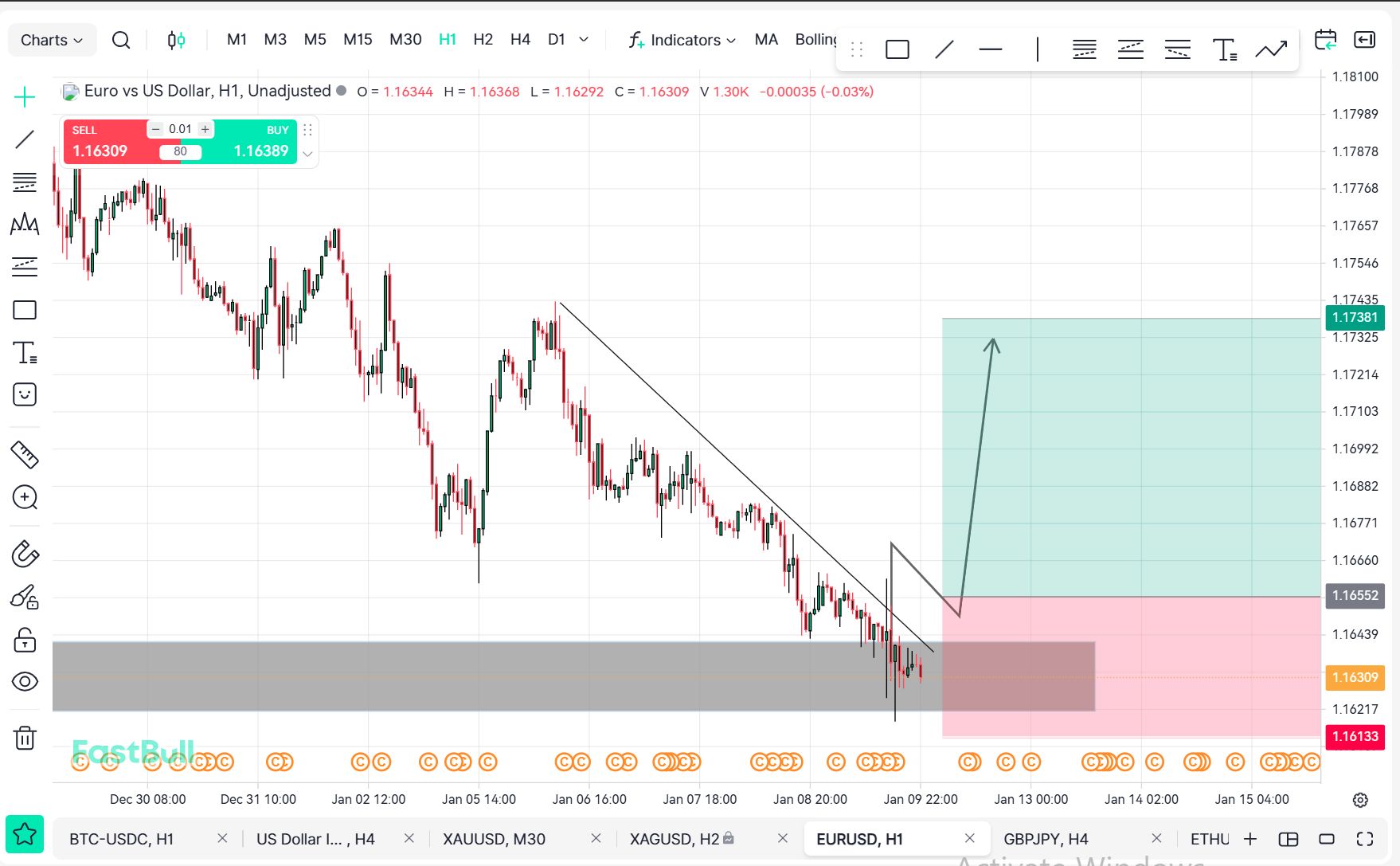
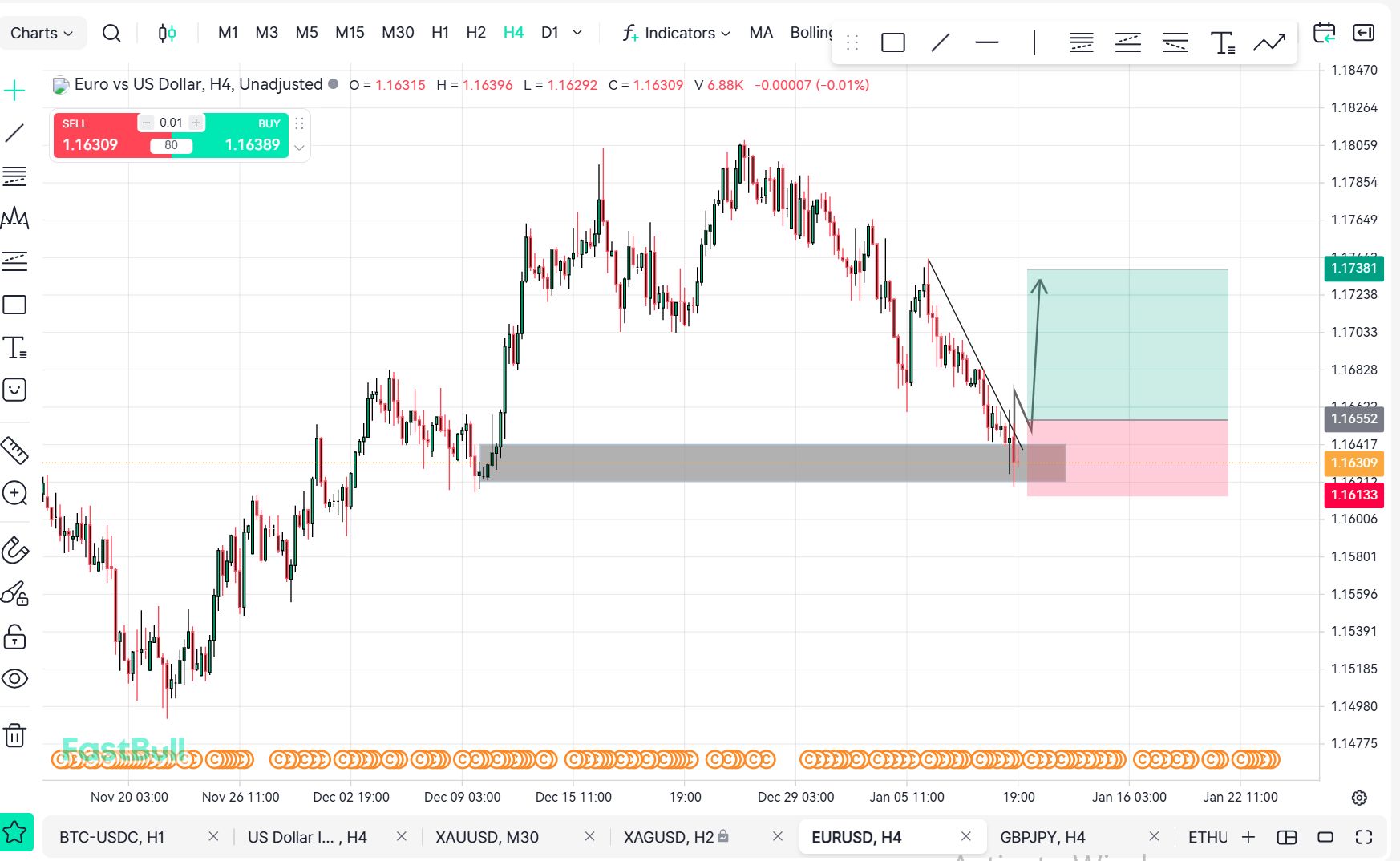
    @AM KingHere is my outlook on eurusd for the coming week. i am leaning bullish on eurusd this week
    EuroTrader flag
    AM King flag
    how use the platform
    EuroTrader flag
    EuroTrader flag
    AM King
    how use the platform
    @AM Kingits just like every other trading platform, you can actually practice trading and get daily insights about the markets
    EuroTrader flag
    AM King
    how use the platform
    @AM King you can just go through the platforms and see how each sections provides value to you
    AM King flag
    yes
    EuroTrader flag
    MQNRL3O0X2
    What are your predictions for gold next week? In my opinion, gold will make a high at the opening of the Asian session, then it will reclaim the current level of 4419 before continuing its upward trend.
    @ifan afian@MQNRL3O0X2Trump admin to carry out preliminary attack plans on Iran - considering what sites to target report
    EuroTrader flag
    MQNRL3O0X2
    What are your predictions for gold next week? In my opinion, gold will make a high at the opening of the Asian session, then it will reclaim the current level of 4419 before continuing its upward trend.
    @MQNRL3O0X2this potential action cantrigger risk-off behavior, weakening equities and supporting gold prices. Possible gap up or sharp bullish spike. High volatility in the first hours spreads may widen.
    TraderKampung flag
    now ATH what next
    EuroTrader flag
    TraderKampung
    now ATH what next
    @TraderKampungcontinue the rise to new all time highs, there is a catalyst that could send price towards new all time highs this week
    3326052 flag
    how to predict with candlestick
    3326122 flag
    by knowing everything
    2991063 flag
    Sanjeev Ku
    @Sanjeev Kucan I enter fro the buy now ?
    3326434 flag
    no
    Sanjeev Ku flag
    2991063
    @Visitor2991063 bro 91047 was my tgt just hit so wait for retracement or let it cross 91117. above 91117 we may get good upside till minimum 92083. btcusdt
    Sanjeev Ku flag
    Sanjeev Ku
    91047.88 tgt hit now next buying above 91117 if a minimum 5 min candle close above it
    ERAGONEsp09 flag
    Sanjeev Ku
    @Sanjeev Ku🤑
    Sanjeev Ku flag
    ERAGONEsp09
    @ERAGONEsp09 ????
    Type here...
    Add Symbol or Code

      No matching data

      All
      Trump Updates
      Recommend
      Stocks
      Cryptocurrencies
      Central Banks
      Featured News
      • All
      • Russia-Ukraine Conflict
      • Middle East Flashpoint
      • All
      • Russia-Ukraine Conflict
      • Middle East Flashpoint
      Search
      Products

      Charts Free Forever

      Chats Q&A with Experts
      Screeners Economic Calendar Data Tools
      Membership Features
      Data Warehouse Market Trends Institutional Data Policy Rates Macro

      Market Trends

      Market Sentiment Order Book Forex Correlations

      Top Indicators

      Charts Free Forever
      Markets

      News

      News Analysis 24/7 Columns Education
      From Institutions From Analysts
      Topics Columnists

      Latest Views

      Latest Views

      Trending Topics

      Top Columnists

      Latest Update

      Signals

      Copy Rankings Latest Signals Become a signal provider AI Rating
      Contests
      Brokers

      Overview Brokers Assessment Rankings Regulators News Claims
      Broker listing Forex Brokers Comparison Tool Live Spread Comparison Scam
      Q&A Complaint Scam Alert Videos Tips to Detect Scam
      More

      Business
      Events
      Careers About Us Advertising Help Center

      White Label

      Data API

      Web Plug-ins

      Affiliate Program

      Awards Institution Evaluation IB Seminar Salon Event Exhibition
      Vietnam Thailand Singapore Dubai
      Fans Party Investment Sharing Session
      FastBull Summit BrokersView Expo
      Recent Searches
        Top Searches
          Markets
          News
          Analysis
          User
          24/7
          Economic Calendar
          Education
          Data
          • Names
          • Latest
          • Prev

          View All

          No data

          Scan to Download

          Faster Charts, Chat Faster!

          Download App
          English
          • English
          • Español
          • العربية
          • Bahasa Indonesia
          • Bahasa Melayu
          • Tiếng Việt
          • ภาษาไทย
          • Français
          • Italiano
          • Türkçe
          • Русский язык
          • 简中
          • 繁中
          Open Account
          Search
          Products
          Charts Free Forever
          Markets
          News
          Signals

          Copy Rankings Latest Signals Become a signal provider AI Rating
          Contests
          Brokers

          Overview Brokers Assessment Rankings Regulators News Claims
          Broker listing Forex Brokers Comparison Tool Live Spread Comparison Scam
          Q&A Complaint Scam Alert Videos Tips to Detect Scam
          More

          Business
          Events
          Careers About Us Advertising Help Center

          White Label

          Data API

          Web Plug-ins

          Affiliate Program

          Awards Institution Evaluation IB Seminar Salon Event Exhibition
          Vietnam Thailand Singapore Dubai
          Fans Party Investment Sharing Session
          FastBull Summit BrokersView Expo

          Why Trump's Plan for Venezuelan Oil Is Unworkable

          King Ten

          Economic

          Bond

          Remarks of Officials

          Commodity

          Political

          Energy

          Summary:

          A potential Trump plan to control Venezuela's oil output profoundly misreads complex realities, from China's deep ties to technical woes, signaling chaos and financial speculation.

          A potential second Trump administration's strategy for Venezuela's oil sector appears to fundamentally misread the complex realities on the ground. The ambitious plan to overhaul the nation's energy industry and control its output faces significant obstacles, from geopolitical ties with China to deep-seated technical challenges that simple subsidies cannot solve.

          Washington's Demands and a Flawed Vision

          The core of the proposed U.S. strategy involves a series of non-negotiable demands directed at Venezuela's interim President, Delcy Rodriguez. These ultimatums include:

          • Cracking down on drug trafficking.

          • Expelling Iranian and Cuban operatives deemed hostile to Washington.

          • Halting all oil sales to U.S. adversaries.

          These conditions are unlikely to be met, setting the stage for continued confrontation. The administration's vision for overhauling Venezuela’s oil business seems equally detached from reality. Initial suggestions of a subsidy-funded revival, projected to take less than 18 months, quickly evolved into an admission that "a tremendous amount of money will have to be spent," with the expectation that "the oil companies will spend it."

          However, major U.S. energy firms are hesitant to invest billions in a nation facing potential chaos, especially if Washington attempts to install a new government over its 28 million citizens.

          The Goal: Controlling PDVSA to Lower Global Oil Prices

          The ultimate objective behind this high-stakes plan is to drive global oil prices down to a maximum of $50 per barrel. To achieve this, a Trump administration would theoretically seize total control of Venezuela's state-owned oil company, PDVSA, managing the acquisition and sale of nearly all its production.

          U.S. Energy Secretary Chris Wright confirmed this strategy at a Goldman Sachs conference, stating, "We are going to market the crude coming out of Venezuela... we will sell the production that comes out of Venezuela into the marketplace."

          This plan effectively involves capturing the revenue from PDVSA's crude sales, with the proceeds theoretically deposited into U.S.-controlled offshore accounts for the "benefit of the Venezuelan people." Unsurprisingly, the government in Caracas is expected to reject what it views as outright theft. This strategy is backed by what Homeland Security Advisor Stephen Miller has described as a "military threat" to maintain control over Venezuela.

          The China Factor: More Than Just a Buyer

          While the U.S. focuses on control, it overlooks China's deeply entrenched role in Venezuela's energy sector. Although China's daily imports of roughly 746,000 barrels from Venezuela are not irreplaceable—Beijing can easily source oil from Iran, Russia, and Saudi Arabia—its relationship goes far beyond simple trade.

          For the past two decades, China has become the operational backbone of Venezuela's oil industry. Its contributions include:

          • Refinery technology and heavy crude upgrading systems

          • Infrastructure design and control software

          • Spare parts logistics and software support

          Removing Chinese engineers, technicians, and supply chains would not "liberate" a functioning oil industry. It would leave behind an inert shell. Industry experts estimate that converting Venezuela's Chinese-built oil infrastructure into an American-operated system would take a minimum of three to five years.

          Furthermore, Beijing sees the U.S. push in the region as an attempt to force it to purchase energy using petrodollars. This is unlikely to succeed, as China increasingly settles energy transactions with Russia and Gulf nations in petroyuan.

          Technical Hurdles and Years of Sanctions

          The physical nature of Venezuelan oil presents another major challenge. The country produces superheavy crude, which is as thick as tar and requires specialized processes for extraction. It must be melted to reach the surface and then mixed with a diluent to prevent it from hardening again. For every barrel of oil exported, approximately 0.3 barrels of diluent must be imported.

          This technical complexity is compounded by an energy infrastructure that, while shaped by Chinese technology, has been degraded by years of American sanctions. The damage is considered even more severe than that inflicted on Iraq's oil sector in the early 2000s, making any quick revival of production highly improbable.

          Financial Speculators Circle the Chaos

          While the strategic goals of the U.S. plan face serious questions, the turmoil has created opportunities for financial players. Hedge fund vultures are circling, anticipating massive returns. Paul Singer, whose firm Elliott Management acquired the Houston-based subsidiary of CITGO in November for $5.9 billion—less than a third of its $18 billion market value—is a prominent example. Singer has also been a major donor to MAGA-aligned super PACs, contributing $42 million in 2024.

          The broader speculative market is eyeing potential profits of up to $170 billion in Venezuela's debt market, with defaulted PDVSA bonds alone valued at over $60 billion. This financial maneuvering underscores how instability, regardless of policy outcomes, generates immense wealth for a select few. Ultimately, the intricate web of technical, geopolitical, and financial factors makes the situation in Venezuela far more complex than a simple strategy of control can address.

          To stay updated on all economic events of today, please check out our Economic calendar
          Risk Warnings and Disclaimers
          You understand and acknowledge that there is a high degree of risk involved in trading. Following any strategies or investment methods may lead to potential losses. The content on the site is provided by our contributors and analysts for information purposes only. You are solely responsible for determining whether any trading assets, securities, strategy, or any other product is suitable for investing based on your own investment objectives and financial situation.
          Add to Favorites
          Share

          Japan Braces for Snap Election as PM Takaichi Weighs Move

          Thomas

          Remarks of Officials

          Economic

          Political

          Speculation is mounting that Japanese Prime Minister Sanae Takaichi may call an early general election, with reports suggesting a vote could happen as soon as February. The move would allow Japan's first female prime minister to capitalize on high approval ratings she has maintained since taking office in October.

          Takaichi's popularity has been bolstered by her firm stance on China, a position that appeals to right-wing voters but has also triggered a significant diplomatic dispute with the neighboring economic power.

          Coalition Partner Fuels Election Talk

          The possibility of a snap election gained traction after Hirofumi Yoshimura, leader of Takaichi's coalition partner, the Japan Innovation Party (Ishin), commented on the matter. In an appearance on public broadcaster NHK on Sunday, Yoshimura said he met with the prime minister on Friday and sensed her thinking on an election's timing had entered a new "stage."

          Japanese Prime Minister Sanae Takaichi meets with Hirofumi Yoshimura, leader of the coalition partner Japan Innovation Party, to discuss political strategy.

          "I won't be surprised if she made the decision as reported by media," Yoshimura stated, though he confirmed they did not discuss specific dates during their meeting.

          Media Reports Point to a February Vote

          Yoshimura's comments follow a report from the Yomiuri newspaper on Friday, which cited government sources. According to the newspaper, Prime Minister Takaichi is actively considering holding a snap election on either February 8 or February 15.

          An early election would be a strategic maneuver to secure a stronger mandate while her public support remains strong.

          Takaichi Stays Focused on Economic Policy

          Despite the growing rumors, Takaichi herself has remained non-committal. In an interview with NHK recorded on Thursday and broadcast on Sunday, the prime minister deflected questions about a potential election.

          Instead, she emphasized her immediate priorities, stating she had instructed her cabinet to focus on two key areas:

          • Ensuring the timely execution of the current fiscal year's supplementary budget.

          • Securing parliamentary approval for the budget for the fiscal year starting in April.

          "At present, I am focusing on the immediate challenge of ensuring that the public feels the benefits of our stimulus policies aimed at cushioning the blow of inflation," Takaichi said.

          To stay updated on all economic events of today, please check out our Economic calendar
          Risk Warnings and Disclaimers
          You understand and acknowledge that there is a high degree of risk involved in trading. Following any strategies or investment methods may lead to potential losses. The content on the site is provided by our contributors and analysts for information purposes only. You are solely responsible for determining whether any trading assets, securities, strategy, or any other product is suitable for investing based on your own investment objectives and financial situation.
          Add to Favorites
          Share

          China's Gas Boom Upends Global LNG Markets

          Devin

          Economic

          Remarks of Officials

          Commodity

          Data Interpretation

          Political

          Energy

          China, long a critical driver of global demand for liquefied natural gas (LNG), is rapidly boosting its domestic production. This strategic shift means that forecasts banking on China's massive appetite for LNG imports will need a major revision.

          Less than a decade ago, China struggled to unlock its vast shale gas reserves, facing geological challenges different from those in U.S. basins. Today, the country's state-owned energy giants are not only pumping more natural gas than ever but also announcing significant new discoveries, particularly in its shale regions.

          The Shale Revolution Arrives in China

          The production numbers speak for themselves. Citing official data, energy analytics firm Kpler reported that China's natural gas output reached 22.1 billion cubic meters in November of last year, a 7.1% increase year-over-year. This growth was largely driven by a faster-than-expected ramp-up of shale gas projects in the Sichuan Basin.

          Based on this momentum, Kpler projects China's total domestic gas production will hit 263 billion cubic meters in 2025 and climb to 278.5 billion cubic meters this year. The continued expansion of shale gas operations in the Sichuan and Shanxi basins is expected to fuel this growth.

          A Shrinking Appetite for LNG Imports

          As with oil, a surge in domestic production inevitably curtails the need for imports, even as China increases its reliance on natural gas to meet emissions targets. Last year provided a clear example: as domestic output rose, China’s LNG imports fell to their lowest level in six years after 12 consecutive months of declines.

          Looking ahead, Kpler anticipates that Chinese demand for LNG will continue to fall this year. The increase in shale gas production alone is expected to displace roughly 600,000 tons of LNG demand, bringing the country's total imports down to 73.9 million tons.

          While 600,000 tons is a relatively small volume in a market where the United States alone exported over 100 million tons last year, it highlights a powerful trend. Beijing is determined to reduce its dependence on energy imports, a policy with far-reaching implications for global commodity markets that have long counted on China as the ultimate source of demand growth.

          Ripple Effects Across the Global LNG Landscape

          The projected decline in China's LNG demand could disrupt ambitious plans for new LNG capacity worldwide. Major exporters like the United States and Qatar are planning a wave of new supply set to come online by the end of the decade. Softening Chinese demand could shrink producer profits and complicate these projects.

          Many analysts already expect an oversupplied LNG market by 2030, which would put sustained pressure on prices. China's growing self-sufficiency only adds weight to this forecast.

          New Suppliers and Shifting Alliances

          Competition within the LNG market is also intensifying. Amid ongoing trade disputes, China is no longer importing U.S. LNG. Instead, Russia is exporting record volumes to its neighbor. While these volumes are not yet massive, they demonstrate that gas, much like oil, will find a market if the price is right, even from sanctioned facilities.

          These dynamics could be further amplified by the European Union's plan to ban Russian energy imports, including gas, next year. As the current largest buyer of Russian LNG, the EU's ban will force Moscow to redirect these flows, with China and India as the most likely destinations.

          Meanwhile, pipeline gas is also set to play a larger role. Kpler estimates that imports through Russia's Power of Siberia pipeline could increase by 8 billion cubic meters compared to 2025, contributing to an overall 8% rise in pipeline imports to 80.7 billion cubic meters. In contrast, pipeline gas imports from Central Asian nations are projected to fall by 4 billion cubic meters in 2026 as those countries prioritize their own domestic demand.

          Outlook: A Gradual but Decisive Shift

          Beijing's priority is clear: reduce reliance on energy imports by ramping up domestic production. However, this transition will be gradual and will eventually face natural limits. Until then, price will remain a key factor driving import decisions.

          While China's pivot will undoubtedly influence the global LNG market, its impact may be less dramatic than trends in its oil demand. The reason is simple: plenty of other nations have a strong appetite for liquefied gas, especially if lower Chinese demand and new supply capacity cause prices to fall and stay there.

          To stay updated on all economic events of today, please check out our Economic calendar
          Risk Warnings and Disclaimers
          You understand and acknowledge that there is a high degree of risk involved in trading. Following any strategies or investment methods may lead to potential losses. The content on the site is provided by our contributors and analysts for information purposes only. You are solely responsible for determining whether any trading assets, securities, strategy, or any other product is suitable for investing based on your own investment objectives and financial situation.
          Add to Favorites
          Share

          Trump's China Pivot: Why Voters Want Détente, Not Tariffs

          Nathaniel Wright

          Economic

          Remarks of Officials

          Political

          Data Interpretation

          China–U.S. Trade War

          Recent tensions between the United States and China are showing signs of easing. Following a pivotal October 2025 meeting between President Donald Trump and President Xi Jinping, officials from both nations have launched dialogues on a range of critical issues, from fentanyl and soybeans to Ukraine and Taiwan. President Trump, in a notable shift, has moved from threatening China to courting it. The key question is whether this strategic pivot is enough to win over American public support.

          Evidence suggests it might be. Before the Trump-Xi negotiations, U.S. public opinion was decidedly against Trump's aggressive stance, with a clear preference for more engagement with China. While Americans view China as a threat, they seem to consider the risks of direct competition too high. Polling indicates that if the Trump administration continues to seek a more stable equilibrium with Beijing, the American public will back the policy.

          The Unpopular Hardline on China

          Prior to the recent diplomatic thaw, President Trump's approach to China was deeply unpopular, particularly amid escalating trade disputes. A public opinion poll from the Institute for Global Affairs at Eurasia Group, conducted from October 6–14, 2025, revealed that most U.S. voters felt Trump's policies were actively worsening tensions. Of 13 foreign policy issues surveyed, Trump's net approval was negative on 11, with his China policy ranked as the absolute worst.

          This sentiment was echoed in other surveys. An October 2025 poll by the Chicago Council on Global Affairs found that 54% of the American public opposed higher tariffs on Chinese goods—the kind Trump had threatened earlier that month. For the first time since 2019, a majority of respondents believed the U.S. should pursue friendly cooperation with China. Less than four in ten Americans supported further reductions in trade or increased tariffs.

          Parsing the Threat: Concerns vs. Confrontation

          One reason for this shift may be that competition with China doesn't rank as a top daily concern for most Americans, even though they acknowledge the threat. The Institute for Global Affairs report noted that while a majority of the public views China as a moderate threat, almost none consider it a primary day-to-day worry.

          Still, the perception of China as a national security risk remains strong.

          • The Chicago Council found that 50% of the U.S. public sees China as a critical threat.

          • The Institute for Global Affairs reported that 62% view China as at least a moderate threat.

          When asked what shaped their view, respondents most often cited China's powerful technology (31%). Many also believe China has hostile intentions, with 22% saying it aims to replace the international order and 15% believing it wants to destroy the United States—a view most common among Republicans.

          Despite these concerns, Trump's confrontational approach lost its appeal. For years, a tough stance on China was a rare point of bipartisan consensus, but that agreement has collapsed. By 2025, nearly a quarter of Trump's own Republican base disapproved of his China policy.

          From Campaign Threats to a Policy U-Turn

          On the campaign trail, Trump promised sweeping changes to the U.S.–China relationship, including a 60% tariff on all Chinese goods, crackdowns on espionage, and a push to reshore industry. The administration appeared ready to deliver in early 2025, threatening tariffs over 100%, imposing new restrictions on Chinese student visas, and creating licensing requirements for semiconductor sales to China.

          However, as public opinion turned, the administration adjusted its course. New tariffs on Chinese goods were lowered to around 20%, all restrictions on Chinese student visas were lifted, and the White House signaled an openness to the sale of advanced U.S. semiconductors to China. This suggests that despite its rhetoric, the administration has proven remarkably responsive to public sentiment.

          If President Trump can steer his foreign policy toward a more stable and predictable relationship with China, he may finally gain the voter approval that previously eluded him. The challenge will be restraining his administration's inclination toward policy chaos, which appears unpopular regardless of the issue.

          To stay updated on all economic events of today, please check out our Economic calendar
          Risk Warnings and Disclaimers
          You understand and acknowledge that there is a high degree of risk involved in trading. Following any strategies or investment methods may lead to potential losses. The content on the site is provided by our contributors and analysts for information purposes only. You are solely responsible for determining whether any trading assets, securities, strategy, or any other product is suitable for investing based on your own investment objectives and financial situation.
          Add to Favorites
          Share

          US Economy: Liquidity Boom or 2026 Recession?

          Christopher Hayes

          Economic

          Cryptocurrency

          Traders' Opinions

          Remarks of Officials

          Data Interpretation

          Central Bank

          Political

          Stocks

          The future of the U.S. economy has split investors and analysts into two distinct camps. One side anticipates a massive liquidity injection that could fuel a prolonged expansion. The other sees structural weaknesses that even aggressive stimulus can't fix, echoing the 2008 crisis when bank bailouts failed to revive the broader economy. A third group remains on the sidelines, waiting for a clearer signal.

          The Bull Case: Betting on a Stimulus-Fueled Expansion

          Optimists point to the momentum from ongoing fiscal and monetary stimulus, which they expect to accelerate under a potential "Trump 2.0" administration. The Federal Reserve has already cut interest rates multiple times, and Trump has suggested he could replace Fed Chair Jerome Powell with a more dovish successor. Such a move could open the door for "ultra-dovish" rate cuts and a significant infusion of liquidity.

          Some analysts believe this stimulus could be timed to secure political victories for Republicans in the midterm elections and bolster approval ratings.

          This strategy draws comparisons to the deregulation policies of the 1980s under Ronald Reagan, with proponents arguing that similar policies could extend economic growth if liquidity is deployed effectively. This was a key topic in a recent episode of Token Narratives, where Bitcoin.com’s Graham Stone and David Sencil discussed the potential impact of direct liquidity measures.

          One key example is Trump's directive for Fannie Mae and Freddie Mac to purchase up to $200 billion in mortgage-backed securities (MBS) to lower mortgage rates.

          "Trump just went out and posted something like, 'I'm telling Freddie Mac to buy MBS.' That's like straight-up 2020, 2008-style QE," Sencil noted. "That's QE infinity. So if that kind of thing does happen... what happens when he gets control of the Fed when Powell steps down?"

          Sencil concluded that such a massive liquidity injection would likely benefit risk assets, including crypto.

          The Bear Case: Why Liquidity Can't Stop a Downturn

          Conversely, the bearish camp argues that while liquidity injections may seem inevitable, they can only delay—not prevent—an economic downturn. Marc Faber, editor of the Gloom Boom & Doom Report, has warned of "doom" in 2026. He advises investors to exit U.S. equities, citing persistent asset price inflation and the Federal Reserve’s weakening control over bond markets. In his view, the era of exceptional market gains is over, with inflation and economic strain set to rise.

          Other bearish arguments focus on several key risks:

          • Consumer Strain: Rising debt levels and financial pressure on households could overwhelm the positive effects of stimulus.

          • Asset Bubbles: Valuations in the tech and AI sectors appear increasingly frothy and vulnerable to a correction.

          • Political Risk: Sliding approval ratings for Trump and the upcoming 2026 midterms could trigger a premature "Trump put"—an attempt to boost the market for political gain that may not be sustainable.

          These analysts believe the era of effective quantitative easing has passed, and any new interventions may come too late to alter the fundamental trajectory.

          Sizing the Odds: What Prediction Markets Say About 2026

          Forecasts for a 2026 recession vary. JPMorgan Global Research estimates the probability of a U.S. and global downturn at 35%, driven by persistent inflation and slowing growth.

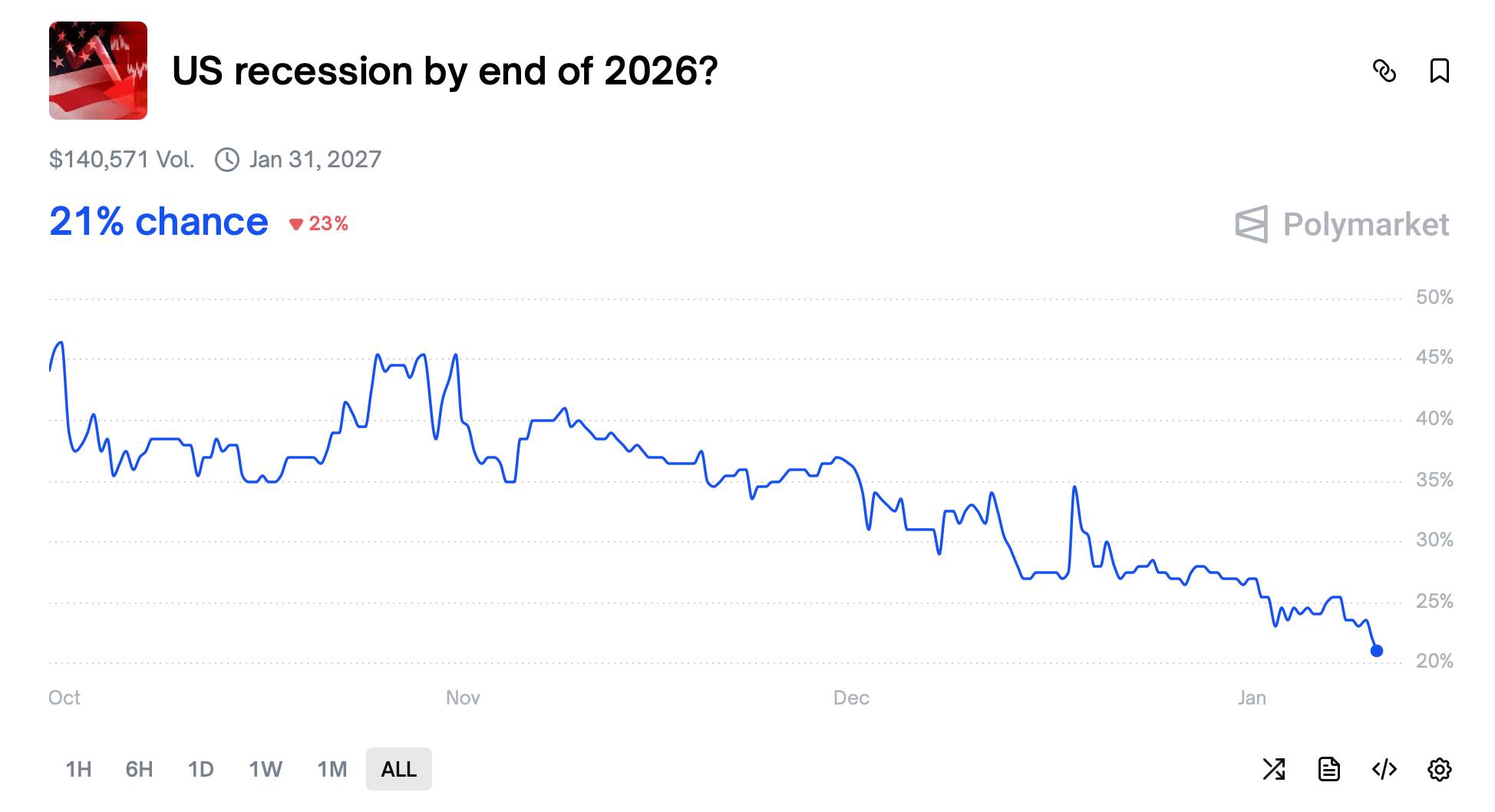
          Prediction markets, however, are pricing in lower odds. As of January 10, 2026, bettors on Polymarket gave a 21% chance of a U.S. recession by the end of the year, in a market that has seen over $140,571 in volume.

          Figure 1: Polymarket data shows the perceived probability of a U.S. recession by the end of 2026 has trended down to 21% as of early January.

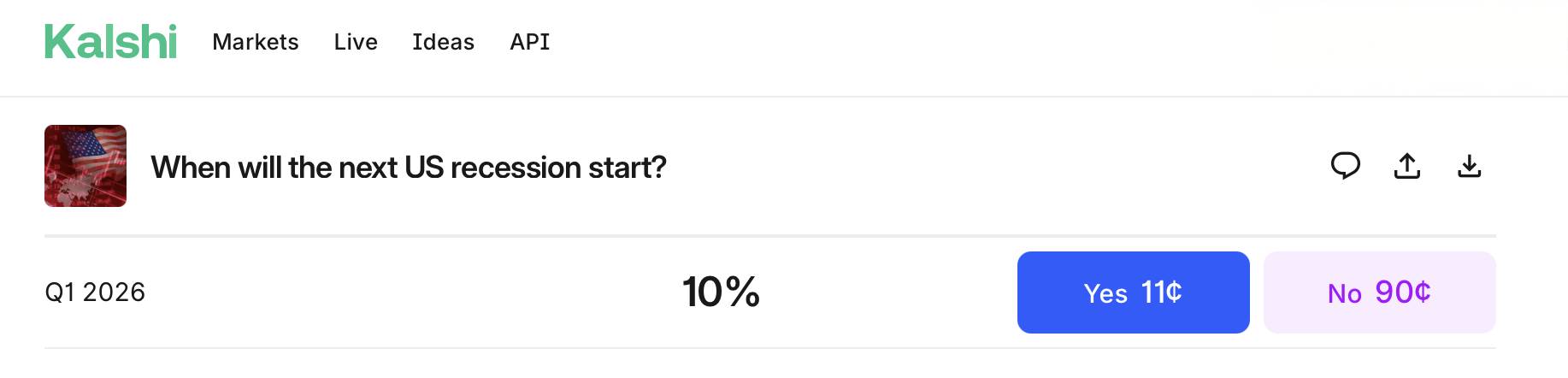
          A separate contract on Kalshi places the odds of a recession beginning in the first quarter of 2026 at just 10%. The divergence in these forecasts highlights the deep uncertainty facing investors.

          Figure 2: A prediction market on Kalshi indicates traders see only a 10% chance of a U.S. recession beginning in the first quarter of 2026.

          Market Outlook: A Cautious Standoff

          For now, the market remains guardedly optimistic, pricing in potential risks without fully committing to either a growth or recession scenario. This tension between stimulus hopes and underlying economic fears is likely to define the year ahead.

          If a wave of liquidity arrives early and decisively, risk assets could rally, validating the expansionist view. However, if stimulus measures are delayed or prove insufficient, the bear case could quickly gain ground, sending recession probabilities higher. Until a clear direction emerges, the most crowded trade may be watching from the sidelines.

          To stay updated on all economic events of today, please check out our Economic calendar
          Risk Warnings and Disclaimers
          You understand and acknowledge that there is a high degree of risk involved in trading. Following any strategies or investment methods may lead to potential losses. The content on the site is provided by our contributors and analysts for information purposes only. You are solely responsible for determining whether any trading assets, securities, strategy, or any other product is suitable for investing based on your own investment objectives and financial situation.
          Add to Favorites
          Share

          Venezuela Frees Prisoners After Maduro's Capture

          Ukadike Micheal

          Economic

          Daily News

          Remarks of Officials

          Commodity

          Political

          Energy

          A week after US forces captured President Nicolás Maduro, Venezuela has continued to release political prisoners, including a key member of opposition leader María Corina Machado's party. The move signals a potential shift in the nation's political crisis amid intense American pressure.

          Prisoner Releases Begin Amid Political Upheaval

          Venezuelan authorities freed at least five individuals on Saturday, a development confirmed by the human rights group Foro Penal. Among those released was Virgilio Laverde, the youth coordinator for Machado's Vente Venezuela party in the state of Bolívar.

          The release of political prisoners has been a central demand of the opposition. So far, approximately two dozen people have been freed, though Foro Penal estimates that more than 800 remain in detention. National Assembly head Jorge Rodríguez stated on Thursday that a significant number of prisoners would be released as a gesture of peace.

          Other notable figures released include:

          • Biagio Pilieri: A former lawmaker and an ally of Machado.

          • Enrique Márquez: Former vice president of the opposition-led National Assembly.

          • Five Spanish citizens.

          The political dynamic extends beyond Venezuela, as neighboring Nicaragua also freed 20 political prisoners on Saturday following increased pressure from the United States.

          Despite the releases, Venezuela's acting President, Delcy Rodriguez, maintained a defiant stance. Speaking at a food market, she vowed to secure Maduro's return. "We will not rest until we have President Maduro back; we are going to rescue him," she said, making no mention of the prisoner releases.

          US Responds with Sanctions Relief and Security Warnings

          The United States has responded to the developments with a mix of incentives and warnings. President Donald Trump confirmed he had canceled a second wave of attacks on Venezuela, citing cooperation from the South American nation. American diplomats have reportedly visited the capital, Caracas.

          Simultaneously, the US issued a security advisory on Saturday, cautioning Americans in Venezuela about reports of armed militias establishing roadblocks and searching vehicles for US citizens or signs of support for the United States.

          On the economic front, President Trump signed an executive order to protect Venezuelan oil revenue held in US Treasury accounts. The order shields these funds from creditors, preventing their seizure to settle debts or other legal claims. Furthermore, Treasury Secretary Scott Bessent told Reuters that the US might lift some sanctions as early as next week to help facilitate oil sales.

          Oil Sector Cautious Despite US Investment Push

          Despite the political maneuvering and potential sanctions relief, major US oil companies remain wary of reinvesting in Venezuela.

          On Friday, top oil executives expressed caution regarding a push from President Trump for them to commit at least $100 billion to rebuild the nation's energy sector. The head of Exxon Mobil Corp. provided a blunt assessment, calling Venezuela "uninvestable" in its current state.

          To stay updated on all economic events of today, please check out our Economic calendar
          Risk Warnings and Disclaimers
          You understand and acknowledge that there is a high degree of risk involved in trading. Following any strategies or investment methods may lead to potential losses. The content on the site is provided by our contributors and analysts for information purposes only. You are solely responsible for determining whether any trading assets, securities, strategy, or any other product is suitable for investing based on your own investment objectives and financial situation.
          Add to Favorites
          Share

          Greenland Rejects US Takeover as Trump Hints at Force

          Isaac Bennett

          Remarks of Officials

          Political

          Political leaders in Greenland have issued a firm rejection of American control after U.S. President Donald Trump renewed his interest in the mineral-rich territory, suggesting Washington might use force to acquire it. The unified stance comes as European allies express alarm over the White House's refusal to rule out military action.

          In a joint statement, leaders of five parties in Greenland's parliament declared their national identity and right to self-determination. "We don't want to be Americans, we don't want to be Danish, we want to be Greenlanders," the statement read. "The future of Greenland must be decided by Greenlanders... without interference from other countries."

          The declaration followed Trump's comment that Washington was "going to do something on Greenland, whether they like it or not."

          Europe Scrambles as Invasion Fears Grow

          The remarks have sent shockwaves through European capitals. French Foreign Minister Jean-Noel Barrot labeled the U.S. posture "blackmail" but expressed doubt that a military intervention would actually occur. "Greenland is a European territory, placed under the protection of NATO," he stated. "The Europeans have very powerful means to defend their interests."

          In Denmark, public anxiety is palpable. A poll by the Ritzau agency found that over 38 percent of Danes believe the United States will launch an invasion of Greenland during the Trump administration.

          This sentiment is echoed on the streets of Nuuk, Greenland's capital. "American? No! We were a colony for so many years. We're not ready to be a colony again," said Julius Nielsen, a 48-year-old fisherman.

          Inaluk Pedersen, a 21-year-old shop assistant, noted the strain on regional ties, saying, "I feel like the United States' interference disrupts all relationships and trust" between Denmark and Greenland.

          The Push for Independence Meets a New Challenge

          A former Danish colony until 1953, Greenland gained home rule 26 years later and has been debating full independence. While many, like telecoms worker Pitsi Mari, support the idea in principle, they urge caution. "I really like the idea of us being independent, but I think we should wait," she said.

          The current ruling coalition favors a measured approach to sovereignty. However, the opposition party Naleraq, which secured 24.5 percent of the vote in the 2025 legislative elections, advocates for a faster timeline. Despite its stance on independence, Naleraq was also a signatory to the joint declaration rejecting U.S. influence.

          "It's time for us to start preparing for the independence we have fought for over so many years," Naleraq MP Juno Berthelsen posted on Facebook.

          Trump's Arctic Gambit: Security or Resources?

          President Trump has framed his interest in Greenland as a matter of national security, citing growing Russian and Chinese military activity in the Arctic. The U.S. has maintained a military base on the strategic island since World War II.

          "We're not going to have Russia or China occupy Greenland. That's what they're going to do if we don't," Trump said, adding, "So we're going to be doing something with Greenland, either the nice way or the more difficult way."

          While Russia and China have increased their regional military presence, neither has made a territorial claim on the island. Greenland has also drawn global attention for its vast natural resources, which include rare earth minerals and potentially large oil and gas reserves.

          High-Stakes Diplomacy and the Future of NATO

          The crisis has triggered a flurry of diplomatic activity. U.S. Secretary of State Marco Rubio is scheduled to meet with Denmark's foreign minister and representatives from Greenland. European leaders are attempting to de-escalate the situation while managing a volatile relationship with Trump, who is nearing the end of his first year back in office.

          Danish Prime Minister Mette Frederiksen issued a stark warning, stating that an invasion of Greenland would destroy "everything," including the NATO defense pact and the entire post-World War II security structure.

          Trump, who first offered to buy Greenland during his previous presidential term in 2019, remained dismissive of Denmark's historical claim. "The fact that they had a boat land there 500 years ago doesn't mean that they own the land," he commented.

          Risk Warnings and Disclaimers
          You understand and acknowledge that there is a high degree of risk involved in trading. Following any strategies or investment methods may lead to potential losses. The content on the site is provided by our contributors and analysts for information purposes only. You are solely responsible for determining whether any trading assets, securities, strategy, or any other product is suitable for investing based on your own investment objectives and financial situation.
          Add to Favorites
          Share
          FastBull
          Copyright © 2026 FastBull Ltd

          728 RM B 7/F GEE LOK IND BLDG NO 34 HUNG TO RD KWUN TONG KLN HONG KONG

          TelegramInstagramTwitterfacebooklinkedin
          App Store Google Play Google Play
          Products
          Charts

          Chats

          Q&A with Experts
          Screeners
          Economic Calendar
          Data
          Tools
          Membership
          Features
          Function
          Markets
          Copy Trading
          Latest Signals
          Contests
          News
          Analysis
          24/7
          Columns
          Education
          Company
          Careers
          About Us
          Contact Us
          Advertising
          Help Center
          Feedback
          User Agreement
          Privacy Policy
          Personal Information Protection Statement
          Business

          White Label

          Data API

          Web Plug-ins

          Poster Maker

          Affiliate Program

          Risk Disclosure

          The risk of loss in trading financial instruments such as stocks, FX, commodities, futures, bonds, ETFs and crypto can be substantial. You may sustain a total loss of the funds that you deposit with your broker. Therefore, you should carefully consider whether such trading is suitable for you in light of your circumstances and financial resources.

          No decision to invest should be made without thoroughly conducting due diligence by yourself or consulting with your financial advisors. Our web content might not suit you since we don't know your financial conditions and investment needs. Our financial information might have latency or contain inaccuracy, so you should be fully responsible for any of your trading and investment decisions. The company will not be responsible for your capital loss.

          Without getting permission from the website, you are not allowed to copy the website's graphics, texts, or trademarks. Intellectual property rights in the content or data incorporated into this website belong to its providers and exchange merchants.

          Not Logged In

          Log in to access more features

          FastBull Membership

          Not yet

          Purchase

          Become a signal provider
          Help Center
          Customer Service
          Dark Mode
          Price Up/Down Colors

          Log In

          Sign Up

          Position
          Layout
          Fullscreen
          Default to Chart
          The chart page opens by default when you visit fastbull.com