• Trade
  • Markets
  • Copy
  • Contests
  • News
  • 24/7
  • Calendar
  • Q&A
  • Chats
Trending
Screeners
SYMBOL
LAST
BID
ASK
HIGH
LOW
NET CHG.
%CHG.
SPREAD
SPX
S&P 500 Index
6878.48
6878.48
6878.48
6882.04
6855.73
+43.98
+ 0.64%
--
DJI
Dow Jones Industrial Average
48362.67
48362.67
48362.67
48457.47
48201.93
+227.79
+ 0.47%
--
IXIC
NASDAQ Composite Index
23428.82
23428.82
23428.82
23476.50
23362.93
+121.19
+ 0.52%
--
USDX
US Dollar Index
97.640
97.720
97.640
97.890
97.480
-0.260
-0.27%
--
EURUSD
Euro / US Dollar
1.17813
1.17820
1.17813
1.18018
1.17498
+0.00200
+ 0.17%
--
GBPUSD
Pound Sterling / US Dollar
1.35076
1.35086
1.35076
1.35184
1.34440
+0.00468
+ 0.35%
--
XAUUSD
Gold / US Dollar
4486.23
4486.57
4486.23
4497.69
4445.89
+43.08
+ 0.97%
--
WTI
Light Sweet Crude Oil
58.129
58.159
58.129
58.168
57.701
+0.219
+ 0.38%
--

Community Accounts

Signal Accounts
--
Profit Accounts
--
Loss Accounts
--
View More

Become a signal provider

Sell trading signals to earn additional income

View More

Guide to Copy Trading

Get started with ease and confidence

View More

Signal Accounts for Members

All Signal Accounts

Best Return
  • Best Return
  • Best P/L
  • Best MDD
Past 1W
  • Past 1W
  • Past 1M
  • Past 1Y

All Contests

  • All
  • Trump Updates
  • Recommend
  • Stocks
  • Cryptocurrencies
  • Central Banks
  • Featured News
Top News Only
Share

[Market Update] LME Copper Rose 2.00% Intraday, Currently Trading At $12,153.60 Per Ton

Share

USA Stock Index Futures Add To Losses, S&P 500 E-Mini, NASDAQ 100 And Dow Futures Down 0.2% Each

Share

Guangzhou Futures Exchange: To Adjust Transaction Fees, Price Limits And Margin Requirements For Some Platinum, Palladium And Lithium Carbonate Futures From Dec 25

Share

Canadian Dollar Holds On To Most Of Its Gains After GDP Data, Up 0.4% On The Day At 1.3695 Per USA Dollar

Share

The US Dollar Index Rose Briefly After The Release Of Q3 GDP Data, Currently Trading At 97.99. US Stock Futures Saw Little Movement, With NASDAQ 100 Futures Maintaining A Decline Of Approximately 0.15%. The Yield On The 10-year US Treasury Note Rose Briefly To 4.149%. Spot Gold Fell By About $4 To $4485.51 Per Ounce

Share

USA Dollar Index Ticks Slightly Higher After US GDP Data, Last Down 0.2% On Day At 98.0

Share

Euro Pares Gains Versus US Dollar After Stronger-Than-Expected US GDP Data, Last Up 0.2% At $1.1782

Share

USA Advance Q3 Pce Services Price Index Ex-Energy/Housing +3.4 Percent

Share

USA Advance Q3 Pce Price Index Ex-Food/Energy/Housing +2.7 Percent

Share

US Dollar Trims Losses Versus Yen After US GDP Data, Last Down 0.5% At 156.19 Yen

Share

Guangzhou Futures Exchange: Recently, There Have Been Numerous Uncertainties Affecting Market Operations, Leading To Significant Price Fluctuations In Related Commodities. All Member Units Are Requested To Strengthen Market Risk Prevention Measures, Enhance Investor Education, Remind Investors To Participate In Trading Rationally And Compliantly, And Maintain The Stable Operation Of The Market

Share

[Market Update] Following The Release Of US GDP Data, Spot Gold Fell By $5 In The Short Term, Currently Trading At $4486.58 Per Ounce

Share

Guangzhou Futures Exchange: Effective From The Settlement On December 25, 2025, The Daily Price Limit For Platinum And Palladium Futures Contracts Will Be Adjusted To 10%, And The Trading Margin Requirement Will Be Adjusted To 12%. If The Above-mentioned Daily Price Limit And Trading Margin Requirement Differ From The Currently Implemented Daily Price Limit And Trading Margin Requirement, The Larger Of The Two And The Higher Requirement Will Apply

Share

The Annualized Quarter-on-quarter Growth Rate Of U.S. Personal Consumption Expenditures (Pce) In The Third Quarter Was Revised To 3.5%, Compared With The Expected 2.7% And The Initial Estimate Of 2.5%

Share

US Advance Q3 Core Pce +2.9% (Consensus +2.9%)

Share

Official: US 'Not Satisfied' With M23 Withdrawal From Congo Town

Share

Canada's GDP Fell 0.3% Month-on-month In October, The Largest Contraction Since December 2022, Compared With An Expected Decline Of 0.2% And A Previous Growth Of 0.20%

Share

The Main Shanghai Nickel Futures Contract Rose More Than 5%, Currently Trading At 128,750 Yuan/ton

Share

Ishares Silver Trust Rises 2.1%, Global X Silver Miners ETF Up 2.1%

Share

Spot Silver Rose More Than 2.00% Intraday, Currently Trading At $70.40 Per Ounce. New York Silver Futures Extended Their Gains To 3.00% Intraday, Currently Trading At $70.63 Per Ounce

TIME
ACT
FCST
PREV
U.S. Weekly Total Rig Count

A:--

F: --

P: --

U.S. Weekly Total Oil Rig Count

A:--

F: --

P: --

China, Mainland 5-Year Loan Prime Rate

A:--

F: --

P: --

China, Mainland 1-Year Loan Prime Rate (LPR)

A:--

F: --

P: --

U.K. Current Account (Q3)

A:--

F: --

P: --
U.K. GDP Final YoY (Q3)

A:--

F: --

P: --

U.K. GDP Final QoQ (Q3)

A:--

F: --

P: --
Italy PPI YoY (Nov)

A:--

F: --

P: --

Mexico Economic Activity Index YoY (Oct)

A:--

F: --

P: --

Canada National Economic Confidence Index

A:--

F: --

P: --

Canada Industrial Product Price Index YoY (Nov)

A:--

F: --

P: --
U.S. Chicago Fed National Activity Index (Nov)

A:--

F: --

P: --
Canada Industrial Product Price Index MoM (Nov)

A:--

F: --

P: --
U.S. 2-Year Note Auction Avg. Yield

A:--

F: --

P: --

RBA Monetary Policy Meeting Minutes
Mexico Trade Balance (Nov)

A:--

F: --

P: --

Canada GDP YoY (Oct)

A:--

F: --

P: --

Canada GDP MoM (SA) (Oct)

A:--

F: --

P: --

U.S. Core PCE Price Index Prelim YoY (Q3)

A:--

F: --

P: --

U.S. PCE Price Index Prelim YoY (Q3)

A:--

F: --

P: --

U.S. Annualized Real GDP Prelim (Q3)

A:--

F: --

P: --

U.S. Non-Defense Capital Durable Goods Orders MoM (Excl. Aircraft) (Oct)

A:--

F: --

P: --
U.S. PCE Price Index Prelim QoQ (SA) (Q3)

A:--

F: --

P: --

U.S. Core PCE Price Index Annualized QoQ Prelim (SA) (Q3)

A:--

F: --

P: --

U.S. GDP Deflator Prelim QoQ (SA) (Q3)

A:--

F: --

P: --

U.S. Durable Goods Orders MoM (Excl. Defense) (SA) (Oct)

A:--

F: --

P: --

U.S. Durable Goods Orders MoM (Excl.Transport) (Oct)

A:--

F: --

P: --
U.S. Real Personal Consumption Expenditures Prelim QoQ (Q3)

A:--

F: --

P: --

U.S. Real GDP Annualized QoQ Prelim (SA) (Q3)

A:--

F: --

P: --

U.S. Durable Goods Orders MoM (Oct)

A:--

F: --

P: --
U.S. Weekly Redbook Index YoY

--

F: --

P: --

U.S. Manufacturing Output MoM (SA) (Nov)

--

F: --

P: --

U.S. Manufacturing Capacity Utilization (Nov)

--

F: --

P: --

U.S. Industrial Output YoY (Oct)

--

F: --

P: --

U.S. Industrial Output MoM (SA) (Nov)

--

F: --

P: --

U.S. Capacity Utilization MoM (SA) (Nov)

--

F: --

P: --

U.S. Richmond Fed Manufacturing Shipments Index (Dec)

--

F: --

P: --

U.S. Richmond Fed Services Revenue Index (Dec)

--

F: --

P: --

U.S. Conference Board Consumer Expectations Index (Dec)

--

F: --

P: --

U.S. Conference Board Present Situation Index (Dec)

--

F: --

P: --

U.S. Richmond Fed Manufacturing Composite Index (Dec)

--

F: --

P: --

U.S. Conference Board Consumer Confidence Index (Dec)

--

F: --

P: --

U.S. 5-Year Note Auction Avg. Yield

--

F: --

P: --

U.S. Weekly Total Oil Rig Count

--

F: --

P: --

U.S. Weekly Total Rig Count

--

F: --

P: --

U.S. API Weekly Cushing Crude Oil Stocks

--

F: --

P: --

U.S. API Weekly Crude Oil Stocks

--

F: --

P: --

U.S. API Weekly Refined Oil Stocks

--

F: --

P: --

U.S. API Weekly Gasoline Stocks

--

F: --

P: --

Mexico Unemployment Rate (Not SA) (Nov)

--

F: --

P: --

U.S. MBA Mortgage Application Activity Index WoW

--

F: --

P: --

U.S. Weekly Continued Jobless Claims (SA)

--

F: --

P: --

U.S. Weekly Initial Jobless Claims (SA)

--

F: --

P: --

U.S. Initial Jobless Claims 4-Week Avg. (SA)

--

F: --

P: --

U.S. EIA Weekly Crude Oil Imports Changes

--

F: --

P: --

U.S. EIA Weekly Heating Oil Stock Changes

--

F: --

P: --

Canada Federal Government Budget Balance (Oct)

--

F: --

P: --

Japan Construction Orders YoY (Nov)

--

F: --

P: --

Japan New Housing Starts YoY (Nov)

--

F: --

P: --

Turkey Capacity Utilization (Dec)

--

F: --

P: --

Q&A with Experts
    • All
    • Chatrooms
    • Groups
    • Friends
    ifan afian flag
    still watching hahaha
    Visxa Benfica flag
    Chasing the high now is risky, especially with the sell wall at 4500 still holding firm b uddy
    RPGFX flag
    trish
    @trishSuch are not here to help, they are here to brag and claim followers
    Lord Yellow Mountain flag
    Visxa Benfica
    @Visxa Benfica
    Visxa Benfica flag
    ifan afian
    @ifan afianI made the mistake of entering the market with FOMO without a clear plan.
    RPGFX flag
    ifan afian
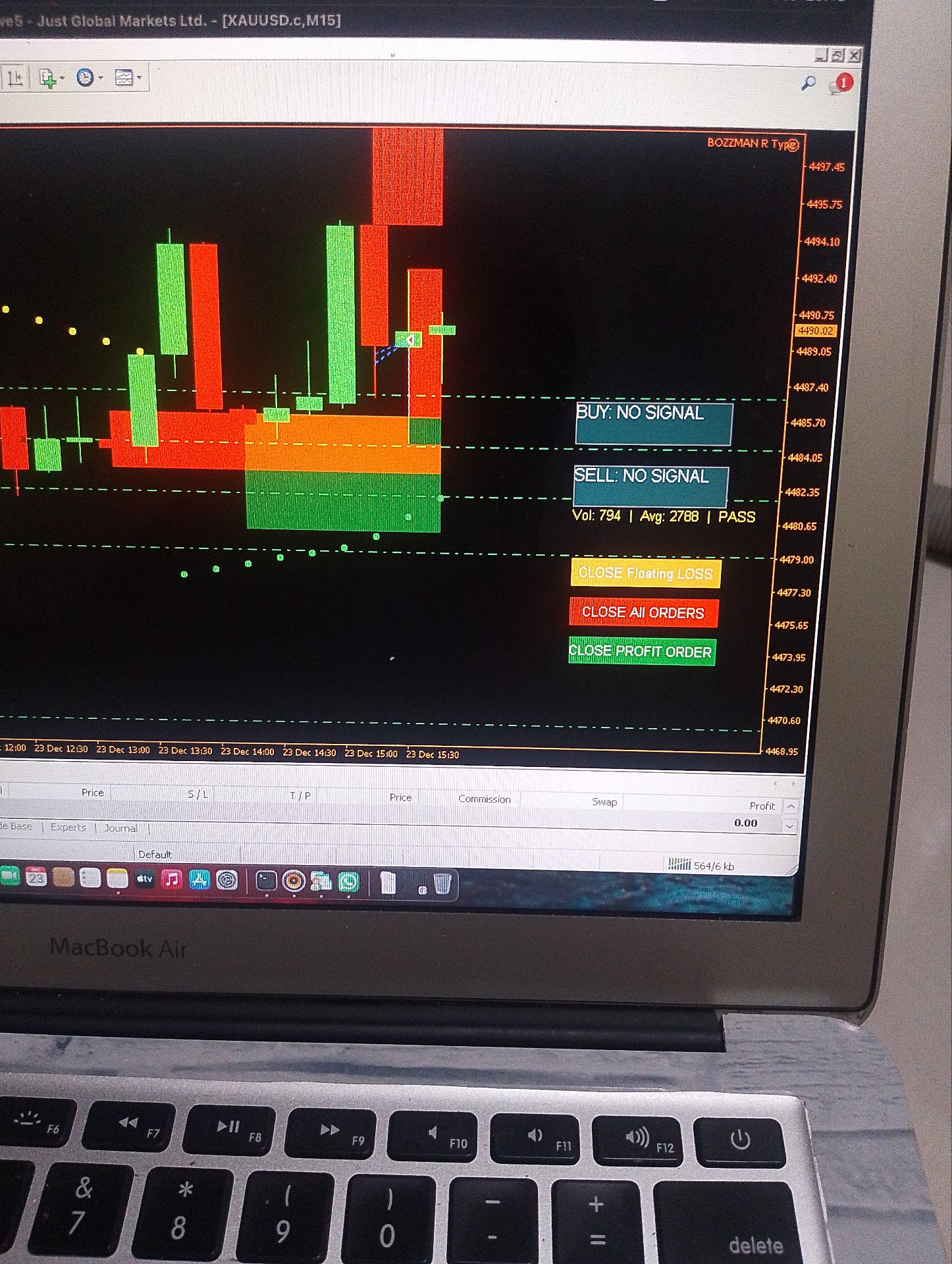
    @ifan afianBoth sell and buy have no signals to give, let us see which side gives one first
    ifan afian flag
    Kung Fu
    @Kung FuI'll just choose the top one, friend... because it's close to the moon hahaha
    Size flag
    ifan afian
    still watching hahaha
    @ifan afianWatching can be just as profitable as trading sometimes patience is key.
    Lord Yellow Mountain flag
    Visxa Benfica
    @Lord Yellow MountainWhy can't we men participate?
    @Visxa Benfica only the lucky ones will participate
    trish flag
    Visxa Benfica
    market on a bull run my brother
    Visxa Benfica flag
    Lord Yellow Mountain
    @Lord Yellow MountainActually, I would really like to participate too
    RPGFX flag
    ifan afian
    still watching hahaha
    @ifan afianAlso sitting out here and waiting for gold to dip enough before I take the next buy
    Visxa Benfica flag
    Lord Yellow Mountain
    @Lord Yellow MountainHahaha, I hope I'll be that lucky man
    Kung Fu flag
    ifan afian
    @ifan afianit's farther from the moon, and not even close at all
    RPGFX flag
    trish
    @trishYou mean gold right? I have been enjoying the bull run so far
    Visxa Benfica flag
    trish
    @trishFrom my perspective, this is just a slight risk-on at the end of the year, not a crazy surge yet
    EuroTrader flag
    ifan afian flag
    Visxa Benfica flag
    @trishThin liquidity makes it easy to reverse if the stock market corrects buddy
    ifan afian flag
    up and down 🤣🤣🤣🤣 .. US sesion is really something
    Type here...
    Add Symbol or Code

      No matching data

      All
      Trump Updates
      Recommend
      Stocks
      Cryptocurrencies
      Central Banks
      Featured News
      • All
      • Russia-Ukraine Conflict
      • Middle East Flashpoint
      • All
      • Russia-Ukraine Conflict
      • Middle East Flashpoint
      Search
      Products

      Charts Free Forever

      Chats Q&A with Experts
      Screeners Economic Calendar Data Tools
      Membership Features
      Data Warehouse Market Trends Institutional Data Policy Rates Macro

      Market Trends

      Market Sentiment Order Book Forex Correlations

      Top Indicators

      Charts Free Forever
      Markets

      News

      News Analysis 24/7 Columns Education
      From Institutions From Analysts
      Topics Columnists

      Latest Views

      Latest Views

      Trending Topics

      Top Columnists

      Latest Update

      Signals

      Copy Rankings Latest Signals Become a signal provider AI Rating
      Contests
      Brokers

      Overview Brokers Assessment Rankings Regulators News Claims
      Broker listing Forex Brokers Comparison Tool Live Spread Comparison Scam
      Q&A Complaint Scam Alert Videos Tips to Detect Scam
      More

      Business
      Events
      Careers About Us Advertising Help Center

      White Label

      Data API

      Web Plug-ins

      Affiliate Program

      Awards Institution Evaluation IB Seminar Salon Event Exhibition
      Vietnam Thailand Singapore Dubai
      Fans Party Investment Sharing Session
      FastBull Summit BrokersView Expo
      Recent Searches
        Top Searches
          Markets
          News
          Analysis
          User
          24/7
          Economic Calendar
          Education
          Data
          • Names
          • Latest
          • Prev

          View All

          No data

          Scan to Download

          Faster Charts, Chat Faster!

          Download App
          English
          • English
          • Español
          • العربية
          • Bahasa Indonesia
          • Bahasa Melayu
          • Tiếng Việt
          • ภาษาไทย
          • Français
          • Italiano
          • Türkçe
          • Русский язык
          • 简中
          • 繁中
          Open Account
          Search
          Products
          Charts Free Forever
          Markets
          News
          Signals

          Copy Rankings Latest Signals Become a signal provider AI Rating
          Contests
          Brokers

          Overview Brokers Assessment Rankings Regulators News Claims
          Broker listing Forex Brokers Comparison Tool Live Spread Comparison Scam
          Q&A Complaint Scam Alert Videos Tips to Detect Scam
          More

          Business
          Events
          Careers About Us Advertising Help Center

          White Label

          Data API

          Web Plug-ins

          Affiliate Program

          Awards Institution Evaluation IB Seminar Salon Event Exhibition
          Vietnam Thailand Singapore Dubai
          Fans Party Investment Sharing Session
          FastBull Summit BrokersView Expo

          Shuttered Shops, Empty Streets: Gaza Conflict Severely Impacts Tourism and Economy in the West Bank

          Devin

          Economic

          Palestinian-Israeli conflict

          Summary:

          The Israel-Hamas war has devastated the Palestinian economy, with the United Nations warning it could set Gaza and the West Bank back by more than a decade.

          For 60 years, the Star Street Inn guesthouse in Bethlehem has been essential to the livelihood of Mr. Ata Mohsen Serhan and his family.
          "This old house, I got it from my father. You can see a good view from here," he told CNA from the terrace of his business, which overlooks the neighbourhood.
          The income from guests staying at the lodging used to help provide for his three daughters and son.
          However, the inn, located along one of the oldest commercial streets in the ancient city, has been closed since the war between Israel and Hamas began last month.
          "I get money from this guesthouse for my family – food and other things," he said. "It is not a good life with this war."
          As the conflict rages on, Mr. Serhan said he is now considering leaving the tourism industry, and looking for a new job in engineering instead.
          Christmas Cancelled
          The holy city of Bethlehem is believed to be the birthplace of Jesus.
          It attracts more than a million tourists every year, particularly during the period leading up to Christmas.
          However, events have been cancelled this year due to the war. Religious ceremonies and prayers will still be observed, but there will be no festive lights or celebrations.
          Local authorities announced last week that they were dismantling Christmas trees and decorations installed several years ago, including in Manger Square in the heart of the city, where some of the biggest festivities typically take place.
          Since the conflict, tourists have fled, and intensive restrictions have brought businesses in the area to a standstill.
          With less than two months until Christmas, rows of shops are now shuttered along quiet and empty streets.
          Those that remain open said they are struggling to stay afloat due to a lack of visitors.
          Mr. Khalil Salahat, the owner of Old Cave souvenir shop, said firms that depend heavily on tourism – like his – make most of their revenue during this festive period.
          "We are in November now – the season time before Christmas. All the good Christian people, they come during this time to Bethlehem. We wait all year for these two months," he told CNA.
          "But now we have no tourists. Zero. We have nobody here. This has hurt our businesses and our lives."
          Palestinian tour guides said their industry has been struggling since the Israeli occupation of the West Bank in 1967, but the current war is exacerbating their struggles.
          Economic Impact
          On Oct 7, Hamas militants launched a surprise cross-border attack on Israel, killing more than 1,400 people and capturing about 240 others as hostages.
          Since then, Israel has retaliated with an offensive into the Gaza Strip, with an aim to wipe out the militant group. Gaza's Hamas-run government said at least 13,000 Palestinians have been killed.
          In the West Bank, Israeli forces have also carried out raids against militants.
          The conflict has heavily impacted the Palestinian economy, with the United Nations warning it could set Gaza and the West Bank back by more than a decade.
          A UN Development Programme report assessing the economic consequences of the war showed the territories' gross domestic product (GDP) suffered 4.2 per cent in the first month of conflict.
          It projects that the Palestinian economy is set to drop 8.4 per cent – a loss of US$1.7 billion – in the next month, thrusting nearly half a million more people into poverty.
          Some 390,000 Palestinians have lost their jobs since the war began, according to UN agency the International Labour Organization.
          This includes people from Gaza who work in the construction industry in Israel, whose work permits were cancelled following the attack by Hamas.
          "There is no future to look forward to anymore. For us, the future has ended because of the war," Gaza resident Hazem Abu Mghanam told CNA.
          Within the West Bank, some have found it difficult to get to work due to restrictions of movement, blocked roads and extra checkpoints affecting people's daily commutes.
          The UN warns that economic devastation will further worsen the already-dire humanitarian situation and make recovery prospects challenging and slow.

          Source: CNA

          To stay updated on all economic events of today, please check out our Economic calendar
          Risk Warnings and Disclaimers
          You understand and acknowledge that there is a high degree of risk involved in trading. Following any strategies or investment methods may lead to potential losses. The content on the site is provided by our contributors and analysts for information purposes only. You are solely responsible for determining whether any trading assets, securities, strategy, or any other product is suitable for investing based on your own investment objectives and financial situation.
          Comments
          Add to Favorites
          Share

          Argentina's Next President Milei Must Tame Inflation, Turn Around Economy

          Owen Li

          Economic

          Political

          Argentina's libertarian President-elect Javier Milei has won a closely fought election. Now comes the hard part: dealing with economic crises.
          Inflation is at 143%, net reserves of foreign currency are deep in the red, savers are ditching the peso, and a recession is looming – if not already here. Four in 10 Argentines live in poverty and a sharp peso devaluation is likely.
          Milei, who is pledging economic shock therapy such as shutting the central bank and dollarization, won a second-round runoff vote on Sunday with some 56% to rival Sergio Massa's 44%.
          Milei now faces the huge challenge of turning around the economy once he takes office on Dec. 10. Failure could lead to the already embattled country suffering a tenth sovereign debt default, poverty climbing and possible social unrest.
          "It is an economy that is in intensive care," said Miguel Kiguel, a former undersecretary of finance at the Economy Ministry in the 1990s.
          Inflation
          Argentina's high inflation rate creates huge distortions in markets and for consumers, with prices changing weekly. A central bank poll of analysts forecast 185% inflation by the end of the year.
          "One of the biggest challenges of the next administration will be to correct the distortion of relative prices that the economy has today," said Lucio Garay Mendez, economist at consulting firm EcoGo.
          "In a context of high inflation and a stabilization plan, a correction is inevitable."
          In a bid to tamp down inflation Argentina's central bank has hiked the benchmark interest rate to 133%, which encourages saving in pesos, but hurts access to credit and economic growth.
          Peso Controls
          Argentina's peso currency has been shackled by capital controls since a market crash in 2019, which has led to an unwieldy array of exchange rates, where dollars trade for well over twice the price of the official level near 350 per dollar.
          Popular unofficial exchange rates include the "blue" dollar, the MEP, and blue-chip swap, though demand for dollars through parallel channels has over time spawned dozens of different rates including a "Coldplay dollar" and "Malbec dollar."
          Milei has pledged to quickly undo capital controls and eventually dollarize the economy, while a sharp devaluation is likely in the near future to bring the official and parallel rates closer together.
          Central Bank Reserves
          Argentina's central bank reserves of foreign currency are near their lowest level since 2006, and in net terms are widely seen by analysts to be in negative territory after a major drought hit exports of key cash crops like soy, corn, and wheat.
          The low reserves threaten the country's ability to repay debts to major creditor the International Monetary Fund (IMF) and private bondholders, as well as cover key imports. Argentina will need to revamp its creaking $44 billion IMF program.
          The government has agreed on an extended currency swap with China to help cover some of its costs, and had to delay some payments to key trade partners such as Brazil.
          Recession
          Latin America's third-largest economy is on track to shrink 2% this year, according to the latest central bank analyst survey, partly due to the impact of the recent drought that cut corn and soy crops in half.
          Along with triple-digit inflation, that is likely to sharpen poverty levels, with two-fifths of people already living under the poverty line as salaries and savings are eroded.
          Silver linings?
          Argentina, rich in grains, shale gas and lithium, could see a boost next year as better rains help the harvest, a new gas pipeline trims reliance on costly imports, and demand rises for the lithium needed for electric vehicle batteries.
          Soy and corn are expected to have far stronger harvests, which will bring in much-needed foreign currency.
          "The harvest will help bring a greater flow of income in the economy, as will the greater production of (shale oil formation) Vaca Muerta," said Eugenio Marí, chief economist at Libertad y Progreso Foundation.

          Source: KFGO

          To stay updated on all economic events of today, please check out our Economic calendar
          Risk Warnings and Disclaimers
          You understand and acknowledge that there is a high degree of risk involved in trading. Following any strategies or investment methods may lead to potential losses. The content on the site is provided by our contributors and analysts for information purposes only. You are solely responsible for determining whether any trading assets, securities, strategy, or any other product is suitable for investing based on your own investment objectives and financial situation.
          Comments
          Add to Favorites
          Share

          Why India Is Set for An Equity Boom After Latest MSCI Additions

          Damon

          Stocks

          India's equity market is set to get a $1.5 billion boost with the addition of nine more stocks to the MSCI Emerging Markets Index, a benchmark tracked by investors with trillion of dollars under management.
          The rise in capital flows to Indian stocks is a reflection of strong market fundamentals and growing foreign investor interest in the equity market of Asia's third-largest economy, analysts say.
          "The addition to MSCI's EM Index is a significant development for India's stock markets … and is a testament to India's growing importance as an emerging market economy" says Amit Goel, co-founder and chief global strategist at Pace 360, an asset management company based in New Delhi.
          Global index provider MSCI raised India's weightage in its Global Standard (Emerging Markets) Index to 16.3 per cent from 15.9 per cent on Tuesday, a move that is likely to increase the flow of foreign funds after a two-year lull.
          This marks "a significant increase over the past three years, almost doubling its weight", Abhilash Pagaria, head of Nuvama Alternative and Quantitative Research, said in note last week.
          Foreign portfolio investors (FPIs), who generally use the MSCI indexes as a gauge to allocate their passive flows, have already bought 1.22 trillion Indian rupees ($14.64 billion) worth of Indian equities this year.
          They sold Indian shares worth 1.4 trillion rupees and 376.32 billion rupees on a net basis in fiscal 2022 and 2023, respectively, according to a Reuters report.
          The upgrade gives India the second-highest weightage on the index after China, which has about 30 per cent. The rejig is estimated to yield inflows of as much as $1.5 billion to Indian equities, Nuvama said in its note.
          The emerging markets gauge by MSCI captures a selection of large and mid-cap companies from 24 emerging market nations.
          The Indian equites that will be added to the index from November 30 include Tata Motors, IndusInd Bank, Suzlon Energy and One 97 Communications, the parent company of digital payments platform Paytm.
          With new additions and no deletion of Indian companies in the review means that India will have 131 companies on the index – the most the nation has had on the gauge.
          "It reflects a global acknowledgement of these companies, potentially leading to substantial foreign investment," says Suman Bannerjee, chief investment officer of Hedonova, a hedge fund investing in alternative assets.
          The move reflects "the growing validation of the India story", says Amar Ambani, group president and head of institutional equities at YES Securities India.
          "The interesting part is that the pace of additions is larger than every other emerging market, barring China," he said.
          On offer from India for foreign investors is a selection of businesses that give them access to a wide range of sectors of in one the fastest-growing economies in the world. That certainly is a factor helping to attract their interest, he adds.
          The country, which is the world's fifth-largest economy, is expected to overtake Japan to become the world's third-biggest economy by 2030 with a gross domestic product of $7.3 trillion, according to S&P Global Market Intelligence.
          India's equities are part of the country's growth story and analysts say that the impact of the nine stocks joining the MSCI index should not be underestimated.
          MSCI indexes are widely used as benchmarks by passive investment funds, including exchange-traded funds (ETFs) and other index-tracking investment vehicles, says Narendra Solanki, head of Mumbai-based research at Anand Rathi Shares and Stock Brokers.
          "These indexes are designed to represent the performance of the equity markets in various regions or countries, and they serve as important benchmarks for investors to measure the performance of their portfolios against."
          Any changes in the constituent stocks of the MSCI Global Standard Indexes or adjustments in their weight can have a significant impact on the composition of passive portfolios, he adds.
          "For example, if a stock is added to the index, passive funds that track the index will need to buy that stock to maintain alignment with the index [parameters]," he says. "Conversely, if a stock is removed from the index, funds will sell that stock."
          "Changes are often anticipated by the market" and this often results in significant trading of those equities ahead of the actual inclusion, Mr. Solanki says.
          The positive impact of post and pre-inclusion trading can also be felt across the market.
          "The addition of Indian stocks to the MSCI Index can contribute to overall market bullishness, as it signals confidence in the Indian market from international investors," says Mr. Solanki.
          "This positive sentiment can attract more foreign capital [from active investors] and boost the valuations of other stocks in the market."
          Indian stock markets have rallied this year, hitting record highs in September. They did, however, suffer a setback in recent weeks, driven by elevated U.S. Treasury yields, investor sentiment souring globally amid the Israel-Gaza war and concerns about overvaluation of Indian equities.
          In the past two weeks, the market has recovered some of the lost ground, with the benchmark BSE Sensex on Friday closing at 65,794.73. It is still off its all-time high of 67,927.23, which it touched in mid-September.
          The index is up 7.56 per cent since the start of this year, a stronger performance than some of the other major markets, including London's FTSE 100, which is down 0.66 per cent year-to-date, and the Shanghai Composite Index, which has fallen 1.99 per cent this year.
          The country's strong economic growth momentum is big lure for global investors, Mr. Goel says, adding that the recent lull in the equities market is only temporary, and that the outlook remains bright.
          "FIIs have been net sellers in the Indian market since August but we expect positive inflows over next four to six weeks as the macro backdrop has improved significantly since October end," he says.
          "The Nifty [the flagship index on the National Stock Exchange] possibly touching a new all-time high in December."
          The country is also benefiting as "challenges faced by Chinese economy and concern over its recovery" have diverted some of the global foreign investment towards India, Mr. Solanki says.
          The MSCI China Index is down by 9 per cent this year, while the MSCI India gauge has risen and is poised for its fifth annual gain in 2023, according to Bloomberg.
          The Indian benchmark has maintained the upwards trajectory despite headwinds.
          "Given the Israel-Hamas conflict, adding to existing headwinds of high interest rates and China deflation, the sentiment globally has been lukewarm," says Mr. Ambani.
          "FIIs have sold emerging market equities in recent times and India was no exception," he says. "Having said that, overall FII flows into Indian stocks have been positive in 2023."
          Global funds have injected more than $12 billion into Indian equities in 2023 so far, Bloomberg reports.
          "As for the outlook, I think it appears optimistic for Indian equities," Mr. Bannerjee says.
          "The attention from global indices, particularly MSCI, and the projected inflows into specific stocks reflect confidence in India's economic and market potential."
          It is, however, essential to "exercise caution and monitor external factors" including global economic conditions, geopolitical developments as well as and domestic policy changes, he adds.
          There is "growing confidence" and that "our sense is that India’s footing will further strengthen in the index", driven by its well-rounded opportunity compared to other heavyweights in the index such as China and Taiwan, says Manish Chowdhury, head of research at broker StoxBox.
          Foreign investors are encouraged by India's "proactive government measures, improved corporate earnings visibility, better fiscal and monetary policy management, and a growing opportunity", Mr. Chowdhury adds.

          Source: The National News

          Risk Warnings and Disclaimers
          You understand and acknowledge that there is a high degree of risk involved in trading. Following any strategies or investment methods may lead to potential losses. The content on the site is provided by our contributors and analysts for information purposes only. You are solely responsible for determining whether any trading assets, securities, strategy, or any other product is suitable for investing based on your own investment objectives and financial situation.
          Comments
          Add to Favorites
          Share

          Bearish Unwind into Thanksgiving

          ING

          Forex

          USD: Thanksgiving uniwnd
          The dollar has fallen nearly 2% since last Tuesday's US CPI release strongly suggested that the Federal Reserve's tightening cycle was over. The dollar's decline has been broad-based, meaning that even the unloved Japanese yen has found a few friends. However, the move looks to be one of short-covering on bearish positions elsewhere in the world rather than a major re-assessment of the Fed easing cycle. In fact, short-dated US yields, which we see as key for next year's dollar decline, have barely budged over the last few days.
          Given the major US Thanksgiving public holiday on Thursday, we suspect this period of position-unwind can continue a little further. Inputs into FX markets this week will include second-tier US data and the release of minutes to the 1 November FOMC meeting. Recall this was the meeting where the Fed retained its tightening bias but included an acknowledgement that tighter financial conditions were doing some of the Fed's work. The market seems in the mood to look out for some dovish headlines here, and this can prove a negative dollar event risk tomorrow evening.
          DXY has decent support at 103.50, marking the 50% retracement of its rally from July. This could mark the lower boundary of this week's trading range, while the top could be the 104.40/50 area.
          Elsewhere, libertarian candidate Javier Milei won a decisive victory in run-off elections for the Argentine presidency. He has run on a ticket of shrinking the government and even dollarising the economy. Given the parlous state of public finances and the very low representation of his party in Congress, it looks as though it will take some time to push reforms through. Investors and corporates will be keen, however, to see developments in the exchange rate. The official rate is ARS350/USD, the 'blue' kerb rate is ARS920/USD, and the 12-month NDF outright is around ARS1600/USD. We discussed some of the challenges to dollarisation in an previous article.
          EUR: Good tidings from Moody's
          The euro received some surprisingly welcome news on Friday evening when the ratings agency Moody's Investors Service raised the outlook for Italian sovereign debt to stable from negative while increasing Portugal's ratings by two notches to A3. The market had been speculating about a possible downgrade to Italy last week.
          The news comes at a time when the dollar is undergoing a broad correction and has allowed EUR/USD to trade over 1.09. We see good resistance for EUR/USD at 1.0950/60 this week, and failure to break that on tomorrow's FOMC minute event risk could then see EUR/USD settling into some kind of 1.0860-1.0960 range.
          Apart from the myriad of ECB speakers this week, the calendar highlight will be the eurozone November PMis released on Thursday. These have been a (negative) market mover over recent months, and our eurozone macro team sees little room for improvement here,
          Thursday also sees a Riksbank policy meeting. It is a very close call, but we and a thin majority see the Riksbank hiking the policy rate by 25bp to 4.25%. This should be a mild positive for the Swedish krona.
          GBP: Focus on tax cuts
          Unsurprisingly, as we head into an election year, the UK Chancellor is looking at ways to reduce taxes. The focus this week is on the Autumn Statement, where we think Jeremy Hunt might have around £16bn to play with, given the better fiscal trajectory than expected. Speculation over tax cuts has centred on inheritance tax and perhaps even income tax and national insurance, which would favour workers at the lower end of the income spectrum. Our UK economist does not, however, think this moves the needle for the Bank of England rate story, where we think rates have peaked and the BoE will start easing next August.
          Speculation over tax costs in a risk-positive environment should be good news for sterling. GBP/USD can push up to 1.2590, while EUR/GBP can correct back to 0.8700 this week.
          CEE: Mixed picture for the FX in the region
          Today's calendar is basically empty, and it won't get interesting until tomorrow. In Poland, industrial and labour market data will be published on Tuesday. Later we will see a decision from the National Bank of Hungary (NBH). We agree with the market and expect another 75bps rate cut, which was telegraphed last week by the deputy governor. Then, on Wednesday, we will see Polish retail sales. On Thursday, the Turkish central bank will raise rates again, by 250bps to 37.5% in our view. On Friday, Moody's will publish a rating review of the Czech Republic, where it has held a negative outlook for more than a year. We see some chance for an improvement to the stable outlook here.
          In the FX market, the forint reacted negatively to falling rates on Friday for the first time since the last NBH meeting, closing the divergence between FX and rates. However, this week will be key for the central bank meeting and communication and maybe new headlines coming from the EU story. We could very likely see higher volatility than in previous weeks, but given Friday's depreciation, we are rather positive on the HUF. This should see it return to 376 EUR/HUF later this week.
          In Poland, data this week should confirm the economic recovery, which could give impetus to markets to price out rate cuts in the short term. As we mentioned on Friday, we saw the appreciation in the last two days as premature, and EUR/PLN returned to 4.380, which we now see as fair value. But the short end of the curve, in our view, has a lot of potential to unwind some rate cuts from current expectations. This should be the main driver for PLN this week in our view, and 4.360 is thus a matter of time this week.
          The Czech koruna, on the other hand, is following falling market rates, which should remain unchanged this week. The breakdown in the interest rate differential over the last two days to basically the levels prior to the last CNB meeting opens the way to EUR/CZK 24.600 in our view. And we can expect more this week after central bankers return to the headlines and re-open the question of rate cuts in December.
          Risk Warnings and Disclaimers
          You understand and acknowledge that there is a high degree of risk involved in trading. Following any strategies or investment methods may lead to potential losses. The content on the site is provided by our contributors and analysts for information purposes only. You are solely responsible for determining whether any trading assets, securities, strategy, or any other product is suitable for investing based on your own investment objectives and financial situation.
          Comments
          Add to Favorites
          Share

          Oil Gains on OPEC Speculation

          Swissquote

          Energy

          The previous week marked a significant shift in market sentiment regarding Federal Reserve (Fed) rate hike expectations. The latest Consumer Price Index (CPI) update revealed a slower-than-anticipated inflation rate in the US, coupled with politicians averting a government shutdown. Despite these factors, the US 2-year yield tested 4.80% for the fourth time, while the 10-year yield briefly dipped below 4.40%. The term premium on the US 10-year paper, which surged to 50 basis points the previous month due to hawkish Fed expectations, political risks, and increased government bond supply, has nearly vanished amid the recent rally. This suggests that, at current levels, investors may require renewed conviction to sustain buying momentum.
          Attention is now focused on the closely watched US 20-year bond auction, considering the recent weakness in the 10 and 30-year bond auctions. The outcome may influence a potential rebound or continuation of the rally in US bond yields. The minutes from the latest Federal Reserve (Fed) policy meeting, set for release tomorrow, will likely emphasize that the Fed's decision to pause rate hikes was influenced by the rise in US long-term yields in October. With the subsequent decrease in yields, interpretations may vary, either signaling Fed caution due to falling yields or a belief that inflationary pressures have subsided, leading to a halt in rate hikes.
          All eyes on Nvidia
          The S&P500 closed above the psychological level of 4500, and the Nasdaq 100 approached its summer peak ahead of Nvidia's earnings announcement. Nvidia has experienced substantial gains with expectations of a significant revenue increase in Q3. The stock price has been up 240+% since the beginning of the year, and 350+% since October 2022. The company predicted that its sales would soar to $16bn last quarter. A wide gap between demand and supply should keep Nvidia on track for extended growth. But any deviation from optimistic projections could trigger heavy profit-taking.
          Elsewhere, US stock optimism extends globally, with the European Stoxx testing the 200-DMA resistance and the Japanese Nikkei reaching a 33-year high. Japan's supportive central bank, a cheap yen, and strong company earnings contribute to investor interest.
          FX and energy
          The USDJPY fell below the 50-DMA and the EURJPY retreated from a record high. There is one reasonable direction for the yen at the current levels: a positive correction. But no one knows when the Bank of Japan's (BoJ) astonishing push back against normalizing policy will end. Japan is expected to announce a rise in inflation to 3% this Friday.
          The EURUSD extends gains above 1.09 this morning on the back of a broad-based USD selloff. The next target for euro bulls is 1.10, contingent on sustained USD weakness. However, the US dollar index flirts with oversold conditions and tests critical 200-DMA support, indicating a potential pause in the ongoing dollar selloff absent fresh news.
          In energy, US crude recovers as speculation that OPEC could extend production cuts throws a floor under the recent selloff. The next OPEC meeting is scheduled for November 26th and Saudi considers doubling its 1mbpd supply cut. It's a risky move and it could go both ways. Oil prices are trending lower today because of a weakening global outlook. Therefore, whether this move – in hurry -attracts buyers or exacerbates the current global economic concerns remains to be seen. Monitoring this week's price action will provide insights into whether to sell a potential post-OPEC rally or seize opportunities on a bullish trend. If the excitement regarding Saudi doubling its supply cuts can't push the price of a barrel above $80-81pb range, it's probably better to sell the tops.
          Risk Warnings and Disclaimers
          You understand and acknowledge that there is a high degree of risk involved in trading. Following any strategies or investment methods may lead to potential losses. The content on the site is provided by our contributors and analysts for information purposes only. You are solely responsible for determining whether any trading assets, securities, strategy, or any other product is suitable for investing based on your own investment objectives and financial situation.
          Comments
          Add to Favorites
          Share

          Dollar Weakens, Yen Strengthens, and Nikkei's New Highs

          Samantha Luan

          Central Bank

          Economic

          Forex

          Dollar's selloff intensified in today's Asian session, underpinned by strong risk-on sentiment prevalent in the market. This move was particularly evident in USD/JPY, which saw broke through an important near-term support level around the 149 mark, signaling the prospect for further decline. Yen's strength was mirrored by Chinese Yuan, while the Australian and New Zealand Dollars emerged as the strongest performers in the current environment so far. In contrast, Euro and Canadian Dollar, despite making noticeable gains against Dollar, ranked as the second and third weakest major currencies. Sterling and Swiss Franc, meanwhile, showed mixed performance.
          Another notable development is in the Japanese stock market, as Nikkei index briefly reached a new high, not seen in over three decades. This spike in the index represented an attempt to break out from a consolidation phase that has persisted for five months. Despite this bullish signal, the response from cautious investors was somewhat restrained, indicating a level of uncertainty still present in the market.
          The rally in Japanese stocks was seen primarily led by financial shares, likely driven by investor expectations of a shift in BoJ longstanding negative rates policy. This sentiment could be further amplified by this week's upcoming CPI data from Japan. If the CPI data reinforces expectations of a policy shift by BoJ, it might trigger another round of buying in Japanese equities and could lend additional strength to Yen too.
          This week, the spotlight in financial markets shifts to the minutes from major central banks including Fed, ECB, and RBA, along with BoE's monetary policy report hearing. Additionally, a plethora of economic data releases will be in focus, including CPI figures from Canada and Japan, Germany's Ifo business climate index, and US durable goods orders. PMI data from Australia, Eurozone, UK, Japan will also provide key insights into global economic conditions.
          Technically, NZD/USD is ready for a second attempt on breaking 0.6054 resistance, after bouncing from 55 D EMA last week. Decisive break of this resistance will bolster the case that medium term corrective fall from 0.6537 has completed with three waves down to 0.5771. Further rally should then be see towards trendline resistance at around 0.6316 next.Dollar Weakens, Yen Strengthens, and Nikkei's New Highs_1
          In Asia, Nikkei closed down -0.63% after hitting as high as 33853. Hong Kong HSI is up 1.63%. China Shanghai SSE is up 0.40%. Singapore Strait Times is down -0.73%. Japan 10-year JGB yield is down -0.001 at 0.747.

          Yuan extends rebound after China maintains 1-yr and 5-yr LPR

          As reported by the National Interbank Funding Center today, China's one-year loan prime rate retains is unchanged 3.45%. Similarly, the over-five-year LPR, a critical determinant of mortgage rates, is also steady at 4.2%.
          The LPR, derived from the quotations by various banks with adjustments based on the open-market operation rates, serves as a pivotal indicator for loan pricing. This stability comes in the wake of PBoC's substantial liquidity injection of CNY 1.45 into the market through the medium-term lending facility last week, maintaining an interest rate of 2.5%.
          USD/CNH extends the decline from 7.3679 to as low as 7.1696 so far. Technically, near term outlook will now stay bearish as long as 7.2684 resistance holds, next target is 7.1154 cluster support (38.2% retracement of 6.6971 to 7.3679 at 7.1117). Reaction from there will reveal whether USD/CNH is already reversing whole up trend form 6.6971 to 7.3679.Dollar Weakens, Yen Strengthens, and Nikkei's New Highs_2

          Fed, ECB, and RBA minutes, alongside global PMIs, to define the week's economic agenda

          This week in the financial markets, the focus is keenly set on the activities of various major central banks, including minutes of Fed, ECB and RBA. Additionally, BoE's monetary policy report hearing might provide some valuable perspectives.
          Fed's minutes from the October 31-November 1 meeting, slated for an unusual Tuesday release, are expected to offer a peek into the internal debate over future rate hikes. Despite a diverse range of opinions likely to be presented, the minutes might not provide significant guidance on Fed's next steps. A critical takeaway, however, is Fed's commitment to maintaining a “sufficiently restrictive” interest rate policy for long enough to tame inflation. The ambiguity surrounding what constitutes “sufficient” and the duration of this stance leaves room for speculation, underscoring the need for December economic projections to shape further decisions.
          Turning to ECB, the accounts from its October meeting are not expected to diverge significantly from the current market understanding. ECB officials have consistently communicated that maintaining the current interest rate level should, over time, return inflation to its target. However, like Fed, ECB considers discussions on rate cuts to be premature.
          In Australia, RBA's recent 25 basis point rate hike aligns with expectations following robust Q3 and September CPI data. The forthcoming release of the minutes will likely provide deeper insight into RBA's decision-making process. The central bank has expressed a low tolerance for inflation surprises, indicating readiness for further action if necessary. However, any additional rate hikes are not anticipated until after Q4 data is reviewed, which is expected to be available by their February meeting.
          For BoE, the upcoming parliamentary hearing will likely focus on Governor Andrew Bailey's interpretation of the recent CPI data, which came in below expectations. Bailey will likely reiterate that the UK is now in a stage of fast disinflation, but it's still soon to declare victory.
          Beyond central bank activities, the week is also rich in global economic data releases. CPI figures from Canada and Japan, Germany's Ifo business climate, and US durable goods orders will be closely monitored. However, PMI data from Australia, Eurozone, UK, Japan, and to a lesser extent US, will be particularly telling. These data points are crucial in assessing the slowdown in various global economies and the looming risks of recession.
          Here are some highlights for the week:
          • Monday: Germany PPI.
          • Tuesday: New Zealand trade balance; RBA minutes; Swiss trade balance; Canada CPI; US existing home sales, FOMC minutes.
          • Wednesday: US jobless claims, durable goods orders.
          • Thursday: Australia PMIs; Eurozone PMIs, ECB meeting accounts; UK PMIs.
          • Friday: New Zealand retail sales; Japan CPI, PMI manufacturing; Germany Ifo, GDP final; Canada retail sales; US PMIs.

          USD/JPY Daily Outlook

          USD/JPY's break of 149.17 support should confirm rejection by 151.93 resistance. Intraday bias is back on the downside for channel support medium term channel support at 145.80. On the downside, though, above 150.03 minor resistance will turn intraday bias neutral first.
          Dollar Weakens, Yen Strengthens, and Nikkei's New Highs_3In the bigger picture, focus stays on 151.93 resistance (2022 high). Rejection by 151.93, followed by sustained break of 145.06 resistance turned support will argue that rise from 127.20 has completed, and turn outlook bearish for 137.22 support and below, as the third leg of the long-term range pattern from 151.93. However, sustained break of 151.93 will confirm resumption of long term up trend.

          Dollar Weakens, Yen Strengthens, and Nikkei's New Highs_4Source: ActionForex

          To stay updated on all economic events of today, please check out our Economic calendar
          Risk Warnings and Disclaimers
          You understand and acknowledge that there is a high degree of risk involved in trading. Following any strategies or investment methods may lead to potential losses. The content on the site is provided by our contributors and analysts for information purposes only. You are solely responsible for determining whether any trading assets, securities, strategy, or any other product is suitable for investing based on your own investment objectives and financial situation.
          Comments
          Add to Favorites
          Share

          Japanese Stocks Party Like It's 1990

          Thomas

          Stocks

          Economic

          It's been a mixed start for most of Asia in this holiday-truncated week, though Japanese shares extended their bull streak to hit highs not seen since 1990.
          The Nikkei is up more than 8 per cent so far this month, and almost 29 per cent for the year so far. The broader Topix is up 26 per cent on the year but still only trades at a price to earnings ratio of 14. That compares to 23 for the S&P 500 and almost 29 for the Nasdaq.
          The entire market capitalisation of the Topix is 454 trillion yen ($3.03 trillion), yet Japanese companies held 555 trillion yen in internal reserves at the end of the financial year. Half of the listed Japanese companies trade at below book value, and in aggregate hold 20 per cent more cash than their market cap.
          Corporate profits ex-financials reached a record high of 32 trillion yen in the April-June quarter and recent earnings results have shown the benefit of a weak yen and the return of some pricing power after decades of deflation.
          Recent surveys show inflation expectations are finally picking up which may prompt households to invest some of the 1,000 trillion yen they currently keep in cash and deposits into equities and bonds.
          Japan consumer price data for October are due Friday and are forecast to show core rates moved back up to 3.0 per cent, some way above the Bank of Japan's 2 per cent target.
          A strong wage round and early signs of more bumper pay awards for next year are stoking speculation the BOJ will finally unwind its uber-easy policy, and maybe even turn rates positive - a major boon for financial sector stocks.
          China's central bank kept its main rates steady on Monday as widely expected, but did set another firm fix for the yuan that saw the dollar slip under 7.2000 and fall more broadly.
          There were media reports Israel, the United States and Hamas had reached a tentative agreement to free dozens of hostages in Gaza in exchange for a five-day pause in fighting, but no confirmation as yet.
          S&P 500 and Nasdaq futures were trading a fraction softer on Monday, but are still up sharply on the year so far driven by huge gains in the seven mega-cap darlings.
          Tech major Nvidia reports quarterly results on Tuesday, and all eyes will be on the state of demand for its AI related products.
          The Black Friday sales will test the pulse of the consumer-driven U.S. economy this week, while the Thanksgiving holiday will make for thin trading.
          The flow of U.S. economic data turns to a trickle this week, but minutes of the Federal Reserve's last meeting will offer some colour on policy makers' thinking as they held rates steady for a second time.
          Markets are clearly vulnerable to any hawkish hints given they have priced in early and aggressive easing for 2024.
          Futures imply zero chance of a further hike in December or next year, and imply a 30 per cent chance of an easing starting in March. Futures also imply around 100 basis points of cuts for 2024, up from 77 basis points before the benign October inflation report roiled markets.
          Key developments that could influence markets on Monday:
          - German PPI for October, EU construction output
          - Appearances by Bank of France Governor de Galhau, Bank of Spain Governor de Cos, Bank of England Governor Bailey
          - Fed's Barkin appears on TV
          ($1 = 149.6200 yen)

          Source: Reuters

          To stay updated on all economic events of today, please check out our Economic calendar
          Risk Warnings and Disclaimers
          You understand and acknowledge that there is a high degree of risk involved in trading. Following any strategies or investment methods may lead to potential losses. The content on the site is provided by our contributors and analysts for information purposes only. You are solely responsible for determining whether any trading assets, securities, strategy, or any other product is suitable for investing based on your own investment objectives and financial situation.
          Comments
          Add to Favorites
          Share
          FastBull
          Copyright © 2025 FastBull Ltd

          728 RM B 7/F GEE LOK IND BLDG NO 34 HUNG TO RD KWUN TONG KLN HONG KONG

          TelegramInstagramTwitterfacebooklinkedin
          App Store Google Play Google Play
          Products
          Charts

          Chats

          Q&A with Experts
          Screeners
          Economic Calendar
          Data
          Tools
          Membership
          Features
          Function
          Markets
          Copy Trading
          Latest Signals
          Contests
          News
          Analysis
          24/7
          Columns
          Education
          Company
          Careers
          About Us
          Contact Us
          Advertising
          Help Center
          Feedback
          User Agreement
          Privacy Policy
          Personal Information Protection Statement
          Business

          White Label

          Data API

          Web Plug-ins

          Poster Maker

          Affiliate Program

          Risk Disclosure

          The risk of loss in trading financial instruments such as stocks, FX, commodities, futures, bonds, ETFs and crypto can be substantial. You may sustain a total loss of the funds that you deposit with your broker. Therefore, you should carefully consider whether such trading is suitable for you in light of your circumstances and financial resources.

          No decision to invest should be made without thoroughly conducting due diligence by yourself or consulting with your financial advisors. Our web content might not suit you since we don't know your financial conditions and investment needs. Our financial information might have latency or contain inaccuracy, so you should be fully responsible for any of your trading and investment decisions. The company will not be responsible for your capital loss.

          Without getting permission from the website, you are not allowed to copy the website's graphics, texts, or trademarks. Intellectual property rights in the content or data incorporated into this website belong to its providers and exchange merchants.

          Not Logged In

          Log in to access more features

          FastBull Membership

          Not yet

          Purchase

          Become a signal provider
          Help Center
          Customer Service
          Dark Mode
          Price Up/Down Colors

          Log In

          Sign Up

          Position
          Layout
          Fullscreen
          Default to Chart
          The chart page opens by default when you visit fastbull.com