Markets
News
Analysis
User
24/7
Economic Calendar
Education
Data
- Names
- Latest
- Prev




Signal Accounts for Members
All Signal Accounts
All Contests


U.S. Average Hourly Wage MoM (SA) (Dec)A:--
F: --
U.S. Average Weekly Working Hours (SA) (Dec)A:--
F: --
P: --
U.S. New Housing Starts Annualized MoM (SA) (Oct)A:--
F: --
U.S. Total Building Permits (SA) (Oct)A:--
F: --
P: --
U.S. Building Permits MoM (SA) (Oct)A:--
F: --
P: --
U.S. Annual New Housing Starts (SA) (Oct)A:--
F: --
U.S. U6 Unemployment Rate (SA) (Dec)A:--
F: --
P: --
U.S. Manufacturing Employment (SA) (Dec)A:--
F: --
U.S. Labor Force Participation Rate (SA) (Dec)A:--
F: --
P: --
U.S. Private Nonfarm Payrolls (SA) (Dec)A:--
F: --
U.S. Nonfarm Payrolls (SA) (Dec)A:--
F: --
U.S. Average Hourly Wage YoY (Dec)A:--
F: --
U.S. Government Employment (Dec)A:--
F: --
P: --
U.S. UMich Consumer Expectations Index Prelim (Jan)A:--
F: --
P: --
U.S. UMich Consumer Sentiment Index Prelim (Jan)A:--
F: --
P: --
U.S. UMich Current Economic Conditions Index Prelim (Jan)A:--
F: --
P: --
U.S. UMich 1-Year-Ahead Inflation Expectations Prelim (Jan)A:--
F: --
P: --
U.S. UMich 5-Year-Ahead Inflation Expectations Prelim YoY (Jan)A:--
F: --
P: --
U.S. 5-10 Year-Ahead Inflation Expectations (Jan)A:--
F: --
P: --
U.S. Weekly Total Oil Rig CountA:--
F: --
P: --
U.S. Weekly Total Rig CountA:--
F: --
P: --
Indonesia Retail Sales YoY (Nov)A:--
F: --
P: --
Euro Zone Sentix Investor Confidence Index (Jan)A:--
F: --
P: --
India CPI YoY (Dec)A:--
F: --
P: --
Canada National Economic Confidence IndexA:--
F: --
P: --
Germany Current Account (Not SA) (Nov)A:--
F: --
P: --
U.S. Conference Board Employment Trends Index (SA) (Dec)A:--
F: --
China, Mainland M0 Money Supply YoY (Dec)--
F: --
P: --
China, Mainland M2 Money Supply YoY (Dec)--
F: --
P: --
China, Mainland M1 Money Supply YoY (Dec)--
F: --
P: --
Richmond Federal Reserve President Barkin delivered a speech.
U.S. 3-Year Note Auction Yield--
F: --
P: --
U.S. 10-Year Note Auction Avg. Yield--
F: --
P: --
New York Federal Reserve President Williams delivered a speech.
Japan Trade Balance (Customs Data) (SA) (Nov)--
F: --
P: --
Japan Trade Balance (Nov)--
F: --
P: --
U.K. BRC Overall Retail Sales YoY (Dec)--
F: --
P: --
U.K. BRC Like-For-Like Retail Sales YoY (Dec)--
F: --
P: --
Turkey Retail Sales YoY (Nov)--
F: --
P: --
U.S. NFIB Small Business Optimism Index (SA) (Dec)--
F: --
P: --
Brazil Services Growth YoY (Nov)--
F: --
P: --
Canada Building Permits MoM (SA) (Nov)--
F: --
P: --
U.S. CPI MoM (SA) (Dec)--
F: --
P: --
U.S. CPI YoY (Not SA) (Dec)--
F: --
P: --
U.S. Real Income MoM (SA) (Dec)--
F: --
P: --
U.S. CPI MoM (Not SA) (Dec)--
F: --
P: --
U.S. Core CPI (SA) (Dec)--
F: --
P: --
U.S. Core CPI YoY (Not SA) (Dec)--
F: --
P: --
U.S. Core CPI MoM (SA) (Dec)--
F: --
P: --
U.S. Weekly Redbook Index YoY--
F: --
P: --
U.S. New Home Sales Annualized MoM (Oct)--
F: --
P: --
U.S. Annual Total New Home Sales (Oct)--
F: --
P: --
U.S. Cleveland Fed CPI MoM (SA) (Dec)--
F: --
P: --
U.S. Cleveland Fed CPI MoM (Dec)--
F: --
P: --
China, Mainland Exports (Dec)--
F: --
P: --
China, Mainland Imports YoY (CNH) (Dec)--
F: --
P: --
China, Mainland Imports (CNH) (Dec)--
F: --
P: --
China, Mainland Trade Balance (CNH) (Dec)--
F: --
P: --
China, Mainland Imports YoY (USD) (Dec)--
F: --
P: --
China, Mainland Exports YoY (USD) (Dec)--
F: --
P: --
U.S. EIA Short-Term Crude Production Forecast For The Next Year (Jan)--
F: --
P: --


No matching data
Latest Views
Latest Views
Trending Topics
Top Columnists
Latest Update
White Label
Data API
Web Plug-ins
Affiliate Program
View All

No data

Remarks of Officials

Political

Central Bank

Daily News

Data Interpretation

Traders' Opinions

Forex

Stocks

Commodity

Economic

Bond
Trump's probe into Fed Chair Powell ignited market turmoil, threatening central bank independence and global rates.
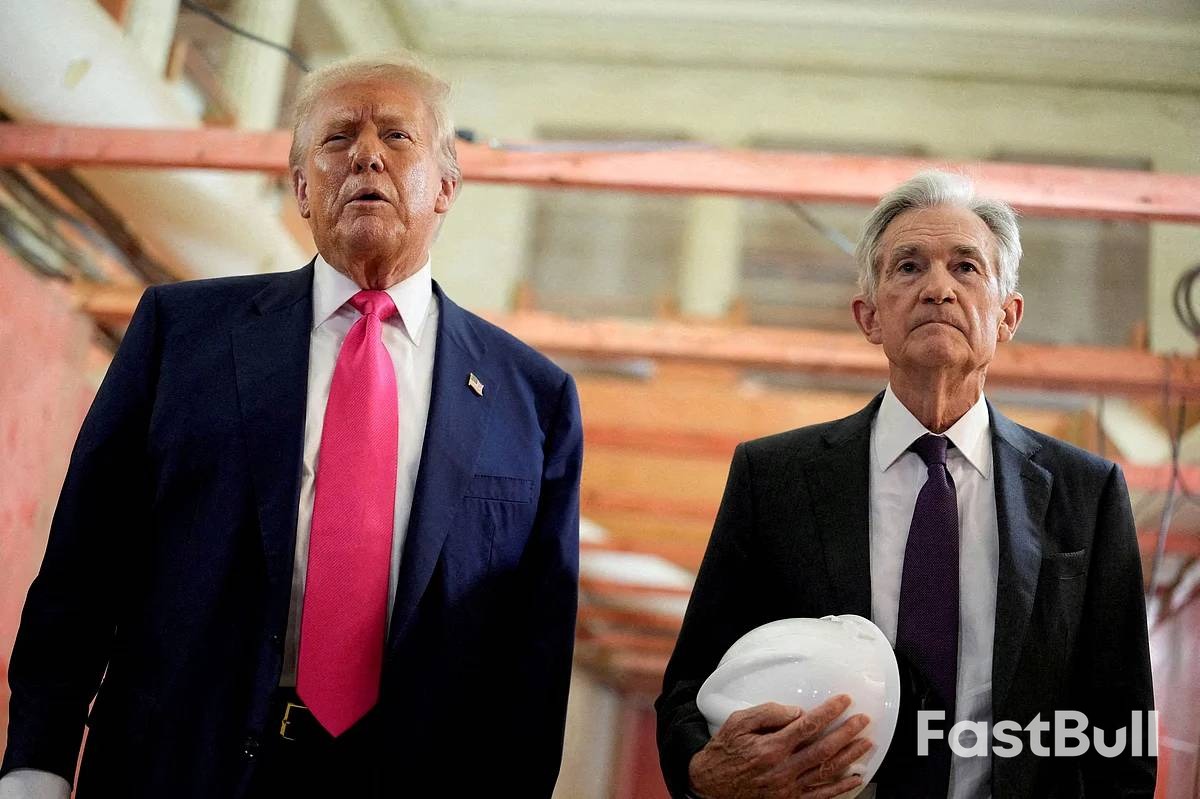
Global investors were sent reeling Monday after the conflict between US President Donald Trump and Federal Reserve Chair Jerome Powell escalated dramatically. A criminal investigation has reportedly been opened into Powell by the US attorney's office in Washington D.C., focusing on the central bank's headquarters renovation.
The market reaction was swift and negative. Ahead of the US open, S&P 500 and Nasdaq futures both fell by more than 0.6%. The VIX "fear gauge" saw its biggest jump since November, while gold, a classic hedge against turmoil, surged to $4,600 an ounce.
With the once-sacred independence of the US central bank now in question, market participants are speculating the investigation is a political power play designed to pressure the Fed into cutting interest rates more aggressively. Powell's term is set to end in May 2026, and Trump, who will name his successor this month, is widely expected to choose a candidate who favors faster monetary easing.
This development amplifies existing concerns about political interference undermining the Fed's credibility. "We had already expected that the Fed would remain challenged by pressures from the White House and that in 2026 there would effectively be 'two Feds'," noted Edward Bell, Acting Chief Economist at Emirates NBD. He explained this refers to "the current Fed with Powell as chair and a post-May Fed when a new chair is appointed." Bell added that public disagreements among policymakers were already confusing the Fed's messaging, and this new threat will "further cloud the Fed's freedom of action."
Vijay Valecha, chief investment officer at Century Financial, warned of the potential consequences. "If this situation is not resolved soon, it could lead to more market volatility, a higher equity risk premium, and a further weakening of the greenback," he said. "We could also see greater inflows into safe-haven instruments such as precious metals and treasuries."
The turmoil is being watched closely by Gulf Cooperation Council (GCC) states. With most of their currencies pegged to the US dollar (except for the Kuwaiti Dinar), their monetary policy is closely tied to the Fed's decisions. When the Fed lowered rates last year, central banks across the region followed suit. Analysts expect regional banks will match the Fed's anticipated 75bps cut in 2026.
While lower rates are welcome, their impact may be limited. "Activity indicators for 2025 show that the economies of the UAE and Saudi Arabia had been performing well even with rates at higher levels so another move lower in rates will be welcome but unlikely to materially accelerate growth for either economy," Bell observed.
Still, short-term impacts are likely. Valecha anticipates "strong opposition to Trump's nomination of Powell's replacement, which could further increase market risk premiums."
If uncertainty around Fed policy intensifies, several rate-sensitive sectors in the GCC could be affected, including banking, real estate, and high-dividend stocks.
According to Valecha, the prospect of continued monetary easing could have several effects:
• Dividend Stocks: Demand could rise for companies offering high dividend yields.
• Real Estate: Expectations of lower regional funding costs could boost demand for developers and REITs, especially as mortgage rates may also decline.
• Banking: While lower interest rates typically squeeze banks' net interest margins (NIMs), this could be offset by an increase in lending activity driven by the region's strong economic fundamentals.
A weaker US dollar, which would also mean weaker GCC currencies, presents both opportunities and challenges for the region's economies.
"Imported goods become more expensive but non-oil exports, and in particular services exports, become relatively more competitive," Bell explained. He added that a significant portion of the region's imports come from markets like India and Turkey, whose currencies depreciated against the dollar in 2025, which could help offset rising costs from other trade partners.
Analysts are advising GCC investors to brace for heightened volatility across asset classes. "If markets start pricing in more political influence over the central bank's decision-making, then it could cause wild swings in global yields," Valecha said. He noted that while short-term yields might fall on rate-cut expectations, long-term yields could rise, leading to a steeper yield curve.
To manage this risk, Valecha recommends portfolio diversification. "Exposure to high-risk momentum plays or cyclical stocks should be balanced by including high-quality, stable defensive components," he advised. He also suggested maintaining a "liquidity buffer to take advantage of any corrective dips through dollar-cost averaging."
Despite the potential for short-term disruption, the long-term outlook for the region's capital markets remains positive. Valecha concluded that while policy uncertainty might cause a "temporary decline in foreign investor inflows," the strong long-term fundamentals of the GCC are likely to support the broader market uptrend.
Bell added that while elevated long-term US rates will keep upward pressure on regional borrowing costs, the "strong credit profile in economies like the UAE and Saudi Arabia and strong investor demand for regional issuances will help to keep spreads contained."

Remarks of Officials

Political

Middle East Situation

Daily News

Russia-Ukraine Conflict

Traders' Opinions

Energy

Commodity

Economic
Oil prices declined on Monday as investors reacted to easing supply concerns from two key OPEC producers, Iran and Venezuela. The dip follows a significant rally last week driven by escalating geopolitical tensions.
By 1248 GMT, Brent crude futures were down 0.2%, or 15 cents, to $63.19 a barrel. West Texas Intermediate (WTI) crude saw a similar decline, falling 0.3%, or 19 cents, to $58.93 a barrel.
According to UBS analyst Giovanni Staunovo, the downward pressure comes from "lower European equity markets and lack of additional supply disruptions" after a strong performance at the end of the previous week. Both benchmarks had surged over 3% last week, marking their largest weekly gain since October.
A primary factor easing market jitters is the situation in Iran. The government announced on Monday that it had regained "total control" following the most significant anti-government demonstrations since 2022.
The statement from Foreign Minister Abbas Araqchi helped calm fears of an immediate supply shock from the region. The recent civil unrest, in which a rights group reported over 500 people were killed, had prompted a sharp crackdown from Iran's clerical establishment.
The situation had drawn international attention, with U.S. President Donald Trump warning of potential military intervention. A U.S. official confirmed that Trump is scheduled to meet with senior advisers on Tuesday to discuss options regarding Iran.
Despite the heightened tensions, market analysts believe a significant risk premium has not yet been fully priced in. "The market is saying, 'Show me the disruption to supply', before materially responding," said Saul Kavonic, head of energy research at MST Marquee, suggesting that traders are waiting for a tangible impact on oil shipments through the Strait of Hormuz.
Adding to the potential for increased global supply, Venezuela is expected to resume oil exports soon after the ouster of President Nicolas Maduro. President Trump announced last week that Caracas is prepared to turn over as much as 50 million barrels of sanctioned oil to the United States.
This development has initiated a logistical race among oil companies. According to four sources familiar with the matter, firms are scrambling to secure tankers and prepare for the complex operations required to ship crude from Venezuela's vessels and aging ports. In a White House meeting on Friday, trading house Trafigura stated its first vessel is expected to load within the next week.
Looking ahead, investment bank Goldman Sachs forecasts that oil prices are likely to trend lower this year. In a note released Sunday, the bank projected that a wave of new supply will create a market surplus.
However, Goldman Sachs also warned that volatility will persist due to ongoing geopolitical risks tied to Russia, Venezuela, and Iran. Investors continue to monitor potential supply disruptions from Russia amid Ukrainian attacks on its energy infrastructure and the possibility of stricter U.S. sanctions.
The bank maintained its average price forecasts for 2026 at $56 per barrel for Brent and $52 per barrel for WTI. It expects prices to hit a bottom in the final quarter of the year at $54 for Brent and $50 for WTI as inventories in OECD countries build up.
In a major policy reversal, JPMorgan Chase has abandoned its forecast for a Federal Reserve rate cut in 2026. The investment bank now predicts the Fed’s next move will be a 25 basis point rate hike in the third quarter of 2027, completely shelving its previous call for a cut in January 2026.
This pivot follows Friday's U.S. jobs report, which showed a labor market that isn't cooling fast enough to warrant monetary easing. While employment growth slowed more than anticipated, the unemployment rate fell to 4.4%, and wage growth remained solid.
However, JPMorgan noted that the door isn't completely closed on easing. "If the labor market weakens again in the coming months, or if inflation falls materially, the Fed could still ease later this year," the bank stated.
JPMorgan is not alone in reassessing the Fed's path forward. Other major banks are also delaying their expectations for rate cuts.
• Goldman Sachs: Has moved its rate cut forecast from March and June to June and September. The firm also lowered its 12-month probability of a U.S. recession from 30% to 20%, stating that the Federal Open Market Committee (FOMC) will likely shift from "risk management mode to normalization mode" if the labor market stabilizes.
• Barclays & Morgan Stanley: Both banks have adjusted their rate cut expectations to mid-2026. Morgan Stanley had previously anticipated cuts in January and April.
Market sentiment has shifted decisively in response to the economic data. According to the CME FedWatch tool, traders now see a 95% probability that the Federal Reserve will hold interest rates steady at its January meeting. This is a significant jump from the 86% chance priced in before the jobs report was released.
Adding another layer of complexity is the political environment surrounding the central bank. Fed Chair Jerome Powell revealed on Sunday that the Trump administration had threatened him with a criminal indictment, raising questions about the Fed's future independence.
With rate cut expectations fading, all eyes are now on Tuesday's Consumer Price Index (CPI) data, which will be the next major test for markets. Ahead of the report, Bitcoin is trading at $90,561, having lost its earlier gains and is down 2.48% over the past week.
Indian Prime Minister Narendra Modi and German Chancellor Friedrich Merz have signed a series of agreements in Gandhinagar, signaling a push to strengthen economic cooperation between India and Europe's largest economy. The new pacts focus on trade, energy, rare earth mining, and skills development.
Prime Minister Modi emphasized the goal of reinforcing India's relationship with Germany, its top trading partner within the European Union. He highlighted new joint initiatives in strategic sectors like clean energy and critical mineral mining.
During the bilateral talks, Chancellor Merz confirmed that both nations are actively working on a trade agreement designed to bolster their strategic and economic connections. He described India as a country with "tremendous economic potential" and noted ongoing collaboration in economic policy and defense.
The German ambassador-designate echoed this sentiment, calling India a "desired partner of choice." He stressed that finalizing a free trade deal is essential to unlocking the full economic potential between India and the EU.
As part of the discussions, the two countries also inked an agreement to facilitate the employment of Indian professionals in Germany's healthcare sector. Merz's visit precedes a key EU-India summit, where leaders hope to advance the long-stalled free trade pact. This trip marked his first to an Asian nation since assuming office last year.
India's outreach to Germany is part of a broader strategy to stabilize its economy by forging stronger ties with multiple global powers, particularly as U.S.-China tensions reshape international trade.
Mending Fences with the United States
Relations with the U.S. have seen recent challenges. Economic ties weakened after India increased its purchases of Russian crude oil following the 2022 invasion of Ukraine, making it the second-largest buyer after China. The Trump administration criticized the move, accusing India of financing Moscow's war effort.
In response, President Donald Trump issued an executive order last August imposing an additional 25% duty on India for its Russian oil purchases, bringing total U.S. tariffs to 50%.
However, efforts are underway to repair the relationship. Sergio Gor, the new U.S. ambassador-designate to New Delhi, stated that both countries are working toward a bilateral trade pact. On his first day in office, Gor remarked, "Real friends can disagree, but always resolve their differences in the end." He acknowledged the difficulty of finalizing a deal with the world's largest nation but affirmed a commitment to seeing it through.
Gor also announced that India will be formally invited next month to join Pax Silica, a U.S.-led strategic initiative, as part of a wider partnership.
Balancing Ties with China
Simultaneously, India is managing its complex relationship with China, its second-largest economic partner. Last year, Beijing's ambassador to India, Xu Feihong, announced that China planned to purchase more Indian goods to help balance the trade relationship. This came as the U.S. was preparing to impose tariffs on multiple countries, including China and India, for what President Trump termed "unfair trade practices."
Xu Feihong affirmed that the Chinese government was ready to enhance practical trade cooperation with India. In a related move, the Indian government has resumed issuing tourist visas to Chinese citizens after years of restrictions, recognizing China's role as a key supplier for its manufacturing sectors.
Expanding into South America
India's strategy extends beyond Asia and the West. Last July, Prime Minister Modi met with Brazilian President Luiz Inacio Lula da Silva to boost trade. Following up in an August call, the two leaders agreed to broaden India's existing trade agreement with Mercosur, the South American trade bloc that includes Brazil.
As the 10th anniversary of Brexit approaches this summer, recent polls suggest nearly 6 in 10 Britons want to rejoin the European Union. Prime Minister Keir Starmer has begun speaking vaguely about a "closer alignment" between the UK and the European single market. Both he and the EU can and should think more boldly.
Starmer's recent comments were spurred by chatter from his own Labour Party about rejoining the EU's customs union. That would eliminate costly "rules of origin" declarations and make tariff-free trade unconditional. But most post-Brexit trade costs stem from nontariff barriers — regulatory inspections, declarations, safety checks, excise duties and the like. As long as the UK remains outside the EU's single market, those stay. Britain would also have to modify a range of recent trade deals, including with the successor to the Trans-Pacific Partnership.
Few Britons want another constitutional brawl over sovereignty and immigration, and Labour has ruled out reversing Brexit or rejoining the single market. But settling for such half measures isn't the answer. What's needed is a broader trade agreement that encourages tighter UK-EU integration without requiring Britain to accept the free movement of people, which remains politically toxic.
The EU has recognized the need for flexibility in the past. Switzerland credits its own bespoke arrangement — over 100 bilateral accords including tariff-free trade, cooperation in electricity markets and Swiss participation in EU research programs — with boosting economic growth and competitiveness. While Switzerland doesn't get to vote on the EU laws it must comply with, it sets its own rules in areas such as monetary policy and trade policy that fall outside its EU partnership.
Getting there won't be easy. EU leaders would much prefer an off-the-shelf plan, and they don't want to seem to reward Britain for leaving the single market. Parochial interests are still influential: France recently blocked a British bid to join a Europe-wide defense financing program in order to protect domestic suppliers. Meanwhile, a loud pro-Brexit minority is already howling at the idea of accepting any EU regulatory constraints.
But such intransigence harms both sides. A recent National Bureau of Economic Research study estimated that, by 2025, Brexit had shrunk British GDP per capita by 6% to 8% while reducing investment by 12% to 18%; the country badly needs stronger growth and better access to the European market. Europe, meanwhile, faces an unreliable, if not actively bullying, ally in the US, a growing Russian threat, a weak defense industrial base and the rise of far-right parties. It can hardly afford to shun the region's second-largest economy, a military power that's already deeply embedded in European supply chains.
Rather than quibble further, both sides should acknowledge they need each other. The first step is to quickly finalize last year's "reset" deals, aimed at easing health checks on food, animals and plants, improving cooperation on defense, and providing greater mobility for young people.
Next, they should open talks on additional ways to ease border frictions, lowering compliance costs, and improving competitiveness for both British and European firms. The EU could accept shared product-safety testing, agree that architects, doctors and other professionals can have their qualifications recognized across Europe, and allow single sets of safety data or approvals for chemicals, cars and medicines; Britain would keep its rules closely aligned. UK defense companies should play a larger role in the continent's defense buildup.
If nothing else has over the last decade, the upheaval of the past year should make clear to European and British leaders that their nations' prosperity and security cannot be unlinked. Their task is to champion that future, not apologize for it.
When the U.S. government releases its 2025 trade data, the numbers are unlikely to please President Donald Trump. Despite his focus on tariffs to shrink the trade deficit, the data shows the opposite trend. In the first 10 months of 2025, the U.S. goods deficit grew by $77 billion, an increase of nearly 8 percent year-over-year.
This widening gap will likely prompt a search for the main culprit, but for the first time in recent history, the answer isn’t China. Instead, the European Union has become the largest source of the U.S. trade deficit, reaching approximately $190 billion in the first three quarters of 2025. During the same period, the deficit with China shrank by 28 percent to $175 billion, while the EU’s surplus remained stable.
This shift could trigger a direct confrontation with the EU. Based on the administration’s recent actions, three potential strategies could emerge, creating major wild cards for trans-Atlantic relations in 2026: weakening the dollar, shifting defense costs to Europe, and cutting strategic deals with Russia.
A 2024 essay by U.S. Federal Reserve Board member Stephen Miran outlines the logic for a future trans-Atlantic trade battle. The core argument is that an overvalued dollar hurts the U.S. by making imports artificially cheap and exports too expensive. The solution, therefore, might be to deliberately weaken the dollar. Goldman Sachs has flagged this as a key scenario to watch in 2026.
One way to achieve this would be to compel foreign nations to sell their holdings of U.S. Treasury securities. The upcoming G-7 summit in Evian, France, in June presents a perfect opportunity. Collectively, EU countries own about one-fifth of all foreign-held U.S. Treasurys. At the summit, Trump will meet with the leaders of Britain, France, Germany, and Japan—the four largest global holders of this debt.
He could use the meeting to demand they sell their U.S. debt or face punitive measures. If the G-7 complies, his focus could then shift to other major holders like China at the G-20 summit in Florida later in the year.
For Europe, this demand would be a nightmare. European-held U.S. Treasurys are owned by a diverse mix of central banks and private funds, making a coordinated response nearly impossible. Furthermore, a sharp fall in the dollar would cause the euro to appreciate, devastating European exporters. With nearly one-third of EU exports invoiced in dollars, a weakening greenback is a greater fear than U.S. tariffs. In 2025 alone, the dollar lost about 12 percent of its value against the euro, and a further slide would be disastrous.
The Trump administration's 2025 National Security Strategy contains another alarming element for Europe. The document proposes a new "burden-sharing network" where NATO allies would contribute more to military expenses.
This demand may surprise many European policymakers who believed the issue was settled. In June 2025, NATO members pledged to spend 5 percent of their GDP on defense by 2035, a commitment many EU capitals saw as final.
The strategy document clarifies how this network would function:
• U.S.-Led: The network would be entirely controlled by Washington.
• Pay-to-Play: Contributing to the network would unlock benefits, such as relief from U.S. tariffs and discounts on American military equipment.
The U.S.-hosted G-20 summit could be the moment these demands are officially made. Washington’s decision to invite Poland as the only non-G-20 member is strategic. In 2025, Poland spent nearly 4.5 percent of its GDP on defense, making it NATO's largest military spender by that measure. Trump could use Warsaw as a model to pressure other allies into joining his proposed network.
A final wild card involves negotiations with Russia and Ukraine. The National Security Strategy emphasizes a resource-centric foreign policy focused on securing critical minerals and expanding fossil fuel production. This opens the door for Trump to make deals with Moscow that benefit U.S. companies at the expense of their European rivals.
Squeezing Europe on Minerals and Energy
Russia is a dominant global supplier of several critical minerals, including:
• Palladium (42% of global supply)
• Antimony (23%)
• Vanadium (19%)
• Platinum (12%)
• Magnesite (11%)
A deal giving U.S. firms preferential access to Russian palladium and titanium would put European automotive and aerospace industries in a vulnerable position, as the EU relies on Russian supplies for these materials.
On fossil fuels, recent Russian decrees suggest a pathway for U.S. energy companies to return. In August 2025, Moscow authorized foreign firms to return to the Sakhalin-1 oil and gas project. U.S. giant ExxonMobil, which held a 30 percent share before its $4.6 billion investment was seized in 2022, stands to benefit. In December 2025, a decree from Russian President Vladimir Putin extended the deadline for ExxonMobil to sell its stake by a year, to 2027.
Washington knows that a complete lifting of sanctions on Russia is unlikely, as they are supported by the G-7, Britain, Canada, and Japan. However, this could work to the U.S.'s advantage. The administration could issue sanctions waivers to American companies like ExxonMobil, allowing them to invest in Russia while European competitors remain locked out. This approach mirrors the licenses Chevron has received to operate in Venezuela since 2019.
Preparing for an Unpredictable Year
As French scientist Louis Pasteur noted, "Luck only favors the prepared mind." Washington’s surprise seizure of Venezuelan leader Nicolás Maduro on January 3 is a stark reminder of its capacity for unpredictable action. As European leaders plan for 2026, preparing for these wild-card scenarios is essential. While it may be difficult to change Trump's course, proactive planning could help the bloc avoid being caught completely by surprise.
White Label
Data API
Web Plug-ins
Poster Maker
Affiliate Program
The risk of loss in trading financial instruments such as stocks, FX, commodities, futures, bonds, ETFs and crypto can be substantial. You may sustain a total loss of the funds that you deposit with your broker. Therefore, you should carefully consider whether such trading is suitable for you in light of your circumstances and financial resources.
No decision to invest should be made without thoroughly conducting due diligence by yourself or consulting with your financial advisors. Our web content might not suit you since we don't know your financial conditions and investment needs. Our financial information might have latency or contain inaccuracy, so you should be fully responsible for any of your trading and investment decisions. The company will not be responsible for your capital loss.
Without getting permission from the website, you are not allowed to copy the website's graphics, texts, or trademarks. Intellectual property rights in the content or data incorporated into this website belong to its providers and exchange merchants.
Not Logged In
Log in to access more features

FastBull Membership
Not yet
Purchase
Log In
Sign Up