Markets
News
Analysis
User
24/7
Economic Calendar
Education
Data
- Names
- Latest
- Prev



Signal Accounts for Members
All Signal Accounts
All Contests


Venezuela's Machado Says She Told Rubio In Meeting On Wednesday That She Wants To Go Back To Her Country
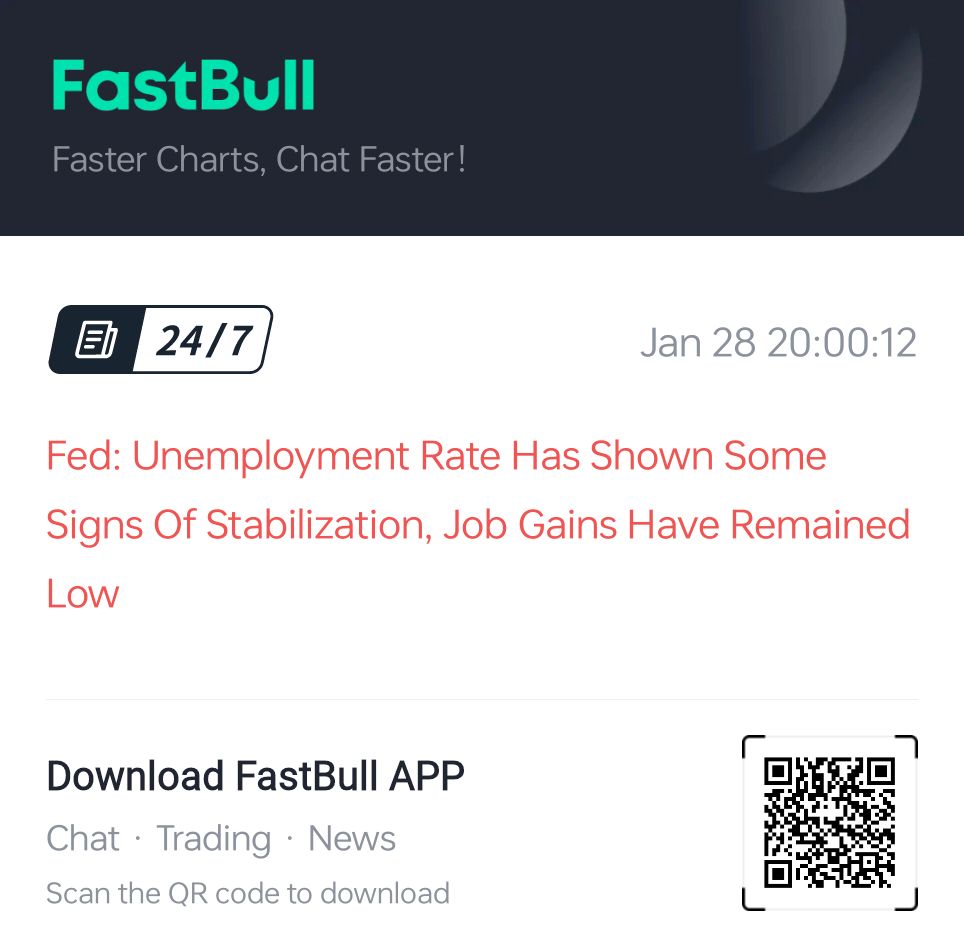
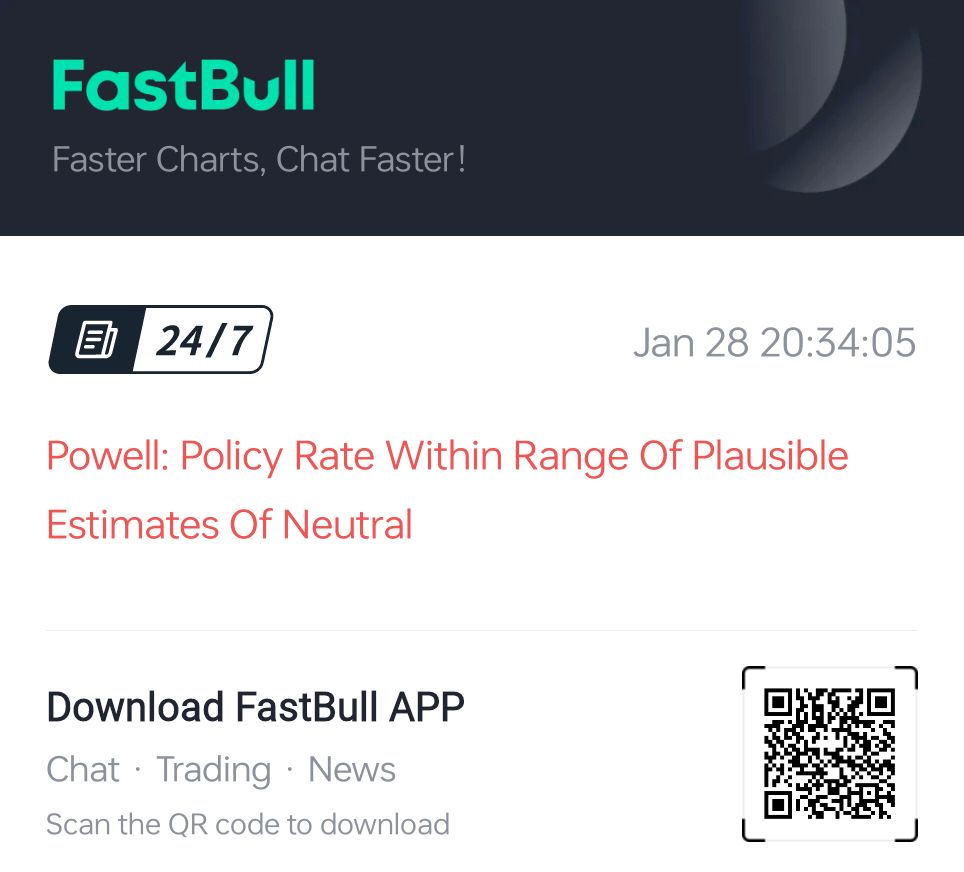
Powell: I Think It's Hard To Look At Incoming Data And Say Policy Is Significantly Restrictive
Apollo Analyst Slok: "The Idea That Fed Governor Waller Is 'testing The Waters' For 'dissent' Is Unfair."
Powell: There Are No Plans Yet For What Will Happen After My Term As Federal Reserve Chairman Ends

U.S. Richmond Fed Services Revenue Index (Jan)A:--
F: --
P: --
U.S. 5-Year Note Auction Avg. YieldA:--
F: --
P: --
U.S. API Weekly Refined Oil StocksA:--
F: --
P: --
U.S. API Weekly Crude Oil StocksA:--
F: --
P: --
U.S. API Weekly Gasoline StocksA:--
F: --
P: --
U.S. API Weekly Cushing Crude Oil StocksA:--
F: --
P: --
Australia RBA Trimmed Mean CPI YoY (Q4)A:--
F: --
P: --
Australia CPI YoY (Q4)A:--
F: --
P: --
Australia CPI QoQ (Q4)A:--
F: --
P: --
Germany GfK Consumer Confidence Index (SA) (Feb)A:--
F: --
P: --
Germany 10-Year Bund Auction Avg. YieldA:--
F: --
P: --
India Industrial Production Index YoY (Dec)A:--
F: --
P: --
India Manufacturing Output MoM (Dec)A:--
F: --
P: --
U.S. MBA Mortgage Application Activity Index WoWA:--
F: --
P: --
Canada Overnight Target RateA:--
F: --
P: --
BOC Monetary Policy Report
U.S. EIA Weekly Crude Stocks ChangeA:--
F: --
P: --
U.S. EIA Weekly Cushing, Oklahoma Crude Oil Stocks ChangeA:--
F: --
P: --
U.S. EIA Weekly Crude Demand Projected by ProductionA:--
F: --
P: --
U.S. EIA Weekly Crude Oil Imports ChangesA:--
F: --
P: --
U.S. EIA Weekly Heating Oil Stock ChangesA:--
F: --
P: --
U.S. EIA Weekly Gasoline Stocks ChangeA:--
F: --
P: --
BOC Press Conference
Russia PPI MoM (Dec)A:--
F: --
P: --
Russia PPI YoY (Dec)A:--
F: --
P: --
U.S. Interest Rate On Reserve BalancesA:--
F: --
P: --
U.S. Target Federal Funds Rate Lower Limit (Overnight Reverse Repo Rate)A:--
F: --
P: --
U.S. Federal Funds Rate TargetA:--
F: --
P: --
U.S. Target Federal Funds Rate Upper Limit (Excess Reserves Ratio)A:--
F: --
P: --
FOMC Statement
FOMC Press Conference
Brazil Selic Interest Rate--
F: --
P: --
Australia Import Price Index YoY (Q4)--
F: --
P: --
Japan Household Consumer Confidence Index (Jan)--
F: --
P: --
Turkey Economic Sentiment Indicator (Jan)--
F: --
P: --
Euro Zone M3 Money Supply (SA) (Dec)--
F: --
P: --
Euro Zone Private Sector Credit YoY (Dec)--
F: --
P: --
Euro Zone M3 Money Supply YoY (Dec)--
F: --
P: --
Euro Zone 3-Month M3 Money Supply YoY (Dec)--
F: --
P: --
South Africa PPI YoY (Dec)--
F: --
P: --
Euro Zone Consumer Confidence Index Final (Jan)--
F: --
P: --
Euro Zone Selling Price Expectations (Jan)--
F: --
P: --
Euro Zone Industrial Climate Index (Jan)--
F: --
P: --
Euro Zone Services Sentiment Index (Jan)--
F: --
P: --
Euro Zone Economic Sentiment Indicator (Jan)--
F: --
P: --
Euro Zone Consumer Inflation Expectations (Jan)--
F: --
P: --
Italy 5-Year BTP Bond Auction Avg. Yield--
F: --
P: --
Italy 10-Year BTP Bond Auction Avg. Yield--
F: --
P: --
France Unemployment Class-A (Dec)--
F: --
P: --
South Africa Repo Rate (Jan)--
F: --
P: --
Canada Average Weekly Earnings YoY (Nov)--
F: --
P: --
U.S. Nonfarm Unit Labor Cost Final (Q3)--
F: --
P: --
U.S. Initial Jobless Claims 4-Week Avg. (SA)--
F: --
P: --
U.S. Weekly Continued Jobless Claims (SA)--
F: --
P: --
U.S. Trade Balance (Nov)--
F: --
P: --
U.S. Weekly Initial Jobless Claims (SA)--
F: --
P: --
Canada Trade Balance (SA) (Nov)--
F: --
P: --
U.S. Exports (Nov)--
F: --
P: --
Canada Imports (SA) (Nov)--
F: --
P: --
Canada Exports (SA) (Nov)--
F: --
P: --
U.S. Unit Labor Cost Revised MoM (SA) (Q3)--
F: --


No matching data
Latest Views
Latest Views
Trending Topics
Top Columnists
Latest Update
White Label
Data API
Web Plug-ins
Affiliate Program
View All

No data
UK PM Starmer's Beijing visit aims to mend ties and boost trade, navigating US volatility and China's security challenges.
British Prime Minister Keir Starmer arrived in Beijing on Wednesday, launching the first official visit to China by a UK leader since 2018. The trip is designed to strengthen diplomatic and business ties with the world's second-largest economy, even as relations with the United States grow more volatile.
Starmer's visit signals a potential thaw in UK-China relations after years of tension. Accompanied by a delegation of over 50 business leaders, the prime minister is focused on encouraging British companies to capitalize on new opportunities while navigating a complex geopolitical landscape.
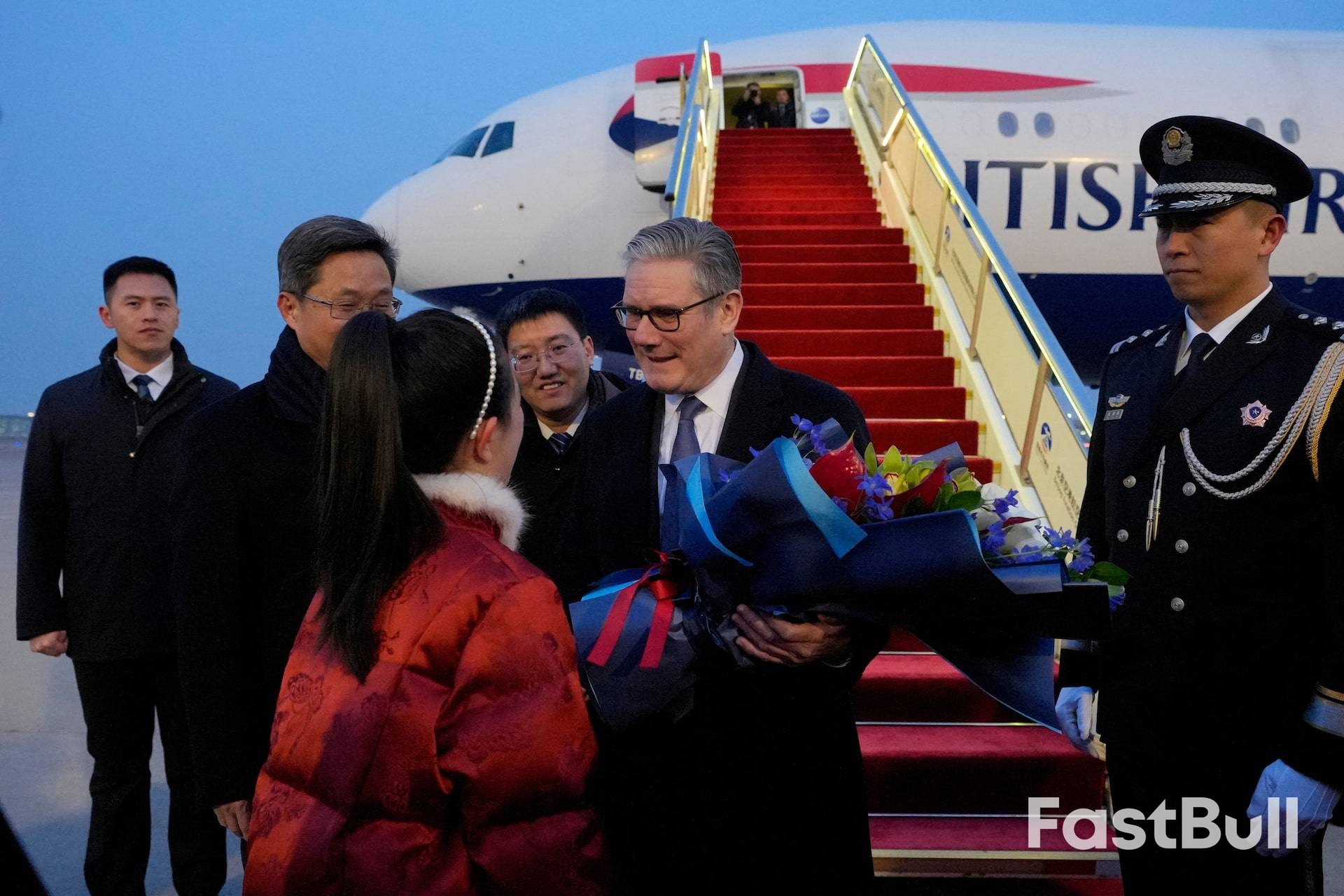
Addressing the business delegation, Starmer highlighted the historic nature of the visit, noting it had been eight years since a British prime minister had set foot on Chinese soil. He framed the trip as a key part of his government's agenda to deliver benefits for people back home.
However, Starmer, whose approach to China has drawn criticism from some politicians in the UK and the U.S., emphasized that this economic engagement must be balanced with caution. He stated that while pursuing trade, Britain must remain vigilant about potential security threats posed by Beijing.
The visit aims to move past years of acrimony over several key issues, including:
• Beijing's crackdown on political freedoms in Hong Kong.
• China's support for Russia in the war against Ukraine.
• Allegations from British security services of Chinese espionage targeting UK officials.
For China, hosting the British leader offers a valuable opportunity to present itself as a stable and reliable international partner amid global uncertainty. Starmer is scheduled to meet with President Xi Jinping and Premier Li Qiang on Thursday.
The prime minister's trip is set against a backdrop of increasing unpredictability in trans-Atlantic relations under U.S. President Donald Trump. Many European nations have ramped up their diplomatic engagement with China as a hedge against this volatility.
Recent tensions with the Trump administration include:
• Trump's threats to seize Greenland.
• His criticism of the UK's deal to transfer sovereignty of the Chagos Archipelago to Mauritius.
• His comments regarding the combat role of NATO allies in Afghanistan.
• A recent threat to impose a 100% tariff on Canadian goods if Ottawa signs a trade deal with China.
Despite these pressures, Starmer insisted that Britain could strengthen its economic relationship with China without damaging its close partnership with the United States. He described the U.S. relationship as one of the UK's strongest, spanning defense, security, intelligence, and trade.
When questioned by reporters, Starmer remained tight-lipped about the specific topics he would raise with Chinese leaders. He declined to confirm whether he would discuss the fate of convicted Hong Kong media tycoon Jimmy Lai or press China to influence Russia's actions in Ukraine.
On the subject of travel, Starmer expressed hope for making "progress" toward a potential visa-free travel arrangement between the two countries.
He also distanced himself from recent comments made by Canadian Prime Minister Mark Carney, who suggested that middle-power countries should collaborate to counter American hegemony. Describing himself as a "British pragmatist applying common sense," Starmer rejected the notion that his government must choose between its relationships with the U.S. and Europe.

President Donald Trump delivered a stark message to Iran on Wednesday, publicly urging the country to negotiate a new nuclear weapons deal before time runs out.
In a social media post, Trump called for Iran to "Come to the Table" and agree to a "fair and equitable deal." The core condition of this proposed agreement is explicit: "NO NUCLEAR WEAPONS." He framed the potential pact as one that is "good for all parties," but emphasized the urgency of the situation, writing, "Time is running out, it is truly of the essence!"
Trump, who withdrew the United States from the 2015 multinational nuclear accord during his first term, backed his diplomatic call with a direct military threat. He reminded Tehran that a previous warning was followed by a military strike.
"The next attack will be far worse!" the president wrote. "Don't make that happen again." To underscore the military pressure, Trump also claimed that another "armada" is currently on its way toward Iran.
The public pressure from Washington was met with a swift denial from Tehran. According to Iranian state media, Foreign Minister Abbas Araqchi stated that he has not been in contact with U.S. special envoy Steve Witkoff in recent days.
Araqchi also directly refuted any suggestion that his government was seeking dialogue, clarifying that Iran had not requested any negotiations with the United States.
BitMEX co-founder Arthur Hayes is known for his bold market calls, and his latest theory connects brewing trouble in Japan with a potential surge for Bitcoin. He argues that a weakening yen and stress in the Japanese government bond market could force U.S. financial authorities to intervene, ultimately injecting liquidity that benefits crypto.
Hayes laid out this scenario in a blog post, explaining that the combination of a falling yen and rising Japanese government bond (JGB) yields signals significant economic strain. He believes this instability will eventually compel the U.S. Treasury and Federal Reserve to act, creating a ripple effect that could break Bitcoin out of its current sideways trend.
Japan is facing growing economic pressure on two fronts. The yen has been under intense selling pressure, dropping sharply against the dollar. For a nation that relies heavily on imports for its energy needs, a weaker currency directly translates to higher costs and rising prices for consumers.
Simultaneously, yields on Japanese government bonds are climbing, making it more expensive for the government to borrow money. Hayes notes that when the yen falls while JGB yields rise, it signals a loss of investor confidence in the government's ability to manage its deficits and protect the currency's value.
This situation is compounded by the fact that the Bank of Japan, the largest holder of JGBs, is facing enormous paper losses as bond prices fall. This further erodes market confidence and intensifies the financial strain.
According to Hayes, Japan's currency problems could spill over into global markets, specifically by pushing U.S. Treasury yields higher. With the United States already running its largest peacetime budget deficits, a surge in its borrowing costs would be a major problem.
This is where U.S. intervention comes in. Hayes predicts that to prevent a wider crisis, the Federal Reserve would step in to provide liquidity. This would involve expanding the Fed's balance sheet and pumping new money into the financial system. Historically, such liquidity injections tend to lift riskier assets, including cryptocurrencies.
The core of Hayes's bullish thesis for Bitcoin is that this new money flowing into the markets would push prices for Bitcoin and other major digital assets higher.
Hayes outlined a specific mechanism for how this intervention might unfold:
1. Dollar Creation: The New York Fed would print U.S. dollars, creating new bank reserves.
2. Currency Swap: These dollars would be used to buy yen on the foreign exchange market, gradually strengthening the Japanese currency without causing a market shock.
3. Bond Purchase: The acquired yen would then be invested in Japanese government bonds, helping to bring their yields down.
In this scenario, the Federal Reserve would effectively absorb the interest rate risk from Japan's bond market to stabilize the global financial system.
While Hayes's theory presents a clear path to higher Bitcoin prices, he also acknowledges the risks. The outcome depends entirely on the actions of policymakers.
• The Bull Case: If intervention occurs as Hayes predicts, the resulting liquidity injection would likely confirm a new bullish phase for crypto markets.
• The Bear Case: If no help arrives, the yen could crash entirely. This could trigger a worldwide deflationary event that would hurt risk assets like Bitcoin.
• The Volatility Risk: A poorly executed or overly aggressive intervention could create extreme short-term swings in the market.
Hayes also pointed out that even as the Fed began cutting rates by 1.75% in September 2024, yields on 10-year Treasury bonds actually rose slightly, indicating persistent inflationary and supply pressures. A crisis stemming from the yen could make this situation worse, while a stronger dollar would also hurt U.S. companies by making their exports more expensive. He suggested that the Bank of Japan's decision to keep rates unchanged on January 23 was a signal that officials may have already sought U.S. assistance behind the scenes.

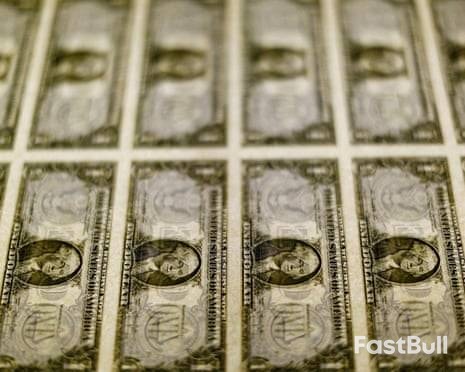
The U.S. dollar has dropped to its lowest level in four years after President Donald Trump dismissed concerns over the currency's slide, triggering a flight of capital into traditional safe-haven assets like gold and the Swiss franc.
Following the president's remarks on Tuesday, the dollar fell 1.3% against a basket of currencies, extending its decline to a fourth consecutive day. The downward momentum continued into Wednesday morning with an additional 0.2% slip.
During a visit to Iowa, President Trump openly welcomed the currency's weakness. When asked if he was concerned about the slide, he told reporters, "No, I think it's great." He added, "I think the value of the dollar – look at the business we're doing. The dollar's doing great."
This endorsement accelerated a downtrend that has seen the greenback fall 10% over the last year. Tuesday's single-day drop was the largest since April of the previous year, when Trump’s tariff plans first roiled global markets. The dollar has now reached its lowest point since February 2022.
The currency's weakness reflects broader market anxiety over unpredictable U.S. policymaking, including recent geopolitical shocks such as threats to take over Greenland and impose new tariffs on European allies.
The dollar's decline has directly fueled a rally in rival currencies and assets, pushing them to multi-year highs as investors seek stability.
Gold Breaks New Records
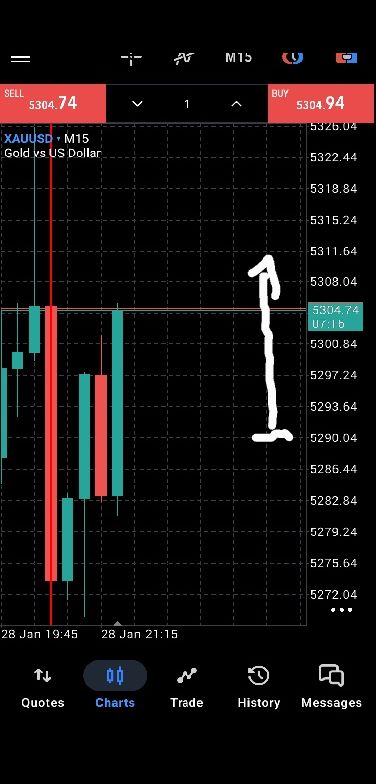
Gold has continued its remarkable rally, surging past $5,200 an ounce. The precious metal, a classic hedge against political instability, broke the $5,000 level for the first time on Monday. Since Trump's second inauguration just over a year ago, the price of gold has jumped by nearly 90%.
Swiss Franc and Euro Strengthen
Investors have flocked to the Swiss franc, which is traditionally viewed as a stable store of wealth insulated from global volatility. The franc has soared to its highest level against the dollar in over a decade, climbing 3% so far this year after a 14% rise in 2025.
The euro has also hit a new milestone, climbing to $1.20 against the dollar. The single currency gained about 2% over the past week, its largest weekly increase since last April. This follows a strong 2025, which was its best year since 2017 with a 13% gain.
According to Steve Sosnick, a market strategist at Interactive Brokers, a weaker dollar presents a mixed economic picture. "A weaker dollar is a two-sided coin," he explained.
• Benefit for Multinationals: Companies with global operations see an advantage, as revenue earned in foreign currencies converts into more U.S. dollars.
• Risk for Consumers: On the other hand, it makes imported goods more expensive, which could create inflationary pressure.
Looking ahead, some analysts anticipate further weakness for the dollar. Key concerns include mounting presidential pressure on the Federal Reserve, the U.S. economic outlook, and the country's rising debt load.
The U.S. central bank is set to announce its first interest rate decision of the year on Wednesday and is widely expected to hold rates steady, despite Trump's persistent calls for rate cuts.
The Fed's independence has come under intense scrutiny following the president's unprecedented attacks on its chair, Jerome Powell, whom Trump has called "stupid" and threatened to fire. The situation has escalated further with the Justice Department opening a criminal investigation into Powell concerning renovations at the central bank's headquarters.
With Powell's term as chair expiring in May, Trump could name a successor shortly after the rate decision, adding another layer of uncertainty to the future of U.S. monetary policy and the dollar's trajectory.
Gold prices could surge to an astonishing $10,000 this year if the monetary and geopolitical landscapes align, according to a forecast from SBG Securities. Analyst Adrian Hammond suggests the precious metal is already in its "last leg" of a major rally, driven more by powerful macroeconomic forces than by traditional mining stock leverage.
For investors, the calculus has changed. Hammond argues that it no longer pays to hold gold equities over the physical metal itself. The reason lies in diminishing returns: earnings for mining companies are already so high that rising gold prices offer less meaningful leverage from this point forward.
For example, a 10% rise in gold from $3,000 per ounce previously translated into roughly 30% earnings growth for miners. From current levels, that same 10% price increase now delivers only about 13% growth. This shift turns most major gold producers into linear proxies for bullion, stripping away their high-leverage appeal.
While higher-cost miners like Harmony Gold and Sibanye Stillwater retain more relative leverage, the entire sector faces growing risks. Hammond points to cost inflation, capital spending that outpaces inflation, increased M&A activity, and rising resource nationalism. These headwinds explain his neutral stance on gold stocks, even as he sees another 20% to 30% upside for bullion this year.
The outlook for U.S. interest rate cuts remains the key driver for gold prices. While markets are currently pricing in two cuts this year, Hammond sees potential for a more aggressive Federal Reserve.
SBG Securities outlines two powerful scenarios:
• Base Case: Three rate cuts could push gold to $7,000 by the end of the year.
• Dovish Shift: A more accommodative Fed could send gold soaring to $10,000.
However, Hammond believes the "more prudent" outcome would be for the Fed to hold rates steady. He notes that a weaker dollar is already contributing to U.S. inflation, a trend that could be intensified by higher energy prices.
The potential for a dovish policy shift is not without its dangers. Hammond states he is "constructive on oil, which could send inflation even higher." Such a backdrop could ultimately work against gold if its price runs too far ahead of its fundamental value.
This creates a real risk of gold overshooting and then correcting sharply. An overly dovish market narrative could "come back to sting gold," particularly if Fed policy remains tighter than investors anticipate.
Even in that scenario, a sharp collapse is not expected. Hammond argues that structurally supportive inflation will limit any significant pullback over the longer term. The more immediate risk is a "near-term dislocation," where political pressure pushes for rate cuts while the Fed remains cautious.
Beneath the speculative forecasts, strong fundamental demand continues to provide a solid floor for gold prices. Central bank buying remains a powerful tailwind, with global reserves rising by 45 tonnes in November.
China, in particular, has been a key player. The People's Bank of China added gold to its reserves every month last year, with its official holdings climbing to a record 2,304 tonnes by the end of the third quarter of 2025. Gold now accounts for 8.5% of the country's total holdings.
Investment flows have also turned supportive. In 2025, Gold ETFs added approximately 16 million ounces. Simultaneously, speculative positioning on the COMEX has grown increasingly bullish, with net long exposure rising sharply toward the year's end. This combination of official sector buying and renewed investor interest reinforces the positive trend, even as short-term policy uncertainty remains.
A new analysis by Fitch Ratings projects largely stable conditions for Gulf Cooperation Council corporates in 2026, as massive government-led investment shields earnings from the dual pressures of lower oil prices and tighter funding markets.
Sustained public capital expenditure, particularly in infrastructure and energy, is expected to be the primary engine supporting regional corporate performance. However, this support will be tested by constrained budgets in both the public and private sectors.
This outlook aligns with broader economic forecasts from the World Bank, which projects the GCC economies to grow by 4.4 percent in 2026 and 4.6 percent in 2027. The bank highlights that non-oil sectors, which now constitute over 60 percent of the region's GDP, will be the main beneficiaries of large-scale state investment.
State-backed investment programs are set to keep non-energy sectors buoyant, especially in Saudi Arabia and the UAE. Fitch forecasts GCC non-oil GDP to expand by 3.7 percent in 2026, a slight moderation from a previous estimate of 4.2 percent.
According to Samer Haydar, Fitch's head of GCC corporates, this public spending will ensure steady earnings for companies in key sectors. However, he cautioned that "sub-investment-grade credits will face low leverage headroom and increased interest-rate sensitivities."
The region is also benefiting from regulatory reforms tied to economic diversification, which are fueling a robust pipeline of initial public offerings expected to continue into 2026.
Corporate credit profiles across the GCC remain remarkably stable. Fitch notes that approximately 95 percent of the issuers it rates currently carry Stable Outlooks. During 2025, there were eight upgrades, some of which were linked to sovereign rating actions.
The ratings landscape for GCC corporates spans from "AA" to "B," with government-related entities (GREs) making up about half of Fitch's rated portfolio in 2025.
On the balance sheet, corporate leverage is expected to tick slightly higher in 2026 to an average of 2.4 times before easing to 2.3 times in 2027. While strong 2025 earnings created a buffer for sectors like oil and gas, real estate, and utilities, other industries such as industrials, retail, and homebuilding are operating with tighter leverage capacity, leaving them more exposed to elevated costs.
Funding conditions are expected to be a critical differentiator for corporate performance. Many GCC issuers successfully extended their "maturity wall" to 2028 through proactive bond and sukuk issuance in 2025, with firms in the UAE and Saudi Arabia leading the early refinancing efforts.
Aggregate corporate fixed-income maturities for entities in the UAE and Saudi Arabia are estimated at around $50 billion over the next five years. Persistently higher funding costs will likely impact high-yield issuers with near-term maturities more severely than their investment-grade counterparts.
At the same time, rising capital expenditure is a near-term constraint on cash flow. Fitch anticipates that capex intensity will increase in 2026, keeping free cash flow subdued for most companies after hitting a peak of negative free cash flow in 2025.
In response, highly-rated issuers are increasingly adopting asset-light strategies like joint ventures to minimize upfront spending. Others may turn to hybrid instruments, equity increases, or asset sales to manage funding pressures.
The GCC property sector's earnings are expected to be supported by regional economic expansion, with average occupancy projected to remain above 90 percent in 2026.
However, a new regulatory provision in Saudi Arabia that freezes annual rent increases for five years on residential, commercial, and land leases is expected to limit the ability of landlords to pass on base rent increases.
For homebuilders, Fitch projects higher working-capital needs as pre-sales payment plans in prime Dubai locations are expected to ease toward 50 percent in 2026, down from a peak of 70 percent. Earnings before interest, taxes, depreciation, and amortization margins for most UAE-based homebuilders are forecast to be around 26.8 percent, with gross leverage averaging approximately 2 times.
Fitch's macroeconomic assumptions remain tied to oil markets, with a forecast for Brent crude to average $63 per barrel in 2026, down from $70 in 2025. This reflects expectations that supply growth, particularly from the Americas, will outpace demand.
While these prices are expected to remain above the fiscal breakeven points for most GCC producers, Fitch noted Bahrain and Saudi Arabia as exceptions, with Oman only marginally below its breakeven level.
Looking ahead, Fitch highlighted three key risks to monitor:
• Regional Escalation: A potential escalation of conflict around the Red Sea could disrupt supply chains and increase raw material costs.
• Saudi Mega-Projects: A widening scope of rescaling for Saudi Arabia's ambitious mega-projects could have knock-on effects.
• Persistent Funding Costs: If funding costs remain higher than expected, it could curb access to debt capital markets, particularly for non-GRE issuers.
White Label
Data API
Web Plug-ins
Poster Maker
Affiliate Program
The risk of loss in trading financial instruments such as stocks, FX, commodities, futures, bonds, ETFs and crypto can be substantial. You may sustain a total loss of the funds that you deposit with your broker. Therefore, you should carefully consider whether such trading is suitable for you in light of your circumstances and financial resources.
No decision to invest should be made without thoroughly conducting due diligence by yourself or consulting with your financial advisors. Our web content might not suit you since we don't know your financial conditions and investment needs. Our financial information might have latency or contain inaccuracy, so you should be fully responsible for any of your trading and investment decisions. The company will not be responsible for your capital loss.
Without getting permission from the website, you are not allowed to copy the website's graphics, texts, or trademarks. Intellectual property rights in the content or data incorporated into this website belong to its providers and exchange merchants.
Not Logged In
Log in to access more features
Log In
Sign Up