• Trade
  • Markets
  • Copy
  • Contests
  • News
  • 24/7
  • Calendar
  • Q&A
  • Chats
Trending
Screeners
SYMBOL
LAST
BID
ASK
HIGH
LOW
NET CHG.
%CHG.
SPREAD
SPX
S&P 500 Index
6896.05
6896.05
6896.05
6941.31
6889.79
-67.69
-0.97%
--
DJI
Dow Jones Industrial Average
48957.92
48957.92
48957.92
49195.10
48884.33
-234.06
-0.48%
--
IXIC
NASDAQ Composite Index
23352.90
23352.90
23352.90
23590.19
23330.56
-356.97
-1.51%
--
USDX
US Dollar Index
98.700
98.780
98.700
98.990
98.690
-0.220
-0.22%
--
EURUSD
Euro / US Dollar
1.16576
1.16583
1.16576
1.16598
1.16359
+0.00157
+ 0.13%
--
GBPUSD
Pound Sterling / US Dollar
1.34527
1.34534
1.34527
1.34637
1.34190
+0.00320
+ 0.24%
--
XAUUSD
Gold / US Dollar
4618.91
4619.34
4618.91
4641.84
4588.51
+32.81
+ 0.72%
--
WTI
Light Sweet Crude Oil
61.233
61.263
61.233
61.804
60.145
+0.377
+ 0.62%
--

Community Accounts

Signal Accounts
--
Profit Accounts
--
Loss Accounts
--
View More

Become a signal provider

Sell trading signals to earn additional income

View More

Guide to Copy Trading

Get started with ease and confidence

View More

Signal Accounts for Members

All Signal Accounts

Best Return
  • Best Return
  • Best P/L
  • Best MDD
Past 1W
  • Past 1W
  • Past 1M
  • Past 1Y

All Contests

  • All
  • Trump Updates
  • Recommend
  • Stocks
  • Cryptocurrencies
  • Central Banks
  • Featured News
Top News Only
Share

German Minister: German-Israel Deal Strengthens Cyber Defence

Share

[German Finance Minister: Urges Europe To Take A Tougher Stance In The Trump Era] German Finance Minister Lars Klingbeil Urged European Countries To Take A Tougher Stance To Successfully Navigate The Current Period Of Global Turmoil And Avoid Becoming "pawns In The Great Power Game." When Under Pressure, The EU "must Not Shy Away From Tougher, More Far-reaching Measures." He Suggested That If Other Countries Lag Behind, Member States Should Consider Advancing Emergency Initiatives In The Form Of "small Groups." He Believes That Europe Can Safeguard Its Own Interests As Long As It Recognizes The New Realities And Responds Appropriately. He Described The Current Competitive Landscape As "a Deliberate Attack On Our Competitiveness."

Share

Wells Fargo CEO Charlie Scharf Says Feel No Pressure To Do Any M&A In Any Of Our Businesses, Bar Would Be High

Share

EIA Sees Henry Hub Natgas Prices Dipping In 2026 Before Climbing In 2027

Share

Federal Reserve Governor Milan: Deregulation Is Equivalent To A Positive Supply And Productivity Shock, Providing More Capacity To The Economy And Easing Price Pressures

Share

EIA - US Commercial Crude Oil Imports Rose In The Latest Week To Highest Since November 2024

Share

David Robin, Interest Rate Strategist At Tjm Institutional Services LLC: "The U.S. Employment Situation Is A Bit Uncertain, And We Also Have Inflation Issues. From A Data Perspective, The Probability That The Fed Will Hold Rates Steady Until At Least March Has Increased. And With Each Meeting Crossed Off The Schedule, The Probability Of The Fed Continuing To Hold Rates Steady Becomes Even Greater." Robin Said, "Whether The Market Believes The Fed Will Hold Rates Steady—whether The Probability Is 5%, 10%, Or 20%—these Trades Are Cheap; If You're A Disciplined Risk Manager, You'll Have Demand."

Share

[A Growing Number Of Options Investors Bet On The Fed Keeping Rates Unchanged For The Entire Year] Options Traders Are Gradually Eliminating Expectations Of A Fed Rate Cut This Year And Shifting Their Bets To A Scenario Where The Fed Keeps Rates Unchanged Throughout The Year. This Theme Began To Emerge At Least Last Friday, When The Latest US Jobs Data Showed An Unexpectedly Low Unemployment Rate. This, Measured By Market Pricing, Virtually Eliminated The Possibility Of A Rate Cut At This Month's Policy Meeting, Prompting More And More Traders To Further Postpone Their Expectations For A Rate Cut. A Stabilizing Labor Market Means That After Policymakers Implemented Three 25-basis-point Rate Cuts Last Year, There Is Little Reason To Continue Cutting Rates, Especially With Inflation Still Above The Fed's Target

Share

Federal Reserve Governor Milan: By 2030, It May Be Possible To Eliminate 30% Of Regulation, Which Could Reduce Inflation By Half A Percentage Point Each Year

Share

U.S. Senate Majority Leader John Thune: I'm Not Sure If I'll Vote Today; The Agenda Calls For A Vote On The Right To Stop The War. The U.S. Has No Ground Troops In Venezuela

Share

EIA - US Gulf Coast Gasoline Stocks Rose In The Latest Week To The Highest Since January 2020

Share

EIA - US Gasoline Stocks Rose By The Most In The Latest Week Since December 2023

Share

Agriculture Watchdog: Russia Doubled Pig Farming Product Exports To China In 2025

Share

Russian President Putin And Brazil President Lula Support Venezuela's Sovereignty, RIA Reports

Share

BOE Deputy Governor Ramsden: We Are Considering What Failure Arrangements Are Necessary For Systemic Stablecoins

Share

BOE Deputy Governor Ramsden: We Have More To Do To Ensure Firms And The Bank Are Ready To Implement A Ccp Resolution

Share

BOE Deputy Governor Ramsden: It's Important Our Resolution Regime Responds To Changes In The Financial System, Including The Growth Of Market-Based Finance

Share

Mexican President Sinbaum: The United States And Cuba Need To Reach An Agreement

Share

BOE Deputy Governor Ramsden: For Banks, We Have Implemented The Key Resolution Policy Developments That We Expect To

Share

The U.S. Energy Information Administration (EIA) Reported That For The Week Ending January 9, Crude Oil Inventories In Cushing, Oklahoma, Increased By 745,000 Barrels, Compared To An Increase Of 728,000 Barrels In The Previous Week; U.S. Strategic Petroleum Reserves Increased By 214,000 Barrels, Compared To 245,000 Barrels In The Previous Week

TIME
ACT
FCST
PREV
China, Mainland Imports (CNH) (Dec)

A:--

F: --

P: --

China, Mainland Imports YoY (USD) (Dec)

A:--

F: --

P: --

China, Mainland Exports YoY (USD) (Dec)

A:--

F: --

P: --

U.K. 10-Year Note Auction Yield

A:--

F: --

P: --

Canada Leading Index MoM (Dec)

A:--

F: --

P: --
U.S. MBA Mortgage Application Activity Index WoW

A:--

F: --

P: --

U.S. PPI YoY (Excl. Food, Energy & Trade) (Oct)

A:--

F: --

P: --
U.S. PPI MoM Final (Excl. Food, Energy and Trade) (SA) (Oct)

A:--

F: --

P: --
U.S. Core PPI YoY (Nov)

A:--

F: --

P: --
U.S. PPI MoM (SA) (Nov)

A:--

F: --

P: --
U.S. PPI YoY (Nov)

A:--

F: --

P: --
U.S. Current Account (Q3)

A:--

F: --

P: --
U.S. Retail Sales YoY (Nov)

A:--

F: --

P: --

U.S. Retail Sales (Nov)

A:--

F: --

P: --

U.S. Core Retail Sales MoM (Nov)

A:--

F: --

P: --
U.S. Retail Sales MoM (Excl. Automobile) (SA) (Nov)

A:--

F: --

P: --
U.S. Core Retail Sales (Nov)

A:--

F: --

P: --

U.S. Retail Sales MoM (Excl. Gas Stations & Vehicle Dealers) (SA) (Nov)

A:--

F: --

P: --
U.S. Retail Sales MoM (Nov)

A:--

F: --

P: --
U.S. Core PPI MoM (SA) (Nov)

A:--

F: --

P: --
Philadelphia Fed President Henry Paulson delivers a speech
U.S. Commercial Inventory MoM (Oct)

A:--

F: --

P: --
U.S. Existing Home Sales Annualized Total (Dec)

A:--

F: --

P: --
U.S. Existing Home Sales Annualized MoM (Dec)

A:--

F: --

P: --
U.S. EIA Weekly Cushing, Oklahoma Crude Oil Stocks Change

A:--

F: --

P: --

U.S. EIA Weekly Crude Stocks Change

A:--

F: --

P: --

U.S. EIA Weekly Gasoline Stocks Change

A:--

F: --

P: --

U.S. EIA Weekly Crude Demand Projected by Production

A:--

F: --

P: --

U.S. EIA Weekly Crude Oil Imports Changes

A:--

F: --

P: --

U.S. EIA Weekly Heating Oil Stock Changes

A:--

F: --

P: --

U.S. Refinitiv/Ipsos Primary Consumer Sentiment Index (PCSI) (Jan)

--

F: --

P: --

Japan Domestic Enterprise Commodity Price Index YoY (Dec)

--

F: --

P: --

Japan Domestic Enterprise Commodity Price Index MoM (Dec)

--

F: --

P: --

Japan PPI MoM (Dec)

--

F: --

P: --

Australia Consumer Inflation Expectations (Jan)

--

F: --

P: --

U.K. 3-Month RICS House Price Balance (Dec)

--

F: --

P: --

South Korea Benchmark Interest Rate

--

F: --

P: --

Saudi Arabia CPI YoY (Dec)

--

F: --

P: --

U.K. Services Index MoM (SA) (Nov)

--

F: --

P: --

U.K. Services Index YoY (Nov)

--

F: --

P: --

U.K. Manufacturing Output MoM (Nov)

--

F: --

P: --

U.K. Trade Balance (Nov)

--

F: --

P: --

U.K. Monthly GDP 3M/3M Change (Nov)

--

F: --

P: --

U.K. GDP MoM (Nov)

--

F: --

P: --

U.K. Industrial Output MoM (Nov)

--

F: --

P: --

U.K. Trade Balance Non-EU (SA) (Nov)

--

F: --

P: --

U.K. Trade Balance (SA) (Nov)

--

F: --

P: --

U.K. Manufacturing Output YoY (Nov)

--

F: --

P: --

U.K. Construction Output MoM (SA) (Nov)

--

F: --

P: --

U.K. Industrial Output YoY (Nov)

--

F: --

P: --

U.K. Services Index MoM

--

F: --

P: --

U.K. Construction Output YoY (Nov)

--

F: --

P: --

U.K. GDP YoY (SA) (Nov)

--

F: --

P: --

U.K. Trade Balance EU (SA) (Nov)

--

F: --

P: --

Indonesia Loan Growth YoY (Dec)

--

F: --

P: --

France HICP Final MoM (Dec)

--

F: --

P: --

Germany Annual GDP Growth

--

F: --

P: --
Italy Industrial Output YoY (SA) (Nov)

--

F: --

P: --

Canada Existing Home Sales MoM (Dec)

--

F: --

P: --

Euro Zone Trade Balance (SA) (Nov)

--

F: --

P: --

Q&A with Experts
    • All
    • Chatrooms
    • Groups
    • Friends
    REETRADER flag
    Size
    @Sizeit yet to take previous day liquidity
    Aliola flag
    ifan afian
    @ifan afianwhat does this mean
    ifan afian flag
    Aliola
    @Aliola liquidity trader
    Size flag
    ifan afian
    @ifan afianTargeting 4700 makes sense if price keeps its bullish momentum.
    john flag
    REETRADER
    @REETRADERalright anything can happen so indeed let's proceed carefully
    Size flag
    Still, keep an eye on intermediate resistance and reaction zones@ifan afian
    ifan afian flag
    Size
    Still, keep an eye on intermediate resistance and reaction zones@ifan afian
    @Size just the magnet at 4570 .. the others no problem at the moment
    Size flag
    REETRADER
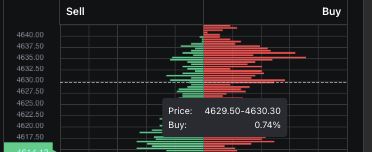
    @REETRADERGold hasn’t taken out the previous day’s liquidity yet.
    Size flag
    so we might see some minor swings or fakeouts before the next real move.@REETRADER
    ifan afian flag
    R.IP for the red lines
    ifan afian flag
    Size flag
    ifan afian
    4570 is acting like a liquidity magnet, which means we could see stop runs@ifan afian
    JustLeon flag
    JustLeon flag
    Size flag
    The smart approach is to monitor how price reacts@ifan afian
    JustLeon flag
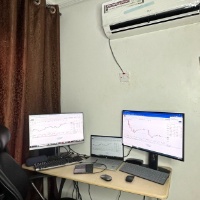
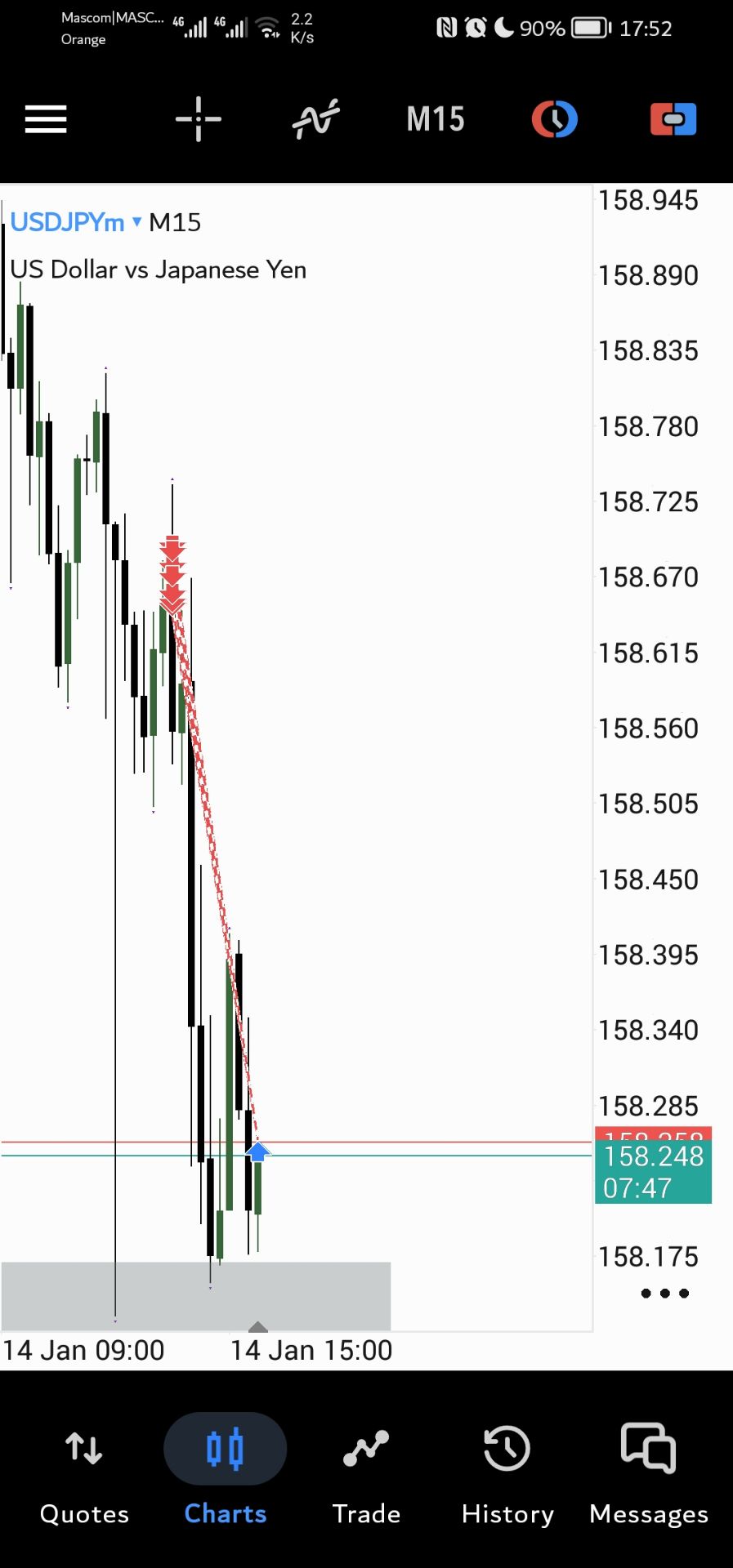
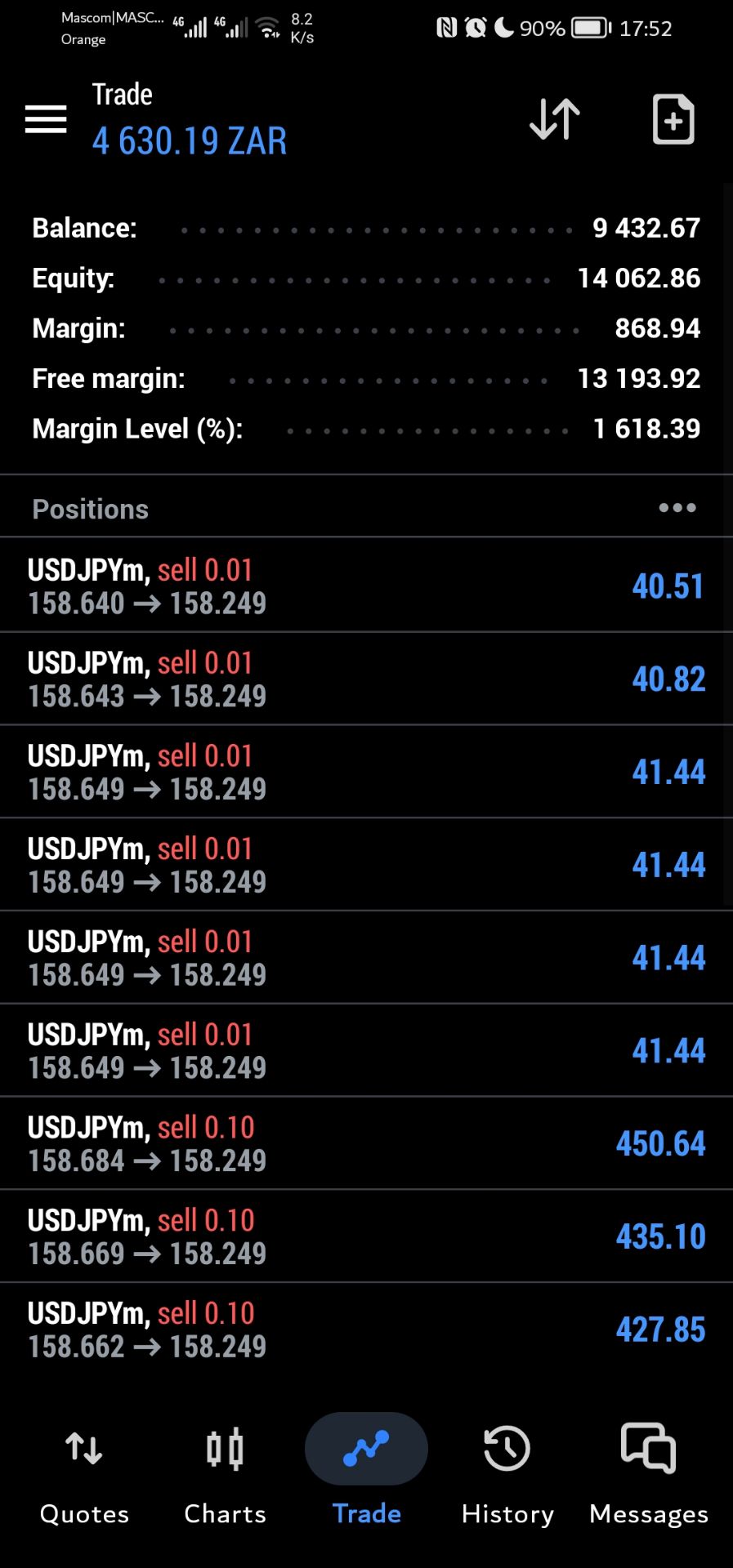
    Done for the day
    john flag
    JustLeon
    @JustLeonyou took this trades today
    JustLeon flag
    john
    @johnmy acc was on 3k today then flipped it to 14k
    Size flag
    JustLeon
    @JustLeonwow, that’s impressive!
    john flag
    JustLeon
    @JustLeonshow us or tell us your ways
    Type here...
    Add Symbol or Code

      No matching data

      All
      Trump Updates
      Recommend
      Stocks
      Cryptocurrencies
      Central Banks
      Featured News
      • All
      • Russia-Ukraine Conflict
      • Middle East Flashpoint
      • All
      • Russia-Ukraine Conflict
      • Middle East Flashpoint
      Search
      Products

      Charts Free Forever

      Chats Q&A with Experts
      Screeners Economic Calendar Data Tools
      Membership Features
      Data Warehouse Market Trends Institutional Data Policy Rates Macro

      Market Trends

      Market Sentiment Order Book Forex Correlations

      Top Indicators

      Charts Free Forever
      Markets

      News

      News Analysis 24/7 Columns Education
      From Institutions From Analysts
      Topics Columnists

      Latest Views

      Latest Views

      Trending Topics

      Top Columnists

      Latest Update

      Signals

      Copy Rankings Latest Signals Become a signal provider AI Rating
      Contests
      Brokers

      Overview Brokers Assessment Rankings Regulators News Claims
      Broker listing Forex Brokers Comparison Tool Live Spread Comparison Scam
      Q&A Complaint Scam Alert Videos Tips to Detect Scam
      More

      Business
      Events
      Careers About Us Advertising Help Center

      White Label

      Data API

      Web Plug-ins

      Affiliate Program

      Awards Institution Evaluation IB Seminar Salon Event Exhibition
      Vietnam Thailand Singapore Dubai
      Fans Party Investment Sharing Session
      FastBull Summit BrokersView Expo
      Recent Searches
        Top Searches
          Markets
          News
          Analysis
          User
          24/7
          Economic Calendar
          Education
          Data
          • Names
          • Latest
          • Prev

          View All

          No data

          Scan to Download

          Faster Charts, Chat Faster!

          Download App
          English
          • English
          • Español
          • العربية
          • Bahasa Indonesia
          • Bahasa Melayu
          • Tiếng Việt
          • ภาษาไทย
          • Français
          • Italiano
          • Türkçe
          • Русский язык
          • 简中
          • 繁中
          Open Account
          Search
          Products
          Charts Free Forever
          Markets
          News
          Signals

          Copy Rankings Latest Signals Become a signal provider AI Rating
          Contests
          Brokers

          Overview Brokers Assessment Rankings Regulators News Claims
          Broker listing Forex Brokers Comparison Tool Live Spread Comparison Scam
          Q&A Complaint Scam Alert Videos Tips to Detect Scam
          More

          Business
          Events
          Careers About Us Advertising Help Center

          White Label

          Data API

          Web Plug-ins

          Affiliate Program

          Awards Institution Evaluation IB Seminar Salon Event Exhibition
          Vietnam Thailand Singapore Dubai
          Fans Party Investment Sharing Session
          FastBull Summit BrokersView Expo

          UAE Joins US-Led 'Pax Silica' AI Alliance

          King Ten

          Remarks of Officials

          Economic

          Middle East Situation

          Political

          Summary:

          The UAE joined the US-led Pax Silica tech bloc, solidifying its AI ambitions and global tech supply chain security.

          The United Arab Emirates has officially joined Pax Silica, a US-led technology bloc focused on strengthening innovation and securing supply chains for the artificial intelligence era.

          The agreement was signed in Abu Dhabi on Wednesday by UAE Minister of State Saeed Alhajeri and US Undersecretary of State for Economic Affairs Jacob Helberg. The signing was part of Helberg's Middle East tour, which also includes stops in Qatar, Saudi Arabia, and Israel.

          Following the agreement, Helberg invited Alhajeri to a ministerial dialogue on critical minerals scheduled for February 4 in Washington.

          According to Alhajeri, the UAE’s entry into Pax Silica demonstrates the nation's commitment to its AI ambitions and the technology's power to reshape the global economy. He stated that the pact "reflects the shared commitment to shaping the future of AI with the responsibility of foresight and purpose."

          Alhajeri described the move as a "defining moment for the future of human innovation," adding that AI is "no longer a technology but a lifeblood of the 21st century."

          A Global Coalition for Tech Security

          Pax Silica is a strategic initiative aimed at bringing together "trusted" partners to collaborate on technology. The US Embassy in the UAE had hinted at the announcement on Monday, calling the Emirates' participation "a key step in strengthening secure, resilient and innovation-driven supply chains critical to the AI era."

          The UAE attended the initial Pax Silica meeting in Washington in December, alongside Japan, South Korea, Singapore, the Netherlands, the UK, Israel, and Australia. Qatar also signed the declaration on Monday, a development Helberg said "effectively fast-tracks diplomatic normalisation" by bringing Israel and Qatar into a single US-led framework.

          Next, India will be invited to join the alliance next month, according to US Ambassador to India Sergio Gor.

          US Perspective: A Partnership for the Future

          Jacob Helberg described Pax Silica as a "real coalition of capabilities," emphasizing the strong relationship between the two nations. "The UAE is and always will be a cherished partner of the US... [we] can write the code for the next generation together," he said.

          Drawing a parallel to the last century's economy, Helberg noted, "If the 20th century ran on oil and fuel, the 21st century will run on compute and the minerals that feed it."

          The official Pax Silica declaration underscores this vision, stating that resilient supply chains are fundamental to the economic security of its signatories. It also acknowledges that "artificial intelligence represents a transformative force for our long-term prosperity and that trustworthy systems are essential to safeguarding our mutual security and prosperity."

          UAE's Deepening Investment in AI

          This partnership is the latest in a series of strategic moves by the UAE to position itself as a global leader in artificial intelligence as part of its economic diversification away from hydrocarbons.

          The country's focused AI strategy has already produced significant results:

          • Major Investments: The UAE has attracted partnerships and investments from top industry players, including Microsoft, Nvidia, and OpenAI.

          • Infrastructure Projects: In collaboration with the US, the UAE is developing the Stargate AI campus in Abu Dhabi, which will feature 5 gigawatts of capacity for AI data centers.

          • Language Models: The nation has developed its own large language models, such as Falcon Arabic, to ensure Arabic culture is represented in the global AI ecosystem.

          • Dedicated University: In 2019, the UAE launched the Mohamed bin Zayed University of Artificial Intelligence (MBZUAI), a graduate-level university exclusively for AI studies.

          • Government Leadership: As early as 2017, the UAE appointed Omar Al Olama as one of the world's first ministers for artificial intelligence.

          To stay updated on all economic events of today, please check out our Economic calendar
          Risk Warnings and Disclaimers
          You understand and acknowledge that there is a high degree of risk involved in trading. Following any strategies or investment methods may lead to potential losses. The content on the site is provided by our contributors and analysts for information purposes only. You are solely responsible for determining whether any trading assets, securities, strategy, or any other product is suitable for investing based on your own investment objectives and financial situation.
          Add to Favorites
          Share

          Trump vs. The Fed: Is Central Bank Independence at Risk?

          Henry Thompson

          Data Interpretation

          Bond

          Political

          Remarks of Officials

          Forex

          Economic

          Central Bank

          Stocks

          Federal Reserve Chair Jerome Powell recently took the unusual step of recording a video statement to protest the Trump administration's latest actions against the central bank, a move that drew a letter of support from his global peers. Despite these high-level alarms, investors have remained remarkably calm.

          Treasury markets were little changed, and stock indexes climbed to record highs to start the week. This quiet market response suggests a broad confidence that, despite the political noise, the Federal Reserve's core decision-making remains insulated from interference.

          Markets Shrug Off Political Pressure

          The most telling indicator of market sentiment might be inflation expectations. If investors truly believed President Donald Trump could successfully pressure the Fed into cutting interest rates against its better judgment, they would anticipate higher inflation.

          However, a key bond market gauge shows long-term inflation expectations holding steady around 2.35%, a level largely unchanged since Trump's election victory in November 2024.

          Fed watchers attribute this market stability to the institution's structure. Rate decisions require a majority vote from the 12-member Federal Open Market Committee (FOMC). While Trump is set to appoint a new chair, he lacks the votes to command a majority on the committee before his term ends.

          The Supreme Court Case That Could Change Everything

          This stability, however, could be fragile. A pivotal moment is approaching on January 21, when the Supreme Court is scheduled to hear oral arguments in Trump's effort to fire Fed board member Lisa Cook.

          According to Bloomberg litigation analyst Elliott Stein, Cook has a 60% chance of winning her case to remain in her post. "The high court has indicated the Fed is distinct from other agencies and so far has let her stay in her role while the case advances, signaling a higher bar for removing a Fed governor," Stein noted.

          But a loss for Cook could be a game-changer. Macro strategists at Wells Fargo, led by Michael Schumacher, warned that a successful ouster could be "the proverbial straw that broke the camel's back."

          The primary concern is that a victory for the administration would set a precedent. The White House could then seek to remove other Fed board members by citing similar justifications, such as the alleged misrepresentations in mortgage application documents used in Cook's case. This would grant the executive branch significant power to reshape the Fed's board and build a compliant majority.

          Potential Triggers for a Market Reaction

          Beyond the Supreme Court, another potential flashpoint is an indictment of Powell himself. Jeanine Pirro, the federal attorney who issued subpoenas to the Fed, recently noted that Powell is currently the only official to have publicly used the word "indictment."

          Analysts Steven Englander and John Davies of Standard Chartered argue that even a "marginally credible" indictment could finally provoke a strong investor reaction. "The dollar could come under more extended pressure," they wrote, explaining that the Fed's credibility would plummet if its governors could be removed at will, leading to expectations of easier monetary policy.

          Economic Impact of Trump's Credit Card Cap Proposal

          Separately, the administration's proposal to cap credit card interest rates at 10% is also under scrutiny. While seemingly a pro-consumer move, economists at Morgan Stanley, including Heather Berger, predict it would ultimately harm consumer spending.

          The team calculates that lower rates could free up approximately $100 billion in consumer income. However, they expect this benefit "would be more than offset by the negative effects," primarily a reduction in credit availability.

          Faced with lower profits, credit card companies would likely tighten lending standards, shrink credit lines, and issue fewer new cards. The most impacted would be consumers with the lowest credit scores, who might resort to more expensive options like buy-now, pay-later services or be forced to cut spending altogether. The Morgan Stanley team concluded that the policy would not only depress overall outlays but also "only worsen the K-shape narrative" of economic inequality.

          To stay updated on all economic events of today, please check out our Economic calendar
          Risk Warnings and Disclaimers
          You understand and acknowledge that there is a high degree of risk involved in trading. Following any strategies or investment methods may lead to potential losses. The content on the site is provided by our contributors and analysts for information purposes only. You are solely responsible for determining whether any trading assets, securities, strategy, or any other product is suitable for investing based on your own investment objectives and financial situation.
          Add to Favorites
          Share

          India Buys First Ecuador Oil Amid Shift From Russian Crude

          Isaac Bennett

          Political

          Commodity

          Economic

          Russia-Ukraine Conflict

          Energy

          Indian Oil Corporation (IOC), the country's largest state-run refiner, is expanding its crude oil sources by purchasing its first-ever cargo from Ecuador. This strategic move is part of a broader effort to find alternatives to Russian supplies amid mounting international pressure.

          According to trade sources, IOC has secured 2 million barrels of medium-heavy sour Oriente crude from the South American nation. The cargo, purchased via a tender, is scheduled for delivery at the end of March.

          Navigating Sanctions and Supply Gaps

          The push for diversification comes as IOC and other Indian refiners navigate a global market reshaped by U.S. sanctions targeting major Russian producers like Rosneft and Lukoil. In response, Indian firms are actively searching for competitively priced crude from new suppliers around the world.

          While IOC has committed to full compliance with U.S. sanctions, it has previously sought to secure non-sanctioned Russian oil. In October, the company reportedly bought five cargoes of Russian crude from non-sanctioned entities for delivery in December. However, the limited availability of such supplies appears insufficient to meet the refiner's needs, prompting the turn toward suppliers as distant as Ecuador.

          This pivot is not an isolated event. In December, IOC also purchased its first crude cargo from Colombia through an optional supply agreement with the state oil firm Ecopetrol. These deals signal a clear trend of Indian refiners looking toward the Americas and West Africa to replace Russian volumes.

          Geopolitics and the US Trade Deal

          India's energy procurement strategy is closely linked to its diplomatic and economic objectives, particularly its pursuit of a trade deal with the United States. Since Russia's invasion of Ukraine in February 2022, India is estimated to have imported $168 billion worth of Russian crude oil.

          The Trump Administration has identified India's significant purchases as a key source of funding for Russia's war efforts, complicating trade negotiations. To address these concerns, New Delhi is now requiring domestic refiners to provide timely and accurate weekly data on their imports of both Russian and U.S. crude.

          Sources familiar with the matter indicate that the Indian government plans to use this data in its discussions with the U.S. administration, aiming to demonstrate its shifting import patterns as it works to finalize a trade agreement.

          To stay updated on all economic events of today, please check out our Economic calendar
          Risk Warnings and Disclaimers
          You understand and acknowledge that there is a high degree of risk involved in trading. Following any strategies or investment methods may lead to potential losses. The content on the site is provided by our contributors and analysts for information purposes only. You are solely responsible for determining whether any trading assets, securities, strategy, or any other product is suitable for investing based on your own investment objectives and financial situation.
          Add to Favorites
          Share

          Asean Can Avoid The US-China Tussle Over AI

          Samantha Luan

          Political

          Economic

          ASIAN nations face a stark choice. The US AI Action Plan, with its explicit goal to "counter Chinese influence in international governance bodies", frames the issue in binary terms: in the race for AI dominance, you are either with us or against us.

          Infrastructure as control

          AI requires infrastructure and know-how: data centres, energy, and technological expertise to develop, deploy, and upkeep. The heart of AI is not just data, but advanced semiconductor chips. The emphasis on semiconductor export controls in the US AI Action Plan means developing nations cannot access cutting-edge chips without Washington's approval. China offers alternatives — at the cost of explicitly aligning yourself with Beijing. Countries adopting either system inherit not just technology, but the social values encoded within algorithmic decision-making.

          Countries across Asia face a choice: whose technology will define their digital destiny?

          Technical infrastructure quickly becomes governmental infrastructure. Chinese smart city systems carry embedded assumptions that state surveillance is a public good. US platforms embed the belief that market competition drives innovation. Both overlook other national approaches like Singapore's "Smart Nation" which balances state guidance with market efficiency, or Japan's "Society 5.0" that prioritises social cohesion.

          The binary trap

          This forced choice isn't theoretical — it's embedded in the technological and institutional architecture itself, creating pressure points where neutrality becomes impossible.

          US export controls, tightened since October 2022, don't just restrict China's access to advanced chips, they create compliance webs that ensnare Southeast Asian companies. Any firm using US-origin semiconductor technology faces the same restrictions when dealing with Chinese partners in advanced AI projects.

          This creates cascading choices: access to cutting-edge US AI capabilities requires demonstrating alignment with US strategic priorities. Meanwhile, China's Digital Silk Road offers alternative pathways. However, accepting Chinese infrastructure means operating within Beijing's governance frameworks and potentially alienating the West. The middle ground of "neutral cooperation" with both sides becomes technologically unfeasible.

          The governance standards trap

          The contest for dominance in international AI governance standards sets another trap. Current Western standards are founded on assumptions of individual rights. The Chinese approach emphasises state coordination. Choosing which AI system will power a nation's digital future also means aligning with the institutional structures, cultural values, and economic principles embedded in those systems. Neither framework reflects Asean's diversity, values like Thai kreng jai (considerate reluctance), Indonesian gotong royong (community cooperation), Filipino kapamilya (family-orientation), or Malaysian unity ideals.

          Some countries have begun charting their own path. Malaysia's "National Guidelines for AI Governance and Ethics" incorporate the Rukun Negara, embedding principles such as Belief in God, Loyalty to King and Country, and Courtesy and Morality. Japan's "Social Principles of Human-Centric AI" ground its "Society 5.0" vision in social cohesion rather than pure market or state control.

          A third way: The Asean AI collaborative

          But choosing between the US and China isn't inevitable. On top of current efforts by Asean to build an AI Safety Network, I think an alternative is an Asean AI collaborative framework that preserves cultural diversity while building technological sovereignty.

          The approach begins by recognising different AI readiness stages among the Asean 6 countries: Singapore leads the region, Malaysia and Thailand have intermediate frameworks, and Indonesia, the Philippines and Vietnam are building foundational capacity. Rather than forcing identical frameworks, tiered cooperation allows countries to contribute according to capabilities while benefiting from regional coordination.

          Singapore's SEA-LION project offers the next step forward: open-source language models pre-trained for Southeast Asia, capturing regional diversity that Western and Chinese systems neglect. This paves the path for Asean nations to build their own sovereign AI models, and along with them, their national AI governance frameworks.

          Building digital sovereignty

          Four practical steps can make the vision of the Asean AI collaborative a reality:

          Establish an Asian AI infrastructure consortium: Pool resources for shared cloud infrastructure and regional AI training, following models like the Asian Development Bank.

          Create culturally-adaptive governance frameworks: Embed Asian philosophical and ethical principles from the ground up: community impact assessments, relationship-based accountability, collective consultation processes.

          Establish protections against algorithmic colonialism: An Asian AI Bill of Rights guaranteeing cultural preservation, economic self-determination, and technological choice.

          Build regional capacity through culturally-grounded education: AI governance starting with Asian traditions — Confucian harmony, Buddhist mindfulness, Islamic justice — rather than Western individual rights.

          The US AI Action Plan frames the future as a choice between American individualism and Chinese collectivism. Asean need not choose either. Digital sovereignty means building systems that reflect our values.

          Nigel Hee is the managing director of OpenNexus Consulting, a boutique regional government relations and research consultancy.

          Source: Theedgemarkets

          To stay updated on all economic events of today, please check out our Economic calendar
          Risk Warnings and Disclaimers
          You understand and acknowledge that there is a high degree of risk involved in trading. Following any strategies or investment methods may lead to potential losses. The content on the site is provided by our contributors and analysts for information purposes only. You are solely responsible for determining whether any trading assets, securities, strategy, or any other product is suitable for investing based on your own investment objectives and financial situation.
          Add to Favorites
          Share

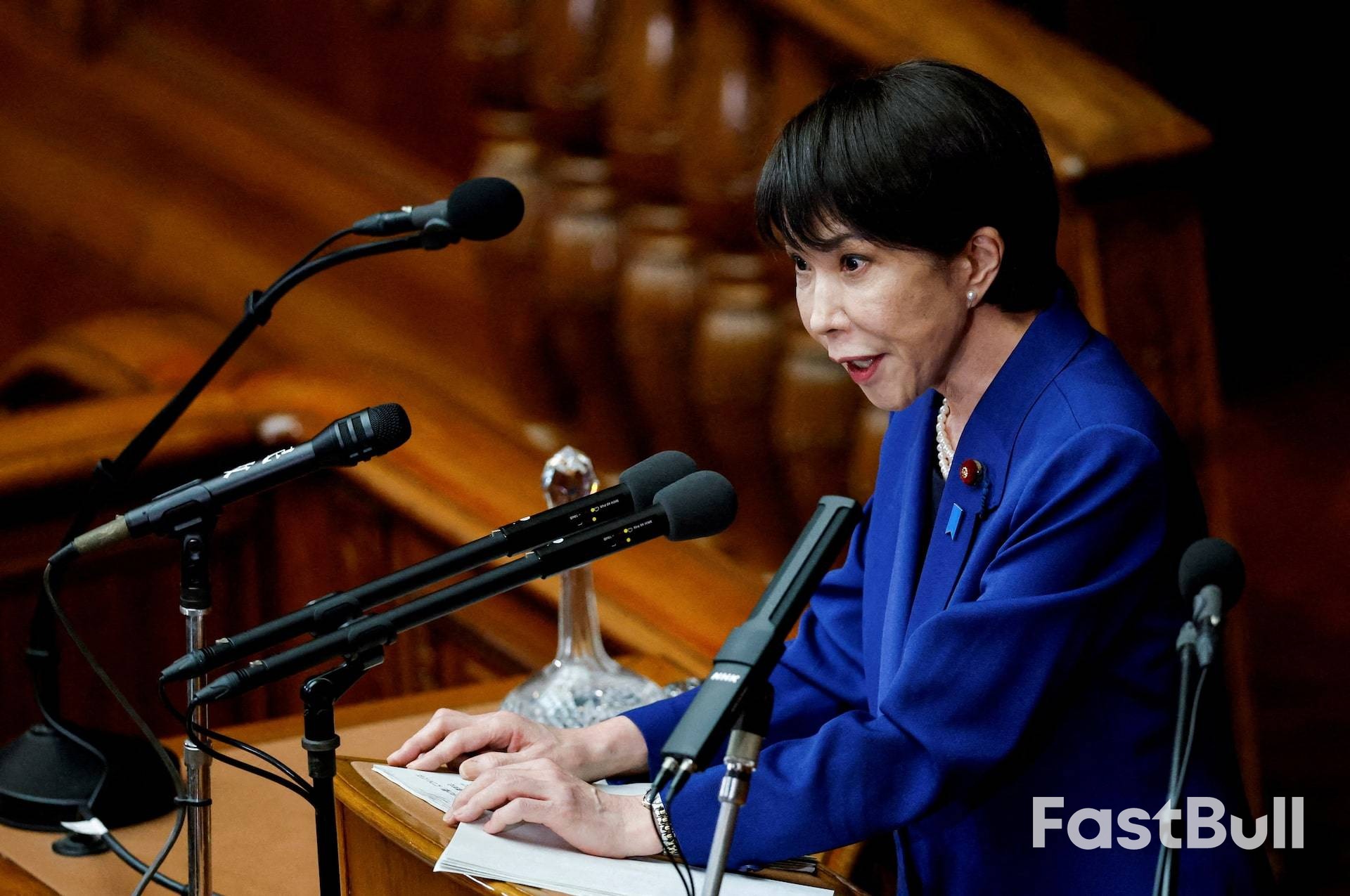
          Takaichi Calls Snap Election Amid Market and China Tensions

          James Riley

          Remarks of Officials

          Economic

          Daily News

          Political

          Japanese Prime Minister Sanae Takaichi is set to dissolve parliament next week to trigger a snap general election, a top party official confirmed Wednesday. The move is a high-stakes gamble to secure a public mandate for her controversial spending plans and hardline stance on China.

          Takaichi, Japan's first female prime minister, is aiming to capitalize on a surge in public support since she took office in October. Two lawmakers from the ruling party, speaking anonymously, indicated that the election is being considered for February 8.

          Prime Minister Sanae Takaichi addresses parliament. Her call for a snap election seeks to solidify public support for her government's economic and national security agenda.

          Seeking a Fresh Mandate for a New Coalition

          Shunichi Suzuki, secretary general of the Liberal Democratic Party (LDP), stated that the government needs to "seek a fresh mandate" from voters. He explained that a key reason for the election is to validate the LDP's new governing coalition.

          Last year, Takaichi broke a long-standing alliance with the more liberal Komeito party, forming a new partnership with the right-wing Japan Innovation Party, known as Ishin.

          "The previous election was under the LDP–Komeito government," Suzuki noted after meeting with the prime minister. "The public has not yet rendered a verdict on the change in our coalition partner." Takaichi is expected to formally announce her plans next Monday.

          Economic Policy on the Ballot

          The election will serve as a direct referendum on Takaichi's economic and security platform. Her agenda includes a significant boost in government spending to stimulate growth and increased defense outlays under a revised national security strategy.

          These fiscal expansion plans have already sent ripples through financial markets. Reports last week that Takaichi was mulling an early election prompted a selloff in the Japanese yen and government bonds, as investors grew concerned about how one of the world's most indebted nations would finance the new spending.

          The timing of the election may also disrupt the passage of the 2026 budget before the fiscal year concludes in March. According to the Yomiuri newspaper, the government is considering a temporary spending measure to bridge the gap.

          A High-Stakes Signal to Beijing

          The snap election comes as tensions between Japan and China have escalated to their worst point in over a decade. The dispute ignited last year when Takaichi described a potential Chinese attack on Taiwan as an "existential threat" to Japan.

          Beijing has repeatedly demanded she retract the statement, but Takaichi has refused. In response, China has implemented countermeasures, including advising its citizens against traveling to Japan and curbing exports of dual-use products.

          Analysts believe the election's outcome will have significant geopolitical implications. "The election would presumably be won on her handling of the economy," said Jeremy Chan, a senior analyst at the political risk consultancy Eurasia Group.

          "The upside for Takaichi of a convincing victory, though, is that it would also signal to Beijing that she is here to stay and China's suite of coercive tactics are not going to succeed in driving her from office," Chan added.

          To stay updated on all economic events of today, please check out our Economic calendar
          Risk Warnings and Disclaimers
          You understand and acknowledge that there is a high degree of risk involved in trading. Following any strategies or investment methods may lead to potential losses. The content on the site is provided by our contributors and analysts for information purposes only. You are solely responsible for determining whether any trading assets, securities, strategy, or any other product is suitable for investing based on your own investment objectives and financial situation.
          Add to Favorites
          Share

          Paris Summit to Bolster Lebanon's Army Against Hezbollah

          Thomas

          Remarks of Officials

          Middle East Situation

          Political

          Lebanon has announced a high-stakes international conference in Paris on March 5, aimed at strengthening its military forces as they work to disarm the militant group Hezbollah.

          The decision follows a meeting between Lebanese President Joseph Aoun and key international envoys, including representatives from France, Saudi Arabia, the United States, Egypt, and Qatar. French President Emmanuel Macron is scheduled to open the summit, which will focus on providing support for both the Lebanese army and its internal security forces.

          Geopolitical Pressure Fuels Disarmament Drive

          This international push comes as Lebanon operates under significant pressure from the United States and amid fears of expanded Israeli military action. The Lebanese government has committed to disarming the Iran-backed Hezbollah, which was significantly weakened after more than a year of conflict with Israel that concluded in late 2024.

          The conference aims to address the Lebanese army's critical needs, including funding, modern equipment, and technical expertise, which were discussed in preliminary talks with international envoys last month. As part of these discussions, Lebanon's army chief agreed to formally document the military's progress in neutralizing Hezbollah's capabilities.

          Army Reports Initial Success South of Litani River

          The Lebanese army has already made tangible progress on the ground. Last week, military officials confirmed the completion of the first phase of their disarmament plan, securing the area south of the Litani river, which lies approximately 30 kilometers from the Israeli border.

          Despite limited resources, the army has successfully dismantled Hezbollah tunnels and other military infrastructure near the Israeli frontier, seizing caches of weapons and ammunition in recent months. A detailed plan for the second phase of disarmament, targeting areas north of the Litani, is set to be presented to the cabinet next month.

          Israel and Hezbollah Remain Major Hurdles

          Despite these efforts, the situation remains tense. Israel has criticized the army's progress as insufficient, accusing Hezbollah of rearming. Meanwhile, Hezbollah has publicly rejected all calls to surrender its weapons.

          The security environment is further complicated by ongoing Israeli actions. Even with a ceasefire in place, Israel has continued to conduct regular strikes inside Lebanon, stating its targets are linked to Hezbollah. Furthermore, Israeli troops remain stationed in five areas of southern Lebanon that it considers strategically important.

          Risk Warnings and Disclaimers
          You understand and acknowledge that there is a high degree of risk involved in trading. Following any strategies or investment methods may lead to potential losses. The content on the site is provided by our contributors and analysts for information purposes only. You are solely responsible for determining whether any trading assets, securities, strategy, or any other product is suitable for investing based on your own investment objectives and financial situation.
          Add to Favorites
          Share

          Trump to Announce New Leadership for Post-War Gaza

          James Riley

          Latest news on the Israeli-Palestinian conflict

          Middle East Situation

          Palestinian-Israeli conflict

          Political

          U.S. President Donald Trump is set to announce a new administration for the war-ravaged Gaza Strip this Wednesday, advancing a phased plan for the Palestinian territory's future, according to four Palestinian sources.

          Displaced Palestinians are seen in a camp in Khan Younis, southern Gaza, as plans for the territory's future administration take shape.

          The move is a central part of a 20-point plan agreed to by Israel and Hamas in October. This framework outlines a transitional governance model for Gaza led by a technocratic Palestinian body, which will operate under the supervision of an international "Board of Peace" and will not include representation from Hamas.

          Unveiling the New Technocratic Body

          The proposed 14-member Palestinian body will be led by Ali Shaath, a former deputy minister in the Western-backed Palestinian Authority who previously managed the development of industrial zones.

          According to a list of names obtained by Reuters, the committee also includes figures from the private sector and non-governmental organizations. Key members tapped by Nickolay Mladenov, the former U.N. Middle East envoy expected to represent the Board of Peace, include:

          • Ayed Abu Ramadan, head of the Gaza Chamber of Commerce.

          • Omar Shamali, who has worked for the Palestinian Telecommunication Group PALTEL.

          Crucially, both Hamas and its rival Fatah group, led by Palestinian President Mahmoud Abbas, have endorsed the list of members, according to Egyptian and Palestinian sources. The committee members are scheduled to meet with Mladenov in Cairo on Wednesday.

          Phase Two Proceeds Despite Unresolved Issues

          Although both Israel and Hamas accuse each other of violating the initial agreement, President Trump is reportedly keen to proceed to the plan's second phase. This next stage involves formally establishing the Board of Peace and deploying peacekeeping forces, a detail that has yet to be finalized.

          The first phase, which centered on a ceasefire and hostage release, has been undermined by several persistent problems:

          • Israeli airstrikes in Gaza have killed hundreds of people.

          • Hamas has refused to disarm.

          • The remains of one last Israeli hostage have not been returned.

          • Israel has delayed the reopening of Gaza's Rafah border crossing with Egypt.

          Disarmament Remains a Key Hurdle in Cairo Talks

          Hamas leaders and other Palestinian factions are currently in Cairo for discussions on the second phase of the plan. Egyptian sources indicate that the talks are now focused on the critical issue of Hamas's disarmament.

          Hamas has consistently stated it will not lay down its weapons until a Palestinian state is established. This position creates a significant roadblock, as further Israeli withdrawals from within Gaza are directly tied to the group's disarmament.

          Israeli officials did not provide an immediate response when asked for comment on the developments.

          Risk Warnings and Disclaimers
          You understand and acknowledge that there is a high degree of risk involved in trading. Following any strategies or investment methods may lead to potential losses. The content on the site is provided by our contributors and analysts for information purposes only. You are solely responsible for determining whether any trading assets, securities, strategy, or any other product is suitable for investing based on your own investment objectives and financial situation.
          Add to Favorites
          Share
          FastBull
          Copyright © 2026 FastBull Ltd

          728 RM B 7/F GEE LOK IND BLDG NO 34 HUNG TO RD KWUN TONG KLN HONG KONG

          TelegramInstagramTwitterfacebooklinkedin
          App Store Google Play Google Play
          Products
          Charts

          Chats

          Q&A with Experts
          Screeners
          Economic Calendar
          Data
          Tools
          Membership
          Features
          Function
          Markets
          Copy Trading
          Latest Signals
          Contests
          News
          Analysis
          24/7
          Columns
          Education
          Company
          Careers
          About Us
          Contact Us
          Advertising
          Help Center
          Feedback
          User Agreement
          Privacy Policy
          Personal Information Protection Statement
          Business

          White Label

          Data API

          Web Plug-ins

          Poster Maker

          Affiliate Program

          Risk Disclosure

          The risk of loss in trading financial instruments such as stocks, FX, commodities, futures, bonds, ETFs and crypto can be substantial. You may sustain a total loss of the funds that you deposit with your broker. Therefore, you should carefully consider whether such trading is suitable for you in light of your circumstances and financial resources.

          No decision to invest should be made without thoroughly conducting due diligence by yourself or consulting with your financial advisors. Our web content might not suit you since we don't know your financial conditions and investment needs. Our financial information might have latency or contain inaccuracy, so you should be fully responsible for any of your trading and investment decisions. The company will not be responsible for your capital loss.

          Without getting permission from the website, you are not allowed to copy the website's graphics, texts, or trademarks. Intellectual property rights in the content or data incorporated into this website belong to its providers and exchange merchants.

          Not Logged In

          Log in to access more features

          FastBull Membership

          Not yet

          Purchase

          Become a signal provider
          Help Center
          Customer Service
          Dark Mode
          Price Up/Down Colors

          Log In

          Sign Up

          Position
          Layout
          Fullscreen
          Default to Chart
          The chart page opens by default when you visit fastbull.com