Markets
News
Analysis
User
24/7
Economic Calendar
Education
Data
- Names
- Latest
- Prev


Signal Accounts for Members
All Signal Accounts
All Contests


The Thailand Futures Exchange (TFEX) Has Announced A Temporary Suspension Of Online Trading In Silver Futures
Source: Trump Offered To Unfreeze Funding For Nyc Tunnel If Dulles Airport, Train Station Renamed For Him
USA Military Says It Attacked An Alleged Drug Vessel In The Eastern Pacific On Thursday And Killed Two People
Spot Gold Has Climbed Back Above $4,800 Per Ounce, Rebounding Nearly $150 From Its Daily Low, Up 0.43% On The Day

Germany Construction PMI (SA) (Jan)A:--
F: --
P: --
Italy Retail Sales MoM (SA) (Dec)A:--
F: --
P: --
U.K. Markit/CIPS Construction PMI (Jan)A:--
F: --
P: --
France 10-Year OAT Auction Avg. YieldA:--
F: --
P: --
Euro Zone Retail Sales YoY (Dec)A:--
F: --
Euro Zone Retail Sales MoM (Dec)A:--
F: --
U.K. BOE MPC Vote Cut (Feb)A:--
F: --
P: --
U.K. BOE MPC Vote Hike (Feb)A:--
F: --
P: --
U.K. BOE MPC Vote Unchanged (Feb)A:--
F: --
P: --
U.K. Benchmark Interest RateA:--
F: --
P: --
MPC Rate Statement
U.S. Challenger Job Cuts (Jan)A:--
F: --
P: --
U.S. Challenger Job Cuts MoM (Jan)A:--
F: --
P: --
U.S. Challenger Job Cuts YoY (Jan)A:--
F: --
P: --
Bank of England Governor Bailey held a press conference on monetary policy.
Euro Zone ECB Marginal Lending RateA:--
F: --
P: --
Euro Zone ECB Deposit RateA:--
F: --
P: --
Euro Zone ECB Main Refinancing RateA:--
F: --
P: --
ECB Monetary Policy Statement
U.S. Weekly Initial Jobless Claims (SA)A:--
F: --
P: --
U.S. Initial Jobless Claims 4-Week Avg. (SA)A:--
F: --
P: --
U.S. Weekly Continued Jobless Claims (SA)A:--
F: --
ECB Press Conference
U.S. JOLTS Job Openings (SA) (Dec)A:--
F: --
U.S. EIA Weekly Natural Gas Stocks ChangeA:--
F: --
P: --
BOC Gov Macklem Speaks
Mexico Policy Interest RateA:--
F: --
P: --
U.S. Weekly Treasuries Held by Foreign Central BanksA:--
F: --
P: --
Reserve Bank of Australia Governor Bullock testified before Parliament.
Japan Foreign Exchange Reserves (Jan)A:--
F: --
P: --
India Benchmark Interest Rate--
F: --
P: --
India Cash Reserve Ratio--
F: --
P: --
India Repo Rate--
F: --
P: --
India Reverse Repo Rate--
F: --
P: --
Japan Leading Indicators Prelim (Dec)--
F: --
P: --
Germany Industrial Output MoM (SA) (Dec)--
F: --
P: --
Germany Exports MoM (SA) (Dec)--
F: --
P: --
U.K. Halifax House Price Index YoY (SA) (Jan)--
F: --
P: --
U.K. Halifax House Price Index MoM (SA) (Jan)--
F: --
P: --
France Trade Balance (SA) (Dec)--
F: --
P: --
Canada Leading Index MoM (Jan)--
F: --
P: --
India Deposit Gowth YoY--
F: --
P: --
Canada Employment (SA) (Jan)--
F: --
Canada Full-time Employment (SA) (Jan)--
F: --
Canada Part-Time Employment (SA) (Jan)--
F: --
Canada Unemployment Rate (SA) (Jan)--
F: --
P: --
Canada Labor Force Participation Rate (SA) (Jan)--
F: --
P: --
Due to the previous government shutdown, the release date of the US January non-farm payroll report has been changed to February 11.
Canada Ivey PMI (Not SA) (Jan)--
F: --
P: --
Canada Ivey PMI (SA) (Jan)--
F: --
P: --
U.S. 5-10 Year-Ahead Inflation Expectations (Feb)--
F: --
P: --
U.S. UMich Consumer Sentiment Index Prelim (Feb)--
F: --
P: --
U.S. UMich 1-Year-Ahead Inflation Expectations Prelim (Feb)--
F: --
P: --
U.S. UMich 5-Year-Ahead Inflation Expectations Prelim YoY (Feb)--
F: --
P: --
U.S. UMich Current Economic Conditions Index Prelim (Feb)--
F: --
P: --
U.S. UMich Consumer Expectations Index Prelim (Feb)--
F: --
P: --
China, Mainland Foreign Exchange Reserves (Jan)--
F: --
P: --
Russia Retail Sales YoY (Dec)--
F: --
P: --
Russia Unemployment Rate (Dec)--
F: --
P: --
Russia Quarterly GDP Prelim YoY (Q1)--
F: --
P: --
U.S. Weekly Total Oil Rig Count--
F: --
P: --


No matching data
View All

No data
Trump-Xi dialogue highlights US-China divergence on Taiwan's status while hinting at economic cooperation.
A lengthy two-hour phone call between President Trump and President Xi on Wednesday painted two starkly different pictures of the U.S.-China relationship. While Trump celebrated the conversation as "excellent" and "thorough," the official Chinese summary revealed a more contentious discussion centered on Beijing's core interests.
According to Beijing's readout, Xi Jinping dedicated a significant portion of the call to Taiwan, which he described as "the most important issue in China-U.S. relations." He delivered a direct warning, declaring that China "will never allow Taiwan to be separated from China."
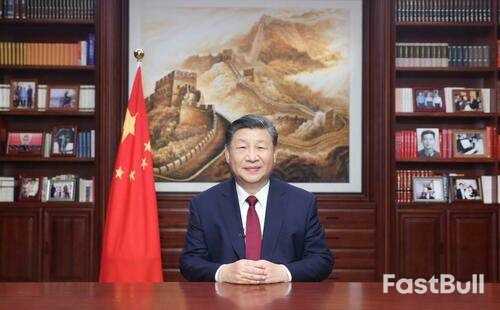
Xi specifically targeted Washington's ongoing military support for the self-ruled island, stating, "The US must handle arms sales to Taiwan with extreme caution." This was a clear reference to the billions in arms packages approved by multiple U.S. administrations.
Taiwan responded quickly to the details of the call. President Lai Ching-te told reporters on Thursday that the bilateral relationship remains strong. "The Taiwan-US relationship is rock solid, and all cooperation projects will continue uninterrupted," he affirmed.
Separately, Taiwan's foreign ministry highlighted that U.S. weapons sales are proceeding without interruption, despite Xi's warnings.
Despite the geopolitical friction, the call also contained a potential economic goodwill gesture. President Trump announced that China is considering a substantial increase in its purchases of U.S.-farmed soybeans, from 12 million tons to 20 million metric tons for the current season. The news prompted a rally in soybean futures.
President Trump has consistently emphasized the importance of maintaining open communication with Beijing. Following the call, he posted on Truth Social, "The relationship with China, and my personal relationship with President Xi, is an extremely good one, and we both realize how important it is to keep it that way." He added, "I believe that there will be many positive results achieved over the next three years of my Presidency."
However, this optimistic tone contrasts with recent actions. In December, the U.S. State Department announced its largest-ever arms sale package to Taiwan, valued at over $11.1 billion and including missiles, artillery systems, and drones. The package still requires approval from Congress.
China's reaction to that proposal was swift and angry, culminating in two days of large-scale military drills involving air, navy, and missile units around Taiwan in late December.
Treasury Secretary Scott Bessent faced sharp questioning from the U.S. Senate regarding President Donald Trump's aggressive push for interest rate cuts, a campaign that critics fear could ignite inflation.
During a Thursday hearing of the Senate's Financial Stability Oversight Council, Democratic senators pressed Bessent on rising consumer prices and Trump's apparent efforts to influence the Federal Reserve, the nation's independent central bank.

The hearing follows President Trump's repeated public demands for the Federal Reserve to slash interest rates as low as possible. In a December interview with The Wall Street Journal, Trump stated he wanted to see rates at "one percent and maybe lower than that," adding, "We should have the lowest rate in the world." The current federal interest rate stands at approximately 3.6 percent.
Economists warn that while a sudden, deep rate cut could create a short-term market boom by making loans cheaper, the resulting flood of cash into the economy could devalue the dollar and trigger higher prices over the long term.
This push for lower rates coincides with Trump's nomination of Kevin Warsh to replace Jerome Powell as Federal Reserve chair. Powell has drawn sustained criticism from the president for his policy of lowering rates gradually.
The Federal Reserve has long operated as an independent agency, a principle designed to shield national monetary policy from political interference. However, critics accuse President Trump of attempting to undermine this independence through legal threats and investigations targeting Fed members.
Recent actions have intensified these concerns:
• Lisa Cook: In August, Trump tried to fire Federal Reserve Governor Lisa Cook, an appointee of his predecessor Joe Biden, over allegations of mortgage fraud, which she denies. Cook has claimed the move was politically motivated, and the case is now before the Supreme Court.
• Jerome Powell: In early January, the Department of Justice launched a criminal investigation into current Fed Chair Jerome Powell, focusing on his management of renovations to the Federal Reserve building. Powell responded with a rare public statement, accusing the president of using the threat of criminal charges to bully Fed leaders into adopting his preferred interest rate policy.
Against this backdrop, a recent comment from President Trump about his Fed nominee fueled further alarm. Trump joked about suing Kevin Warsh if he failed to follow presidential demands on interest rates. While Trump later dismissed the remark as "all comedy" during a press gaggle on Air Force One, senators at the hearing were not amused.
Warren Questions Fed Nominee's Independence
Senator Elizabeth Warren directly confronted Bessent over the report, asking for a commitment that Warsh would not be sued or investigated if he did not cut interest rates as Trump desires.
"Mr Secretary, can you commit right here and now that Trump's Fed nominee Kevin Warsh will not be sued, will not be investigated by the Department of Justice, if he doesn't cut interest rates exactly the way that Donald Trump wants?" Warren asked.
Bessent sidestepped the question, replying, "That is up to the president."
Warren rebuked the Treasury chief, stating, "I don't think the American people are laughing. They're the ones who were struggling with the affordability."

Bipartisan Rebuke from Senator Tillis
The concern over the administration's actions extended across the aisle. Senator Thom Tillis, a Republican, opened his remarks by denouncing the investigation into Jerome Powell. While acknowledging his own disappointment with the current Fed chair, Tillis stated his belief that Powell committed no crime.
He warned that such probes would discourage transparency and hinder future oversight hearings, imagining a scenario where officials, fearing "perjury traps," would refuse to answer questions without extensive legal consultation. "Is that really the way we want oversight to go in the future?" Tillis asked.

For his part, Bessent told the council that he supported the Federal Reserve's long-term inflation target of about 2 percent. "What is desirable is to get back to the Fed's 2 percent target, and for the past three months, we've been at 2.1 percent," he noted.
The hearing also turned to another contentious issue: President Trump's lawsuit against the Internal Revenue Service (IRS), a department within his own executive branch.
Trump is seeking $10 billion in damages related to the leak of his tax returns during his first term. The leak was perpetrated by a former government contractor, Charles Littlejohn, who has since been sentenced to five years in prison.
Democrat Ruben Gallego questioned the apparent conflict of interest, given that Trump's own Justice Department would defend the lawsuit and could potentially approve a settlement paid for by taxpayers.
When Gallego asked where the $10 billion would come from, Bessent confirmed, "It would come from Treasury." He added that Trump has said any awarded money would go to charity and that the Treasury would not be the entity deciding on the damages.
Gallego pressed further, noting that Bessent, as a political appointee who can be fired by the president, would ultimately be in charge of disbursing the funds. "Have you recused yourself from any decisions about paying the president on these claims?" Gallego asked.
Bessent again evaded a direct answer, stating simply, "I will follow the law."
Cuba is set to implement a new national plan to manage severe fuel shortages after the United States moved to block supplies to the island nation. President Miguel Diaz-Canel announced the strategy, which focuses on renewable energy and increasing domestic production to maintain essential services.

The situation has grown increasingly difficult, with President Diaz-Canel describing the US stance as "aggressive and criminal." The shortages have triggered rising food and transportation costs and led to blackouts across the country, affecting everything from hospitals and schools to tourism and food production.
To counter the fuel crisis, Cuba's government plans to leverage renewable resources and boost its own energy infrastructure. Key elements of the strategy include:
• Expanding Solar Power: The nation will ramp up its solar generation capabilities to provide electricity for critical facilities like hospitals, elderly care centers, and remote regions. Cuba already produces approximately 1,000 megawatts from solar panels, accounting for 38% of its daytime electricity, largely thanks to installations supported by China over the last two years.
• Boosting Domestic Oil Production: Efforts are underway to increase Cuba's crude oil extraction and expand its storage capacity, aiming for greater self-sufficiency.
• Securing Imports: Despite the challenges, Diaz-Canel affirmed Cuba's "right" to receive fuel shipments by sea and stated that the government will continue all necessary steps to ensure imports can resume.
In a two-hour televised press conference, the president acknowledged the difficulty of the situation. "We are going to take measures that, while not permanent, will require effort," he said, adding that some plans would be restrictive and require adjustments in consumption and a focus on savings.
The fuel shortage has had a direct impact on daily life. Last week, tensions escalated after the U.S. threatened tariffs on any country sending oil to Cuba. This followed a statement from U.S. President Donald Trump that Cuba would no longer receive oil from its primary supplier, Venezuela.
The strain on the country's infrastructure was highlighted by a recent substation failure that caused a complete blackout in five eastern provinces. "How do we till our soil? How do we move around? How do we keep our kids in classes without fuel?" Diaz-Canel asked.
On the diplomatic front, Cuban officials recently held a phone call with Russian Foreign Minister Sergey Lavrov, though no details were released. Meanwhile, Mexico has committed to sending humanitarian aid, including food, after President Trump asked the country to suspend its oil shipments to the island.
President Diaz-Canel reiterated Cuba's willingness to engage in dialogue with the United States, but only under specific conditions. "Cuba is willing to engage in dialogue, but with the sole demand that the US government not attempt to interfere in Cuba's internal affairs, nor undermine our sovereignty," he stated.
Confirming this, Cuba's top diplomat to the U.S., Carlos Fernandez de Cossio, told Reuters that communication with the U.S. government has begun, but a formal bilateral dialogue has not yet been established.
The U.S. agricultural sector faces growing financial stress, with a new forecast from the Department of Agriculture (USDA) projecting a drop in net farm income for 2026. This modest decline, however, is being softened by near-record government payments, which now account for nearly 29% of producers' total earnings.
Without this federal support, the industry's financial picture would be far bleaker, revealing deep-seated economic challenges for American farmers.
According to the USDA's latest data, net farm income—a key barometer of the agricultural economy's health—is forecast to fall by 0.7% to $153.4 billion in 2026 compared to the previous year.
When adjusted for inflation, the decline is more pronounced, with income projected to decrease by $4.1 billion, or 2.6%.
The outlook varies by commodity:
• Crops: Cash receipts are expected to rise for corn, remain steady for soybeans, and fall for wheat.
• Livestock: Overall receipts are projected to drop, driven by lower egg and milk prices, though cattle receipts are forecast to continue increasing.
This data, typically released three times a year, incorporated delayed findings from a December report that was postponed due to a federal government shutdown. Agricultural economists note this delay has made it more difficult to assess the full extent of financial stress in the sector.
Federal subsidies are playing an outsized role in stabilizing farm finances. The USDA projects producers will receive $30.5 billion in direct government payments in 2025 and a staggering $44.3 billion in 2026. These figures exclude additional payouts from federal crop insurance programs.
These support levels are approaching those seen in 2020 and 2021, a period marked by the COVID-19 pandemic and major trade disruptions. The USDA attributes the high payments to Farm Bill programs triggered by falling crop prices, as well as ongoing supplemental and disaster assistance.
The impact of this aid is dramatic. Without government payments, net farm income would plummet by nearly 12% to $109.1 billion, according to agency data.
"Government payments are doing a lot of the work in supporting crop producers," said Wesley Davis, a partner at the agricultural economics consultancy Meridian Agribusiness Advisors.
Even with historic levels of federal aid, many farmers are struggling to stay afloat as they take on record levels of debt. Economists, farmers, and lawmakers warn that current support may not be enough to counter a wave of economic pressures, including:
• Persistently low crop prices
• A global grain glut
• Rising operational costs
• Lost export sales resulting from Trump-era trade and economic policies
The growing dependency on federal aid has raised alarms. The chair of the U.S. Senate's agriculture committee stated on Tuesday that many farmers are already suffering heavy losses.
In a separate warning, more than two dozen former USDA officials and industry leaders cautioned lawmakers that U.S. agriculture is at risk of a "widespread collapse," citing the lingering effects of the Trump administration's policies as a key factor. As farmers rely more on federal support to pay their bills, the underlying stability of the sector remains a critical concern for policymakers.


Despite recent volatility shaking the metals market, analysts at Canadian bank CIBC are doubling down on their bullish outlook for gold and silver, expecting prices to climb significantly by year-end.
In a recent report, CIBC’s commodity analysts sharply raised their gold price forecast, projecting an average of $6,000 per ounce this year. This marks a substantial increase from their previous estimate of $4,500 per ounce. The bank sees a continued uptrend, with prices potentially peaking at an average of $6,500 an ounce in 2027.
The bullish call comes as gold encounters fresh resistance at the $5,000 level and enters a consolidation phase. Spot gold was last trading at $4,863.10 an ounce. For silver, CIBC forecasts an average price of around $105 an ounce this year, rising to $120 an ounce in the next.

According to the bank's analysts, the fundamental drivers that supported precious metals in 2025 are still firmly in place, even with the recent price correction. Two factors stand out:
• Persistent Geopolitical Uncertainty: This is expected to continue fueling safe-haven demand for gold.
• Anticipated U.S. Dollar Weakness: This is viewed as a key tailwind that will push gold prices higher.
Analysts noted that "dollar debasement is likely to persist" as central banks and investors react to heightened uncertainty by quietly shifting allocations away from U.S. treasuries. They also anticipate that rate cuts and ongoing tension between the Federal Reserve and the White House will exert further pressure on the dollar.
CIBC noted that gold's recent selloff from record highs was triggered by President Donald Trump's announcement that he would nominate Kevin Warsh to replace Jerome Powell as head of the Federal Reserve.
Markets reacted negatively, expecting Warsh, a former Federal Reserve Governor, to tighten monetary policy. However, CIBC analysts describe Trump's pick as a "dove in hawk's clothing," suggesting the market’s initial reaction was misplaced.
Their report states, "Mr. Warsh is seemingly more aligned with a dovish stance than last week's negative market reaction would imply." The analysts point out that Warsh has previously argued for tightening the Fed's balance sheet as a method to control inflation, which would then allow for lower interest rates for "Main Street." More recently, he has supported Trump's government efficiency initiatives as another path to temper inflation and enable lower rates.
Ultimately, CIBC believes that "it is unlikely that any candidate would do anything but guide the Federal Reserve Board to lower rates in 2026."
Beyond U.S. monetary policy, CIBC points to the broader trend of global fiat currency debasement as a long-term catalyst for gold demand.
The report argues that with U.S. Treasuries—the traditional safe-haven asset—no longer considered "risk-free," both investors and central banks are actively seeking alternatives. The options are slim, as most Western economies face near-record debt-to-GDP ratios and are choosing to inflate rather than restrain their way out of the problem.
This environment has eroded investor confidence in fiat currencies, a trend that has directly fueled a "flight to safety" into gold.
The risk of loss in trading financial instruments such as stocks, FX, commodities, futures, bonds, ETFs and crypto can be substantial. You may sustain a total loss of the funds that you deposit with your broker. Therefore, you should carefully consider whether such trading is suitable for you in light of your circumstances and financial resources.
No decision to invest should be made without thoroughly conducting due diligence by yourself or consulting with your financial advisors. Our web content might not suit you since we don't know your financial conditions and investment needs. Our financial information might have latency or contain inaccuracy, so you should be fully responsible for any of your trading and investment decisions. The company will not be responsible for your capital loss.
Without getting permission from the website, you are not allowed to copy the website's graphics, texts, or trademarks. Intellectual property rights in the content or data incorporated into this website belong to its providers and exchange merchants.
Not Logged In
Log in to access more features
Log In
Sign Up