• Trade
  • Markets
  • Copy
  • Contests
  • News
  • 24/7
  • Calendar
  • Q&A
  • Chats
Trending
Screeners
SYMBOL
LAST
BID
ASK
HIGH
LOW
NET CHG.
%CHG.
SPREAD
SPX
S&P 500 Index
6827.42
6827.42
6827.42
6899.86
6801.80
-73.58
-1.07%
--
DJI
Dow Jones Industrial Average
48458.04
48458.04
48458.04
48886.86
48334.10
-245.98
-0.51%
--
IXIC
NASDAQ Composite Index
23195.16
23195.16
23195.16
23554.89
23094.51
-398.69
-1.69%
--
USDX
US Dollar Index
97.950
98.030
97.950
98.500
97.950
-0.370
-0.38%
--
EURUSD
Euro / US Dollar
1.17394
1.17409
1.17394
1.17496
1.17192
+0.00011
+ 0.01%
--
GBPUSD
Pound Sterling / US Dollar
1.33707
1.33732
1.33707
1.33997
1.33419
-0.00148
-0.11%
--
XAUUSD
Gold / US Dollar
4299.39
4299.39
4299.39
4353.41
4257.10
+20.10
+ 0.47%
--
WTI
Light Sweet Crude Oil
57.233
57.485
57.233
58.011
56.969
-0.408
-0.71%
--

Community Accounts

Signal Accounts
--
Profit Accounts
--
Loss Accounts
--
View More

Become a signal provider

Sell trading signals to earn additional income

View More

Guide to Copy Trading

Get started with ease and confidence

View More

Signal Accounts for Members

All Signal Accounts

Best Return
  • Best Return
  • Best P/L
  • Best MDD
Past 1W
  • Past 1W
  • Past 1M
  • Past 1Y

All Contests

  • All
  • Trump Updates
  • Recommend
  • Stocks
  • Cryptocurrencies
  • Central Banks
  • Featured News
Top News Only
Share

Ukraine Says It Received 114 Prisoners From Belarus

Share

USA Embassy In Lithuania: Maria Kalesnikava Is Not Going To Vilnius

Share

USA Embassy In Lithuania: Other Prisoners Are Being Sent From Belarus To Ukraine

Share

Ukraine President Zelenskiy: Five Ukrainians Released By Belarus In US-Brokered Deal

Share

USA Vilnius Embassy: USA Stands Ready For "Additional Engagement With Belarus That Advances USA Interests"

Share

USA Vilnius Embassy: Belarus, USA, Other Citizens Among The Prisoners Released Into Lithuania

Share

USA Vilnius Embassy: USA Will Continue Diplomatic Efforts To Free The Remaining Political Prisoners In Belarus

Share

USA Vilnius Embassy: Belarus Releases 123 Prisoners Following Meeting Of President Trump's Envoy Coale And Belarus President Lukashenko

Share

USA Vilnius Embassy: Masatoshi Nakanishi, Aliaksandr Syrytsa Are Among The Prisoners Released By Belarus

Share

USA Vilnius Embassy: Maria Kalesnikava And Viktor Babaryka Are Among The Prisoners Released By Belarus

Share

USA Vilnius Embassy: Nobel Peace Prize Laureate Ales Bialiatski Is Among The Prisoners Released By Belarus

Share

Belarusian Presidential Administration Telegram Channel: Lukashenko Has Pardoned 123 Prisoners As Part Of Deal With US

Share

Two Local Syrian Officials: Joint US-Syrian Military Patrol In Central Syria Came Under Fire From Unknown Assailants

Share

Israeli Military Says It Targeted 'Key Hamas Terrorist' In Gaza City

Share

Rwanda's Actions In Eastern Drc Are A Clear Violation Of Washington Accords Signed By President Trump - Secretary Of State Rubio

Share

Israeli Military Issues Evacuation Warning In Southern Lebanon Village Ahead Of Strike - Spokesperson On X

Share

Belarusian State Media Cites US Envoy Coale As Saying He Discussed Ukraine And Venezuela With Lukashenko

Share

Belarusian State Media Cites US Envoy Coale As Saying That US Removes Sanctions On Belarusian Potassium

Share

Thai Prime Minister: No Ceasefire Agreement With Cambodia

Share

US, Ukraine To Discuss Ceasefire In Berlin Ahead Of European Summit

TIME
ACT
FCST
PREV
U.K. Trade Balance Non-EU (SA) (Oct)

A:--

F: --

P: --

U.K. Trade Balance (Oct)

A:--

F: --

P: --

U.K. Services Index MoM

A:--

F: --

P: --

U.K. Construction Output MoM (SA) (Oct)

A:--

F: --

P: --

U.K. Industrial Output YoY (Oct)

A:--

F: --

P: --

U.K. Trade Balance (SA) (Oct)

A:--

F: --

P: --

U.K. Trade Balance EU (SA) (Oct)

A:--

F: --

P: --

U.K. Manufacturing Output YoY (Oct)

A:--

F: --

P: --

U.K. GDP MoM (Oct)

A:--

F: --

P: --

U.K. GDP YoY (SA) (Oct)

A:--

F: --

P: --

U.K. Industrial Output MoM (Oct)

A:--

F: --

P: --

U.K. Construction Output YoY (Oct)

A:--

F: --

P: --

France HICP Final MoM (Nov)

A:--

F: --

P: --

China, Mainland Outstanding Loans Growth YoY (Nov)

A:--

F: --

P: --

China, Mainland M2 Money Supply YoY (Nov)

A:--

F: --

P: --

China, Mainland M0 Money Supply YoY (Nov)

A:--

F: --

P: --

China, Mainland M1 Money Supply YoY (Nov)

A:--

F: --

P: --

India CPI YoY (Nov)

A:--

F: --

P: --

India Deposit Gowth YoY

A:--

F: --

P: --

Brazil Services Growth YoY (Oct)

A:--

F: --

P: --

Mexico Industrial Output YoY (Oct)

A:--

F: --

P: --

Russia Trade Balance (Oct)

A:--

F: --

P: --

Philadelphia Fed President Henry Paulson delivers a speech
Canada Building Permits MoM (SA) (Oct)

A:--

F: --

P: --

Canada Wholesale Sales YoY (Oct)

A:--

F: --

P: --

Canada Wholesale Inventory MoM (Oct)

A:--

F: --

P: --

Canada Wholesale Inventory YoY (Oct)

A:--

F: --

P: --

Canada Wholesale Sales MoM (SA) (Oct)

A:--

F: --

P: --

Germany Current Account (Not SA) (Oct)

A:--

F: --

P: --

U.S. Weekly Total Rig Count

A:--

F: --

P: --

U.S. Weekly Total Oil Rig Count

A:--

F: --

P: --

Japan Tankan Large Non-Manufacturing Diffusion Index (Q4)

--

F: --

P: --

Japan Tankan Small Manufacturing Outlook Index (Q4)

--

F: --

P: --

Japan Tankan Large Non-Manufacturing Outlook Index (Q4)

--

F: --

P: --

Japan Tankan Large Manufacturing Outlook Index (Q4)

--

F: --

P: --

Japan Tankan Small Manufacturing Diffusion Index (Q4)

--

F: --

P: --

Japan Tankan Large Manufacturing Diffusion Index (Q4)

--

F: --

P: --

Japan Tankan Large-Enterprise Capital Expenditure YoY (Q4)

--

F: --

P: --

U.K. Rightmove House Price Index YoY (Dec)

--

F: --

P: --

China, Mainland Industrial Output YoY (YTD) (Nov)

--

F: --

P: --

China, Mainland Urban Area Unemployment Rate (Nov)

--

F: --

P: --

Saudi Arabia CPI YoY (Nov)

--

F: --

P: --

Euro Zone Industrial Output YoY (Oct)

--

F: --

P: --

Euro Zone Industrial Output MoM (Oct)

--

F: --

P: --

Canada Existing Home Sales MoM (Nov)

--

F: --

P: --

Euro Zone Total Reserve Assets (Nov)

--

F: --

P: --

U.K. Inflation Rate Expectations

--

F: --

P: --

Canada National Economic Confidence Index

--

F: --

P: --

Canada New Housing Starts (Nov)

--

F: --

P: --

U.S. NY Fed Manufacturing Employment Index (Dec)

--

F: --

P: --

U.S. NY Fed Manufacturing Index (Dec)

--

F: --

P: --

Canada Core CPI YoY (Nov)

--

F: --

P: --

Canada Manufacturing Unfilled Orders MoM (Oct)

--

F: --

P: --

Canada Manufacturing New Orders MoM (Oct)

--

F: --

P: --

Canada Core CPI MoM (Nov)

--

F: --

P: --

Canada Manufacturing Inventory MoM (Oct)

--

F: --

P: --

Canada CPI YoY (Nov)

--

F: --

P: --

Canada CPI MoM (Nov)

--

F: --

P: --

Canada CPI YoY (SA) (Nov)

--

F: --

P: --

Canada Core CPI MoM (SA) (Nov)

--

F: --

P: --

Q&A with Experts
    • All
    • Chatrooms
    • Groups
    • Friends
    Connecting
    .
    .
    .
    Type here...
    Add Symbol or Code

      No matching data

      All
      Trump Updates
      Recommend
      Stocks
      Cryptocurrencies
      Central Banks
      Featured News
      • All
      • Russia-Ukraine Conflict
      • Middle East Flashpoint
      • All
      • Russia-Ukraine Conflict
      • Middle East Flashpoint
      Search
      Products

      Charts Free Forever

      Chats Q&A with Experts
      Screeners Economic Calendar Data Tools
      Membership Features
      Data Warehouse Market Trends Institutional Data Policy Rates Macro

      Market Trends

      Market Sentiment Order Book Forex Correlations

      Top Indicators

      Charts Free Forever
      Markets

      News

      News Analysis 24/7 Columns Education
      From Institutions From Analysts
      Topics Columnists

      Latest Views

      Latest Views

      Trending Topics

      Top Columnists

      Latest Update

      Signals

      Copy Rankings Latest Signals Become a signal provider AI Rating
      Contests
      Brokers

      Overview Brokers Assessment Rankings Regulators News Claims
      Broker listing Forex Brokers Comparison Tool Live Spread Comparison Scam
      Q&A Complaint Scam Alert Videos Tips to Detect Scam
      More

      Business
      Events
      Careers About Us Advertising Help Center

      White Label

      Data API

      Web Plug-ins

      Affiliate Program

      Awards Institution Evaluation IB Seminar Salon Event Exhibition
      Vietnam Thailand Singapore Dubai
      Fans Party Investment Sharing Session
      FastBull Summit BrokersView Expo
      Recent Searches
        Top Searches
          Markets
          News
          Analysis
          User
          24/7
          Economic Calendar
          Education
          Data
          • Names
          • Latest
          • Prev

          View All

          No data

          Scan to Download

          Faster Charts, Chat Faster!

          Download App
          English
          • English
          • Español
          • العربية
          • Bahasa Indonesia
          • Bahasa Melayu
          • Tiếng Việt
          • ภาษาไทย
          • Français
          • Italiano
          • Türkçe
          • Русский язык
          • 简中
          • 繁中
          Open Account
          Search
          Products
          Charts Free Forever
          Markets
          News
          Signals

          Copy Rankings Latest Signals Become a signal provider AI Rating
          Contests
          Brokers

          Overview Brokers Assessment Rankings Regulators News Claims
          Broker listing Forex Brokers Comparison Tool Live Spread Comparison Scam
          Q&A Complaint Scam Alert Videos Tips to Detect Scam
          More

          Business
          Events
          Careers About Us Advertising Help Center

          White Label

          Data API

          Web Plug-ins

          Affiliate Program

          Awards Institution Evaluation IB Seminar Salon Event Exhibition
          Vietnam Thailand Singapore Dubai
          Fans Party Investment Sharing Session
          FastBull Summit BrokersView Expo

          Super Central Bank Week Trading News

          King Ten

          Commodity

          Summary:

          The "Super Central Bank Week" is back this week, with the Federal Reserve, the Bank of England and the Reserve Bank of Australia set to announce their interest rate resolutions; the global markets are waiting with bated breath, as "some families are happy, and some families have worries”, will there be any surprises?

          The Agenda of Global Central Banks

          Monday ( 31st October): Speech by Vesko, the ECB Governing Council, and speech by Philip Lane, the ECB Chief Economist.
          Tuesday (1 November): the Reserve Bank of Australia will release its interest rate resolution; president Philip Lowe will deliver a speech; The governor of the Sveriges Riksbank, Stefan Ingves, will deliver a speech. The Bank of Korea will release the summaries of its October monetary policy meeting.
          Wednesday ( 2nd November): The Reserve Bank of New Zealand will publish its financial stability report; the Bank of Japan will publish the minutes of its September monetary policy meeting; ECB Governing Council member Makhlouf will deliver a speech; ECB Governing Council member Francois Villeroy de Galhau will make a presentation; US President Joe Biden will give a speech on infrastructure.
          Thursday ( 3rd November): The Fed FOMC will publish its interest rate resolution and policy statement; Fed Chairman Powell will hold a press conference on monetary policy. The ECB Governing Council member Joachim Nagel will make a speech, and ECB President Lagarde will make a speech. The Norges Bank will publish its interest rate resolution, and the Norges Bank will hold a press conference on monetary policy. The Bank of England will issue its interest rate resolution and minutes of its meeting, and Bank of England Governor Bailey will hold a monetary policy press conference.
          Friday ( 4th November): The Bank of England's monetary policy member Mann will give a speech; the Reserve Bank of Australia will release its monetary policy statement; the Deputy President of the European Central Bank, Kim Doss, will give a speech; the President of the European Central Bank, Christine Lagarde, will give a speech; the Chief Economist of the Bank of England, Huw Pill, will give a speech; the 2022 FOMC voting member and the Federal Reserve Bank of Boston President Collins will make a presentation on the economic and policy outlook.

          Precious Metals Await Direction

          On 21st October, Nick Timiraos, a Wall Street Journal reporter who is regarded as the Fed's mouthpiece, said that Fed officials were considering a 75 bps rate hike in November but would also discuss slowing the pace of rate hikes in December at the meeting, with some officials hinting that they wanted to halt rate hikes early next year.
          Previously, the market had been trading a more aggressive path of rate hikes because of the continued over-expected US inflation and employment data. Thus the current marginal dovish signal had a significant impact on the market, with market expectations for a slowdown in rate hikes leading to a pullback in the USD and US bond rates and a strong rally in gold and silver.
          The Q3 US GDP was higher than market expectations, and the personal consumption expenditure in September exceeded expectations. The core PCE growth rate did not fall back year-on-year. In contrast, with the ECB raising interest rates by 75 bps in October and the possibility of a subsequent hike above the neutral rate, the market expects the Eurozone economy is very likely to fall into recession in the fourth quarter, all of which provide support to the dollar and US bond yields.
          This has also led to the market difficulty in trading inflexion points, becoming more cautious, facing the central bank super week, in the last two trading days of last week, the short position of the dollar to cover, the long position of precious metals also appeared to retreat, gold ETF positions fell further, the market's focus on November 3 will be released more rate hikes to slow the pace of signals, and October's employment and inflation data may be the greatest game point. It is expected that gold will continue its oscillating trend until there are more obvious signals of a fall in inflation and employment, just pending the direction after the meeting and data.

          Upward Risks to Crude Oil Still Unresolved

          Influenced by a significant increase in crude oil exports and the release of strategic reserves, total US crude oil stocks declined to reach a near 21-year low. While the recent autumn overhaul of US refineries peaked, the output of refined products fell while exports were high, with diesel supplies in the Eastern US performing particularly tightly. Combined with OPEC+ production cuts due to start in November and EU sanctions on Russian crude coming into effect on 5th December, the overall margins of global crude supply will tighten again; Although the details of the cap are not yet available, Russian-initiated production cuts cannot be ruled out to support oil prices if they fall.
          The Republican Member of the United States House of Representatives last week launched an investigation into Biden's abuse of the National Reserve and asked the Energy Secretary to explain the export ban policy. Still, it is not expected to change before the mid-term elections in November, which will need to be followed now.
          The greatest focus of this week's meeting is the article above the demand, which is the expectation for the medium-term economic trend; from the plate, the market appeared more divergent if the following better-than-expected financial data, inflation went downward, interest rate hikes slowed, etc. will improve the market's risk preference, it will also drive oil prices from the demand side induced upward, coupled with the market since September too consistent trading overseas tightening cycle under the recession short Position covering, the fourth quarter will also have the opportunity to bar up to $100/barrel or higher.
          Risk Warnings and Disclaimers
          You understand and acknowledge that there is a high degree of risk involved in trading. Following any strategies or investment methods may lead to potential losses. The content on the site is provided by our contributors and analysts for information purposes only. You are solely responsible for determining whether any trading assets, securities, strategy, or any other product is suitable for investing based on your own investment objectives and financial situation.
          Comments
          Add to Favorites
          Share

          Why Are West and Central Africa's Floods So Devastating This Year?

          Cohen

          Energy

          Unusually intense seasonal rains have drenched swathes of West and Central Africa since June, unleashing deadly floods that have affected millions and submerged farmland in 19 countries.
          Below are factors that are making the floods worse and data on the scale of their impact.
          Where is the water coming from?
          Most years, West and Central Africa see floods of varying severity between June and September, when seasonal rains sweep through the Sahel belt of countries along the southern fringes of the Sahara Desert.
          This season, a La Niña weather pattern caused above-average rainfall in parts of the region - while contributing to East Africa's worst drought in 40 years.
          Warming temperatures due to climate change are also increasing the intensity and frequency of Africa's rains, according to United Nations climate experts.
          This year, poor urban planning, silted-up rivers and land degradation worsened their impact. Water systems were quickly overloaded with disastrous consequences.
          "The climate element is only one ingredient," said flood specialist Andrew Kruczkiewicz of Columbia University's Climate School.
          "The term natural disaster is not really used anymore ... (It) is seen as an oversimplification ...when you really have to look at the overall socio-economic system."
          What is the impact of the floods so far?
          By mid-October, the floods had affected 5 million people and 1 million hectares of cropland in a region where 43 million were already facing hunger during the June-August lean season, according to the U.N.'s World Food Programme.
          In Nigeria, rising waters have killed at least 600 people, displaced over 1 million others, and worsened a cholera outbreak.
          Eighteen of Chad's 23 provinces have been flooded and over 19,000 head of livestock swept away, the U.N.'s Food and Agriculture Organization (FAO) said last week.
          In coastal West Africa, the rains have called fatal flash floods in the capitals of Senegal and Sierra Leone.
          In Cameroon's Far North region, heavy rains have made rivers overflow, displacing tens of thousands in September, according to U.N. humanitarian office OCHA.
          The agricultural impact is hard to estimate immediately, as some areas can benefit from seasonal flooding.
          But the FAO predicts a 3.4% drop in the region's cereal output due to the floods and other factors.
          Why have some countries been so badly hit?
          Chad, which ranks near-bottom of the Notre Dame global adaptation index of countries' vulnerability to extreme climate events, saw its most intense rains in 30 years.
          They overloaded the water table and raised the level of Lake Chad - which straddles Chad, Cameroon, Niger, and Nigeria - above river levels, said Chadian hydrologist Hamit Abakar Souleyman.
          As a result the Logone and Chari rivers, unable to disgorge into the lake, burst their banks, flooding Chad's capital, N'Djamena, and the Cameroon border town of Kousseri.
          The Benue River, which flows from Cameroon to Nigeria, rose so high that Cameroonian authorities had to release water from the Lagdo Dam, intensifying flood risks downstream, primarily in Nigeria, that country's disasters agency said.
          Heavy rains also hit much of Nigeria, their impact worsened by poor planning that experts say has allowed a rapidly growing urban population to build on flood plains, destroying wetlands that would normally act as a natural barrier.
          "So, no matter how light or heavy the rainfall is, you have less infiltration and more runoff, which results in flooding," said Ibidun Adelekan a geography professor at Nigeria's Ibadan University who worked on the Feb 2022 U.N. climate report.
          "There's much that can be done to ensure that people don't just build anyhow," she said, adding that better dredging of major rivers would also help.

          Source: Reuters

          Risk Warnings and Disclaimers
          You understand and acknowledge that there is a high degree of risk involved in trading. Following any strategies or investment methods may lead to potential losses. The content on the site is provided by our contributors and analysts for information purposes only. You are solely responsible for determining whether any trading assets, securities, strategy, or any other product is suitable for investing based on your own investment objectives and financial situation.
          Comments
          Add to Favorites
          Share

          Hong Kong Moves Toward Legalising Retail-Investor Crypto Trading

          Kevin Du

          Cryptocurrency

          Hong Kong laid out a master plan to become a top Asian crypto hub offering legalised retail trading and digital-asset exchange-traded funds (ETFs), part of a wider push to restore the city's credentials as a financial centre.
          A consultation will begin on how the retail segment "may be given a suitable degree of access" to tokens, according to a statement on Monday from the government. The city invited global crypto exchanges to explore opportunities, adding that work toward a new virtual-asset licensing regime is intensifying.
          The Securities and Futures Commission (SFC) for the first time detailed criteria for authorizing crypto ETFs, which initially would only be able to invest in bitcoin and ether futures traded on CME Group Inc exchanges. The allowable futures portfolios could expand over time, the regulator said.
          Asset managers and banks can apply to roll out such ETFs right away, SFC deputy chief executive officer Julia Leung told reporters, adding the products would be available to retail buyers.
          Hong Kong Moves Toward Legalising Retail-Investor Crypto Trading_1Years of political turmoil and Covid-19 curbs sparked a talent exodus from Hong Kong, undermining the city's claim to be Asia's financial nerve-centre. Officials are now trying to undo some of that damage by wooing businesses back, although it remains an open question how successful they will be.
          In a separate policy paper, Hong Kong said it "will be careful and cautious about the risks to retail investors" and will enhance education and ensure appropriate regulatory arrangements are in place.
          Bloomberg News reported earlier that a planned mandatory licensing programme for crypto platforms due to be enforced in March next year was likely to allow retail trading. The current voluntary crypto framework restricts exchanges to clients with portfolios of at least HK$8 million (RM4.82 million).
          "A consistent framework for crypto regulation is essential and key to growing institutional and retail adoption of digital assets at scale," Yvonne Szeto, vice president at Worldpay from FIS, said in a Bloomberg Television interview. She added she welcomes the direction Hong Kong is moving in.
          In Monday's statement, Hong Kong also said it is willing to review "property rights for tokenised assets and the legality of smart contracts".
          Tokenisation refers to the process of using blockchain technology to create tradable tokens that could represent a range of assets or fractions of them. Smart contracts, key to decentralised finance applications in crypto, are software programmes that automatically execute when certain conditions are met.
          Singapore, China
          Regulators globally are grappling with how to oversee the volatile digital-asset sector, which is picking up the pieces of a US$2 trillion (RM9.46 trillion) rout over roughly the past year. The shake-out may lead to a reordering of crypto markets in Asia.
          For instance, Singapore is tightening up to restrict retail transactions after being buffeted by high-profile crypto blow-ups. But Japan is taking steps to make it easier to list tokens, partially reversing a conservative stance. China declared the crypto sector largely illegal a year ago.
          "We need to find ways to help China do things that China itself is not yet prepared and able to do," Charles Li, chairman at Micro Connect and a former CEO of Hong Kong Exchanges & Clearing Ltd, said on Bloomberg Television. "And so this is a very important psychological step."
          Hong Kong used to be a base for big exchanges like Binance and FTX. They were lured by a laissez-faire reputation and close ties with China.
          The city introduced the voluntary licensing regime in 2018, a framework that seemed to signal a toughening approach that would turn away lucrative consumer-facing business. FTX decamped to the Bahamas last year.
          Free NFTs
          The new approach to digital tokens was rolled out at the start of the Hong Kong FinTech Week conference. Crypto was the centrepiece of the event, with participants even getting free non-fungible tokens (NFTs).
          Leading players in the digital-asset ecosystem such as Animoca Brands Corp chairman Yat Siu and crypto exchange FTX's CEO Sam Bankman-Fried attended in person or by video.
          Bankman-Fried said it is "obviously not too late" for Hong Kong to try to catch up and even take the lead in virtual-asset regulation.
          Digital-token transaction volume in Hong Kong expanded less than 10% in the 12 months through June from a year earlier, the least in East Asia outside of a slump in China, according to blockchain specialist Chainalysis Inc.

          Source: Bloomberg

          Risk Warnings and Disclaimers
          You understand and acknowledge that there is a high degree of risk involved in trading. Following any strategies or investment methods may lead to potential losses. The content on the site is provided by our contributors and analysts for information purposes only. You are solely responsible for determining whether any trading assets, securities, strategy, or any other product is suitable for investing based on your own investment objectives and financial situation.
          Comments
          Add to Favorites
          Share

          How the Middle East can Prepare for the Coming Economic Storm

          Cohen

          Economic

          Policymakers in the Middle East and North Africa's emerging markets are confronted with two pressing questions. The first is how to prepare their economies for an even more challenging year ahead, with an increasingly gloomy and uncertain global outlook. The second is asking what policies and reforms can they implement to help mitigate the impact on their populations at a time when their policy space has shrunk to its lowest levels, following multiple shocks, and when economic conditions could take a turn for the worse.
          Mena emerging markets have shown resilience this year despite the headwinds from Russia's war in Ukraine. Industrial production is up, employment is rising and the tourism sector is experiencing a revival following the pandemic. Nonetheless, as in other parts of the world, these countries are enduring a strong terms-of-trade shock and high inflation. Inflation is up by almost 50 per cent compared to 2021 levels and is forecast to remain in the double digits through next year. Moreover, the tightening of global financial conditions has already impacted sovereign spreads and countries' ability to access international markets.
          However, the deterioration of next year's outlook and the accumulation of downside risks require strong and timely policy actions.
          First, commodity prices are expected to stay high and volatile, raising the pressure on central banks to bring inflation under control and governments to tackle heightened food insecurity risks. In some countries, where monetary policy transmission is weak, this may require large increases in policy rates that could risk tipping some into a recession.
          Second, the era of widely available and affordable external financing is coming to an end and room for policy manoeuvre is narrowing rapidly. About twice as much external public debt falls due each year on average in 2022 and 2023 as in 2019 for the region's emerging markets. At the same time, significantly tighter global financial conditions are drying up external financing sources for these countries, raising the risk of a funding crunch.
          Third, what are the prospects for containing debt pressures in the region's emerging markets when debt in terms of a percentage of GDP at the end of 2021 was already about 10 per cent higher than pre-pandemic levels and when average sovereign bond spreads (excluding Lebanon) were over 600 basis points above levels in the two years before the pandemic? With growth slowing and debt service costs rising, prospects for stabilizing debt are set to worsen.
          In addition, countries' ability to provide adequate social protection may also be constrained by higher debt service costs at a time when needs are high. Combined with a yet-unfinished energy subsidy reform in the region, there is no room to increase the current envelope for social spending to address rising social needs, which may strain social cohesion.
          So how can policymakers prepare for the challenging years ahead and protect their populations?
          Restoring price stability while protecting the vulnerable is the most urgent policy priority. Monetary policy will need further tightening where inflation is becoming broad-based and expectations are rising. Meanwhile, a tighter fiscal stance that includes targeted support to those in need will contribute to disinflation while strengthening social cohesion.
          Countries must also act quickly to prevent a food crisis. Harvests next year and beyond could suffer if farmers do not have access to affordable fertilisers. Now is the time to scale up production, secure access to fertilisers for farmers and rebuild food reserves. Looking forward, investing in climate-resilient agriculture will help buffer countries from future climate-related shocks.
          To maintain debt sustainability and build resilience, policymakers should accelerate inclusive fiscal consolidation, including by completing energy subsidy reforms while building stronger social safety nets and investing in energy efficiency. Doing so will also reduce fiscal pressures while effectively providing support to the vulnerable and easing energy dependency.
          Authorities would also be well served to make meaningful improvements to the credibility and effectiveness of their policy frameworks. For monetary policy, this means strengthening central bank autonomy and increasing the transparency of monetary operations and foreign-exchange interventions. On the fiscal side, robust medium-term frameworks can bolster confidence, free up fiscal resources and strengthen fiscal sustainability. Greater transparency and accountability can improve efficiency and reduce the fiscal costs and risks associated with state-owned enterprises.
          With financial stability risks set to rise as shocks continue to batter the region's emerging markets, policymakers will also need to strengthen their macroprudential policy frameworks to improve financial sector resilience.
          Finally, accelerating structural reforms has become even more urgent to mitigate potential adverse effects on growth and bolster productivity. Priorities include removing barriers to private firms, enacting reforms that reduce informality and improve tax equity, and investing in climate-resilient technology and infrastructure.
          The outlook calls for audacious measures, but countries do not need to deal with these challenges alone. The IMF is a partner that stands ready to help. There is no time for complacency. Long-standing reforms are needed now.

          Source: The National News

          To stay updated on all economic events of today, please check out our Economic calendar
          Risk Warnings and Disclaimers
          You understand and acknowledge that there is a high degree of risk involved in trading. Following any strategies or investment methods may lead to potential losses. The content on the site is provided by our contributors and analysts for information purposes only. You are solely responsible for determining whether any trading assets, securities, strategy, or any other product is suitable for investing based on your own investment objectives and financial situation.
          Comments
          Add to Favorites
          Share

          Fed Set to Deliver Another Big Rate Hike, Debate December downshift

          Alex

          Central Bank

          U.S. central bankers are expected to keep their inflation fight in high gear this week, even as they intensify a debate over when to downshift to smaller interest rate hikes so as to avoid sending the world's biggest economy into a tailspin.
          With the Fed's preferred measure of inflation running at more than three times its 2% target, the outcome of the central bank's policy meeting on Tuesday and Wednesday is not in doubt: it will raise rates by three quarters of a percentage point for the fourth straight time, bringing the target overnight lending rate to a 3.75%-4.00% range.
          But what's next is less clear.
          After the last meeting, in September, Fed Chair Jerome Powell said that "at some point" it will be appropriate to slow the pace of rate hikes and take stock of how the sharpest rise in borrowing costs in 40 years is affecting the economy.
          Defining that point, or at least its parameters, will be the subject of intense discussion at this week's Federal Open Market Committee meeting.
          Do price pressures need to ease convincingly first?
          Or is the bar simply that inflation needs to stop getting worse, even if it takes time to actually get better?
          How will a looming recession in Europe, a slowdown in China, and rising global commodity prices stoked by the war in Ukraine impact the U.S. outlook for inflation?
          How to account for the lagging effect of rising U.S. rates, which are slowing the housing market dramatically but have yet to bite into the broader economy or lift the unemployment rate, currently at 3.5%?
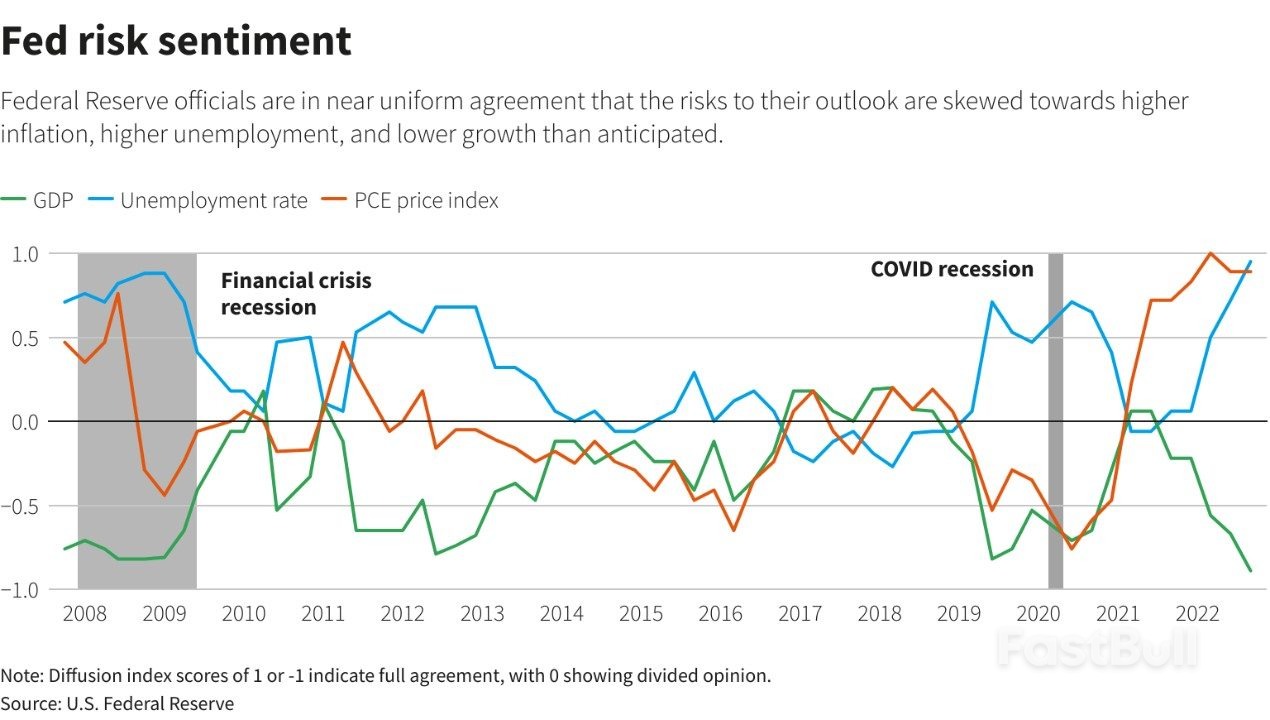
          Projections released at the end of the Sept. 20-21 meeting suggest that most of the Fed's 19 policymakers expect to be able to begin to slow the rate hikes in December and reach a peak policy rate of 4.50%-4.75% in 2023.
          But economic data since that meeting has been mixed, with U.S. inflation still searingly hot but some signs that household spending and job growth are easing.
          Fed Set to Deliver Another Big Rate Hike, Debate December downshift_1And during that time, Fed policymakers, with the notable exception of Powell, have offered a range of views on where they stand on a possible slowdown or even pause to rate hikes.
          Fed Governor Michelle Bowman, for instance, said she'll look for signs that inflation is moving down before she would want to reduce the pace of rate hikes. Minneapolis Fed President Neel Kashkari signaled he would be comfortable if inflation simply stopped rising.
          It isn't clear that two days of debate are enough to resolve those differences.
          "There does not yet appear to be a consensus on the Committee about the preferred size of a December hike, limiting Powell's ability to offer guidance," Nomura economists wrote on Friday.
          The Fed chief will instead, those economists and others predict, point to the range of data still to come before any decision needs to be made - including two more monthly reports on the state of the U.S. job market and, most importantly, fresh inflation readings.
          "There is little reason for the committee to limit its optionality for December, as even the most dovish participants would likely prefer more information about how inflation and overtightening risks are evolving before signaling a policy turn," Barclays economists also wrote on Friday.

          Fed Set to Deliver Another Big Rate Hike, Debate December downshift_2'Need to be convinced'

          Bets in futures markets weigh heavily in favor of a slowdown in rate hikes starting in December, but ultimately a top Fed policy rate of 4.75%-5.00%, slightly higher than policymakers themselves have flagged, by early next year.
          "Everything is squared up to do 50 (basis points) in December," said Vincent Reinhart, chief economist at Dreyfus-Mellon, and then to raise rates a bit further to a plateau that's high enough to put downward pressure on inflation.
          Other global central banks are signaling slower tightening ahead, with the Bank of Canada shifting to a half-percentage-point hike last week and a slightly less hawkish tone from the European Central Bank as it announced its own 75-basis-point rate hike last week.
          Fed policymakers, Reinhart said, are also well aware that monetary policy typically goes too far.
          "You tighten too much, you ease too much, you wait too long because you need to be convinced," he said. "And knowing that ... they'll slow the pace."
          Still, anything from Powell that suggests he views the Fed's September projections as stale could upend expectations for a December downshift and set the stage for a more aggressive touch.

          Source: Reuters

          Risk Warnings and Disclaimers
          You understand and acknowledge that there is a high degree of risk involved in trading. Following any strategies or investment methods may lead to potential losses. The content on the site is provided by our contributors and analysts for information purposes only. You are solely responsible for determining whether any trading assets, securities, strategy, or any other product is suitable for investing based on your own investment objectives and financial situation.
          Comments
          Add to Favorites
          Share

          Market Outlook for the Week - Commodities

          Winkelmann

          Commodity

          XAUUSD

          Gold prices rose and then fell last week, with little room for gains and losses. Although the US GDP resumed growth in the third quarter, and the labor market remains strong, the Fed's November rate meeting to raise interest rates by 75 basis points has almost been confirmed, but a series of economic indicators, including PMI, residential investment, home price index are underperforming, suggesting that the economy is slipping. Moreover, the Bank of Canada (BoC) unexpectedly shifted to a smaller rate hike, triggering speculation of a slowdown in the pace of interest rate hikes by the Fed in December, further causing the market sentiment to turn sharply. Finally, the USD depreciated significantly for the second week, which once helped gold prices surge higher to above 1670.
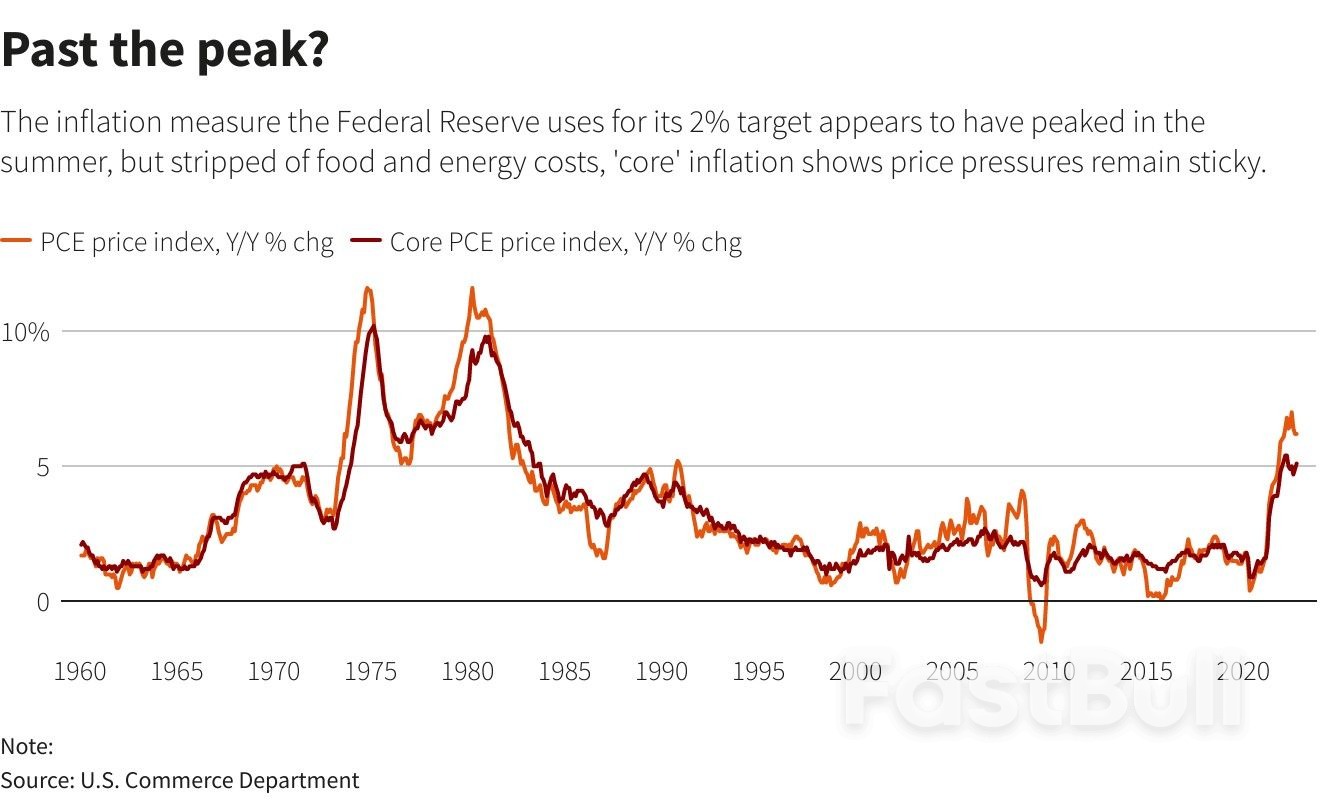
          However, the Fed's key measure of inflation, the personal consumption expenditure price index (PCE) rose 6.2% YoY in September and the core PCE price index rose 5.1% YoY, with little sign of weakening inflation. It weakened expectations of a Fed slowdown in interest rate hikes, with US Treasury bond yields rising 1.8% on Friday and gold ascending first and then depreciating.
          The interest rate resolutions of the Reserve Bank of Australia (RBA), the Fed, and the Bank of England (BoE) will be settled this week, while the market is expected the result will be to raise interest rates by 25 basis points, 75 basis points, and 75 basis points, respectively. Besides, the opportunity cost of holding gold will further increase, which is unfavorable to gold prices. However, the biggest impact on gold prices will also be the hawk-dove attitude of the Fed's resolution, as the market has digested in advance that the Fed will raise interest rates for the fourth consecutive time by 75 bps, while the main concern will be whether the Fed will reveal the news of slowing down the pace of interest rate hikes in the future after the November meeting. Given that core inflation pressures remain high in the US, it may take a significant slowdown in core CPI YoY growth and further signs of a declining US economy to give the Fed the confidence to significantly slow the pace of tightening.
          Looking ahead to this week, the Nonfarm payrolls report will be released, the job market is one of the most essential and healthy drivers to let the Fed raise interest rates. Presently, there are few signs of a significant slowdown in the labor market. Around the time of the Fed's resolution, gold could see diametrically opposed movements and be more volatile.
          Market Outlook for the Week - Commodities_1
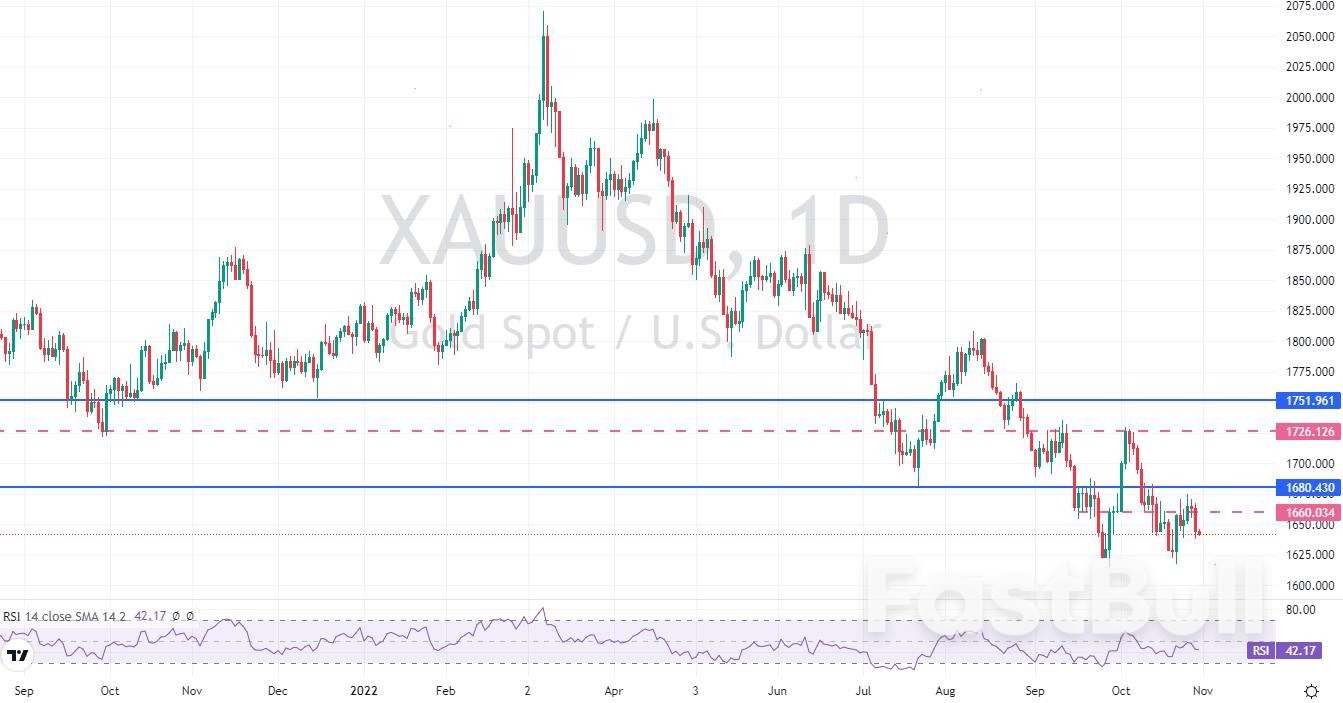
          From the technical graphics, gold prices' performance was disappointing last week, with a potential double bottom structure to be formed shortly. Additionally, it seems that the downtrend ended for now, but the gold price was blocked and headed down near 1670, without going further. Furthermore, the weekly chart closed again with a decline, and the downtrend is expected to continue further. At present, the gold price is back to 1640, and it will extend the decline until the Fed's meeting this week. If it falls below 1640, it is recommended to keep an eye on 1620 and 1600. Nevertheless, if the gold can maintain above 1640, it is better to check if gold will break through and stabilize above 1660, and then look up to 1680 nearby.

          WTI

          Since October, OPEC+'s production cut plan has heated up market sentiment over oil supply concerns, and with the EU embargo on Russian oil and oil price caps, global oil inventories are falling, and supply tightness is boosting oil prices. Last week, oil prices were supported by a weaker USD due to rising expectations of a slowdown in interest rate hikes by the Fed, as record-high US crude oil exports confirmed that demand remains strong and a return to positive US GDP growth in the third quarter eased some of the recession fears.
          Furthermore, Russia suspended its participation in the UN-brokered Black Sea grain export agreement on Saturday, which may intensify the risk of uncertainty in the geopolitical situation, short-term oil prices are still tending to oscillate to the upside. In addition to keeping the focus on the situation in Russia and Ukraine, the eurozone GDP data for the third quarter is also approaching, while the U.S. ISM manufacturing and non-manufacturing PMI data for October, the U.S. Nonfarm payrolls report for October, are expected to have a greater impact on market sentiment and performance. If there are hints that the economy is getting worse, the outlook for demand may weaken oil prices again.
          Market Outlook for the Week - Commodities_2
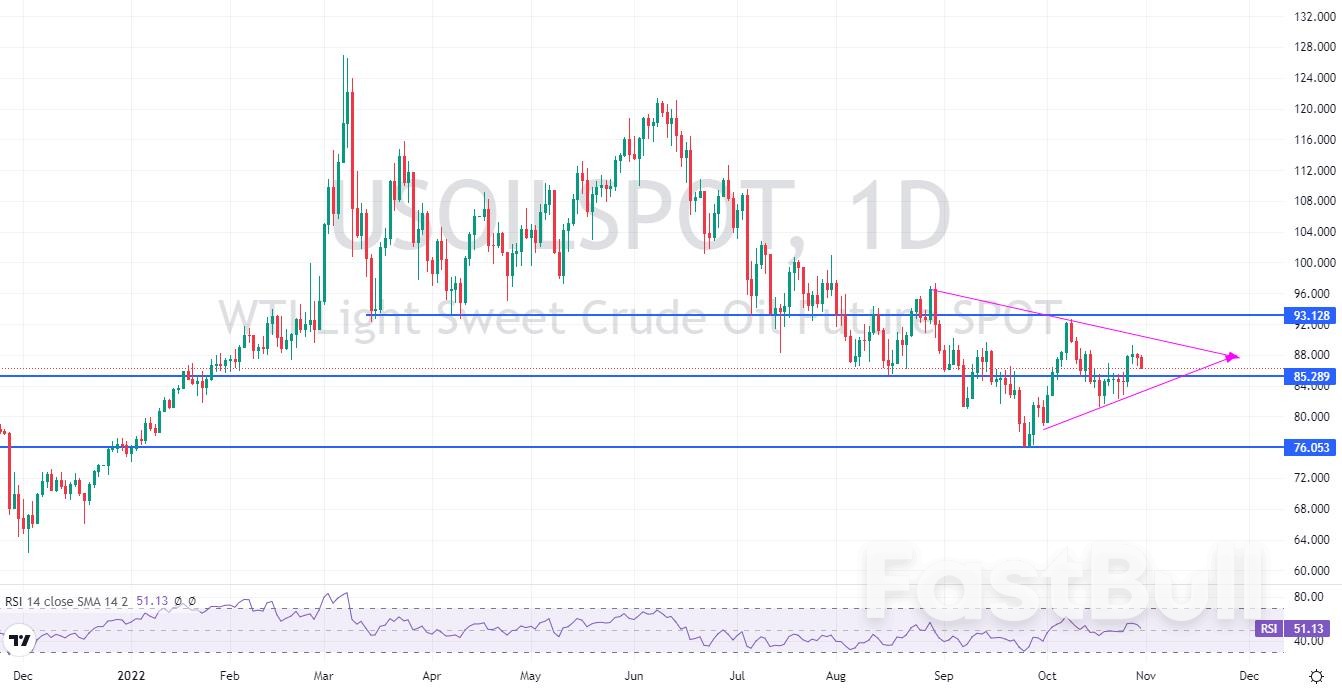
          According to the technical graph, although WTI rebounded to highs last week, the rebound was insufficient with the oscillation getting narrow and the bears and bulls keeping competition, failing to show a clear direction. Generally, the bearish trend will not change unless the key pressure near 93.0 is broken, and the oil prices are easy to decline but hard to gain. In the near term, oil prices will extend the oscillation with little space for ups and downs as there are no signs of changes in demand and supply. Thus, choose the direction when the oil price succeeds in breaking through the fluctuating triangle area. It is recommended to keep an eye on the upper-pressure level near 93.0 and 89.0, and the support level near 85.0 and 81.0 below.
          Risk Warnings and Disclaimers
          You understand and acknowledge that there is a high degree of risk involved in trading. Following any strategies or investment methods may lead to potential losses. The content on the site is provided by our contributors and analysts for information purposes only. You are solely responsible for determining whether any trading assets, securities, strategy, or any other product is suitable for investing based on your own investment objectives and financial situation.
          Comments
          Add to Favorites
          Share

          It's Not Local Politicians Tearing Northern Ireland Apart - it's London

          Devin

          Political

          When Belfast renamed its small commuter airport after George Best in 2006 it was not just honouring a hometown hero who was a global footballing icon. Northern Ireland was then enjoying a peace dividend stemming from the reconciliation of its formerly warring communities and an economic boom that unlocked the talents of the population.
          A decade and a half later, Northern Ireland is in a quietly unfolding crisis tied to a Conservative Party melodrama that has left the UK a stricken state. This week the seventh Conservative MP to hold the post of Northern Ireland Secretary since the 2016 Brexit referendum has some big decisions to announce.
          Chris Heaton-Harris is an ambitious former member of the European Parliament and a political operator who surfed a tide of headlines in support of Brexit to the lower ranks of the UK Cabinet. As the Northern Ireland Secretary, he last week shuttered the local government and now plans call fresh elections. He has plenty of blame to heap on the region's political leaders who yet again have failed to deliver a power-sharing government.
          The devolved administration is the lynchpin of the 1998 Good Friday Agreement (GFA). To turn the corner on 30 years of the Troubles, as the terrorist campaigns were called, it provided a formula for Northern Ireland's Protestant and Catholic communities to govern together.
          Breakdowns have been as common as partnerships since then. There has not been an agreed budget for the region in 10 years. The black hole in government expenditure has grown ever wider.
          Yet Mr Heaton-Harris can finger point all he likes. The differences between the parties in Northern Ireland are not key reason why the abyss now looms.
          London politics is what has broken Northern Ireland. As voters face the prospect of a winter election that nobody wants, there will be much talk of how time is being squandered. However, the all-important splits in the Conservative Party won't be on the ballot.
          Turning point one was the Brexit referendum itself. By withdrawing from the EU, the UK took Northern Ireland with it. This shattered the founding premise of the GFA, which was that anyone from the region could be British or Irish or both. This concept was underpinned by the principle of common citizenship in the EU.
          That joint platform for identity superseded the British-Irish Common Travel Area, which for decades gave British and Irish citizens the right to live and work in the separate islands.
          To revert to the Common Travel Area post-Brexit was not enough. Barriers in trade and everyday ties were erected or going to be necessary. These imposed choices were reversals of the post-Troubles peace dividend. Not surprisingly political and community tensions started rising again.
          Turning point two was the advent of Boris Johnson as prime minister in 2019 and the absolutist Brexit formula he choose to pursue. This was very successful at the outset for him and he won a general election with a massive parliamentary majority.
          Mr Johnson's EU departure deal contained a Northern Ireland provision that could have given Belfast a best of both worlds, arbitraging between the UK and EU economic blocs as the only place that was part of both.
          Instead the Northern Ireland Protocol has become for Conservative politicians – and their occasional allies in the hardline Democratic Unionist Party (DUP) – a poison pill. In their own fevered way they now refuse to swallow this and the elixir has become a noxious cloud that chokes politics in Belfast.
          Not content with bringing this ruination, politicians like Mr Heaton-Harris are pressing on.
          Turning point three is now being served. An election that few analysts see as resolving any of the real issues.
          To hold its dominant role in Unionist politics, the DUP is pushing the line that the protocol must be scrapped. The prospect that it could reclaim its role as the largest party and thus take first minister role is slim but a possibility.
          On the other hand the complicated electoral system in Northern Ireland could see voters push up the cross community Alliance Party into a numerical second, creating a new form of deadlock that would deliver a death knell to the system overall.
          The 25th anniversary of the GFA hangs over the London government as a test of its nerves. US President Joe Biden has hinted of his desire to travel to Belfast to mark that milestone in the coming spring. Officials in London believe this means resolving negotiations on the Protocol with Brussels by late January.
          Ahead of a messy local election and without trust on the ground, London would anyway need to orchestrate a series of miracle-like strokes to achieve this turnaround.
          Given his background, the likelihood of Mr Heaton-Harris pulling this off is very hard to see. As I tried to answer a question last week about what the peace dividend was and why it was symbolised in part by the naming of an airport after Best, the Manchester United star, the moment felt to me very hollow.
          It would be a comfort if someone with the political equivalent of Georgie's legendary dribbling and striking skills was on the Belfast scene today.

          Source: The National News

          Risk Warnings and Disclaimers
          You understand and acknowledge that there is a high degree of risk involved in trading. Following any strategies or investment methods may lead to potential losses. The content on the site is provided by our contributors and analysts for information purposes only. You are solely responsible for determining whether any trading assets, securities, strategy, or any other product is suitable for investing based on your own investment objectives and financial situation.
          Comments
          Add to Favorites
          Share
          FastBull
          Copyright © 2025 FastBull Ltd

          728 RM B 7/F GEE LOK IND BLDG NO 34 HUNG TO RD KWUN TONG KLN HONG KONG

          TelegramInstagramTwitterfacebooklinkedin
          App Store Google Play Google Play
          Products
          Charts

          Chats

          Q&A with Experts
          Screeners
          Economic Calendar
          Data
          Tools
          Membership
          Features
          Function
          Markets
          Copy Trading
          Latest Signals
          Contests
          News
          Analysis
          24/7
          Columns
          Education
          Company
          Careers
          About Us
          Contact Us
          Advertising
          Help Center
          Feedback
          User Agreement
          Privacy Policy
          Business

          White Label

          Data API

          Web Plug-ins

          Poster Maker

          Affiliate Program

          Risk Disclosure

          The risk of loss in trading financial instruments such as stocks, FX, commodities, futures, bonds, ETFs and crypto can be substantial. You may sustain a total loss of the funds that you deposit with your broker. Therefore, you should carefully consider whether such trading is suitable for you in light of your circumstances and financial resources.

          No decision to invest should be made without thoroughly conducting due diligence by yourself or consulting with your financial advisors. Our web content might not suit you since we don't know your financial conditions and investment needs. Our financial information might have latency or contain inaccuracy, so you should be fully responsible for any of your trading and investment decisions. The company will not be responsible for your capital loss.

          Without getting permission from the website, you are not allowed to copy the website's graphics, texts, or trademarks. Intellectual property rights in the content or data incorporated into this website belong to its providers and exchange merchants.

          Not Logged In

          Log in to access more features

          FastBull Membership

          Not yet

          Purchase

          Become a signal provider
          Help Center
          Customer Service
          Dark Mode
          Price Up/Down Colors

          Log In

          Sign Up

          Position
          Layout
          Fullscreen
          Default to Chart
          The chart page opens by default when you visit fastbull.com