• Trade
  • Markets
  • Copy
  • Contests
  • News
  • 24/7
  • Calendar
  • Q&A
  • Chats
Trending
Screeners
SYMBOL
LAST
BID
ASK
HIGH
LOW
NET CHG.
%CHG.
SPREAD
SPX
S&P 500 Index
6847.49
6847.49
6847.49
6852.39
6824.70
+6.98
+ 0.10%
--
DJI
Dow Jones Industrial Average
47773.22
47773.22
47773.22
47819.74
47462.94
+212.94
+ 0.45%
--
IXIC
NASDAQ Composite Index
23526.16
23526.16
23526.16
23559.82
23435.17
-50.31
-0.21%
--
USDX
US Dollar Index
98.890
98.970
98.890
99.210
98.860
-0.290
-0.29%
--
EURUSD
Euro / US Dollar
1.16575
1.16582
1.16575
1.16599
1.16215
+0.00318
+ 0.27%
--
GBPUSD
Pound Sterling / US Dollar
1.33445
1.33452
1.33445
1.33472
1.32894
+0.00494
+ 0.37%
--
XAUUSD
Gold / US Dollar
4199.34
4199.75
4199.34
4218.67
4187.63
-7.83
-0.19%
--
WTI
Light Sweet Crude Oil
57.923
57.953
57.923
58.507
57.533
-0.232
-0.40%
--

Community Accounts

Signal Accounts
--
Profit Accounts
--
Loss Accounts
--
View More

Become a signal provider

Sell trading signals to earn additional income

View More

Guide to Copy Trading

Get started with ease and confidence

View More

Signal Accounts for Members

All Signal Accounts

Best Return
  • Best Return
  • Best P/L
  • Best MDD
Past 1W
  • Past 1W
  • Past 1M
  • Past 1Y

All Contests

  • All
  • Trump Updates
  • Recommend
  • Stocks
  • Cryptocurrencies
  • Central Banks
  • Featured News
Top News Only
Share

Iran's Ambassador To Russia Says President Pezeshkian To Meet Russia's Putin In Turkmenistan - Fars News

Share

Jon Gray, President Of Blackstone Group: The U.S. Economy Has Always Been “quite Resilient.”

Share

LME Copper Rose $70 To $11,556 Per Tonne. LME Aluminum Rose $10 To $2,867 Per Tonne. LME Zinc Fell $8 To $3,082 Per Tonne. LME Lead Rose $2 To $1,980 Per Tonne. LME Nickel Fell $82 To $14,652 Per Tonne. LME Tin Rose $146 To $4,004 Per Tonne. LME Cobalt Rose $570 To $52,790 Per Tonne

Share

A Court Order Shows That A U.S. Judge Rejected The Trump Administration's Motion To Dismiss California's Case To Withdraw $4 Billion In High-speed Rail Funding

Share

Blackstone Coo Says Got An Active IPO Pipeline For Next Year

Share

IMF: Agreement Brings Total IMF Financial Support Under The Ecf Arrangement So Far To About US$2134 Million (Sdr1598.1 Million) For Ethiopia

Share

IMF: IMF Reaches Staff Level Agreement On The Fourth Review Of The Extended Credit Facility For Ethiopia

Share

Brazil Flows Total Net $+4.709 Billion Last Week

Share

Brazil Central Bank Says Dollar Flows Totaled Net $-7.115 Billion In November

Share

Brazil Flows Total Net $4.710 Billion In The Calendar Month To December 5

Share

Canada Says It Lists Four New Terrorist Entities, Including 'Maniac Murder Cult' Which It Says Is Primarily Based In Russia, Ukraine

Share

US Natural Gas Inventories Seen Down 166 Billion Cubic Feet Last Week In Thursday's EIA Report, Reuters Poll Shows

Share

[German 10-year Bond Yield Rises Over 2 Basis Points As Investors Await Fed Policy Statement] In Late European Trading On Wednesday (December 10), The Yield On 10-year German Government Bonds Rose 0.1 Basis Points To 2.851%, Trading Within A Range Of 2.895%-2.851% During The Day, Initially Rising Before Falling Back – After Reaching A Daily High At 17:14 Beijing Time, It Gradually Gave Back Its Gains/maintained An Upward Trend Throughout The Day. The Yield On 2-year German Bonds Rose 2.4 Basis Points To 2.177%, Reaching A Daily High At 17:14 Before Fluctuating At High Levels; The Yield On 30-year German Bonds Fell 0.6 Basis Points To 3.453%. The Spread Between 2-year And 10-year German Bond Yields Fell 2.237 Basis Points To +67.104 Basis Points, Continuing Its Downward Trend Throughout The Day

Share

Sbu Source: Tanker Is Disabled As Result Of Attack

Share

Sbu Source: Ukrainian Navy Drones In Black Sea Struck 'Dashan' Vessel That Is Part Of Russia's Shadow Fleet

Share

UK Doctors' Union Bma: Government Has Put Forward An Offer On Ending The Jobs Crisis For Doctors In England

Share

[UK Bond Yields Rise By About 1 Basis Point] In Late European Trading On Wednesday (December 10), The Yield On 10-year UK Government Bonds Rose 0.8 Basis Points To 4.512%, Maintaining An Upward Trend Throughout The Day, Exhibiting A Pattern Of Rising Initially And Then Falling Back. It Reached A Daily High Of 4.554% At 17:56 Beijing Time. The Yield On 2-year UK Government Bonds Rose 0.9 Basis Points To 3.794%, Having Reached A Daily High Of 3.830% At 16:54. The Yield On 30-year UK Government Bonds Rose 1.6 Basis Points To 5.211%; The Yield On 50-year UK Government Bonds Rose 1.4 Basis Points To 4.680%. The Spread Between 2-year And 10-year UK Government Bond Yields Fell 0.213 Basis Points To +71.531 Basis Points

Share

Trump: Mexico Must Take Care Of Its Water And Sewage Problem, Immediately

Share

USA Office Of The Comptroller Of The Currency: Nine Major Banks Engaged In “unfair Discrimination” In Providing Financial Services To Certain Clients, Including Oil, Gas, And Firearms Companies

Share

Irish Prime Minister: Drones Did Not Threaten Ukrainian President's Aircraft

TIME
ACT
FCST
PREV
Japan Reuters Tankan Manufacturers Index (Dec)

A:--

F: --

P: --

Japan PPI MoM (Nov)

A:--

F: --

P: --

Japan Domestic Enterprise Commodity Price Index MoM (Nov)

A:--

F: --

P: --

Japan Domestic Enterprise Commodity Price Index YoY (Nov)

A:--

F: --

P: --

China, Mainland CPI YoY (Nov)

A:--

F: --

P: --

China, Mainland PPI YoY (Nov)

A:--

F: --

P: --

China, Mainland CPI MoM (Nov)

A:--

F: --

P: --

Indonesia Retail Sales YoY (Oct)

A:--

F: --

P: --

Italy Industrial Output YoY (SA) (Oct)

A:--

F: --

P: --

Italy 12-Month BOT Auction Avg. Yield

A:--

F: --

P: --

BOE Gov Bailey Speaks
ECB President Lagarde Speaks
South Africa Retail Sales YoY (Oct)

A:--

F: --

P: --

Brazil IPCA Inflation Index YoY (Nov)

A:--

F: --

P: --

Brazil CPI YoY (Nov)

A:--

F: --

P: --

U.S. MBA Mortgage Application Activity Index WoW

A:--

F: --

P: --

U.S. Labor Cost Index QoQ (Q3)

A:--

F: --

P: --

Canada Overnight Target Rate

A:--

F: --

P: --

BOC Monetary Policy Report
U.S. EIA Weekly Gasoline Stocks Change

A:--

F: --

P: --

U.S. EIA Weekly Crude Demand Projected by Production

A:--

F: --

P: --

U.S. EIA Weekly Cushing, Oklahoma Crude Oil Stocks Change

A:--

F: --

P: --

U.S. EIA Weekly Crude Stocks Change

A:--

F: --

P: --

U.S. EIA Weekly Crude Oil Imports Changes

A:--

F: --

P: --

U.S. EIA Weekly Heating Oil Stock Changes

A:--

F: --

P: --

U.S. Refinitiv/Ipsos Primary Consumer Sentiment Index (PCSI) (Dec)

A:--

F: --

P: --

China, Mainland M1 Money Supply YoY (Nov)

--

F: --

P: --

China, Mainland M0 Money Supply YoY (Nov)

--

F: --

P: --

China, Mainland M2 Money Supply YoY (Nov)

--

F: --

P: --

Russia CPI YoY (Nov)

A:--

F: --

P: --

U.S. Federal Funds Rate Projections-Longer Run (Q4)

--

F: --

P: --

U.S. Federal Funds Rate Projections-1st Year (Q4)

--

F: --

P: --

U.S. Federal Funds Rate Projections-2nd Year (Q4)

--

F: --

P: --

U.S. Target Federal Funds Rate Lower Limit (Overnight Reverse Repo Rate)

--

F: --

P: --

U.S. Budget Balance (Nov)

--

F: --

P: --

U.S. Target Federal Funds Rate Upper Limit (Excess Reserves Ratio)

--

F: --

P: --

U.S. Interest Rate On Reserve Balances

--

F: --

P: --

U.S. Federal Funds Rate Projections-Current (Q4)

--

F: --

P: --

U.S. Federal Funds Rate Target

--

F: --

P: --

U.S. Federal Funds Rate Projections-3rd Year (Q4)

--

F: --

P: --

FOMC Statement
FOMC Press Conference
Brazil Selic Interest Rate

--

F: --

P: --

U.K. 3-Month RICS House Price Balance (Nov)

--

F: --

P: --

Australia Employment (Nov)

--

F: --

P: --

Australia Full-time Employment (SA) (Nov)

--

F: --

P: --

Australia Unemployment Rate (SA) (Nov)

--

F: --

P: --

Australia Labor Force Participation Rate (SA) (Nov)

--

F: --

P: --

Turkey Retail Sales YoY (Oct)

--

F: --

P: --

South Africa Mining Output YoY (Oct)

--

F: --

P: --

South Africa Gold Production YoY (Oct)

--

F: --

P: --

Italy Quarterly Unemployment Rate (SA) (Q3)

--

F: --

P: --

IEA Oil Market Report
Turkey 1-Week Repo Rate

--

F: --

P: --

South Africa Refinitiv/Ipsos Primary Consumer Sentiment Index (PCSI) (Dec)

--

F: --

P: --

Turkey Overnight Lending Rate (O/N) (Dec)

--

F: --

P: --

Turkey Late Liquidity Window Rate (LON) (Dec)

--

F: --

P: --

U.K. Refinitiv/Ipsos Primary Consumer Sentiment Index (PCSI) (Dec)

--

F: --

P: --

Brazil Retail Sales MoM (Oct)

--

F: --

P: --

U.S. Weekly Initial Jobless Claims (SA)

--

F: --

P: --

Canada Imports (SA) (Sept)

--

F: --

P: --

Q&A with Experts
    • All
    • Chatrooms
    • Groups
    • Friends
    Connecting
    .
    .
    .
    Type here...
    Add Symbol or Code

      No matching data

      All
      Trump Updates
      Recommend
      Stocks
      Cryptocurrencies
      Central Banks
      Featured News
      • All
      • Russia-Ukraine Conflict
      • Middle East Flashpoint
      • All
      • Russia-Ukraine Conflict
      • Middle East Flashpoint
      Search
      Products

      Charts Free Forever

      Chats Q&A with Experts
      Screeners Economic Calendar Data Tools
      Membership Features
      Data Warehouse Market Trends Institutional Data Policy Rates Macro

      Market Trends

      Market Sentiment Order Book Forex Correlations

      Top Indicators

      Charts Free Forever
      Markets

      News

      News Analysis 24/7 Columns Education
      From Institutions From Analysts
      Topics Columnists

      Latest Views

      Latest Views

      Trending Topics

      Top Columnists

      Latest Update

      Signals

      Copy Rankings Latest Signals Become a signal provider AI Rating
      Contests
      Brokers

      Overview Brokers Assessment Rankings Regulators News Claims
      Broker listing Forex Brokers Comparison Tool Live Spread Comparison Scam
      Q&A Complaint Scam Alert Videos Tips to Detect Scam
      More

      Business
      Events
      Careers About Us Advertising Help Center

      White Label

      Data API

      Web Plug-ins

      Affiliate Program

      Awards Institution Evaluation IB Seminar Salon Event Exhibition
      Vietnam Thailand Singapore Dubai
      Fans Party Investment Sharing Session
      FastBull Summit BrokersView Expo
      Recent Searches
        Top Searches
          Markets
          News
          Analysis
          User
          24/7
          Economic Calendar
          Education
          Data
          • Names
          • Latest
          • Prev

          View All

          No data

          Scan to Download

          Faster Charts, Chat Faster!

          Download App
          English
          • English
          • Español
          • العربية
          • Bahasa Indonesia
          • Bahasa Melayu
          • Tiếng Việt
          • ภาษาไทย
          • Français
          • Italiano
          • Türkçe
          • Русский язык
          • 简中
          • 繁中
          Open Account
          Search
          Products
          Charts Free Forever
          Markets
          News
          Signals

          Copy Rankings Latest Signals Become a signal provider AI Rating
          Contests
          Brokers

          Overview Brokers Assessment Rankings Regulators News Claims
          Broker listing Forex Brokers Comparison Tool Live Spread Comparison Scam
          Q&A Complaint Scam Alert Videos Tips to Detect Scam
          More

          Business
          Events
          Careers About Us Advertising Help Center

          White Label

          Data API

          Web Plug-ins

          Affiliate Program

          Awards Institution Evaluation IB Seminar Salon Event Exhibition
          Vietnam Thailand Singapore Dubai
          Fans Party Investment Sharing Session
          FastBull Summit BrokersView Expo

          Preview of NZ Q4 GDP and OCR Forecast Change

          Owen Li

          Central Bank

          Summary:

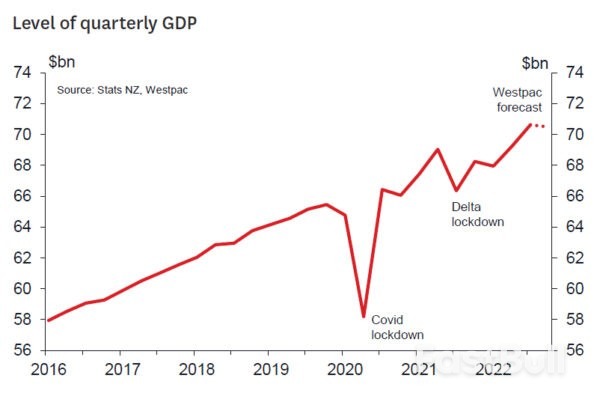
          The New Zealand economy went on a tear through the middle part of last year, as the return of overseas tourists lifted GDP by almost 4% over the June and September quarters.
          Bumps along the road

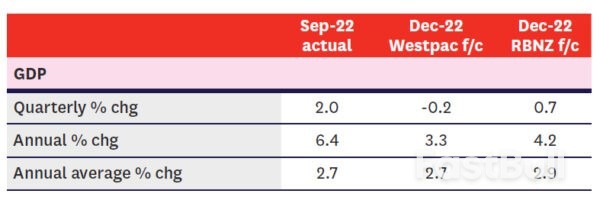
          · We expect a 0.2% fall in GDP for the December quarter, following two quarters of extremely strong growth.
          · This does not necessarily mark the start of a recession. GDP data has been choppy since Covid, and the details don't tell a consistent story about whether monetary policy is biting.
          · Nevertheless, it does show that the economy is coming from a less overheated starting point than the Reserve Bank thought.
          · We think that will nudge them towards a smaller 25 basis point hike at the April OCR review.

          Preview of NZ Q4 GDP and OCR Forecast Change_1Weak Q4 not a sign of recession – yet

          The New Zealand economy went on a tear through the middle part of last year, as the return of overseas tourists lifted GDP by almost 4% over the June and September quarters. Coming off the back of that, we were already bracing for much more subdued growth in the December quarter. But the final batch of indicators released last week actually suggest a slight contraction. We now estimate that GDP fell by 0.2% in the December quarter.
          Preview of NZ Q4 GDP and OCR Forecast Change_2Whether this is a sign that recession has come upon us earlier than expected is unclear. The GDP figures have been choppy since the Covid pandemic, with Stats NZ often having to use alternative data sources, and with the border closure in particular throwing out the normal seasonal patterns in activity. If our forecast is right, this will be the third time in two years that we see a drop in quarterly GDP that wasn't the result of a lockdown.
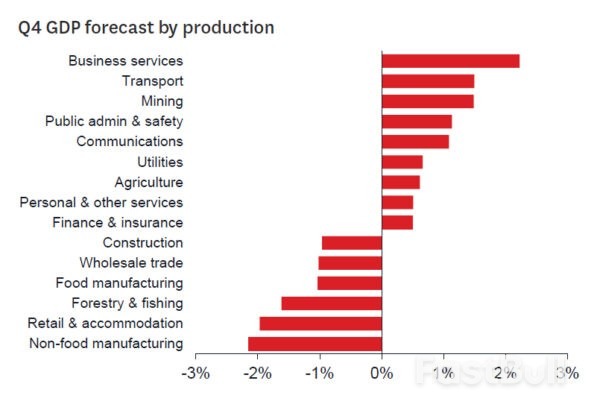
          Moreover, the details don't tell as clean a story as we might like about the Reserve Bank's efforts to slow the economy. Goods-producing sectors were softer across the board in the December quarter, with retail, wholesaling, manufacturing and construction all likely recording declines. But services sectors are still looking robust – and not just those relating to international tourism, but areas like professional services as well. There's no obvious reason why tight monetary policy would have such disparate effects.
          Some of the higher-frequency data that was genuinely weaker at the end of last year has picked up a little in the last two months. Card spending showed that the December splurge was smaller than usual, but January and February were more like normal. The manufacturing PMI remained below 50 in the December quarter (signalling a contraction in activity), but has risen above that mark again.
          Finally, we know that March quarter GDP is going to be affected by the January floods and Cyclone Gabrielle. And as the 2011 Christchurch earthquake showed, the initial loss of activity can end up being almost immediately outweighed by the boost from repairs, replacement and cleaning up. While we did have a small drop pencilled in for March quarter GDP, it's likely that we'll end up revising that higher.
          Notwithstanding the current volatility in the GDP numbers, we still think that the scene is set for the economy to head into recession later this year. Homeowners will increasingly be rolling onto much higher mortgage rates in the coming months. That will require some belt-tightening on their discretionary spending, until activity is reined back in to more sustainable levels.

          Preview of NZ Q4 GDP and OCR Forecast Change_3We now expect a 25bp OCR hike in April

          Our forecast is around the middle of the range of market forecasts (although almost all locally-based forecasters are picking a negative number). More importantly, it's looking a lot weaker than the 0.7% increase that the Reserve Bank assumed in its February Monetary Policy Statement. That doesn't preclude the case for tighter monetary policy – the economy is still coming from an overheated starting point, just not as much as the RBNZ thought.
          The RBNZ's February projections sat somewhere between a 25 and a 50 basis point hike at the next OCR review on 5 April. Previously we favoured a 50 point move, on the basis that the RBNZ's recent tactic have been to move quickly towards where it thinks the OCR needs to be. But with the likelihood of a much weaker than expected GDP result – and effectively no other major data releases between now and April – we now expect the RBNZ to lean towards a smaller 25 basis point increase.
          For now we've kept the peak of our OCR forecasts at 5.50%, with two further 25 basis point hikes in May and July. The April review is not a full Monetary Policy Statement so the RBNZ won't be publishing new projections anyway. But in February there was a sense that the RBNZ has deferred the question of how high interest rates will need to go until the May review, when they will have a better sense of the inflationary effects of both the cyclone's impact and the fiscal response.

          Source: Westpac Banking

          Risk Warnings and Disclaimers
          You understand and acknowledge that there is a high degree of risk involved in trading. Following any strategies or investment methods may lead to potential losses. The content on the site is provided by our contributors and analysts for information purposes only. You are solely responsible for determining whether any trading assets, securities, strategy, or any other product is suitable for investing based on your own investment objectives and financial situation.
          Comments
          Add to Favorites
          Share

          The SVB Fallout's Contagion Effect on The Markets, When? How? Why?

          Alex

          Stocks

          The Silicon Valley Bank (SVB)'s rout has rippled through global markets since last Friday, causing a sharp selloff in banking stocks. It is also the largest U.S. banking failure since the GFC in 2008, sparking enough concern for the U.S. Treasury to step in to protect depositors.
          When and how did this happen?
          The venture capital-focused bank, Silicon Valley Bank unveiled plans to raise $2.25 billion to shore up its balance sheet as the bank has been forced to sell its $21 billion bond portfolio on a loss of $1.8 billion due to aggressive rate hikes by the U.S. Fed.
          The SVB, founded in 1983, is a lender specialising in tech and start-ups, which is the most vulnerable sector to ongoing macro headwinds. By end of Thursday (local time) last week, its customers withdrew $42 billion of deposits following the capital raising announcement.
          SVB's shares plummeted 60% on Friday trading and another 26% drop in after-hours trading. Later on Friday, the bank was shut down by regulators, and the Federal Deposit Insurance Corp (FDIC) kicked off an auction process for SVB late Saturday. At the time, the FDIC said SVB's customer will have full access to the insured deposit maximum of $250,000. However, most funds held at the bank are far more than the limit.
          Earlier today (Monday across Asia), U.S. banking regulators announced a plan to backstop depositors with money at SVB. The Treasury Department has approved plans to fully protect all depositors with full access to their funds on Monday night (Asian time). The U.S. Fed is also working on a new Bank Term Funding Program aimed at strengthening confidence in the banking system. Treasury Secretary Janet Yellen said these actions are to protect all depositors whose accounts exceed the $250,000 limit for FDIC insurance.
          The financial market reaction to the event
          The first response of global markets on Friday had all the major indices falling sharply. The three U.S. benchmarks had their worst week in 2023, while the ASX 200 slid for the 6th consecutive week. The U.S. dollar weakened following the news as haven assets, such as the Japanese Yen, the Eurodollar, gold, and bonds. The fear gauge, the Volatility Index, spiked from under 20 to almost 30 at the highest before pulling back to just under 25 last week.
          Early in the Asian session today, risk sentiment somewhat recovered amid the protection measures taken by both U.S. Treasury Department and the Fed. However, uncertainties still loom amid the unsettled event.
          While the U.S. equity futures moved higher, both Australian and New Zealand stock markets fell by the time of publishing. The global bond yields sharply declined, with the Australian 10-year bond yield down 21 basis points to 3.49%, the lowest seen since 6 February. The Japanese 10-year government bond yield fell 11 basis points to 0.39%, the lowest since the BOJ expanded its cap limit to 0.50% in late December.
          What is next?
          The SVB's collapse is unlikely from being over for a few reasons:
          Firstly, the US Treasury will have to supply more money to support the deposits for those not insured with the $250,000 cap and this may lead to a Fed policy turnaround if things get fluid.
          Secondly, there are other similar small banks as SVB which may face similar issues amid the Fed's rate hikes. The Signature bank was also shut down by regulators due to the same crisis. Ultimately, SVB's collapse reflects that venture funds, particularly in tech, are usually the most vulnerable sector at the back of central banks' rapid rate hikes as it becomes hard for them to manage interest rate risks. Also, this tells that small banks that are not under the regulator's scrutiny may lack risk management to prepare for the macro changes.
          On the flip side, some positive takeaways may be raised by the event. The event is promoting the Fed to be more cautious about its approach regarding the aggressive tightening measures to the monetary policy. Notably, the CME FedWatch Tool shows there might be a pause in rate hikes this month following the banking sector's rout. This has been dramatically altered from a 50-basis points rate hike before it happened early last week.
          Moreover, a drop in the US dollar has boosted commodity markets, including precious metal and oil prices. A dovish turn of the Fed will be a welcome note for the financial markets. Let us watch out for this week's US CPI and Chinese key economic data to further find clues to the market trajectory. 

          Source: CMC

          Risk Warnings and Disclaimers
          You understand and acknowledge that there is a high degree of risk involved in trading. Following any strategies or investment methods may lead to potential losses. The content on the site is provided by our contributors and analysts for information purposes only. You are solely responsible for determining whether any trading assets, securities, strategy, or any other product is suitable for investing based on your own investment objectives and financial situation.
          Comments
          Add to Favorites
          Share

          No Policy Measures Taken to Contain High Inflation

          Thomas
          Inflation is back to a rising path following a few months of modest decline. The rise was driven by food inflation while non-food inflation remained unchanged relative to January at close to double digit level.
          A very significant rise in food inflation in February possibly reflects the preponed Ramadan effects on prices as mobile courts become more aggressive during Ramadan.
          Also, it looks politically more palatable since Ramadan price increases have drawn a lot of flaks in recent years.
          High non-food inflation has been sustained by a 15.8 per cent increase in electricity prices in two months in addition to increase in gas prices for commercial and industrial users.
          Import compression due to forex shortage must also have contributed to recharging the inflationary momentum.
          Even though there have been lots of disinflationary talk and exhortations, we have not seen any policy change specifically designed to contain the rise in inflation.
          The Bangladesh Bank has monetised budget deficit, injected liquidity through repo and expanded refinancing facilities.
          Interest rates remain untouched except for consumer loans. All these are antithetical to containing inflation.
          On the fiscal side, some minor tax adjustments were made but the elephant in the room, public expenditures, has not been used to rundown inflation.
          The revised ADP shows no inflation reducing cuts as only foreign financed part of the ADP is reduced.
          Public consumption expenditures appear to be on the same path as in any other year as if nothing is different this year.
          There has also been very little policy response to help out families at the bottom of the income ladder for whom inflation has created a livelihood crisis.
          The family card system introduced for the 10 million Dhaka poor is not only vastly inadequate but also inordinately mismanaged so much so that part of the benefit to the poor is allegedly redistributed back to the card issuers and food distributors.
          One cannot help but wonder why a tested direct cash transfer to the poor has not been chosen to ease the burden of inflation on the poor.

          Source: Asianews

          Risk Warnings and Disclaimers
          You understand and acknowledge that there is a high degree of risk involved in trading. Following any strategies or investment methods may lead to potential losses. The content on the site is provided by our contributors and analysts for information purposes only. You are solely responsible for determining whether any trading assets, securities, strategy, or any other product is suitable for investing based on your own investment objectives and financial situation.
          Comments
          Add to Favorites
          Share

          Declining U.S. Bank Reserves Add Wrinkle to Contentious Debt Ceiling Issue

          Devin

          Economic

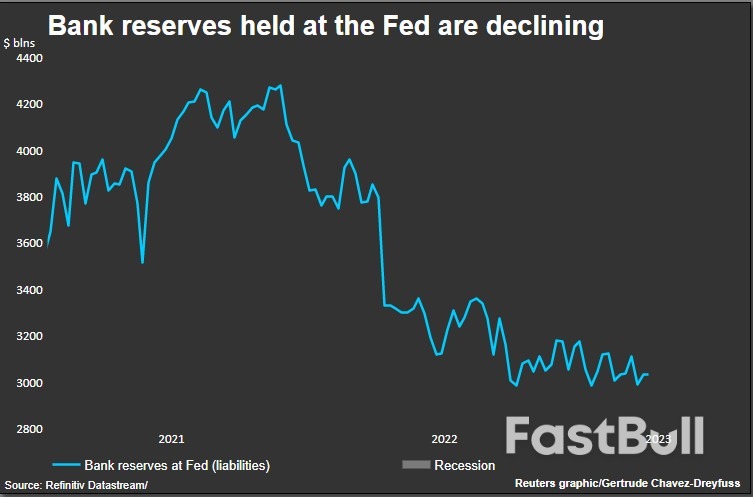
          A rapid fall in bank reserves held at the Federal Reserve, coinciding with an expected shortage of U.S. Treasury bills as the debt ceiling battle looms, has raised concerns from investors about potential stress in financial markets.
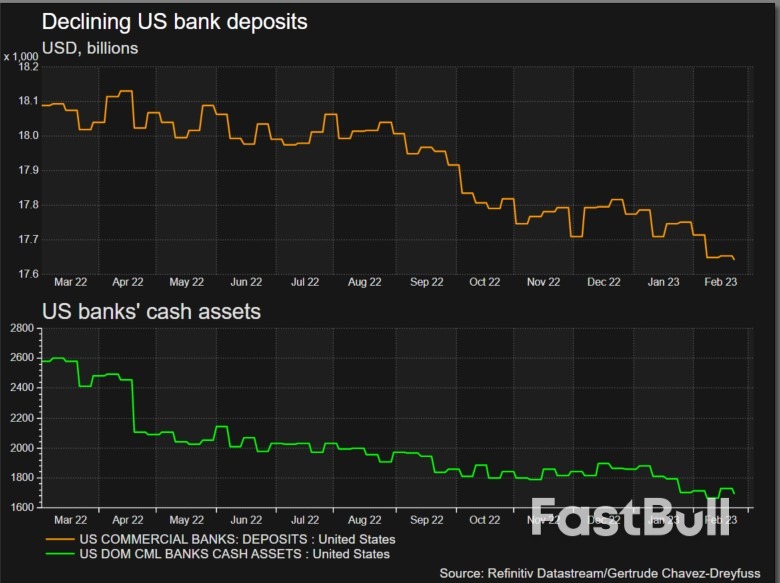
          Reserves, which are funds the Fed requires banks to hold as balances at the central bank, have fallen due to the impact of the central bank's program to reduce its swollen balance sheet, known as quantitative tightening (QT). Bank deposits, which are part of reserves, also dropped with customers seeking higher-yielding alternatives for their cash.
          A persistent slide in reserves has broad implications for the economy. Lower reserves constrain banks' balance sheets, hampering their ability to lend to finance corporate growth and expansions, analysts said.
          The Fed's balance sheet increased during the pandemic as it bought securities under its quantitative easing (QE) program, as did reserves at the central bank. That is now being unwound with QT, which was meant to drain that stimulus from the financial system.
          As of March 8, bank reserves during the week averaged $2.999 trillion, Fed data show, falling around $1.3 trillion from a peak of $4.3 trillion in December 2021. In the last QT cycle, $1.3 trillion in liquidity was withdrawn in five years.
          "In the event of a liquidity crisis in markets, the banking system is much less ready and able to battle those shocks because of the declining level of reserves," said Matt Smith, investment director at asset manager Ruffer in London.
          Declining U.S. Bank Reserves Add Wrinkle to Contentious Debt Ceiling Issue_1One such shock was Friday's collapse of SVB Financial group, a startup-focused lender, which has raised concerns about its impact on the broader financial sector.
          The last time the Fed undertook QT, it ended abruptly after bank reserves dropped in September 2019 below the minimum needed to ensure the smooth functioning of short-term funding markets. That prompted a spike in repo rates and forced the Fed to provide additional reserves to the banking system.
          An expected shortage of bills as the United States hits the debt ceiling and the Treasury must curtail borrowing, is also seen reducing reserves further. The U.S. government came close to its $31.4 trillion debt limit earlier last month, prompting a Treasury warning that it may not be able to avert default past early June.
          "If the Treasury is unable to issue bills because of the debt ceiling, then you get more cash into reverse repos and that brings reserves down further," said John Velis, FX and macro strategist at BNY Mellon in New York.
          In a reverse repo, market players lend overnight cash to the Fed at a 4.55% rate in exchange for Treasuries with a promise to buy them back.
          Investors have been funneling cash into reverse repos or into money market funds that have access to these repos, instead of putting the money as deposits in banks, analysts said. Volumes on reverse repos have hit north of $2 trillion since June last year, even as bank reserves have dwindled.
          Deposit Outflows, Silicon Valley Bank
          Deposit rates, with the current average savings rate at roughly 0.2% per annum, have not kept up with the surge in the fed funds rate that came with multiple Fed hikes. Analysts attributed that to people over-depositing during the QE period amid all the government stimulus during the pandemic.
          That low deposit rate has led to deposit outflows. Deposits have been declining since the second quarter of last year, according to Fed data on banks' assets and liabilities.
          Joseph Abate, managing director at Barclays, in a research note, wrote that excess deposits gave banks more power to set deposit rates and determine how aggressive they need to be to compete for funding.
          SVB Financial's saga that started on Thursday is the latest example of how deposit outflows could adversely impact smaller banks.
          California banking regulators on Friday shuttered SVB, which does business as Silicon Valley Bank amid a run on deposits. Among other issues, SVB grappled with declining deposits from startups struggling for funds.
          "Banks with good liquidity and funding profiles should be able to withstand the decline (in deposits)," said Julie Solar, group credit officer at Fitch's credit policy group.
          "But banks reliant on non-core funding, have deposit concentrations, or large unrealized losses in their securities portfolios could face more pressure in this environment."
          Declining U.S. Bank Reserves Add Wrinkle to Contentious Debt Ceiling Issue_2Deposit outflows, reverse repos, and bank reserves are all inter-related. Deposits are finding their way into money market funds which invest in reverse repos. Higher reverse repo usage, in turn, effectively cuts reserves.
          The current level of reserves though are still higher than in 2019 when they dwindled to $2 trillion due to heavy withdrawals for tax payments and analysts agreed that the market is not necessarily in a panic situation just yet.
          But the mininum level of reserves under the current QT is probably higher than the previous cycle since the Fed's balance sheet has grown substantially more than the last one given a huge QE program.
          "All balance sheets have grown since then, so we don't know where the biting point is," said Ruffer's Smith.

          Source: Reuters

          To stay updated on all economic events of today, please check out our Economic calendar
          Risk Warnings and Disclaimers
          You understand and acknowledge that there is a high degree of risk involved in trading. Following any strategies or investment methods may lead to potential losses. The content on the site is provided by our contributors and analysts for information purposes only. You are solely responsible for determining whether any trading assets, securities, strategy, or any other product is suitable for investing based on your own investment objectives and financial situation.
          Comments
          Add to Favorites
          Share

          How a Bank Run Closed Silicon Valley Bank and Where That Could Lead

          Cohen

          Economic

          Regulators have long warned that the end of rock-bottom interest rates could cause sudden crises in unexpected corners of global finance. So when Silicon Valley Bank (SVB) failed in the face of a funding crunch, investors were left to wonder if its plight was a harbinger of broader trouble.
          Major banks are much better capitalised than they were before the global financial crisis, and SVB's deposit base was unusually concentrated in venture-backed start-ups.
          But the selloff in bank shares that followed SVB's woes reflected worries that the ripple effects of interest-rate hikes could hurt at least the most vulnerable lenders.
          What befell SVB?
          As the only publicly traded bank focused on Silicon Valley and new tech ventures, SVB was deeply embedded in the US start-up scene. According to its website, it did business with nearly half of all US venture capital-backed start-ups and 44 per cent of US venture-backed tech and healthcare companies that went public last year.
          Its website lists Shopify, VC firm Andreessen Horowitz and cybersecurity firm CrowdStrike Holdings among its clients. On Mar 8, its parent company, SVB Financial Group, announced it had sold US$21 billion of securities from its portfolio at a loss of US$1.8 billion and would sell US$2.25 billion in new shares to shore up its finances.
          That unnerved a number of prominent venture capitalists, including Peter Thiel's Founders Fund, Coatue Management and Union Square Ventures, which were said to have instructed their portfolio businesses to pull their cash from the bank.
          By Mar 10, the effort to raise new equity or find a buyer had been abandoned, and the bank was put into receivership by the Federal Deposit Insurance Corporation (FDIC).
          Receivership typically means a bank's deposits will be assumed by another healthy bank, or the FDIC will pay depositors up to the insured limit.
          What does that mean for SVB and its clients?
          The FDIC said it had created a new bank, the Deposit Insurance National Bank of Santa Clara, to hold the assets of SVB. It added that insured depositors - those with US$250,000 or less in their accounts - would have access to their money by Mar 13.
          The FDIC guarantees deposits - but typically only up to US$250,000 per client and per bank.
          But in a joint statement on Sunday (Mar 12), financial agencies including the US Treasury said SVB depositors would have access to "all of their money".
          Treasury Secretary Janet Yellen said the move will protect "all depositors," signalling aid to those whose accounts exceed the typical US$250,000 threshold for FDIC insurance.
          "We are taking decisive actions to protect the US economy by strengthening public confidence in our banking system," the agencies said in a joint statement.
          Typically, the FDIC sells the assets of a failed bank to other financial institutions and pays those with uninsured deposits out of those proceeds. Uninsured depositors will get a receivership certificate for the remaining amount of their uninsured funds, the regulator said, adding that it doesn't yet know that amount.
          Could a buyer emerge?
          There's no guarantee, but it's possible. A transaction might involve selling the company's assets piecemeal or as a whole, Bloomberg News reported, citing a person familiar with the matter who said the goal is to complete a deal by Monday.
          In the depths of the global financial crisis 15 years ago, US regulators set a precedent by arranging the distressed sales of Bear Stearns Cos and Merrill Lynch to JPMorgan Chase and Bank of America, respectively.
          But those failed banks were considered systemically important because of their debt obligations to other banks; it's not clear that SVB would get the same treatment.
          Why did SVB prove so vulnerable?
          Several factors came together to cause its distress. Some of those are unique to SVB, while others are the source of broader worries in banking. Behind most of them are the rapid interest-rate increases pushed through over the last year by the US Federal Reserve to tame the highest inflation in decades.
          One consequence of those hikes that hit SVB especially hard was the sharp downturn in the high-flying tech companies that had been the source of its rapid growth; most banks have broader customer bases. As venture capital dried up, SVB's clients tapped their deposits to withdraw cash they needed to keep going.
          What happened after those withdrawals?
          To keep up with the wave of withdrawals, SVB had to sell assets - including, crucially, bonds that had lost a substantial portion of their value. That produced US$1.8 billion in losses that wouldn't have hit the bank's balance sheet had the bonds been held to maturity. Here, too, SVB's funding structure had made it particularly vulnerable.
          All US lenders park a chunk of their money in Treasuries and other bonds, and the Fed's hikes made those existing bonds less valuable because of their low yields. But SVB took it to a different level: Its investment portfolio had swelled to more than half its total assets, far above the norm.
          Why are there fears of contagion?
          For one thing, SVB's problems coincided with the abrupt shutdown of Silvergate Capital, though the two cases are mostly unrelated. At Silvergate, the issue was a run on deposits that began last year, when clients - cryptocurrency ventures, primarily - withdrew cash to weather the collapse of the FTX digital-asset exchange.
          But the withdrawals forced asset sales that locked in losses, as happened with SVB, leading Silvergate to announce plans to wind down operations and liquidate.
          Even before SVB's woes became public, US bank stocks had come under pressure after KeyCorp warned about mounting pressure to reward savers: As interest rates rise, depositors can switch to banks offering higher rates. Analysts say that pressure hits regional banks hardest. They can either raise their own rates, cutting into profits, or face the prospect of a scramble to shore up their funding base if depositors leave.
          Did anyone see this coming?
          Concern had been mounting about the impact of rising rates on bank balance sheets. While rising rates buoy banks' revenue, in the short term they also force them to write down the value of assets they hold. In all, US banks had booked US$620 billion in unrealized losses on their available-for-sale and held-to-maturity debts at the end of last year, according to filings with the FDIC.
          The agency noted in March that those paper losses "meaningfully reduced the reported equity capital of the banking industry." As recently as January, SVB chief financial officer Daniel Beck told investors there wasn't "any desire" for a wholesale change in the bank's available-for-sale portfolio. That all changed this month.

          Source: Bloomberg

          To stay updated on all economic events of today, please check out our Economic calendar
          Risk Warnings and Disclaimers
          You understand and acknowledge that there is a high degree of risk involved in trading. Following any strategies or investment methods may lead to potential losses. The content on the site is provided by our contributors and analysts for information purposes only. You are solely responsible for determining whether any trading assets, securities, strategy, or any other product is suitable for investing based on your own investment objectives and financial situation.
          Comments
          Add to Favorites
          Share

          March 13th Financial News

          FastBull Featured

          Daily News

          【Quick Facts】

          1. U.S. regulators are backing up Silicon Valley Bank depositors and providing $25 billion in emergency loans.
          2. The Federal Reserve may not raise interest rates by 50 bps in March.
          3. The U.S. fiscal deficit widened, which might intensify the bipartisan dispute over the long-term budget.
          4. The Fed has a nearly 50% chance of raising rates to 6% or higher.
          5. U.S. employment data or let the Fed will raise interest rates for a longer period of time.
          6. Russia's diesel exports to Turkey hit a record high in February.
          7. Barkin: I am open to a 50 bps rate hike.

          【News Details】

          1. U.S. regulators are backing up Silicon Valley Bank depositors and providing $25 billion in emergency loans.
          U.S. financial regulators took action Sunday to ensure the safety of depositors' funds following the Silicon Valley Bank incident and set up a new $25 billion loan program funded by the Treasury Department that is designed to provide the necessary liquidity to depository institutions. In a joint statement with the Federal Reserve and the Federal Deposit Insurance Corporation, the Treasury said Sunday that Silicon Valley Bank depositors "will have access to all of their funds beginning Monday, March 13, and any losses associated with the resolution of the Silicon Valley Bank issue will not be borne by taxpayers."
          2. The Federal Reserve may not raise interest rates by 50 bps in March.
          It will take time for the ripple effects of the Silicon Valley Bank failure to fully emerge. While depositors were bailed out, it came at the expense of unsecured creditors, which will lead to increased bank financing. So while the event itself may not prevent the Fed from continuing to fight inflation, even a potential systemic risk alone (however weak that risk may be) could cause the Fed to temporarily choose to ease rather than tighten the financial environment. So regardless of the data, this week's inflation and retail sales data will largely be reduced to "a sideshow". The Fed may not raise rates by 50bps in March, and in extreme cases may even "pause to raise rates".
          3. The U.S. fiscal deficit widened, which might intensify the bipartisan dispute over the long-term budget.
          The U.S. federal government's budget deficit widened by $262 billion in February, bringing the deficit for the first five months of the fiscal year to $723 billion. According to monthly budget data released Friday by the U.S. Treasury Department, interest payments on the government's outstanding debt were again a major driver of the deficit. interest payments in February were $46 billion, and interest payments so far this fiscal year are about $307 billion, a jump of about 29 percent from a year ago. On an adjusted basis, the federal deficit for the current fiscal year has widened by 62 percent from the previous year. This deterioration will intensify the bipartisan wrangling around how to address long-term budget challenges, with President Joe Biden proposing significant tax increases and GOP lawmakers insisting on spending cuts.
          4. The Fed has a nearly 50% chance of raising rates to 6% or higher.
          Former U.S. Treasury Secretary Summers said the likelihood of the Federal Reserve raising its benchmark interest rate to 6 percent or higher is close to 50 percent. Summers said the non-farm payrolls report was mixed and difficult to interpret, but from a broader perspective, the Fed's current interest rates are not enough to be very restrictive on economic growth. Right now it looks like the economy is strong in the short term, which is a very good thing, but there is a risk of inflation or a hard landing, so I think we are still above the rate limit.
          5. U.S. employment data or let the Fed will raise interest rates for a longer period of time.
          U.S. jobs rose steadily in February, which could ensure the Fed will raise rates for longer, despite wage inflation showing signs of cooling. A larger-than-expected increase in employment showed that the surge in January was no coincidence. The U.S. labor market remains tight, with initial jobless claims remaining low despite high-profile layoffs in the technology sector. Data released this week showed 1.9 job openings for every unemployed person. The Federal Reserve's Beige Book also showed that the labor market remained "firm" in February. In addition, U.S. job growth has exceeded expectations for 11 consecutive months. Last month, U.S. households also had a fairly optimistic view of the labor market.
          6. Russia's diesel exports to Turkey hit a record high in February.
          Russian diesel and gasoline shipments to Turkey hit a record high in February as traders changed the route of their cargoes after the EU ban on Russian oil products came into effect, data from traders and Refinitiv showed. According to Refinitiv shipping data and Reuters calculations, Russia's diesel and gasoline exports to Turkey may have reached a record 1 million tons in February. Traders said it appeared that Turkey may increase exports of its own diesel production after a big increase in Russian diesel imports.
          7. Barkin: I am open to a 50 bps rate hike.
          In an interview with the Financial Times on Friday, March 10, 2024, FOMC member and Richmond Fed President Thomas Barkin said that he has not yet made a decision on the upcoming rate hike ( previously he kept advocating a 25bps hike) amid persistent inflation. At the same time, he also said that "at any given meeting, I always say I'm open to any outcome" and noted that he "would never give up on any possibility". "The last 25bps rate hike does not mean that every meeting is 25bps".
          Barkin's statement echoed Powell's testimony this week, when he said he was open to a renewed 50bps hike if future data showed it was necessary. Regarding the potential impact of the Silicon Valley Bank incident on the Fed's monetary policy, Barkin argued that he is primarily concerned about economic demand and that financial stability "may or may not have an impact" and "I will continue to respond until we get inflation under control". He added that he would not be surprised if the summary of economic forecasts released to accompany the March meeting were revised above the expected level of 5.1% in December last year.
          Risk Warnings and Disclaimers
          You understand and acknowledge that there is a high degree of risk involved in trading. Following any strategies or investment methods may lead to potential losses. The content on the site is provided by our contributors and analysts for information purposes only. You are solely responsible for determining whether any trading assets, securities, strategy, or any other product is suitable for investing based on your own investment objectives and financial situation.
          Comments
          Add to Favorites
          Share

          The Commodities Feed: Natural Gas Prices Surge

          Samantha Luan

          Commodity

          Energy - European gas prices surge
          The oil market has continued to move higher in early morning trading today, following a strong close at the end of last week. ICE Brent settled almost 1.5% higher on Friday. The strength in the market comes despite the continued weakness we have seen in equities given concerns over SVB and the broader banking sector. Instead, the market seems focused on a somewhat positive demand picture for oil, while more recently, expectations for Fed tightening have also fallen.
          The more positive demand picture is being driven by reports of some strong buying from China and this also ties in with the move that we have seen in the Brent-Dubai spread, which continues to narrow. This makes sense given the demand recovery that is expected not only from China but broader Asia following a relaxation in China's Covid policy late last year.
          The latest positioning data shows that speculators increased their net long in ICE Brent by 12,291 lots over the last reporting week to 298,291 lots as of last Tuesday. This move was driven exclusively by fresh buying, rather than short covering. But although we saw buying coming through for Brent, NYMEX WTI saw speculators reduce their net longs by 26,959 lots to 164,292 lots. The more bearish positioning in WTI shouldn't be too surprising, given the scale of inventory builds that we have seen in the US so far this year.
          European natural gas prices rallied significantly towards the end of last week. TTF was up around 25% over Thursday and Friday, which has taken the market back above EUR50/MWh. There are several catalysts for the move higher, including ongoing strike action in France which is affecting operations at 4 LNG import terminals. Also in France, EDF discovered some defects at two of its nuclear reactors, which has led to them being halted. And finally, these concerns are coinciding with a cold snap across large parts of Europe. However, for now, EU gas storage is still comfortable at about 56% full, well above the 5-year average of 36% full for this time of year.
          Metals – Canada to ban imports of Russian steel and aluminium products
          Canada will ban the import of Russian steel and aluminium products, the government said in a press release. The ban will include iron and non-alloy steel, semi-finished and finished products, such as tubes and pipes. It will also include all Russian aluminium products, such as unwrought aluminium, aluminium sheets, and finished products, including containers and other household items made from aluminium. In 2021, Canada imported C$45 million of aluminium and C$213 million of steel products from Russia, the government said.
          LME on-warrant aluminium stockpiles fell by 15,775 tonnes to 427,075 tonnes on Friday, the biggest fall since 29 December, according to the latest data from the exchange. Most of the outflows were reported from warehouses in Malaysia and South Korea. Net outflows for the week totalled 28,350 tonnes compared to inflows of 8,350 tonnes a week earlier. Cancelled warrants for aluminium rose by 12,975 tonnes to 121,300 tonnes, while exchange inventories declined for the fifth straight session by 3,625 tonnes to 548,375 tonnes (the lowest level in a month) at the end of last week.
          Copper inventories at the Shanghai Futures Exchange warehouses extended their decline for a second consecutive week amid a recovery in industrial demand in China. The latest ShFE data show that copper weekly inventories at the exchange fell by 26,008 tonnes (the biggest weekly decline since 28th October) to 214,972 tonnes as of Friday. Aluminium stocks rose 2.7% WoW to 310,888 tonnes, while lead inventories grew 4.1% WoW to 49,492 tonnes.
          Agriculture – Coffee market to remain in marginal deficit
          The International Coffee Organization forecasts the global coffee market to witness a marginal supply deficit for a second straight year in 2022/23 majorly due to concern over the arabica crop. Unfavourable weather conditions in Brazil and Colombia (major arabica-producing nations) in the past few years and labour shortages took a toll on yields. The coffee market witnessed a supply shortfall of 4-5m bags in the last season.
          The latest fortnightly report from UNICA shows that sugar cane crushing in Centre-South Brazil stood at 72kt for the second half of February, down 55% from a year ago. The cumulative cane crush rose 3.8% YoY this season to stand at 542.5mt. Meanwhile, sugar production stood at just 381t over the fortnight, with around 4.82% of cane allocated to sugar production. Cumulatively, sugar production rose by 4.5% YoY to 33.5mt.CS Brazil is in the middle of its off crop and the new season is set to start in a couple of weeks.

          Source: ING

          Risk Warnings and Disclaimers
          You understand and acknowledge that there is a high degree of risk involved in trading. Following any strategies or investment methods may lead to potential losses. The content on the site is provided by our contributors and analysts for information purposes only. You are solely responsible for determining whether any trading assets, securities, strategy, or any other product is suitable for investing based on your own investment objectives and financial situation.
          Comments
          Add to Favorites
          Share
          FastBull
          Copyright © 2025 FastBull Ltd

          728 RM B 7/F GEE LOK IND BLDG NO 34 HUNG TO RD KWUN TONG KLN HONG KONG

          TelegramInstagramTwitterfacebooklinkedin
          App Store Google Play Google Play
          Products
          Charts

          Chats

          Q&A with Experts
          Screeners
          Economic Calendar
          Data
          Tools
          Membership
          Features
          Function
          Markets
          Copy Trading
          Latest Signals
          Contests
          News
          Analysis
          24/7
          Columns
          Education
          Company
          Careers
          About Us
          Contact Us
          Advertising
          Help Center
          Feedback
          User Agreement
          Privacy Policy
          Business

          White Label

          Data API

          Web Plug-ins

          Poster Maker

          Affiliate Program

          Risk Disclosure

          The risk of loss in trading financial instruments such as stocks, FX, commodities, futures, bonds, ETFs and crypto can be substantial. You may sustain a total loss of the funds that you deposit with your broker. Therefore, you should carefully consider whether such trading is suitable for you in light of your circumstances and financial resources.

          No decision to invest should be made without thoroughly conducting due diligence by yourself or consulting with your financial advisors. Our web content might not suit you since we don't know your financial conditions and investment needs. Our financial information might have latency or contain inaccuracy, so you should be fully responsible for any of your trading and investment decisions. The company will not be responsible for your capital loss.

          Without getting permission from the website, you are not allowed to copy the website's graphics, texts, or trademarks. Intellectual property rights in the content or data incorporated into this website belong to its providers and exchange merchants.

          Not Logged In

          Log in to access more features

          FastBull Membership

          Not yet

          Purchase

          Become a signal provider
          Help Center
          Customer Service
          Dark Mode
          Price Up/Down Colors

          Log In

          Sign Up

          Position
          Layout
          Fullscreen
          Default to Chart
          The chart page opens by default when you visit fastbull.com