Markets
News
Analysis
User
24/7
Economic Calendar
Education
Data
- Names
- Latest
- Prev



Signal Accounts for Members
All Signal Accounts
All Contests


U.S. EIA Weekly Natural Gas Stocks ChangeA:--
F: --
P: --
Richmond Federal Reserve President Barkin delivered a speech.
U.S. Weekly Treasuries Held by Foreign Central BanksA:--
F: --
P: --
Germany CPI Final MoM (Dec)A:--
F: --
P: --
Germany CPI Final YoY (Dec)A:--
F: --
P: --
Germany HICP Final MoM (Dec)A:--
F: --
P: --
Germany HICP Final YoY (Dec)A:--
F: --
P: --
Brazil PPI MoM (Nov)A:--
F: --
P: --
Canada New Housing Starts (Dec)A:--
F: --
U.S. Capacity Utilization MoM (SA) (Dec)A:--
F: --
U.S. Industrial Output YoY (Dec)A:--
F: --
P: --
U.S. Manufacturing Capacity Utilization (Dec)A:--
F: --
P: --
U.S. Manufacturing Output MoM (SA) (Dec)A:--
F: --
U.S. Industrial Output MoM (SA) (Dec)A:--
F: --
U.S. NAHB Housing Market Index (Jan)A:--
F: --
P: --
Russia CPI YoY (Dec)A:--
F: --
P: --
U.S. Weekly Total Rig CountA:--
F: --
P: --
U.S. Weekly Total Oil Rig CountA:--
F: --
P: --
Japan Core Machinery Orders YoY (Nov)A:--
F: --
P: --
Japan Core Machinery Orders MoM (Nov)A:--
F: --
P: --
U.K. Rightmove House Price Index YoY (Jan)A:--
F: --
P: --
China, Mainland Urban Area Unemployment Rate (Dec)A:--
F: --
P: --
China, Mainland GDP YoY (YTD) (Q4)A:--
F: --
P: --
China, Mainland GDP (Q4)A:--
F: --
P: --
China, Mainland GDP QoQ (SA) (Q4)A:--
F: --
P: --
China, Mainland Annual GDPA:--
F: --
P: --
China, Mainland Annual GDP GrowthA:--
F: --
P: --
China, Mainland GDP YoY (Q4)A:--
F: --
P: --
China, Mainland Industrial Output YoY (YTD) (Dec)A:--
F: --
P: --
Japan Industrial Output Final MoM (Nov)--
F: --
P: --
Japan Industrial Output Final YoY (Nov)--
F: --
P: --
Euro Zone Core HICP Final MoM (Dec)--
F: --
P: --
Euro Zone HICP Final MoM (Dec)--
F: --
P: --
Euro Zone HICP Final YoY (Dec)--
F: --
P: --
Euro Zone HICP MoM (Excl. Food & Energy) (Dec)--
F: --
P: --
Euro Zone Core CPI Final YoY (Dec)--
F: --
P: --
Euro Zone Core HICP Final YoY (Dec)--
F: --
P: --
Euro Zone CPI YoY (Excl. Tobacco) (Dec)--
F: --
P: --
Euro Zone Core CPI Final MoM (Dec)--
F: --
P: --
Canada National Economic Confidence Index--
F: --
P: --
Canada CPI MoM (SA) (Dec)--
F: --
P: --
Canada Core CPI MoM (SA) (Dec)--
F: --
P: --
Canada CPI YoY (SA) (Dec)--
F: --
P: --
Canada Trimmed CPI YoY (SA) (Dec)--
F: --
P: --
Canada CPI YoY (Dec)--
F: --
P: --
Canada CPI MoM (Dec)--
F: --
P: --
Canada Core CPI YoY (Dec)--
F: --
P: --
Canada Core CPI MoM (Dec)--
F: --
P: --
South Korea PPI MoM (Dec)--
F: --
P: --
China, Mainland 1-Year Loan Prime Rate (LPR)--
F: --
P: --
China, Mainland 5-Year Loan Prime Rate--
F: --
P: --
U.K. Average Weekly Earnings (3-Month Average, Including Bonuses) YoY (Nov)--
F: --
P: --
U.K. Average Weekly Earnings (3-Month Average, Excluding Bonuses) YoY (Nov)--
F: --
P: --
Germany PPI YoY (Dec)--
F: --
P: --
Germany PPI MoM (Dec)--
F: --
P: --
U.K. Unemployment Rate (Dec)--
F: --
P: --
U.K. 3-Month ILO Unemployment Rate (Nov)--
F: --
P: --
U.K. 3-Month ILO Employment Change (Nov)--
F: --
P: --
U.K. Unemployment Claimant Count (Dec)--
F: --
P: --
Euro Zone Current Account (Not SA) (Nov)--
F: --
P: --


No matching data
Latest Views
Latest Views
Trending Topics
Top Columnists
Latest Update
White Label
Data API
Web Plug-ins
Affiliate Program
View All

No data
Malaysia's surprisingly strong late-2025 economic performance stabilizes 2026 interest rate forecasts, fueled by robust domestic demand and subdued inflation outlooks.
A surprisingly strong finish to 2025 for Malaysia's economy has prompted economists to recalibrate their expectations for Bank Negara Malaysia (BNM), with most now forecasting the central bank will keep its key interest rate stable.
The shift in sentiment comes after the Department of Statistics Malaysia released an advance estimate showing the economy expanded by 5.7% year-on-year in the fourth quarter of 2025. This robust performance pushed full-year gross domestic product (GDP) growth for 2025 to 4.9%, beating many earlier projections.
Following the impressive data, CIMB Investment Bank Bhd stated it anticipates BNM will maintain the overnight policy rate (OPR) at its current level throughout 2026. The bank argues that with economic growth on a moderate and stable track, coupled with tame inflation, there is little pressure for a policy change.
CIMB has revised its GDP growth forecast for Malaysia in 2026 upward to 4.4%, from a previous estimate of 4.1%. The bank expects a "stable OPR outlook," supported by benign demand-driven inflation, a strong Malaysian Ringgit, and expanded productive capacity.
Public Investment Bank Bhd echoed this view, noting the strong fourth-quarter performance creates an upside bias to its own full-year 2025 GDP forecast of 4.7%. The firm acknowledged that growth could reach 4.9% if the momentum continued through the end of the year.
Analysts project that Malaysia's economic growth in 2026 will be primarily anchored by domestic activity. Several key factors are expected to support this trend:
• Services Sector: This sector is forecast to be the main engine of growth, particularly in wholesale and retail trade, transportation, and storage.
• Government Support: A second round of salary adjustments for civil servants and cash assistance programs like SARA and STR will bolster consumer spending.
• Tourism: The Visit Malaysia 2026 campaign is expected to provide a significant boost to tourism-related activities, including food, beverages, and accommodation.
However, this domestic strength is likely to be tempered by challenges in the manufacturing sector. Weaker external demand, especially for non-electrical and electronics exports, is expected to cause a moderation in this area.
A crucial factor supporting a stable OPR is the outlook for inflation, which is expected to remain low. CIMB projects that inflation will average just 1.5% year-on-year in 2026, citing several reasons:
• Low Input Costs: Energy prices and other input costs remain contained.
• Limited Price Hikes: After an excise duty increase on alcohol and tobacco in November, economists do not foresee further adjustments to government-administered prices.
Analysts from both CIMB and Public Investment Bank highlighted that the late-2025 economic outperformance was broad-based. Growth was not confined to a single area, with the services, manufacturing, and construction sectors all contributing significantly. The construction sector’s strength was driven by non-residential buildings and specialized construction activities.


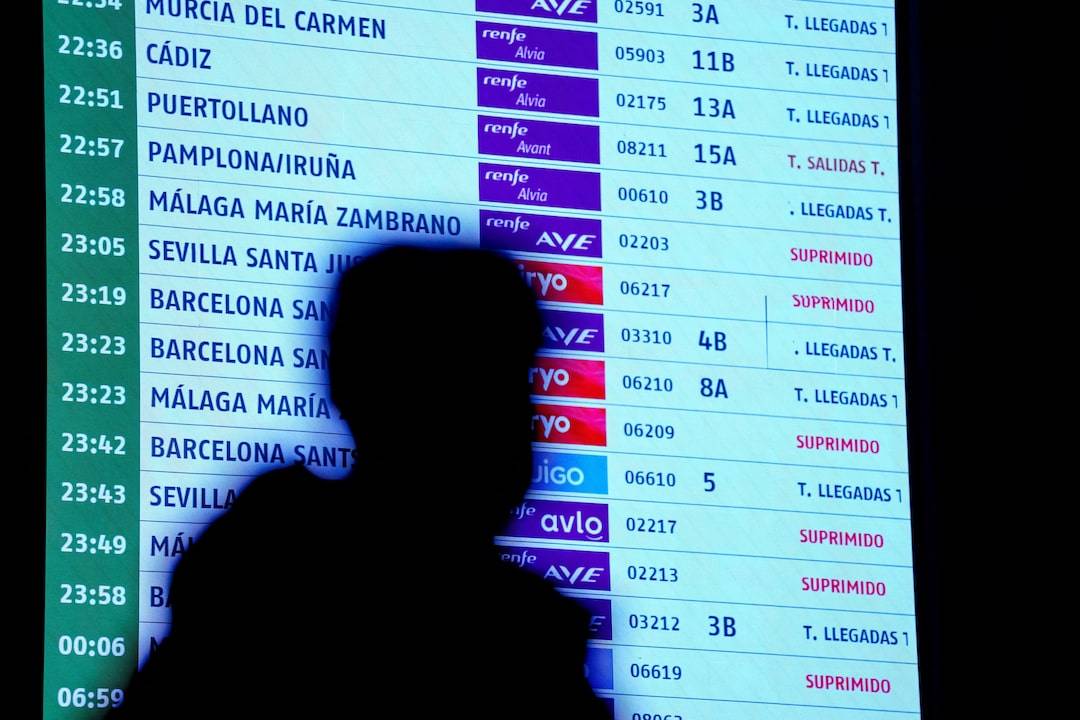
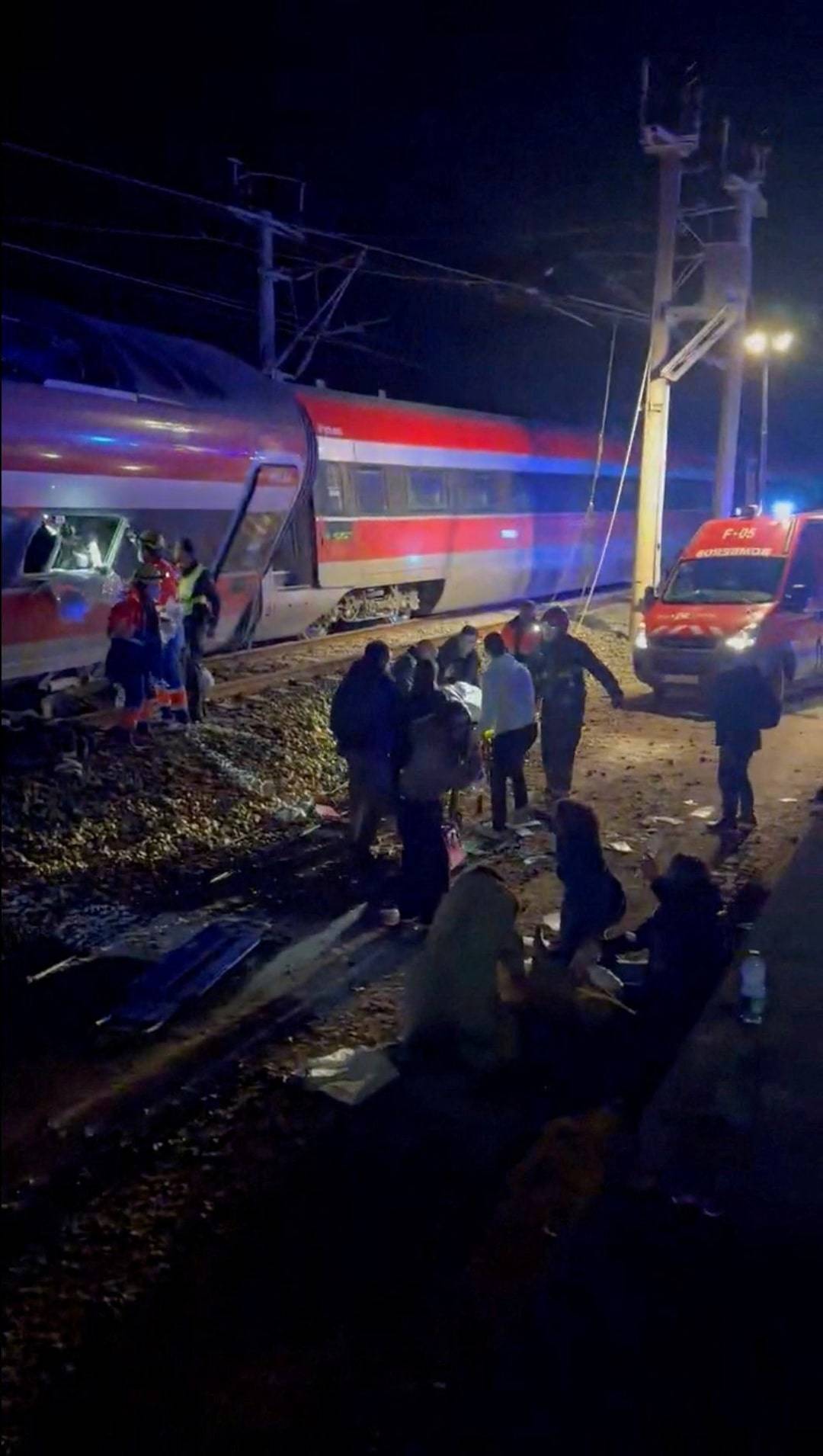
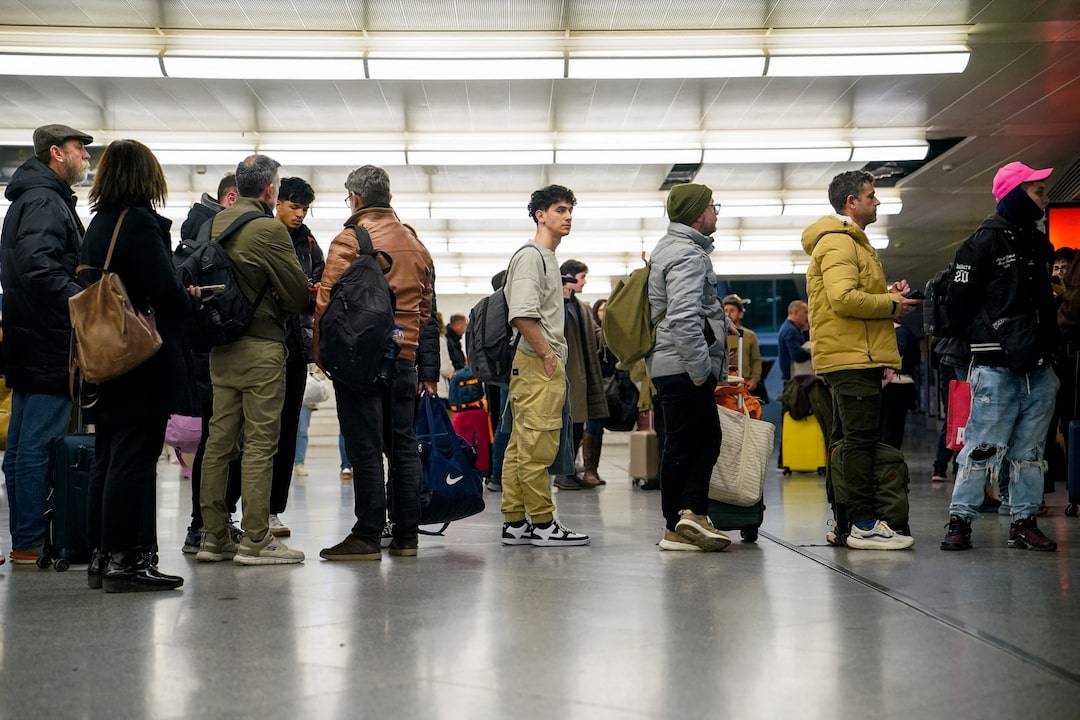
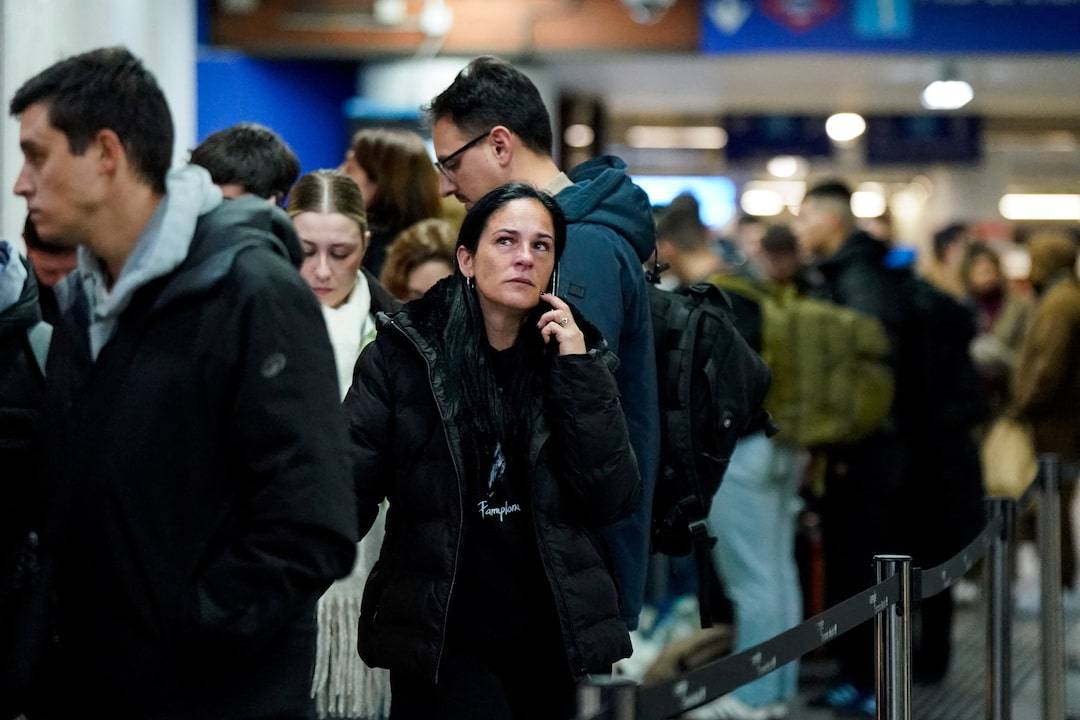
A high-speed train derailed and smashed into another oncoming train in southern Spain on Sunday, pushing the second train off the tracks in a collision that police sources confirmed to Reuters had killed at least 21 people.
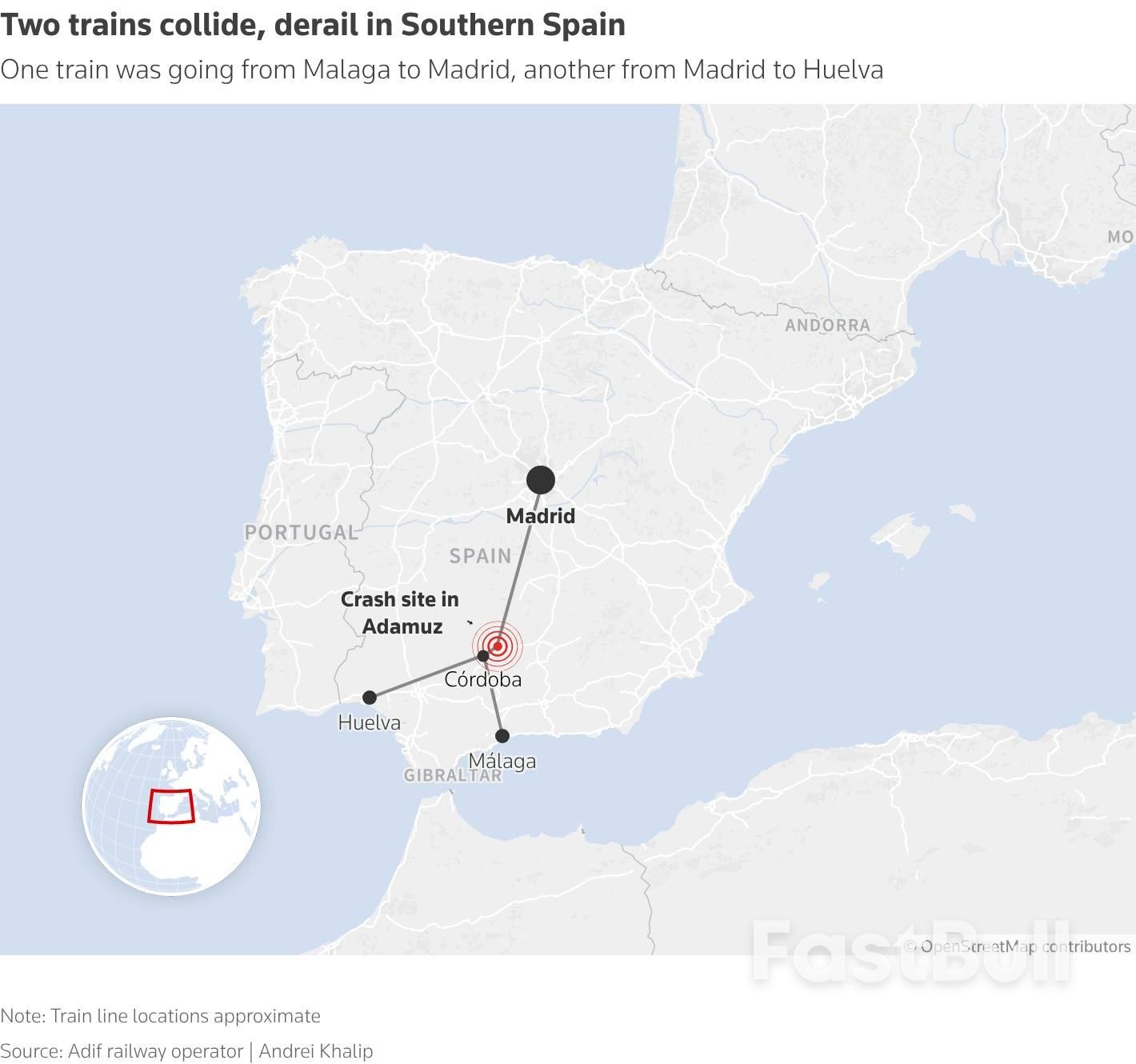
The accident happened near Adamuz, in Cordoba province. So far, 21 people have been confirmed dead by police, with state broadcaster Television Espanola adding that 100 people had been injured, 25 seriously. The driver of one of the trains, which was travelling from Madrid to Huelva, was among those who died, the TV station added.
Map of railroad collision in southern Spain"The Iryo 6189 Malaga - (to Madrid) train has derailed from the track at Adamuz, crashing onto the adjacent track. The (Madrid) to Huelva train which was travelling on the adjacent track has also derailed," said Adif, which runs the rail network, in a social media post.
Adif said the accident happened at 6:40 p.m. (1740 GMT), about 10 minutes after the Iryo train left Cordoba heading towards Madrid.
Iryo is a private rail operator, majority-owned by Italian state-controlled railway group Ferrovie dello Stato. The train involved was a Freccia 1000 train which was travelling between Malaga and Madrid, a spokesperson for Ferrovie dello Stato said.
The company said in a statement that it deeply regretted what had happened and had activated all emergency protocols to work closely with the relevant authorities to manage the situation.
The second train was operated by Renfe, which also did not respond to a request for comment.
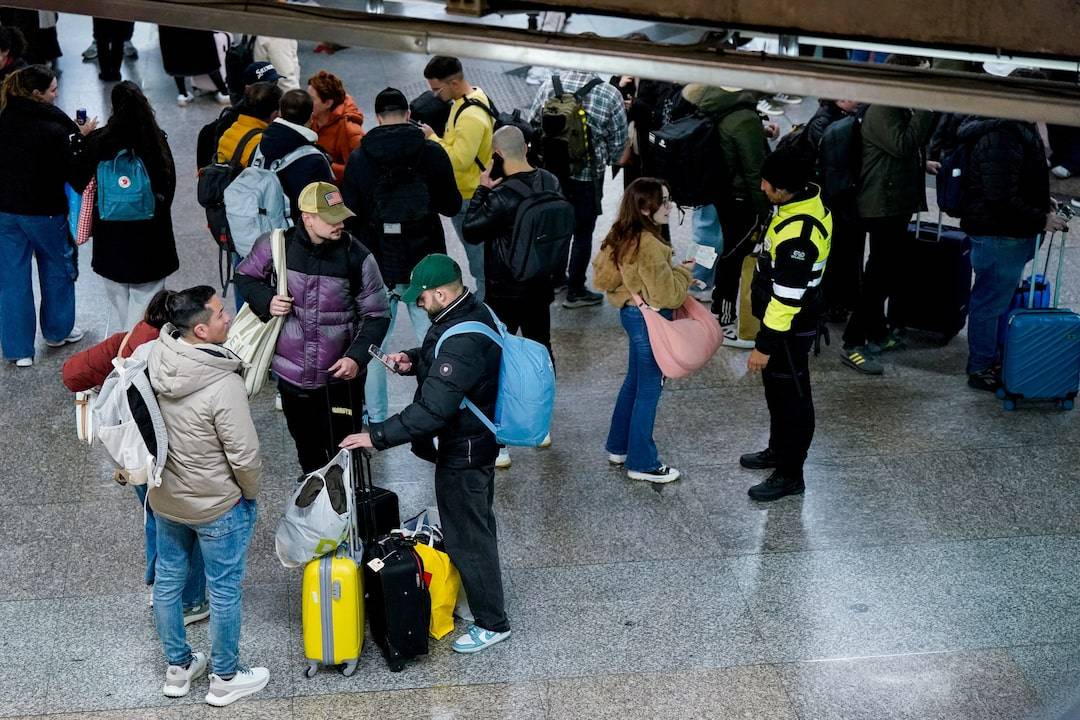
Adif has suspended all rail services between Madrid and Andalusia.
The Iryo train had more than 300 passengers on board, while the Renfe train had around 100.
Paco Carmona, Cordoba fire chief, told TVE the first train heading to Madrid from Malaga had been evacuated.
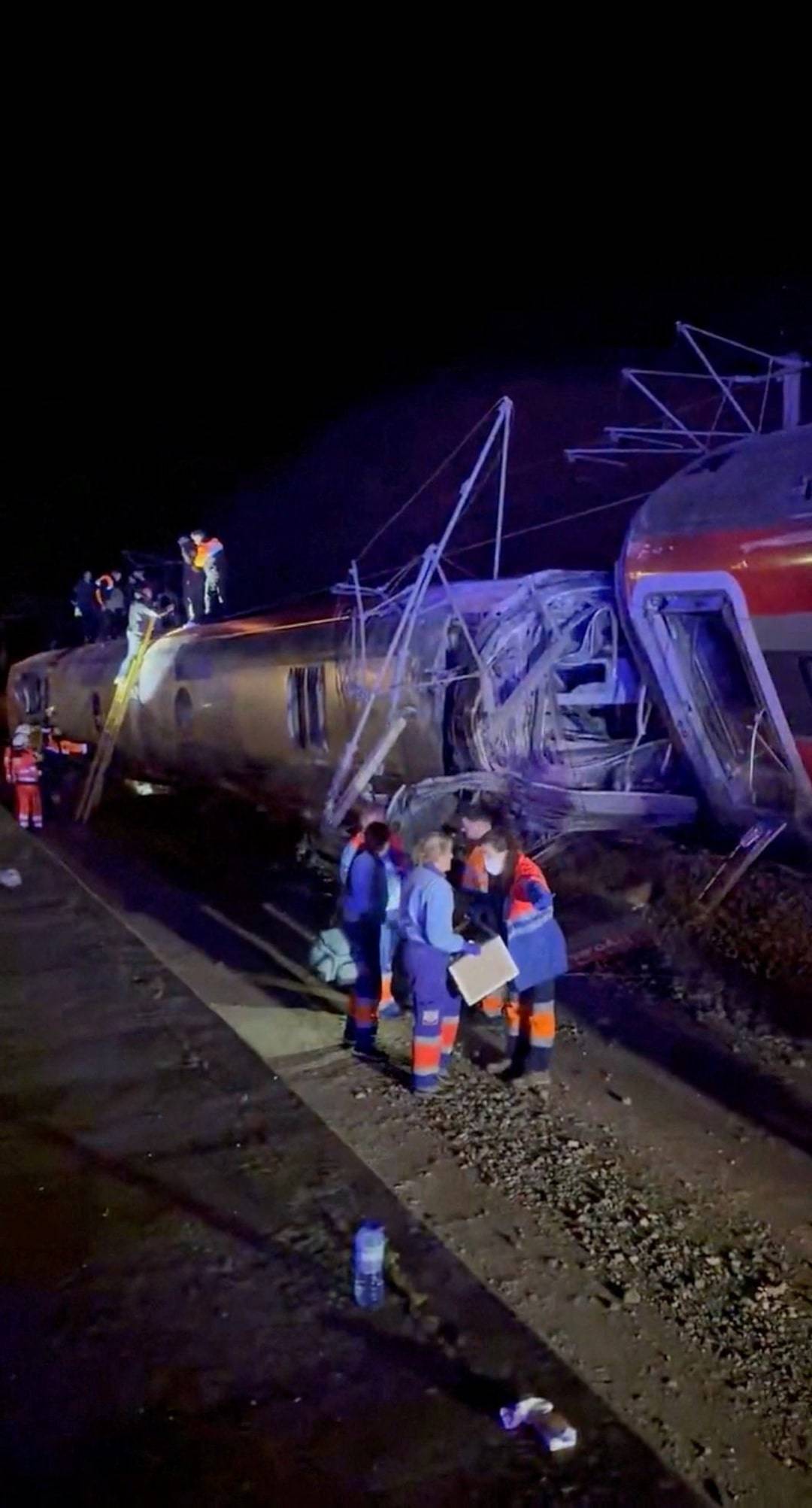
The other train's carriages were badly damaged, he said, with twisted metal and seats. "There are still people trapped. We don't know how many people have died and the operation is concentrating on getting people out of areas which are very narrow," he said. "We have to remove the bodies to reach anyone who is still alive. It is proving to be a complicated task."
Transport Minister Oscar Puente said he was following events from rail operator Adif's headquarters in Madrid.
"The latest information is very serious," he posted on X. "The impact was terrible, causing the first two carriages of the Renfe train to be thrown off the track. The number of victims cannot be confirmed at this time. The most important thing now is to help the victims."
The mayor of Adamuz, Rafael Moreno, told El Pais newspaper that he had been among the first to arrive at the scene of the accident alongside the local police and saw what he believed to be a badly lacerated body several metres from the accident site.
"The scene is horrific," he said. "I don't think they were on the same track, but it's not clear. Now the mayors and residents of the area are focused on helping the passengers."
Images on local television showed a reception centre set up for passengers in the town of Adamuz, population 5,000, with locals coming and going with food and blankets amid nighttime temperatures of around 42 degrees Fahrenheit (6 degrees Celsius).
A woman named Carmen posted on X that she had been on board the Iryo train to Madrid. "Ten minutes after departing (from Cordoba) the train started to shake a lot, and it derailed from coach 6 behind us. The lights went out."
Footage posted by another Iryo train passenger, also on X, showed an Iryo staffer in a fluorescent jacket instructing passengers to remain in their seats in the darkened carriages, and those with first aid training to keep watch over fellow passengers. He also urged people to maintain mobile phone batteries to be able to use their torches when they disembarked.
Salvador Jimenez, a journalist for RTVE who was on board the Iryo train, shared images showing the nose of the rear carriage of the train lying on its side, with evacuated passengers sitting on the side of the carriage facing upwards.
Jimenez told TVE by phone from beside the stricken trains that passengers had used emergency hammers to smash the windows and climb out, and they had seen two people taken out of the overturned carriages on stretchers.
"There's a certain uncertainty about when we'll get to Madrid, where we'll spend the night, we've had no message from the train company yet," he said. "It's very cold but here we are."

Data Interpretation

Political

Commodity

Remarks of Officials

Traders' Opinions

Middle East Situation

Energy
Oil prices showed little movement on Monday, holding steady after a recent rally as concerns over a potential supply disruption from Iran began to fade. The market is weighing easing geopolitical tensions against fresh data on U.S. crude inventories.
By 0158 GMT, Brent crude was trading up 5 cents at $64.18 a barrel. U.S. West Texas Intermediate (WTI) for February delivery edged up 8 cents to $59.52, with the more active March contract rising 2 cents to $59.36.
A primary factor capping price gains is the situation in Iran. A government crackdown on protests over economic hardship has subdued civil unrest, lowering the perceived risk of a U.S. intervention that could threaten oil flows from OPEC's fourth-largest producer.
This de-escalation was seemingly supported by comments from U.S. President Donald Trump, who appeared to step back from earlier threats of intervention.
The market has responded by unwinding the "Iran premium" that had pushed prices to twelve-week highs, according to IG market analyst Tony Sycamore. Despite the recent pullback, prices still settled higher on Friday, and the continued movement of U.S. military assets to the Gulf highlights lingering concerns.
Adding to the bearish sentiment was recent U.S. inventory data that surprised the market. According to the EIA, domestic crude stocks rose by 3.4 million barrels in the week ending January 9.
This build-up contradicted analyst expectations for a 1.7 million-barrel draw, reinforcing what Sycamore described as "bearish supply pressures" on the market.
Traders are also monitoring developments in Venezuela. President Trump has stated the U.S. would run the country's oil industry following the capture of Nicolas Maduro, and the U.S. energy secretary confirmed that efforts are underway to grant Chevron an expanded production license.
However, the market remains skeptical about a quick turnaround for Venezuela's struggling oil sector. "It is becoming clear that Venezuela's production ramp-up will take many years to play out," noted Sycamore, suggesting that a significant supply increase from the nation is not imminent.


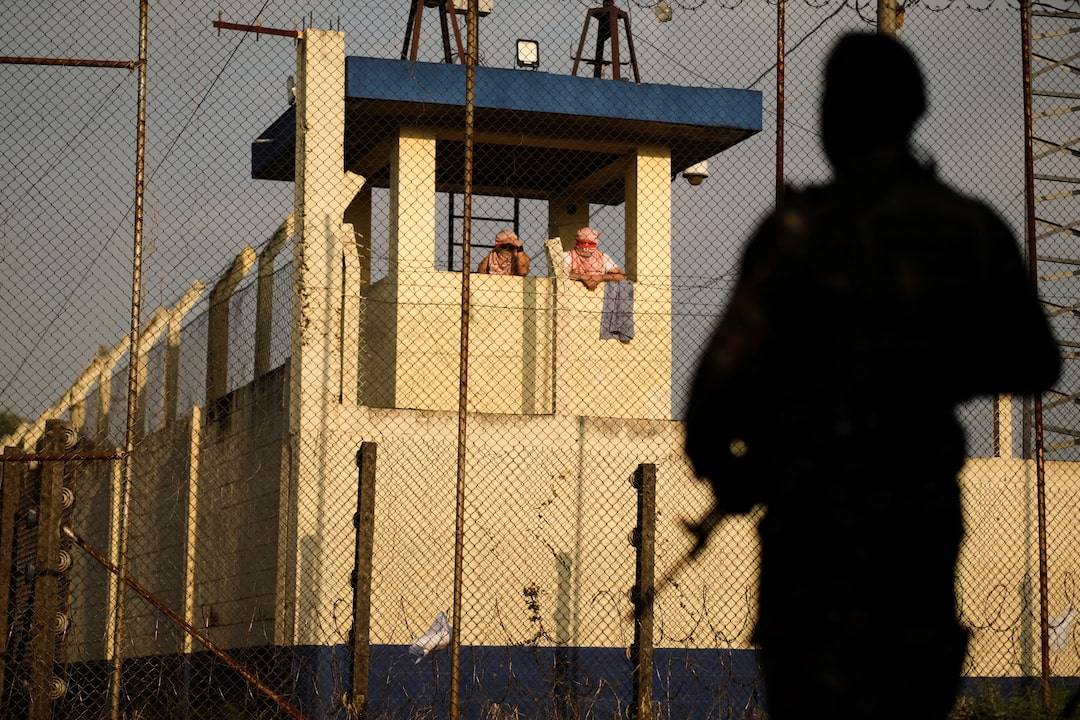
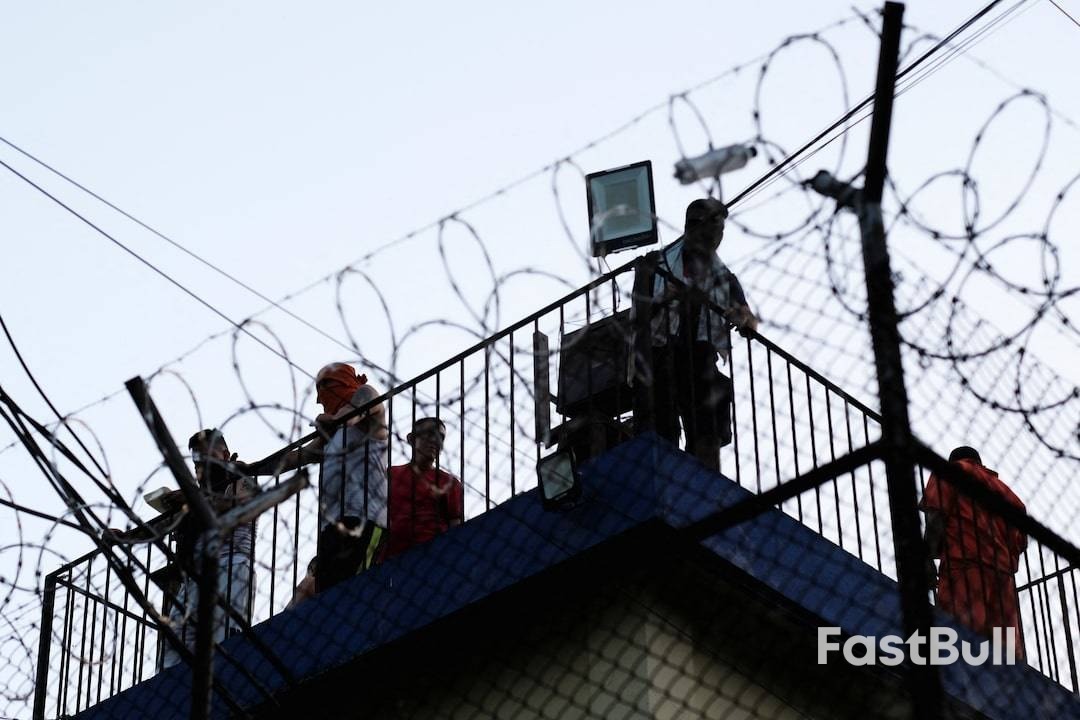
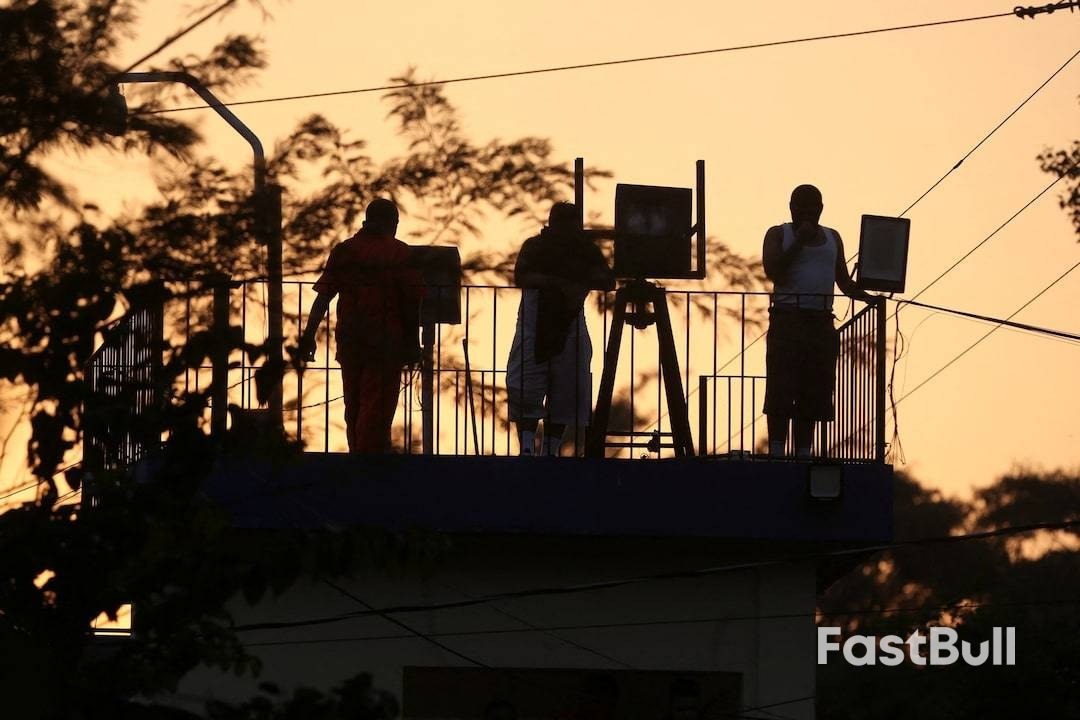
Guatemala's president declared a state of siege on Sunday after security forces freed dozens of prison guards held hostage by inmates, ending a weekend of gang violence that left at least seven police officers dead and another 10 injured.
Rioting inmates had taken 46 hostages at three men's prisons early on Saturday. The government blamed the riots on the Barrio 18 gang, which it said was pushing for greater privileges for its members in prison.
Gang-led violence targeted police in several areas around Guatemala City after security forces regained control of the prison where Barrio 18's leader, Aldo Duppie, was held. The gang leader, known as El Lobo, was taken back into custody.
President Bernardo Arevalo declared a 30-day state of siege that he said would allow the full force of the state, including the police and the army, to combat gang violence.
Under Guatemalan law, a state of siege can temporarily limit or suspend civil liberties and expand security forces' powers in response to threats to public order.
Images provided by the police showed officers on Sunday morning escorting Barrio 18's leader, who appeared to have a bloody shoulder, out of a prison that had been taken over by inmates.
Shortly afterward, simultaneous attacks against police officers broke out in and around the capital, in what Arevalo said was gang retaliation for taking back the prisons. One gang member was also killed in the violence.
"These murders were carried out with the intention of terrorizing the security forces and the population so that we give up in the fight against gangs and their regime of terror. But they will fail," Arevalo said.
Arevalo, who also declared three days of national mourning, said the state of siege should not alter normal life for Guatemalans.
Earlier on Sunday, National Civil Police director David Boteo had advised Guatemalans to stay at home, and the U.S. Embassy in Guatemala issued a security warning for U.S. citizens. Guatemala's education minister canceled school classes across the country on Monday, which Arevalo said was a preventive measure.
Guatemala's Congress declared Barrio 18 a terrorist group in October 2025, shortly after U.S. President Donald Trump's administration classified the gang as a foreign terrorist organization.
El Lobo is currently serving prison sentences totaling some 2,000 years. He is married to the niece of Sandra Torres, Guatemala's former first lady who has been the runner-up in three presidential elections, most recently finishing second to Arevalo in 2023.
A new trade deal between the United States and Taiwan aims to shift more semiconductor production to American soil, but analysts argue the move is unlikely to end U.S. reliance on the island’s most advanced chips anytime soon. For now, Taiwan's strategic "silicon shield" remains firmly in place.
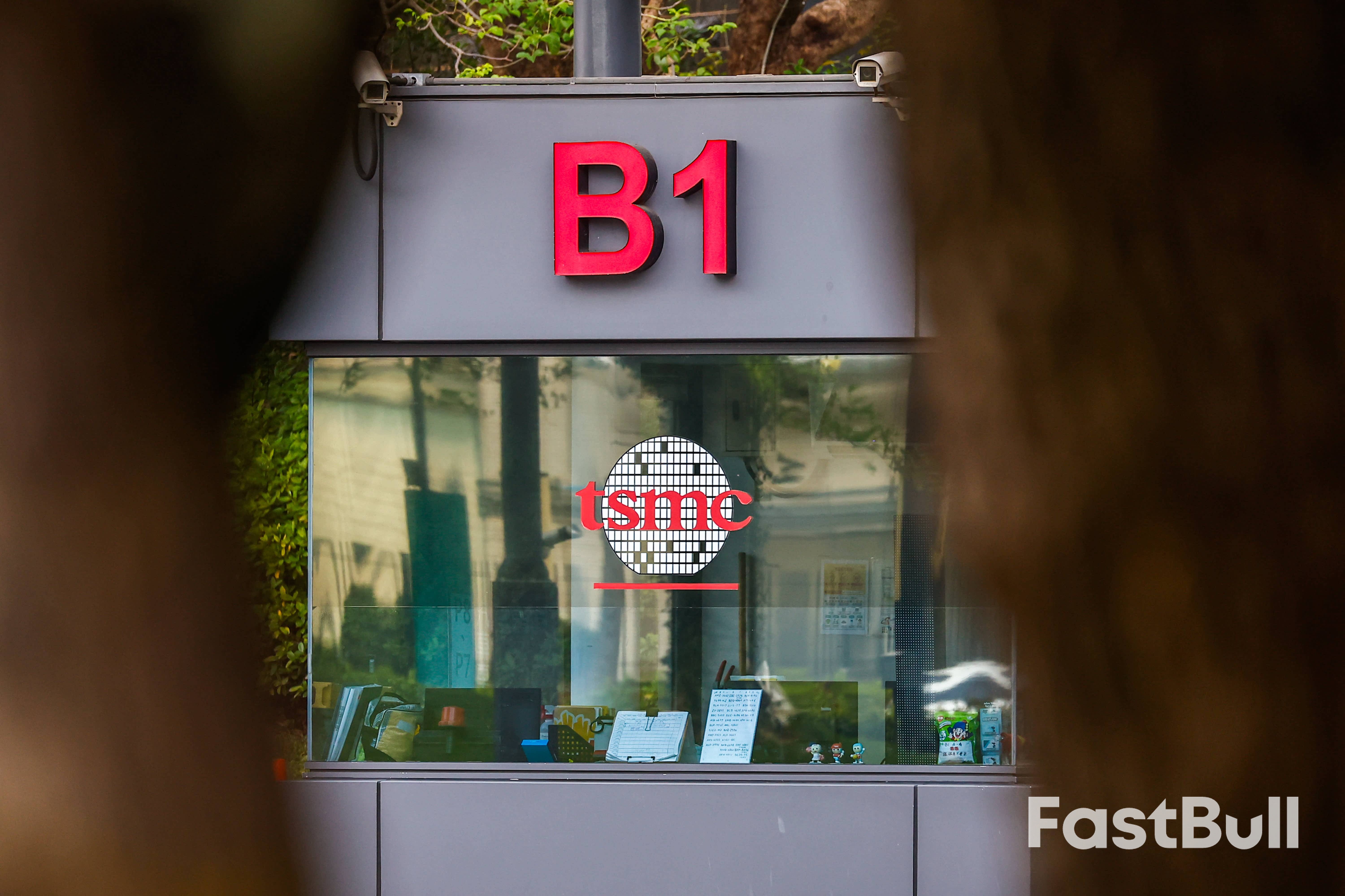
Taiwan is the undisputed leader in global chip manufacturing, with Taiwan Semiconductor Manufacturing Company (TSMC) producing the majority of the world's most advanced semiconductors. It's estimated that nearly a third of all new computing power is fabricated on the island. This dominance has made Taiwan’s security a strategic priority for Washington and its allies, as Beijing continues to claim sovereignty over the self-governed island.

Under a trade agreement announced Thursday, the Taiwanese government has pledged to guarantee $250 billion in credit for its technology companies to expand production capacity in the U.S. In exchange, these firms will receive higher quotas for tariff-free chip imports into the American market.
The deal also includes tariff reductions from Washington, which will lower levies on most Taiwanese goods to 15% from 20% and eliminate tariffs on certain items like generic drugs, aircraft parts, and natural resources not available in the U.S.
Commerce Secretary Howard Lutnick told CNBC the goal is to bring 40% of Taiwan's entire semiconductor supply chain to the United States. However, experts are skeptical that this can be achieved easily, citing Taipei's strict policy of keeping its most advanced technology at home.
According to Sravan Kundojjala, an analyst at SemiAnalysis, Taiwan's "silicon shield" will remain strong through the end of the decade, with the world's most critical advanced manufacturing capacity staying concentrated on the island.
The global economy would face a "depression-level event if Taiwan were invaded tomorrow," Kundojjala added, highlighting the world's continued dependence.
The 'N-2 Rule': Taiwan's Built-in Tech Advantage
A key reason for this is Taiwan's "N-2 rule," a policy restricting TSMC's overseas factories to using technology that is at least two generations behind what is developed domestically.
This technology gap is already visible. While TSMC is producing its most advanced 2-nanometer chips in Taiwan, its new plant in Arizona has only recently started making 4-nanometer chips. Plans for the Arizona facility to scale up to 2-nanometer and A16 nodes are not expected until 2030. In chipmaking, a smaller nanometer size allows for denser, faster, and more energy-efficient processors. This four-to-five-year lag ensures Taiwan maintains its technological edge.
TSMC Keeps Its Most Advanced R&D at Home
Company leadership and government officials have made it clear that core innovation will not be leaving Taiwan.
TSMC's CFO, Wendell Huang, told CNBC that the company will continue developing its most advanced technologies in Taiwan. He cited the need for "very intensive collaboration" between domestic research and manufacturing teams. "We'll be sending hundreds of engineers back and forth [between] different sites in Taiwan. Therefore, it will stay in Taiwan when we ramp [up] the most leading-edge technology," Huang explained.
This strategy is backed by the government. Wu Cheng-wen, head of Taiwan's National Science and Technology Council, told the Financial Times last year that keeping cutting-edge R&D at home was crucial to prevent the domestic industry from being "hollowed out." He warned, "If we move our R&D overseas, it'll be dangerous for us."
Despite this, TSMC has pledged a $165 billion investment in U.S.-based chip fabrication facilities and an R&D lab to supply key customers like Nvidia and Apple.
Analysts point to significant difficulties in shifting the semiconductor ecosystem away from Taiwan. William Reinsch, a senior adviser at the Center for Strategic and International Studies, said Taiwan's engineering talent and advanced fabrication capabilities are "not replicable at scale anywhere else."
Reinsch noted that a lack of trained workers and higher production costs have already caused delays at TSMC's U.S. plants, and the new trade deal does little to solve these underlying constraints. He expects the pledged investments to take longer than anticipated and potentially fall short of the promised levels.
"The semiconductor ecosystem cannot be relocated overnight, so the silicon shield may weaken but still exist in the near term," said Dennis Lu-Chung Weng, an associate professor at Sam Houston State University. He cautioned about the future, saying, "The bigger question is what happens after Trump: if future U.S. administrations keep pushing for large-scale relocation, Taiwan losing its exclusive advantage becomes less a question of if and more a question of when."
In response to the deal, China's foreign ministry reiterated its opposition to any official agreements between Taiwan and countries that have diplomatic relations with Beijing, urging the U.S. to adhere to the "one-China principle."
However, the trade deal is unlikely to alter Beijing's strategic calculations. Ava Shen, an expert at Eurasia Group, said a Chinese invasion of Taiwan remains a low-probability event. She noted that Chinese authorities are more focused on the military balance with the U.S. and the level of American defense support for Taipei.
Meanwhile, Taiwanese officials continue to emphasize the need to diversify their economy and strengthen their defense capabilities to counter military pressure from China.
A limited military strike could be the key to giving the Iranian people a chance to overthrow their own government. With protests in Iran leading to thousands of deaths and the regime’s brutality exposed by the killing of figures like Mahsa Amini and Hadis Najafi, the government's power now rests on terror.
As a potential Donald Trump presidency revisits conflict with the Islamic Republic, the playbook looks familiar. A second term could see strikes against the regime’s nuclear program, echoing the first term's killing of Quds Force commander Qasem Soleimani.
Any US military action would not aim for devastation or a failed state that destabilizes the region. The strategy would be built on two core objectives:
1. Systematically break the power of the clerical establishment and the Islamic Revolutionary Guard Corps (IRGC).
2. Preserve the state's capacity to govern a post-theocracy Iran.
The ultimate goal would be to create an opening for the Iranian people to end the post-1979 order for good.
In 1999, NATO’s Operation Allied Force used an air campaign to end Serbia's abuses in Kosovo. After 78 days, President Slobodan Milošević capitulated. Airpower was decisive, but indirectly; Serbia’s international isolation and the economic pain inflicted on its elite forced the government to concede. The Kosovo campaign proved that airpower can function as a tool of political warfare.
Even without an aircraft carrier in the region, the US has options. The USS Abraham Lincoln carrier strike group is reportedly moving to the Middle East. Strategic reach was demonstrated in June 2025's Operation Midnight Hammer, where B-2 Spirit bombers flew missions over 13,000 miles and 36 hours from Whiteman Air Force Base in Missouri. Submarines, difficult to track, can launch surprise Tomahawk cruise missile attacks.
Israel has already set a precedent by using F-35I stealth fighters to penetrate Iranian airspace during the 12-Day War, paving the way for the US Air Force's F-22s and F-35s. Alternatively, waiting for the USS Abraham Lincoln would allow for maximum force projection.
However, a modern conflict requires more than just military force. The US would need to ensure Iranians have internet access to bypass government blackouts, while launching a major cyber offensive to disrupt the regime's control over information.
A US air campaign must send a clear political message by prioritizing strikes on hardline IRGC targets while sparing the Artesh—Iran's conventional military—whenever possible. This operational plan should be reinforced with public rhetoric urging the regular army to honor its oath to protect the Iranian people, not the regime.
This strategy draws a sharp line between the IRGC, which acts as a shield for the clerical elite, and the Artesh, which could instead shield the population from the government.
This approach would tap into Iran's own history. After the 1979 revolution, the new leadership purged the Imperial Army, doubting its loyalty. They elevated pro-Khomeini militias, which became the IRGC, specifically to counterbalance the army and prevent coups. This initial suspicion created a lasting institutional rivalry between the two military bodies.
Military action against Iran would operate in a legal gray area, much like Operation Allied Force, which proceeded without UN Security Council authorization. The justification rests on the premise that a state loses its sovereign rights when it commits mass killings against its own citizens.
History offers a warning against hesitation. Former President Barack Obama later admitted that failing to support Iran's 2009 Green Movement was a mistake, and the Iranian people paid the price. Once a regime successfully crushes dissent, it consolidates its power. Iran's current vulnerability following the 12-Day War is a rare window of opportunity.
If no action is taken, the regime may become more aggressive. Iran still possesses significant ballistic missile capabilities, receives assistance from China, and is exploring intercontinental ballistic missiles that could threaten the United States.
However, the risks of a limited campaign are significant. If it fails to achieve a decisive political outcome, it could leave Iran wounded but defiant. Operation Allied Force required 78 days and over 38,000 sorties to work. A campaign against Iran would need to be far more surgical. Tehran could also retaliate against US forces in the region or strike key targets across the Middle East, risking a wider conflict.
Regime change in Iran is a question of when, not if. Supreme Leader Ali Khamenei is 86, and there is no clear successor with his authority. If the current uprising is suppressed, the most likely outcome is a military dictatorship dominated by the IRGC.
The alternative path is one that undoes the legacy of 1979. Nostalgia for the old order is not a solution; the exiled crown prince Reza Pahlavi’s appeal is limited, as the pre-revolutionary monarchy had its own forms of repression.
Iran is headed for one of two futures: a militarized state or a chance for its people to reclaim their country. A US military campaign, while risky, would force a decision on which path Iran will take.
Bitcoin's price plunged by nearly $4,000 in a sudden evening sell-off after President Donald Trump announced plans for significant new tariffs on European goods. The sharp downturn triggered a cascade of forced liquidations across the cryptocurrency market.
Around 6 p.m. EST, a wave of selling pressure sent the world's largest cryptocurrency from approximately $95,500 to an intraday low of $91,935 in just two hours. This rapid decline wiped out over $500 million in leveraged long positions within a single hour, with total crypto long liquidations exceeding $525 million in the same timeframe.
The bitcoin price has since found a floor near $92,600 but remains down roughly 2.5% over the last 24 hours.
The market sell-off aligns with rising macroeconomic uncertainty following Trump's announcement that the U.S. will impose new tariffs on European nations starting February 1.
The proposal outlines a 10% tariff on goods from eight countries:
• Denmark
• Norway
• Sweden
• France
• Germany
• The United Kingdom
• The Netherlands
• Finland
This rate would escalate to 25% by June 1 if no agreement is reached. President Trump explicitly linked the trade measures to U.S. efforts to secure Greenland, intensifying already strained transatlantic relations.
European leaders responded with strong opposition. In a joint statement, the affected nations warned the tariff threats could ignite a "dangerous downward spiral." Danish Prime Minister Mette Frederiksen asserted that Europe "will not be blackmailed." Protests were also reported in Denmark and Greenland over the weekend.
In a classic flight to safety, gold prices climbed to a new all-time high of around $4,670.
Compounding the tariff issue is a high-stakes U.S. Supreme Court case that could redefine presidential authority on trade. The court is set to rule on whether President Trump has the power to impose sweeping tariffs under the International Emergency Economic Powers Act (IEEPA).
The case centers on Trump's use of the act to declare trade deficits a national emergency, which served as the legal basis for a baseline 10% duty on most imports. The ruling has major implications for trade policy and federal revenue.
A decision against Trump could compel the government to refund more than $100 billion in collected tariffs, potentially disrupting defense and budget plans. Conversely, if the court upholds the president's authority, existing tariffs will stand, and future actions—like the proposed duties on European goods—could move forward.
Following the recent volatility, Bitcoin is trading down approximately 3% from its seven-day high of $95,468 and remains within a narrow range above its seven-day low of $92,284.
The asset’s circulating supply stands at 19.98 million BTC, out of a maximum possible supply of 21 million. The global Bitcoin market capitalization is approximately $1.85 trillion, a daily decrease of about 2%, while 24-hour trading volume has hit $32 billion.
White Label
Data API
Web Plug-ins
Poster Maker
Affiliate Program
The risk of loss in trading financial instruments such as stocks, FX, commodities, futures, bonds, ETFs and crypto can be substantial. You may sustain a total loss of the funds that you deposit with your broker. Therefore, you should carefully consider whether such trading is suitable for you in light of your circumstances and financial resources.
No decision to invest should be made without thoroughly conducting due diligence by yourself or consulting with your financial advisors. Our web content might not suit you since we don't know your financial conditions and investment needs. Our financial information might have latency or contain inaccuracy, so you should be fully responsible for any of your trading and investment decisions. The company will not be responsible for your capital loss.
Without getting permission from the website, you are not allowed to copy the website's graphics, texts, or trademarks. Intellectual property rights in the content or data incorporated into this website belong to its providers and exchange merchants.
Not Logged In
Log in to access more features

FastBull Membership
Not yet
Purchase
Log In
Sign Up