• Trade
  • Markets
  • Copy
  • Contests
  • News
  • 24/7
  • Calendar
  • Q&A
  • Chats
Screeners
SYMBOL
LAST
ASK
BID
HIGH
LOW
NET CHG.
%CHG.
SPREAD
SPX
S&P 500 Index
6917.82
6917.82
6917.82
6993.09
6862.05
-58.62
-0.84%
--
DJI
Dow Jones Industrial Average
49240.98
49240.98
49240.98
49653.13
48832.78
-166.67
-0.34%
--
IXIC
NASDAQ Composite Index
23255.18
23255.18
23255.18
23691.60
23027.21
-336.92
-1.43%
--
USDX
US Dollar Index
97.220
97.300
97.220
97.300
97.160
+0.020
+ 0.02%
--
EURUSD
Euro / US Dollar
1.18237
1.18245
1.18237
1.18316
1.18075
+0.00062
+ 0.05%
--
GBPUSD
Pound Sterling / US Dollar
1.37043
1.37050
1.37043
1.37123
1.36821
+0.00079
+ 0.06%
--
XAUUSD
Gold / US Dollar
5061.71
5062.16
5061.71
5065.28
4910.07
+115.46
+ 2.33%
--
WTI
Light Sweet Crude Oil
63.729
63.764
63.729
63.865
63.180
+0.095
+ 0.15%
--

Community Accounts

Signal Accounts
--
Profit Accounts
--
Loss Accounts
--
View More

Become a signal provider

Sell trading signals to earn additional income

View More

Guide to Copy Trading

Get started with ease and confidence

View More

Signal Accounts for Members

All Signal Accounts

Best Return
  • Best Return
  • Best P/L
  • Best MDD
Past 1W
  • Past 1W
  • Past 1M
  • Past 1Y

All Contests

  • All
  • Trump Updates
  • Recommend
  • Stocks
  • Cryptocurrencies
  • Central Banks
  • Featured News
Top News Only
Share

AXIOS Reports That Nuclear Talks Between The United States And Iran Are Expected To Begin In Oman On Friday. The Trump Administration Has Agreed To Iran's Request To Move The Talks From Turkey

Share

Singapore's Benchmark Stock Index Rises As Much As 0.3% To Record High Of 4956.44

Share

Trump Administration Agreed To The Iranian Request To Move The Talks From Turkey

Share

South Korea's Benchmark Stock Index Rises As Much As 1.2% To Record High Of 5348.82 Points

Share

Spot Gold Broke Through $5,060 Per Ounce, Up 2.29% On The Day

Share

Spot Palladium Broke Through $1,800 Per Ounce, Up 3.49% On The Day

Share

Spot Silver Rises Over 3% To $87.88/Oz

Share

China's CSI Sws Coal Index Up 3%

Share

BofA: Gold And Silver Volatility Remains High, Extreme Movements Unlikely To Recur Soon

Share

China Central Bank Injects 75 Billion Yuan Via 7-Day Reverse Repos At 1.40% Versus Prior 1.40%

Share

US Official - US Has Returned Remaining $200 Million From Initial $500 Million Oil Sale To Venezuela

Share

Spot Gold Rises Over 2% To $5043.64/Oz

Share

Spot Platinum Rises Over 3% To $2276.15/Oz

Share

Dollar/Yen Up 0.2% At 156.06

Share

New York And New Jersey Are Seeking Emergency Assistance In Response To Plans To Suspend Construction On Friday

Share

The U.S. States Of New York And New Jersey Have Filed A Lawsuit Against President Trump For His Decision To Withhold $16 Billion In Tunnel Project Funds

Share

Spot Silver Broke Through $86 Per Ounce, Rising Nearly 1% On The Day

Share

Spot Palladium Rises 3% To $1784.96/Oz

Share

Spot Gold Broke Through $5,000 Per Ounce, With Intraday Gains Widening To 1.1%, Rebounding Nearly $600 From This Week's Low

Share

Spot Silver Rebounded During The Day After Falling More Than 2%, And Is Currently Trading At $85.4 Per Ounce

TIME
ACT
FCST
PREV
U.S. ISM Inventories Index (Jan)

A:--

F: --

P: --

U.S. ISM Manufacturing Employment Index (Jan)

A:--

F: --

P: --

U.S. ISM Manufacturing New Orders Index (Jan)

A:--

F: --

P: --

U.S. ISM Manufacturing PMI (Jan)

A:--

F: --

P: --

US President Trump delivered a speech
South Korea CPI YoY (Jan)

A:--

F: --

P: --

Japan Monetary Base YoY (SA) (Jan)

A:--

F: --

P: --

Australia Building Approval Total YoY (Dec)

A:--

F: --

P: --
Australia Building Permits MoM (SA) (Dec)

A:--

F: --

P: --
Australia Building Permits YoY (SA) (Dec)

A:--

F: --

P: --

Australia Private Building Permits MoM (SA) (Dec)

A:--

F: --

P: --
Australia Overnight (Borrowing) Key Rate

A:--

F: --

P: --

RBA Rate Statement
Japan 10-Year Note Auction Yield

A:--

F: --

P: --

The U.S. House of Representatives voted on a short-term spending bill to end the partial government shutdown.
Saudi Arabia IHS Markit Composite PMI (Jan)

A:--

F: --

P: --

RBA Press Conference
Turkey PPI YoY (Jan)

A:--

F: --

P: --

Turkey CPI YoY (Jan)

A:--

F: --

P: --

Turkey CPI YoY (Excl. Energy, Food, Beverage, Tobacco & Gold) (Jan)

A:--

F: --

P: --

U.K. 10-Year Note Auction Yield

A:--

F: --

P: --

Richmond Federal Reserve President Barkin delivered a speech.
U.S. Weekly Redbook Index YoY

A:--

F: --

P: --

Mexico Manufacturing PMI (Jan)

A:--

F: --

P: --

U.S. API Weekly Refined Oil Stocks

A:--

F: --

P: --

U.S. API Weekly Gasoline Stocks

A:--

F: --

P: --

U.S. API Weekly Cushing Crude Oil Stocks

A:--

F: --

P: --

U.S. API Weekly Crude Oil Stocks

A:--

F: --

P: --

Japan IHS Markit Services PMI (Jan)

A:--

F: --

P: --

Japan IHS Markit Composite PMI (Jan)

A:--

F: --

P: --

China, Mainland Caixin Services PMI (Jan)

A:--

F: --

P: --

China, Mainland Caixin Composite PMI (Jan)

A:--

F: --

P: --

India HSBC Services PMI Final (Jan)

--

F: --

P: --

India IHS Markit Composite PMI (Jan)

--

F: --

P: --

Russia IHS Markit Services PMI (Jan)

--

F: --

P: --

South Africa IHS Markit Composite PMI (SA) (Jan)

--

F: --

P: --

Italy Services PMI (SA) (Jan)

--

F: --

P: --

Italy Composite PMI (Jan)

--

F: --

P: --

Germany Composite PMI Final (SA) (Jan)

--

F: --

P: --

Euro Zone Composite PMI Final (Jan)

--

F: --

P: --

Euro Zone Services PMI Final (Jan)

--

F: --

P: --

U.K. Composite PMI Final (Jan)

--

F: --

P: --

U.K. Total Reserve Assets (Jan)

--

F: --

P: --

U.K. Services PMI Final (Jan)

--

F: --

P: --

U.K. Official Reserves Changes (Jan)

--

F: --

P: --

Euro Zone Core CPI Prelim YoY (Jan)

--

F: --

P: --

Euro Zone Core HICP Prelim YoY (Jan)

--

F: --

P: --

Euro Zone PPI MoM (Dec)

--

F: --

P: --

Euro Zone HICP Prelim YoY (Jan)

--

F: --

P: --

Euro Zone Core HICP Prelim MoM (Jan)

--

F: --

P: --

Italy HICP Prelim YoY (Jan)

--

F: --

P: --

Euro Zone Core CPI Prelim MoM (Jan)

--

F: --

P: --

Euro Zone PPI YoY (Dec)

--

F: --

P: --

U.S. MBA Mortgage Application Activity Index WoW

--

F: --

P: --

Brazil IHS Markit Composite PMI (Jan)

--

F: --

P: --

Brazil IHS Markit Services PMI (Jan)

--

F: --

P: --

U.S. ADP Employment (Jan)

--

F: --

P: --

The U.S. Treasury Department released its quarterly refinancing statement.
U.S. IHS Markit Composite PMI Final (Jan)

--

F: --

P: --

U.S. IHS Markit Services PMI Final (Jan)

--

F: --

P: --

U.S. ISM Non-Manufacturing Employment Index (Jan)

--

F: --

P: --

Q&A with Experts
    • All
    • Chatrooms
    • Groups
    • Friends
    3533359 flag
    va suvir causaaa
    3480163 flag
    hey guys
    3480163 flag
    anyone using ea?
    AllinXau flag
    AllinXau flag
    Jonas777 flag
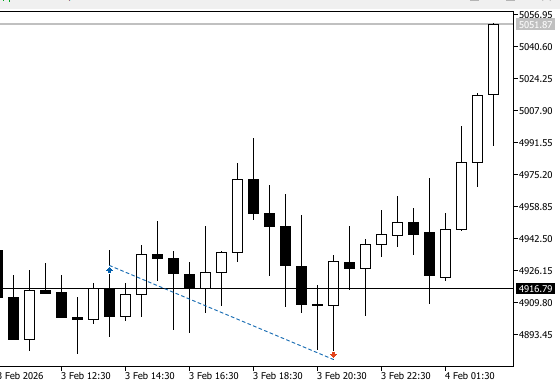
    layer whale order detected. gold
    Jonas777 flag
    my target 4300
    The fx flag
    Jonas777
    layer whale order detected. gold
    @Jonas777what do you mean??
    Jonas777 flag
    Jonas777 flag
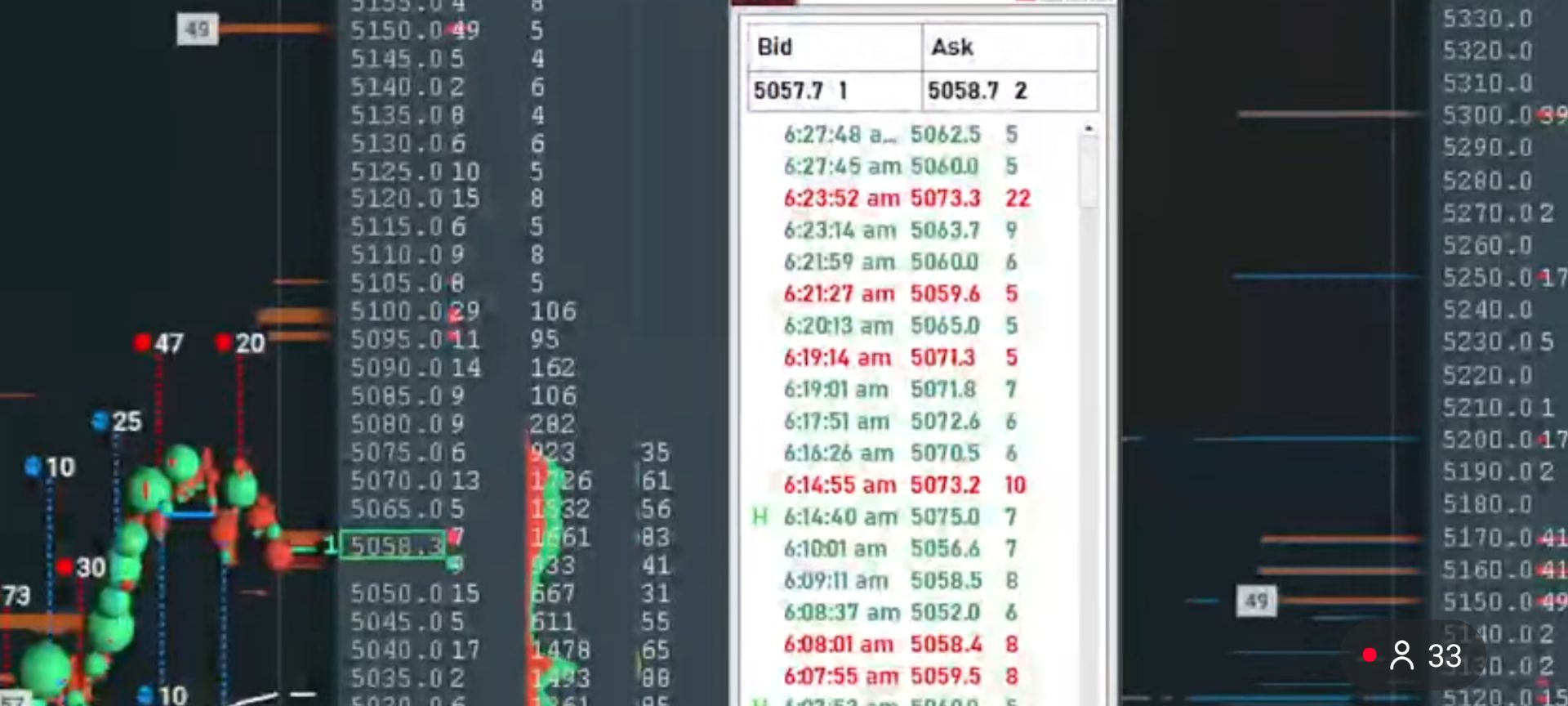
    large orders at the same level or sometimes small orders at the same level that protect the imbalance level above it
    Jonas777 flag
    Some say absorption. Some say iceberg order.
    Cyrpe flag
    Jonas777
    Some say absorption. Some say iceberg order.
    @Jonas777 so we sell gold until 4300? That is what you mean?
    Jonas777 flag
    The market is dynamic. We have to see the reactions between structures. How can we do this without data and only by looking at candlesticks?
    Jonas777 flag
    There could be spoofing at 4700, or sell orders above it that are continuously being canceled without being executed, which causes the price to continue to rise. We need to look at the raw data in the DOM or candle footprint.
    abang fran flag
    Jonas777
    large orders at the same level or sometimes small orders at the same level that protect the imbalance level above it
    @Jonas777share the link, bro
    Jonas777 flag
    There are many... you can subscribe to bookmaps or sierra charts or TTS etc... or heatmaps or API integration with data from CME, Comex, Globex etc. don't use candlesticks!! that's gambling
    Jonas777 flag
    Order data on the main exchange is most important, whether pending or aggressive. After reviewing the raw market data, we analyze it. It's the same as trading in general, not candlestick guesswork.
    Cyrpe flag
    Jonas777
    There are many... you can subscribe to bookmaps or sierra charts or TTS etc... or heatmaps or API integration with data from CME, Comex, Globex etc. don't use candlesticks!! that's gambling
    @Jonas777 very nice advise brother but i need to study what you advise from
    Jonas777 flag
    Learn DOM first. How prices are formed. Volume is formed. Delta is formed.
    Jonas777 flag
    Next, identify participants, especially institutional order patterns. Then, how do they create prices and markets? Manipulate fluctuations. There are indeed undetectable things, such as dark pool activity. But at least if we trade using data, we can anticipate. No one can predict the market. There are only actions, reactions, and anticipation.
    Type here...
    Add Symbol or Code

      No matching data

      All
      Trump Updates
      Recommend
      Stocks
      Cryptocurrencies
      Central Banks
      Featured News
      • All
      • Russia-Ukraine Conflict
      • Middle East Flashpoint
      • All
      • Russia-Ukraine Conflict
      • Middle East Flashpoint
      Search
      Products

      Charts Free Forever

      Chats Q&A with Experts
      Screeners Economic Calendar Data Tools
      Membership Features
      Data Warehouse Market Trends Institutional Data Policy Rates Macro

      Market Trends

      Market Sentiment Order Book Forex Correlations

      Top Indicators

      Charts Free Forever
      Markets

      News

      News Analysis 24/7 Columns Education
      From Institutions From Analysts
      Topics Columnists

      Latest Views

      Latest Views

      Trending Topics

      Top Columnists

      Latest Update

      Signals

      Copy Rankings Latest Signals Become a signal provider AI Rating
      Contests
      Brokers

      Overview Brokers Assessment Rankings Regulators News Claims
      Broker listing Forex Brokers Comparison Tool Live Spread Comparison Scam
      Q&A Complaint Scam Alert Videos Tips to Detect Scam
      More

      Business
      Events
      Careers About Us Advertising Help Center

      White Label

      Broker API

      Data API

      Web Plug-ins

      Affiliate Program

      Awards Institution Evaluation IB Seminar Salon Event Exhibition
      Vietnam Thailand Singapore Dubai
      Fans Party Investment Sharing Session
      FastBull Summit BrokersView Expo
      Recent Searches
        Top Searches
          Markets
          News
          Analysis
          User
          24/7
          Economic Calendar
          Education
          Data
          • Names
          • Latest
          • Prev

          View All

          No data

          Scan to Download

          Faster Charts, Chat Faster!

          Download App
          English
          • English
          • Español
          • العربية
          • Bahasa Indonesia
          • Bahasa Melayu
          • Tiếng Việt
          • ภาษาไทย
          • Français
          • Italiano
          • Türkçe
          • Русский язык
          • 简中
          • 繁中
          Open Account
          Search
          Products
          Charts Free Forever
          Markets
          News
          Signals

          Copy Rankings Latest Signals Become a signal provider AI Rating
          Contests
          Brokers

          Overview Brokers Assessment Rankings Regulators News Claims
          Broker listing Forex Brokers Comparison Tool Live Spread Comparison Scam
          Q&A Complaint Scam Alert Videos Tips to Detect Scam
          More

          Business
          Events
          Careers About Us Advertising Help Center

          White Label

          Broker API

          Data API

          Web Plug-ins

          Affiliate Program

          Awards Institution Evaluation IB Seminar Salon Event Exhibition
          Vietnam Thailand Singapore Dubai
          Fans Party Investment Sharing Session
          FastBull Summit BrokersView Expo

          India-U.S. Trade Deal Unlocks Key Sector Opportunities

          Thomas

          Traders' Opinions

          Energy

          Remarks of Officials

          Stocks

          Economic

          Daily News

          Political

          Summary:

          India's new US trade deal, lowering tariffs after an EU pact, signals a pivotal global economic realignment, boosting key sectors.

          India and the United States have forged a significant trade pact that lowers tariffs on Indian exports from 25% to 18%. The agreement, announced by Trump, also includes a commitment from India to halt purchases of Russian crude oil and instead buy from the U.S. and potentially Venezuela.

          According to the announcement, India has pledged to purchase $500 billion worth of American agriculture, technology, energy, and other products. This development comes less than a week after India finalized a major free trade agreement with the European Union, signaling a rapid realignment of its global trade relationships.

          While many specifics of the U.S. deal are still being finalized, investors are already identifying key sectors poised to benefit.

          Manufacturing and Exports Set for a Major Boost

          India's labor-intensive export sector is seen as a primary winner. According to James Thom, senior investment director at Aberdeen Investments, industries like textiles, clothing, leather, jewelry, toys, and furniture now have a clear opportunity to reclaim market share from regional manufacturing rivals.

          The new 18% tariff rate positions India more competitively against:

          • Pakistan: 19% tariff

          • Vietnam: 20% tariff

          • Bangladesh: 20% tariff

          Thom noted that small and medium-sized companies are particularly well-positioned to gain from the tariff reduction. He added that the agreement should also provide a lift to banks, non-banking financial companies, and export-focused manufacturers, boosting overall retail sentiment in small and mid-cap stocks.

          A Strategic Win with Geopolitical Implications

          Analysts at Bernstein suggest that last week's India-EU treaty likely prompted the U.S. to accelerate its own deal with India. The agreement brings India more in line with its peers in the Association of Southeast Asian Nations (ASEAN), which analysts called "incrementally a big positive." It also enhances India's competitive standing relative to China.

          While certain industries like autos and metals might still face sector-specific tariffs, the improved diplomatic climate is expected to create broad-based advantages.

          IT and Pharma Emerge as Key Beneficiaries

          Bernstein analysts Venugopal Garre and Nikhil Arela highlighted that India's information technology sector stands to gain significantly. Although the trade pact primarily covers manufactured goods, the improved U.S.-India relations are expected to reduce regulatory scrutiny on I.T. services and lower the risk of future punitive actions, such as additional taxes.

          Based on this, the analysts outlined a tactical "buy" recommendation for Indian equities, with a short-term rebound expected in financials, I.T., and telecoms.

          Meanwhile, the recent EU trade deal has put a spotlight on India's pharmaceutical industry. According to BMI, Fitch Ratings' research unit, the elimination of 11% tariffs on EU drug imports—covering cancer therapies, biologics, and GLP-1s—is a game-changer. These imports amounted to $1.2 billion in 2024.

          BMI forecasts that lower import costs and more efficient supply chains will drive India's pharmaceutical market from $31.2 billion in 2025 to $45.7 billion by 2035, representing a compound annual growth rate of 5.2%. The EU agreement is also expected to help Indian firms diversify their export markets and reverse recent stagnation by streamlining regulatory compliance and reducing administrative costs.

          Market Reaction and Investor Outlook

          The trade announcement immediately lifted market sentiment. Russ Mould, investment director at A.J. Bell, pointed to the Sensex's 2.5% rise as evidence of renewed investor confidence. The Sensex index tracks 30 of the largest and most actively traded companies on the Bombay Stock Exchange.

          The positive momentum extended to UK-listed investment trusts with Indian exposure. Ashoka India, for instance, saw its shares climb 5.6% on the FTSE 250.

          "India has been a rich source of returns for investors over the past few decades, but Trump's tariff regime stalled momentum in the Sensex index," Mould said. "Investors will now be wondering if the trade deal effectively removes the shackles on the market and breathes new life into it, rather than simply resulting in a short-term relief rally."

          To stay updated on all economic events of today, please check out our Economic calendar
          Risk Warnings and Disclaimers
          You understand and acknowledge that there is a high degree of risk involved in trading. Following any strategies or investment methods may lead to potential losses. The content on the site is provided by our contributors and analysts for information purposes only. You are solely responsible for determining whether any trading assets, securities, strategy, or any other product is suitable for investing based on your own investment objectives and financial situation.
          Add to Favorites
          Share

          China's Yuan Surges on Exports: Can Beijing Stop the Rally?

          Alex

          Traders' Opinions

          Remarks of Officials

          Data Interpretation

          Economic

          Central Bank

          Forex

          China's booming export sector is fueling a powerful rally in its currency, the yuan, creating a critical challenge for policymakers. While most analysts believe officials will step in to halt further gains, mounting market pressure suggests the yuan could test levels that strain the country's economic model.

          The currency's strength is being driven by record-breaking foreign exchange inflows. In December, a staggering $452 billion in foreign currency flowed into Chinese banks, with a record $311 billion of that converted into yuan, according to data from the State Administration of Foreign Exchange. This wave of demand pushed the yuan to 6.9378 per dollar, its strongest point since 2023.

          The Consensus: A Managed Exchange Rate

          Most bank analysts believe the People's Bank of China (PBOC) will draw a line in the sand to prevent the yuan from appreciating much further. The consensus forecast from 13 global investment banks sees the currency ending the year at 6.92 per dollar, while derivatives markets are pricing it closer to 6.8.

          To maintain control, authorities have a well-established toolkit:

          • Official Guidance: Setting the yuan's daily midpoint trading fix at a level that signals disapproval of rapid gains.

          • State Bank Intervention: Directing state-owned banks to buy U.S. dollars in the open market to absorb upward pressure on the yuan.

          • Reserve Ratio Adjustments: Tweaking the foreign exchange reserve requirements for banks, which can compel them to hold more dollars.

          "Given that China's economic growth is still highly dependent on exports, the People's Bank of China may not yet be willing to risk a more significant appreciation of the currency," explained Wei He, an economist at Gavekal Dragonomics.

          Traders have already noted that the PBOC's midpoint has been consistently weaker than market estimates since November, a clear sign of official resistance. Janice Xue, a strategist at Bank of America Global Research, also anticipates policy tweaks, stating, "We see a high chance for the 20% risk reserve on banks' forward FX sale to be removed and expect FX reserve requirement ratio to be raised."

          Upside Risks and the Exporter Dilemma

          Despite the central bank's influence, some analysts see risks skewed toward a stronger yuan. Goldman Sachs recently upgraded its 12-month forecast to 6.7 per dollar, which would represent a 3.5% appreciation from current levels.

          "The pace of appreciation has exceeded our expectations," Goldman analysts noted, citing the record currency flows and what they perceive as a shift in tone from the central bank.

          A key risk is the creation of a positive feedback loop. As the yuan strengthens, exporters are incentivized to convert their dollar earnings into yuan more quickly to avoid future losses. This increased demand for yuan then pushes the currency even higher.

          This dynamic is already playing out. An electrical industry exporter based in Shanghai, who gave his surname as Ding, confirmed his firm was converting dollars to yuan faster in response to the recent exchange rate moves. While the 68.8% of export receipts converted to yuan in December was not a record, it signals a growing trend.

          Balancing Growth with Currency Stability

          The yuan's trajectory presents a fundamental dilemma for Beijing. China's 5% GDP growth last year was heavily reliant on a record $1.2 trillion trade surplus, an increase of about 20% from the previous year. A runaway currency rally would erode the competitive advantage of Chinese exporters and could put this growth engine at risk.

          "Our base scenario remains a strong export performance, which could support the yuan," said Chaoping Zhu, global market strategist at J.P. Morgan Asset Management. "However, as foreign governments become more cautious about the impacts on their economies, uncertainties are rising for Chinese export growth."

          This suggests a future of "higher two-way volatility," with the exchange rate likely fluctuating around the 7-per-dollar mark.

          For now, the PBOC appears focused on ensuring any appreciation is "on a gradual, measured pace," according to Kelvin Lam, senior China+ economist at Pantheon Macroeconomics. By managing a slow and stable nine-month rally that has lifted the yuan nearly 6% against the dollar, policymakers aim to boost the currency's appeal for international trade and investment without derailing the export machine that powers the economy.

          To stay updated on all economic events of today, please check out our Economic calendar
          Risk Warnings and Disclaimers
          You understand and acknowledge that there is a high degree of risk involved in trading. Following any strategies or investment methods may lead to potential losses. The content on the site is provided by our contributors and analysts for information purposes only. You are solely responsible for determining whether any trading assets, securities, strategy, or any other product is suitable for investing based on your own investment objectives and financial situation.
          Add to Favorites
          Share

          Nvidia, OpenAI Appear Stalled on Their Mega Deal, But the AI Giants Still Need Each Other

          Manuel

          Stocks

          CEO Jensen Huang and OpenAI CEO Sam Altman appeared together on CNBC in September to announce a mammoth $100 billion deal that was poised to usher in a new chapter for the booming artificial intelligence industry.
          Five months later, no contract has been signed and no money has changed hands. More concerning to investors, the two companies are seemingly at odds.
          The Wall Street Journal on Friday reported that the negotiations between the companies were “on ice” after some within Nvidia expressed doubts about OpenAI’s business model. It’s been a major topic of conversation in AI since November, when Nvidia warned in the risk factors of its quarterly filing that, “There is no assurance that we will enter into definitive agreements with respect to the OpenAI opportunity or other potential investments.”
          Despite the reported friction, Nvidia and OpenAI still need each other.
          Altman has said OpenAI requires a massive number of Nvidia’s AI chips to hit its growth targets for revenue, while Huang relies on customers like OpenAI to create services that wow customers and continue driving sales of its costly systems.
          Soaring demand and industry hype drove Nvidia’s market cap past $5 trillion at its peak in October, though the stock is down 15% from its high, pushing the valuation to $4.4 trillion. OpenAI, meanwhile, was valued on the private market at $500 billion late last year and is reportedly eyeing a valuation of over $800 billion as it pursues another round of cash.
          “We are looking forward to Sam closing it and he’s doing terrifically,” Huang told CNBC’s Jim Cramer on Tuesday. “And we will invest in the next round. There is no question about that.”
          Nvidia first invested in OpenAI in October 2024, as part of a $6.6 billion funding round.
          Huang added on Tuesday that “there’s no drama” in the relationship with OpenAI, a sentiment Altman expressed a day earlier in a post on X.
          “We hope to be a gigantic customer for a very long time,” Altman wrote. “I don’t get where all this insanity is coming from.”
          Still, when it comes to the historic agreement from September, which is supposed to involve OpenAI’s building out of infrastructure requiring 10 gigawatts of power, there’s been little apparent progress.
          Nvidia’s initial investment of $10 billion will be deployed when the first gigawatt is completed, CNBC reported at the time of the agreement. The companies said the first phase of the latest investment would come online in the second half of 2026.
          OpenAI’s current fundraising round, which Huang said will include Nvidia’s participation, is not part of last year’s arrangement. Huang told Cramer that Nvidia would evaluate additional investments into OpenAI and wants to participate in the AI lab’s IPO.
          Nvidia shares fell about 3% on Tuesday, leading a broader slide in tech stocks, and have declined for three straight days.

          A long history

          Nvidia and OpenAI have been linked together for a decade.
          When OpenAI was a little-known non-profit lab in 2016, it was the first entity that wanted to use Nvidia’s debut AI system, which was called DGX, Huang told Joe Rogan in a December interview.
          In subsequent years, OpenAI became a heavy user of Nvidia chips, usually provided through Microsoft
          infrastructure. In February 2023, months after ChatGPT’s release, Huang appeared ebullient on Nvidia’s earnings call, praising OpenAI and boasting that generative AI was transforming his company.
          “Everybody who develops software is either alerted, or shocked into alert, or actively working on something that is like ChatGPT to be integrated into their application,” Huang said, as his company’s stock price skyrocketed.
          Nvidia’s parabolic growth coincides with OpenAI’s explosion.
          In the quarter ChatGPT was released, Nvidia generated $6 billion in revenue. In the period that ended this past October, that number had swelled almost tenfold to $57 billion. Analysts say the chipmaker has over 90% of the market for graphics processing units, or GPUs.
          ChatGPT is the leading chatbot by usage, hitting 800 million weekly users late last year. In January, the company said it was on track to reach $20 billion in annual sales, but analysts don’t project it to turn profitable until 2030.
          At the heart of the tension, which both companies deny exists, is how they’ve each diversified by partnering with the other’s rivals.
          With a swelling balance sheet and a need for more customers, Nvidia has used its cash to invest in many of its important partners, including committing $10 billion in November to Anthropic. Investors are looking for Nvidia to team up with more big buyers due to its hefty customer concentration with a few hyperscalers.
          At the same time, OpenAI has made several announcements with other semiconductor companies, and said it needs more computing power than Nvidia alone can provide.

          In June, Altman appeared with Advanced Micro Devices

          CEO Lisa Su at the chipmaker’s annual event in San Jose, California. Altman said OpenAI would help AMD develop its next-generation AI chips and be a customer. AMD is the only company aside from Nvidia to make a big data center GPU for AI.
          Four months later, OpenAI announced a partnership with Broadcom, which helps make custom AI chips, including Google’s tensor processing units. And last month, OpenAI said it would use chips from startup Cerebras in a deal worth over $10 billion.
          With reports swirling about emerging challenges in the OpenAI-Nvidia relationship, OpenAI infrastructure executive Sachin Katti took to X on Monday to describe his company’s partnership with the chip giant as “foundational.”
          “Our entire compute fleet runs on Nvidia GPUs,” Katti wrote. “The demand curve is unmistakable. The world needs orders of magnitude more compute.”

          Source: CNBC

          Risk Warnings and Disclaimers
          You understand and acknowledge that there is a high degree of risk involved in trading. Following any strategies or investment methods may lead to potential losses. The content on the site is provided by our contributors and analysts for information purposes only. You are solely responsible for determining whether any trading assets, securities, strategy, or any other product is suitable for investing based on your own investment objectives and financial situation.
          Add to Favorites
          Share

          Oil Gains as US-Iran Tensions Escalate, Adding Risk Premium

          Manuel

          Political

          Commodity

          Oil edged higher after US and Iranian forces appeared to square off in the sea and air, heightening concerns about an escalation in tensions.
          West Texas Intermediate rose to settle above $63 a barrel after an Iranian drone approached an American aircraft carrier in the Arabian Sea and was shot down. The episode restored some geopolitical-risk premium that had ebbed in recent days amid signs Washington was softening its stance on Tehran.
          Futures pared some gains after White House Press Secretary Karoline Leavitt said US President Donald Trump wants to pursue diplomacy “first” with Iran. Prices advanced in post-settlement trading, rising as much as 3.3%.Oil Gains as US-Iran Tensions Escalate, Adding Risk Premium_1
          The development came hours after an oil tanker that’s part of a US-military fuel procurement program was hailed by Iranian ships in the Strait of Hormuz, evincing renewed risks to maritime traffic in the region. Tanker rates have soared in recent days over concerns about the Hormuz chokepoint through which about one-third of the world’s oil flows.
          The events underscore how recent US moves toward diplomacy with Iran reflect not a desire to deescalate but a calculation that Washington has sufficient leverage to strong-arm Tehran into a nuclear agreement, among other demands, according to Gregory Brew, geopolitical analyst at the Eurasia Group. He estimates that a $3 to $5 risk premium is currently baked into prices.
          Leavitt’s comments are likely an attempt “to brush off efforts by the Iranians to destabilize the environment, because the environment right now is favorable to the US,” Brew added.
          Still, Tuesday’s episode whipsawed investors who had been watching moves that suggested the US was steering clear of military strikes on the country over its nuclear program and handling of recent protests. Trump earlier said talks could begin within days, after Tehran signaled it was ready to engage. Iranian media said a US carrier strike group in the region had moved further away from the country toward Yemen.
          In another boon to prices, Trump earlier said he would roll back tariffs on India in return for an agreement that Prime Minister Narendra Modi would stop buying Russian oil, although that wasn’t confirmed by New Delhi. Shipments of Moscow’s crude to Indian ports have tumbled toward the lowest in more than three years, contributing to a growing pool of unsold sanctioned barrels across the globe.
          Crude surged last month despite widespread concerns that the market faces a global glut, with prices supported by geopolitical concerns and interruptions to some supplies, including from Kazakhstan. The rally faltered on Monday as oil was caught up in a major retreat from commodities, especially in metals.

          Source: Bloomberg

          Risk Warnings and Disclaimers
          You understand and acknowledge that there is a high degree of risk involved in trading. Following any strategies or investment methods may lead to potential losses. The content on the site is provided by our contributors and analysts for information purposes only. You are solely responsible for determining whether any trading assets, securities, strategy, or any other product is suitable for investing based on your own investment objectives and financial situation.
          Add to Favorites
          Share

          Mexico's 2026 GDP Forecast Gets a Major Upgrade

          Thomas

          Forex

          Economic

          Central Bank

          Data Interpretation

          Private-sector analysts have raised their expectations for Mexico's economic growth in 2026, according to the central bank's January survey. The updated outlook follows stronger-than-anticipated economic performance at the end of 2025.

          Stronger Growth Spurs Upgraded Forecasts

          The median forecast for Mexico's 2026 GDP growth now stands at 1.3%, an increase from the 1.15% projected in the mid-December survey. In contrast, the outlook for 2027 saw a slight downward revision to 1.8% from 1.85%.

          This optimism is rooted in new data showing Mexico's economy expanded by 1.6% year-over-year in the fourth quarter of 2025. The expansion was led by solid performance in the agriculture sector, with more modest growth recorded in the industrial and services sectors.

          USMCA Renewal and Key Economic Risks

          According to market sources, growth prospects for both 2026 and 2027 hinge on the successful and timely renewal of the US-Mexico-Canada (USMCA) free trade agreement. Negotiations are scheduled to conclude in July.

          Optimism surrounding the talks is reflected in the survey’s quarterly breakdown, which projects GDP growth will accelerate to 1.54% in the third quarter of 2026, up from 1.1% in the second quarter.

          Despite the positive outlook, analysts identified public security as the primary short-term risk to economic growth. This concern significantly outpaced foreign trade issues, with both factors cited far more frequently than any other potential headwind in the survey.

          The Outlook on Inflation and Interest Rates

          Analysts slightly increased their inflation expectations for 2026, with the forecast moving to 3.95% from 3.88%. The estimate for core inflation, which excludes volatile food and energy prices, remained unchanged from the previous survey at 3.75%.

          Annual inflation slowed to 3.69% in December—the lowest December reading since 2020. However, core inflation, despite easing to 4.33% from 4.43%, remained above the central bank's 4% upper target for the eighth consecutive month.

          The central bank cut its target rate to 7% on December 18, down from 10% at the start of 2025. Analysts expect the tightening cycle to end this year and forecast the rate will close 2026 at 6.5%. The bank's next monetary policy decision is scheduled for February 5.

          Analysts Project a Stronger Mexican Peso

          The survey also revealed a stronger forecast for the Mexican peso. Analysts now project an exchange rate of Ps18.50 per US dollar by the end of 2026, a significant improvement from the previous forecast of Ps19.23. The end-2027 forecast was also strengthened, moving to Ps19.00 from Ps19.45.

          This view aligns with recent market performance. The US dollar weakened by roughly 4% against the peso over the last month, trading at Ps17.26 on February 3 compared to Ps17.9 on January 3.

          To stay updated on all economic events of today, please check out our Economic calendar
          Risk Warnings and Disclaimers
          You understand and acknowledge that there is a high degree of risk involved in trading. Following any strategies or investment methods may lead to potential losses. The content on the site is provided by our contributors and analysts for information purposes only. You are solely responsible for determining whether any trading assets, securities, strategy, or any other product is suitable for investing based on your own investment objectives and financial situation.
          Add to Favorites
          Share

          Treasury Yields Slip on Fed Leadership Buzz and Data Delays

          Liam Peterson

          Traders' Opinions

          Remarks of Officials

          Data Interpretation

          Economic

          Central Bank

          Bond

          U.S. Treasury yields declined on Tuesday as traders weighed the possibility of a major policy shift at the Federal Reserve and navigated economic data delays caused by a partial government shutdown.

          Market focus has intensified on Kevin Warsh, who President Donald Trump selected on Friday to lead the central bank when Jerome Powell’s term concludes in May. Though previously known as an inflation hawk, Warsh is now advocating for lower interest rates.

          This potential change at the top is creating complex crosscurrents in the bond market, pushing yields lower while reshaping expectations for the Fed's long-term strategy.

          A New Fed Playbook Under Warsh?

          Jason Pride, chief of investment strategy and research at Glenmede, anticipates the Fed will cut rates twice this year by 25 basis points each—a scenario he notes is already largely priced into the market.

          However, the more significant impact of a Warsh-led Fed could be on its massive balance sheet. Warsh has been a vocal critic of the Fed's large holdings, arguing they distort the financial system. In a November Wall Street Journal opinion piece, he stated, "the Fed's bloated balance sheet, designed to support the biggest firms in a bygone crisis era, can be reduced significantly."

          This stance is causing the yield curve to steepen. Pride explained that Warsh has been "a strong advocate against the overuse of the Federal Reserve's balance sheet." At the same time, his view on short-term rates "is very much in line with the Federal Reserve's policy up until now, and maybe even a little bit dovish relative to it."

          Bond Market Responds to Uncertainty

          The mixed signals are being reflected in Treasury prices:

          • The 2-year Treasury note yield, sensitive to Fed rate expectations, edged down 0.2 basis points to 3.568%.

          • The benchmark 10-year Treasury note yield fell 1 basis point to 4.268%.

          The spread between the two-year and 10-year yields, a key gauge of the yield curve, narrowed slightly by half a basis point to 69.5 basis points. This followed a move to 72.7 basis points on Monday, its steepest level since April. Adding to the downward pressure on yields was a sharp selloff in stocks on Tuesday, which likely boosted safe-haven demand for government debt.

          Data Delays and Market Crosscurrents

          Compounding the uncertainty is a lack of clear economic signals. Thomas Simons, chief U.S. economist at Jefferies, pointed out that some traditional market correlations have broken down recently, making it difficult to determine what is driving asset prices.

          "It feels like the market's having a hard time assessing whether or not there is a kind of broad risk-off or risk-on tone at any given time because of all the crosscurrents," Simons said.

          The partial government shutdown has exacerbated this issue by delaying the release of January's crucial employment report, originally scheduled for Friday. While the U.S. House of Representatives narrowly approved a deal on Tuesday to end the shutdown, the data blackout has left investors flying blind.

          The Outlook for Inflation and Rates

          Recent economic data had pushed market expectations for the next Fed rate cut to June. However, a significant slowdown in the labor market, once the data is released, could accelerate that timeline.

          Looking further ahead, Pride projects the U.S. economy could see above-average growth in 2026 as tariff headwinds fade and fiscal stimulus takes effect. He warned this could raise inflation risks, keeping it a primary focus for the Fed.

          The debate within the central bank continues. On Tuesday, Richmond Fed President Tom Barkin noted that while rising productivity is helping to ease cost pressures, its persistence is hard to predict, making future monetary policy decisions difficult. In contrast, Fed Governor Stephen Miran, speaking on Fox Business Network, continued to argue for aggressive interest-rate cuts this year.

          To stay updated on all economic events of today, please check out our Economic calendar
          Risk Warnings and Disclaimers
          You understand and acknowledge that there is a high degree of risk involved in trading. Following any strategies or investment methods may lead to potential losses. The content on the site is provided by our contributors and analysts for information purposes only. You are solely responsible for determining whether any trading assets, securities, strategy, or any other product is suitable for investing based on your own investment objectives and financial situation.
          Add to Favorites
          Share

          Bitcoin Hits Lowest Level Since 2024 and Stocks Stumble as AI and Geopolitical Nerves Fray

          Manuel

          Cryptocurrency

          A nervous mood swept through markets Tuesday as stocks stumbled and bitcoin slumped to its lowest level since November 2024.
          The Dow was down 360 points, or 0.73%. The broader S&P 500 fell 1.25%, retreating after briefly flirting with a record high. The tech-heavy Nasdaq slumped 2%.
          In a sign of the risk-averse mood, bitcoin dropped almost 7% across the past day and fell just below $73,000, hitting its lowest level since President Donald Trump’s victory in the presidential election. Bitcoin then slightly rebounded and traded just below $75,000.
          Bitcoin is down roughly 41% since hitting a record high above $126,000 in October. The Trump administration has touted pro-crypto policies, with the president promising to make the United States the “crypto capital of the world.”
          But bitcoin — the world’s largest cryptocurrency by market value — has whipsawed in price and struggled to regain ground in recent months amid a series of sell-offs.
          While stocks and bitcoin were lower, gold and silver surged higher, extending recent bouts of volatility. Gold futures gained 6.8% to $4,967 a troy ounce. Silver futures soared 10% to roughly $84.78 a troy ounce.
          Gold, considered a haven amid uncertainty, has now outpaced bitcoin across the past five years, according to FactSet data.
          “[Bitcoin’s] divergence from gold is a sign that most investors currently view gold as the dominant store-of-value asset, especially in periods of currency debasement, geopolitical turmoil and uncertainty over macroeconomic conditions,” Gerry O’Shea, head of global market insights at Hashdex, said in an email.
          O’Shea said he expects continued near-term volatility for bitcoin as the crypto industry seeks more regulatory clarity and crypto integrates into mainstream financial infrastructure, but he thinks bitcoin’s appeal will increase.
          Stocks were led by declines in shares of many technology and artificial intelligence companies. Tech stalwarts Microsoft (MSFT) and Amazon (AMZN) fell 3.2% and 2.4%, respectively. Nvidia (NVDA), the star of the AI trade, fell 4.1%, weighing on markets.
          There have been lingering concerns on Wall Street about just how profitable the AI boom will prove to be, and whether companies’ enormous amounts of spending will ultimately be justified. Microsoft shares dropped 10% on Thursday, erasing nearly $360 billion in market value, after the company reported less growth in cloud sales than expected and increased AI spending.
          Wall Street is in the midst of corporate earnings season, and traders are digesting results for the last quarter. Investors are increasingly scrutinizing spending forecasts and focusing on how companies will be able to turn a profit to justify their expenditures.
          Meanwhile, shares of software companies also fell amid nerves about developments in AI eating into their business models. Salesforce shares (CRM) were down 8%.
          While markets were lower, Walmart shares (WMT) gained 2.1%, lifting the company’s market value above the $1 trillion mark for the first time.
          Markets extended their losses and volatility picked up after reports that the United States shot down an Iranian drone that had been approaching a US aircraft carrier.
          Wall Street’s fear gauge, the VIX, jumped 19%. The VIX briefly traded at 20 points, a threshold that signals elevated volatility in markets.
          Oil futures rose amid escalating US-Iran tensions. Brent crude, the international benchmark, was up 1.9% to $67.56 a barrel. West Texas Intermediate, the US benchmark, rose 2.17% to $63.48 a barrel.
          The US dollar index was down 0.23%, pausing gains after a strong two-day rebound.

          Source: CNN

          Risk Warnings and Disclaimers
          You understand and acknowledge that there is a high degree of risk involved in trading. Following any strategies or investment methods may lead to potential losses. The content on the site is provided by our contributors and analysts for information purposes only. You are solely responsible for determining whether any trading assets, securities, strategy, or any other product is suitable for investing based on your own investment objectives and financial situation.
          Add to Favorites
          Share
          FastBull
          Copyright © 2026 FastBull Ltd

          728 RM B 7/F GEE LOK IND BLDG NO 34 HUNG TO RD KWUN TONG KLN HONG KONG

          TelegramInstagramTwitterfacebooklinkedin
          App Store Google Play Google Play
          Products
          Charts

          Chats

          Q&A with Experts
          Screeners
          Economic Calendar
          Data
          Tools
          Membership
          Features
          Function
          Markets
          Copy Trading
          Latest Signals
          Contests
          News
          Analysis
          24/7
          Columns
          Education
          Company
          Careers
          About Us
          Contact Us
          Advertising
          Help Center
          Feedback
          User Agreement
          Privacy Policy
          Personal Information Protection Statement
          Business

          White Label

          Broker API

          Data API

          Web Plug-ins

          Poster Maker

          Affiliate Program

          Risk Disclosure

          The risk of loss in trading financial instruments such as stocks, FX, commodities, futures, bonds, ETFs and crypto can be substantial. You may sustain a total loss of the funds that you deposit with your broker. Therefore, you should carefully consider whether such trading is suitable for you in light of your circumstances and financial resources.

          No decision to invest should be made without thoroughly conducting due diligence by yourself or consulting with your financial advisors. Our web content might not suit you since we don't know your financial conditions and investment needs. Our financial information might have latency or contain inaccuracy, so you should be fully responsible for any of your trading and investment decisions. The company will not be responsible for your capital loss.

          Without getting permission from the website, you are not allowed to copy the website's graphics, texts, or trademarks. Intellectual property rights in the content or data incorporated into this website belong to its providers and exchange merchants.

          Not Logged In

          Log in to access more features

          Connect Broker
          Become a signal provider
          Help Center
          Customer Service
          Dark Mode
          Price Up/Down Colors

          Log In

          Sign Up

          Position
          Layout
          Fullscreen
          Default to Chart
          The chart page opens by default when you visit fastbull.com