• Trade
  • Markets
  • Copy
  • Contests
  • News
  • 24/7
  • Calendar
  • Q&A
  • Chats
Screeners
SYMBOL
LAST
ASK
BID
HIGH
LOW
NET CHG.
%CHG.
SPREAD
SPX
S&P 500 Index
6978.02
6978.02
6978.02
7002.25
6964.04
-0.58
-0.01%
--
DJI
Dow Jones Industrial Average
49015.59
49015.59
49015.59
49150.34
48901.49
+12.19
+ 0.02%
--
IXIC
NASDAQ Composite Index
23857.44
23857.44
23857.44
23988.27
23775.49
+40.33
+ 0.17%
--
USDX
US Dollar Index
96.110
96.190
96.110
96.120
95.990
-0.020
-0.02%
--
EURUSD
Euro / US Dollar
1.19604
1.19611
1.19604
1.19848
1.19515
+0.00072
+ 0.06%
--
GBPUSD
Pound Sterling / US Dollar
1.38038
1.38049
1.38038
1.38345
1.37898
+0.00008
+ 0.01%
--
XAUUSD
Gold / US Dollar
5489.40
5489.85
5489.40
5597.94
5419.36
+73.20
+ 1.35%
--
WTI
Light Sweet Crude Oil
63.435
63.470
63.435
63.634
63.106
+0.094
+ 0.15%
--

Community Accounts

Signal Accounts
--
Profit Accounts
--
Loss Accounts
--
View More

Become a signal provider

Sell trading signals to earn additional income

View More

Guide to Copy Trading

Get started with ease and confidence

View More

Signal Accounts for Members

All Signal Accounts

Best Return
  • Best Return
  • Best P/L
  • Best MDD
Past 1W
  • Past 1W
  • Past 1M
  • Past 1Y

All Contests

  • All
  • Trump Updates
  • Recommend
  • Stocks
  • Cryptocurrencies
  • Central Banks
  • Featured News
Top News Only
Share

Yield On 5-Year Japanese Government Bond Rises 1.5 Basis Points To 1.680%

Share

The Main Lithium Carbonate Futures Contract Continued To Fall, Dropping More Than 6% Intraday, And Is Currently Trading At 160,020 Yuan/ton

Share

China's Central Bank Sets Yuan Mid-Point At 6.9771 / Dlr Versus Last Close 6.9475

Share

Sk Hynix: To Monitor Discussions Between US And South Korea Governments Regarding Tariffs

Share

Yield On 10-Year Japanese Government Bond Rises 1.5 Basis Points To 2.250%

Share

Dollar Falls 0.5% Against Swiss Franc To 0.7647

Share

Japan's Dec Crude Imports Down By 1.5 Percent

Share

Japan's December LNG Imports Up By 2.8 Percent

Share

Japan's December Thermal Coal Imports -14.7 Percent

Share

Australia Q4 Import Prices +0.9% Quarter-On-Quarter

Share

Yield On 10-Year Japanese Government Bond Rises 0.5 Basis Points To 2.240%

Share

Spot Gold Fell $50 In The Short Term, Last Trading At $5,462 Per Ounce

Share

[Sources: Trump Considers Major Strikes Against Iran Amid Nuclear Negotiations] Sources Revealed That US President Trump Is Considering A New Major Strike Against Iran After Initial Discussions Between The US And Iran Failed To Make Progress On Limiting Iran's Nuclear Program And Ballistic Missile Production. Sources Said That Options Trump Is Currently Considering Include Airstrikes Against Iranian Leaders And Security Officials Believed To Be Responsible For Deaths And Injuries During Protests In Iran, As Well As Strikes Against Iranian Nuclear Facilities And Government Institutions. Sources Also Indicated That Trump Has Not Yet Finalized His Decision On How To Act, But He Believes His Military Options Are More Abundant Than At The Beginning Of The Month With The Deployment Of US Carrier Strike Groups To The Region

Share

Smmt - UK Vehicle Manufacturing Output Up 6.1% To 55284 Units In December

Share

Smmt - UK Vehicle Manufacturing Output Down 15.5% To 764715 Units In 2025

Share

Singapore's Monetary Authority Of Singapore - The Risks To The Growth And Inflation Outlook Are Tilted To The Upside At This Point

Share

Singapore's Monetary Authority Of Singapore - For The Full Year, GDP Growth Is Expected To Ease Relative To The Stronger Outturn In 2025

Share

Singapore's Monetary Authority Of Singapore - On Average Over 2026, Core Inflation Momentum Is Expected To Come In At A Pace That Is Slightly Below Trend

Share

There Will Be No Change To Its Width And The Level At Which It Is Centred - Monetary Authority Of Singapore

Share

New Zealand Business Confidence 64.1% In January Versus 73.6% In Previous Survey - ANZ Bank Survey

TIME
ACT
FCST
PREV
U.S. API Weekly Refined Oil Stocks

A:--

F: --

P: --

U.S. API Weekly Crude Oil Stocks

A:--

F: --

P: --

U.S. API Weekly Gasoline Stocks

A:--

F: --

P: --

U.S. API Weekly Cushing Crude Oil Stocks

A:--

F: --

P: --

Australia RBA Trimmed Mean CPI YoY (Q4)

A:--

F: --

P: --

Australia CPI YoY (Q4)

A:--

F: --

P: --

Australia CPI QoQ (Q4)

A:--

F: --

P: --

Germany GfK Consumer Confidence Index (SA) (Feb)

A:--

F: --

P: --

Germany 10-Year Bund Auction Avg. Yield

A:--

F: --

P: --

India Industrial Production Index YoY (Dec)

A:--

F: --

P: --

India Manufacturing Output MoM (Dec)

A:--

F: --

P: --

U.S. MBA Mortgage Application Activity Index WoW

A:--

F: --

P: --

Canada Overnight Target Rate

A:--

F: --

P: --

BOC Monetary Policy Report
U.S. EIA Weekly Crude Stocks Change

A:--

F: --

P: --

U.S. EIA Weekly Cushing, Oklahoma Crude Oil Stocks Change

A:--

F: --

P: --

U.S. EIA Weekly Crude Demand Projected by Production

A:--

F: --

P: --

U.S. EIA Weekly Crude Oil Imports Changes

A:--

F: --

P: --

U.S. EIA Weekly Heating Oil Stock Changes

A:--

F: --

P: --

U.S. EIA Weekly Gasoline Stocks Change

A:--

F: --

P: --

BOC Press Conference
Russia PPI MoM (Dec)

A:--

F: --

P: --

Russia PPI YoY (Dec)

A:--

F: --

P: --

U.S. Interest Rate On Reserve Balances

A:--

F: --

P: --

U.S. Target Federal Funds Rate Lower Limit (Overnight Reverse Repo Rate)

A:--

F: --

P: --

U.S. Federal Funds Rate Target

A:--

F: --

P: --

U.S. Target Federal Funds Rate Upper Limit (Excess Reserves Ratio)

A:--

F: --

P: --

FOMC Statement
FOMC Press Conference
Brazil Selic Interest Rate

A:--

F: --

P: --

Australia Import Price Index YoY (Q4)

A:--

F: --

P: --

Japan Household Consumer Confidence Index (Jan)

--

F: --

P: --

Turkey Economic Sentiment Indicator (Jan)

--

F: --

P: --

Euro Zone M3 Money Supply (SA) (Dec)

--

F: --

P: --

Euro Zone Private Sector Credit YoY (Dec)

--

F: --

P: --

Euro Zone M3 Money Supply YoY (Dec)

--

F: --

P: --

Euro Zone 3-Month M3 Money Supply YoY (Dec)

--

F: --

P: --

South Africa PPI YoY (Dec)

--

F: --

P: --

Euro Zone Consumer Confidence Index Final (Jan)

--

F: --

P: --

Euro Zone Selling Price Expectations (Jan)

--

F: --

P: --

Euro Zone Industrial Climate Index (Jan)

--

F: --

P: --

Euro Zone Services Sentiment Index (Jan)

--

F: --

P: --

Euro Zone Economic Sentiment Indicator (Jan)

--

F: --

P: --

Euro Zone Consumer Inflation Expectations (Jan)

--

F: --

P: --

Italy 5-Year BTP Bond Auction Avg. Yield

--

F: --

P: --

Italy 10-Year BTP Bond Auction Avg. Yield

--

F: --

P: --

France Unemployment Class-A (Dec)

--

F: --

P: --

South Africa Repo Rate (Jan)

--

F: --

P: --

Canada Average Weekly Earnings YoY (Nov)

--

F: --

P: --

U.S. Nonfarm Unit Labor Cost Final (Q3)

--

F: --

P: --

U.S. Initial Jobless Claims 4-Week Avg. (SA)

--

F: --

P: --

U.S. Weekly Continued Jobless Claims (SA)

--

F: --

P: --

U.S. Trade Balance (Nov)

--

F: --

P: --

U.S. Weekly Initial Jobless Claims (SA)

--

F: --

P: --

Canada Trade Balance (SA) (Nov)

--

F: --

P: --

U.S. Exports (Nov)

--

F: --

P: --

Canada Imports (SA) (Nov)

--

F: --

P: --

Canada Exports (SA) (Nov)

--

F: --

P: --

U.S. Unit Labor Cost Revised MoM (SA) (Q3)

--

F: --

P: --
U.S. Factory Orders MoM (Nov)

--

F: --

P: --

U.S. Wholesale Sales MoM (SA) (Nov)

--

F: --

P: --

Q&A with Experts
    • All
    • Chatrooms
    • Groups
    • Friends
    srinivas flag
    5520 bro that was the trap
    David Nwaelue flag
    look at 6000 almost here
    Khawatir_ flag
    David Nwaelue
    look at 6000 almost here
    @David Nwaeluelater.
    srinivas flag
    David Nwaelue
    look at 6000 almost here
    @David Nwaeluenot today
    David Nwaelue flag
    it's unbelievable
    David Nwaelue flag
    3800 of which month is now 5,500
    srinivas flag
    it's a reset... dollar has lost its value
    srinivas flag
    anyways today's trap was pure magic
    Khawatir_ flag
    srinivas
    it's a reset... dollar has lost its value
    @srinivasbro I wanna know your opini. Just check GBP/USD @ 12MN or 6MN. Will it going to 1,80xxxx or 2USD?
    srinivas flag
    Khawatir_
    one min
    rawa ronte flag
    Khawatir_
    @Khawatir_After being hit by a SL.. I immediately went up😅
    srinivas flag
    again trap that chart
    srinivas flag
    that ticket will fall too
    srinivas flag
    GBP usd
    3474315 flag
    guys should i buy silver
    3474315 flag
    i am new trader
    srinivas flag
    rawa ronte
    @rawa rontestill a sell bro
    marsgents flag
    falling wedge still want more up?
    srinivas flag
    Khawatir_
    @Khawatir_why did you choose this? does it have any correlation with gold. is a sell too. buyers will be trapped
    srinivas flag
    marsgents
    falling wedge still want more up?
    @marsgentsbuyers trap
    Type here...
    Add Symbol or Code

      No matching data

      All
      Trump Updates
      Recommend
      Stocks
      Cryptocurrencies
      Central Banks
      Featured News
      • All
      • Russia-Ukraine Conflict
      • Middle East Flashpoint
      • All
      • Russia-Ukraine Conflict
      • Middle East Flashpoint
      Search
      Products

      Charts Free Forever

      Chats Q&A with Experts
      Screeners Economic Calendar Data Tools
      Membership Features
      Data Warehouse Market Trends Institutional Data Policy Rates Macro

      Market Trends

      Market Sentiment Order Book Forex Correlations

      Top Indicators

      Charts Free Forever
      Markets

      News

      News Analysis 24/7 Columns Education
      From Institutions From Analysts
      Topics Columnists

      Latest Views

      Latest Views

      Trending Topics

      Top Columnists

      Latest Update

      Signals

      Copy Rankings Latest Signals Become a signal provider AI Rating
      Contests
      Brokers

      Overview Brokers Assessment Rankings Regulators News Claims
      Broker listing Forex Brokers Comparison Tool Live Spread Comparison Scam
      Q&A Complaint Scam Alert Videos Tips to Detect Scam
      More

      Business
      Events
      Careers About Us Advertising Help Center

      White Label

      Data API

      Web Plug-ins

      Affiliate Program

      Awards Institution Evaluation IB Seminar Salon Event Exhibition
      Vietnam Thailand Singapore Dubai
      Fans Party Investment Sharing Session
      FastBull Summit BrokersView Expo
      Recent Searches
        Top Searches
          Markets
          News
          Analysis
          User
          24/7
          Economic Calendar
          Education
          Data
          • Names
          • Latest
          • Prev

          View All

          No data

          Scan to Download

          Faster Charts, Chat Faster!

          Download App
          English
          • English
          • Español
          • العربية
          • Bahasa Indonesia
          • Bahasa Melayu
          • Tiếng Việt
          • ภาษาไทย
          • Français
          • Italiano
          • Türkçe
          • Русский язык
          • 简中
          • 繁中
          Open Account
          Search
          Products
          Charts Free Forever
          Markets
          News
          Signals

          Copy Rankings Latest Signals Become a signal provider AI Rating
          Contests
          Brokers

          Overview Brokers Assessment Rankings Regulators News Claims
          Broker listing Forex Brokers Comparison Tool Live Spread Comparison Scam
          Q&A Complaint Scam Alert Videos Tips to Detect Scam
          More

          Business
          Events
          Careers About Us Advertising Help Center

          White Label

          Data API

          Web Plug-ins

          Affiliate Program

          Awards Institution Evaluation IB Seminar Salon Event Exhibition
          Vietnam Thailand Singapore Dubai
          Fans Party Investment Sharing Session
          FastBull Summit BrokersView Expo

          Hong Kong Markets Rebound on Record Mainland Inflows

          Samantha Luan

          Central Bank

          Remarks of Officials

          Stocks

          Economic

          Political

          Summary:

          Mainland Chinese capital is revitalizing Hong Kong's markets, a strategic Beijing-backed influx that deepens integration and alters its economic risk profile.

          Mainland Chinese capital is pouring into Hong Kong's property and stock markets, driving both to record highs in the last year. This surge aligns with Beijing's strategy to revitalize the city's role as an international financial hub following the 2020 National Security Law.

          The trend was recently highlighted by the sale of a three-story house on Hong Kong Island for HK$860 million ($110 million) to a mainland Chinese buyer, as reported by local media on January 18.

          Real Estate Rebounds, Driven by Mainland Buyers

          Hong Kong's real estate market is experiencing a significant turnaround. The government announced that the housing price index reached 298.6 in December, marking its seventh consecutive month of growth. For the full year of 2025, prices rose by approximately 3%, the first annual increase in four years.

          This recovery follows a substantial downturn. After peaking in 2021, Hong Kong housing prices fell by about 30%. Because the Hong Kong dollar is pegged to the U.S. dollar, the city's monetary policy mirrors that of the United States. This forced Hong Kong to raise interest rates during an economic slowdown, which put heavy pressure on the property market.
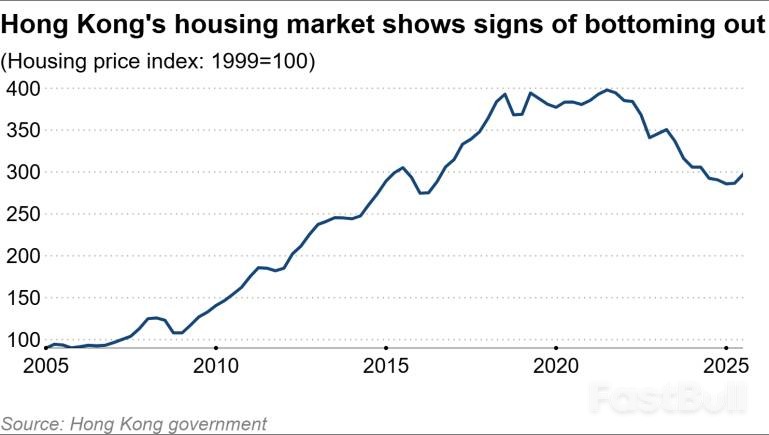
          A line graph shows Hong Kong's housing price index from 2005 to 2025, illustrating a sharp decline from its 2021 peak before stabilizing and starting to recover.

          Praveen Choudhary, head of Hong Kong real estate at Morgan Stanley, believes the 2025 recovery signals the start of a new growth cycle. He forecasts that housing prices will climb by more than 10% in 2026.

          Mainland buyers are the primary force behind this uptick. According to an analysis of registration data by Centaline Property Agency, housing transactions involving mainland buyers increased by 20% in 2025 to 13,958. The total value of these purchases rose by 8% to a record HK$141 billion, with mainland buyers now accounting for nearly 30% of the market.
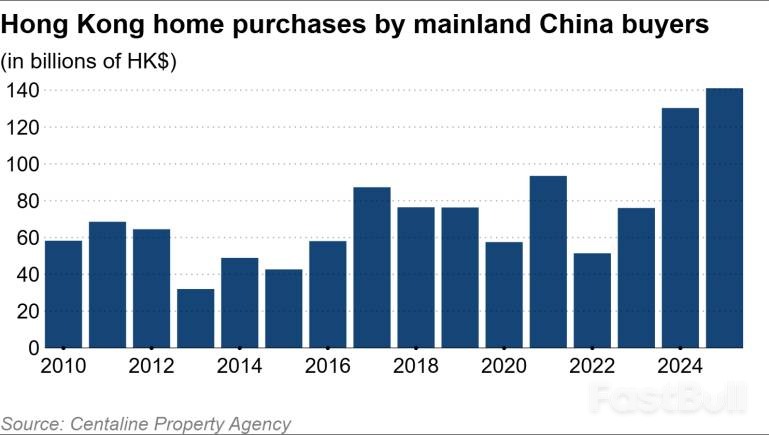
          This bar chart tracks the total value of Hong Kong properties purchased by mainland buyers from 2010 to 2025, showing a new record high of HK$141 billion in 2025.

          Stock Market Sees Record Inflows via Stock Connect

          The influence of mainland money is just as pronounced in the stock market. Through the Stock Connect program, which links the Hong Kong, Shanghai, and Shenzhen exchanges, mainland investors are channeling unprecedented funds into the city.

          In 2025, net purchases of Hong Kong stocks by mainland investors reached a record high of approximately HK$1.4 trillion, a 70% increase. Reflecting this confidence, the Hang Seng Index recently climbed 3% in a single day to its highest level in about four and a half years.

          What's Driving the Mainland Money Rush?

          A massive pool of domestic savings is fueling this cross-border investment. As of the end of June, total deposits in mainland China stood at 160 trillion yuan ($23 trillion), with an estimated 50 trillion yuan in excess savings. With China's domestic real estate market facing an uncertain outlook, this capital is seeking opportunities elsewhere, and Hong Kong has become a prime destination.

          Beijing's policies are also actively supporting this trend. After the National Security Law prompted a population outflow, Hong Kong implemented policies to attract new talent. This led to an influx from mainland China, increasing the city's population by 180,000 in three years to 7.52 million and creating upward pressure on housing demand.

          Furthermore, obtaining a Hong Kong visa provides a practical way to move capital. While mainland China has strict controls limiting overseas remittances to $50,000 per year, these rules are different for those relocating.

          "If you get a Hong Kong visa, remittances from mainland China are allowed for living expenses, making it easier to buy real estate," explained a financial industry professional who moved from the mainland to Hong Kong in 2024. A portion of this remitted money is also finding its way into the stock market.

          Beijing's Push to Solidify Hong Kong's Financial Hub Status

          This capital influx is part of a broader strategic push by Beijing. Following the implementation of the National Security Law, international concerns grew that political changes would diminish Hong Kong's appeal to foreign firms and capital.

          In response, Chinese President Xi Jinping issued a directive in 2022 to strengthen Hong Kong's position as an international financial center. As a gateway for international capital into mainland China and a key hub for the yuan's internationalization, Hong Kong's economic vitality is a strategic priority.

          This support was recently reaffirmed by People's Bank of China Deputy Governor Zou Lan. In a speech in Hong Kong, Zou expressed support for expanding the circulation of the yuan in the city and announced plans to establish an international gold trading center. He emphasized that China and Hong Kong would achieve victory through cooperation in a new era.

          A New Era for Hong Kong: Tighter Integration, New Risks

          The recovery in Hong Kong's property and stock markets suggests the city is regaining its economic momentum. However, this resurgence is defined by a much closer relationship with the mainland.

          This deeper integration means Hong Kong's economy is now more exposed to fluctuations in the Chinese economy and potential policy shifts from Beijing. For global investors, this shift also has wider implications. Mainland capital flowing into Hong Kong may slow investment in other overseas markets.

          "I'm advising my clients to sell properties in Tokyo and buy in Hong Kong," said a real estate broker from mainland China now working in the city, highlighting a potential redirection of international investment flows.

          To stay updated on all economic events of today, please check out our Economic calendar
          Risk Warnings and Disclaimers
          You understand and acknowledge that there is a high degree of risk involved in trading. Following any strategies or investment methods may lead to potential losses. The content on the site is provided by our contributors and analysts for information purposes only. You are solely responsible for determining whether any trading assets, securities, strategy, or any other product is suitable for investing based on your own investment objectives and financial situation.
          Add to Favorites
          Share

          Why the US Won't Save the Falling Japanese Yen

          Alice Winters

          Central Bank

          Remarks of Officials

          Economic

          Forex

          Data Interpretation

          The Japanese yen has extended its slide against the US dollar after a clear signal from Washington: America will not step in to rescue the struggling currency. US Treasury Secretary Scott Bessent's recent comments have erased any lingering hopes of a coordinated intervention, highlighting a stark divergence in monetary strategy between the two economic powers.

          For traders and analysts, this confirms that the yen's fate rests solely on the shoulders of Japanese policymakers, who are grappling with deep-seated economic challenges.

          US Treasury Confirms "Strong Dollar" Stance

          In an interview with CNBC, Treasury Secretary Scott Bessent explicitly ruled out any US action to prop up the Japanese yen. His statement was a direct refutation of rumors that had circulated the previous week suggesting a potential "rate check" between US and Japanese authorities—an action often seen as a precursor to market intervention.

          Those rumors had caused a temporary sell-off in the US dollar. However, Bessent’s remarks prompted a swift rebound for the dollar, as he reaffirmed the administration's commitment to a "strong dollar policy." He explained this policy is about "setting the right fundamentals" to encourage capital flows into the US, making intervention in a foreign currency market a direct contradiction of that goal.

          The Long-Term Strain on the Yen

          The yen's current weakness is not a new phenomenon. It stems from years of loose monetary policy by the Bank of Japan (BOJ), which kept interest rates low to stimulate economic growth. This strategy stood in sharp contrast to the policies of other major economies like the United States.

          This interest rate differential fueled the popular "yen carry trade." Investors would borrow yen at a very low cost, convert it into US dollars, and invest in higher-yielding American assets. However, this dynamic began to unravel dramatically.

          In April 2024, the yen plummeted to its weakest level against the dollar since the early 1990s. The trigger was a BOJ interest rate hike that made the carry trade unprofitable. As investors rushed to exit their positions, they sold off massive amounts of yen, causing the currency to crash. The BOJ has struggled to stabilize the currency ever since.

          Domestic Policies Magnify the Pressure

          The situation has been compounded by domestic policy decisions. On January 13, 2026, the yen fell to its weakest point against the dollar since the summer of 2024. This decline was largely driven by market concerns over Prime Minister Sanae Takaichi's preference for loose monetary policy, which could expand Japan's already enormous national deficit.

          Japan's debt-to-GDP ratio currently stands at over 230%, one of the highest among developed nations. Further fueling investor anxiety, the Takaichi administration approved a massive stimulus package that pushed yields on 40-year Japanese bonds to record highs. This move triggered significant capital flight from the Japanese bond market, placing the nation's economy in an even more precarious position.

          Japan's 2026 Economic Outlook: A Balancing Act

          Looking ahead, the path for Japan's economy remains challenging. A January report from Goldman Sachs projected moderate but steady growth of around 0.8% for 2026, driven primarily by domestic demand rather than exports. The report also forecasts inflation to remain near the 2% target.

          Despite the recent stimulus package, Japan's debt-to-GDP ratio has seen a slight decline. However, planned government spending and the potential elimination of consumption taxes threaten to reverse this trend. If the Takaichi administration delays necessary interest rate adjustments, the BOJ may be forced to intervene.

          Several key risks continue to undermine confidence in the Japanese economy:

          • Fiscal Instability: Further increases in government spending could push the national debt higher.

          • Demographic Headwinds: An aging population and persistent labor shortages could hinder long-term growth.

          • Global Factors: Broader shifts in global trade and ongoing currency volatility remain significant external threats.

          To stay updated on all economic events of today, please check out our Economic calendar
          Risk Warnings and Disclaimers
          You understand and acknowledge that there is a high degree of risk involved in trading. Following any strategies or investment methods may lead to potential losses. The content on the site is provided by our contributors and analysts for information purposes only. You are solely responsible for determining whether any trading assets, securities, strategy, or any other product is suitable for investing based on your own investment objectives and financial situation.
          Add to Favorites
          Share

          US Weighs Iran Strike: Tehran's Defense vs. Retaliation

          Winkelmann

          Political

          Energy

          Daily News

          Middle East Situation

          Tensions are escalating in the Middle East as the United States deploys an aircraft carrier and additional bombers to the region, positioning key military assets for a potential confrontation with Iran. Following President Donald Trump's threats to strike the Islamic Republic over its crackdown on protesters, analysts are assessing a critical question: how would Tehran respond?

          Experts agree that Iran would be largely powerless to stop a direct American aerial attack. However, its defensive vulnerabilities are only half the story. Tehran possesses a formidable arsenal of missiles and drones, giving it significant capacity to retaliate against US military and commercial interests across the region.

          Defensively Weak, Offensively Potent

          Recent conflicts have exposed critical weaknesses in Iran's defenses. During a 12-day war last June, Israeli strikes hit Iranian military infrastructure, including missile production centers, radars, and Russian-made S-300 air-defense systems. With an aging air force, these attacks left Iran's ability to fend off aerial assaults severely weakened.

          "In terms of purely defensive capabilities, Iran is practically naked," said Michael Horowitz, an independent defense expert based in Israel.

          Despite this, Iran demonstrated its offensive strength by firing hundreds of ballistic missiles at Israel during that same conflict, with dozens penetrating Israel's advanced air defenses to hit military sites.

          This offensive power remains the core of its strategy. "Iran still has a large arsenal of short and medium range missiles that can easily hit US bases in the Middle East, as well as cruise missiles and drones that it would likely use to try and target US ships," Horowitz added.

          A Closer Look at Iran's Missile Arsenal

          To understand Iran's retaliatory threat, it's essential to break down its missile capabilities. Israel's strikes in June specifically targeted production facilities at the Parchin military complex, the Khojir military base, and the Shahrud missile site to hinder the development of medium-range ballistic missiles.

          According to Sascha Bruchmann, a military analyst at the International Institute for Strategic Studies, these missiles are "fairly potent" but have a key weakness.

          • Medium-Range Ballistic Missiles: Many are liquid-fueled and depend on fixed infrastructure for loading and launch. This makes their launchers easier to find and destroy, as Israel demonstrated during the war. The number of operational launchers remaining is unclear.

          • Short-Range Ballistic Missiles: These weapons pose a more immediate and flexible danger. Bruchmann notes that Tehran has several thousand of these missiles, which are often solid-fueled, making them more mobile and harder to detect before launch. He warns they "constitute a real threat, especially for the smaller Gulf countries" like Qatar and Bahrain, which both host significant US military forces.

          Iran's ballistic missile systems form the core of its asymmetric warfare and retaliatory capabilities.

          The Strait of Hormuz: Iran's Economic Weapon

          Beyond its conventional weapons, Iran's most powerful tool may be its ability to disrupt the global economy. The Persian Gulf region produces approximately 40% of the world's oil, and about one-fifth of the entire world's supply flows through the Strait of Hormuz—a narrow waterway Iran can threaten to close.

          "The Islamic republic has long prepared a set of military assets meant to shut down this key maritime route," Horowitz explained. "This would create an economic shock that Iran could exploit."

          Analyzing US Military Options and Potential Outcomes

          According to US media reports, President Trump is weighing a range of military options in response to Iran's crackdown on protests, which saw authorities kill thousands of people. These options reportedly include:

          • Strikes on largely symbolic targets.

          • "Decapitation" strikes targeting Supreme Leader Ayatollah Ali Khamenei.

          • A sustained bombing campaign against military and security infrastructure.

          Experts warn that any US military action is fraught with risk and could easily trigger a full-blown regional conflict. The ultimate goal of a potential strike also remains unclear—whether it is to force regime change, encourage defections, or simply bring a weakened Tehran back to the negotiating table.

          Most analysts agree that an aerial campaign alone, without a ground invasion, is unlikely to topple the regime. A ground war in Iran, the largest and most populous country in the Middle East, is widely considered a non-starter. Even a sustained US air campaign, which Trump reportedly wishes to avoid in favor of a limited attack, would not guarantee the regime's fall.

          "A sustained US air campaign could severely degrade Iran's conventional military by ripping up command-and-control, and fixed infrastructure," said Horowitz. "But it is unlikely by itself to produce the collapse of Iran's security forces, which can disperse, hide, and shift to low-signature internal repression."

          The bottom line, he adds, is that "airpower can punish and paralyze, but it would need a simultaneous political fracture on the ground...to really deliver a full collapse."

          Risk Warnings and Disclaimers
          You understand and acknowledge that there is a high degree of risk involved in trading. Following any strategies or investment methods may lead to potential losses. The content on the site is provided by our contributors and analysts for information purposes only. You are solely responsible for determining whether any trading assets, securities, strategy, or any other product is suitable for investing based on your own investment objectives and financial situation.
          Add to Favorites
          Share

          Treasury Yields Climb as Fed Holds Rates Steady

          Liam Peterson

          Central Bank

          Remarks of Officials

          Traders' Opinions

          Economic

          Bond

          Data Interpretation

          U.S. Treasury yields pushed higher on Wednesday after the Federal Reserve concluded its two-day meeting, leaving interest rates unchanged but signaling that its fight against inflation is not over.

          The central bank held its key policy rate in the 3.50%-3.75% range, a move that was widely anticipated by markets. However, the Federal Open Market Committee (FOMC) statement noted that inflation remains elevated and tweaked its language on the jobs market, suggesting policymakers are growing more confident in the economy's resilience.

          Fed Signals Confidence in a Stabilizing Labor Market

          In its official statement, the FOMC noted that "job gains have remained low" but removed previous language highlighting rising downside risks to employment. This subtle shift indicates that the Fed is less concerned about a potential deterioration in the labor market.

          Dario Perkins, managing director for global macro at TS Lombard, described the announcement as an "absolute snoozefest" but labeled the statement "slightly hawkish."

          "The only noteworthy point came from a slight upgrading of how the FOMC perceives the labor market," Perkins explained. "The jobs data have stabilized and that has made officials less anxious about 'stalling'."

          Powell's Hawkish Tone Shifts Rate Cut Expectations

          Fed Chair Jerome Powell reinforced this message during his press conference, adopting a hawkish tone while reiterating that a rate hike is not the committee's baseline expectation. He emphasized that upside risks to inflation and downside risks to employment have both eased, positioning the Fed to react to future data as needed.

          The market reacted immediately to the Fed's confident stance.

          • The benchmark 10-year Treasury yield rose 2.8 basis points to 4.249%.

          • The 30-year Treasury yield increased by 2.6 basis points to 4.860%.

          • The 2-year Treasury yield, which is highly sensitive to interest rate expectations, climbed 1.6 basis points to 3.585%.

          Following the decision, interest rate futures adjusted, pricing in approximately 46 basis points of easing for 2026. This implies fewer than two standard quarter-point rate cuts, a decrease from the 53 basis points of cuts priced in just two weeks ago.

          Chris Grisanti, chief market strategist at Mai Capital Management, suggested a more aggressive outlook. "With the market strong and the economy strengthening, I think there may be no cuts in 2026," he commented.

          Dissent Emerges as Yield Curve Flattens

          The decision to hold rates was not unanimous. Governor Christopher Waller and Governor Stephen Miran both dissented, advocating for a quarter-percentage-point rate cut. This dissent highlights a division within the Fed on the appropriate path forward.

          The bond market's yield curve, a key indicator of economic expectations, also reacted to the news. The spread between 2-year and 10-year Treasury yields narrowed from 66.6 basis points to 65.2 basis points, a slight flattening. Earlier in the day, the curve had steepened to 67.8 basis points amid concerns about inflation linked to a declining dollar—a move seemingly encouraged by President Donald Trump. However, Treasury Secretary Scott Bessent later reaffirmed the administration's strong-dollar policy, calming those fears.

          With the FOMC meeting concluded, market attention is turning to the future leadership of the central bank. Matthias Scheiber, head of the multi-asset team at Allspring Global Investments, noted that the announcement of the next Fed chair will be a major focus, with the race considered "wide open." The general expectation is that a more dovish successor will replace Powell when his term ends in May.

          To stay updated on all economic events of today, please check out our Economic calendar
          Risk Warnings and Disclaimers
          You understand and acknowledge that there is a high degree of risk involved in trading. Following any strategies or investment methods may lead to potential losses. The content on the site is provided by our contributors and analysts for information purposes only. You are solely responsible for determining whether any trading assets, securities, strategy, or any other product is suitable for investing based on your own investment objectives and financial situation.
          Add to Favorites
          Share

          Rubio Cites Venezuela Progress, Says US not Planning More use of Force

          Manuel

          Commodity

          Political

          Secretary of State Marco Rubio said Venezuela's new leaders were moving toward closer ties with Washington, leaving no immediate need for further U.S. military action, as he publicly faced lawmakers' questions on Wednesday for the first time since President Nicolas Maduro's capture this month.
          President Donald Trump has ordered his administration to work with Delcy Rodriguez, a Maduro ally who was sworn in as interim president after his arrest, but previously warned of further military action if her government does not comply with U.S. demands.
          Rubio, a former Florida senator and member of the Senate Foreign Relations Committee, told a packed Senate hearing room that while Trump would not rule out any options, "we are not postured to, nor do we intend or expect to, have to take any military action in Venezuela," signaling the administration's satisfaction with Rodriguez.
          "The only military presence you will see in Venezuela is our Marine guards at an embassy. That is our goal. That is our expectation," Rubio said.
          Communications with Venezuela's leaders were "very respectful and productive," Rubio said, adding that he expected the U.S. would soon be able to reopen a diplomatic presence in the country. The U.S. embassy in Caracas has been shuttered since 2019, but the State Department has in recent weeks sent officials to begin preparations for its reopening.

          'SERIOUS CONVERSATIONS'

          "For the first time in 20 years, we are having serious conversations about eroding and eliminating the Iranian presence, the Chinese influence, the Russian presence as well. In fact, I will tell you that there are many elements there in Venezuela that welcome a return to establishing relations with the United States on multiple fronts," he said.
          Reuters reported on Tuesday that U.S. intelligence reports have questioned whether Rodriguez is fully on board with the U.S. strategy for her country and if she intends to formally cut ties with U.S. adversaries.
          Rubio met at the State Department later on Wednesday with Venezuelan opposition leader Maria Corina Machado, amid questions about whether Trump would ever install her as Venezuela's leader to replace Maduro.
          Afterward, Machado told reporters she wanted to assure Venezuelans that change was coming. "I know what Venezuela is living through; I feel it in every fiber of my being. But I tell you this: we are going to achieve it. It is happening," she said.
          In his testimony, Rubio said Maduro had to be removed from power because Venezuela had become a base of operations for U.S. adversaries, including China, Russia and Iran, and his alleged cooperation with drug traffickers was affecting the Western Hemisphere.
          "It was an untenable situation and it had to be addressed," Rubio said.
          The U.S. has set up a mechanism to sell Venezuelan oil in the short term but aimed to facilitate a transition to "a friendly, stable, prosperous Venezuela" that ultimately chooses its leaders through free and fair elections, Rubio said.
          Venezuela sits on the world’s largest crude oil reserves, and the Trump administration has said it intends to control the OPEC member's oil industry and revenue indefinitely.
          A group of 12 Democratic lawmakers on Wednesday warned about the financial risks of investing in Venezuela, pointing out that the terms offered by the U.S. and Venezuelan governments could be reversed.
          'WITHOUT PRECEDENT'
          Several members of Congress, some Republicans as well as Democrats, have expressed frustration with what they say is a lack of communication from Trump aides about major operations, including the capture of Maduro and the elimination of many foreign aid programs supported by Congress.
          Two weeks ago, Trump's fellow Republicans narrowly blocked a resolution that would have barred Trump from further military action in Venezuela without Congress' authorization. Vice President JD Vance was forced to break a tie.
          The war powers resolution appeared to be on track to pass the Senate after five Republicans joined Democrats in voting to advance it, in rare Republican opposition to Trump.
          But Trump railed at the five, saying they should never again be elected to public office. He and Rubio encouraged senators to change their votes by insisting there were no U.S. troops in Venezuela, and with promises including Rubio's agreement to testify publicly. Two of them, Josh Hawley of Missouri and Todd Young of Indiana, flipped their positions, citing the administration's assurances.
          The close vote reflected concern in Congress about Trump's foreign policy and growing support for the argument that Congress should take back the power to send U.S. troops to war from the president, as spelled out in the Constitution.
          Some Democrats during the hearing warned that the U.S. could be pulled into another long overseas entanglement in Venezuela, questioned the legality of U.S. strikes on boats allegedly carrying drugs and also questioned the wisdom of working closely with Rodriguez, a lifelong socialist and previously an opponent of U.S. involvement in her country.
          "The scope of the project that you are undertaking in Venezuela is without precedent," Democratic Senator Chris Murphy of Connecticut said. "You are taking their oil at gunpoint. You are holding and selling that oil, putting for now the receipts in an offshore Middle Eastern account. You're deciding how and for what purposes that money is going to be used in a country of 30 million people. I think a lot of us believe that that is destined for failure."

          Source: Reuters

          Risk Warnings and Disclaimers
          You understand and acknowledge that there is a high degree of risk involved in trading. Following any strategies or investment methods may lead to potential losses. The content on the site is provided by our contributors and analysts for information purposes only. You are solely responsible for determining whether any trading assets, securities, strategy, or any other product is suitable for investing based on your own investment objectives and financial situation.
          Add to Favorites
          Share

          Gold Tops $5,300 For First Time, Markets Digest Fed Rate Verdict

          Justin

          Central Bank

          Jan 28 (Reuters) - Gold prices climbed above $5,300 per ounce for the first time on Wednesday, propelled by economic and geopolitical uncertainty, while markets absorbed the Federal Reserve's latest rate verdict.

          Spot gold was up 2.2% at $5,301.60 an ounce by 2:40 p.m. ET (1940 GMT) after touching a record $5,325.56.

          U.S. gold futures for February settled 4.3% higher at $5,303.60.

          "The rally in the precious metals have kind of taken on a life of their own at this point," said Peter Grant, vice president and senior metals strategist at Zaner Metals.

          Gold remains overbought and vulnerable to a correction, but strong buying interest during dips continues to favor the upside, with the next target projected at $5,400, Grant added.

          The Fed held interest rates steady, citing still-elevated inflation alongside solid economic growth, but gave little indication in its latest policy statement of when borrowing costs might fall again.

          Both Governor Christopher Waller, a contender to replace Fed Chair Jerome Powell when his term as central bank chief ends in May, and Governor Stephen Miran, on leave from his job as an economic adviser at the White House, dissented in favor of a quarter-percentage-point rate cut.

          "Markets are just oscillating after the Fed statement... No suggestion that the Fed is in any hurry to move again," said Tai Wong, an independent metals trader.

          Powell said inflation in December was likely still well above the central bank's 2% target. U.S. President Donald Trump said on Tuesday he would soon announce his pick to replace Powell.

          Gold, a safe-haven asset that does not yield interest, typically performs well during periods of low rates. It has gained more than 20% since the start of the year, building on last year's record gains.

          Meanwhile, crypto group Tether plans to allocate 10%–15% of its investment portfolio to physical gold, its CEO Paolo Ardoino said, adding to the bullion which it says already backs some of its products.

          Spot silver rose 0.7% to $113.78 an ounce after hitting a record high of $117.69 on Monday. Prices gained nearly 60% so far this year.

          "Number of silver indicators suggest prices may be due a correction in the short term," analysts at Standard Chartered said in a note.

          Spot platinum fell 1% to $2,612.81, having hit a record $2,918.80 on Monday, while palladium rose 3.9% to $2,009.69.

          Source: Reuters

          Risk Warnings and Disclaimers
          You understand and acknowledge that there is a high degree of risk involved in trading. Following any strategies or investment methods may lead to potential losses. The content on the site is provided by our contributors and analysts for information purposes only. You are solely responsible for determining whether any trading assets, securities, strategy, or any other product is suitable for investing based on your own investment objectives and financial situation.
          Add to Favorites
          Share

          Powell Defends Fed's Independence Amid Trump Pressure

          George Anderson

          Central Bank

          Remarks of Officials

          Economic

          Political

          Daily News

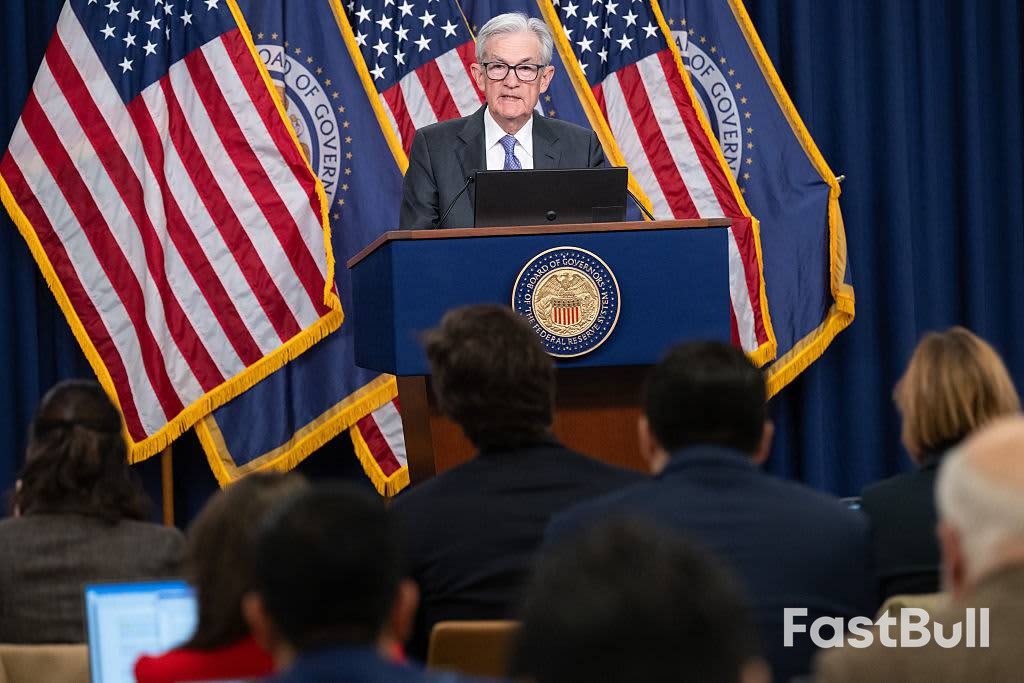
          Federal Reserve Chair Jerome Powell has offered his first public defense for attending a Supreme Court hearing concerning Fed Governor Lisa Cook, calling the case a pivotal moment for the central bank's independence.

          Speaking at his press conference on Wednesday, Powell framed his controversial decision as a necessary stand. "That case is perhaps the most important legal case in the Fed's 113-year history," he stated. "As I thought about it, I thought it might be hard to explain why I didn't attend."

          Federal Reserve Chair Jerome Powell addresses the media, explaining his decision to attend a crucial Supreme Court hearing.

          Powell's presence at the opening arguments last week drew criticism, most notably from Treasury Secretary Scott Bessent, who called the move a "mistake" that politicized the case.

          The Supreme Court Showdown Over a Fed Governor

          The legal battle centers on whether President Donald Trump has the authority to fire Cook. This question has significant implications for a president's ability to remove central bank officials and exert control over monetary policy.

          During the hearing, Supreme Court justices appeared skeptical of the claim that Trump was within his powers to remove Cook. Trump has officially cited mortgage fraud allegations as the reason for his action, but critics believe the move is linked to his public push for lower interest rates. The Supreme Court had previously allowed Cook to remain in her position while awaiting the oral arguments.

          A Two-Pronged Threat to Fed Autonomy

          The attempted removal of Cook is not the only source of political pressure on the central bank. Earlier this month, Powell revealed he is facing a federal probe related to renovations at the Fed's headquarters.

          Many observers have connected this investigation to Trump's repeated criticism of Powell for not cutting interest rates more quickly. Together, the criminal investigation and the attempt to oust a governor have fueled concerns that the Federal Reserve's long-held apolitical status is under threat.

          Why Independence Matters

          During Wednesday's press conference, Powell emphasized that political separation is essential for the Fed's long-term credibility.

          "The point of independence is not to protect policymakers or anything like that," Powell explained. "It just is that every advanced economy (and) democracy in the world has come around to this common practice."

          He warned that if the central bank loses that separation, "it would be hard to restore the credibility of the institution."

          With his own term as chair ending in May, Powell's comments carried an additional weight. He concluded with pointed advice for whoever might take his place next.

          "Don't get pulled into elected politics," Powell urged. "Don't do it."

          To stay updated on all economic events of today, please check out our Economic calendar
          Risk Warnings and Disclaimers
          You understand and acknowledge that there is a high degree of risk involved in trading. Following any strategies or investment methods may lead to potential losses. The content on the site is provided by our contributors and analysts for information purposes only. You are solely responsible for determining whether any trading assets, securities, strategy, or any other product is suitable for investing based on your own investment objectives and financial situation.
          Add to Favorites
          Share
          FastBull
          Copyright © 2026 FastBull Ltd

          728 RM B 7/F GEE LOK IND BLDG NO 34 HUNG TO RD KWUN TONG KLN HONG KONG

          TelegramInstagramTwitterfacebooklinkedin
          App Store Google Play Google Play
          Products
          Charts

          Chats

          Q&A with Experts
          Screeners
          Economic Calendar
          Data
          Tools
          Membership
          Features
          Function
          Markets
          Copy Trading
          Latest Signals
          Contests
          News
          Analysis
          24/7
          Columns
          Education
          Company
          Careers
          About Us
          Contact Us
          Advertising
          Help Center
          Feedback
          User Agreement
          Privacy Policy
          Personal Information Protection Statement
          Business

          White Label

          Data API

          Web Plug-ins

          Poster Maker

          Affiliate Program

          Risk Disclosure

          The risk of loss in trading financial instruments such as stocks, FX, commodities, futures, bonds, ETFs and crypto can be substantial. You may sustain a total loss of the funds that you deposit with your broker. Therefore, you should carefully consider whether such trading is suitable for you in light of your circumstances and financial resources.

          No decision to invest should be made without thoroughly conducting due diligence by yourself or consulting with your financial advisors. Our web content might not suit you since we don't know your financial conditions and investment needs. Our financial information might have latency or contain inaccuracy, so you should be fully responsible for any of your trading and investment decisions. The company will not be responsible for your capital loss.

          Without getting permission from the website, you are not allowed to copy the website's graphics, texts, or trademarks. Intellectual property rights in the content or data incorporated into this website belong to its providers and exchange merchants.

          Not Logged In

          Log in to access more features

          Connect Broker
          Become a signal provider
          Help Center
          Customer Service
          Dark Mode
          Price Up/Down Colors

          Log In

          Sign Up

          Position
          Layout
          Fullscreen
          Default to Chart
          The chart page opens by default when you visit fastbull.com