Markets
News
Analysis
User
24/7
Economic Calendar
Education
Data
- Names
- Latest
- Prev



Signal Accounts for Members
All Signal Accounts
All Contests


U.S. Average Hourly Wage MoM (SA) (Dec)--
F: --
P: --
U.S. Average Weekly Working Hours (SA) (Dec)--
F: --
P: --
U.S. New Housing Starts Annualized MoM (SA) (Oct)--
F: --
P: --
U.S. Total Building Permits (SA) (Oct)--
F: --
P: --
U.S. Building Permits MoM (SA) (Oct)--
F: --
P: --
U.S. Annual New Housing Starts (SA) (Oct)--
F: --
P: --
U.S. Government Employment (Dec)--
F: --
P: --
U.S. UMich 5-Year-Ahead Inflation Expectations Prelim YoY (Jan)--
F: --
P: --
U.S. UMich Consumer Sentiment Index Prelim (Jan)--
F: --
P: --
U.S. UMich Current Economic Conditions Index Prelim (Jan)--
F: --
P: --
U.S. UMich Consumer Expectations Index Prelim (Jan)--
F: --
P: --
U.S. UMich 1-Year-Ahead Inflation Expectations Prelim (Jan)--
F: --
P: --
U.S. 5-10 Year-Ahead Inflation Expectations (Jan)--
F: --
P: --
U.S. Weekly Total Oil Rig Count--
F: --
P: --
U.S. Weekly Total Rig Count--
F: --
P: --
Indonesia Retail Sales YoY (Nov)A:--
F: --
P: --
Euro Zone Sentix Investor Confidence Index (Jan)A:--
F: --
P: --
India CPI YoY (Dec)A:--
F: --
P: --
Canada National Economic Confidence IndexA:--
F: --
P: --
Germany Current Account (Not SA) (Nov)A:--
F: --
P: --
U.S. Conference Board Employment Trends Index (SA) (Dec)A:--
F: --
China, Mainland M0 Money Supply YoY (Dec)--
F: --
P: --
China, Mainland M2 Money Supply YoY (Dec)--
F: --
P: --
China, Mainland M1 Money Supply YoY (Dec)--
F: --
P: --
U.S. 3-Year Note Auction YieldA:--
F: --
P: --
Richmond Federal Reserve President Barkin delivered a speech.
U.S. 10-Year Note Auction Avg. YieldA:--
F: --
P: --
New York Federal Reserve President Williams delivered a speech.
Japan Trade Balance (Customs Data) (SA) (Nov)A:--
F: --
P: --
Japan Trade Balance (Nov)A:--
F: --
P: --
U.K. BRC Overall Retail Sales YoY (Dec)A:--
F: --
P: --
U.K. BRC Like-For-Like Retail Sales YoY (Dec)A:--
F: --
P: --
Turkey Retail Sales YoY (Nov)--
F: --
P: --
U.S. NFIB Small Business Optimism Index (SA) (Dec)--
F: --
P: --
Brazil Services Growth YoY (Nov)--
F: --
P: --
Canada Building Permits MoM (SA) (Nov)--
F: --
P: --
U.S. CPI MoM (SA) (Dec)--
F: --
P: --
U.S. CPI YoY (Not SA) (Dec)--
F: --
P: --
U.S. Real Income MoM (SA) (Dec)--
F: --
P: --
U.S. CPI MoM (Not SA) (Dec)--
F: --
P: --
U.S. Core CPI (SA) (Dec)--
F: --
P: --
U.S. Core CPI YoY (Not SA) (Dec)--
F: --
P: --
U.S. Core CPI MoM (SA) (Dec)--
F: --
P: --
U.S. Weekly Redbook Index YoY--
F: --
P: --
U.S. New Home Sales Annualized MoM (Oct)--
F: --
P: --
U.S. Annual Total New Home Sales (Oct)--
F: --
P: --
U.S. Cleveland Fed CPI MoM (SA) (Dec)--
F: --
P: --
U.S. Cleveland Fed CPI MoM (Dec)--
F: --
P: --
China, Mainland Exports (Dec)--
F: --
P: --
China, Mainland Imports YoY (CNH) (Dec)--
F: --
P: --
China, Mainland Imports (CNH) (Dec)--
F: --
P: --
China, Mainland Trade Balance (CNH) (Dec)--
F: --
P: --
China, Mainland Imports YoY (USD) (Dec)--
F: --
P: --
China, Mainland Exports YoY (USD) (Dec)--
F: --
P: --
U.S. EIA Natural Gas Production Forecast For The Next Year (Jan)--
F: --
P: --
U.S. EIA Short-Term Crude Production Forecast For The Next Year (Jan)--
F: --
P: --
U.S. EIA Short-Term Crude Production Forecast For The Year (Jan)--
F: --
P: --
EIA Monthly Short-Term Energy Outlook
U.S. 30-Year Bond Auction Avg. Yield--
F: --
P: --
U.S. Budget Balance (Dec)--
F: --
P: --
Argentina 12-Month CPI (Dec)--
F: --
P: --


Kung Fu
ID: 4603470


No matching data
Latest Views
Latest Views
Trending Topics
Top Columnists
Latest Update
White Label
Data API
Web Plug-ins
Affiliate Program
View All

No data
Facing a weak won, inflation, and a hot housing market, South Korea's central bank pauses rate cuts.
South Korea's central bank is widely expected to keep its key interest rate unchanged at 2.50% this week, as a falling currency and persistent inflation limit its room for further monetary easing.
A Reuters poll of 34 economists conducted from January 6 to 12 found a unanimous consensus that the Bank of Korea (BOK) will hold its base rate steady on January 15. The forecast signals a significant shift, with analysts now pushing expectations for the next rate cut into early next year.
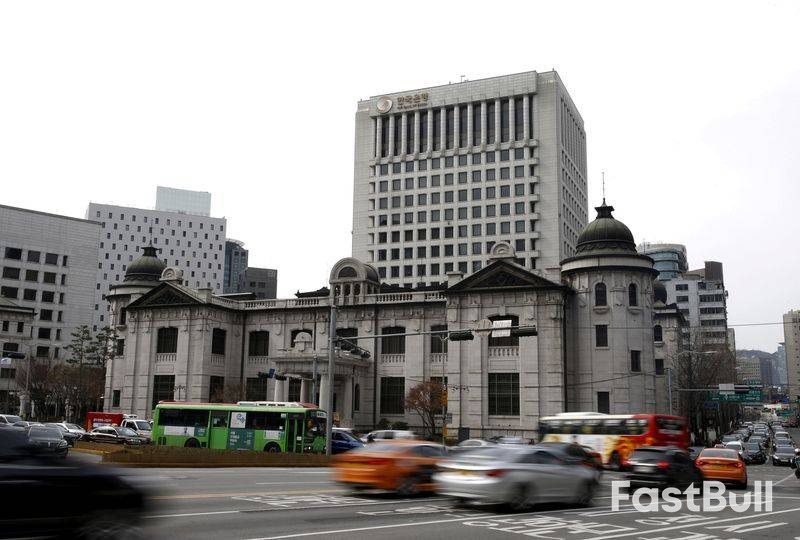
A primary driver behind the BOK's cautious stance is the Korean won, which has weakened by nearly 2% in the first two weeks of the year. This depreciation increases the risk of higher consumer prices, a concern the central bank flagged at its November meeting.
While inflation in Asia's fourth-largest economy eased slightly to 2.1% in 2025 from 2.3% in 2024, it remains above the BOK's official 2% target, complicating any decision to lower borrowing costs.
The central bank has also adjusted its forward guidance, signaling it may be nearing the end of its current easing cycle. The language has shifted from a commitment to "maintain its rate cut stance" to a more data-dependent approach, strengthening the case for a prolonged pause.
This outlook is reflected in the sharp reversal of market expectations. In a November 2025 poll, over 60% of respondents predicted at least one additional rate cut in the first quarter of this year. In the latest poll, that number has plummeted to just 22%, or seven of 32 respondents. The survey now indicates no rate changes are expected through the end of 2026.
Expert View: FX Volatility and Housing Prices Are Key
Analysts point to twin pressures from the currency market and the domestic property sector.
"Given the volatility in the FX market, it is too soon for the BOK to cut rates right now," said Kelvin Lam, senior economist at Pantheon Macroeconomics.
He added that the BOK's focus has turned to stabilizing the won and addressing risks from the property market. "The focus for the BOK is now turned to having a stable currency and also looking at instability stemming from the overheating apartment prices," Lam noted.
Seoul's Property Market Heats Up
Data from the Korea Real Estate Board underscores the challenge facing policymakers. Apartment prices in Seoul rose by 0.18% in the week ending January 5 alone. Over the course of 2025, prices climbed a steep 8.7%, fueling concerns about financial stability.
Despite the policy constraints, economists forecast South Korea's economy will expand by 2.0% this year, slightly ahead of the BOK's own projection of 1.8%. Growth is expected to hold steady at 1.9% in both 2027 and 2028.
Inflation for the current year is projected to average 1.9%, just below the central bank's forecast of 2.1%.
Japanese government bonds sold off on Tuesday as rising political uncertainty put investors on edge about the country's fiscal direction.
The market showed clear signs of stress, with the 30-year bond yield climbing by as much as 12 basis points to 3.52%. At the same time, 10-year bond futures dropped by as much as 71 ticks.
The sell-off was fueled by growing speculation that Prime Minister Sanae Takaichi might dissolve parliament and call a snap election.
Investors are concerned that a stronger electoral mandate for Takaichi would empower her to push forward with an expansionary fiscal agenda. Such a policy would likely put downward pressure on both government bonds and the yen.
The Japanese yen also reacted sharply to the political news. The currency initially weakened past 158 per dollar, marking its lowest point in a year. This slide came after media reports highlighted the possibility of an early election.
However, the yen later recovered, gaining as much as 0.2% to trade at 157.90 per dollar. The reversal followed a meeting in Washington where Japan's Finance Minister Satsuki Katayama and US Treasury Secretary Scott Bessent expressed shared concerns over the yen's weakness.
The currency's performance has been a persistent issue. Last year, the yen lagged most of its Group of 10 peers, managing only a 0.3% gain against the US dollar. In response to its recent slide, Japanese officials have intensified their warnings against speculative trading, and markets are now on alert for potential government intervention to support the currency.
Japanese Prime Minister Sanae Takaichi will meet with South Korean President Lee Jae Myung on Tuesday in a high-stakes summit aimed at strengthening ties as both nations navigate a complex diplomatic landscape dominated by China. The meeting is a strategic move by Tokyo to counter Beijing's increasing efforts to drive a wedge between key U.S. allies in the region.
This summit, held in Takaichi's home prefecture of Nara, marks the second time the two leaders have met in less than three months. Their first in-person discussion occurred in late October on the sidelines of the Asia-Pacific Economic Cooperation (APEC) conference, where they agreed to work toward a stable, forward-looking relationship.
While Japan-China frictions are expected to be a central topic, President Lee is unlikely to make any public statements critical of Beijing. His administration has carefully sought to avoid taking sides in the escalating tensions between South Korea's two most powerful neighbors.
Even without direct mention, China's influence will loom large over the discussions. Relations between Tokyo and Beijing have deteriorated significantly since Takaichi’s first meeting with President Xi Jinping at the APEC summit. In early November, her remarks concerning Taiwan angered China, which retaliated with stricter export controls on Japan and issued a travel advisory.
A successful meeting with South Korea would bolster Japan's broader strategy to build a coalition of allies to push back against what it sees as China's global campaign to isolate Tokyo. This effort includes:
• Finance Minister Satsuki Katayama holding talks with other advanced economies to secure critical mineral supply chains, amid fears China could leverage its dominance in rare earths.
• Defense Minister Shinjiro Koizumi scheduling talks with his U.S. counterpart for Thursday.
For President Lee, the summit represents another step in a delicate diplomatic balancing act. Just last week, he was in Beijing, where he was warmly received by President Xi, who even referenced the two countries' shared history of opposing Japanese militarism.
Lee has signaled a more balanced foreign policy than his predecessor, who prioritized a closer alliance with the United States. However, South Korea's foundational security alliance with the U.S. places a natural limit on any significant strategic shift toward China.
Beijing's recent actions highlight its contrasting approaches to its two neighbors. While courting South Korea, it has adopted an increasingly confrontational stance toward Japan. China has imposed new export restrictions on dual-use goods that could enhance Japan's military capabilities and launched an anti-dumping probe into a key material used in chipmaking. Furthermore, Japan recently lodged a protest over China's deployment of a mobile drilling vessel in the East China Sea.
Prime Minister Takaichi has refused to retract her November remarks suggesting Japan could deploy its military if China were to invade Taiwan, despite repeated demands from Beijing. While the diplomatic and economic consequences continue to grow, the situation has not yet harmed her domestic popularity.
This has fueled speculation that Takaichi may call a snap election in February to strengthen her coalition's hold on power. Following their talks, Takaichi and Lee are expected to speak to reporters on Tuesday afternoon before visiting a historic temple on Wednesday. Later in the week, Takaichi is scheduled to host Italian Prime Minister Giorgia Meloni in Japan.
President Donald Trump announced Monday that his administration is working with major technology companies to ensure the massive utility costs from their data centers do not lead to higher household electricity bills.
In a statement, Trump said his team is starting with Microsoft, which he expects will make "major changes" beginning this week to address the issue.
Trump's initiative aims to force tech companies building AI infrastructure to internalize their energy expenses rather than passing them on to the public.
"I never want Americans to pay higher Electricity bills because of Data Centers… the big Technology Companies who build them must 'pay their own way,'" Trump stated in a social media post.
He added that the collaboration with Microsoft is intended to ensure Americans don't "pick up the tab" for the company's power consumption. While promoting the construction of more data centers as crucial for maintaining U.S. dominance in artificial intelligence, Trump also criticized political rivals for allegedly driving up utility costs for consumers.
The president's focus on data centers stems from the immense energy and water resources they require. Training and operating the large language models that power the AI industry demand enormous computational power, raising concerns across the political spectrum that the average American could face higher utility bills.
These worries have grown as Wall Street's "AI hyperscalers"—a group of megacap companies investing billions in the technology—have laid out plans to build and operate a large number of new AI data centers across the United States.
This new policy direction marks a change for the Trump administration, which was previously seen encouraging the expansion of data centers through 2025 with faster approvals and more relaxed regulatory demands.
However, with midterm elections on the horizon, Trump appears to be targeting lower living costs for Americans in an effort to bolster his political standing.
China and Southeast Asian stock markets are poised to lead Asia in 2026, according to a new analysis from Deutsche Bank. The bank's strategists predict a "bull upcycle" for China, driven by a powerful combination of supportive liquidity, recovering corporate profits, and a decisive government policy pivot toward reform.
Deutsche Bank identifies three fundamental factors that could fuel sustained growth in China's market. These elements suggest a structural shift that could improve both investor sentiment and corporate performance.
A Reservoir of Household Cash
While the pace of global liquidity growth is slowing, China has a unique internal advantage: vast household bank deposits. Analysts believe this cash could increasingly flow into equities as the opportunity cost of holding savings in low-yield accounts diminishes.
A Focus on Corporate Profitability
A key driver for improved corporate health is the government's "anti-involution" policy, designed to curb the excessive competition and oversupply that have plagued many industries. Deutsche Bank notes that signs of greater investment discipline are already emerging, helping profits stabilize after years of pressure from overcapacity.
Additional support comes from industrial policies and directives for state-owned enterprises to speed up their payment cycles, which is expected to bolster corporate sentiment.
A Policy Pivot Toward Reform
A broader shift in Beijing's priorities is also expected to lift confidence through 2026. The government's work plans and the upcoming 15th Five-Year Plan show an increased emphasis on boosting consumption, investing in human capital, and easing regulatory pressures. This move toward reform and "opening up" signals a more market-friendly environment.
Deutsche Bank argues that global investors are currently underweight on Chinese assets. This positioning creates significant upside potential. The bank estimates that if major funds were to reallocate just one percentage point of their portfolios to China, it could trigger approximately $270 billion in capital inflows.
When combined with potential global fiscal easing and interest rate cuts, this influx of capital could propel Chinese and Hong Kong equities beyond their previous market peaks.
Based on this outlook, the bank's strategy is clear:
• Favored Markets: China and select Southeast Asian markets.
• Favored Sectors: Industries benefiting from "anti-involution" policies that reduce over-competition.
• Areas of Caution: High-tech sectors that are facing renewed supply pressures.
Australian consumer confidence soured in January, with households growing increasingly concerned about their finances as the prospect of higher interest rates looms.
A survey from Westpac Banking Corp. on Tuesday showed that overall sentiment fell by 1.7% to 92.9 points. With the index remaining below the neutral 100-point mark, pessimists continue to outnumber optimists.
"The main catalyst continues to be a sharp turn in interest rate expectations," said Matthew Hassan, Westpac's head of Australian macro-forecasting. He noted that nearly two-thirds of consumers now anticipate mortgage rates will climb over the next year, a figure that has more than doubled since September.
The survey's sub-indexes painted a uniformly bleak picture. "All sub-indexes were below 100, only the second time since October 2024 that pessimists have outnumbered optimists across every component," Hassan added.
The growing anxiety among consumers reflects the messaging from the Reserve Bank of Australia (RBA). The central bank has held borrowing costs steady at 3.6% since August but has consistently warned about persistent inflation pressures in a tight job market.
RBA Governor Michele Bullock has indicated that further policy easing is unlikely in the near term, suggesting the next move is more likely to be a rate hike than a cut.
This drop in sentiment contrasts with recent official data showing that Australian household spending grew faster than expected in November. The increase was driven by spending on services and strong pre-Christmas retail discounts.
The disconnect has left economists divided. Forecasters at Commonwealth Bank of Australia and National Australia Bank are predicting at least one more rate increase this year to combat inflation. In contrast, analysts at Bank of America expect the RBA to keep rates on hold. Meanwhile, money markets are pricing in a rate hike by mid-2024.
The RBA's next policy decision at its February 2-3 meeting remains uncertain and will be heavily influenced by upcoming economic reports.
Policymakers will be closely watching December's employment figures to assess the labor market's tightness. The fourth-quarter inflation data, scheduled for release in late January, will also be a critical factor in shaping interest rate expectations.
President Lai Ching-te is escalating a power struggle with Taiwan's opposition-controlled legislature, with a record-breaking defense budget at the center of the conflict. His ability to pass this monumental spending package has become a critical test of his young presidency.
In a sharp break from tradition, Lai's premier recently refused to sign tax legislation that threatened the central government's funding, a move opponents decried as unconstitutional. His administration followed this with a legal victory, successfully challenging a court revamp that would have weakened his power to contest laws passed by parliament.
These maneuvers represent a significant advance for a leader who took office in early 2024 with the slimmest victory margin in over two decades. However, they have also deepened political polarization. Lai's opponents are now threatening a long-shot impeachment and labeling his administration a "green dictatorship," accusing him of eroding legislative authority.
This sets the stage for his next major challenge: passing a special budget to bolster Taiwan's defenses by an extra $40 billion in the coming years without inflaming the already tense political climate.
Failure to pass the defense budget could have serious international consequences, particularly with the United States. The proposed spending aligns with US President Donald Trump's public calls for Taiwan to significantly increase its own military investment.
"Such an outcome would be detrimental to Taiwan's relationship with the US and the Trump administration," said William Yang, a senior analyst at the International Crisis Group.
The Lai government is also in the final stages of negotiating a tariff agreement as part of a broader trade deal with the US. According to the New York Times, this deal could pave the way for Taiwan Semiconductor Manufacturing Co. (TSMC) to build five new chip facilities in Arizona.
President Lai’s Democratic Progressive Party (DPP) is scheduled to make its seventh attempt on Tuesday to advance the budget-related legislation for a reading. The president's office did not respond to a request for comment.
The budget standoff is unfolding amid escalating military aggression from China. In the final days of 2025, President Xi Jinping ordered military drills around Taiwan to protest an $11 billion US weapons package for the self-governed island, which Beijing claims as its own territory.
During these exercises, the People’s Liberation Army fired long-range projectiles into the Taiwan Strait for the first time since 2022, disrupting one of the world's most vital shipping lanes. This pressure has reinforced Lai's pledge to accelerate the development of the T-Dome, a sophisticated and costly system for intercepting aerial threats.
Chieh Chung, an assistant professor at Tamkang University, emphasized that the special budget, which helps fund the T-Dome, is "extremely important for Taiwan's future combat capability."
Lai first detailed the plan in a Washington Post commentary last November, stating the funds would be used for "significant new arms acquisitions from the United States" and to "vastly enhance Taiwan's asymmetrical capabilities." His cabinet has suggested financing the budget through previous fiscal surpluses or government borrowing.
Despite the clear external threats, the opposition, led by the Kuomintang (KMT) party which advocates for closer relations with Beijing, has blocked the budget legislation from its first reading on six separate occasions.
Opposition parties have also delayed the review of the annual general budget, which includes standard defense spending. While Taiwan's general budget is usually passed by February, delays are not unprecedented. In 2007, another minority DPP government saw its budget held up until June.
While the opposition agrees on the need for increased defense spending, they disagree on the priorities and demand more transparency.
Niu Hsu-ting, a lawmaker who frequently represents the KMT's positions, argued that "improving the treatment of military personnel is the most important issue." She suggested the annual budget should first incorporate opposition-backed legislation mandating pay raises for soldiers.
Opponents have also criticized the special military budget for its lack of specifics and have asked Lai to submit to questioning by legislators. The president has offered to deliver a "state of the nation" address but only "in a manner that fits the constitution," implying he would not take questions.
"The continued stalling of the special military budget by opposition parties is an indicator the political stalemate is far from being resolved," noted Yen Wei-ting, an assistant research fellow at Academia Sinica's Institute of Political Science.
Ultimately, pressure from the United States, Taiwan’s most crucial military ally, might be the key to breaking the legislative gridlock.
On January 7, representatives from the American Institute in Taiwan (AIT) met with the speaker of Taiwan's legislature and his deputy. According to an AIT Facebook post, the meeting aimed to "strengthen US-Taiwan cooperation" on security and economic matters.
Lin Ying-yu, an associate professor at Tamkang University, believes the US is likely already engaging in quiet diplomacy with the opposition.
"The US will likely engage with members of opposition parties and take advantage of year-end or New Year events to communicate with them on a wide range of issues, including arms sales," Lin said.
White Label
Data API
Web Plug-ins
Poster Maker
Affiliate Program
The risk of loss in trading financial instruments such as stocks, FX, commodities, futures, bonds, ETFs and crypto can be substantial. You may sustain a total loss of the funds that you deposit with your broker. Therefore, you should carefully consider whether such trading is suitable for you in light of your circumstances and financial resources.
No decision to invest should be made without thoroughly conducting due diligence by yourself or consulting with your financial advisors. Our web content might not suit you since we don't know your financial conditions and investment needs. Our financial information might have latency or contain inaccuracy, so you should be fully responsible for any of your trading and investment decisions. The company will not be responsible for your capital loss.
Without getting permission from the website, you are not allowed to copy the website's graphics, texts, or trademarks. Intellectual property rights in the content or data incorporated into this website belong to its providers and exchange merchants.
Not Logged In
Log in to access more features

FastBull Membership
Not yet
Purchase
Log In
Sign Up