Markets
News
Analysis
User
24/7
Economic Calendar
Education
Data
- Names
- Latest
- Prev



Signal Accounts for Members
All Signal Accounts
All Contests


U.S. NY Fed Manufacturing New Orders Index (Jan)A:--
F: --
P: --
U.S. NY Fed Manufacturing Employment Index (Jan)A:--
F: --
P: --
U.S. Export Price Index YoY (Nov)A:--
F: --
P: --
U.S. NY Fed Manufacturing Index (Jan)A:--
F: --
U.S. Initial Jobless Claims 4-Week Avg. (SA)A:--
F: --
U.S. Export Price Index MoM (Nov)A:--
F: --
P: --
Canada Manufacturing Unfilled Orders MoM (Nov)A:--
F: --
P: --
Canada Manufacturing New Orders MoM (Nov)A:--
F: --
P: --
U.S. Philadelphia Fed Manufacturing Employment Index (Jan)A:--
F: --
P: --
Canada Wholesale Inventory YoY (Nov)A:--
F: --
P: --
Canada Manufacturing Inventory MoM (Nov)A:--
F: --
P: --
Canada Wholesale Sales YoY (Nov)A:--
F: --
P: --
Canada Wholesale Inventory MoM (Nov)A:--
F: --
P: --
U.S. Import Price Index YoY (Nov)A:--
F: --
U.S. Philadelphia Fed Business Activity Index (SA) (Jan)A:--
F: --
P: --
U.S. EIA Weekly Natural Gas Stocks ChangeA:--
F: --
P: --
Richmond Federal Reserve President Barkin delivered a speech.
U.S. Weekly Treasuries Held by Foreign Central BanksA:--
F: --
P: --
Germany CPI Final MoM (Dec)A:--
F: --
P: --
Germany CPI Final YoY (Dec)A:--
F: --
P: --
Germany HICP Final MoM (Dec)A:--
F: --
P: --
Germany HICP Final YoY (Dec)A:--
F: --
P: --
Brazil PPI MoM (Nov)A:--
F: --
P: --
Canada New Housing Starts (Dec)A:--
F: --
U.S. Capacity Utilization MoM (SA) (Dec)A:--
F: --
U.S. Industrial Output YoY (Dec)A:--
F: --
P: --
U.S. Manufacturing Capacity Utilization (Dec)A:--
F: --
P: --
U.S. Manufacturing Output MoM (SA) (Dec)A:--
F: --
U.S. Industrial Output MoM (SA) (Dec)A:--
F: --
U.S. NAHB Housing Market Index (Jan)A:--
F: --
P: --
Russia CPI YoY (Dec)--
F: --
P: --
U.S. Weekly Total Rig Count--
F: --
P: --
U.S. Weekly Total Oil Rig Count--
F: --
P: --
Japan Core Machinery Orders YoY (Nov)--
F: --
P: --
Japan Core Machinery Orders MoM (Nov)--
F: --
P: --
U.K. Rightmove House Price Index YoY (Jan)--
F: --
P: --
China, Mainland GDP YoY (YTD) (Q4)--
F: --
P: --
China, Mainland Industrial Output YoY (YTD) (Dec)--
F: --
P: --
Japan Industrial Output Final MoM (Nov)--
F: --
P: --
Japan Industrial Output Final YoY (Nov)--
F: --
P: --
Euro Zone Core HICP Final MoM (Dec)--
F: --
P: --
Euro Zone HICP Final MoM (Dec)--
F: --
P: --
Euro Zone HICP Final YoY (Dec)--
F: --
P: --
Euro Zone HICP MoM (Excl. Food & Energy) (Dec)--
F: --
P: --
Euro Zone Core CPI Final YoY (Dec)--
F: --
P: --
Euro Zone Core HICP Final YoY (Dec)--
F: --
P: --
Euro Zone CPI YoY (Excl. Tobacco) (Dec)--
F: --
P: --
Euro Zone Core CPI Final MoM (Dec)--
F: --
P: --
Canada National Economic Confidence Index--
F: --
P: --
Canada CPI MoM (SA) (Dec)--
F: --
P: --
Canada Core CPI MoM (SA) (Dec)--
F: --
P: --
Canada CPI YoY (SA) (Dec)--
F: --
P: --
Canada Trimmed CPI YoY (SA) (Dec)--
F: --
P: --
Canada CPI YoY (Dec)--
F: --
P: --
Canada CPI MoM (Dec)--
F: --
P: --
Canada Core CPI YoY (Dec)--
F: --
P: --
Canada Core CPI MoM (Dec)--
F: --
P: --
South Korea PPI MoM (Dec)--
F: --
P: --
China, Mainland 1-Year Loan Prime Rate (LPR)--
F: --
P: --
China, Mainland 5-Year Loan Prime Rate--
F: --
P: --


No matching data
Latest Views
Latest Views
Trending Topics
Top Columnists
Latest Update
White Label
Data API
Web Plug-ins
Affiliate Program
View All

No data
Argentina-based crypto exchange Lemon has officially rolled out the country's first Bitcoin-backed Visa credit card, marking a shift away from traditional crypto debit models toward collateralized credit.
Argentina-based crypto exchange Lemon has officially rolled out the country's first Bitcoin-backed Visa credit card, marking a shift away from traditional crypto debit models toward collateralized credit. The product is now available to Lemon's user base of more than 5.5 million people.
Unlike debit cards that automatically sell crypto at the point of purchase, Lemon's new card allows users to spend Argentine pesos while keeping their Bitcoin intact.
The card is built on a Collateralized Debt Position structure. Users lock 0.01 BTC as collateral, roughly $900 to $960 at current prices, and receive an immediate credit limit of 1 million Argentine pesos. Spending is settled in local currency, while the Bitcoin remains untouched in custody.
The design removes forced liquidation entirely. Users access short-term peso liquidity for daily expenses without selling Bitcoin, preserving full exposure to price movements. Approval is based on collateral value and account history, with no credit checks or traditional banking requirements.
Maintenance fees are waived for the first three months under a partnership with Rootstock. After that period, the card carries a monthly fee of about 7,500 pesos unless the user buys at least $150 in crypto each month.
Crypto adoption in Argentina continues to accelerate. As of January 2026, nearly 20% of the population, around 8.6 million people, actively uses cryptocurrency, the highest penetration rate in Latin America.
On Lemon's platform, Bitcoin has become the most widely held asset, overtaking both stablecoin dollar proxies and the Argentine peso itself. The card effectively formalizes Bitcoin's role as a store of value while unlocking its utility for everyday spending.
Lemon plans to expand the product's functionality in future phases. The roadmap includes customizable collateral ratios and the option to settle dollar-denominated purchases directly with stablecoins such as USDC and USDT.
The launch builds on Lemon's earlier Visa offering from 2021, which introduced BTC cashback on purchases. This time, the focus has shifted from rewards to credit—turning Bitcoin holdings into a spending buffer without requiring users to give them up.
Deutsche Bank has raised its forecast for UK GDP growth in 2026 to 1.2%, an upward revision from its previous estimate of 1.1%. The adjustment, which restores the bank's projection from a month prior, follows the release of stronger-than-anticipated economic data.
This renewed optimism signals a significant shift in the short-term outlook. The bank now predicts the UK will sidestep a recession in the fourth quarter of 2025, forecasting 0.2% quarter-on-quarter growth instead of a previously anticipated decline. The revision was driven by a notable rebound in November GDP figures and upward adjustments to data from previous months.
The economic strength seen in November was broad-based. The UK's services sector recovered robustly after contracting by 0.3% in October, while the production sector expanded by 1.1% month-on-month.
A closer look at the data reveals specific drivers of this growth:
• Services: Activity was propelled by gains in leisure (0.9%), information and communication (1.6%), and professional services (1.7%).
• Manufacturing: A 25% surge in motor vehicle production provided a major lift as output in the auto sector normalized.
However, not all sectors showed strength. Construction output registered a 1.3% month-on-month decline, marking its second consecutive month of contraction.
Looking ahead to 2026, Deutsche Bank identifies several positive factors that are expected to support continued economic growth. These tailwinds include falling inflation, which is projected to approach target levels by spring, thereby boosting real disposable incomes for households.
Other supportive elements include:
• Favorable credit conditions
• Anticipated interest rate cuts from the Bank of England
• Increased public sector spending
• The government's ongoing deregulation initiatives
Despite the improved growth forecast, the bank has maintained its projection for monetary policy. It continues to expect the Bank of England's key interest rate to end 2026 at 3.25%, down from the current rate of 3.75%.
The United States is blocking Spain from key preparatory meetings for the upcoming G-20 summit, a move that signals the Trump administration's continued willingness to reshape the global order by sidelining traditional allies.
Washington is hosting the gathering of the world's leading economies on December 14-15 at President Donald Trump's Miami golf resort. Using its position as host, the administration is curbing input from countries like Spain, which are not official G-20 members but are typically invited to participate.
This tactic is becoming a hallmark of the White House's foreign policy, which increasingly shuts out allies on the world stage, particularly those that do not align with its demands.
The decision regarding Spain is not an isolated incident. The US has already taken similar steps against other nations:
• South Africa: Barred from attending this year's G-20 summit after the country's leadership disputed President Trump's false claims that White Afrikaners were facing genocide.
• NATO Allies: The administration is also rebuffing overtures from NATO partners that have refused Trump's demands to facilitate the handover of Greenland, a semi-autonomous Danish territory.
Spain has had its own points of friction with the Trump administration. The country was the only NATO ally to reject a US-backed initiative to spend 5% of its gross domestic product on defense. Madrid also forcefully criticized Trump for his strike that deposed Venezuelan leader Nicolas Maduro.
"Spain is not a team player," Trump commented last year.
As a result, Spanish officials are now excluded from all preparatory and ministerial meetings for the G-20 summit, according to two people familiar with the plans. These sessions are critical, as they are where most of the substantive work and negotiations for the event are conducted.
A Spanish government spokesperson confirmed that Prime Minister Pedro Sanchez will still attend the main leaders' summit in December.
Sources familiar with the decision, who requested anonymity, said the move is part of a broader US campaign to narrow the G-20's agenda to economic issues and shrink the number of participating countries. A White House statement confirmed that other traditional non-member invitees, such as Egypt and the Netherlands, were also excluded from the first preparatory meeting in December.
The White House did not respond to a request for comment. The story was first reported by the newspaper El Confidencial.
The administration's approach creates a sharp contrast in how it treats different nations. While South Africa, a full G-20 member, faced a US boycott of the Johannesburg summit it hosted last year, other countries have been welcomed.
US Secretary of State Marco Rubio criticized South Africa in December, writing that its "economy has stagnated under its burdensome regulatory regime driven by racial grievance."
In contrast, the US has extended an invitation to Poland for this year's summit. Trump officials have actively courted the country, which is a major defense spender in NATO and boasts a growing economy. Notably, Poland was the only non-G-20 country present at the December planning meeting.
"Poland's success," Rubio wrote, "shows how partnership with the United States and American companies can promote mutual prosperity and growth."
Spain is the last major European nation led by a socialist, Prime Minister Pedro Sanchez, who governs with the support of left-wing parties that are highly critical of both the United States and NATO.
Furthermore, Spain has maintained ties with Nicolas Maduro's regime in Venezuela, even though it does not recognize his victory in the widely disputed 2024 election. Former Spanish Prime Minister Jose Luis Rodríguez Zapatero, also a socialist, has strong connections to the Maduro government and has served as an intermediary in Venezuela for years. Just last week, the government in Caracas thanked him for his role in mediating the release of political prisoners.


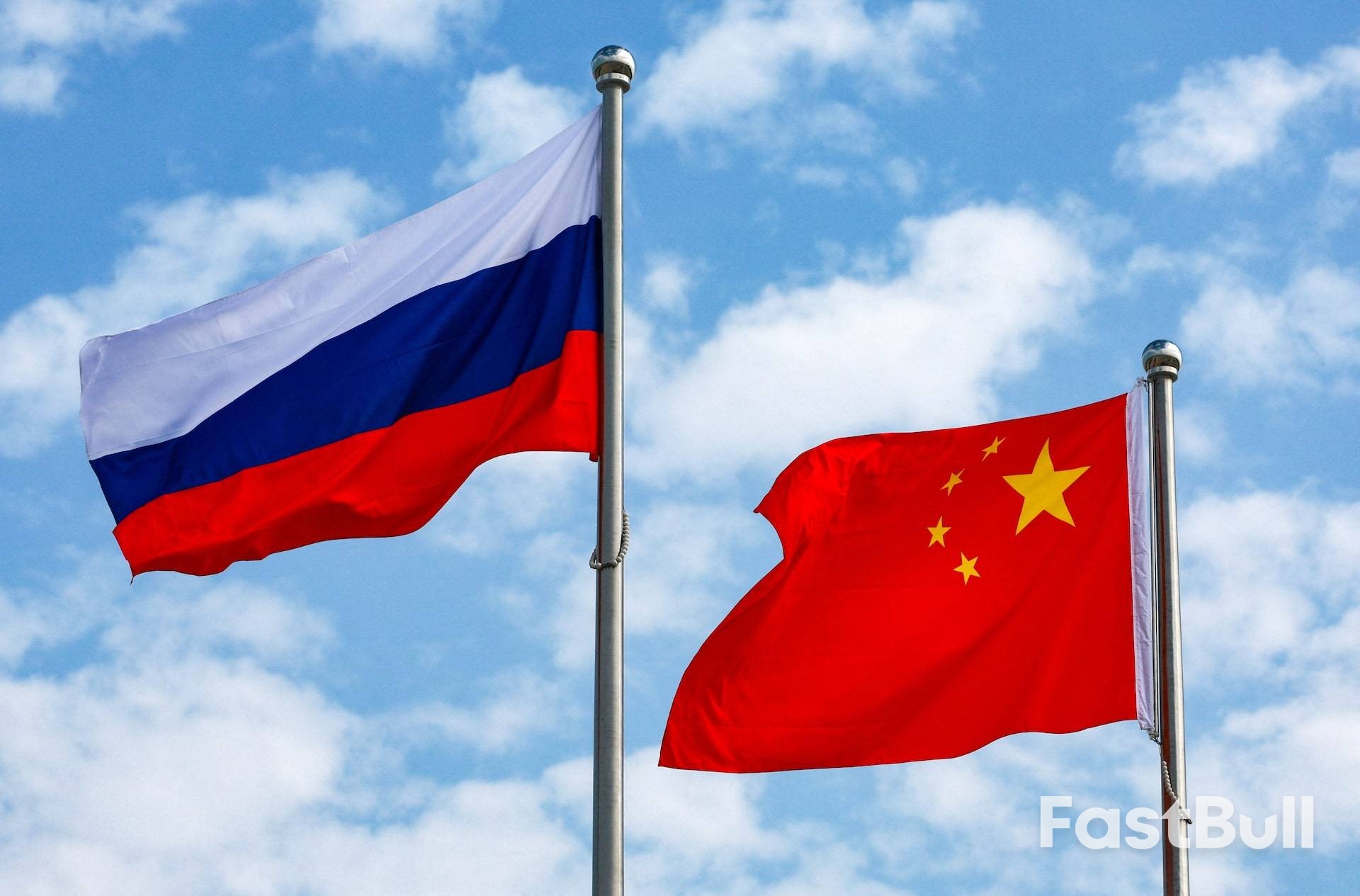
China has suspended its imports of electricity from Russia, with sources citing high prices as the primary cause, according to a report from the Kommersant newspaper. While the Chinese government has not yet commented, Russia’s energy ministry stated its priority is meeting rising domestic demand but confirmed it is ready to resume sales if new terms are reached.
The decision to halt supplies was not clarified as originating from China or Russia. However, Russia's energy ministry noted it could restart exports "if it receives a corresponding request from Beijing and if mutually beneficial cooperation terms are reached."
InterRAO, Russia's state-backed power supplier to China, confirmed that discussions are ongoing and that neither party intends to terminate their long-term contract.
"At present, the parties are actively exploring opportunities for electricity trade," the company stated, adding that its Chinese counterparts have not expressed any interest in ending the agreement.
Despite this, the Kommersant report squarely links the pause to a price disparity, suggesting that Russian power has become more expensive than China's domestic electricity.
Russia's official position centers on its own energy needs. The energy ministry emphasized that serving the growing power demand in Russia's Far East is its main focus.
The recent suspension is the culmination of a steady decline in Russian electricity exports to China. This trend has been driven by system constraints and a power capacity shortage in Russia's Far East.
The supply figures show a clear downward trajectory:
• 2022: Exports reached a record high of 4.6 billion kilowatt-hours.
• 2023: Supplies fell to 3.1 billion kilowatt-hours.
• 2024: Exports declined further to 0.9 billion kilowatt-hours.
• First Nine Months of 2025: Only 0.3 billion kilowatt-hours were delivered.
These exports are governed by a 25-year contract signed in 2012 for the delivery of approximately 100 billion kilowatt-hours. The interstate transmission lines connecting the two countries have the capacity to deliver up to 7 billion kilowatt-hours annually.
The South African rand is experiencing its most sustained period of gains against the U.S. dollar in more than two decades, driven by a powerful combination of high commodity prices and a strengthening economic outlook.
The currency is poised for its eighth consecutive weekly advance, a winning streak not seen since December 2002. Over this period, the rand has strengthened by 6.1%, according to Bloomberg data.
While record-high prices for gold and silver have provided a significant cyclical boost, analysts point to deeper structural changes as the primary drivers of the currency's sharp appreciation.
"Possibly, the main cyclical factor is the commodity tailwind," said Burak Baskurt, chief emerging markets strategist at BNP Paribas. "But structural factors mostly explain the sharp appreciation."
These underlying strengths include recent economic reforms and the central bank's disciplined monetary policy. Last year, policymakers adopted a lower inflation target, which has reinforced investor confidence that the country will maintain its favorable interest-rate differential with the United States.
With South Africa's policy rate at 6.75% and annual inflation forecast to be around 3.6%, the country offers a real interest rate of over 3%—an attractive real return for investors. Upcoming economic data is expected to confirm that inflation has likely peaked.
This positive outlook is shared by market strategists. "We see further gains for the rand and expect rates and bonds to rally further due to low inflation," wrote Societe Generale strategists, including Phoenix Kalen and Marek Drimal, in a recent note.
The optimism has spilled over from the currency markets. South Africa's benchmark equity index climbed over 2% this week, reaching a record high on the back of a rally in mining shares.
Brazil's economy expanded much faster than expected in November, posting its strongest growth in months and complicating the central bank's path toward lowering interest rates. The robust performance adds new pressure on policymakers who are trying to balance growth with inflation control.
Data released on Friday showed the central bank's economic activity index, a leading indicator for gross domestic product (GDP), rose by 0.68% from the previous month. This figure easily surpassed the 0.4% median estimate from a Bloomberg survey of analysts and marked the largest monthly increase since March.
Compared to the same month a year earlier, the index was up 1.25%, confirming a solid underlying momentum in the economy.
The stronger-than-expected data creates a challenge for monetary policy. Economists and traders have been watching for signs that the central bank has room to start cutting its benchmark Selic rate, which has been held at 15%—a level not seen in nearly two decades.
While inflation has been moving closer to the official target, policymakers have so far refused to signal when they might begin an easing cycle. This latest report gives them another reason to remain cautious.
The central bank's cautious stance is reinforced by several factors that could keep inflation elevated. A hot jobs market continues to support demand, while analysts expect President Luiz Inacio Lula da Silva to ramp up public spending this year.
This anticipated fiscal stimulus, viewed as a strategy to secure support for a potential fourth term, is already pressuring forecasts for consumer price growth and making the case for near-term rate cuts more difficult.
White Label
Data API
Web Plug-ins
Poster Maker
Affiliate Program
The risk of loss in trading financial instruments such as stocks, FX, commodities, futures, bonds, ETFs and crypto can be substantial. You may sustain a total loss of the funds that you deposit with your broker. Therefore, you should carefully consider whether such trading is suitable for you in light of your circumstances and financial resources.
No decision to invest should be made without thoroughly conducting due diligence by yourself or consulting with your financial advisors. Our web content might not suit you since we don't know your financial conditions and investment needs. Our financial information might have latency or contain inaccuracy, so you should be fully responsible for any of your trading and investment decisions. The company will not be responsible for your capital loss.
Without getting permission from the website, you are not allowed to copy the website's graphics, texts, or trademarks. Intellectual property rights in the content or data incorporated into this website belong to its providers and exchange merchants.
Not Logged In
Log in to access more features

FastBull Membership
Not yet
Purchase
Log In
Sign Up