Markets
News
Analysis
User
24/7
Economic Calendar
Education
Data
- Names
- Latest
- Prev



Signal Accounts for Members
All Signal Accounts
All Contests


The Main Lithium Carbonate Futures Contract Continued To Fall, Dropping More Than 6% Intraday, And Is Currently Trading At 160,020 Yuan/ton
[Sources: Trump Considers Major Strikes Against Iran Amid Nuclear Negotiations] Sources Revealed That US President Trump Is Considering A New Major Strike Against Iran After Initial Discussions Between The US And Iran Failed To Make Progress On Limiting Iran's Nuclear Program And Ballistic Missile Production. Sources Said That Options Trump Is Currently Considering Include Airstrikes Against Iranian Leaders And Security Officials Believed To Be Responsible For Deaths And Injuries During Protests In Iran, As Well As Strikes Against Iranian Nuclear Facilities And Government Institutions. Sources Also Indicated That Trump Has Not Yet Finalized His Decision On How To Act, But He Believes His Military Options Are More Abundant Than At The Beginning Of The Month With The Deployment Of US Carrier Strike Groups To The Region
Singapore's Monetary Authority Of Singapore - The Risks To The Growth And Inflation Outlook Are Tilted To The Upside At This Point
Singapore's Monetary Authority Of Singapore - For The Full Year, GDP Growth Is Expected To Ease Relative To The Stronger Outturn In 2025
Singapore's Monetary Authority Of Singapore - On Average Over 2026, Core Inflation Momentum Is Expected To Come In At A Pace That Is Slightly Below Trend
There Will Be No Change To Its Width And The Level At Which It Is Centred - Monetary Authority Of Singapore

U.S. API Weekly Refined Oil StocksA:--
F: --
P: --
U.S. API Weekly Crude Oil StocksA:--
F: --
P: --
U.S. API Weekly Gasoline StocksA:--
F: --
P: --
U.S. API Weekly Cushing Crude Oil StocksA:--
F: --
P: --
Australia RBA Trimmed Mean CPI YoY (Q4)A:--
F: --
P: --
Australia CPI YoY (Q4)A:--
F: --
P: --
Australia CPI QoQ (Q4)A:--
F: --
P: --
Germany GfK Consumer Confidence Index (SA) (Feb)A:--
F: --
P: --
Germany 10-Year Bund Auction Avg. YieldA:--
F: --
P: --
India Industrial Production Index YoY (Dec)A:--
F: --
P: --
India Manufacturing Output MoM (Dec)A:--
F: --
P: --
U.S. MBA Mortgage Application Activity Index WoWA:--
F: --
P: --
Canada Overnight Target RateA:--
F: --
P: --
BOC Monetary Policy Report
U.S. EIA Weekly Crude Stocks ChangeA:--
F: --
P: --
U.S. EIA Weekly Cushing, Oklahoma Crude Oil Stocks ChangeA:--
F: --
P: --
U.S. EIA Weekly Crude Demand Projected by ProductionA:--
F: --
P: --
U.S. EIA Weekly Crude Oil Imports ChangesA:--
F: --
P: --
U.S. EIA Weekly Heating Oil Stock ChangesA:--
F: --
P: --
U.S. EIA Weekly Gasoline Stocks ChangeA:--
F: --
P: --
BOC Press Conference
Russia PPI MoM (Dec)A:--
F: --
P: --
Russia PPI YoY (Dec)A:--
F: --
P: --
U.S. Interest Rate On Reserve BalancesA:--
F: --
P: --
U.S. Target Federal Funds Rate Lower Limit (Overnight Reverse Repo Rate)A:--
F: --
P: --
U.S. Federal Funds Rate TargetA:--
F: --
P: --
U.S. Target Federal Funds Rate Upper Limit (Excess Reserves Ratio)A:--
F: --
P: --
FOMC Statement
FOMC Press Conference
Brazil Selic Interest RateA:--
F: --
P: --
Australia Import Price Index YoY (Q4)A:--
F: --
P: --
Japan Household Consumer Confidence Index (Jan)--
F: --
P: --
Turkey Economic Sentiment Indicator (Jan)--
F: --
P: --
Euro Zone M3 Money Supply (SA) (Dec)--
F: --
P: --
Euro Zone Private Sector Credit YoY (Dec)--
F: --
P: --
Euro Zone M3 Money Supply YoY (Dec)--
F: --
P: --
Euro Zone 3-Month M3 Money Supply YoY (Dec)--
F: --
P: --
South Africa PPI YoY (Dec)--
F: --
P: --
Euro Zone Consumer Confidence Index Final (Jan)--
F: --
P: --
Euro Zone Selling Price Expectations (Jan)--
F: --
P: --
Euro Zone Industrial Climate Index (Jan)--
F: --
P: --
Euro Zone Services Sentiment Index (Jan)--
F: --
P: --
Euro Zone Economic Sentiment Indicator (Jan)--
F: --
P: --
Euro Zone Consumer Inflation Expectations (Jan)--
F: --
P: --
Italy 5-Year BTP Bond Auction Avg. Yield--
F: --
P: --
Italy 10-Year BTP Bond Auction Avg. Yield--
F: --
P: --
France Unemployment Class-A (Dec)--
F: --
P: --
South Africa Repo Rate (Jan)--
F: --
P: --
Canada Average Weekly Earnings YoY (Nov)--
F: --
P: --
U.S. Nonfarm Unit Labor Cost Final (Q3)--
F: --
P: --
U.S. Initial Jobless Claims 4-Week Avg. (SA)--
F: --
P: --
U.S. Weekly Continued Jobless Claims (SA)--
F: --
P: --
U.S. Trade Balance (Nov)--
F: --
P: --
U.S. Weekly Initial Jobless Claims (SA)--
F: --
P: --
Canada Trade Balance (SA) (Nov)--
F: --
P: --
U.S. Exports (Nov)--
F: --
P: --
Canada Imports (SA) (Nov)--
F: --
P: --
Canada Exports (SA) (Nov)--
F: --
P: --
U.S. Unit Labor Cost Revised MoM (SA) (Q3)--
F: --
U.S. Factory Orders MoM (Nov)--
F: --
P: --
U.S. Wholesale Sales MoM (SA) (Nov)--
F: --
P: --


No matching data
Latest Views
Latest Views
Trending Topics
Top Columnists
Latest Update
White Label
Data API
Web Plug-ins
Affiliate Program
View All

No data
As US threats escalate, Iran, defensively weak but offensively potent, could unleash missiles and disrupt global oil.
Tensions are escalating in the Middle East as the United States deploys an aircraft carrier and additional bombers to the region, positioning key military assets for a potential confrontation with Iran. Following President Donald Trump's threats to strike the Islamic Republic over its crackdown on protesters, analysts are assessing a critical question: how would Tehran respond?
Experts agree that Iran would be largely powerless to stop a direct American aerial attack. However, its defensive vulnerabilities are only half the story. Tehran possesses a formidable arsenal of missiles and drones, giving it significant capacity to retaliate against US military and commercial interests across the region.
Recent conflicts have exposed critical weaknesses in Iran's defenses. During a 12-day war last June, Israeli strikes hit Iranian military infrastructure, including missile production centers, radars, and Russian-made S-300 air-defense systems. With an aging air force, these attacks left Iran's ability to fend off aerial assaults severely weakened.
"In terms of purely defensive capabilities, Iran is practically naked," said Michael Horowitz, an independent defense expert based in Israel.
Despite this, Iran demonstrated its offensive strength by firing hundreds of ballistic missiles at Israel during that same conflict, with dozens penetrating Israel's advanced air defenses to hit military sites.
This offensive power remains the core of its strategy. "Iran still has a large arsenal of short and medium range missiles that can easily hit US bases in the Middle East, as well as cruise missiles and drones that it would likely use to try and target US ships," Horowitz added.
To understand Iran's retaliatory threat, it's essential to break down its missile capabilities. Israel's strikes in June specifically targeted production facilities at the Parchin military complex, the Khojir military base, and the Shahrud missile site to hinder the development of medium-range ballistic missiles.
According to Sascha Bruchmann, a military analyst at the International Institute for Strategic Studies, these missiles are "fairly potent" but have a key weakness.
• Medium-Range Ballistic Missiles: Many are liquid-fueled and depend on fixed infrastructure for loading and launch. This makes their launchers easier to find and destroy, as Israel demonstrated during the war. The number of operational launchers remaining is unclear.
• Short-Range Ballistic Missiles: These weapons pose a more immediate and flexible danger. Bruchmann notes that Tehran has several thousand of these missiles, which are often solid-fueled, making them more mobile and harder to detect before launch. He warns they "constitute a real threat, especially for the smaller Gulf countries" like Qatar and Bahrain, which both host significant US military forces.

Beyond its conventional weapons, Iran's most powerful tool may be its ability to disrupt the global economy. The Persian Gulf region produces approximately 40% of the world's oil, and about one-fifth of the entire world's supply flows through the Strait of Hormuz—a narrow waterway Iran can threaten to close.
"The Islamic republic has long prepared a set of military assets meant to shut down this key maritime route," Horowitz explained. "This would create an economic shock that Iran could exploit."
According to US media reports, President Trump is weighing a range of military options in response to Iran's crackdown on protests, which saw authorities kill thousands of people. These options reportedly include:
• Strikes on largely symbolic targets.
• "Decapitation" strikes targeting Supreme Leader Ayatollah Ali Khamenei.
• A sustained bombing campaign against military and security infrastructure.
Experts warn that any US military action is fraught with risk and could easily trigger a full-blown regional conflict. The ultimate goal of a potential strike also remains unclear—whether it is to force regime change, encourage defections, or simply bring a weakened Tehran back to the negotiating table.
Most analysts agree that an aerial campaign alone, without a ground invasion, is unlikely to topple the regime. A ground war in Iran, the largest and most populous country in the Middle East, is widely considered a non-starter. Even a sustained US air campaign, which Trump reportedly wishes to avoid in favor of a limited attack, would not guarantee the regime's fall.
"A sustained US air campaign could severely degrade Iran's conventional military by ripping up command-and-control, and fixed infrastructure," said Horowitz. "But it is unlikely by itself to produce the collapse of Iran's security forces, which can disperse, hide, and shift to low-signature internal repression."
The bottom line, he adds, is that "airpower can punish and paralyze, but it would need a simultaneous political fracture on the ground...to really deliver a full collapse."
U.S. Treasury yields pushed higher on Wednesday after the Federal Reserve concluded its two-day meeting, leaving interest rates unchanged but signaling that its fight against inflation is not over.
The central bank held its key policy rate in the 3.50%-3.75% range, a move that was widely anticipated by markets. However, the Federal Open Market Committee (FOMC) statement noted that inflation remains elevated and tweaked its language on the jobs market, suggesting policymakers are growing more confident in the economy's resilience.
In its official statement, the FOMC noted that "job gains have remained low" but removed previous language highlighting rising downside risks to employment. This subtle shift indicates that the Fed is less concerned about a potential deterioration in the labor market.
Dario Perkins, managing director for global macro at TS Lombard, described the announcement as an "absolute snoozefest" but labeled the statement "slightly hawkish."
"The only noteworthy point came from a slight upgrading of how the FOMC perceives the labor market," Perkins explained. "The jobs data have stabilized and that has made officials less anxious about 'stalling'."
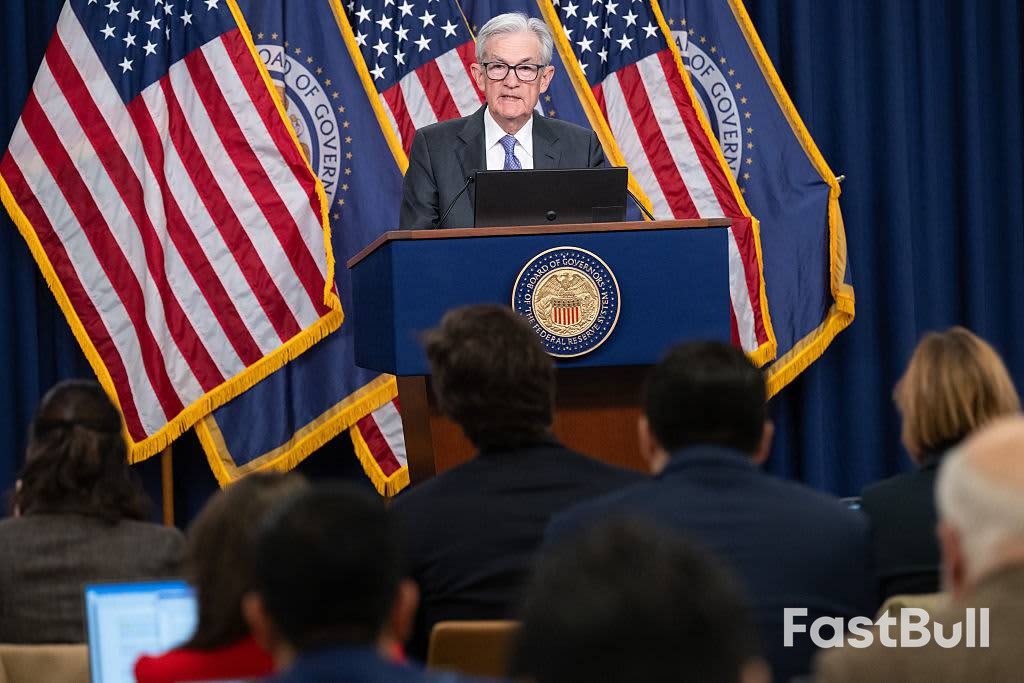
Fed Chair Jerome Powell reinforced this message during his press conference, adopting a hawkish tone while reiterating that a rate hike is not the committee's baseline expectation. He emphasized that upside risks to inflation and downside risks to employment have both eased, positioning the Fed to react to future data as needed.
The market reacted immediately to the Fed's confident stance.
• The benchmark 10-year Treasury yield rose 2.8 basis points to 4.249%.
• The 30-year Treasury yield increased by 2.6 basis points to 4.860%.
• The 2-year Treasury yield, which is highly sensitive to interest rate expectations, climbed 1.6 basis points to 3.585%.
Following the decision, interest rate futures adjusted, pricing in approximately 46 basis points of easing for 2026. This implies fewer than two standard quarter-point rate cuts, a decrease from the 53 basis points of cuts priced in just two weeks ago.
Chris Grisanti, chief market strategist at Mai Capital Management, suggested a more aggressive outlook. "With the market strong and the economy strengthening, I think there may be no cuts in 2026," he commented.
The decision to hold rates was not unanimous. Governor Christopher Waller and Governor Stephen Miran both dissented, advocating for a quarter-percentage-point rate cut. This dissent highlights a division within the Fed on the appropriate path forward.
The bond market's yield curve, a key indicator of economic expectations, also reacted to the news. The spread between 2-year and 10-year Treasury yields narrowed from 66.6 basis points to 65.2 basis points, a slight flattening. Earlier in the day, the curve had steepened to 67.8 basis points amid concerns about inflation linked to a declining dollar—a move seemingly encouraged by President Donald Trump. However, Treasury Secretary Scott Bessent later reaffirmed the administration's strong-dollar policy, calming those fears.
With the FOMC meeting concluded, market attention is turning to the future leadership of the central bank. Matthias Scheiber, head of the multi-asset team at Allspring Global Investments, noted that the announcement of the next Fed chair will be a major focus, with the race considered "wide open." The general expectation is that a more dovish successor will replace Powell when his term ends in May.
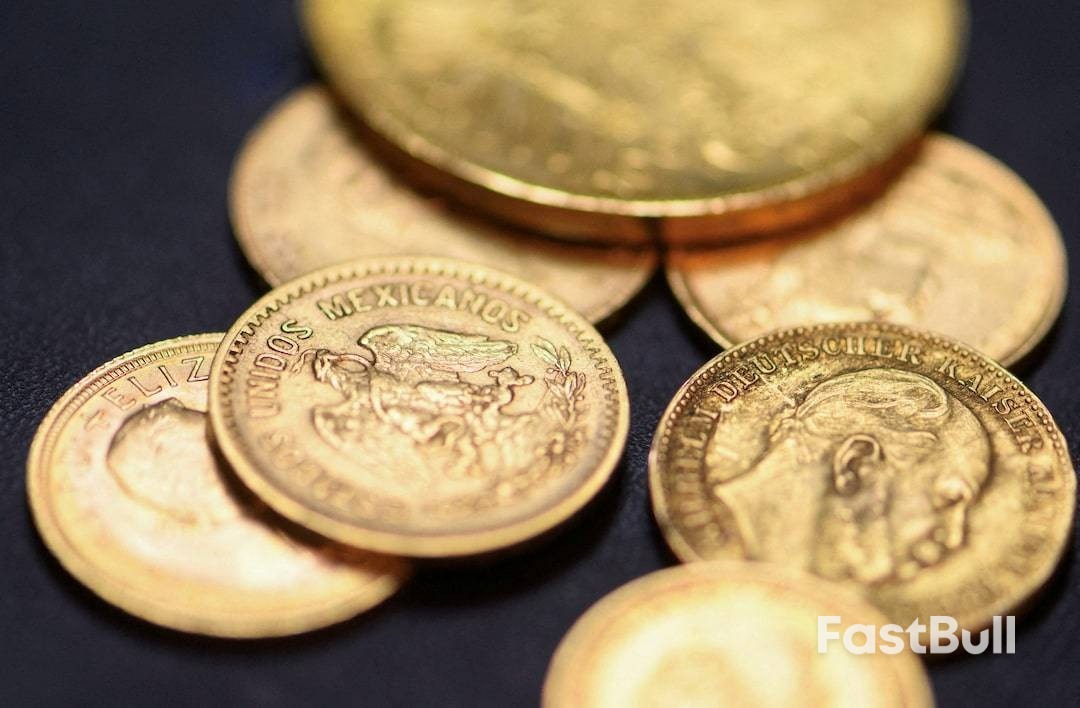
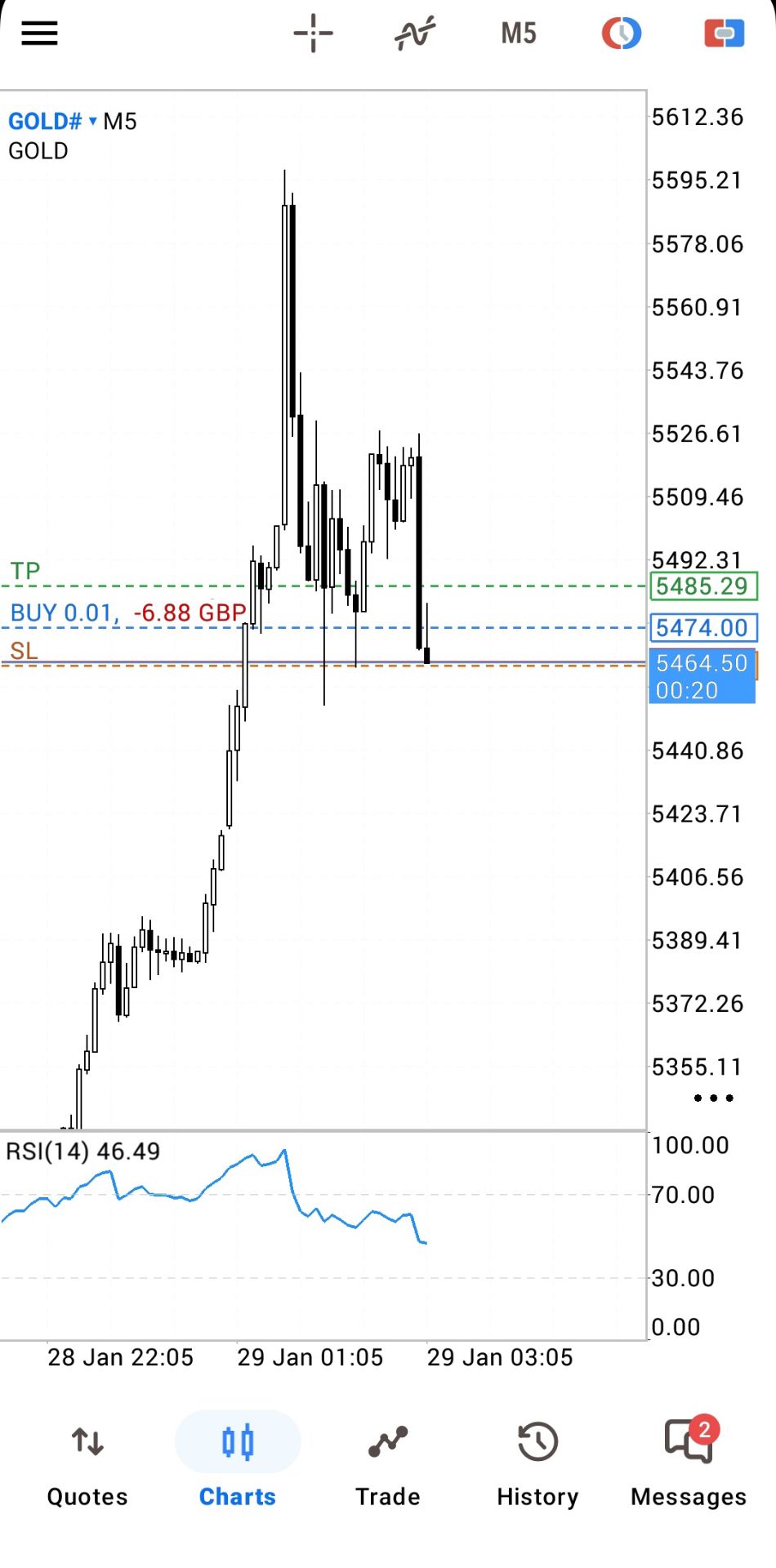
Jan 28 (Reuters) - Gold prices climbed above $5,300 per ounce for the first time on Wednesday, propelled by economic and geopolitical uncertainty, while markets absorbed the Federal Reserve's latest rate verdict.
Spot gold was up 2.2% at $5,301.60 an ounce by 2:40 p.m. ET (1940 GMT) after touching a record $5,325.56.
U.S. gold futures for February settled 4.3% higher at $5,303.60.
"The rally in the precious metals have kind of taken on a life of their own at this point," said Peter Grant, vice president and senior metals strategist at Zaner Metals.
Gold remains overbought and vulnerable to a correction, but strong buying interest during dips continues to favor the upside, with the next target projected at $5,400, Grant added.
The Fed held interest rates steady, citing still-elevated inflation alongside solid economic growth, but gave little indication in its latest policy statement of when borrowing costs might fall again.
Both Governor Christopher Waller, a contender to replace Fed Chair Jerome Powell when his term as central bank chief ends in May, and Governor Stephen Miran, on leave from his job as an economic adviser at the White House, dissented in favor of a quarter-percentage-point rate cut.


"Markets are just oscillating after the Fed statement... No suggestion that the Fed is in any hurry to move again," said Tai Wong, an independent metals trader.
Powell said inflation in December was likely still well above the central bank's 2% target. U.S. President Donald Trump said on Tuesday he would soon announce his pick to replace Powell.
Gold, a safe-haven asset that does not yield interest, typically performs well during periods of low rates. It has gained more than 20% since the start of the year, building on last year's record gains.
Meanwhile, crypto group Tether plans to allocate 10%–15% of its investment portfolio to physical gold, its CEO Paolo Ardoino said, adding to the bullion which it says already backs some of its products.
Spot silver rose 0.7% to $113.78 an ounce after hitting a record high of $117.69 on Monday. Prices gained nearly 60% so far this year.
"Number of silver indicators suggest prices may be due a correction in the short term," analysts at Standard Chartered said in a note.
Spot platinum fell 1% to $2,612.81, having hit a record $2,918.80 on Monday, while palladium rose 3.9% to $2,009.69.
Federal Reserve Chair Jerome Powell has offered his first public defense for attending a Supreme Court hearing concerning Fed Governor Lisa Cook, calling the case a pivotal moment for the central bank's independence.
Speaking at his press conference on Wednesday, Powell framed his controversial decision as a necessary stand. "That case is perhaps the most important legal case in the Fed's 113-year history," he stated. "As I thought about it, I thought it might be hard to explain why I didn't attend."

Powell's presence at the opening arguments last week drew criticism, most notably from Treasury Secretary Scott Bessent, who called the move a "mistake" that politicized the case.
The legal battle centers on whether President Donald Trump has the authority to fire Cook. This question has significant implications for a president's ability to remove central bank officials and exert control over monetary policy.
During the hearing, Supreme Court justices appeared skeptical of the claim that Trump was within his powers to remove Cook. Trump has officially cited mortgage fraud allegations as the reason for his action, but critics believe the move is linked to his public push for lower interest rates. The Supreme Court had previously allowed Cook to remain in her position while awaiting the oral arguments.
The attempted removal of Cook is not the only source of political pressure on the central bank. Earlier this month, Powell revealed he is facing a federal probe related to renovations at the Fed's headquarters.
Many observers have connected this investigation to Trump's repeated criticism of Powell for not cutting interest rates more quickly. Together, the criminal investigation and the attempt to oust a governor have fueled concerns that the Federal Reserve's long-held apolitical status is under threat.
During Wednesday's press conference, Powell emphasized that political separation is essential for the Fed's long-term credibility.
"The point of independence is not to protect policymakers or anything like that," Powell explained. "It just is that every advanced economy (and) democracy in the world has come around to this common practice."
He warned that if the central bank loses that separation, "it would be hard to restore the credibility of the institution."
With his own term as chair ending in May, Powell's comments carried an additional weight. He concluded with pointed advice for whoever might take his place next.
"Don't get pulled into elected politics," Powell urged. "Don't do it."
The Bitcoin and cryptocurrency markets are bracing for a pivotal moment as the U.S. Federal Reserve prepares to announce its first interest rate decision of 2026, followed by a press conference with Chairman Jerome Powell.
While the Fed is widely expected to keep its policy rate unchanged, the real focus is on the forward-looking signals from Powell, which could set the tone for digital assets in the coming months.
After implementing three consecutive interest rate cuts beginning in September of last year, the consensus is that the Fed will pause its easing cycle in January. The market anticipates the policy interest rate will hold steady in the 3.50–3.75 percent range.
The economic data supports a cautious stance. With U.S. inflation hovering around 2.7% and the job market showing signs of a slowdown, the central bank has reason to wait and assess incoming information before making its next move.
Olu Sonola, head of U.S. Economic Research at Fitch Ratings, noted that current inflation and employment dynamics will likely keep the Fed on hold during this meeting.
Key Timings for the Announcement
The Federal Reserve will release its decision on January 28, 2026, at 10:00 PM Turkish time. Chairman Jerome Powell is scheduled to begin his verbal statement and press conference thirty minutes later, at 10:30 PM.
Adding a layer of complexity is the political pressure from U.S. President Donald Trump, who has openly called for rate cuts to support economic growth. Trump recently stated that a "meaningful reduction" in interest rates is essential.
Despite this, the Fed is expected to prioritize its dual mandate of price stability and maximum employment. Economists are watching to see how Powell navigates this dynamic.
• Tim Duy, chief economist at SGH Macro Advisors, suggested Fed officials may adopt a strategy to "pause interest rate cuts and reassess if data changes."
• Karim Basta of III Capital Management believes Powell could signal that current interest rates are "at a good level for now."
• Bloomberg economists Anna Wong and Chris Collins warned that a pause could provoke a fresh wave of criticism from the White House.
With a rate hold largely priced in by the markets, investors will scrutinize every word from Chairman Powell's press conference for clues about the Fed's future trajectory. This meeting is particularly critical as it is the first since a subpoena was issued concerning building renovations.
Traders will be listening for Powell's commentary on several key issues:
• Future Rate Cuts: Does he leave the door open for a rate cut in March or beyond?
• Economic Outlook: What is his assessment of inflation and economic growth?
• Political Independence: How will he address Trump's calls for lower rates and defend the central bank's autonomy?
• Personal Future: What are his plans after his term ends in May?
Ultimately, Powell’s stance on these topics will provide the guidance that shapes the direction of Bitcoin and the broader cryptocurrency market.
U.S. Treasury prices fell on Wednesday, pushing the yield on the benchmark 10-year note up by 2.8 basis points to 4.251%. The move came as the Federal Reserve announced its widely expected decision to keep interest rates unchanged, and as investors appeared to favor gold over government debt as a primary safe-haven asset.
Bond prices trended lower for most of the session before recovering some ground near the close. While government bonds typically attract buyers during times of geopolitical turmoil, the continued surge in gold prices suggests the precious metal is currently the preferred hedge.
The main driver for the bond market was the Federal Reserve's decision to maintain the federal funds rate in its current target range of 3.50% to 3.75%. This move marks a pause after a series of three consecutive quarter-point rate reductions.
In its statement, the central bank cited "elevated uncertainty about the economic outlook" as the key reason for holding rates steady. Officials also reaffirmed their focus on the dual mandate of achieving maximum employment while ensuring inflation returns to its 2% long-term target.
A Divided Board: Two Governors Voted for a Cut
The decision to pause was not unanimous. Federal Reserve Governors Stephen I. Miran and Christopher J. Waller dissented from the majority, indicating they preferred another quarter-point rate cut.
Mike Fratantoni, SVP and Chief Economist at the Mortgage Bankers Association, commented that there seems to be a "clear and consistent majority in favor of a pause in this rate-cutting cycle."
He suggested this pause will likely continue "unless or until the job market weakens further." Fratantoni added, "With inflation remaining elevated, the FOMC majority does not seem in any rush to make further rate moves."
Market sentiment aligns with this view. According to CME Group's FedWatch Tool, investors currently expect the Fed to keep rates on hold until after Chairman Jerome Powell's term ends in May.
Looking ahead, traders will be closely watching several key economic reports on Thursday. The market's direction could be influenced by new data on weekly jobless claims, the U.S. trade deficit, and factory orders.
White Label
Data API
Web Plug-ins
Poster Maker
Affiliate Program
The risk of loss in trading financial instruments such as stocks, FX, commodities, futures, bonds, ETFs and crypto can be substantial. You may sustain a total loss of the funds that you deposit with your broker. Therefore, you should carefully consider whether such trading is suitable for you in light of your circumstances and financial resources.
No decision to invest should be made without thoroughly conducting due diligence by yourself or consulting with your financial advisors. Our web content might not suit you since we don't know your financial conditions and investment needs. Our financial information might have latency or contain inaccuracy, so you should be fully responsible for any of your trading and investment decisions. The company will not be responsible for your capital loss.
Without getting permission from the website, you are not allowed to copy the website's graphics, texts, or trademarks. Intellectual property rights in the content or data incorporated into this website belong to its providers and exchange merchants.
Not Logged In
Log in to access more features
Log In
Sign Up