Markets
News
Analysis
User
24/7
Economic Calendar
Education
Data
- Names
- Latest
- Prev



Signal Accounts for Members
All Signal Accounts
All Contests


U.K. Retail Sales MoM (SA) (Dec)A:--
F: --
P: --
France Manufacturing PMI Prelim (Jan)A:--
F: --
P: --
France Services PMI Prelim (Jan)A:--
F: --
P: --
France Composite PMI Prelim (SA) (Jan)A:--
F: --
P: --
Germany Manufacturing PMI Prelim (SA) (Jan)A:--
F: --
P: --
Germany Services PMI Prelim (SA) (Jan)A:--
F: --
P: --
Germany Composite PMI Prelim (SA) (Jan)A:--
F: --
P: --
Euro Zone Composite PMI Prelim (SA) (Jan)A:--
F: --
P: --
Euro Zone Manufacturing PMI Prelim (SA) (Jan)A:--
F: --
P: --
Euro Zone Services PMI Prelim (SA) (Jan)A:--
F: --
P: --
U.K. Composite PMI Prelim (Jan)A:--
F: --
P: --
U.K. Manufacturing PMI Prelim (Jan)A:--
F: --
P: --
U.K. Services PMI Prelim (Jan)A:--
F: --
P: --
Mexico Economic Activity Index YoY (Nov)A:--
F: --
P: --
Russia Trade Balance (Nov)A:--
F: --
P: --
Canada Core Retail Sales MoM (SA) (Nov)A:--
F: --
P: --
Canada Retail Sales MoM (SA) (Nov)A:--
F: --
U.S. IHS Markit Manufacturing PMI Prelim (SA) (Jan)A:--
F: --
P: --
U.S. IHS Markit Services PMI Prelim (SA) (Jan)A:--
F: --
P: --
U.S. IHS Markit Composite PMI Prelim (SA) (Jan)A:--
F: --
P: --
U.S. UMich Consumer Sentiment Index Final (Jan)A:--
F: --
P: --
U.S. UMich Current Economic Conditions Index Final (Jan)A:--
F: --
P: --
U.S. UMich Consumer Expectations Index Final (Jan)A:--
F: --
P: --
U.S. Conference Board Leading Economic Index MoM (Nov)A:--
F: --
P: --
U.S. Conference Board Coincident Economic Index MoM (Nov)A:--
F: --
P: --
U.S. Conference Board Lagging Economic Index MoM (Nov)A:--
F: --
P: --
U.S. UMich 1-Year-Ahead Inflation Expectations Final (Jan)A:--
F: --
P: --
U.S. Conference Board Leading Economic Index (Nov)A:--
F: --
P: --
U.S. Weekly Total Rig CountA:--
F: --
P: --
U.S. Weekly Total Oil Rig CountA:--
F: --
P: --
Germany Ifo Business Expectations Index (SA) (Jan)--
F: --
P: --
Germany IFO Business Climate Index (SA) (Jan)--
F: --
P: --
Germany Ifo Current Business Situation Index (SA) (Jan)--
F: --
P: --
U.S. Dallas Fed PCE Price Index YoY (Nov)--
F: --
P: --
Brazil Current Account (Dec)--
F: --
P: --
Mexico Unemployment Rate (Not SA) (Dec)A:--
F: --
P: --
Canada National Economic Confidence Index--
F: --
P: --
U.S. Non-Defense Capital Durable Goods Orders MoM (Excl. Aircraft) (Nov)--
F: --
P: --
U.S. Durable Goods Orders MoM (Excl. Defense) (SA) (Nov)--
F: --
P: --
U.S. Durable Goods Orders MoM (Excl.Transport) (Nov)--
F: --
P: --
U.S. Durable Goods Orders MoM (Nov)--
F: --
P: --
U.S. Chicago Fed National Activity Index (Nov)--
F: --
P: --
U.S. Dallas Fed New Orders Index (Jan)--
F: --
P: --
U.S. Dallas Fed General Business Activity Index (Jan)--
F: --
P: --
U.K. BRC Shop Price Index YoY (Jan)--
F: --
P: --
China, Mainland Industrial Profit YoY (YTD) (Dec)--
F: --
P: --
Mexico Trade Balance (Dec)--
F: --
P: --
U.S. S&P/CS 20-City Home Price Index YoY (Not SA) (Nov)--
F: --
P: --
U.S. S&P/CS 20-City Home Price Index MoM (SA) (Nov)--
F: --
P: --
U.S. FHFA House Price Index MoM (Nov)--
F: --
P: --
U.S. FHFA House Price Index (Nov)--
F: --
P: --
U.S. Richmond Fed Manufacturing Composite Index (Jan)--
F: --
P: --
U.S. Conference Board Present Situation Index (Jan)--
F: --
P: --
U.S. Conference Board Consumer Expectations Index (Jan)--
F: --
P: --
U.S. Richmond Fed Manufacturing Shipments Index (Jan)--
F: --
P: --
U.S. Richmond Fed Services Revenue Index (Jan)--
F: --
P: --
U.S. Conference Board Consumer Confidence Index (Jan)--
F: --
P: --
Australia RBA Trimmed Mean CPI YoY (Q4)--
F: --
P: --
Australia CPI YoY (Q4)--
F: --
P: --
Australia CPI QoQ (Q4)--
F: --
P: --


No matching data
Latest Views
Latest Views
Trending Topics
Top Columnists
Latest Update
White Label
Data API
Web Plug-ins
Affiliate Program
View All

No data
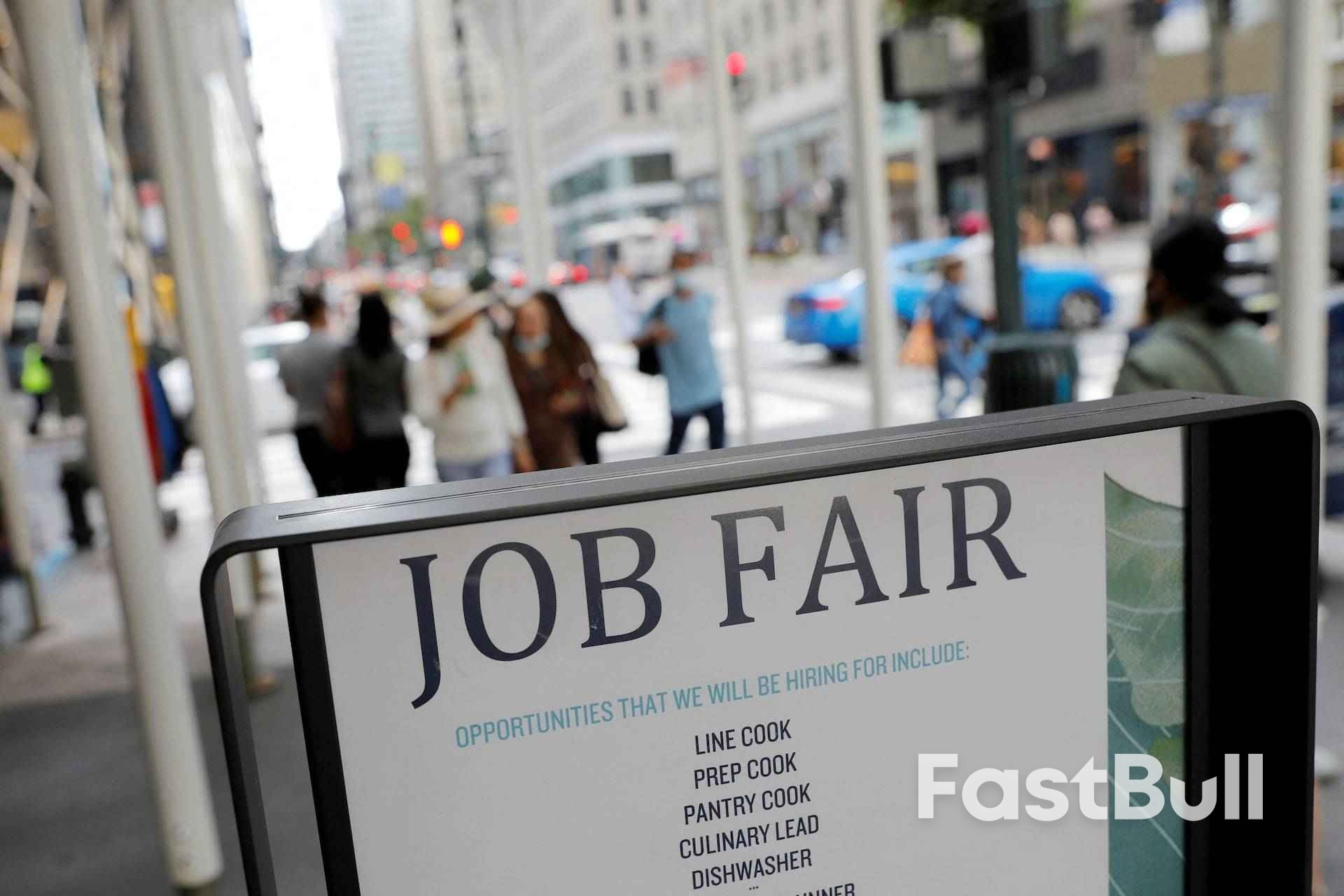
The number of Americans filing new applications for unemployment benefits unexpectedly fell last week, but that likely does not signal a material shift in the labor market, which remains in a holding pattern.
The number of Americans filing new applications for unemployment benefits unexpectedly fell last week, but that likely does not signal a material shift in the labor market, which remains in a holding pattern.
Initial claims for state unemployment benefits dropped 9,000 to a seasonally adjusted 198,000 for the week ended January 10, the Labor Department said on Thursday. Economists polled by Reuters had forecast 215,000 claims for the latest week.
The surprise drop in claims likely reflected continuing challenges adjusting the data for seasonal fluctuations around the year-end holiday season and the start of the year. There has been little change in labor market dynamics, with layoffs remaining low and hiring sluggish.
Economists say President Donald Trump's aggressive trade and immigration policies have reduced both demand for and supply of workers. Businesses are also unsure of their staffing needs as they invest heavily in artificial intelligence, curbing hiring.
The Federal Reserve's Beige Book report on Wednesday said "employment was mostly unchanged" in early January. The U.S. central bank said multiple districts "reported an increase in the usage of temporary workers, with one contact reporting this allows them 'to stay flexible in uncertain times'." When firms were hiring, it was "mostly to backfill vacancies rather than create new positions," the Fed added.
The government reported last week that nonfarm payrolls increased by 50,000 jobs in December. The economy added 584,000 jobs in 2025, the fewest in five years, averaging about 49,000 positions per month. The unemployment rate fell to 4.4% from 4.5% in November. But long-term unemployment remains prevalent.
The number of people receiving unemployment benefits after an initial week of aid, a proxy for hiring, decreased 19,000 to a seasonally adjusted 1.884 million during the week ended January 3, the claims report showed.
India's trade deficit edged up to $25 billion in December from $24.5 billion in November, but the figure remains well below the record $42 billion high seen in October. This stabilization is primarily driven by a sharp drop in gold imports and a modest recovery in exports. The country's oil trade balance has also shown continued improvement.

For the full year of 2025, the trade deficit expanded by $33 billion, with the non-oil trade balance contributing to nearly 85% of this increase.
A key trend emerging from recent data is the normalization of export growth, even with a steep 50% tariff imposed on exports to the United States. Indian exporters are actively diversifying their markets, with significant gains seen in trade with Africa and North Asia.
China is notably becoming a more important destination for Indian goods. While India has historically run a large trade deficit with China, exports to the neighboring country grew by approximately 20% year-on-year in 2025. Although China's 4% share of India's total exports is still small compared to the United States' 20% share, this growth signals a crucial move to reduce dependency on Western markets.
Further evidence of this Asia-centric strategy is the 10% increase in exports to Taiwan during the same period. Though not a major partner yet, this uptick points to a deeper integration of India's technology supply chains within the region.
Electronics has become the star performer in India's export basket, surging by an impressive 40% year-on-year through November 2025. This growth far outpaces that of other sectors.
A primary catalyst for this boom is the government's Production-Linked Incentive (PLI) scheme for smartphones. This policy has successfully attracted global giants like Apple and Samsung, who are leveraging the incentives to boost production and increase overseas shipments. Apple, for example, has established India as its second-largest iPhone manufacturing hub after China.
In contrast, petroleum exports have struggled, falling 15% year-on-year through November 2025. The cost advantage Indian refiners gained from access to inexpensive Russian crude is quickly diminishing due to U.S. sanctions. With this competitive edge gone, the sector's decline could accelerate.
The current account deficit is estimated to have widened to -2% of GDP in the fourth quarter of 2025, up from -1.3% in the third quarter. However, for the full year, the shortfall was a relatively modest -0.6% of GDP.
The Indian rupee ended 2025 as Asia's weakest currency, pressured by accelerating portfolio outflows from equity markets in December amid concerns over muted earnings and high valuations. The rupee's weakness also eroded currency-adjusted returns for bond investors, prompting foreign institutional outflows from debt markets.
Looking ahead, India is expected to secure lower tariff rates, which should help narrow the trade deficit and offer some support to the rupee over the next three to six months. Furthermore, the sharp decline in the rupee's real effective exchange rate should provide a buffer against further significant depreciation.
President Donald Trump announced on Wednesday that he would not impose tariffs on rare earths, lithium, and other critical minerals for now. Instead, he has directed his administration to pursue supply agreements with international trading partners.

The decision postpones duties that could disrupt the U.S. economy, particularly as the Supreme Court reviews the legality of existing Trump tariffs. However, the move acknowledges America's dependence on foreign mineral supplies, a point that may not sit well with the domestic mining sector.
President Trump has ordered U.S. Trade Representative Jamieson Greer and Commerce Secretary Howard Lutnick to begin negotiations with trading partners. The goal is to adjust critical mineral imports to ensure they do not "threaten to impair the national security of the United States."
A key objective of these talks is to promote the use of price floors for critical minerals. This is a long-standing goal for Western miners and policymakers, and it was a topic of discussion among G7 finance ministers and other major economies like Australia in Washington earlier this week.
If these negotiations prove unsuccessful, Trump stated he would then consider setting minimum import prices for critical minerals or "may take other measures," though he did not specify what those actions would be.
This new approach aligns with a recommendation from Commerce Secretary Lutnick, whose department launched a national security review last April under Section 232 of the Trade Expansion Act of 1962. Lutnick submitted his findings to the president in October.
Lutnick's report concluded that the U.S. has a "significant national security vulnerability that could be exploited by foreign actors." The report identified several key issues:
• The country is "too reliant on foreign sources" for critical minerals.
• The U.S. lacks access to a secure supply chain.
• The market is experiencing "unsustainable price volatility."
It was not immediately clear why the president waited until this month to act on the October report.
The administration's focus on supply chains highlights the dominance of countries like China. According to the U.S. Geological Survey, China is a top global producer of more than half of the 54 minerals classified as critical. Amid its trade dispute with Washington, China has also been curtailing exports and is a major refiner of these materials.
President Trump's order acknowledged this reality, stating, "Mining a mineral domestically does not safeguard the national security of the United States if the United States remains dependent on a foreign country for the processing of that mineral."
Gold prices steadied on Thursday, recovering from an earlier drop of nearly 1% as investors weighed easing tensions with Iran against persistent geopolitical concerns elsewhere.
Spot gold was flat at $4,619.54 per ounce after hitting a record high of $4,642.72 on Wednesday. The initial dip in the session followed comments from U.S. President Donald Trump suggesting he might pause military action against Iran, which temporarily dampened demand for safe-haven assets. U.S. gold futures for February delivery also fell 0.3% to $4,623.80.
Despite the brief pullback, market sentiment for gold remains strong. Fawad Razaqzada, a market analyst at City Index and FOREX.com, noted that traders are eager to enter the market on any weakness. "Momentum is really strong and people are happy to step on the dips and buy any dip they can get their hands on," he said.
This underlying support is fueled by ongoing geopolitical uncertainty. Trump reiterated on Wednesday that the U.S. needs Greenland and cannot rely on Denmark to protect the island. In a separate development, the United States began withdrawing some personnel from key military bases in the Middle East as a precautionary measure amid regional tensions.
At the White House, Trump adopted a more cautious stance on Iran, stating he was told that the crackdown on protests there was easing. He also decided against imposing tariffs on rare earths, lithium, and other critical minerals for now, ordering his administration to seek supplies from international partners instead.
Gold traditionally performs well during periods of economic and geopolitical instability, as well as in low-interest-rate environments.
Market participants are currently focused on the U.S. Federal Reserve's policy direction. While the Fed is expected to hold interest rates steady at its January 27-28 meeting, markets are pricing in the possibility of at least two 25-basis-point rate cuts later this year.
Other precious metals pulled back from their recent highs.
• Spot Silver: Slid 1.7% to $91.22 per ounce after reaching an all-time high of $93.57 earlier in the session. Ole Hansen, head of commodity strategy at Saxo Bank, suggested a market normalization could see silver fall by a third relative to gold, pushing the gold-silver ratio to 70.
• Spot Platinum: Receded 0.6% to $2,369.02 per ounce, down from its record peak of $2,478.50 on December 29.
• Palladium: Lost 1.1% to trade at $1,806.75 per ounce.

Political

Commodity

Remarks of Officials

Economic

Middle East Situation

Energy

China–U.S. Trade War

Daily News
China's Foreign Minister Wang Yi has conveyed Beijing's firm opposition to the use of military force in a direct phone call with his Iranian counterpart, Abbas Araghchi. The conversation on Thursday marks China's first public engagement with Tehran since recent violent protests in Iran drew threats of a military response from the United States.
During the call, Wang emphasized China's consistent commitment to international law and its rejection of unilateral actions. According to a statement from China's Ministry of Foreign Affairs, he warned against a global return to the "law of the jungle," where powerful nations impose their will on others.
Wang added that Beijing hopes all involved parties will prioritize peace and offered to play a constructive role in de-escalating the situation.
The diplomatic exchange comes after a volatile week for global markets. President Donald Trump initially heightened tensions by threatening military strikes against Iran in response to its government's crackdown on widespread protests.
However, by Wednesday, Trump signaled a potential de-escalation, suggesting he might hold off on an attack for now. This reversal of tone immediately triggered a large decline in oil prices.
Inside Iran, authorities claim to have regained control after protests saw hundreds of thousands take to the streets last week. The government has accused the United States and Israel of fueling the unrest and arming terrorists.
The situation carries significant economic risks beyond the immediate military threat. On Monday, President Trump announced new tariffs on goods from countries trading with Iran. This policy directly impacts China, which stands as the world's top buyer of Iranian oil, and could risk derailing the one-year trade truce between Washington and Beijing.
Ukraine is grappling with a severe energy emergency triggered by Russian airstrikes and a harsh cold snap, even as diplomatic pressure mounts over stalled peace negotiations. President Volodymyr Zelenskyy has declared a state of emergency, while both the Kremlin and U.S. President Donald Trump have signaled that Kyiv is the primary obstacle to a potential deal.
President Volodymyr Zelenskyy announced a state of emergency in Ukraine's energy sector, citing a combination of Russian airstrikes and severe winter weather. In a video address, he confirmed discussions with the newly appointed Energy Minister, Denys Shmyhal, on Wednesday to address the crisis.
The situation is particularly critical in major cities like Kyiv, Odesa, and Dnipro, which have been hard-hit by power outages. Nighttime temperatures in parts of the country have plummeted to as low as -20°C (-4°F). Zelenskyy noted that other cities, such as Kharkiv, had implemented more timely measures to manage the impact.

In response, Ukraine is deploying heated emergency tent shelters where residents can find warmth, hot drinks, and power to charge essential devices like mobile phones.

According to Zelenskyy, the emergency declaration provides the legal flexibility to bypass bureaucracy and streamline relief efforts. Regional leaders have been instructed to accelerate the connection of backup energy sources to the grid and facilitate power imports from abroad.
Energy Minister Shmyhal, a key ally of Zelenskyy, previously served as prime minister for about five years before moving to the Defense Ministry and now to his current role.
While Ukraine battles the energy crisis, its government faces increasing pressure from Washington and Moscow to engage in peace talks on terms it has so far rejected.
Trump Blames Ukraine for Stalled Negotiations
U.S. President Donald Trump told the Reuters agency that his Ukrainian counterpart, Volodymyr Zelenskyy, is the main impediment to a peace deal, not Russian President Vladimir Putin.
"I think he's ready to make a deal," Trump said of Putin. "I think Ukraine is less ready to make a deal." When asked why negotiations had not yet resolved the conflict, Trump simply responded: "Zelenskyy."
This assessment contrasts sharply with the position of European allies, who have consistently questioned Putin's willingness to engage in serious negotiations for a just peace.
Kremlin Warns Kyiv's Window for Talks is "Narrowing"
The Kremlin has echoed Trump's sentiment. On Thursday, spokesman Dmitry Peskov told reporters he agreed with the U.S. President's comments.
"President Putin and the Russian side remain open [to talks]," Peskov stated. "The Russian position is well known. It is well known to the American negotiators, to President Trump, and to the leadership of the Kyiv regime."
Peskov claimed the situation for Kyiv is "deteriorating day by day" and warned that Ukraine's "corridor for decision-making" in the negotiating process was "narrowing."
Currently, Russia seeks to retain the territory it occupies—approximately 20% of Ukraine's internationally recognized landmass—and demands that Ukrainian troops withdraw from other contested regions. Ukraine has suggested it might consider halting the fighting along current front lines in exchange for Western security guarantees. However, President Zelenskyy has repeatedly and publicly ruled out any territorial concessions to Russia.
The United States is gathering foreign ministers from allied nations for a major meeting next month aimed at reducing their collective dependence on critical minerals from China.
The summit, scheduled for February 4, will be hosted by Secretary of State Marco Rubio and will focus on strategies for diversifying and strengthening mineral supply chains.
Washington has made ending its reliance on Chinese critical minerals a top priority since last year. The push gained momentum after Beijing announced export restrictions on rare earths, a move that highlighted significant vulnerabilities in global supply chains.
Although the restrictions were delayed for a year following a deal between Presidents Donald Trump and Xi Jinping last October, American officials are now determined to make swift progress, according to European diplomats.
To accelerate the shift away from China, the U.S. has been urging individual European Union member states to sign bilateral memorandums of understanding.
However, this approach has met resistance from the European Commission, which has called on EU countries to maintain a unified front in negotiations. Sources familiar with the discussions say the talks have not been easy, and an initial deadline to conclude negotiations with European nations by January 22 is now unlikely to be met.
Adding to the complexity, some allied countries are reportedly confused about who serves as the main point person for critical mineral policy within the U.S. administration. Secretary of State Rubio, Treasury Secretary Scott Bessent, and Trade Representative Jamieson Greer have all played roles in the discussions.
Despite the challenges, the objective remains clear. "It's no secret we need more resilient supply chains for critical minerals," said Greer, adding that the goal is "to create an economically viable market for critical minerals" by working with partner countries.
The effort involves multiple departments, as demonstrated on Monday when Bessent discussed the issue with finance ministers from several allied nations in Washington.
White Label
Data API
Web Plug-ins
Poster Maker
Affiliate Program
The risk of loss in trading financial instruments such as stocks, FX, commodities, futures, bonds, ETFs and crypto can be substantial. You may sustain a total loss of the funds that you deposit with your broker. Therefore, you should carefully consider whether such trading is suitable for you in light of your circumstances and financial resources.
No decision to invest should be made without thoroughly conducting due diligence by yourself or consulting with your financial advisors. Our web content might not suit you since we don't know your financial conditions and investment needs. Our financial information might have latency or contain inaccuracy, so you should be fully responsible for any of your trading and investment decisions. The company will not be responsible for your capital loss.
Without getting permission from the website, you are not allowed to copy the website's graphics, texts, or trademarks. Intellectual property rights in the content or data incorporated into this website belong to its providers and exchange merchants.
Not Logged In
Log in to access more features
Log In
Sign Up