• Trade
  • Markets
  • Copy
  • Contests
  • News
  • 24/7
  • Calendar
  • Q&A
  • Chats
Trending
Screeners
SYMBOL
LAST
BID
ASK
HIGH
LOW
NET CHG.
%CHG.
SPREAD
SPX
S&P 500 Index
6966.29
6966.29
6966.29
6978.37
6917.65
+44.83
+ 0.65%
--
DJI
Dow Jones Industrial Average
49504.06
49504.06
49504.06
49571.41
49197.06
+237.96
+ 0.48%
--
IXIC
NASDAQ Composite Index
23671.34
23671.34
23671.34
23721.15
23426.48
+191.33
+ 0.81%
--
USDX
US Dollar Index
98.860
98.940
98.860
98.980
98.600
+0.290
+ 0.29%
--
EURUSD
Euro / US Dollar
1.16309
1.16389
1.16309
1.16618
1.16179
-0.00271
-0.23%
--
GBPUSD
Pound Sterling / US Dollar
1.33930
1.34121
1.33930
1.34505
1.33922
-0.00468
-0.35%
--
XAUUSD
Gold / US Dollar
4509.15
4509.15
4509.15
4517.06
4452.75
+31.36
+ 0.70%
--
WTI
Light Sweet Crude Oil
58.641
58.670
58.641
59.589
57.491
+0.393
+ 0.67%
--

Community Accounts

Signal Accounts
--
Profit Accounts
--
Loss Accounts
--
View More

Become a signal provider

Sell trading signals to earn additional income

View More

Guide to Copy Trading

Get started with ease and confidence

View More

Signal Accounts for Members

All Signal Accounts

Best Return
  • Best Return
  • Best P/L
  • Best MDD
Past 1W
  • Past 1W
  • Past 1M
  • Past 1Y

All Contests

  • All
  • Trump Updates
  • Recommend
  • Stocks
  • Cryptocurrencies
  • Central Banks
  • Featured News
Top News Only
Share

[US Media Reports: At Least 4 Of The 16 Tomahawk Missiles Fired By The US Military Failed To Detonate] US President Trump Stated On December 25th That The US Launched A "powerful And Deadly" Strike Against ISIS Terrorists In Northwestern Nigeria. According To The Latest Report From The Washington Post, At Least Four Of The 16 Tomahawk Missiles Fired By The US Military Appear To Have Failed To Detonate, Raising Questions About The Effectiveness Of The Operation And The Intelligence Supporting It

Share

[Probability Of Trump Being Impeached Again During His Term Rises To 57%] January 11Th, According To Information From The Kalshi Platform, The Probability Of Trump Being Impeached Again During His 2025-2029 Term Has Risen To 57%, Reaching A New All-Time High.Previously, Trump Stated That If The Democratic Party Were To Achieve A Major Victory In The 2026 Midterms, He Might Face A New Impeachment Attempt

Share

Iran's Police Chief Radan Says The Level Of Confrontation With Rioters Has Been Stepped Up

Share

Iran's Parliament Speaker Warns USA President Any Attack Will Lead To Tehran Striking Israel And Regional USA Bases As 'Legitimate Targets'

Share

Governor: One Civilian Dead After Ukrainian Drone Attack On Russia's Voronezh

Share

[Order Gradually Returning To Venezuela's Capital] A Week Has Passed Since The US Raided Caracas, The Venezuelan Capital, On January 3 And Forcibly Took President Maduro And His Wife Into Custody. CCTV Reporters Observed On The Streets Of Caracas That Traffic Is Generally Stable, With A Significant Increase In Vehicle Volume. Local Residents Told Reporters That US Interference Will Not Deprive Venezuelans Of Their Motivation To Continue Developing

Share

Three Israeli Sources Who Attended Israeli Security Talks: Israel Is On High Alert For The Possibility Of Any USA Intervention In Iran

Share

EU Demands 'Farage Clause' As Part Of Brexit Reset Talks With Britain - Ft

Share

[Mass Shooting In Mississippi] Mississippi Police Said On January 10 That A Series Of Shootings In Clay County, Mississippi, On The Evening Of January 9 Left At Least Six People Dead, Including A Child. One Suspect Has Been Arrested. Police Said The Incidents Occurred In A Rural Community In West Point, Clay County, Where A 24-year-old Man Named Darika Moore Opened Fire At Three Different Locations. The Motive Is Currently Unclear. Moore Has Been Charged With First-degree Murder

Share

Rubio And Netanyahu Discuss Iran, Syria And Gaza, Axios Reports

Share

[A Whale Moves $2.2M Worth Of Trump To Binance, Anticipates Over 50% Loss] January 11Th, According To Onchainschool.Pro Monitoring, Early This Morning, A Wallet Transferred $2.2 Million Worth Of Trump To Binance. Most Of These Tokens Were Withdrawn From A Cex About 8 Months Ago. The Actual Estimated Loss Is Expected To Be $2.5 Million

Share

Bill Pulte, Head Of The Federal Housing Finance Agency (FhFA), Stated That An Investigation Is Needed Into The Issue Of Reduced Inventory At Housing Developer Kb Home

Share

[Grok AI-generated Pornographic Images Controversy Escalates; Musk Accuses UK Government Of Being "fascist"] Following The UK's Further Threat To Ban X Due To The Creation Of Sexually Suggestive Images Of Women And Children By The AI ​​tool Grok, Elon Musk Accused The UK Government Of Being "fascist." Regarding A Chart Claiming That The UK Has The Highest Number Of Arrests Globally For Social Media Posts, Musk Posted, "Why Is The UK Government So Fascist?" In Several Other Posts A Few Hours Earlier, He Also Said That The UK Wanted To "crack Down On Freedom Of Speech" And Referred To The Country As A "prison Island."

Share

Governor: Ukrainian Drone Attack Injures Four, Damages Buildings In Russia's Voronezh

Share

Bessent: US May Lift More Venezuela Sanctions Next Week

Share

Bessent: USA Is Willing To Convert Venezuela's IMF Special Drawing Rights To Dollars To Aid Reconstruction

Share

Bessent: Chevron Has Been In Venezuela A Long Time, Expect Its Commitment To Increase Greatly

Share

North Korea's Supreme Leader Kim Yo Jong Says South Korea Still Needs To Explain About Drone Incidents

Share

North Korea's Supreme Leader Kim Yo Jong Says It Is Wise Decision That South Korea Does Not Have Intent To Provoke

Share

USA Military Says It Conducted Large-Scale Strikes Against Multiple ISIS Targets Across Syria

TIME
ACT
FCST
PREV
U.S. Average Hourly Wage MoM (SA) (Dec)

A:--

F: --

P: --
U.S. Average Weekly Working Hours (SA) (Dec)

A:--

F: --

P: --

U.S. New Housing Starts Annualized MoM (SA) (Oct)

A:--

F: --

P: --
U.S. Total Building Permits (SA) (Oct)

A:--

F: --

P: --

U.S. Building Permits MoM (SA) (Oct)

A:--

F: --

P: --

U.S. Annual New Housing Starts (SA) (Oct)

A:--

F: --

P: --
U.S. U6 Unemployment Rate (SA) (Dec)

A:--

F: --

P: --

U.S. Manufacturing Employment (SA) (Dec)

A:--

F: --

P: --
U.S. Labor Force Participation Rate (SA) (Dec)

A:--

F: --

P: --

U.S. Private Nonfarm Payrolls (SA) (Dec)

A:--

F: --

P: --
U.S. Unemployment Rate (SA) (Dec)

A:--

F: --

P: --
U.S. Nonfarm Payrolls (SA) (Dec)

A:--

F: --

P: --
U.S. Average Hourly Wage YoY (Dec)

A:--

F: --

P: --
Canada Full-time Employment (SA) (Dec)

A:--

F: --

P: --

Canada Part-Time Employment (SA) (Dec)

A:--

F: --

P: --

Canada Unemployment Rate (SA) (Dec)

A:--

F: --

P: --

Canada Labor Force Participation Rate (SA) (Dec)

A:--

F: --

P: --

U.S. Government Employment (Dec)

A:--

F: --

P: --

Canada Employment (SA) (Dec)

A:--

F: --

P: --

U.S. UMich Consumer Expectations Index Prelim (Jan)

A:--

F: --

P: --

U.S. UMich Consumer Sentiment Index Prelim (Jan)

A:--

F: --

P: --

U.S. UMich Current Economic Conditions Index Prelim (Jan)

A:--

F: --

P: --

U.S. UMich 1-Year-Ahead Inflation Expectations Prelim (Jan)

A:--

F: --

P: --

U.S. UMich 5-Year-Ahead Inflation Expectations Prelim YoY (Jan)

A:--

F: --

P: --

U.S. 5-10 Year-Ahead Inflation Expectations (Jan)

A:--

F: --

P: --

China, Mainland M1 Money Supply YoY (Dec)

--

F: --

P: --

China, Mainland M0 Money Supply YoY (Dec)

--

F: --

P: --

China, Mainland M2 Money Supply YoY (Dec)

--

F: --

P: --

U.S. Weekly Total Oil Rig Count

A:--

F: --

P: --

U.S. Weekly Total Rig Count

A:--

F: --

P: --

Indonesia Retail Sales YoY (Nov)

--

F: --

P: --

Euro Zone Sentix Investor Confidence Index (Jan)

--

F: --

P: --

India CPI YoY (Dec)

--

F: --

P: --

Germany Current Account (Not SA) (Nov)

--

F: --

P: --

Canada National Economic Confidence Index

--

F: --

P: --

FOMC Member Barkin Speaks
U.S. 3-Year Note Auction Yield

--

F: --

P: --

U.S. 10-Year Note Auction Avg. Yield

--

F: --

P: --

Japan Trade Balance (Customs Data) (SA) (Nov)

--

F: --

P: --

Japan Trade Balance (Nov)

--

F: --

P: --

U.K. BRC Overall Retail Sales YoY (Dec)

--

F: --

P: --

U.K. BRC Like-For-Like Retail Sales YoY (Dec)

--

F: --

P: --

Turkey Retail Sales YoY (Nov)

--

F: --

P: --

U.S. NFIB Small Business Optimism Index (SA) (Dec)

--

F: --

P: --

Brazil Services Growth YoY (Nov)

--

F: --

P: --

Canada Building Permits MoM (SA) (Nov)

--

F: --

P: --

U.S. CPI MoM (SA) (Dec)

--

F: --

P: --

U.S. CPI YoY (Not SA) (Dec)

--

F: --

P: --

U.S. Real Income MoM (SA) (Dec)

--

F: --

P: --

U.S. CPI MoM (Not SA) (Dec)

--

F: --

P: --

U.S. Core CPI (SA) (Dec)

--

F: --

P: --

U.S. Core CPI YoY (Not SA) (Dec)

--

F: --

P: --

U.S. Core CPI MoM (SA) (Dec)

--

F: --

P: --

U.S. Weekly Redbook Index YoY

--

F: --

P: --

U.S. New Home Sales Annualized MoM (Oct)

--

F: --

P: --

U.S. Annual Total New Home Sales (Oct)

--

F: --

P: --

U.S. Cleveland Fed CPI MoM (SA) (Dec)

--

F: --

P: --

China, Mainland Imports YoY (CNH) (Dec)

--

F: --

P: --

China, Mainland Trade Balance (CNH) (Dec)

--

F: --

P: --

China, Mainland Imports YoY (USD) (Dec)

--

F: --

P: --

China, Mainland Exports YoY (USD) (Dec)

--

F: --

P: --

Q&A with Experts
    • All
    • Chatrooms
    • Groups
    • Friends
    mukesh jha flag
    BABA MEANS ALIBABA
    RPGFX flag
    mukesh jha
    BABA MEANS ALIBABA
    @mukesh jhaYeah, BABA stocks is the symbol for shares in Alibaba
    EuroTrader flag
    mukesh jha
    BABA MEANS ALIBABA
    @mukesh jhaohh i can see, ive not really even opened alibab stock since i started trading six years ago
    RPGFX flag
    Wu Frank
    What do you think of BABA stock?
    @Wu FrankBased on analysts, this is a time for strong buy on BABA stock
    RPGFX flag
    RPGFX flag
    RPGFX
    43 out of 56 analysts indicate a strong buy and 8 out of the rest are on a buy, 3 are on neutral and just 1 on a strong sell with non on sell, so buying chances are very very high @Wu Frank
    RPGFX flag
    RPGFX flag
    RPGFX
    @Wu Frank However the 4 hour technicals an chart patterns indicate a sell but not strong sell
    RPGFX flag
    Wu Frank
    Is it a good time to buy now?
    Just hold on and check again later this week for when the technicals turn bullish then you are good for an entry @Wu Frank
    3323469 flag
    fhdidss12
    3323469 flag
    poi99.5
    3323469 flag
    fuudiuyhg285
    3323469 flag
    fuduifygtfk45
    3323469 flag
    idfifuygiduhg25
    Nawhdir. Øt flag
    baba = father.
    mukesh jha flag
    Nawhdir. Øt
    baba = father.
    @Nawhdir. Øt GOD FATHER
    mukesh jha flag
    OLAKA KOLAKAA KIYA KARAKKA
    EuroTrader flag
    mukesh jha
    @mukesh jha and he is the lion, thr roar, the liquid metal, the indaboski bahose, the slayer of the markets and reaper of the broker
    mukesh jha flag
    mukesh jha flag
    ENJOY LIFE AND WIFE NO USE WTI OIL SIMPLE RULES ONLY FOR SOUL LOVE
    Type here...
    Add Symbol or Code

      No matching data

      All
      Trump Updates
      Recommend
      Stocks
      Cryptocurrencies
      Central Banks
      Featured News
      • All
      • Russia-Ukraine Conflict
      • Middle East Flashpoint
      • All
      • Russia-Ukraine Conflict
      • Middle East Flashpoint
      Search
      Products

      Charts Free Forever

      Chats Q&A with Experts
      Screeners Economic Calendar Data Tools
      Membership Features
      Data Warehouse Market Trends Institutional Data Policy Rates Macro

      Market Trends

      Market Sentiment Order Book Forex Correlations

      Top Indicators

      Charts Free Forever
      Markets

      News

      News Analysis 24/7 Columns Education
      From Institutions From Analysts
      Topics Columnists

      Latest Views

      Latest Views

      Trending Topics

      Top Columnists

      Latest Update

      Signals

      Copy Rankings Latest Signals Become a signal provider AI Rating
      Contests
      Brokers

      Overview Brokers Assessment Rankings Regulators News Claims
      Broker listing Forex Brokers Comparison Tool Live Spread Comparison Scam
      Q&A Complaint Scam Alert Videos Tips to Detect Scam
      More

      Business
      Events
      Careers About Us Advertising Help Center

      White Label

      Data API

      Web Plug-ins

      Affiliate Program

      Awards Institution Evaluation IB Seminar Salon Event Exhibition
      Vietnam Thailand Singapore Dubai
      Fans Party Investment Sharing Session
      FastBull Summit BrokersView Expo
      Recent Searches
        Top Searches
          Markets
          News
          Analysis
          User
          24/7
          Economic Calendar
          Education
          Data
          • Names
          • Latest
          • Prev

          View All

          No data

          Scan to Download

          Faster Charts, Chat Faster!

          Download App
          English
          • English
          • Español
          • العربية
          • Bahasa Indonesia
          • Bahasa Melayu
          • Tiếng Việt
          • ภาษาไทย
          • Français
          • Italiano
          • Türkçe
          • Русский язык
          • 简中
          • 繁中
          Open Account
          Search
          Products
          Charts Free Forever
          Markets
          News
          Signals

          Copy Rankings Latest Signals Become a signal provider AI Rating
          Contests
          Brokers

          Overview Brokers Assessment Rankings Regulators News Claims
          Broker listing Forex Brokers Comparison Tool Live Spread Comparison Scam
          Q&A Complaint Scam Alert Videos Tips to Detect Scam
          More

          Business
          Events
          Careers About Us Advertising Help Center

          White Label

          Data API

          Web Plug-ins

          Affiliate Program

          Awards Institution Evaluation IB Seminar Salon Event Exhibition
          Vietnam Thailand Singapore Dubai
          Fans Party Investment Sharing Session
          FastBull Summit BrokersView Expo

          US Set to Lift Venezuela Sanctions for Oil Trade

          Isaac Bennett

          Economic

          Remarks of Officials

          Commodity

          Political

          Energy

          Summary:

          Washington eyes lifting Venezuela oil sanctions next week, facilitating sales and financial system re-entry.

          The United States could begin lifting sanctions on Venezuela as soon as next week to facilitate oil sales, according to Treasury Secretary Scott Bessent. The move is part of a broader strategy to re-engage with the country following the capture of Venezuelan leader Nicolas Maduro.

          In an interview on Friday, Bessent stated the Treasury is examining changes that would allow the proceeds from oil sales—much of it currently stored on ships—to be repatriated to Venezuela.

          "We're de-sanctioning the oil that's going to be sold," he said. The administration's focus, he explained, is on how these funds "can help... run the government, run the security services and get it to the Venezuelan people."

          When asked about the timeline, Bessent confirmed that sanctions could be removed "as soon as next week," though he did not specify which measures would be lifted. This policy shift is central to the Trump administration's efforts to stabilize Venezuela and encourage the return of U.S. oil producers.

          IMF and World Bank Poised for Re-Engagement

          Alongside sanctions relief, the U.S. is pushing for Venezuela's reintegration into the global financial system. Bessent, who represents the U.S. at the International Monetary Fund and the World Bank, confirmed he will meet with the heads of both institutions next week to discuss their re-engagement with Venezuela.

          A key part of this plan involves unlocking nearly $5 billion of Venezuela's assets held at the IMF in the form of Special Drawing Rights (SDRs). Bessent said the Treasury would be willing to convert the country's 3.59 billion SDRs, valued at approximately $4.9 billion, into dollars to help rebuild the economy. These assets are currently inaccessible to Venezuela.
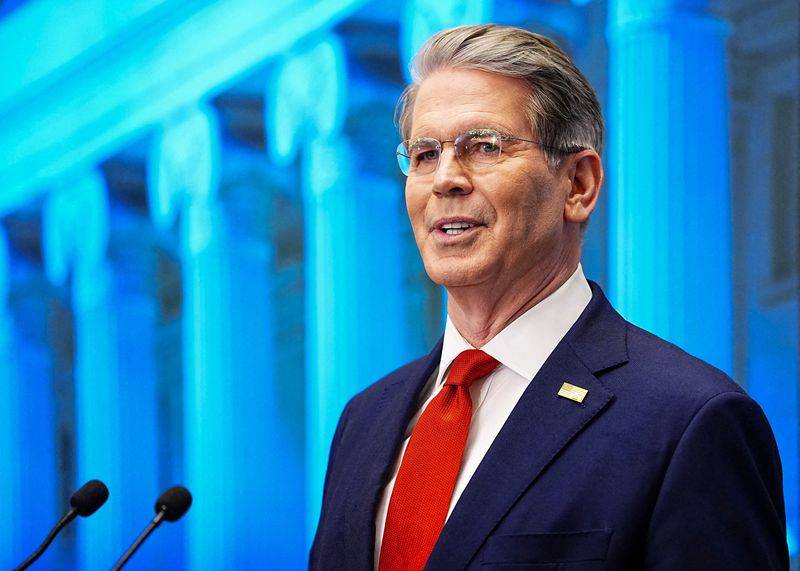
          U.S. Treasury Secretary Scott Bessent outlines the administration's economic plans for Venezuela.

          This approach mirrors a previous U.S. action, when the Treasury backed a $20 billion swap line for Argentina using its SDRs to stabilize the peso. An IMF spokesperson confirmed the fund is monitoring developments in Venezuela but declined to comment on the upcoming meeting.

          Overcoming Decades of Financial Isolation

          Venezuela has been largely cut off from international financial institutions for years. The IMF has not completed a formal economic assessment of the country since 2004, and Venezuela paid off its last World Bank loan in 2007 under the late Hugo Chavez.

          Current U.S. sanctions have been a major impediment to restructuring the country's complex $150 billion debt, as they prohibit international banks from dealing with the Venezuelan government without a license.

          In a related move, President Donald Trump signed an executive order on Friday to safeguard Venezuelan oil revenues held in U.S. Treasury accounts. The order blocks courts or creditors from seizing these funds, stating they should be used to help create "peace, prosperity and stability" in Venezuela.

          A source familiar with internal discussions at the World Bank said the lender is in the early stages of exploring how it can assist, noting its rapid support for countries like Afghanistan and Syria after regime changes.

          Who Will Re-Enter Venezuela's Oil Sector?

          Bessent expressed confidence that smaller, privately held companies would be the first to re-enter Venezuela's oil sector. "I think it's going to be the typical progression where the private companies can move quickly and will come in very quickly," he said, noting they have not raised financing concerns.

          While some major oil companies like Exxon Mobil remain hesitant due to past nationalizations of their assets, Bessent believes others will expand their presence. "Chevron has been there a long time and will continue to be there, so I believe that their commitment will greatly increase," he stated.

          He also echoed comments from U.S. Energy Secretary Chris Wright, suggesting a role for the U.S. Export-Import Bank in guaranteeing financing for the recovering oil sector.

          To stay updated on all economic events of today, please check out our Economic calendar
          Risk Warnings and Disclaimers
          You understand and acknowledge that there is a high degree of risk involved in trading. Following any strategies or investment methods may lead to potential losses. The content on the site is provided by our contributors and analysts for information purposes only. You are solely responsible for determining whether any trading assets, securities, strategy, or any other product is suitable for investing based on your own investment objectives and financial situation.
          Add to Favorites
          Share

          Trump Backs Iran Protests as US Weighs Military Strike Options

          Kevin Du

          Economic

          Cryptocurrency

          Remarks of Officials

          Commodity

          Political

          Stocks

          Middle East Situation

          Former President Donald Trump declared that the United States "stands ready to help" Iranians pursuing freedom, a statement that surfaced just as reports revealed senior U.S. officials have been holding preliminary discussions about potential military action against Iran.

          In a post on Truth Social, Trump described Iran as "looking at FREEDOM, perhaps like never before." This public show of support coincided with a Wall Street Journal report detailing private conversations among administration officials about potential attack scenarios, including possible targets for an aerial strike on Iranian military facilities.

          However, U.S. officials familiar with the discussions emphasized that these talks are in their early stages and do not signal an impending decision to attack. No military forces have been repositioned, and the planning remains conceptual rather than operational.

          Widespread Unrest and US Support

          Trump's comments come amid some of the most widespread protests Iran has seen in years. Demonstrations have erupted across major cities, fueled by discontent over economic conditions and political repression. The government has responded with force, leading to hundreds of arrests and a rising death toll. Internet blackouts have also complicated independent reporting from within the country.

          The former president's message echoes similar sentiments from other U.S. lawmakers. Republican Senator Ted Cruz noted that American public opinion is broadly behind the Iranian demonstrators and credited Trump with reinforcing this supportive stance.

          Inside the Pentagon's Contingency Planning

          According to the reports, one military option being considered involves large-scale aerial strikes against Iranian military installations. Officials stressed that there is no consensus on this approach and that such preliminary discussions are a standard part of contingency planning for global hotspots, not a sign of imminent conflict.

          Strategic planners regularly develop options for potential conflicts. However, moving from a conceptual plan to an approved military operation involves multiple layers of review, including detailed assessments of the potential repercussions for regional stability, diplomatic fallout, and legal justification.

          Market Impact: Geopolitical Risk and Asset Volatility

          Heightened geopolitical risk has historically been a major driver of volatility in financial markets, affecting everything from commodities and equities to digital assets.

          During past periods of tension in the Middle East, risk-sensitive assets like Bitcoin have often moved in correlation with traditional markets as investors adopt a "risk-off" posture. However, analysts note that cryptocurrency markets can behave differently from traditional assets during such events. Some episodes have shown initial sell-offs followed by a recovery as the broader macroeconomic picture evolves. This reflects the dual identity of assets like Bitcoin, which can function as both a risk asset and a potential hedge depending on wider financial dynamics.

          A History of Tense US-Iran Relations

          The current tensions are rooted in a long history of conflict between the U.S. and Iran over issues like nuclear proliferation, regional influence, and proxy wars. Previous military actions, including strikes on Iranian nuclear and military sites, have led to retaliation and prolonged regional instability.

          Iran's leadership has consistently stated that it does not seek war with the United States or its allies, while also asserting its readiness to defend itself. Diplomatic channels have also been explored, including negotiations in 2025 that focused on limiting Iran's nuclear program in exchange for sanctions relief, though these talks did not result in a lasting agreement.

          An Uncertain Path Forward

          For now, discussions about a potential military strike remain in their early stages, and Trump's public statements fall short of any operational commitment. The administration continues to position itself as a supporter of the Iranian protest movement while navigating the complex realities of regional security and global diplomacy.

          As the situation evolves, financial markets, including the cryptocurrency sector, will likely continue to price in the possibility of either military escalation or a diplomatic resolution, highlighting how distant political developments can shape financial conditions worldwide.

          To stay updated on all economic events of today, please check out our Economic calendar
          Risk Warnings and Disclaimers
          You understand and acknowledge that there is a high degree of risk involved in trading. Following any strategies or investment methods may lead to potential losses. The content on the site is provided by our contributors and analysts for information purposes only. You are solely responsible for determining whether any trading assets, securities, strategy, or any other product is suitable for investing based on your own investment objectives and financial situation.
          Add to Favorites
          Share

          Trump Order Shields Venezuelan Oil Funds from Creditors

          Isaac Bennett

          Energy

          Economic

          Commodity

          Political

          President Donald Trump has signed an executive order declaring a national emergency to control the proceeds from future sales of Venezuelan oil. The directive is designed to block creditors and other claimants from seizing the revenue.

          According to a White House fact sheet, the order safeguards Venezuelan oil revenue held in U.S. Treasury accounts. It prevents the money from being used to satisfy debts or other legal claims lodged against the Latin American country.

          Protecting 'Sovereign Property'

          The executive order affirms that the funds are the "sovereign property of Venezuela," even when held in U.S. custody for diplomatic and governmental purposes. This designation, the White House stated, makes the revenue not subject to private claims.

          The stated goal is to ensure the funds are preserved to advance U.S. foreign policy objectives.

          How the Oil Revenue Will Be Used

          The Trump administration has announced its intention to use the proceeds from Venezuelan oil sales to benefit both the Venezuelan and American people. The initial sales are expected to involve what the president has claimed to be 30 million to 50 million barrels of crude.

          These sales are also meant to help clear a growing accumulation of oil in storage and maintain a flow of revenue following the capture of Nicolás Maduro.

          Foreign Policy and National Security Concerns

          The White House warned that allowing other countries or creditors to access the funds would jeopardize American objectives. It specified that such claims could "empower malign actors like Iran and Hezbollah."

          By blocking these claims, the administration aims to maintain control over the funds and direct them toward its stated policy goals.

          To stay updated on all economic events of today, please check out our Economic calendar
          Risk Warnings and Disclaimers
          You understand and acknowledge that there is a high degree of risk involved in trading. Following any strategies or investment methods may lead to potential losses. The content on the site is provided by our contributors and analysts for information purposes only. You are solely responsible for determining whether any trading assets, securities, strategy, or any other product is suitable for investing based on your own investment objectives and financial situation.
          Add to Favorites
          Share

          US Trade Deficit Plummets: Tariffs, LNG & Global Shifts

          Michael Ross

          Economic

          Energy

          Political

          Data Interpretation

          China–U.S. Trade War

          The U.S. trade deficit saw a stunning collapse in October, a development revealed in data delayed by last year's government shutdown. This sharp correction highlights structural shifts in the global economy driven by new trade policies and energy market dynamics.

          For years, the deficit has reflected America's industrial base and the unique status of the U.S. dollar as the world's reserve currency, which fueled cheap imports and the outsourcing of manufacturing. In the year before the 2024 inauguration, this gap reached $918 billion, a figure comparable to China’s entire trade surplus.

          However, recently released survey data from the U.S. Chamber of Commerce shows a dramatic change for October. The monthly trade deficit fell from $48.1 billion to just $29.4 billion, defying market expectations of a nearly $60 billion deficit.

          Figure 1: The U.S. trade deficit surged to historic highs post-2020 before showing a slight moderation, according to data tracking its trajectory since the early 1990s.

          A Two-Pronged Strategy to Reshape Trade

          A core objective of the Trump administration has been to tackle the trade deficit through a combination of restrictive policies and a push for reindustrialization.

          This strategy involves two main fronts. First, tariffs have made imports more expensive, significantly reducing trade volumes with China. President Trump's diplomatic trip to the Arab Gulf states, which resulted in investment pledges worth hundreds of billions for American industrial production, complements this effort.

          Second, there is a systematic push to rebuild U.S. industry, which recently constituted only about 10 percent of GDP. This is most visible through massive investments in key sectors like artificial intelligence and energy. As a result, China and its subsidized export economy are being forced to find other markets, increasing competitive pressure on the European Union.

          Key Drivers Behind the October Contraction

          The delayed data brings several critical factors into focus that explain the sharp drop in the U.S. deficit.

          • The Inventory Cycle: In anticipation of U.S. tariffs, companies stockpiled imports to avoid price hikes and supply risks. That trend is now reversing, leading to a drop in import demand that is reflected in the new trade figures.

          • Surging LNG Exports: U.S. exports of liquefied natural gas (LNG) are being used as a strategic geopolitical tool. Last year, LNG exports climbed 25 percent to 116 million tons. With market prices estimated between $8.50 and $9.50 per MMBtu, the total value of these exports likely exceeds $50 billion. Germany, in particular, has become a major buyer after halting cheap Russian gas imports, though at a significantly higher price.

          • Domestic Household Spending: A less visible factor may be a pullback in demand from middle- and lower-income U.S. households dealing with high prices. However, this effect is likely tempered by the strong momentum of the U.S. economy, which grew at an annualized rate of roughly 4.5 percent in the last two quarters of the previous year.

          Furthermore, falling domestic energy prices and easing housing costs in some regions may be providing relief to households. The government recently reported the repatriation of approximately 2.6 million illegally residing immigrants, a move that could dampen rent and housing prices.

          Global Trade Shows Tentative Recovery

          While the International Monetary Fund (IMF) projects global economic growth of around 3 percent this year—below the historical trend of 3.5–4 percent—other indicators signal a potential rebound.

          Dynamic measures like shipping indices suggest a tentative recovery in global trade. The Drewry World Container Index (WCI), a key benchmark, has shown early signs of improvement on major routes connecting China with the U.S. and European ports. This indicates that companies across global supply chains have adapted to U.S. tariffs and are gradually normalizing operations.

          Germany's Export Sector Faces Headwinds

          In contrast to the U.S., Germany's export sector had a modest performance last year. While nominal exports grew by 0.6 percent to approximately €1.6 trillion, volume-adjusted exports fell by about 2 percent.

          The causes are familiar: the energy crisis and declining competitiveness are weighing on Germany's industrial core, particularly the automotive and machinery sectors. As a result, Germany's trade surplus with the U.S. shrank by 7.3 percent.

          The decline in trade with China was even steeper, with German exporters losing around 10 percent of their business volume. At the same time, Germany's imports from China rose 4.4 percent, driven by capital goods. This signals a reversal in knowledge transfer, with China increasingly exporting technology rather than just serving as the world's low-cost factory.

          For the full year 2025, Germany's trade surplus is projected to be around €195 billion, its lowest level since 2012, excluding the outlier year of the Corona lockdown.

          To stay updated on all economic events of today, please check out our Economic calendar
          Risk Warnings and Disclaimers
          You understand and acknowledge that there is a high degree of risk involved in trading. Following any strategies or investment methods may lead to potential losses. The content on the site is provided by our contributors and analysts for information purposes only. You are solely responsible for determining whether any trading assets, securities, strategy, or any other product is suitable for investing based on your own investment objectives and financial situation.
          Add to Favorites
          Share

          Netanyahu: Israel to End US Military Aid Within 10 Years

          Isaac Bennett

          Remarks of Officials

          Economic

          Political

          Israeli Prime Minister Benjamin Netanyahu has outlined a plan to end Israel's long-standing dependence on American military aid, setting a goal to achieve complete self-reliance within the next decade.

          While Netanyahu has previously advocated for reducing reliance on foreign military support, he has now attached a firm timeline to this strategic shift.

          A Vision for Military Independence

          In an interview with The Economist, Netanyahu stated his ambition to "taper off the military [aid] within the next 10 years." When asked if this meant reducing the aid "down to zero," he confirmed, "Yes."

          The Prime Minister also noted that he had communicated this perspective to U.S. President Donald Trump during a recent visit. Netanyahu said he expressed Israel's deep appreciation for America's historical military support but emphasized that the nation has "come of age and we've developed incredible capacities."

          Investing in a Homegrown Defense Industry

          This push for self-sufficiency is backed by significant financial commitment. In December, Netanyahu announced that Israel would invest 350 billion shekels ($110 billion) to develop its independent arms industry, directly aiming to reduce dependency on other countries.

          This new direction comes even as a major aid package remains in effect. In 2016, the U.S. and Israeli governments signed a memorandum of understanding that provides $38 billion in military assistance over ten years, running through September 2028. The package includes $33 billion in grants for military equipment and $5 billion for missile defense systems.

          Underscoring the growing strength of its domestic sector, Israel's defense exports saw a 13 percent increase last year. This growth was driven by major contracts for advanced Israeli defense technology, including its multi-layered aerial defense systems.

          To stay updated on all economic events of today, please check out our Economic calendar
          Risk Warnings and Disclaimers
          You understand and acknowledge that there is a high degree of risk involved in trading. Following any strategies or investment methods may lead to potential losses. The content on the site is provided by our contributors and analysts for information purposes only. You are solely responsible for determining whether any trading assets, securities, strategy, or any other product is suitable for investing based on your own investment objectives and financial situation.
          Add to Favorites
          Share

          Why Trump's Tariffs Won't Crash the Crypto Market

          Henry Thompson

          Economic

          Cryptocurrency

          Bond

          Traders' Opinions

          Remarks of Officials

          Data Interpretation

          Fears of a market shock rippled through financial circles this week, centered on a potential U.S. Supreme Court ruling that could strike down tariffs from the Trump administration. For traders, the logic was simple: a massive, court-ordered tariff refund could force the U.S. Treasury to flood the system with liquidity, potentially destabilizing bond markets and sending risk assets like crypto into a tailspin.

          However, U.S. Treasury officials have moved quickly to address these concerns, signaling that the risk of a financial cataclysm is minimal.

          Treasury Debunks Fears of a Liquidity Shock

          U.S. Treasury Secretary Scott Bessent has reassured markets that the government is fully equipped to handle any potential tariff refunds. He clarified that even a worst-case scenario would not involve a single, massive payout.

          Instead, any refunds would be distributed gradually over weeks, months, or longer. This staggered approach is designed to prevent the kind of sudden liquidity event that could rattle markets.

          Bessent stated that the Treasury is well-prepared for this contingency and does not foresee the process disrupting government funding or overall financial stability. While expressing doubt that the Supreme Court would overturn the tariffs, he emphasized that robust contingency plans are in place regardless.

          The Logistical Hurdles of a Mass Refund

          Beyond the Treasury's capacity to pay, the refund process itself is expected to be highly complex. According to Bessent, any court ruling would likely come with conditions that complicate how the money flows back into the economy.

          There is also significant uncertainty about whether corporations that paid the tariffs, such as large retailers, would pass the refunds on to consumers. These logistical challenges make a rapid, market-disrupting payout even less probable.

          How Market Panic Cooled Down

          Earlier in the week, analysts had warned that a ruling against the tariffs could trigger a broad market correction. The primary concern was that a large refund obligation might compel the Treasury to issue more bonds, which would push yields higher and drain liquidity from speculative assets, including the crypto market.

          These fears began to subside after the Supreme Court adjusted its timeline in a separate case, effectively delaying the tariff decision. This postponement reduced immediate market pressure and helped stabilize investor sentiment.

          A $774 Billion Cash Buffer Provides Stability

          A key factor calming the market is the Treasury's exceptionally strong cash position. Government cash balances currently stand near $774 billion and are projected to grow to approximately $850 billion by the end of March 2026.

          This substantial buffer means there is no need for emergency borrowing or an aggressive bond issuance to fund potential refunds. For crypto markets, this suggests that the threat of a liquidity-driven crash tied to the Trump-era tariffs is largely overblown.

          What This Means for Traders

          For now, the systemic risk from this issue appears to be contained. Here are the key takeaways:

          • Gradual Payouts: Any tariff refunds would be spread out over time, preventing a sudden shock to the financial system.

          • Ample Liquidity: The U.S. Treasury confirms it has more than enough cash on hand to manage refunds without disrupting bond markets.

          • Delayed Timeline: The Supreme Court has pushed its decision further out, removing any immediate threat to market stability.

          • No Forced Selling: With a strong cash position, the Treasury will not need to issue a wave of new bonds that could pull capital away from risk assets like crypto.

          To stay updated on all economic events of today, please check out our Economic calendar
          Risk Warnings and Disclaimers
          You understand and acknowledge that there is a high degree of risk involved in trading. Following any strategies or investment methods may lead to potential losses. The content on the site is provided by our contributors and analysts for information purposes only. You are solely responsible for determining whether any trading assets, securities, strategy, or any other product is suitable for investing based on your own investment objectives and financial situation.
          Add to Favorites
          Share

          Is Germany Planning a Shift to a War Economy?

          Michael Ross

          Remarks of Officials

          Russia-Ukraine Conflict

          Economic

          Political

          Prominent German economist Moritz Schularick, president of the Kiel Institute for the World Economy, has suggested that Germany’s path out of its economic slump lies in a pivot toward a war economy, signaling a striking embrace of central planning over market principles.

          A Call for a Centrally Planned Arms Industry

          In an interview with the Neue Osnabrücker Zeitung, Schularick identified a leadership vacuum in German arms policy. He framed a state-directed industrial policy focused on weapons manufacturing as the solution to Germany's economic challenges, even calling increased arms production a potential "job booster."

          Moritz Schularick, president of the Kiel Institute for the World Economy, has advocated for a centrally managed arms production push.

          His argument is rooted in geopolitical strategy. "If we want Europe to truly stand on its own in defense soon and not remain dependent on the MAGA-USA," Schularick stated, "then Defense Minister Boris Pistorius must be given the order to work with European partners to eventually replace the USA and its capabilities."

          This rhetoric of "orders to march" and military self-sufficiency reveals a dangerous convergence between politics and state-aligned economic research. Instead of advocating for deregulation and lower taxes to cure economic ills, the focus has shifted to centrally managed industrial policy.

          Schularick proposes a top-level arms coordinator to manage investment funds, citing the Russian threat as justification. With over €500 billion in defense investments planned by the end of the decade, the goal is to reduce Germany's security dependence on the United States.

          The Problem with Production Capacity

          A key frustration for Schularick is the slow pace of ramping up arms production. He notes that four years into the war, little has been done to significantly boost manufacturing capacity.

          "How many Taurus missiles are finished per month? Not even a handful," he lamented, diagnosing this as a clear deficit in industrial policy.

          This perspective highlights a new trend in German economic thinking, where state-aligned research champions an active industrial policy directed by Berlin and Brussels. Central planners like Schularick appear to believe that idle German industrial capacity can simply be repurposed for the defense sector. The assumption is that civilian car production can be easily converted into tank production.

          However, this approach creates a new subsidy-dependent industry that pulls resources from civilian manufacturing, produces goods not demanded by private households, and artificially inflates costs for consumers.

          The Illusion of a State-Directed Boom

          Schularick seems to find a "rediscovered" work ethic in the prospect of a war economy, noting that arms production still operates on a single-shift, five-day work week. The implication is that these state-directed jobs represent Germany's economic future.

          Yet, this vision overlooks critical questions. Little thought is given to what civilian goods should be produced to prevent empty shelves during a potential conflict. Schularick acknowledges that Germany has fallen behind not just in producing armored vehicles but also in future technologies like autonomous systems, satellites, AI, and robotics.

          The interview fails to address the source of this competitive disadvantage. The possibility that burdensome German policy and Brussels bureaucracy are the primary antagonists is seemingly ignored. This reveals a growing gap between economic reality and the insulated world of politics and state-backed research, which promotes massive economic mismanagement while failing to critically assess Russia's actual military capabilities.

          Historical Lessons and Political Realities

          The practical challenges of converting civilian production lines to military manufacturing are immense. Beyond financing, the knowledge transfer required to build a centrally planned war economy is a massive and time-consuming undertaking. Germany's political learning curve appears flat, even after decades of a green transformation that primarily succeeded in driving capital out of the country.

          This raises a cynical question: Was the goal of restrictive climate policies to corner industry until it faltered, only to fill the resulting capacity with arms production?

          As the climate subsidy model fails, a new one appears to be emerging: the European defense sector. Whether this experiment can survive real-world economic pressures like falling productivity and rising debt is highly doubtful.

          No deep economic expertise is needed to see that such a militarization strategy is likely to fail. A brief look at 20th-century history reveals the pitfalls of massive resource mismanagement under central planning. Furthermore, modern obstacles include issues of national sovereignty, divergent geopolitical interests within the EU, and a divided union in which Eastern European nations are wary of conflict with Russia.

          When economists like Schularick champion the logic of powerful central planning, it suggests a departure from sound economic principles. The allure of high-level positions, such as a ministerial-level arms coordinator, may be a powerful incentive, but it risks leading the economy down a path of short-term ambition and long-term failure.

          To stay updated on all economic events of today, please check out our Economic calendar
          Risk Warnings and Disclaimers
          You understand and acknowledge that there is a high degree of risk involved in trading. Following any strategies or investment methods may lead to potential losses. The content on the site is provided by our contributors and analysts for information purposes only. You are solely responsible for determining whether any trading assets, securities, strategy, or any other product is suitable for investing based on your own investment objectives and financial situation.
          Add to Favorites
          Share
          FastBull
          Copyright © 2026 FastBull Ltd

          728 RM B 7/F GEE LOK IND BLDG NO 34 HUNG TO RD KWUN TONG KLN HONG KONG

          TelegramInstagramTwitterfacebooklinkedin
          App Store Google Play Google Play
          Products
          Charts

          Chats

          Q&A with Experts
          Screeners
          Economic Calendar
          Data
          Tools
          Membership
          Features
          Function
          Markets
          Copy Trading
          Latest Signals
          Contests
          News
          Analysis
          24/7
          Columns
          Education
          Company
          Careers
          About Us
          Contact Us
          Advertising
          Help Center
          Feedback
          User Agreement
          Privacy Policy
          Personal Information Protection Statement
          Business

          White Label

          Data API

          Web Plug-ins

          Poster Maker

          Affiliate Program

          Risk Disclosure

          The risk of loss in trading financial instruments such as stocks, FX, commodities, futures, bonds, ETFs and crypto can be substantial. You may sustain a total loss of the funds that you deposit with your broker. Therefore, you should carefully consider whether such trading is suitable for you in light of your circumstances and financial resources.

          No decision to invest should be made without thoroughly conducting due diligence by yourself or consulting with your financial advisors. Our web content might not suit you since we don't know your financial conditions and investment needs. Our financial information might have latency or contain inaccuracy, so you should be fully responsible for any of your trading and investment decisions. The company will not be responsible for your capital loss.

          Without getting permission from the website, you are not allowed to copy the website's graphics, texts, or trademarks. Intellectual property rights in the content or data incorporated into this website belong to its providers and exchange merchants.

          Not Logged In

          Log in to access more features

          FastBull Membership

          Not yet

          Purchase

          Become a signal provider
          Help Center
          Customer Service
          Dark Mode
          Price Up/Down Colors

          Log In

          Sign Up

          Position
          Layout
          Fullscreen
          Default to Chart
          The chart page opens by default when you visit fastbull.com