Markets
News
Analysis
User
24/7
Economic Calendar
Education
Data
- Names
- Latest
- Prev



Signal Accounts for Members
All Signal Accounts
All Contests


U.S. Average Hourly Wage MoM (SA) (Dec)A:--
F: --
U.S. Average Weekly Working Hours (SA) (Dec)A:--
F: --
P: --
U.S. New Housing Starts Annualized MoM (SA) (Oct)A:--
F: --
U.S. Total Building Permits (SA) (Oct)A:--
F: --
P: --
U.S. Building Permits MoM (SA) (Oct)A:--
F: --
P: --
U.S. Annual New Housing Starts (SA) (Oct)A:--
F: --
U.S. U6 Unemployment Rate (SA) (Dec)A:--
F: --
P: --
U.S. Manufacturing Employment (SA) (Dec)A:--
F: --
U.S. Labor Force Participation Rate (SA) (Dec)A:--
F: --
P: --
U.S. Private Nonfarm Payrolls (SA) (Dec)A:--
F: --
U.S. Unemployment Rate (SA) (Dec)A:--
F: --
U.S. Nonfarm Payrolls (SA) (Dec)A:--
F: --
U.S. Average Hourly Wage YoY (Dec)A:--
F: --
Canada Labor Force Participation Rate (SA) (Dec)A:--
F: --
P: --
U.S. Government Employment (Dec)A:--
F: --
P: --
U.S. UMich Consumer Expectations Index Prelim (Jan)A:--
F: --
P: --
U.S. UMich Consumer Sentiment Index Prelim (Jan)A:--
F: --
P: --
U.S. UMich Current Economic Conditions Index Prelim (Jan)A:--
F: --
P: --
U.S. UMich 1-Year-Ahead Inflation Expectations Prelim (Jan)A:--
F: --
P: --
U.S. UMich 5-Year-Ahead Inflation Expectations Prelim YoY (Jan)A:--
F: --
P: --
U.S. 5-10 Year-Ahead Inflation Expectations (Jan)A:--
F: --
P: --
China, Mainland M1 Money Supply YoY (Dec)--
F: --
P: --
China, Mainland M0 Money Supply YoY (Dec)--
F: --
P: --
China, Mainland M2 Money Supply YoY (Dec)--
F: --
P: --
U.S. Weekly Total Oil Rig CountA:--
F: --
P: --
U.S. Weekly Total Rig CountA:--
F: --
P: --
China, Mainland M0 Money Supply YoY (Dec)--
F: --
P: --
China, Mainland M1 Money Supply YoY (Dec)--
F: --
P: --
China, Mainland M2 Money Supply YoY (Dec)--
F: --
P: --
Indonesia Retail Sales YoY (Nov)A:--
F: --
P: --
Euro Zone Sentix Investor Confidence Index (Jan)--
F: --
P: --
India CPI YoY (Dec)--
F: --
P: --
Germany Current Account (Not SA) (Nov)--
F: --
P: --
Canada National Economic Confidence Index--
F: --
P: --
U.S. Conference Board Employment Trends Index (SA) (Dec)--
F: --
P: --
Russia CPI YoY (Dec)--
F: --
P: --
FOMC Member Barkin Speaks
U.S. 3-Year Note Auction Yield--
F: --
P: --
U.S. 10-Year Note Auction Avg. Yield--
F: --
P: --
Japan Trade Balance (Customs Data) (SA) (Nov)--
F: --
P: --
Japan Trade Balance (Nov)--
F: --
P: --
U.K. BRC Overall Retail Sales YoY (Dec)--
F: --
P: --
U.K. BRC Like-For-Like Retail Sales YoY (Dec)--
F: --
P: --
Turkey Retail Sales YoY (Nov)--
F: --
P: --
U.S. NFIB Small Business Optimism Index (SA) (Dec)--
F: --
P: --
Brazil Services Growth YoY (Nov)--
F: --
P: --
Canada Building Permits MoM (SA) (Nov)--
F: --
P: --
U.S. CPI MoM (SA) (Dec)--
F: --
P: --
U.S. CPI YoY (Not SA) (Dec)--
F: --
P: --
U.S. Real Income MoM (SA) (Dec)--
F: --
P: --
U.S. CPI MoM (Not SA) (Dec)--
F: --
P: --
U.S. Core CPI (SA) (Dec)--
F: --
P: --
U.S. Core CPI YoY (Not SA) (Dec)--
F: --
P: --
U.S. Core CPI MoM (SA) (Dec)--
F: --
P: --
U.S. Weekly Redbook Index YoY--
F: --
P: --
U.S. New Home Sales Annualized MoM (Oct)--
F: --
P: --
U.S. Annual Total New Home Sales (Oct)--
F: --
P: --
U.S. Cleveland Fed CPI MoM (SA) (Dec)--
F: --
P: --
China, Mainland Trade Balance (CNH) (Dec)--
F: --
P: --


No matching data
Latest Views
Latest Views
Trending Topics
Top Columnists
Latest Update
White Label
Data API
Web Plug-ins
Affiliate Program
View All

No data
The US has exited the UNFCCC and 65 global bodies, mirroring corporate ESG retreats, sparking debate on climate leadership and economic priorities.
In a major policy shift, President Donald Trump has withdrawn the United States from the United Nations Framework Convention on Climate Change (UNFCCC) and 65 other international bodies focused on climate and social justice. The move mirrors a growing trend in the private sector, where major corporations have recently backed away from similar global environmental, social, and governance (ESG) alliances.
According to a White House statement, a January 7 executive order instructs all U.S. executive departments and agencies to halt participation and funding for 35 non-UN organizations and 31 UN entities. The administration stated these groups operate contrary to American national interests, security, and economic prosperity.
Following the order, the U.S. Treasury Department announced on January 8 that it would cease funding the Global Climate Fund, a key financial vehicle for UN climate initiatives. The United States had been a party to the UNFCCC since the Senate ratified the treaty in 1992, joining over 190 nations. Subsequent international accords, like the 1997 Kyoto Protocol and the 2015 Paris Agreement, were not ratified by the U.S. Senate.
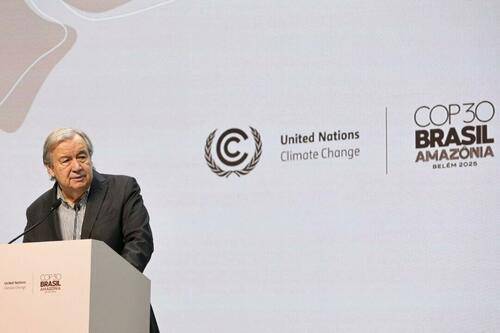
The Trump administration's decision follows a significant unwinding of corporate "net-zero" alliances that once aligned the private sector with global climate goals. At their peak, these groups formed a powerful network under the U.N.-backed Glasgow Financial Alliance for Net Zero, a coalition managing trillions of dollars.
This network included influential subgroups like the Net Zero Banking Alliance, the Net Zero Insurance Alliance, and the Net Zero Asset Managers initiative. Their strategy focused on leveraging financial institutions, which act as both financiers and dominant shareholders, to influence corporate behavior across the economy.
Members included the world's largest asset managers—BlackRock, Vanguard, and State Street. Together, these three firms are the largest shareholders in over 40% of all publicly traded U.S. companies and 88% of the S&P 500, according to a study by George Mason University professors Sebahattin Demirkan and Ted Polat.
However, these alliances began to crumble under political and legal pressure. A backlash from conservative U.S. states led to boycotts and antitrust investigations, with lawmakers accusing financial firms of colluding against fossil fuel companies and violating their fiduciary duties.
Key departures included:
• Vanguard: Left the Net Zero Asset Managers initiative in 2022.
• BlackRock: Exited in January 2025, after which the group suspended its activities.
• Net Zero Insurance Alliance: Lost nearly half its members in 2023 amid antitrust concerns.
Supporters of the administration's move praised it as a crucial step to reclaim U.S. sovereignty and promote economic growth, particularly in the oil and gas sectors. Critics of the ESG movement argue that net-zero policies have driven up energy costs and lowered living standards without effectively controlling global temperatures.
Myron Ebell, a former advisor to the Trump Environmental Protection Agency transition team, stated the decision removes the U.S. from "a long list of harmful foreign entanglements," calling the UNFCCC the "international climate racket."
Sterling H. Burnett of The Heartland Institute described the order as "the biggest single step taken by any administration in my lifetime to advance U.S. sovereignty." He argued that many of these international agreements enrich political elites and unaccountable bureaucrats while failing to benefit ordinary people.
Advocates for net-zero policies condemned the decision, warning of severe consequences for American leadership and economic competitiveness.
"By choosing to run away from addressing some of the biggest environmental, economic, health, and security threats on the planet, the United States of America stands to lose a lot," said Yamide Dagnet of the Natural Resources Defense Council. She predicted the U.S. would miss out on job creation and innovation, "ceding scientific and technological leadership to other countries."
Similarly, the House of Representatives Sustainable Energy and Environment Coalition issued a statement claiming the order "sent a dangerous signal to the global community that America is withdrawing from its role as a world leader, leaving America weaker, poorer, and more unsafe than ever before."
The withdrawal of the United States, the world's largest economy and oil and gas producer, carries significant financial weight. Prior to Trump's 2024 reelection, the U.S. was responsible for 22% of the UNFCCC's €75 million ($87.2 million) budget. After Trump first halted these payments upon taking office in 2025, China increased its contribution from 15% to 20%, while Bloomberg Philanthropies stepped in to cover the remaining U.S. shortfall. The UNFCCC's budget was slated to increase to €81.6 million ($94.9 million) for 2026.
Australian household spending accelerated unexpectedly in November, signaling robust consumer confidence that could complicate the Reserve Bank of Australia's battle against inflation.
According to data released by the Australian Bureau of Statistics, consumer spending rose 1% from the previous month, easily surpassing economists' forecasts of a 0.6% increase. On an annual basis, spending was up 6.3%, also beating expectations.
This data is critical for monetary policy, as private consumption drives more than half of Australia's gross domestic product. The RBA has consistently identified consumer spending as a key area of uncertainty in its policy decisions.
The November strength wasn't just a fluke. "Household spending remained strong in November, continuing the strong rises in services and goods spending seen in October," noted Tom Lay, head of business statistics at the ABS.
Lay highlighted that spending on services climbed 1.2%, largely fueled by major events like concerts and sporting fixtures. This activity created a ripple effect, boosting spending in related areas such as catering, transport, and recreational activities.
The strong spending figures add to a growing debate over the RBA's future actions. In December, Governor Michele Bullock effectively ruled out rate cuts and suggested a hike could be the next move.
This has split market analysts:
• Commonwealth Bank of Australia and National Australia Bank are forecasting at least one more rate increase this year.
• Bank of America anticipates the RBA will remain on hold.
• Money markets are currently pricing in a high probability of a rate hike in May.
Expectations for tighter policy gained traction after third-quarter inflation data revealed broad-based price pressures across the economy. Subsequent monthly inflation reports have consistently shown figures above the RBA's 2-3% target range.
Last week, RBA Deputy Governor Andrew Hauser described inflation as "too high" and suggested the rate-cutting cycle that began last February is likely over. Despite this, he indicated the central bank is taking a "patient approach" to taming inflation ahead of its first meeting of the year on February 2-3.
The RBA has previously cut its policy rate by 75 basis points to 3.6%, the lowest level since April 2023.
Before the RBA board convenes in February, it will closely analyze two pivotal data releases.
First, the December employment figures will test the central bank's assessment of a tight labor market. Second, the fourth-quarter inflation report, due in late January, will be crucial in shaping interest rate expectations for the months ahead.
Federal Reserve Chair Jerome Powell is the subject of an investigation by U.S. prosecutors regarding the renovation of the central bank's Washington headquarters, according to a report from The New York Times.
Citing officials briefed on the matter, the report states that the U.S. attorney's office in the District of Columbia has opened the probe.
The investigation centers on whether Powell misled Congress about the full scope and cost of the renovation project. To determine this, prosecutors are reportedly analyzing Powell's public statements alongside the Federal Reserve's spending records.
This legal inquiry is widely viewed as a new form of pressure on Powell from the Donald Trump administration. The president has repeatedly attacked the Fed Chair for resisting demands for sharp interest rate cuts.
Previously, Trump had also raised the possibility of fraud connected to the Fed's headquarters renovation, an allegation that Powell denied.
The conflict over monetary policy saw the Fed cut interest rates by a cumulative 75 basis points in 2025, a significantly smaller reduction than Trump had called for. At the time, Powell cited caution over inflation and the economic impact of the administration's policies as reasons for the more measured cuts.
With Powell's term expiring in May, the Trump administration is expected to move quickly to announce his replacement. Last week, Trump told The New York Times he had already selected the next Fed Chair and would announce his decision soon.
The frontrunners for the position are believed to be White House economic advisor Kevin Hassett and former Fed governor Kevin Warsh. Both candidates are seen as supportive of President Trump's calls for lower interest rates.
Gold prices climbed to a record high, breaking above $4,564 an ounce early Monday, as a combination of economic data and geopolitical turmoil fueled investor demand for the safe-haven asset. The rally was driven by a weak U.S. jobs report that solidified expectations for further Federal Reserve interest rate cuts and rising tensions from protests in Iran.
The primary catalyst for gold's ascent was the latest U.S. employment data, which showed that job growth fell short of forecasts last month. This report reinforced the view that the Federal Reserve will continue to lower borrowing costs to bolster the economy.
Markets are now pricing in at least two more interest rate reductions from the Fed this year, following the three consecutive cuts delivered in the second half of last year. Lower interest rates typically boost gold, as they reduce the opportunity cost of holding the non-yielding precious metal.
The U.S. dollar also weakened, with the Bloomberg Dollar Spot Index dipping 0.1%, further supporting the price of dollar-denominated commodities like gold.
Adding to gold's appeal were deadly protests in Iran, which injected a fresh wave of uncertainty into global geopolitics and energy markets. The possibility of regime change in the Islamic Republic has driven investors toward the security of precious metals.
This event builds on a series of tailwinds that pushed gold to a record-setting performance last year, including heightened geopolitical risk and declining trust in the U.S. dollar. Reflecting this sentiment, numerous money managers have indicated they are maintaining their positions, confident in bullion's long-term value.
The positive momentum was not limited to gold. By 8:23 a.m. Singapore time, gold was trading at $4,561.12 an ounce, a gain of 1.1%.
Other precious metals also advanced:
• Silver climbed 2.7%, building on a nearly 10% surge from the previous week and trading just below its own all-time peak.
• Palladium and platinum also posted gains.
Investors are also watching for a key legal decision in the U.S. The Supreme Court has yet to rule on a case concerning Trump's tariffs, setting Wednesday as the date for its next opinion. A ruling against the tariffs would represent a significant legal defeat for the administration and undermine a central pillar of its economic policy.
German Chancellor Friedrich Merz is heading to India for his first trip to Asia, a strategic visit designed to forge deeper business and defense partnerships. This move comes as Europe's largest economy navigates growing tensions with its traditional trading partners, China and the United States.
Merz is scheduled to meet with Prime Minister Narendra Modi on Monday in Ahmedabad, located in Modi's home state of Gujarat. The agenda includes bilateral talks, a visit to a Mahatma Gandhi memorial, and attendance at a local kite festival.
The high-profile meeting offers both nations a chance to reinforce economic and security cooperation, particularly as relations with the U.S. under President Donald Trump have become strained. Trump's repeated threats to annex Greenland have unsettled European allies, while India faces steep U.S. tariffs of up to 50%.
During the two-day visit, Germany and India are expected to sign several key agreements aimed at boosting collaboration in critical sectors. The key areas of focus include:
• Business and Semiconductors: General agreements on business cooperation and specific initiatives for semiconductor development are anticipated.
• Critical Minerals: Berlin is actively seeking to reduce its supply chain reliance on China for rare earths and other raw materials. A memorandum of understanding is expected to give Germany better access to these resources from India.
• Skilled Labor: An agreement is planned to make it easier for Indian healthcare workers to move to Germany, helping to address labor shortages that are constraining German economic growth.
Accompanying Merz is a significant delegation of German business leaders, signaling a strong corporate interest in the Indian market. The group includes the CEOs of major corporations such as Siemens, DHL Group, Infineon Technologies, Uniper, and Airbus Defence and Space.
Managers from Germany's "Mittelstand"—the small and medium-sized enterprises that form the core of the country's manufacturing sector—are also part of the delegation. Additionally, the presence of senior managers from Boehringer Ingelheim and ThyssenKrupp Marine Systems highlights a specific push to deepen cooperation in the pharmaceutical and defense industries.
A central focus of the defense talks is a massive submarine manufacturing deal valued at a minimum of $8 billion, which would be New Delhi's largest-ever defense agreement.
Germany’s Thyssenkrupp Marine Systems GmbH and India's state-owned Mazagon Dock Shipbuilders Ltd. are negotiating the specifics. According to sources familiar with the matter, the deal would involve a significant technology transfer for submarine production in India.
India's navy currently relies on about a dozen aging Russian submarines alongside six newer French models. Germany views this deal as a strategic opportunity to reduce India's long-standing dependence on Russian military hardware. However, it remains uncertain if the final agreement will be announced during Merz's visit.
Beyond specific deals, Merz is expected to use the meeting to accelerate negotiations on a free-trade agreement between the European Union and India. Negotiators are working to finalize a deal before EU President Ursula von der Leyen's visit to India later in January, though talks have reportedly stalled on key issues like steel and automobiles.
As the fastest-growing economy in the G20, India is a vital economic partner for Germany in the Indo-Pacific. The economic ties are already substantial:
• Over 2,000 German companies currently operate in India.
• More than 700 Indian companies have investments in Germany.
• Bilateral trade volume stands at nearly $50 billion, making Germany India's most important partner in the EU.
The discussions will also likely address India's relationship with Russia, especially following the 2022 invasion of Ukraine. While India increased its oil purchases from Russia after the invasion, it has recently reduced its buying following U.S. sanctions on Russian energy producers.
To conclude his trip, Merz plans to visit a Bosch facility in the technology hub of Bangalore on Tuesday.
Crude oil prices extended gains for a third consecutive day, driven by escalating protests in Iran that have sparked fears of a potential supply disruption from OPEC's fourth-largest producer. Brent crude futures pushed toward $64 a barrel following a nearly 6% surge over the prior two sessions, the largest two-day gain since October. West Texas Intermediate (WTI) traded near the $60 mark.
The situation has drawn international attention, with U.S. President Donald Trump warning of repercussions if Iranian authorities move against the demonstrators. In response, Tehran has cautioned the United States and Israel against intervening in its internal affairs, heightening geopolitical risk in the region.
The potential disruption to Iran's daily oil exports, which total nearly 2 million barrels, is shifting market focus away from concerns about a global supply glut. This oversupply had previously weighed on prices and fueled bearish sentiment among investors.
Options Market Signals Bullish Turn
The new supply risk is clearly visible in the options market. The premium for bullish call options on U.S. crude futures has risen sharply, reaching its highest level since July. This indicates that traders are increasingly betting on higher prices in response to the instability.
Developments in Iran have also diverted attention from the ongoing crisis in Venezuela. While President Trump signed an executive order on Saturday to protect Venezuelan oil revenue in U.S. Treasury accounts from the country's creditors, significant political uncertainty continues to threaten the investment needed to sustain its oil production.
The U.S. State Department has issued an urgent warning for American citizens to depart Venezuela immediately, citing a volatile and unpredictable security environment across the South American nation.
This advisory follows a high-stakes U.S. military operation in Caracas last week that resulted in the capture of Venezuelan leader Nicolás Maduro and his wife, Cilia Flores. Both have since pleaded not guilty to a series of federal charges, including narco-terrorism, in a New York court.
Venezuela remains under a "Level 4: Do Not Travel" advisory, the highest warning level issued by the U.S. government. The State Department points to severe risks for Americans, including:
• Wrongful detention and torture
• Kidnapping and terrorism
• Arbitrary enforcement of local laws
• Violent crime and civil unrest
• Poor health infrastructure
The advisory specifically highlights reports of armed militias, known as "colectivos," establishing roadblocks to search vehicles for any signs of U.S. citizenship or affiliation.
Even with the resumption of international flights, officials are urging Americans to remain vigilant, be aware of their surroundings, and exercise caution on the roads. The U.S. government has reiterated that it cannot provide any emergency services to its citizens within Venezuela.
The travel warning comes amid a broader pressure campaign by the Trump administration against drug cartels and the socialist regime in Venezuela.
U.S. military initiatives include:
• Operation Southern Spear: Launched in September 2025, this operation involves strikes against vessels in the Pacific and Caribbean suspected of transporting drugs. Officials report that over 100 alleged narco-terrorists have been killed.
• Operation Absolute Resolve: This targeted overnight raid on January 3 led to the capture of Maduro and his wife without any American casualties.
In addition to military action, the U.S. has imposed sanctions on oil tankers moving to and from Venezuela. On Friday, the U.S. seized an oil tanker in the Caribbean Sea as part of this enforcement.
Days after Maduro’s capture, President Trump announced that the United States would receive between 30 and 50 million barrels of previously sanctioned Venezuelan oil.
"This Oil will be sold at its Market Price, and that money will be controlled by me, as President of the United States of America, to ensure it is used to benefit the people of Venezuela and the United States!" Trump stated on Truth Social.
The president has directed Energy Secretary Chris Wright to implement this plan and has also said that oil companies are expected to invest at least $100 billion to rebuild Venezuela's oil infrastructure and increase production.

Despite the heightened tensions, both the U.S. and Venezuela have indicated they are exploring the possibility of restoring diplomatic relations. An American delegation recently visited the country to assess the potential reopening of the U.S. Embassy in Caracas. The embassy was closed in 2019 after the United States declined to recognize Maduro as the country's legitimate leader following allegations of election fraud.
White Label
Data API
Web Plug-ins
Poster Maker
Affiliate Program
The risk of loss in trading financial instruments such as stocks, FX, commodities, futures, bonds, ETFs and crypto can be substantial. You may sustain a total loss of the funds that you deposit with your broker. Therefore, you should carefully consider whether such trading is suitable for you in light of your circumstances and financial resources.
No decision to invest should be made without thoroughly conducting due diligence by yourself or consulting with your financial advisors. Our web content might not suit you since we don't know your financial conditions and investment needs. Our financial information might have latency or contain inaccuracy, so you should be fully responsible for any of your trading and investment decisions. The company will not be responsible for your capital loss.
Without getting permission from the website, you are not allowed to copy the website's graphics, texts, or trademarks. Intellectual property rights in the content or data incorporated into this website belong to its providers and exchange merchants.
Not Logged In
Log in to access more features

FastBull Membership
Not yet
Purchase
Log In
Sign Up