








Markets
News
Analysis
User
24/7
Economic Calendar
Education
Data
- Names
- Latest
- Prev


Signal Accounts for Members
All Signal Accounts
All Contests


U.S. Average Hourly Wage MoM (SA) (Dec)A:--
F: --
U.S. Average Weekly Working Hours (SA) (Dec)A:--
F: --
P: --
U.S. New Housing Starts Annualized MoM (SA) (Oct)A:--
F: --
U.S. Total Building Permits (SA) (Oct)A:--
F: --
P: --
U.S. Building Permits MoM (SA) (Oct)A:--
F: --
P: --
U.S. Annual New Housing Starts (SA) (Oct)A:--
F: --
U.S. U6 Unemployment Rate (SA) (Dec)A:--
F: --
P: --
U.S. Manufacturing Employment (SA) (Dec)A:--
F: --
U.S. Labor Force Participation Rate (SA) (Dec)A:--
F: --
P: --
U.S. Private Nonfarm Payrolls (SA) (Dec)A:--
F: --
U.S. Unemployment Rate (SA) (Dec)A:--
F: --
U.S. Nonfarm Payrolls (SA) (Dec)A:--
F: --
U.S. Average Hourly Wage YoY (Dec)A:--
F: --
Canada Part-Time Employment (SA) (Dec)A:--
F: --
P: --
Canada Unemployment Rate (SA) (Dec)A:--
F: --
P: --
Canada Labor Force Participation Rate (SA) (Dec)A:--
F: --
P: --
U.S. Government Employment (Dec)A:--
F: --
P: --
U.S. UMich Consumer Expectations Index Prelim (Jan)A:--
F: --
P: --
U.S. UMich Consumer Sentiment Index Prelim (Jan)A:--
F: --
P: --
U.S. UMich Current Economic Conditions Index Prelim (Jan)A:--
F: --
P: --
U.S. UMich 1-Year-Ahead Inflation Expectations Prelim (Jan)A:--
F: --
P: --
U.S. UMich 5-Year-Ahead Inflation Expectations Prelim YoY (Jan)A:--
F: --
P: --
U.S. 5-10 Year-Ahead Inflation Expectations (Jan)A:--
F: --
P: --
U.S. Weekly Total Oil Rig CountA:--
F: --
P: --
U.S. Weekly Total Rig CountA:--
F: --
P: --
China, Mainland M0 Money Supply YoY (Dec)--
F: --
P: --
China, Mainland M1 Money Supply YoY (Dec)--
F: --
P: --
China, Mainland M2 Money Supply YoY (Dec)--
F: --
P: --
Indonesia Retail Sales YoY (Nov)A:--
F: --
P: --
Euro Zone Sentix Investor Confidence Index (Jan)A:--
F: --
P: --
India CPI YoY (Dec)--
F: --
P: --
Germany Current Account (Not SA) (Nov)--
F: --
P: --
Canada National Economic Confidence Index--
F: --
P: --
U.S. Conference Board Employment Trends Index (SA) (Dec)--
F: --
P: --
Russia CPI YoY (Dec)--
F: --
P: --
Richmond Federal Reserve President Barkin delivered a speech.
U.S. 3-Year Note Auction Yield--
F: --
P: --
U.S. 10-Year Note Auction Avg. Yield--
F: --
P: --
New York Federal Reserve President Williams delivered a speech.
Japan Trade Balance (Customs Data) (SA) (Nov)--
F: --
P: --
Japan Trade Balance (Nov)--
F: --
P: --
U.K. BRC Overall Retail Sales YoY (Dec)--
F: --
P: --
U.K. BRC Like-For-Like Retail Sales YoY (Dec)--
F: --
P: --
Turkey Retail Sales YoY (Nov)--
F: --
P: --
U.S. NFIB Small Business Optimism Index (SA) (Dec)--
F: --
P: --
Brazil Services Growth YoY (Nov)--
F: --
P: --
Canada Building Permits MoM (SA) (Nov)--
F: --
P: --
U.S. CPI MoM (SA) (Dec)--
F: --
P: --
U.S. CPI YoY (Not SA) (Dec)--
F: --
P: --
U.S. Real Income MoM (SA) (Dec)--
F: --
P: --
U.S. CPI MoM (Not SA) (Dec)--
F: --
P: --
U.S. Core CPI (SA) (Dec)--
F: --
P: --
U.S. Core CPI YoY (Not SA) (Dec)--
F: --
P: --
U.S. Core CPI MoM (SA) (Dec)--
F: --
P: --
U.S. Weekly Redbook Index YoY--
F: --
P: --
U.S. New Home Sales Annualized MoM (Oct)--
F: --
P: --
U.S. Annual Total New Home Sales (Oct)--
F: --
P: --
U.S. Cleveland Fed CPI MoM (SA) (Dec)--
F: --
P: --
China, Mainland Imports YoY (CNH) (Dec)--
F: --
P: --
China, Mainland Trade Balance (CNH) (Dec)--
F: --
P: --
China, Mainland Imports YoY (USD) (Dec)--
F: --
P: --


No matching data
Latest Views
Latest Views
Trending Topics
Top Columnists
Latest Update
White Label
Data API
Web Plug-ins
Affiliate Program
View All

No data
Oil majors balk at Trump's rapid Venezuela investment plan, citing "un-investible" conditions and deep market hurdles.
Major oil companies are hitting the brakes on President Donald Trump's ambitious plan for a rapid, multi-billion dollar investment into Venezuela, citing a wall of security, commercial, and legal hurdles that make the country's oil sector a non-starter for now.
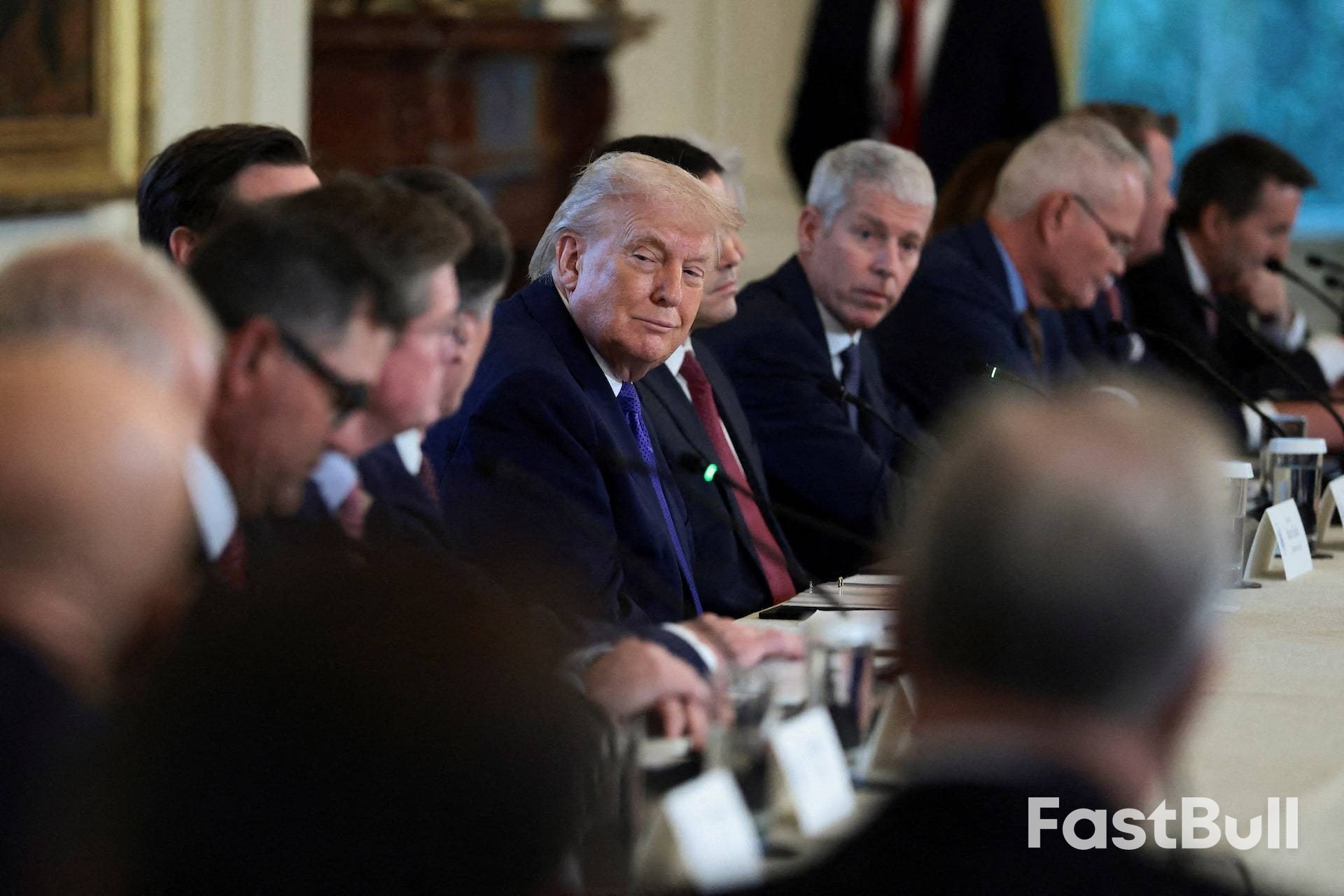
While a televised White House meeting on Friday with top U.S. and European energy executives appeared to be a public relations victory for the president, the conversation revealed a deep disconnect between political ambition and market reality. Despite praise from some executives, the industry delivered a dose of realism to Trump's goal of pouring $100 billion into Venezuela to boost its oil production from the current 900,000 barrels per day.
Exxon Mobil CEO Darren Woods was blunt, stating that from a commercial and legal standpoint, the Latin American nation is currently "un-investible."
Woods' assessment reflects a grim reality shaped by nearly a decade of U.S. sanctions and decades of internal corruption and mismanagement. Turning this around would be a monumental task, requiring a stable government that can guarantee physical security and provide fiscal confidence—a process that could take months, if not years.
The Trump administration is trying to move quickly. Treasury Secretary Scott Bessent confirmed on Saturday that Washington is working on lifting some sanctions to help stabilize Venezuela's economy and facilitate oil sales.
However, a partial rollback is not enough. According to Carlos Bellorin, an analyst at consultancy Welligence, more significant sanctions relief is needed to allow oil companies to legally engage with the national oil company, PDVSA. It would also be essential for major oil service providers like SLB and Halliburton to bring in critical drilling equipment.
Removing key restrictions could unlock investment in so-called "low-hanging" barrels. This includes funding to revive abandoned wellheads and overhaul basic infrastructure like pipelines and port facilities.
Some immediate, albeit modest, gains are possible:
• Chevron: The only U.S. company still operating in Venezuela under a special license, could increase its output by 50% from 240,000 barrels per day within two years by upgrading existing equipment, said Vice Chairman Mark Nelson.
• Repsol: The Spanish oil firm could triple its production of 45,000 barrels per day over two to three years, according to CEO Josu Jon Imaz.
Even with these gains, the total production increase would likely be less than 200,000 barrels per day over the next year—a fraction of the administration's vision.
A long and painful history haunts any potential new investment. Most international oil majors have been burned before in Venezuela, particularly during two waves of industry nationalization in the 1970s and 2000s that forced them out and left behind massive, unrecovered losses.
This history of expropriation creates a major trust deficit. "Oilfield service providers could be reluctant to commit resources in Venezuela because they're still owed massive amount of money," noted Bellorin. He added that a commitment from Venezuela to repay old debts would be a necessary first step.
President Trump, however, seemed to suggest the opposite. When ConocoPhillips CEO Ryan Lance mentioned his company is still owed about $12 billion from the 2007 nationalization, Trump proposed that Conoco could simply write off the debt, despite years of legal battles. Lance's proposal to involve the U.S. Export-Import Bank (EXIM) to restructure the debt was also seemingly rejected by the president.
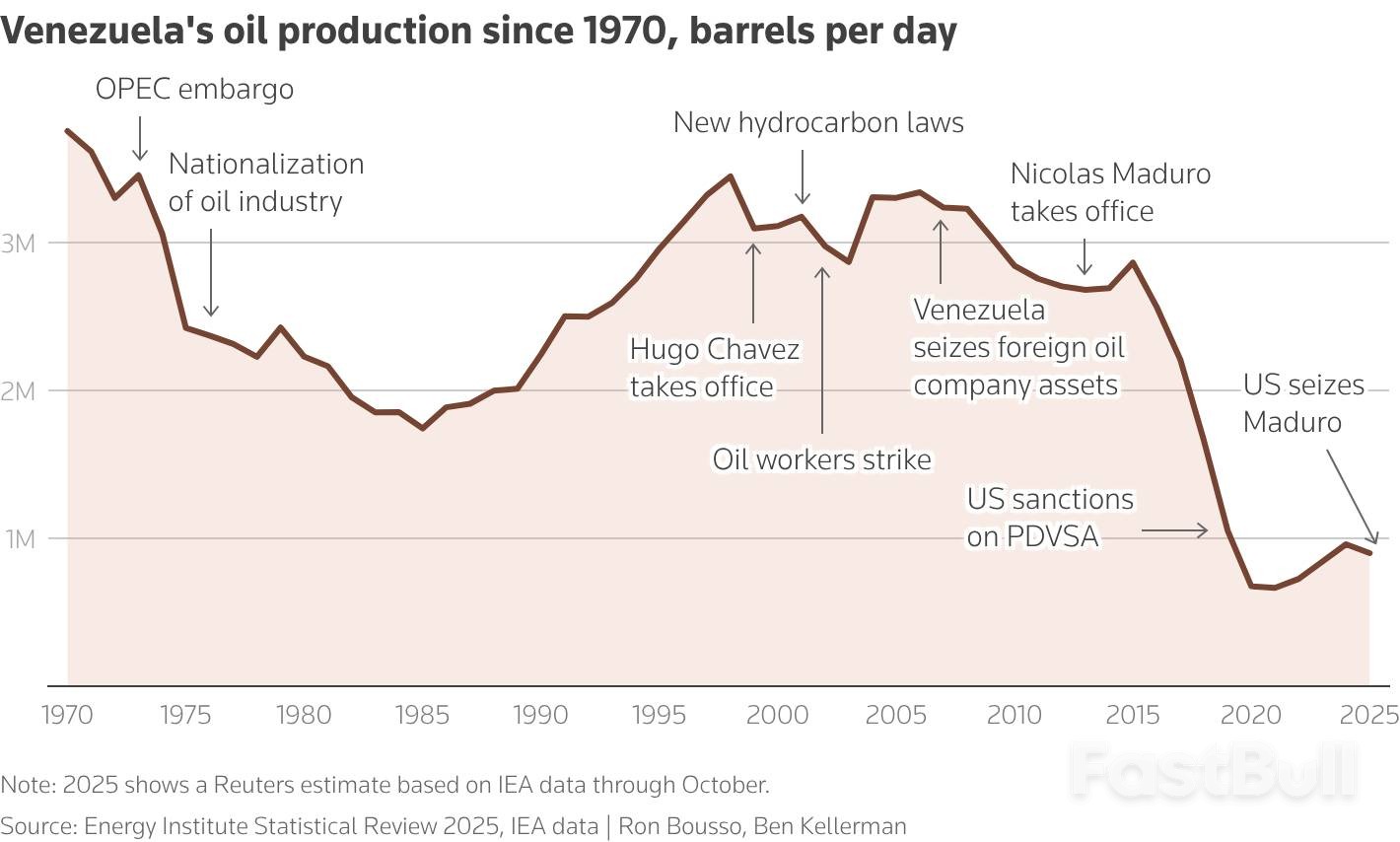
To truly unlock Venezuela's potential—which peaked above 3.5 million barrels per day in the 1990s—requires rewriting the country's fundamental hydrocarbon laws.
Key structural reforms would include:
• Revisiting the requirement for mandatory state participation of over 50% in upstream joint ventures.
• Reducing the oil industry's high royalty (30%) and income tax (50%) rates.
• Modifying PDVSA's monopoly on marketing the country's oil.
Beyond the legal framework, geological and geopolitical challenges remain. Venezuela holds the world's largest proven reserves, but most of it is heavy oil, which is more expensive to extract. Furthermore, many of these reserves are tied up in joint ventures with Chinese and Russian companies.
For publicly traded companies with a duty to their shareholders, verbal assurances from the White House are not enough. As Exxon's Woods explained, "We take a very long-term perspective. The investments that we make span decades and decades. So, we do not go into any opportunity with a short-term mindset."
Despite their reservations, oil executives find themselves in a difficult position. Openly refusing to invest in Venezuela could draw the ire of an administration known for playing hardball with businesses it sees as uncooperative, as seen with its recent actions toward law firms and defense contractors.
Faced with this political pressure, some energy boards might decide that a modest investment in Venezuela is a pragmatic choice to avoid potential blowback, even if the financial case is weak.
But even a flurry of politically motivated activity is unlikely to restore Venezuela's oil industry to its former glory. For that to happen, the country will need concrete action and fundamental reforms, not just presidential promises.

Goldman Sachs energy analysts are projecting a sharp decline in oil prices, warning that West Texas Intermediate (WTI) could fall to $50 per barrel by the end of this year. In a recent note, the investment bank cited an expected market imbalance driven by excess supply as the primary factor that will pressure global benchmarks.
However, analysts also acknowledged that geopolitical tensions could act as a significant counterweight, potentially supporting prices against a broader bearish trend.
Goldman's forecast points to a substantial 2.3 million barrel-per-day (mb/d) surplus in the global oil market by 2026. This oversupply, combined with rising global oil stocks, is expected to force prices lower to rebalance the market.
According to the bank, lower prices would be necessary to slow down supply growth from non-OPEC producers while simultaneously supporting solid growth in demand. This outlook assumes no major supply disruptions or significant production cuts from OPEC.
While the supply-side outlook appears bearish, immediate geopolitical risks could disrupt the narrative. Analysts at ANZ have highlighted the potential for supply disruptions stemming from protests in Iran, where demonstrators have called on oil industry workers to join them.
"The situation puts at least 1.9 million barrels per day of oil exports at risk of disruption," ANZ noted, introducing a key variable that could tighten the market unexpectedly.
Looking further ahead, Goldman Sachs anticipates the market will swing back into a deficit by 2027. This shift is expected to be caused by a reversal in production growth among non-OPEC countries, likely in response to the current price environment, coupled with a slowdown in OPEC production.
Despite this projected deficit, the bank revised its price estimate for 2027 downward. It now projects Brent crude will trade between $54 and $58 per barrel that year, a $5 reduction from its previous forecast.
Goldman's long-term view is considerably more bullish. Analysts see robust oil demand supporting prices all the way to 2040, a trend that could spur a new wave of investment after years of industry frugality. The bank's model suggests that persistent demand will challenge the "peak oil" narratives that have emerged from net-zero forecasting.
By 2035, Goldman predicts Brent crude could surpass $70 per barrel. Even this long-term forecast represents a downward revision, having been lowered by 45 per barrel from an earlier projection.
Sunday brought news that the Trump administration, through the Justice Department, was investigating Federal Reserve Chair Jerome Powell over testimony surrounding renovations of the Fed's headquarters in Washington, D.C.
In an extremely unusual development, Powell released a statement and a video explicitly condemning the move by the administration as a pretext for forcing the Fed to lower interest rates.
"The threat of criminal charges is a consequence of the Federal Reserve setting interest rates based on our best assessment of what will serve the public, rather than following the preferences of the president," Powell said. "This is about whether the Fed will be able to continue to set interest rates based on evidence and economic conditions—or whether instead monetary policy will be directed by political pressure or intimidation," Powell said.
The move by the Trump administration comes as markets are awaiting word on who the president will nominate to be the next Fed chair. Even before Sunday's events there were widespread questions about how independent President Donald Trump's nominee will be. Powell's term as chair ends May 15.
The initial overnight reaction in global markets was to push stock futures lower. But beyond any short-term response, the critical question will be the verdict among investors on the growing risks to the Fed independence, what that would mean for the inflation outlook, and ultimately the credibility of the US central bank.
The new year is kicking into high gear. Last Friday saw the release of the December employment report, which confirmed that the jobs market closed 2025 on a soggy note. While the report did little to shift the immediate outlook for Federal Reserve policy—no change in interest rates is expected this month—Tuesday's Consumer Price Index report could be more important in shaping the long-term outlook.
A big question is whether the inflation data will be clean enough to draw any conclusions from. The November report showed inflation that unexpectedly cooled, but the federal government shutdown is believed to have distorted the data.
The hope is that Tuesday's data for December will provide a somewhat clearer picture of inflation trends. Economists aren't sure if that will be the case. Broadly, forecasts call for an uptick in inflation from the shutdown-affected November readings, thanks largely to the lingering impact of Trump's tariffs and the reversals of shutdown impacts.
Wednesday could bring a critical decision from the Supreme Court on the legality of Trump's tariffs under the International Emergency Economic Powers Act. (The court doesn't say whether any rulings are forthcoming, just that there will be news.)
Press reports suggest that the justices seem skeptical of the administration's use of emergency powers to impose tariffs. But should the court rule against Trump, it wouldn't mean tariffs would go back to their pre-2025 levels, as we explain in "Watch These 6 Signals for Clues on Where Markets Will Go In 2026."
Mortgage-backed securities are also now on the radar. While most mainstream investors don't follow the goings-on in the MBS market, it's a critical part of mortgage rates and home-buying. Last week, President Trump announced on social media that he was instructing "representatives"— expected to be the government-sponsored agencies Fannie Mae and Freddie Mac—to buy $200 billion worth of mortgage-backed bonds.
The idea is that this would lower mortgage rates and make buying a home more affordable. Dominic Pappalardo, chief multi-asset strategist at Morningstar Wealth, notes that the announcement appeared to have an impact, with mortgage rates falling in the past week.
Then there's the question of whether Trump's plan will have a meaningful impact beyond the knee-jerk market reaction.
The other big event this coming week is the kickoff of the fourth-quarter earnings season. First up are the big banks, with JP Morgan JPM reporting on Tuesday and Wells Fargo WFC, Bank of America BAC, and Citigroup C on Wednesday.


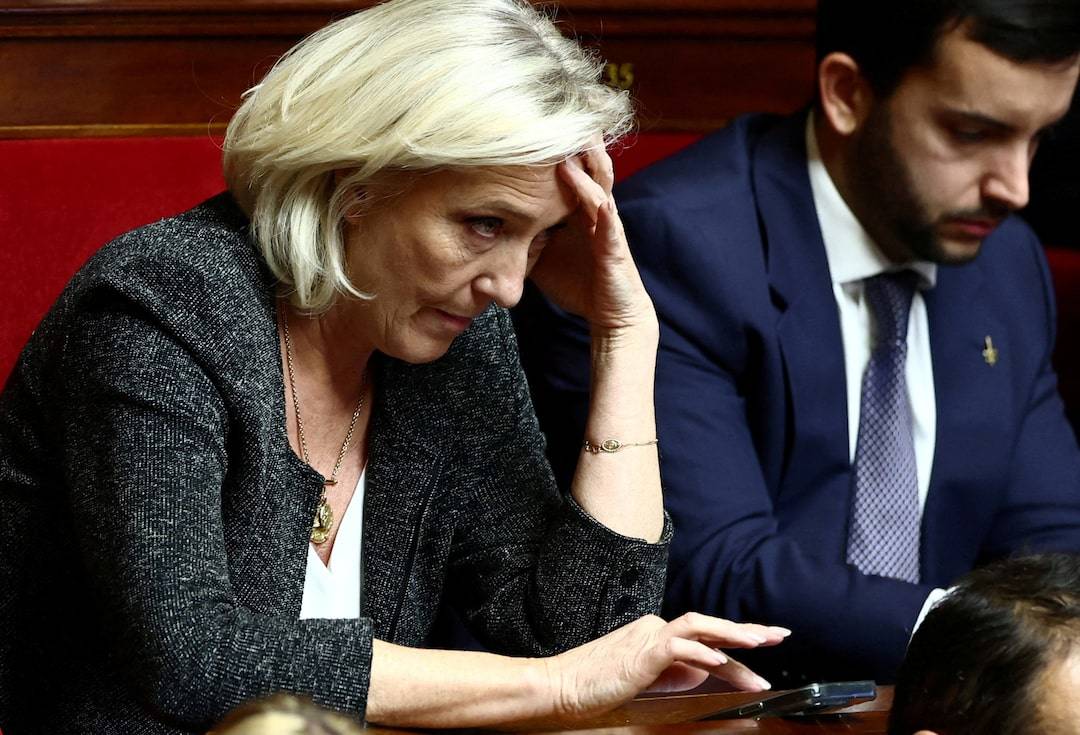
French far-right leader Marine Le Pen begins a crucial appeal in Paris this week that will determine whether she can run in the 2027 presidential election, after being barred from public office over a conviction for misusing EU funds.
Le Pen, the long-time leader of the far-right National Rally (RN), was seen as a likely frontrunner in the 2027 race until she was found guilty last year of misappropriating more than 4 million euros ($4.7 million) of EU funds and given a five-year ban from running for public office, effective immediately.
Le Pen appealed, as did the RN and 10 others found guilty of diverting European Parliament funds. The hearing begins on Tuesday and should end on February 12.
A ruling is expected before the summer, meaning her hopes of running in 2027 remain alive if her five-year ban is revoked or drastically curtailed.
If she cannot run, Le Pen has said her protege, 30-year-old RN party president Jordan Bardella, will do so in her stead.
U.S. President Donald Trump and senior members of his team voiced support for Le Pen after her conviction, and any move to stop her from running would likely be seized on by them in their campaign to portray European courts and officials as seeking to unfairly block far-right politicians from power.
Trump officials last year held internal discussions about sanctioning French prosecutors and judges involved in barring Le Pen, four sources told Reuters, although those talks no longer appear to be active.
The news, first reported by German magazine Der Spiegel, was denied by Under Secretary of State Sarah B. Rogers on X on Thursday, describing it as a "fake story".
A State Department spokesperson said: "We do not preview potential actions."
French government spokeswoman Maud Bregeon said on Thursday the government would remain vigilant to potential U.S. meddling after Peimane Ghaleh-Marzban, the president of the Paris judicial court, said any move against a French judge would "constitute an unacceptable and intolerable interference in the internal affairs of our country".
Over the past year, the U.S. has imposed sanctions against 11 International Criminal Court judges involved in cases against Israel.
Le Pen's lawyers, Rodolphe Bosselut and Sandra Chirac Kollarik, declined to comment ahead of the trial.
Following her conviction, Le Pen accused the judiciary of politically motivated targeting, echoing rhetoric used in the U.S.
"In the country of human rights, judges have implemented practices that we thought were reserved for authoritarian regimes," Le Pen told French TV channel TF1 at the time.
The judges explained in their ruling that they had decided to make the ban effective immediately "to avoid irreparable harm to democratic public order".
Opinion polls indicated that most French people supported the ruling.
The European Parliament's lawyer Patrick Maisonneuve said he hoped Le Pen and her co-defendants' convictions would be upheld, including more than 3 million euro awarded in damages to the European Parliament. The RN was also ordered to pay a 2 million euro fine, with half the amount suspended.
Judges said in last March's ruling that, between 2004 and 2016, Le Pen and others had used funds destined for work at the European Parliament to pay staff who were actually working for the party.
Le Pen said the way she and her co-defendants used the money was legitimate.
Le Pen's legal woes appear to have benefited Bardella. A poll last autumn found Bardella would win the presidency, no matter who his opponent was in the second round.
"French people have turned the page on Marine Le Pen," Stewart Chau, an analyst with Verian Group, told Reuters.($1 = 0.8589 euros)

Meta has deactivated more than half a million social media accounts belonging to children in compliance with Australia's new social media law.
The law came into effect on December 10 and bans social media accounts for children under the age of 16. It requires big platforms including Meta, TikTok and YouTube to stop holding accounts for those under that age.
Meta said that between December 4 and 11 it had deactivated 544,052 accounts it believed were held by users aged under 16. This included 330,639 accounts on Instagram, 173,497 on Facebook and 39,916 on Threads.
Companies found not to be in compliance face fines of up to $49.5 million Australian (€28.4 million, US$33 million).
In a statement, Meta said it was committed to complying with the law but said "our concerns about determining age online without an industry standard remain."
"We call on the Australian government to engage with industry constructively to find a better way forward, such as incentivising all of industry to raise the standard in providing safe, privacy-preserving, age appropriate experiences online, instead of blanket bans," Meta said.
The tech giant went on to renew a call for app stores to be required to verify ages and also get parental approval before apps can be downloaded.
"This is the only way to guarantee consistent, industry-wide protections for young people, no matter which apps they use, and to avoid the whack-a-mole effect of catching up with new apps that teens will migrate to in order to circumvent the social media ban law," the company said.
Australian public broadcaster ABC reported that government was expected to release data showing how many under-age Australians had been booted off platforms impacted by the ban this week.
Australia's ban has been lauded by advocates worldwide, and has prompted other countries to consider similar measures, including Germany.
White Label
Data API
Web Plug-ins
Poster Maker
Affiliate Program
The risk of loss in trading financial instruments such as stocks, FX, commodities, futures, bonds, ETFs and crypto can be substantial. You may sustain a total loss of the funds that you deposit with your broker. Therefore, you should carefully consider whether such trading is suitable for you in light of your circumstances and financial resources.
No decision to invest should be made without thoroughly conducting due diligence by yourself or consulting with your financial advisors. Our web content might not suit you since we don't know your financial conditions and investment needs. Our financial information might have latency or contain inaccuracy, so you should be fully responsible for any of your trading and investment decisions. The company will not be responsible for your capital loss.
Without getting permission from the website, you are not allowed to copy the website's graphics, texts, or trademarks. Intellectual property rights in the content or data incorporated into this website belong to its providers and exchange merchants.
Not Logged In
Log in to access more features

FastBull Membership
Not yet
Purchase
Log In
Sign Up