Markets
News
Analysis
User
24/7
Economic Calendar
Education
Data
- Names
- Latest
- Prev


Signal Accounts for Members
All Signal Accounts
All Contests


U.S. Annual Total New Home Sales (Oct)A:--
F: --
U.S. Cleveland Fed CPI MoM (SA) (Dec)A:--
F: --
P: --
U.S. Cleveland Fed CPI MoM (Dec)A:--
F: --
P: --
China, Mainland M0 Money Supply YoY (Dec)--
F: --
P: --
China, Mainland M1 Money Supply YoY (Dec)--
F: --
P: --
China, Mainland M2 Money Supply YoY (Dec)--
F: --
P: --
U.S. EIA Natural Gas Production Forecast For The Next Year (Jan)A:--
F: --
P: --
U.S. EIA Short-Term Crude Production Forecast For The Next Year (Jan)A:--
F: --
P: --
U.S. EIA Short-Term Crude Production Forecast For The Year (Jan)A:--
F: --
P: --
EIA Monthly Short-Term Energy Outlook
U.S. 30-Year Bond Auction Avg. YieldA:--
F: --
P: --
Argentina 12-Month CPI (Dec)A:--
F: --
P: --
U.S. Budget Balance (Dec)A:--
F: --
P: --
Argentina CPI MoM (Dec)A:--
F: --
P: --
Argentina National CPI YoY (Dec)A:--
F: --
P: --
Richmond Federal Reserve President Barkin delivered a speech.
U.S. API Weekly Cushing Crude Oil StocksA:--
F: --
P: --
U.S. API Weekly Crude Oil StocksA:--
F: --
P: --
U.S. API Weekly Refined Oil StocksA:--
F: --
P: --
U.S. API Weekly Gasoline StocksA:--
F: --
P: --
South Korea Unemployment Rate (SA) (Dec)A:--
F: --
P: --
Japan Reuters Tankan Non-Manufacturers Index (Jan)A:--
F: --
P: --
Japan Reuters Tankan Manufacturers Index (Jan)A:--
F: --
P: --
China, Mainland Exports YoY (CNH) (Dec)A:--
F: --
P: --
China, Mainland Trade Balance (USD) (Dec)A:--
F: --
P: --
China, Mainland Trade Balance (CNH) (Dec)A:--
F: --
P: --
China, Mainland Exports (Dec)A:--
F: --
P: --
China, Mainland Imports YoY (CNH) (Dec)A:--
F: --
P: --
China, Mainland Imports (CNH) (Dec)A:--
F: --
P: --
China, Mainland Imports YoY (USD) (Dec)A:--
F: --
P: --
China, Mainland Exports YoY (USD) (Dec)A:--
F: --
P: --
China, Mainland Outstanding Loans Growth YoY (Dec)--
F: --
P: --
U.K. 10-Year Note Auction Yield--
F: --
P: --
Canada Leading Index MoM (Dec)--
F: --
P: --
U.S. MBA Mortgage Application Activity Index WoW--
F: --
P: --
U.S. Core PPI YoY (Nov)--
F: --
P: --
U.S. PPI MoM (SA) (Nov)--
F: --
P: --
U.S. PPI YoY (Nov)--
F: --
P: --
U.S. Current Account (Q3)--
F: --
P: --
U.S. Retail Sales YoY (Nov)--
F: --
P: --
U.S. Retail Sales (Nov)--
F: --
P: --
U.S. Core Retail Sales MoM (Nov)--
F: --
P: --
U.S. PPI YoY (Excl. Food, Energy & Trade) (Nov)--
F: --
P: --
U.S. PPI MoM Final (Excl. Food, Energy and Trade) (SA) (Nov)--
F: --
P: --
U.S. Core Retail Sales (Nov)--
F: --
P: --
U.S. Retail Sales MoM (Excl. Automobile) (SA) (Nov)--
F: --
P: --
U.S. Retail Sales MoM (Nov)--
F: --
P: --
U.S. Retail Sales MoM (Excl. Gas Stations & Vehicle Dealers) (SA) (Nov)--
F: --
P: --
U.S. Core PPI MoM (SA) (Nov)--
F: --
P: --
Philadelphia Fed President Henry Paulson delivers a speech
U.S. Commercial Inventory MoM (Oct)--
F: --
P: --
U.S. Existing Home Sales Annualized Total (Dec)--
F: --
P: --
U.S. Existing Home Sales Annualized MoM (Dec)--
F: --
P: --
U.S. EIA Weekly Cushing, Oklahoma Crude Oil Stocks Change--
F: --
P: --
U.S. EIA Weekly Crude Stocks Change--
F: --
P: --
U.S. EIA Weekly Gasoline Stocks Change--
F: --
P: --
U.S. EIA Weekly Crude Demand Projected by Production--
F: --
P: --
U.S. EIA Weekly Crude Oil Imports Changes--
F: --
P: --
U.S. EIA Weekly Heating Oil Stock Changes--
F: --
P: --
U.S. Refinitiv/Ipsos Primary Consumer Sentiment Index (PCSI) (Jan)--
F: --
P: --
Japan Domestic Enterprise Commodity Price Index YoY (Dec)--
F: --
P: --


No matching data
Latest Views
Latest Views
Trending Topics
Top Columnists
Latest Update
White Label
Data API
Web Plug-ins
Affiliate Program
View All

No data

Political

Remarks of Officials

Economic

Russia-Ukraine Conflict

Middle East Situation

China–U.S. Trade War
Trump expects China to open markets, yet new Iran tariffs compound deep US-China geopolitical friction.
U.S. President Donald Trump stated on Tuesday that he believes China will open its markets to American goods, reaffirming his positive relationship with Chinese leader Xi Jinping.
"I think it's going to happen," Trump commented when asked about the prospect of increased market access for U.S. products. He did not provide further details on his optimistic outlook.
Trump's remarks come against a backdrop of long-standing and complex tensions between Washington and Beijing. For years, the two global powers have been at odds over a wide range of critical issues, including:
• Trade tariffs and intellectual property disputes
• Differing policies on cybersecurity
• Human rights concerns
• The origins of the Covid-19 pandemic
• Divergent stances on Taiwan, Hong Kong, and Russia's war in Ukraine
The statement on market access follows a separate threat made by Trump just one day earlier. The president announced he might impose a 25% tariff on any country that trades with Iran, a move that could directly impact Beijing, which is Tehran's largest trading partner.
China has already condemned the proposed tariff. Trump has not yet offered specific details on how the plan would be implemented.
This policy is being considered as Trump weighs his response to the current situation in Iran, which is experiencing some of its largest anti-government demonstrations in years. The geopolitical context also includes a 12-day war last year between Iran and U.S. ally Israel, as well as a U.S. military bombing of Iranian nuclear sites in June.
The Japanese yen's recent sharp decline has put markets on high alert for potential government intervention and a significant price correction, according to analysts at Eurizon SLJ Capital and Societe Generale SA.
The currency weakened to around 159 per dollar, a low not seen since July 2024, following reports that Prime Minister Sanae Takaichi might call a snap election. Investors believe this move could strengthen the ruling Liberal Democratic Party's power, opening the door for more fiscal stimulus—a scenario considered negative for both the yen and Japanese government bonds.
Experts warn that the risks for the dollar-yen exchange rate are now "heavily skewed to the downside" for the remainder of the year. Stephen Jen, CEO of Eurizon, noted that "interventions at the right moment could trigger such a correction."
This view is shared by Kit Juckes, chief FX strategist at Societe Generale, who suggested that a price spike in the coming days "may finally be an opportunity to go short" the dollar-yen pair.
Market participants are closely watching the 160-per-dollar level as a potential line in the sand for intervention. However, Japanese officials have consistently stated their focus is on the speed and volatility of currency moves rather than a specific exchange rate.
While there is no official formula for what triggers action, a key official indicated in 2024 that a 10-yen move against the dollar in one month would be considered rapid. Similarly, a 4% shift in two weeks was described as inconsistent with economic fundamentals. The Ministry of Finance, with the Bank of Japan acting as its agent, last intervened in 2024 when the yen hit 160.17.
The anticipation of an official response is already affecting market behavior. "We're seeing broad demand for options across the curve as the market tries to interpret the price action ahead of a potentially volatile official response," said Ivan Stamenovic, head of Asia-Pacific G-10 currency trading at Bank of America Corp. in Hong Kong.
Prime Minister Takaichi's known support for reflationist policies has weighed on the yen since she took office in October, feeding speculation that she might discourage the Bank of Japan from a near-term interest rate hike.
However, SocGen's Juckes offered a counterpoint, arguing that Takaichi's administration "is unlikely to pursue aggressive fiscal expansion immediately" due to concerns about debt sustainability. He suggested this could support a "buy-the-dip" strategy for both the yen and Japanese government bonds.
Trader positioning data also signals a high risk of a short squeeze. In mid-2024, a sharp build-up of speculative net short positions saw the dollar-yen rate surge past 160 before reversing course. The latest data from the Commodity Futures Trading Commission shows that short positions, while moderating slightly, remain elevated.
Further reinforcing this view, Citigroup Inc.'s yen pain gauge, which measures overall trader positioning, is still negative. This indicates just how crowded the bearish yen trade has become, heightening the risk of a sharp reversal if sentiment shifts.
Donald Trump is set to take the stage at the World Economic Forum (WEF) in Davos this Wednesday, marking a high-profile return to the global financial spotlight. His address to an audience of heads of state, central bankers, and top business leaders will be closely watched as he reemerges as a central figure in U.S. politics ahead of the 2024 election.
The speech offers a platform for Trump to outline his perspectives on the global economy, American monetary policy, and financial innovation.
While the full details of the speech are not public, Trump is expected to focus on several core economic issues. His agenda will likely include U.S. interest rate policy, inflation, energy independence, and international trade.
In recent statements, Trump has been critical of the Federal Reserve, arguing that its interest rate policies are hindering U.S. economic growth. Observers anticipate he will continue this line of commentary, advocating for lower rates.
Additionally, Trump may address the role of cryptocurrency in the global financial system. As digital assets become more mainstream, his position on crypto policy has evolved, moving closer to narratives that favor innovation and oppose centralized control.
Trump's appearance in Davos is as much a political event as it is an economic one. At a time of rising global tensions and shifting monetary landscapes, his comments could influence both markets and international policy discussions.
More importantly, the speech signals an intent to reassert American leadership on the world stage. It provides a unique opportunity for Trump to set the tone for his economic platform, effectively using the global forum to launch key themes for his upcoming presidential campaign.

Venezuela's top lawmaker Jorge Rodriguez said on Tuesday that over 400 people had been freed from prison as part of an ongoing release process, although rights groups say they estimate a much lower figure of between 60 and 70 have been freed in recent days.
Rodriguez, the president of the National Assembly, and U.S. President Donald Trump both said last week that large numbers of prisoners would be released as a peace gesture after the U.S. capture of President Nicolas Maduro.
The release of people considered political prisoners by the opposition has been one of their long-standing demands. The Venezuelan government has always denied it holds people for political reasons and has said it has already released most of the 2,000 people detained after protests over the contested 2024 election.
"The decision to release some prisoners, not political prisoners, but some politicians who had broken the law and violated the Constitution, people who called for invasion, was granted," Rodriguez said during a parliamentary session on Tuesday, adding that this was intended to promote "peaceful coexistence."
Over 400 had been released, he said, without giving a specific timeline.
Local NGOs have said that the number of prisoners freed since Thursday ranges between 60 and 70, and have denounced a slow pace and lack of information surrounding the releases.
On Monday, Venezuela's penitentiary authority had said that 116 people had been freed.
Foro Penal, a leading local NGO that works on legal support for detainees, said at least 800 political prisoners were behind bars at the beginning of this year.
Opposition leader and Nobel Peace Prize winner Maria Corina Machado, who is expected to meet with Trump on Thursday, has been one of the leading voices demanding the release of prisoners, some of whom are her close allies.
Families and rights groups have denounced what they say is abusive treatment of detainees, including the denial of medical care, the use of solitary confinement, a lack of access to legal counsel and even torture.

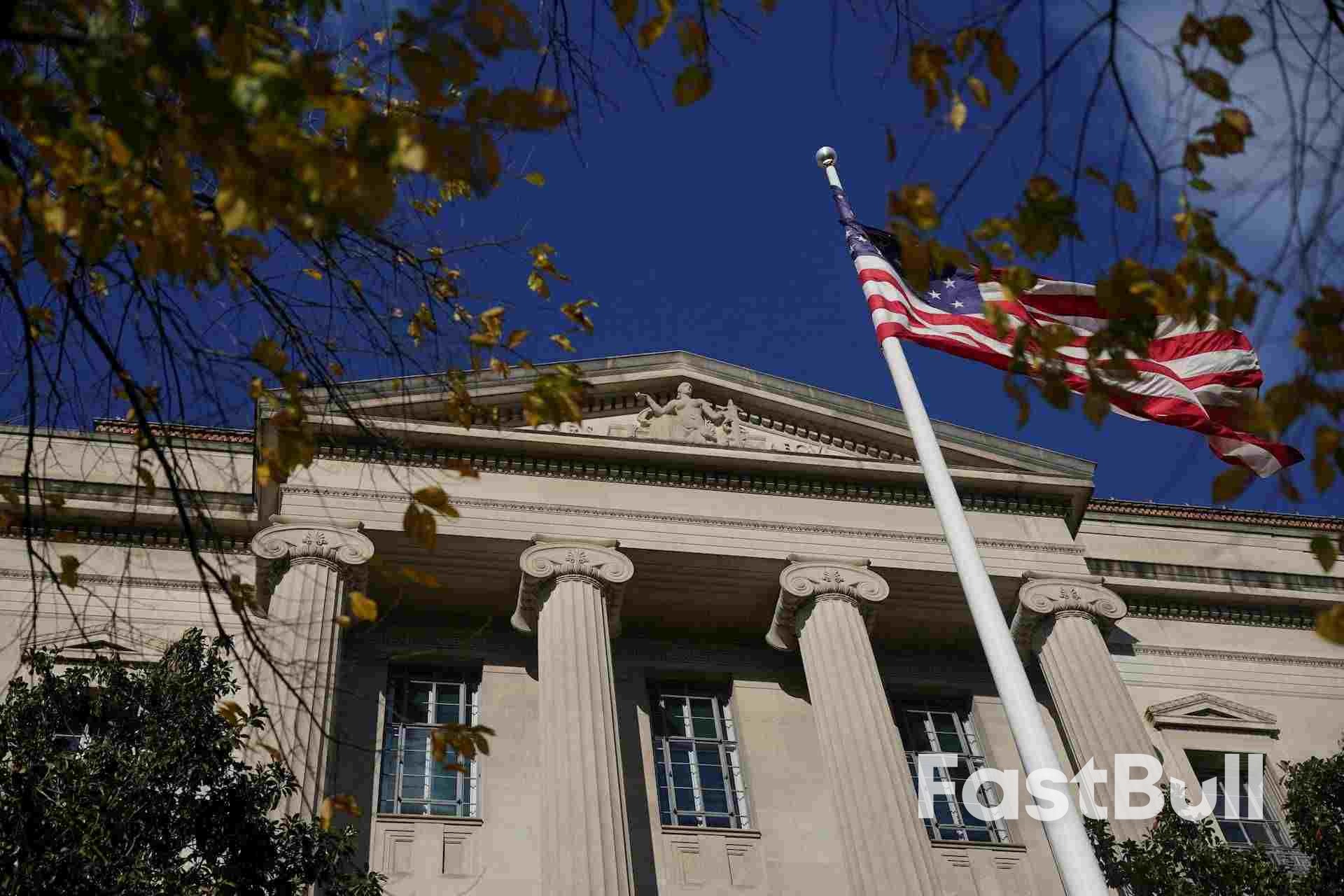
At least a dozen federal prosecutors have indicated plans to leave the U.S. Justice Department over the Trump administration's handling of the fatal shooting of a Minnesota woman by a U.S. immigration officer and other civil rights cases, according to three people familiar with the situation.
The departures spanned the Justice Department's Civil Rights Division in Washington and the U.S. Attorney's Office in Minneapolis, the sources said.
Six federal prosecutors in Minnesota have resigned over a request from Justice Department leadership to investigate the widow of 37-year-old Renee Good, who was shot and killed in Minneapolis on January 7, according to two of the sources.
It was not clear exactly what DOJ officials wanted to investigate, but Trump administration officials have accused Good of impeding an immigration operation. The sources spoke on the condition of anonymity to discuss a sensitive internal matter.
Another six senior prosecutors in the criminal section of the Justice Department's Civil Rights Division also informed the department they planned to leave.
The head of the division, Harmeet Dhillon, an appointee of President Donald Trump, informed the unit last week they would not be involved in the probe of the Minnesota shooting, two sources said.
The section typically plays a leading role working with FBI agents to investigate potential civil rights violations and use-of-force by law enforcement officers. Several of the prosecutors accepted an early retirement offer from the Trump administration, some of the sources said.
The resignations are the latest sign of tumult in the Justice Department under Trump, which has fired and expelled dozens of career officials and pursued investigations of Trump's perceived political enemies.
The departures also prompted renewed concern about the federal investigation into the shooting, which has prompted protests nationwide and drawn renewed scrutiny of the Trump administration's sweeping immigration crackdown in U.S. cities.
The Minnesota probe was only one factor in the decision of the civil rights lawyers to leave the department. The prosecutors, veteran lawyers who had served across presidential administrations, had grown disillusioned with the direction of the division, whose priorities had been reshaped to align with Trump, according to the sources.
A Justice Department official confirmed the departures from the Civil Rights Division. The lawyers who requested to participate in an early retirement program did so well before the Minnesota shooting, the official said.
The official said U.S. Immigration and Customs Enforcement is conducting an internal investigation into the shooting in parallel with the FBI.
"There is currently no basis for a criminal civil rights investigation," Deputy Attorney General Todd Blanche said in a statement.
Tension erupted in Minnesota last week, when a federal immigration officer shot and killed Good, a 37-year-old mother of three who was observing the federal law enforcement action.
The Trump administration accused Good of attempting to ram the officer with her vehicle, a claim state officials disputed.
Hennepin County Attorney Mary Moriarty, the chief state prosecutor in Minneapolis, told Reuters on Tuesday that the departures at the Justice Department are an indication that career prosecutors are "not being allowed to do their job."
"And that's because of politics, not because of what actually happened here," Moriarty said.
Japan's five-year government bond yield surged to its highest level since the bond's introduction in 2000, driven by deepening concerns over the country's fiscal policy following reports that Prime Minister Sanae Takaichi is planning a snap election.
The yield climbed as much as 1.5 basis points to 1.615% on Wednesday. Rates on two-year and 10-year bonds also moved higher, reflecting broader market anxiety. Investors are now closely watching a five-year bond auction scheduled for later today, which will serve as a crucial test of market appetite amid rising fiscal and supply-side risks.
The market's reaction follows a Nikkei report that Prime Minister Takaichi intends to inform Liberal Democratic Party leaders of her plan to call an early election. This move is widely seen as an attempt to capitalize on her high approval ratings and strengthen the party's majority in the powerful lower house of parliament.
According to investors, a decisive election victory would pave the way for a large fiscal stimulus package later this year. This prospect is raising concerns about Japan's "fiscal premium," putting downward pressure on both the yen and Japanese government bonds (JGBs).
The Takaichi government is already planning a record initial budget for the fiscal year beginning in April. The Ministry of Finance previously announced that despite the increased spending, it would reduce the issuance of super-long government bonds. However, sales of two- and five-year debt are set to increase, adding to supply pressure in the shorter end of the market.
This fiscal backdrop is complicating the Bank of Japan's (BOJ) policy calculations. Although the central bank raised its policy rate to a three-decade high in December, the yen has continued to weaken. This slide, combined with worries over government spending, could force the BOJ to act more aggressively.
Makoto Sakurai, a former BOJ board member, stated in an interview that the central bank might raise its benchmark interest rates as early as April, citing market concerns over the government's fiscal approach.
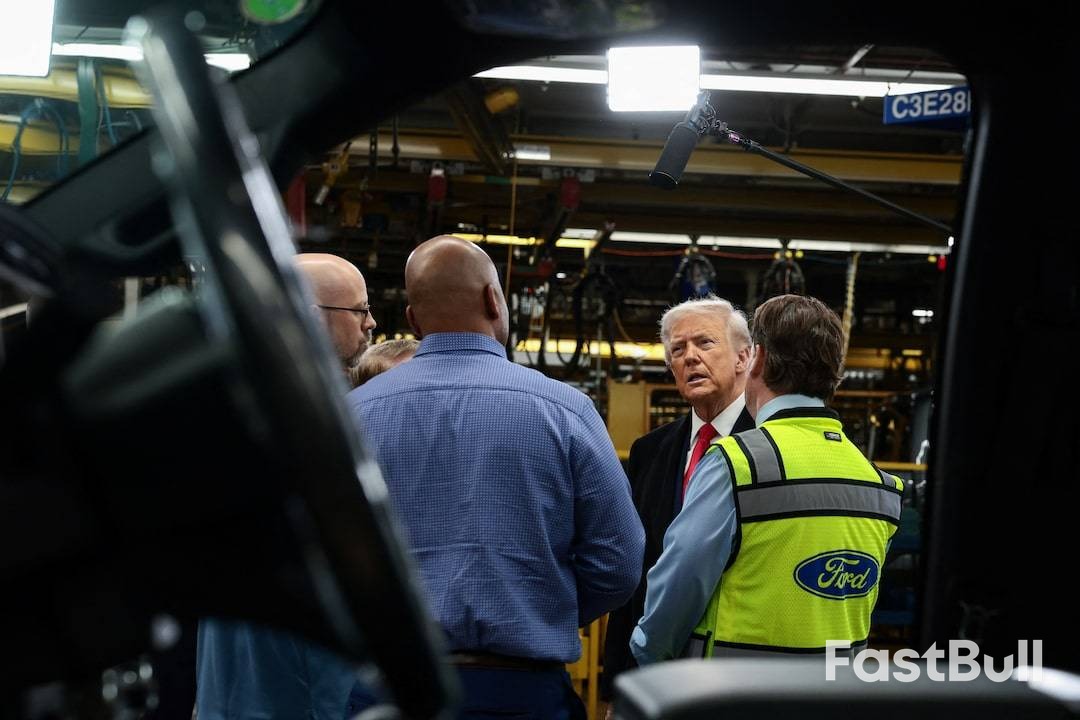
President Donald Trump visited Detroit on Tuesday to deliver a confident message on the economy, aiming to shift the national conversation back to U.S. manufacturing and away from the rising cost of living that continues to worry American families.
In a wide-ranging speech to the Detroit Economic Club, Trump declared his economic policies a resounding success after just 11 months, claiming he had successfully rebuilt the U.S. economy.
"Growth is exploding, productivity is soaring, investment is booming, incomes are rising," he stated. "Inflation is defeated. America is respected again like never before."
Despite the president's optimistic tone, recent economic data presents a more complicated picture. Consumer prices increased last month, largely due to higher costs for food and rent. Meanwhile, job growth has been sluggish, and affordability remains a primary concern for the electorate.
A Reuters/Ipsos poll from December highlighted this disconnect, showing Trump's approval rating on cost-of-living issues at just 27%. The numbers reflect a broader challenge for the White House, which is trying to convince households that it is effectively managing their economic anxieties.
The visit also comes as some White House aides have reportedly urged the president to focus more on domestic concerns, particularly as the Republican Party prepares for a difficult midterm election battle in November.

Trump's trip to the heart of the American auto industry coincided with the Detroit Auto Show, where Ford, General Motors, and Stellantis are showcasing their latest vehicles. However, the industry backdrop is grim.
Nationwide factory employment fell by 8,000 jobs in December, a figure that contradicts the manufacturing renaissance Trump promised would result from his aggressive import taxes. On Tuesday, he repeated his assertion that tariffs were driving a boom in new auto factory construction, though there is little evidence to support this claim.
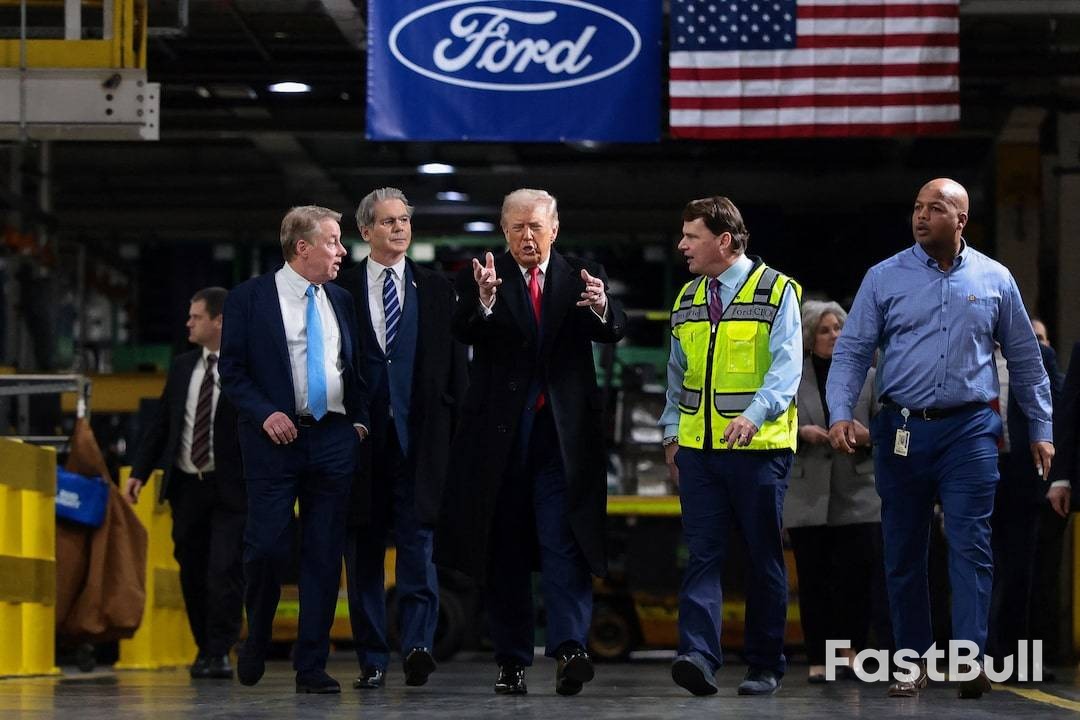
"Now we have more plants being built in our country than at any time in history," Trump said before a tour of a Ford production facility in Dearborn.
The president also expressed indifference toward renegotiating the United States-Mexico-Canada (USMCA) trade agreement, calling it "irrelevant."
"We don't need cars made in Canada," he said. "We don't need cars made in Mexico. We want to make them here."
This position is at odds with U.S. automakers, who have lobbied Trump to extend the free-trade pact. They argue that parts sourced from Mexico and Canada are essential for manufacturing vehicles in the United States. Auto executives, including Ford CEO Jim Farley and Executive Chairman Bill Ford who accompanied Trump on his tour, have spent the past year navigating the financial impact of the president's tariffs and trade disputes.

The Detroit speech is part of a broader strategy to communicate Trump's economic achievements directly to voters ahead of the November midterms, especially after Democrats secured key state-level victories in 2025. Michigan itself is a crucial political battleground with an open U.S. Senate seat and several competitive House races.
While billed as an economic address, Trump's speech veered into other topics, including immigration, former President Joe Biden, transgender athletes, and Venezuela.
His visit follows a series of recent economic-focused announcements that have impacted markets but lack clear legislative support. These include:
• Pressuring credit card companies to temporarily lower interest rates.
• Announcing a ban on Wall Street purchases of single-family homes.
• Urging global oil companies to increase Venezuelan crude output to potentially lower consumer prices.
This flurry of activity signals a White House eager to reframe the economic narrative as a critical election season approaches.
White Label
Data API
Web Plug-ins
Poster Maker
Affiliate Program
The risk of loss in trading financial instruments such as stocks, FX, commodities, futures, bonds, ETFs and crypto can be substantial. You may sustain a total loss of the funds that you deposit with your broker. Therefore, you should carefully consider whether such trading is suitable for you in light of your circumstances and financial resources.
No decision to invest should be made without thoroughly conducting due diligence by yourself or consulting with your financial advisors. Our web content might not suit you since we don't know your financial conditions and investment needs. Our financial information might have latency or contain inaccuracy, so you should be fully responsible for any of your trading and investment decisions. The company will not be responsible for your capital loss.
Without getting permission from the website, you are not allowed to copy the website's graphics, texts, or trademarks. Intellectual property rights in the content or data incorporated into this website belong to its providers and exchange merchants.
Not Logged In
Log in to access more features

FastBull Membership
Not yet
Purchase
Log In
Sign Up