Markets
News
Analysis
User
24/7
Economic Calendar
Education
Data
- Names
- Latest
- Prev


Signal Accounts for Members
All Signal Accounts
All Contests


U.S. Average Hourly Wage MoM (SA) (Dec)A:--
F: --
U.S. Average Weekly Working Hours (SA) (Dec)A:--
F: --
P: --
U.S. New Housing Starts Annualized MoM (SA) (Oct)A:--
F: --
U.S. Total Building Permits (SA) (Oct)A:--
F: --
P: --
U.S. Building Permits MoM (SA) (Oct)A:--
F: --
P: --
U.S. Annual New Housing Starts (SA) (Oct)A:--
F: --
U.S. U6 Unemployment Rate (SA) (Dec)A:--
F: --
P: --
U.S. Manufacturing Employment (SA) (Dec)A:--
F: --
U.S. Labor Force Participation Rate (SA) (Dec)A:--
F: --
P: --
U.S. Private Nonfarm Payrolls (SA) (Dec)A:--
F: --
U.S. Nonfarm Payrolls (SA) (Dec)A:--
F: --
U.S. Average Hourly Wage YoY (Dec)A:--
F: --
U.S. Government Employment (Dec)A:--
F: --
P: --
U.S. UMich Consumer Expectations Index Prelim (Jan)A:--
F: --
P: --
U.S. UMich Consumer Sentiment Index Prelim (Jan)A:--
F: --
P: --
U.S. UMich Current Economic Conditions Index Prelim (Jan)A:--
F: --
P: --
U.S. UMich 1-Year-Ahead Inflation Expectations Prelim (Jan)A:--
F: --
P: --
U.S. UMich 5-Year-Ahead Inflation Expectations Prelim YoY (Jan)A:--
F: --
P: --
U.S. 5-10 Year-Ahead Inflation Expectations (Jan)A:--
F: --
P: --
U.S. Weekly Total Oil Rig CountA:--
F: --
P: --
U.S. Weekly Total Rig CountA:--
F: --
P: --
Indonesia Retail Sales YoY (Nov)A:--
F: --
P: --
Euro Zone Sentix Investor Confidence Index (Jan)A:--
F: --
P: --
India CPI YoY (Dec)A:--
F: --
P: --
Canada National Economic Confidence IndexA:--
F: --
P: --
Germany Current Account (Not SA) (Nov)A:--
F: --
P: --
U.S. Conference Board Employment Trends Index (SA) (Dec)A:--
F: --
China, Mainland M0 Money Supply YoY (Dec)--
F: --
P: --
China, Mainland M2 Money Supply YoY (Dec)--
F: --
P: --
China, Mainland M1 Money Supply YoY (Dec)--
F: --
P: --
Richmond Federal Reserve President Barkin delivered a speech.
U.S. 3-Year Note Auction Yield--
F: --
P: --
U.S. 10-Year Note Auction Avg. Yield--
F: --
P: --
New York Federal Reserve President Williams delivered a speech.
Japan Trade Balance (Customs Data) (SA) (Nov)--
F: --
P: --
Japan Trade Balance (Nov)--
F: --
P: --
U.K. BRC Overall Retail Sales YoY (Dec)--
F: --
P: --
U.K. BRC Like-For-Like Retail Sales YoY (Dec)--
F: --
P: --
Turkey Retail Sales YoY (Nov)--
F: --
P: --
U.S. NFIB Small Business Optimism Index (SA) (Dec)--
F: --
P: --
Brazil Services Growth YoY (Nov)--
F: --
P: --
Canada Building Permits MoM (SA) (Nov)--
F: --
P: --
U.S. CPI MoM (SA) (Dec)--
F: --
P: --
U.S. CPI YoY (Not SA) (Dec)--
F: --
P: --
U.S. Real Income MoM (SA) (Dec)--
F: --
P: --
U.S. CPI MoM (Not SA) (Dec)--
F: --
P: --
U.S. Core CPI (SA) (Dec)--
F: --
P: --
U.S. Core CPI YoY (Not SA) (Dec)--
F: --
P: --
U.S. Core CPI MoM (SA) (Dec)--
F: --
P: --
U.S. Weekly Redbook Index YoY--
F: --
P: --
U.S. New Home Sales Annualized MoM (Oct)--
F: --
P: --
U.S. Annual Total New Home Sales (Oct)--
F: --
P: --
U.S. Cleveland Fed CPI MoM (SA) (Dec)--
F: --
P: --
U.S. Cleveland Fed CPI MoM (Dec)--
F: --
P: --
China, Mainland Exports (Dec)--
F: --
P: --
China, Mainland Imports YoY (CNH) (Dec)--
F: --
P: --
China, Mainland Imports (CNH) (Dec)--
F: --
P: --
China, Mainland Trade Balance (CNH) (Dec)--
F: --
P: --
China, Mainland Imports YoY (USD) (Dec)--
F: --
P: --
China, Mainland Exports YoY (USD) (Dec)--
F: --
P: --
U.S. EIA Short-Term Crude Production Forecast For The Next Year (Jan)--
F: --
P: --


No matching data
Latest Views
Latest Views
Trending Topics
Top Columnists
Latest Update
White Label
Data API
Web Plug-ins
Affiliate Program
View All

No data
U.S. stock futures slid amid a probe into Fed Chair Powell and rising Iran tensions, driving investors to safe havens as gold hit records, silver surged, and the dollar weakened.
The European Union has issued new guidance on a minimum pricing mechanism for Chinese electric vehicles, a move Beijing has welcomed as a "soft landing" in the heated trade dispute over EV tariffs.
This development signals a potential de-escalation after months of tension. At the end of 2024, the European Commission secured backing from member states to impose tariffs ranging from 7.8% to 35.3% on EV imports from China, citing unfair subsidies.

Those tariffs, effective since July 2024, prompted a swift reaction from China. Beijing launched anti-dumping investigations into key EU exports, including brandy and pork, in a move widely seen as targeting France, Spain, the Netherlands, and Denmark.
Following extensive negotiations, the European Commission released its "Guidance Document on the submission of price undertaking offers on battery electric vehicles (BEVs) from China."
According to the Commission, the guidance outlines the key elements for a potential price agreement, covering critical aspects such as:
• Minimum import prices
• Approved sales channels
• Rules on cross-compensation
• Frameworks for future investments in the EU
China’s Commerce Ministry responded positively, highlighting the EU's commitment within the document. The ministry noted that the "EU acknowledges that it will assess each price undertaking offer against the same legal criteria in an objective and fair manner, following the principle of non-discrimination and in accordance with relevant WTO rules."
Beijing views this progress as evidence that both sides can resolve differences through dialogue under the WTO framework. The ultimate goal, according to the ministry, is to maintain stability in the global automotive industrial and supply chains.
This sentiment was echoed by the China Chamber of Commerce to the European Union (CCCEU), which praised "the positive outcome achieved through dialogue and consultations between China and the European Union, which has enabled a soft landing in the electric vehicle case."
The tariff dispute comes as China continues to expand its global dominance in the EV market. Its lead has grown as both the EU and the U.S. have recently adjusted previous policy commitments, a move that reduces competitive pressure on Chinese manufacturers.


Remarks of Officials

Political

Central Bank

Daily News

Data Interpretation

Traders' Opinions

Forex

Stocks

Commodity

Economic

Bond

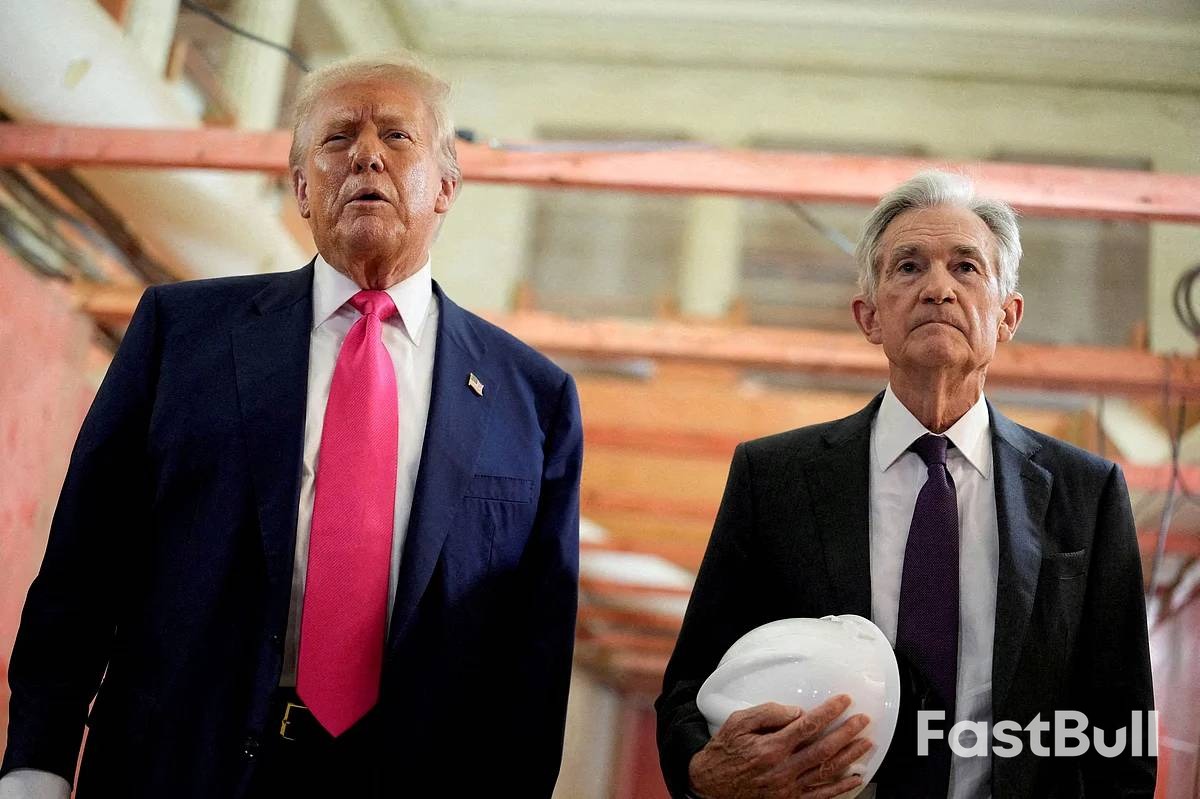
Global investors were sent reeling Monday after the conflict between US President Donald Trump and Federal Reserve Chair Jerome Powell escalated dramatically. A criminal investigation has reportedly been opened into Powell by the US attorney's office in Washington D.C., focusing on the central bank's headquarters renovation.
The market reaction was swift and negative. Ahead of the US open, S&P 500 and Nasdaq futures both fell by more than 0.6%. The VIX "fear gauge" saw its biggest jump since November, while gold, a classic hedge against turmoil, surged to $4,600 an ounce.
With the once-sacred independence of the US central bank now in question, market participants are speculating the investigation is a political power play designed to pressure the Fed into cutting interest rates more aggressively. Powell's term is set to end in May 2026, and Trump, who will name his successor this month, is widely expected to choose a candidate who favors faster monetary easing.
This development amplifies existing concerns about political interference undermining the Fed's credibility. "We had already expected that the Fed would remain challenged by pressures from the White House and that in 2026 there would effectively be 'two Feds'," noted Edward Bell, Acting Chief Economist at Emirates NBD. He explained this refers to "the current Fed with Powell as chair and a post-May Fed when a new chair is appointed." Bell added that public disagreements among policymakers were already confusing the Fed's messaging, and this new threat will "further cloud the Fed's freedom of action."
Vijay Valecha, chief investment officer at Century Financial, warned of the potential consequences. "If this situation is not resolved soon, it could lead to more market volatility, a higher equity risk premium, and a further weakening of the greenback," he said. "We could also see greater inflows into safe-haven instruments such as precious metals and treasuries."
The turmoil is being watched closely by Gulf Cooperation Council (GCC) states. With most of their currencies pegged to the US dollar (except for the Kuwaiti Dinar), their monetary policy is closely tied to the Fed's decisions. When the Fed lowered rates last year, central banks across the region followed suit. Analysts expect regional banks will match the Fed's anticipated 75bps cut in 2026.
While lower rates are welcome, their impact may be limited. "Activity indicators for 2025 show that the economies of the UAE and Saudi Arabia had been performing well even with rates at higher levels so another move lower in rates will be welcome but unlikely to materially accelerate growth for either economy," Bell observed.
Still, short-term impacts are likely. Valecha anticipates "strong opposition to Trump's nomination of Powell's replacement, which could further increase market risk premiums."
If uncertainty around Fed policy intensifies, several rate-sensitive sectors in the GCC could be affected, including banking, real estate, and high-dividend stocks.
According to Valecha, the prospect of continued monetary easing could have several effects:
• Dividend Stocks: Demand could rise for companies offering high dividend yields.
• Real Estate: Expectations of lower regional funding costs could boost demand for developers and REITs, especially as mortgage rates may also decline.
• Banking: While lower interest rates typically squeeze banks' net interest margins (NIMs), this could be offset by an increase in lending activity driven by the region's strong economic fundamentals.
A weaker US dollar, which would also mean weaker GCC currencies, presents both opportunities and challenges for the region's economies.
"Imported goods become more expensive but non-oil exports, and in particular services exports, become relatively more competitive," Bell explained. He added that a significant portion of the region's imports come from markets like India and Turkey, whose currencies depreciated against the dollar in 2025, which could help offset rising costs from other trade partners.
Analysts are advising GCC investors to brace for heightened volatility across asset classes. "If markets start pricing in more political influence over the central bank's decision-making, then it could cause wild swings in global yields," Valecha said. He noted that while short-term yields might fall on rate-cut expectations, long-term yields could rise, leading to a steeper yield curve.
To manage this risk, Valecha recommends portfolio diversification. "Exposure to high-risk momentum plays or cyclical stocks should be balanced by including high-quality, stable defensive components," he advised. He also suggested maintaining a "liquidity buffer to take advantage of any corrective dips through dollar-cost averaging."
Despite the potential for short-term disruption, the long-term outlook for the region's capital markets remains positive. Valecha concluded that while policy uncertainty might cause a "temporary decline in foreign investor inflows," the strong long-term fundamentals of the GCC are likely to support the broader market uptrend.
Bell added that while elevated long-term US rates will keep upward pressure on regional borrowing costs, the "strong credit profile in economies like the UAE and Saudi Arabia and strong investor demand for regional issuances will help to keep spreads contained."

Remarks of Officials

Political

Middle East Situation

Daily News

Russia-Ukraine Conflict

Traders' Opinions

Energy

Commodity

Economic
Oil prices declined on Monday as investors reacted to easing supply concerns from two key OPEC producers, Iran and Venezuela. The dip follows a significant rally last week driven by escalating geopolitical tensions.
By 1248 GMT, Brent crude futures were down 0.2%, or 15 cents, to $63.19 a barrel. West Texas Intermediate (WTI) crude saw a similar decline, falling 0.3%, or 19 cents, to $58.93 a barrel.
According to UBS analyst Giovanni Staunovo, the downward pressure comes from "lower European equity markets and lack of additional supply disruptions" after a strong performance at the end of the previous week. Both benchmarks had surged over 3% last week, marking their largest weekly gain since October.
A primary factor easing market jitters is the situation in Iran. The government announced on Monday that it had regained "total control" following the most significant anti-government demonstrations since 2022.
The statement from Foreign Minister Abbas Araqchi helped calm fears of an immediate supply shock from the region. The recent civil unrest, in which a rights group reported over 500 people were killed, had prompted a sharp crackdown from Iran's clerical establishment.
The situation had drawn international attention, with U.S. President Donald Trump warning of potential military intervention. A U.S. official confirmed that Trump is scheduled to meet with senior advisers on Tuesday to discuss options regarding Iran.
Despite the heightened tensions, market analysts believe a significant risk premium has not yet been fully priced in. "The market is saying, 'Show me the disruption to supply', before materially responding," said Saul Kavonic, head of energy research at MST Marquee, suggesting that traders are waiting for a tangible impact on oil shipments through the Strait of Hormuz.
Adding to the potential for increased global supply, Venezuela is expected to resume oil exports soon after the ouster of President Nicolas Maduro. President Trump announced last week that Caracas is prepared to turn over as much as 50 million barrels of sanctioned oil to the United States.
This development has initiated a logistical race among oil companies. According to four sources familiar with the matter, firms are scrambling to secure tankers and prepare for the complex operations required to ship crude from Venezuela's vessels and aging ports. In a White House meeting on Friday, trading house Trafigura stated its first vessel is expected to load within the next week.
Looking ahead, investment bank Goldman Sachs forecasts that oil prices are likely to trend lower this year. In a note released Sunday, the bank projected that a wave of new supply will create a market surplus.
However, Goldman Sachs also warned that volatility will persist due to ongoing geopolitical risks tied to Russia, Venezuela, and Iran. Investors continue to monitor potential supply disruptions from Russia amid Ukrainian attacks on its energy infrastructure and the possibility of stricter U.S. sanctions.
The bank maintained its average price forecasts for 2026 at $56 per barrel for Brent and $52 per barrel for WTI. It expects prices to hit a bottom in the final quarter of the year at $54 for Brent and $50 for WTI as inventories in OECD countries build up.
In a major policy reversal, JPMorgan Chase has abandoned its forecast for a Federal Reserve rate cut in 2026. The investment bank now predicts the Fed’s next move will be a 25 basis point rate hike in the third quarter of 2027, completely shelving its previous call for a cut in January 2026.
This pivot follows Friday's U.S. jobs report, which showed a labor market that isn't cooling fast enough to warrant monetary easing. While employment growth slowed more than anticipated, the unemployment rate fell to 4.4%, and wage growth remained solid.
However, JPMorgan noted that the door isn't completely closed on easing. "If the labor market weakens again in the coming months, or if inflation falls materially, the Fed could still ease later this year," the bank stated.
JPMorgan is not alone in reassessing the Fed's path forward. Other major banks are also delaying their expectations for rate cuts.
• Goldman Sachs: Has moved its rate cut forecast from March and June to June and September. The firm also lowered its 12-month probability of a U.S. recession from 30% to 20%, stating that the Federal Open Market Committee (FOMC) will likely shift from "risk management mode to normalization mode" if the labor market stabilizes.
• Barclays & Morgan Stanley: Both banks have adjusted their rate cut expectations to mid-2026. Morgan Stanley had previously anticipated cuts in January and April.
Market sentiment has shifted decisively in response to the economic data. According to the CME FedWatch tool, traders now see a 95% probability that the Federal Reserve will hold interest rates steady at its January meeting. This is a significant jump from the 86% chance priced in before the jobs report was released.
Adding another layer of complexity is the political environment surrounding the central bank. Fed Chair Jerome Powell revealed on Sunday that the Trump administration had threatened him with a criminal indictment, raising questions about the Fed's future independence.
With rate cut expectations fading, all eyes are now on Tuesday's Consumer Price Index (CPI) data, which will be the next major test for markets. Ahead of the report, Bitcoin is trading at $90,561, having lost its earlier gains and is down 2.48% over the past week.
White Label
Data API
Web Plug-ins
Poster Maker
Affiliate Program
The risk of loss in trading financial instruments such as stocks, FX, commodities, futures, bonds, ETFs and crypto can be substantial. You may sustain a total loss of the funds that you deposit with your broker. Therefore, you should carefully consider whether such trading is suitable for you in light of your circumstances and financial resources.
No decision to invest should be made without thoroughly conducting due diligence by yourself or consulting with your financial advisors. Our web content might not suit you since we don't know your financial conditions and investment needs. Our financial information might have latency or contain inaccuracy, so you should be fully responsible for any of your trading and investment decisions. The company will not be responsible for your capital loss.
Without getting permission from the website, you are not allowed to copy the website's graphics, texts, or trademarks. Intellectual property rights in the content or data incorporated into this website belong to its providers and exchange merchants.
Not Logged In
Log in to access more features

FastBull Membership
Not yet
Purchase
Log In
Sign Up