• Trade
  • Markets
  • Copy
  • Contests
  • News
  • 24/7
  • Calendar
  • Q&A
  • Chats
Trending
Screeners
SYMBOL
LAST
BID
ASK
HIGH
LOW
NET CHG.
%CHG.
SPREAD
SPX
S&P 500 Index
6846.50
6846.50
6846.50
6878.28
6827.18
-23.90
-0.35%
--
DJI
Dow Jones Industrial Average
47739.31
47739.31
47739.31
47971.51
47611.93
-215.67
-0.45%
--
IXIC
NASDAQ Composite Index
23545.89
23545.89
23545.89
23698.93
23455.05
-32.22
-0.14%
--
USDX
US Dollar Index
99.030
99.110
99.030
99.160
98.730
+0.080
+ 0.08%
--
EURUSD
Euro / US Dollar
1.16375
1.16383
1.16375
1.16717
1.16162
-0.00051
-0.04%
--
GBPUSD
Pound Sterling / US Dollar
1.33243
1.33253
1.33243
1.33462
1.33053
-0.00069
-0.05%
--
XAUUSD
Gold / US Dollar
4189.30
4189.74
4189.30
4218.85
4175.92
-8.61
-0.21%
--
WTI
Light Sweet Crude Oil
58.607
58.734
58.607
60.084
58.495
-1.202
-2.01%
--

Community Accounts

Signal Accounts
--
Profit Accounts
--
Loss Accounts
--
View More

Become a signal provider

Sell trading signals to earn additional income

View More

Guide to Copy Trading

Get started with ease and confidence

View More

Signal Accounts for Members

All Signal Accounts

Best Return
  • Best Return
  • Best P/L
  • Best MDD
Past 1W
  • Past 1W
  • Past 1M
  • Past 1Y

All Contests

  • All
  • Trump Updates
  • Recommend
  • Stocks
  • Cryptocurrencies
  • Central Banks
  • Featured News
Top News Only
Share

(US Stocks) The Philadelphia Gold And Silver Index Closed Down 2.34% At 311.01 Points. (Global Session) The NYSE Arca Gold Miners Index Closed Down 2.17%, Hitting A Daily Low Of 2235.45 Points; US Stocks Remained Slightly Down Before The Opening Bell—holding Steady Around 2280 Points—before Briefly Rising Slightly

Share

IMF: IMF Executive Board Approves Extension Of The Extended Credit Facility Arrangement With Nepal

Share

Trump: Same Approach Will Apply To Amd, Intel, And Other Great American Companies

Share

Trump: Department Of Commerce Is Finalizing Details

Share

Trump: $25% Will Be Paid To United States Of America

Share

Trump: President Xi Responded Positively

Share

[Consumer Discretionary ETFs Fell Over 1.4%, Leading The Decline Among US Sector ETFs; Semiconductor ETFs Rose Over 1.1%] On Monday (December 8), The Consumer Discretionary ETF Fell 1.45%, The Energy ETF Fell 1.09%, The Internet ETF Fell 0.18%, The Regional Banks ETF Rose 0.34%, The Technology ETF Rose 0.70%, The Global Technology ETF Rose 0.93%, And The Semiconductor ETF Rose 1.13%

Share

Trump: I Have Informed President Xi, Of China, That United States Will Allow Nvidia To Ship Its H200 Products To Approved Customers In China

Share

Argentina's Merval Index Closed Up 0.02% At 3.047 Million Points. It Rose To A New Daily High Of 3.165 Million Points In Early Trading In Buenos Aires Before Gradually Giving Back Its Gains

Share

US Stock Market Closing Report | On Monday (December 8), The Magnificent 7 Index Fell 0.20% To 208.33 Points. The "mega-cap" Tech Stock Index Fell 0.33% To 405.00 Points

Share

Pentagon - USA State Dept Approves Potential Sale Of Hellfire Missiles To Belgium For An Estimated $79 Million

Share

Toronto Stock Index .GSPTSE Unofficially Closes Down 141.44 Points, Or 0.45 Percent, At 31169.97

Share

The Nasdaq Golden Dragon China Index Closed Up Less Than 0.1%. Nxtt Rose 21%, Microalgo Rose 7%, Daqo New Energy Rose 4.3%, And 21Vianet, Baidu, And Miniso All Rose More Than 3%

Share

The S&P 500 Initially Closed Down More Than 0.4%, With The Telecom Sector Down 1.9%, And Materials, Consumer Discretionary, Utilities, Healthcare, And Energy Sectors Down By As Much As 1.6%, While The Technology Sector Rose 0.7%. The NASDAQ 100 Initially Closed Down 0.3%, With Marvell Technology Down 7%, Fortinet Down 4%, And Netflix And Tesla Down 3.4%

Share

IMF: Review Pakistan Authorities To Draw The Equivalent Of About US$1 Billion

Share

President Trump Is Committed To The Continued Cessation Of Violence And Expects The Governments Of Cambodia And Thailand To Fully Honor Their Commitments To End This Conflict - Senior White House Official

Share

[Water Overflows From Spent Fuel Pool At Japanese Nuclear Facility] According To Japan's Nuclear Waste Management Company, Following A Strong Earthquake Off The Coast Of Aomori Prefecture Late On December 8th, Workers At The Nuclear Waste Treatment Plant In Rokkasho Village, Aomori Prefecture, Discovered "at Least 100 Liters Of Water" On The Ground Around The Spent Fuel Pool During An Inspection. Analysis Suggests This Water "may Have Overflowed Due To The Earthquake's Shaking." However, It Is Reported That The Overflowed Water "remains Inside The Building And Has Not Affected The External Environment."

Share

Trump Says Netflix, Paramount Are Not His Friends As Warner Bros Fight Heats Up

Share

On Monday (December 8), The ICE Dollar Index Rose 0.11% To 99.102 In Late New York Trading, Trading Between 98.794 And 99.227, Following A Significant Rally After The US Stock Market Opened. The Bloomberg Dollar Index Rose 0.12% To 1213.90, Trading Between 1210.34 And 1214.88

Share

Trump: Has Not Spoken To Kushner About Paramount Bid

TIME
ACT
FCST
PREV
France Trade Balance (SA) (Oct)

A:--

F: --

P: --
Euro Zone Employment YoY (SA) (Q3)

A:--

F: --

P: --
Canada Part-Time Employment (SA) (Nov)

A:--

F: --

P: --

Canada Unemployment Rate (SA) (Nov)

A:--

F: --

P: --

Canada Full-time Employment (SA) (Nov)

A:--

F: --

P: --

Canada Labor Force Participation Rate (SA) (Nov)

A:--

F: --

P: --

Canada Employment (SA) (Nov)

A:--

F: --

P: --

U.S. PCE Price Index MoM (Sept)

A:--

F: --

P: --

U.S. Personal Income MoM (Sept)

A:--

F: --

P: --

U.S. Core PCE Price Index MoM (Sept)

A:--

F: --

P: --

U.S. PCE Price Index YoY (SA) (Sept)

A:--

F: --

P: --

U.S. Core PCE Price Index YoY (Sept)

A:--

F: --

P: --

U.S. Personal Outlays MoM (SA) (Sept)

A:--

F: --

P: --
U.S. 5-10 Year-Ahead Inflation Expectations (Dec)

A:--

F: --

P: --

U.S. Real Personal Consumption Expenditures MoM (Sept)

A:--

F: --

P: --
U.S. Weekly Total Rig Count

A:--

F: --

P: --

U.S. Weekly Total Oil Rig Count

A:--

F: --

P: --

U.S. Consumer Credit (SA) (Oct)

A:--

F: --

P: --
China, Mainland Foreign Exchange Reserves (Nov)

A:--

F: --

P: --

Japan Trade Balance (Oct)

A:--

F: --

P: --

Japan Nominal GDP Revised QoQ (Q3)

A:--

F: --

P: --

China, Mainland Imports YoY (CNH) (Nov)

A:--

F: --

P: --

China, Mainland Exports (Nov)

A:--

F: --

P: --

China, Mainland Imports (CNH) (Nov)

A:--

F: --

P: --

China, Mainland Trade Balance (CNH) (Nov)

A:--

F: --

P: --

China, Mainland Exports YoY (USD) (Nov)

A:--

F: --

P: --

China, Mainland Imports YoY (USD) (Nov)

A:--

F: --

P: --

Germany Industrial Output MoM (SA) (Oct)

A:--

F: --

P: --
Euro Zone Sentix Investor Confidence Index (Dec)

A:--

F: --

P: --

Canada National Economic Confidence Index

A:--

F: --

P: --

U.K. BRC Like-For-Like Retail Sales YoY (Nov)

--

F: --

P: --

U.K. BRC Overall Retail Sales YoY (Nov)

--

F: --

P: --

Australia Overnight (Borrowing) Key Rate

--

F: --

P: --

RBA Rate Statement
RBA Press Conference
Germany Exports MoM (SA) (Oct)

--

F: --

P: --

U.S. NFIB Small Business Optimism Index (SA) (Nov)

--

F: --

P: --

Mexico 12-Month Inflation (CPI) (Nov)

--

F: --

P: --

Mexico Core CPI YoY (Nov)

--

F: --

P: --

Mexico PPI YoY (Nov)

--

F: --

P: --

U.S. Weekly Redbook Index YoY

--

F: --

P: --

U.S. JOLTS Job Openings (SA) (Oct)

--

F: --

P: --

China, Mainland M1 Money Supply YoY (Nov)

--

F: --

P: --

China, Mainland M0 Money Supply YoY (Nov)

--

F: --

P: --

China, Mainland M2 Money Supply YoY (Nov)

--

F: --

P: --

U.S. EIA Short-Term Crude Production Forecast For The Year (Dec)

--

F: --

P: --

U.S. EIA Natural Gas Production Forecast For The Next Year (Dec)

--

F: --

P: --

U.S. EIA Short-Term Crude Production Forecast For The Next Year (Dec)

--

F: --

P: --

EIA Monthly Short-Term Energy Outlook
U.S. API Weekly Gasoline Stocks

--

F: --

P: --

U.S. API Weekly Cushing Crude Oil Stocks

--

F: --

P: --

U.S. API Weekly Crude Oil Stocks

--

F: --

P: --

U.S. API Weekly Refined Oil Stocks

--

F: --

P: --

South Korea Unemployment Rate (SA) (Nov)

--

F: --

P: --

Japan Reuters Tankan Non-Manufacturers Index (Dec)

--

F: --

P: --

Japan Reuters Tankan Manufacturers Index (Dec)

--

F: --

P: --

Japan Domestic Enterprise Commodity Price Index MoM (Nov)

--

F: --

P: --

Japan Domestic Enterprise Commodity Price Index YoY (Nov)

--

F: --

P: --

China, Mainland PPI YoY (Nov)

--

F: --

P: --

China, Mainland CPI MoM (Nov)

--

F: --

P: --

Italy Industrial Output YoY (SA) (Oct)

--

F: --

P: --

Q&A with Experts
    • All
    • Chatrooms
    • Groups
    • Friends
    Connecting
    .
    .
    .
    Type here...
    Add Symbol or Code

      No matching data

      All
      Trump Updates
      Recommend
      Stocks
      Cryptocurrencies
      Central Banks
      Featured News
      • All
      • Russia-Ukraine Conflict
      • Middle East Flashpoint
      • All
      • Russia-Ukraine Conflict
      • Middle East Flashpoint
      Search
      Products

      Charts Free Forever

      Chats Q&A with Experts
      Screeners Economic Calendar Data Tools
      Membership Features
      Data Warehouse Market Trends Institutional Data Policy Rates Macro

      Market Trends

      Market Sentiment Order Book Forex Correlations

      Top Indicators

      Charts Free Forever
      Markets

      News

      News Analysis 24/7 Columns Education
      From Institutions From Analysts
      Topics Columnists

      Latest Views

      Latest Views

      Trending Topics

      Top Columnists

      Latest Update

      Signals

      Copy Rankings Latest Signals Become a signal provider AI Rating
      Contests
      Brokers

      Overview Brokers Assessment Rankings Regulators News Claims
      Broker listing Forex Brokers Comparison Tool Live Spread Comparison Scam
      Q&A Complaint Scam Alert Videos Tips to Detect Scam
      More

      Business
      Events
      Careers About Us Advertising Help Center

      White Label

      Data API

      Web Plug-ins

      Affiliate Program

      Awards Institution Evaluation IB Seminar Salon Event Exhibition
      Vietnam Thailand Singapore Dubai
      Fans Party Investment Sharing Session
      FastBull Summit BrokersView Expo
      Recent Searches
        Top Searches
          Markets
          News
          Analysis
          User
          24/7
          Economic Calendar
          Education
          Data
          • Names
          • Latest
          • Prev

          View All

          No data

          Scan to Download

          Faster Charts, Chat Faster!

          Download App
          English
          • English
          • Español
          • العربية
          • Bahasa Indonesia
          • Bahasa Melayu
          • Tiếng Việt
          • ภาษาไทย
          • Français
          • Italiano
          • Türkçe
          • Русский язык
          • 简中
          • 繁中
          Open Account
          Search
          Products
          Charts Free Forever
          Markets
          News
          Signals

          Copy Rankings Latest Signals Become a signal provider AI Rating
          Contests
          Brokers

          Overview Brokers Assessment Rankings Regulators News Claims
          Broker listing Forex Brokers Comparison Tool Live Spread Comparison Scam
          Q&A Complaint Scam Alert Videos Tips to Detect Scam
          More

          Business
          Events
          Careers About Us Advertising Help Center

          White Label

          Data API

          Web Plug-ins

          Affiliate Program

          Awards Institution Evaluation IB Seminar Salon Event Exhibition
          Vietnam Thailand Singapore Dubai
          Fans Party Investment Sharing Session
          FastBull Summit BrokersView Expo

          NATO Is Right in Not Admitting Ukraine to the Alliance in A Hurry

          Devin

          Political

          Russia-Ukraine Conflict

          Summary:

          The hesitation is smart because many member countries may not accept such a move.

          At the NATO summit in July, while member states displayed continued resolve to provide Ukraine with the material and political support needed to counter Russia, they would not agree to President Volodymyr Zelenskyy's demand for an expedited Ukrainian entry into the alliance. Ukraine has been pressing NATO for admission, but most members demurred. One of the main reasons was that according to NATO's charter, Ukrainian membership would, in effect, directly put other NATO members at war with Russia in the defence of Ukraine's sovereignty. That was seen as a step too far.
          The decision reached by NATO's members was that weapons and aid will continue to flow and sanctions on Russia will remain in place, but Ukraine's admission would be delayed until the end of hostilities. What the NATO members are saying to Mr. Zelenskyy is that it's one thing for us to give you everything you need to repel the invasion of your territory and quite another for us to declare a full-scale European continental war with Russia.
          This hesitation is smart because it is doubtful that public opinion in many NATO countries would accept such a move. And it is even more questionable, even if there were support in some countries for such a war with Russia, that the support would be sustainable over time.
          It's useful to recall former US Secretary of State Colin Powell's doctrinal guidelines to be followed by any democracy before declaring war. Of the items included in the “Powell Doctrine”, two are particularly relevant in this instance. First, Mr. Powell insisted, there must be a clear understanding of the costs, consequences and terms of engagement involved in the war.
          Following this, the doctrine maintains that there must be sufficient and sustainable public support for the effort to be successful, especially if the war is expected to be long. According to the doctrine, if these conditions cannot be met, public support will wane and the resultant discontent will ensure that objectives cannot be met. (Of course, it should be recalled that in his support for the Iraq war, Mr. Powell violated these and other terms of his own “doctrine,” and the disaster that followed only proved the wisdom of his earlier observations.)
          Having noted this, it is useful to examine the results of the Zogby Research Services poll in seven European countries (UK, France, Spain, Italy, Germany, Poland and Turkey) completed in May 2023. This was the fourth in a series of ZRS polls of European attitudes towards the war. This poll was conducted against a backdrop that included: an intensified push by the US and NATO allies to supply Ukraine with more advanced weaponry in anticipation of Ukraine's awaited “spring offensive”; Russian bombing of Ukrainian civilian targets; and the destruction of a major dam in Ukraine threatening several communities and causing tens of thousands of people to flee.
          What we found was that NATO opposition to Russia's aggression and support for Ukraine coupled with caution regarding their quick admission were clearly in line with current European public opinion. Our summary findings were:
          Most Europeans continue to blame Russia for the war and support breaking ties with and continued sanctions directed against Russia.
          At the same time, a substantial majority of respondents in all countries polled make clear that they are “concerned about the cost of this war and believe that a compromise should be found to save lives and resources”. Only one-third or fewer believe that “it is worth the cost of continuing to fight to stop Russian aggression”.
          About two-thirds in most countries say their governments should be more independent in global affairs and less aligned with the US. And while Russia has burnt its bridges with most Western Europeans, a sizable majority of respondents see the importance of their countries now developing closer ties with China.
          There is support for admitting Ukraine into NATO in just four of the seven countries, and only respondents in the UK and Poland give tepid support for sending NATO troops. In no country were respondents in support of sending their own forces into the war zone.
          These attitudes may shift in coming months depending on the success or failure of Ukraine's offensive and how the internal situation in Russia unfolds in the wake of the failed rebellion by the Wagner Group.
          But what's clear, at this point, is that there is growing unease with the fact that this war, which most respondents told us they believed would be over quickly, is continuing with no end in sight. Their major concerns are with increases in the cost of living, the flood of refugees which only serves to aggravate the xenophobic mindset of political parties on the right, and the potential for the war to morph into other destabilising threats that will impact peace on the continent. And, as noted, there is additional unease with their governments appearing to be allowing the US to determine the direction of their foreign policy.
          In this context, NATO's caution was right.

          Source: The National News

          Risk Warnings and Disclaimers
          You understand and acknowledge that there is a high degree of risk involved in trading. Following any strategies or investment methods may lead to potential losses. The content on the site is provided by our contributors and analysts for information purposes only. You are solely responsible for determining whether any trading assets, securities, strategy, or any other product is suitable for investing based on your own investment objectives and financial situation.
          Comments
          Add to Favorites
          Share

          Michel Barnier Calls for Post-Brexit UK-EU Defense Treaty

          Cohen

          Political

          Economic

          The time is right for London and Brussels to negotiate a new treaty on defense and foreign policy cooperation, Michel Barnier, the EU's former chief Brexit negotiator, told POLITICO.
          Speaking to the Ex-Files newsletter for its 100th edition, Barnier — a former French presidential candidate and key player in Britain's painstaking divorce from the EU — said it was now in both sides' interest to collaborate in the face of shared challenges like the war in Ukraine, climate change and terrorism.
          Pointing to the "goodwill" built up between London and Brussels this year with the signing of a long sought-after deal on trading rules for Northern Ireland, Barnier argued: "We need to build a new kind of [U.K.-EU] cooperation."
          During 2020 talks for the U.K. and EU's post-Brexit trade deal, known as the Trade and Cooperation Agreement (TCA), then-Prime Minister Boris Johnson decided not to negotiate a security treaty with the bloc.
          That was despite such a plan being part of the political declaration Johnson had signed a few months earlier. The U.K. maintained there were ways of cooperating on issues like defense without formal treaty obligations.
          "There were probably political reasons behind this refusal, but I think it was a mistake," said Barnier, who led the EU's negotiating team for the TCA and the preceding U.K.-EU Withdrawal Agreement.
          "And now, I think it's time — looking at the situation in Africa, looking at the war in Ukraine, looking at the new challenges for our security and the stability of the Continent — I think it would be in our common interest to negotiate a new treaty on defense, external policy, foreign policy and cooperation between the U.K. and the EU."
          The Financial Times reported over the weekend that the U.K. had declined an EU offer to collaborate formally on global issues — an idea the newspaper said was floated by European Council President Charles Michel.
          But the U.K. does appear to be warming to the idea of reviving defense cooperation with the bloc — despite some misgivings from Conservative Brexiteers.
          A U.K. minister revealed in June that Brussels and London had reached consensus on the "majority" of an agreement for the U.K. to join a military project under the EU's defense coordination group, known as the Permanent Structured Cooperation.
          Brexit reflections
          Speaking from a holiday on France's Atlantic coast, Barnier — who became a household name across the U.K. as it negotiated its exit from the EU — continued to express regret over Britain's decision to leave the bloc.
          Brexit is an outcome he continues to call a "nonsense" and a "lose-lose game" for the U.K. and the EU. While proud to have led "extraordinary" negotiations on Brussels' behalf, he noted that the EU had never before had to engage in trade talks with a third country "to rebuild barriers, not to delete barriers."
          "Until now, I do not see any positive consequences of leaving the EU," he said. Britain's current difficulties are not all linked to Brexit, Barnier insisted, but are "more serious" as a result of it.
          While cautious not to opine on what the U.K. should or shouldn't do next, he said "the door is open" for Britain to rejoin the EU if it so wishes. But he warned that regulatory divergence from the EU — which "the U.K. is free" to do and was "one of the main reasons for Brexit" — would make such a task all the harder.
          "If you have created too big a divergence, it could be a problem because you have to reduce this divergence" to meet the rules and standards of the single market, he said.
          'No way' on rules of origin
          One potential new flashpoint for U.K. and EU relations is already coming into view.
          Under the TCA that Barnier helped negotiate, rules of origin crucial to electric vehicle manufacturing will tighten from January 1 next year.
          The changes will require 45 percent of a new electric vehicle and its parts to be made inside the U.K. or EU when traded across the border — or face 10 percent tariffs. Those rules will tighten further in 2027.
          The automotive industry in both Britain and the EU wants a stay of execution, and Kemi Badenoch, the U.K.'s business and trade secretary, has been pressing her EU counterpart about the upcoming cliff-edge.
          But Barnier, who has kept across U.K. demands from afar, suggests further tinkering on rules of origin and financial services in the TCA — which also faces another deadline on EU banks using clearing houses in London — is unlikely.
          "I think there is no way to do more flexibility on these two issues. No way," he said.
          The former Brexit negotiator continued to argue for one tweak that he believes will ease trade burdens between the two sides: a U.K.-EU veterinary agreement to facilitate "the exchange of animals and also vegetables."
          It's a commitment made by the U.K.'s opposition Labour Party if it wins power.
          "There is some way to improve, to facilitate, to use technology, but there is no way for any kind of cherry-picking," he said. "In my view, as a French and European citizen, I will not accept any kind of cherry-picking."
          Asked if he would like to take part in the review of the TCA due midway through this decade, Barnier, who is no longer a member of the European Commission, replied: "There are many, many competent people in the Commission to deal with this."
          The Brexit talks "remain for me an extraordinary negotiation, but also a negative negotiation," he said later in the interview. "I've still not understood the added value of Brexit — for the U.K. and for us."

          Source: POLITICO

          To stay updated on all economic events of today, please check out our Economic calendar
          Risk Warnings and Disclaimers
          You understand and acknowledge that there is a high degree of risk involved in trading. Following any strategies or investment methods may lead to potential losses. The content on the site is provided by our contributors and analysts for information purposes only. You are solely responsible for determining whether any trading assets, securities, strategy, or any other product is suitable for investing based on your own investment objectives and financial situation.
          Comments
          Add to Favorites
          Share

          Time for Tech

          Damon

          Stocks

          There seems to be broad agreement that Fitch's U.S. credit rating downgrade will have little impact on the real value of U.S. Treasuries, but the move has left markets feeling fragile and nervy ahead of tech giants Apple and Amazon reporting.
          U.S. Treasury yields and the dollar are clinging to nine-month peaks, while the VIX is headed for its biggest week-on-week gain since March. The Nasdaq tumbled by 2.2% on Wednesday - reversing more than half of July's gains in one fell swoop - and futures point to more pain ahead, with questions about whether the big tech rally - the tide that floated most equity markets' boats - can be sustained.
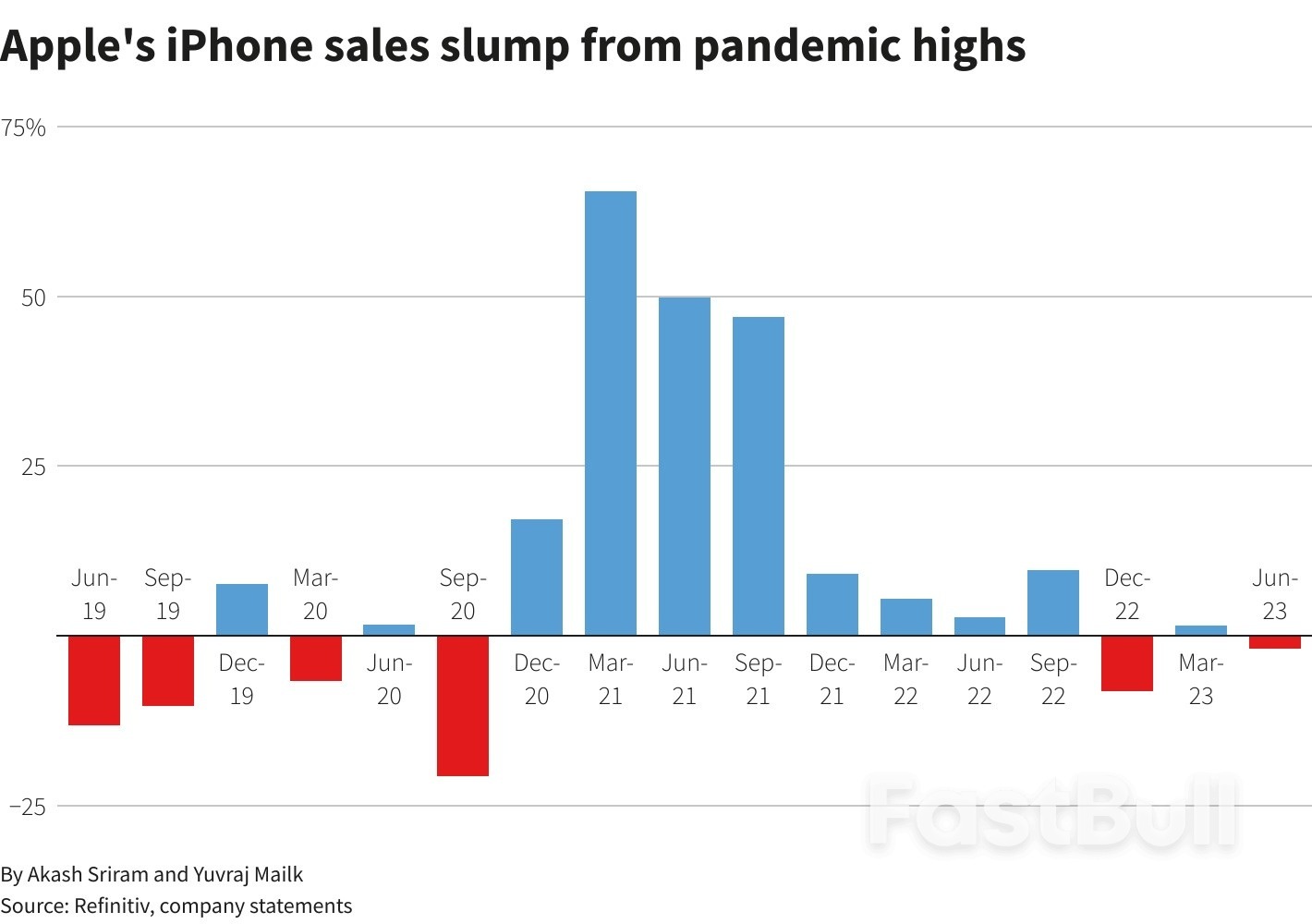
          Apple is likely to report a dip in iPhone sales in its April-June quarter, as shoppers held out for a new model in a slow economy. This will shift investors' focus to the use of artificial intelligence to augment Apple's growth.
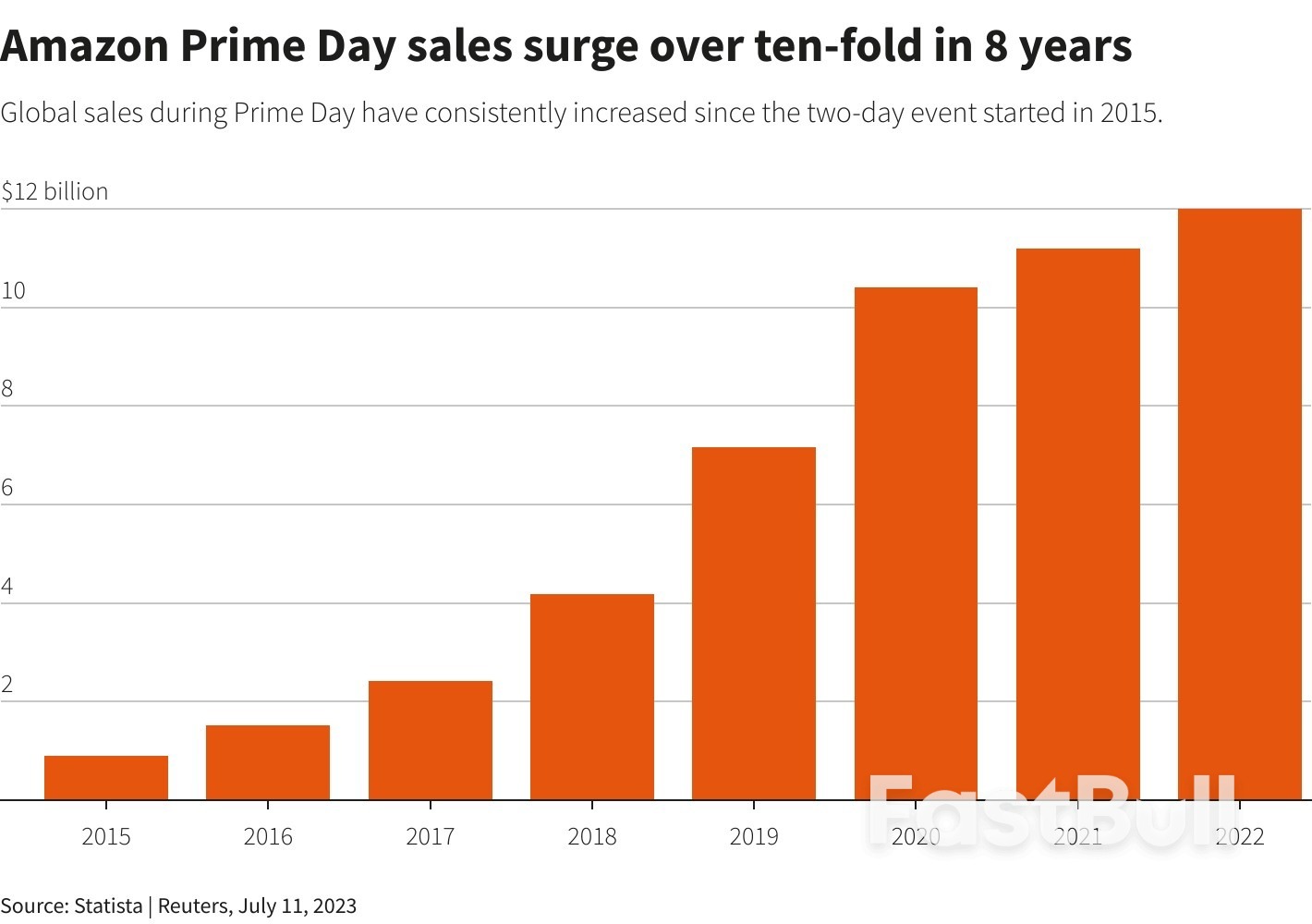
          Meanwhile, Amazon.com is expected to deliver a more than 8% rise in second-quarter revenue, aided by a recovery in the advertising and e-commerce businesses and offset by weakness in its Amazon Web Services cloud unit.
          Both will also give a fresh sense of how retail demand is shaping up - tying in closely with a raft of labour market data due out today, including jobless claims, second-quarter productivity and unit labour costs, which all pave the way for Friday's big non-farm payroll release. Plus - there are PMIs, and final durable goods orders to round off the day.
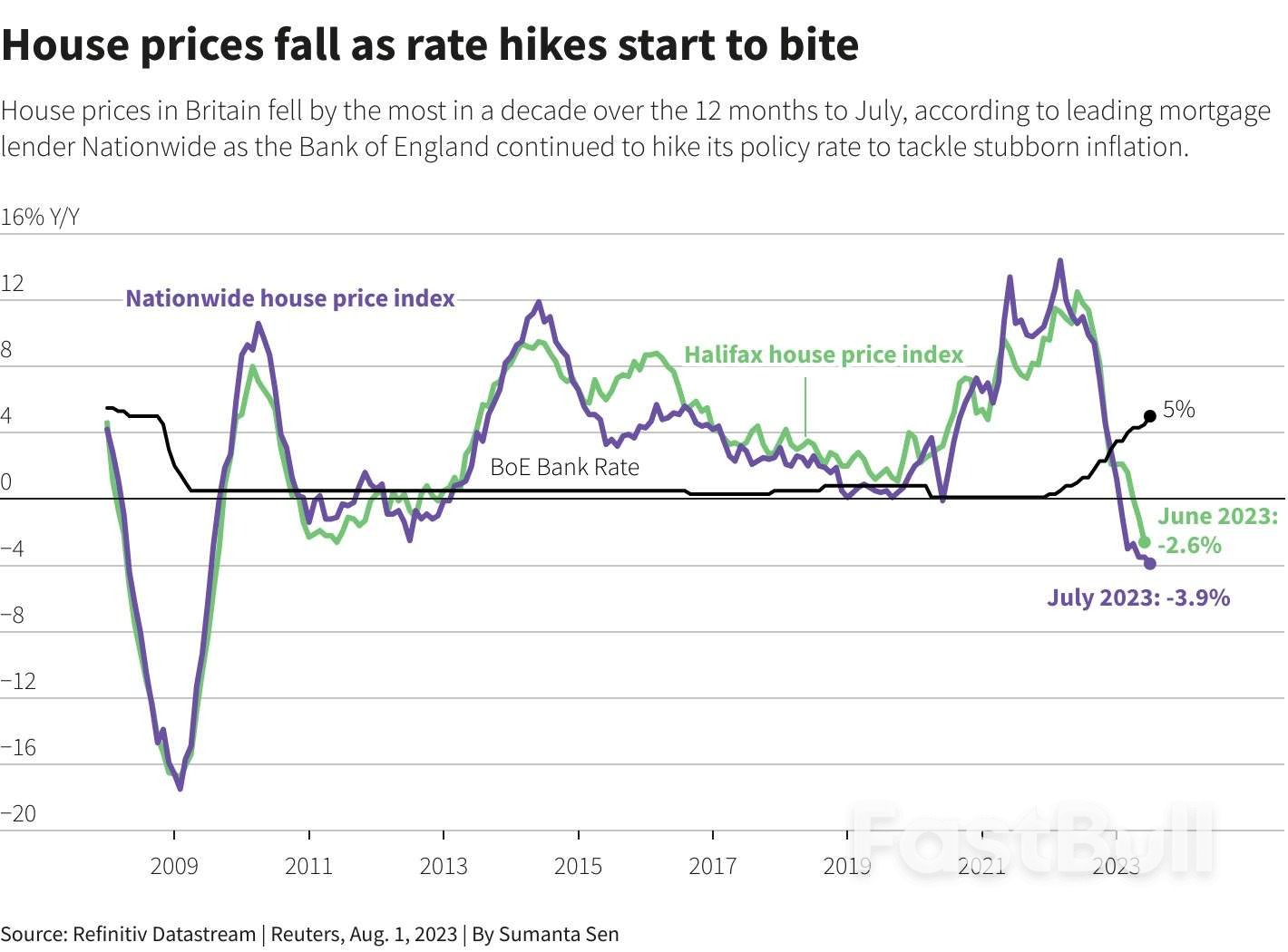
          Back to Europe, where the Bank of England is facing a knife-edge decision on whether to hike UK rates by 25 basis points or 50 basis points in what would be the 14th increase in a row. Policy makers are attempting a balancing act; trying to fight inflation without fanning recession risk. The pound traded around its lowest in a month on Thursday, and the FTSE 100 share index fell to two-week lows, both weighed down by nervousness ahead of the BoE decision.
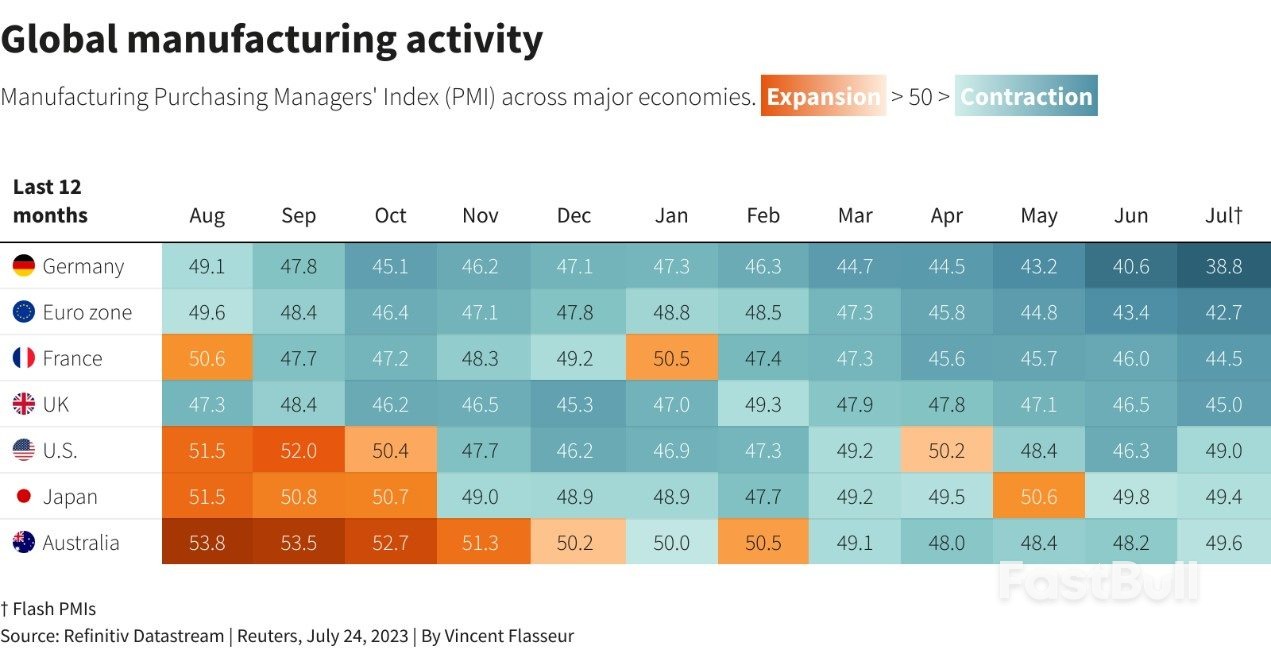
          Data from the euro zone showed the downturn in business activity worsened more than initially thought in July as the slump in manufacturing was accompanied by a further slowing of growth in the bloc's dominant services industry.
          Key developments that should provide more direction to U.S. markets later on Thursday:
          * U.S. corp earnings: Apple, Amazon, Moderna, Hasbro, ConocoPhilips, Airbnb, Amgen, Livent, Regeneron, Corteva
          * Initial claims for state unemployment benefits, Labor Department preliminary unit labour costs, Commerce Department factory orders & durable goods, ISM non-manufacturing PMI, S&P Global's final reading of composite and services PMI
          * The Federal Reserve Bank of Richmond President Thomas Barkin scheduled to speak on "Recession Revisited"Time for Tech_1Time for Tech_2Time for Tech_3Time for Tech_4

          Source: Yahoo

          Risk Warnings and Disclaimers
          You understand and acknowledge that there is a high degree of risk involved in trading. Following any strategies or investment methods may lead to potential losses. The content on the site is provided by our contributors and analysts for information purposes only. You are solely responsible for determining whether any trading assets, securities, strategy, or any other product is suitable for investing based on your own investment objectives and financial situation.
          Comments
          Add to Favorites
          Share

          BOJ Makes Bold Shift as Yen Risks Grow Too Big to Ignore

          Thomas

          Forex

          Central Bank

          The Bank of Japan's surprise decision last week to raise a cap on interest rates was partly driven by policymakers' growing worries ultra-loose monetary settings would spark a repeat of the bruising yen selloff that the economy saw last year.
          The tweak to the BOJ's bond yield curve control (YCC) was the result of brainstorming sessions that came to a head in May, say sources familiar with the decision, just over a month after Kazuo Ueda succeeded his dovish predecessor Haruhiko Kuroda as the bank's chief.
          Pressure from Prime Minister Fumio Kishida's government also played a part, suggesting that future policy tweaks will be driven not just by the inflation outlook but market moves - notably the yen, the sources said.
          "Yen moves have been and will remain a very important factor shaping Japan's monetary policy," one of them said. "The BOJ made that point clear this time in a way unseen in the past."
          The BOJ's decision shook markets on Friday and contrasted sharply with Ueda's more cautious comments in recent months about the dangers of retreating too quickly from accommodative Kuroda-era policies.
          The focus on yen moves also means policymakers are now prioritising dealing with the side-effects of decades of massive monetary stimulus, such as Japan's yawning interest rate gap with economic peers that has pummelled its currency.
          "Deep inside, Ueda probably feels the role of YCC has ended and is worried about its side-effects," said an official who has known Ueda for decades. "There's also a small but probable risk of inflation overshooting in Japan, which gave the BOJ reason to act."
          This account of the BOJ's decision last week is based on conversations with over a dozen government officials, Kishida administration aides and sources with direct knowledge of the central bank's deliberations.
          Most spoke on condition of anonymity as they were not authorised to speak publicly, or declined to comment on record due to the sensitivity of the matter.
          Last week's move means the BOJ will likely refrain from further tweaks to YCC unless inflation perks up much faster than expected and keeps the 10-year yield elevated near the new 1% ceiling, the sources said.
          More substantial moves toward policy normalisation, such as interest rate hikes, will come after close scrutiny of data for clues on next year's wage and inflation outlook, they said.
          "It's clear the direction the BOJ is taking is towards an exit from easy policy," a third source said. "But it will take time, perhaps the entire five-year term for Ueda."
          New Priorities
          The BOJ's policy decision last week signalled to investors that it would now allow the 10-year government bond yield to move closer to 1% before it intervenes.
          Under YCC, first introduced in 2016, the central bank seeks to rev up stagnant consumer demand by keeping credit extremely ample, specifically by guiding short-term rates at -0.1% and the 10-year bond yield around 0%.
          That policy runs smoothly when inflation and economic growth are subdued, but hits trouble when prices creep up, as they have over the past year, putting upward pressure on the 10-year bond yield and forcing the BOJ to ramp up bond buying.
          The BOJ's relentless defence of its yield cap last year in particular drew the ire of Kishida's administration for fuelling sharp yen falls that inflated import costs and household expenses.
          Since the yen hit a 23-year-low in September last year, the government has frequently prodded the BOJ to make its ultra-easy policy more flexible, in part to prevent low Japanese yields from stoking further currency declines, the sources said.
          When asked about the role the government played in the BOJ's July decision, Chief Cabinet Secretary Hirokazu Matsuno told reporters on Thursday he was not aware of any government intervention. He also said the government "always communicates closely with the BOJ," but declined to comment on specifics.
          A BOJ spokesperson did not respond to Reuters' request for comment.
          As the yen renewed its fall in May, a handful of bureaucrats at the BOJ's elite monetary affairs department began brainstorming ideas on how to loosen the bank's grip on yields.
          Their mission was to avoid a recurrence of last December, when the BOJ relented to market pressure and abruptly raised the yield cap - stoking speculation of an early end to easy policy.
          The stakes are high, not just for Japan but global financial markets.
          After three decades of extremely low interest rates, any sign of monetary tightening risks triggering a spike in the cost of funding Japan's huge public debt, and creating disruptive shifts in global asset allocation.
          The key was therefore to allow rates to rise, without giving markets the impression the BOJ was moving towards policy normalisation.
          That meant Ueda would need to pitch the move as aimed at prolonging the lifespan of YCC.
          'Bit by bit'
          The shift in thinking gained momentum at the BOJ's June policy meeting, but not enough to turn the tide.
          While one board member called for an early review of YCC, most saw no need to take immediate action. Dovish board members like Seiji Adachi and Asahi Noguchi also publicly ruled out the chance of an early YCC tweak.
          After that, however, Ueda and his deputies started dropping subtle hints of a tweak by drawing more attention to the side-effects of YCC and changing the way they described recent inflation.
          Deputy Governor Ryozo Himino told Reuters in late June that inflation was stronger than previously projected and driven increasingly by domestic demand.
          A week later, Deputy Governor Shinichi Uchida told the Nikkei newspaper the BOJ would decide whether to modify the yield cap by scrutinising "the impact it had on financial intermediation and market function."
          The government kept applying pressure on the BOJ to pay more attention to currency market consequences of its policy.
          Uchida, a career central banker who masterminded many of the BOJ's unconventional policies, liaised with the government and kept in close contact with Japan's top currency diplomat Masato Kanda.
          As the yen slid to a two-week low near 142 to the dollar, Kanda suggested on July 21 that growing inflationary signs could prod the BOJ to soon tweak its approach to stimulus.
          The BOJ made tweaks to YCC at the meeting held a week later, saying the move was aimed at mitigating side-effects such as "volatility in the exchange-rate market."
          Deputy governor Uchida told reporters this week that preventing exchange-rate volatility would be among factors the central bank would emphasise in guiding policy.
          Uchida's comments marked a rare foray by the BOJ into concerns about foreign exchange, which historically comes under the purview of the government.
          "The BOJ already controls Japanese bond yields," said a fourth source. "It can't fully control yen moves but at the very least, it can be more mindful of their impact on the economy."
          However the BOJ frames the move, some analysts see the July action as the first step towards policy normalisation. While the 0.5% cap for the 10-year yield remains in place, it is now obsolete with a new effective ceiling of 1.0% set last week.
          The BOJ will now intervene only when the 10-year yield creeps near 1% - a level its staff don't think will be reached under current economic conditions.
          "Last week's move made YCC quite a flexible scheme. It was a test case, or a preliminary exercise, toward future policy normalisation," said former BOJ board member Takahide Kiuchi.
          "It's an example of how the BOJ will chip away at Kuroda's legacy stimulus bit by bit."

          Source: Reuters

          Risk Warnings and Disclaimers
          You understand and acknowledge that there is a high degree of risk involved in trading. Following any strategies or investment methods may lead to potential losses. The content on the site is provided by our contributors and analysts for information purposes only. You are solely responsible for determining whether any trading assets, securities, strategy, or any other product is suitable for investing based on your own investment objectives and financial situation.
          Comments
          Add to Favorites
          Share

          Shares Stumble as U.S. Yields Rise

          Damon

          Stocks

          Share markets stumbled on Thursday as U.S. bonds yields hit nine-month peaks, helping the dollar to shrug off a U.S. credit downgrade to hit a four-week high against its major peers.
          European shares slipped 1.1% after falling on Wednesday to two-week lows as rating agency Fitch cut the U.S. government's credit rating. UK shares fell 1.3%, with the Bank of England (BoE) expected to raise interest rates later in the day.
          Wall Street was set to open in negative territory, too. S&P 500 futures and Nasdaq futures were down 0.5% and 0.8% respectively, set for more pain after a wave of selling a day earlier.
          Pressuring stocks were a climb in long-term U.S. Treasury yields after stronger-than-expected private employment data and the announced refunding of the U.S. government's maturing debt.
          U.S. 10-year yields hit a new nine-month peak of 4.17%, while 30-year yields rose to a fresh nine-month top.
          That helped the U.S. dollar stay buoyant near a one-month high of 102.75 against its major peers. The strong private payrolls data added to signs of U.S. labour market resilience, with the nonfarm payrolls report due on Friday.
          Economists expect the BoE to hike rates by a quarter-point to a 15-year high of 5.25%, with a decision due at 1100 GMT. The risk, investors said, was that a repeat of June's surprise half-point increase could fuel bets that major central banks are not done tightening yet.
          "We'll see how the (monetary policy) committee is thinking about that balance between inflation and growth - that's really what's on central banks' minds right now," said Jonathan Petersen, senior markets economist at Capital Economics.
          Apple And Amazon
          In Asia, MSCI's broadest index of Asia-Pacific shares outside Japan fell 0.4%, extending losses after a drop of 2.3% a day earlier.
          Still, Chinese blue chips rose 0.9% and Hong Kong's Hang Seng index added 0.3% after a private survey showed China's services activity expanded at a faster place in July - a rare spot of good news for the sputtering economy though in contrast with a decline in official surveys.
          Analysts at Morgan Stanley downgraded China shares to equal weight, given the still-negative earnings revisions and weak return on equity and profit margins.
          "We believe a better reentry opportunity could be down the road, but more patience is preferred at this moment," they said in a note.
          Investors were awaiting earnings results from Apple and Amazon that may give clues on whether the tech sector's sky-high valuations are justified.
          Apple is expected to report the largest third-quarter drop in revenues since 2016 as sales of iPhones slow.
          Amazon, a bellwether for consumer spending, is expected to report a more than 8% rise in second-quarter revenue, aided by a recovery in the advertising and e-commerce businesses.
          In currency markets, sterling hovered around $1.27 ahead of the BOE's decision, just a touch above its four-week low of $1.2680. Sterling has climbed almost 6% this year, and is already set for its biggest annual jump since 2017, supported by the central bank's aggressive monetary tightening path.
          Overnight, Brazil's central bank cut its benchmark interest rates for the first time in three years and by a larger-than-expected 50 basis points, marking the start of an easing cycle in emerging markets now that U.S. rates have likely peaked.

          Source: Yahoo

          Risk Warnings and Disclaimers
          You understand and acknowledge that there is a high degree of risk involved in trading. Following any strategies or investment methods may lead to potential losses. The content on the site is provided by our contributors and analysts for information purposes only. You are solely responsible for determining whether any trading assets, securities, strategy, or any other product is suitable for investing based on your own investment objectives and financial situation.
          Comments
          Add to Favorites
          Share

          Oil Steadies After falling 2% on Strong Dollar and U.S. Credit Rating Downgrade Concerns

          Owen Li

          Commodity

          Oil prices steadied on Thursday after falling about 2 per cent the previous day amid concerns over the U.S. credit rating downgrade and a strong dollar.
          Brent, the benchmark for two thirds of the world's oil, was trading 0.13 per cent higher at $83.31 a barrel at 8.53am UAE time, while West Texas Intermediate, the gauge that tracks U.S. crude, was up 0.10 per cent at $79.57 per barrel.
          On Wednesday, Brent settled 2.01 per cent lower at $83.20 a barrel while WTI was down 2.31 per cent at $79.49.
          Oil Steadies After falling 2% on Strong Dollar and U.S. Credit Rating Downgrade Concerns_1On Tuesday, rating agency Fitch downgraded the U.S.'s long-term foreign currency ratings to "AA+" from "AAA", citing fiscal deterioration over the next three years, growing general government debt, and the "erosion of governance" that has resulted in repeated debt limit standoffs and last-minute resolutions.
          The downgrade "should not have been a surprise for investors that have been following Fitch's comments, but the timing surely caught everyone off guard", Edward Moya, senior market analyst at Oanda, said.
          Futures were supported by a record drop in U.S. crude stocks.
          U.S. crude inventories, an indicator of fuel demand, fell by 17 million barrels to 439.8 million barrels last week, the lowest levels since 1985, according to the U.S. Energy Information Administration.
          Analysts polled by Reuters were expecting an inventory drawdown of 1.4 million barrels.
          Meanwhile, petroleum stocks fell by 1.5 million barrels in the week that ended on July 28, while distillate inventories decreased by 800,000 barrels.
          "A strong dollar is getting in oil's way, but that should only lead to limited downside given how good both the supply and demand fundamentals have become," Mr Moya said.
          The U.S. Dollar Index – a measure of its value against a weighted basket of major currencies – has gained 1 per cent over the past five days. It was marginally up at 102.66 on Thursday.
          A stronger greenback makes dollar-denominated oil more expensive for holders of other currencies.
          Despite the recent sharp rise in crude prices, BMI, a unit of Fitch Solutions, has held its view of $80 Brent for 2023. It expects prices to rise to $83 a barrel next year.
          "As anticipated, oil prices have strengthened heading into the third quarter, supported by seasonally higher demand, unilateral cutbacks by Saudi Arabia and weakening Russian exports," BMI said in a research note on Wednesday.
          "Global economic activity is slowing, and we expect to see short and shallow recessions in both the eurozone and the U.S., which will erode physical oil demand and weigh on sentiment," the research firm said.
          "However, the slowdown has been widely anticipated and should, by now, have largely been priced into Brent."
          Last week, the International Monetary Fund marginally raised its forecast for the global economy for this year and the next but said it was "not out of the woods" due to headwinds that persist, even though the recovery is on track.
          The fund revised its earlier forecast for this year upwards, raising it by 0.2 percentage points to 3 per cent, although lower than the 3.5 per cent expansion recorded in 2022. It is projecting a similar pace of growth in 2024.
          The OPEC+ alliance of 23-oil producing countries is unlikely to make any changes to its output policy when it meets on August 4.
          At the June 4 meeting, the group agreed to keep its current production curbs, totalling 3.66 million barrels per day, in place until the end of 2024.
          Saudi Arabia, which announced the extension of its unilateral production cut of 1 million bpd until August on July 3, is expected to maintain the output cut through September, according to Goldman Sachs.
          "On the supply side, a tug of war is continuing between tight production constraints in place across OPEC+ markets and healthy output gains among non-OPEC producers," BMI said.

          Source: The National News

          Risk Warnings and Disclaimers
          You understand and acknowledge that there is a high degree of risk involved in trading. Following any strategies or investment methods may lead to potential losses. The content on the site is provided by our contributors and analysts for information purposes only. You are solely responsible for determining whether any trading assets, securities, strategy, or any other product is suitable for investing based on your own investment objectives and financial situation.
          Comments
          Add to Favorites
          Share

          U.S. Treasury Wobble Unnerves Risk Assets

          Samantha Luan

          Forex

          USD: Tracking Treasuries
          Wednesday's session was all about the U.S. bond market and the sell-off at the long end of the curve. U.S. 30-year Treasury yields were briefly 15bp higher. And far from the benign bullish disinversion of the curve we saw after the soft June CPI print, yesterday's move was a more negative bullish steepening. Higher risk-free rates hit U.S. growth stocks (Nasdaq -2%) and also hit 'growth' currencies, such as the commodity complex and the unloved Scandi currencies.
          At the heart of yesterday's move was the U.S. fiscal story. Despite the Democrat administration and its supporters in the media decrying Fitch's decision to remove the sovereign's AAA status on Tuesday evening, there is genuine concern over U.S. fiscal dynamics. And it looks like the Fitch release was carefully timed. Yesterday also saw a slightly higher than expected U.S. quarterly refunding announcement, where $103bn of 3, 10, and 30-year bonds will be sold next week. The fact that fiscal dynamics were in play yesterday was reflected in wider U.S. asset swap spreads (Treasuries underperforming the U.S. swap curve) and the U.S. yield curve steepening.
          As above, higher risk-free rates are providing greater headwinds to risk asset markets - including equities. We are also seeing some slightly higher cross-market volatility readings which may prompt investors to partially de-risk from carry trade strategies (good for the Japanese yen and Swiss franc on the crosses, bad for the high yielders). We will also be interested to see how the Brazilian real performs today after Brazil's central bank started its easing cycle last night with a 50bp cut and promised similar magnitude cuts over coming meetings. The currency could edge a little lower today given the international environment.
          While the U.S. Treasury story will be with us into next week's auctions, the focus today will be on the initial jobless claims (these have been moving markets) and the services ISM index. Barring a significant rise in claims or a big dip in the services ISM, it looks like the dollar will hang onto recent gains into what should be decent U.S. July nonfarm payrolls report tomorrow.
          DXY could grind its way toward the 103.50 area.
          EUR: An episodic correction
          EUR/USD is currently going through its third significant correction of the year. The corrections in February and May were worth 5% and 4%, respectively. The current correction is around 3%. These corrections largely come on the back of heavy one-way positioning, given that most expect EUR/USD to be higher by year-end - the current consensus is for 1.12. We would warn against getting too pessimistic on EUR/USD because of the European Central Bank. True, the market has taken 15bp out of the expected ECB tightening cycle over recent weeks, but as our colleague Peter Vanden Houte outlined yesterday, core inflation is still high and the September ECB meeting should still be considered 'live' for a 25bp rate hike.
          For today, the eurozone calendar is light and EUR/USD will again be driven by U.S. inputs. Unless U.S. activity data surprisingly softens today, expect EUR/USD to continue to press the 100-day moving average near 1.0930, below which there is an outside risk to the 1.0850 area. We do, however, believe this dip should be temporary and continue to forecast 1.12 by the end of September on further signs of U.S. disinflation and finally some softer U.S. activity data, too.
          Elsewhere we see Swiss July CPI data today. The headline rate is expected to fall further to 1.7% year-on-year and the core to remain at 1.8%. Despite this, the Swiss National Bank (SNB) is expected to remain hawkish and hike 25bp at its September meeting. The SNB also continues to guide the nominal Swiss franc higher. Given that USD/CHF is now rallying, the SNB may need more of that trade-weighted Swiss franc appreciation to come via EUR/CHF. That could mean that 0.9650 now proves the top of a new - and lower - 0.9500-0.9650 range.
          GBP: Some downside risks to sterling
          The Bank of England announces its interest rate decision and releases a new Monetary Policy Report (MPR) at 1300CET today. Most analysts expect a 25bp hike in the Bank Rate to 5.25%, but a significant minority are looking for a 50bp rate hike. Money markets price around 32bp of tightening today.
          Despite the welcome UK June CPI figures, no one expects the BoE to let its guard down on inflation and its statement will likely retain words to the effect that rates could be raised further were there evidence of more persistent price pressures in the economy. The market will also be looking out for the CPI forecasts in the monetary policy report and also whether the BoE has anything to say about Quantitative Tightening (QT), currently running at a pace of £80bn per annum. Some are arguing that QT could be accelerated to well over £100bn p.a.
          A slightly risk-off environment and our baseline call of the BoE only hiking 25bp could be a mild negative for sterling – especially were the BoE to go further than the Fed in acknowledging the process of disinflation. For cable that means an outside risk of a drop to the 1.2580/2600 area (depending on the dollar environment), while EUR/GBP could be correcting back to the 0.8640 area.
          CZK: The CNB's last chance to send a hawkish signal
          There is only one event on the calendar today in the CEE region and that is the meeting of the Czech National Bank. A rate change is not on the table this time either. However, we think it should be one of the most interesting sessions this year. Firstly, rapid disinflation opens up the question of a first rate cut; secondly, the weak koruna in turn raises the question of FX intervention and the postponement of rate cuts; and thirdly, the CNB will release a new forecast which may be the central bank's last attempt to reverse very dovish market expectations.
          The Czech koruna has erased some losses in recent days but it seems to have been more related to the rebalancing of bonds within the GBI-EM index than due to any CNB hawkishness. So yesterday the koruna closed slightly below 24.0 per euro, which we believe is the pain threshold for the central bank. We believe that the CNB will try to support FX somehow given that it has become the pillar of monetary policy over recent months. The market is not buying into CNB hawkishness very much and so today's unveiling of the new forecast is likely to be the last chance to fight the market's dovish expectations. Financial markets are pricing in roughly 115bps of rate cuts this year, while we see 50bps in total in two steps in November and December. We think the CNB will try to paint a similar picture, which should support the koruna closer to 23.80 EUR/CZK.

          Source: ING

          Risk Warnings and Disclaimers
          You understand and acknowledge that there is a high degree of risk involved in trading. Following any strategies or investment methods may lead to potential losses. The content on the site is provided by our contributors and analysts for information purposes only. You are solely responsible for determining whether any trading assets, securities, strategy, or any other product is suitable for investing based on your own investment objectives and financial situation.
          Comments
          Add to Favorites
          Share
          FastBull
          Copyright © 2025 FastBull Ltd

          728 RM B 7/F GEE LOK IND BLDG NO 34 HUNG TO RD KWUN TONG KLN HONG KONG

          TelegramInstagramTwitterfacebooklinkedin
          App Store Google Play Google Play
          Products
          Charts

          Chats

          Q&A with Experts
          Screeners
          Economic Calendar
          Data
          Tools
          Membership
          Features
          Function
          Markets
          Copy Trading
          Latest Signals
          Contests
          News
          Analysis
          24/7
          Columns
          Education
          Company
          Careers
          About Us
          Contact Us
          Advertising
          Help Center
          Feedback
          User Agreement
          Privacy Policy
          Business

          White Label

          Data API

          Web Plug-ins

          Poster Maker

          Affiliate Program

          Risk Disclosure

          The risk of loss in trading financial instruments such as stocks, FX, commodities, futures, bonds, ETFs and crypto can be substantial. You may sustain a total loss of the funds that you deposit with your broker. Therefore, you should carefully consider whether such trading is suitable for you in light of your circumstances and financial resources.

          No decision to invest should be made without thoroughly conducting due diligence by yourself or consulting with your financial advisors. Our web content might not suit you since we don't know your financial conditions and investment needs. Our financial information might have latency or contain inaccuracy, so you should be fully responsible for any of your trading and investment decisions. The company will not be responsible for your capital loss.

          Without getting permission from the website, you are not allowed to copy the website's graphics, texts, or trademarks. Intellectual property rights in the content or data incorporated into this website belong to its providers and exchange merchants.

          Not Logged In

          Log in to access more features

          FastBull Membership

          Not yet

          Purchase

          Become a signal provider
          Help Center
          Customer Service
          Dark Mode
          Price Up/Down Colors

          Log In

          Sign Up

          Position
          Layout
          Fullscreen
          Default to Chart
          The chart page opens by default when you visit fastbull.com