Markets
News
Analysis
User
24/7
Economic Calendar
Education
Data
- Names
- Latest
- Prev


Signal Accounts for Members
All Signal Accounts
All Contests


[Bitcoin Briefly Drops Below $78,000] February 1st, According To Htx Market Data, Bitcoin Briefly Dropped Below $78,000, And Is Now Trading At $78,184, With A 24-Hour Decrease Of 6.52%
India Budget: Targets 3.16 Trillion Rupees Dividend From Reserve Bank Of India, Financial Institutions
India Budget: Government To Switch Bonds Worth 2.5 Trillion Rupees For Fy26 (Adds Dropped Words)

U.K. M4 Money Supply (SA) (Dec)A:--
F: --
Italy Unemployment Rate (SA) (Dec)A:--
F: --
P: --
Euro Zone Unemployment Rate (Dec)A:--
F: --
P: --
Euro Zone GDP Prelim QoQ (SA) (Q4)A:--
F: --
P: --
Euro Zone GDP Prelim YoY (SA) (Q4)A:--
F: --
P: --
Italy PPI YoY (Dec)A:--
F: --
P: --
Mexico GDP Prelim YoY (Q4)A:--
F: --
P: --
Brazil Unemployment Rate (Dec)A:--
F: --
P: --
South Africa Trade Balance (Dec)A:--
F: --
P: --
India Deposit Gowth YoYA:--
F: --
P: --
Germany CPI Prelim YoY (Jan)A:--
F: --
P: --
Germany CPI Prelim MoM (Jan)A:--
F: --
P: --
Germany HICP Prelim YoY (Jan)A:--
F: --
P: --
Germany HICP Prelim MoM (Jan)A:--
F: --
P: --
U.S. Core PPI YoY (Dec)A:--
F: --
U.S. Core PPI MoM (SA) (Dec)A:--
F: --
P: --
U.S. PPI YoY (Dec)A:--
F: --
P: --
U.S. PPI MoM (SA) (Dec)A:--
F: --
P: --
Canada GDP MoM (SA) (Nov)A:--
F: --
P: --
Canada GDP YoY (Nov)A:--
F: --
P: --
U.S. PPI MoM Final (Excl. Food, Energy and Trade) (SA) (Dec)A:--
F: --
P: --
U.S. PPI YoY (Excl. Food, Energy & Trade) (Dec)A:--
F: --
P: --
U.S. Chicago PMI (Jan)A:--
F: --
Canada Federal Government Budget Balance (Nov)A:--
F: --
P: --
U.S. Weekly Total Oil Rig CountA:--
F: --
P: --
U.S. Weekly Total Rig CountA:--
F: --
P: --
China, Mainland NBS Manufacturing PMI (Jan)A:--
F: --
P: --
China, Mainland NBS Non-manufacturing PMI (Jan)A:--
F: --
P: --
China, Mainland Composite PMI (Jan)A:--
F: --
P: --
South Korea Trade Balance Prelim (Jan)A:--
F: --
Japan Manufacturing PMI Final (Jan)--
F: --
P: --
South Korea IHS Markit Manufacturing PMI (SA) (Jan)--
F: --
P: --
Indonesia IHS Markit Manufacturing PMI (Jan)--
F: --
P: --
China, Mainland Caixin Manufacturing PMI (SA) (Jan)--
F: --
P: --
Indonesia Trade Balance (Dec)--
F: --
P: --
Indonesia Inflation Rate YoY (Jan)--
F: --
P: --
Indonesia Core Inflation YoY (Jan)--
F: --
P: --
India HSBC Manufacturing PMI Final (Jan)--
F: --
P: --
Australia Commodity Price YoY (Jan)--
F: --
P: --
Russia IHS Markit Manufacturing PMI (Jan)--
F: --
P: --
Turkey Manufacturing PMI (Jan)--
F: --
P: --
U.K. Nationwide House Price Index MoM (Jan)--
F: --
P: --
U.K. Nationwide House Price Index YoY (Jan)--
F: --
P: --
Germany Actual Retail Sales MoM (Dec)--
F: --
Italy Manufacturing PMI (SA) (Jan)--
F: --
P: --
South Africa Manufacturing PMI (Jan)--
F: --
P: --
Euro Zone Manufacturing PMI Final (Jan)--
F: --
P: --
U.K. Manufacturing PMI Final (Jan)--
F: --
P: --
Brazil IHS Markit Manufacturing PMI (Jan)--
F: --
P: --
Canada National Economic Confidence Index--
F: --
P: --
Canada Manufacturing PMI (SA) (Jan)--
F: --
P: --
U.S. IHS Markit Manufacturing PMI Final (Jan)--
F: --
P: --
U.S. ISM Output Index (Jan)--
F: --
P: --
U.S. ISM Inventories Index (Jan)--
F: --
P: --
U.S. ISM Manufacturing Employment Index (Jan)--
F: --
P: --
U.S. ISM Manufacturing New Orders Index (Jan)--
F: --
P: --
U.S. ISM Manufacturing PMI (Jan)--
F: --
P: --
South Korea CPI YoY (Jan)--
F: --
P: --
Japan Monetary Base YoY (SA) (Jan)--
F: --
P: --
Australia Building Permits MoM (SA) (Dec)--
F: --
P: --


No matching data
Latest Views
Latest Views
Trending Topics
Top Columnists
Latest Update
White Label
Data API
Web Plug-ins
Affiliate Program
View All

No data
Japan's fiscal policy faces market turmoil risk from election-driven tax cuts, echoing the UK's "Truss shock."
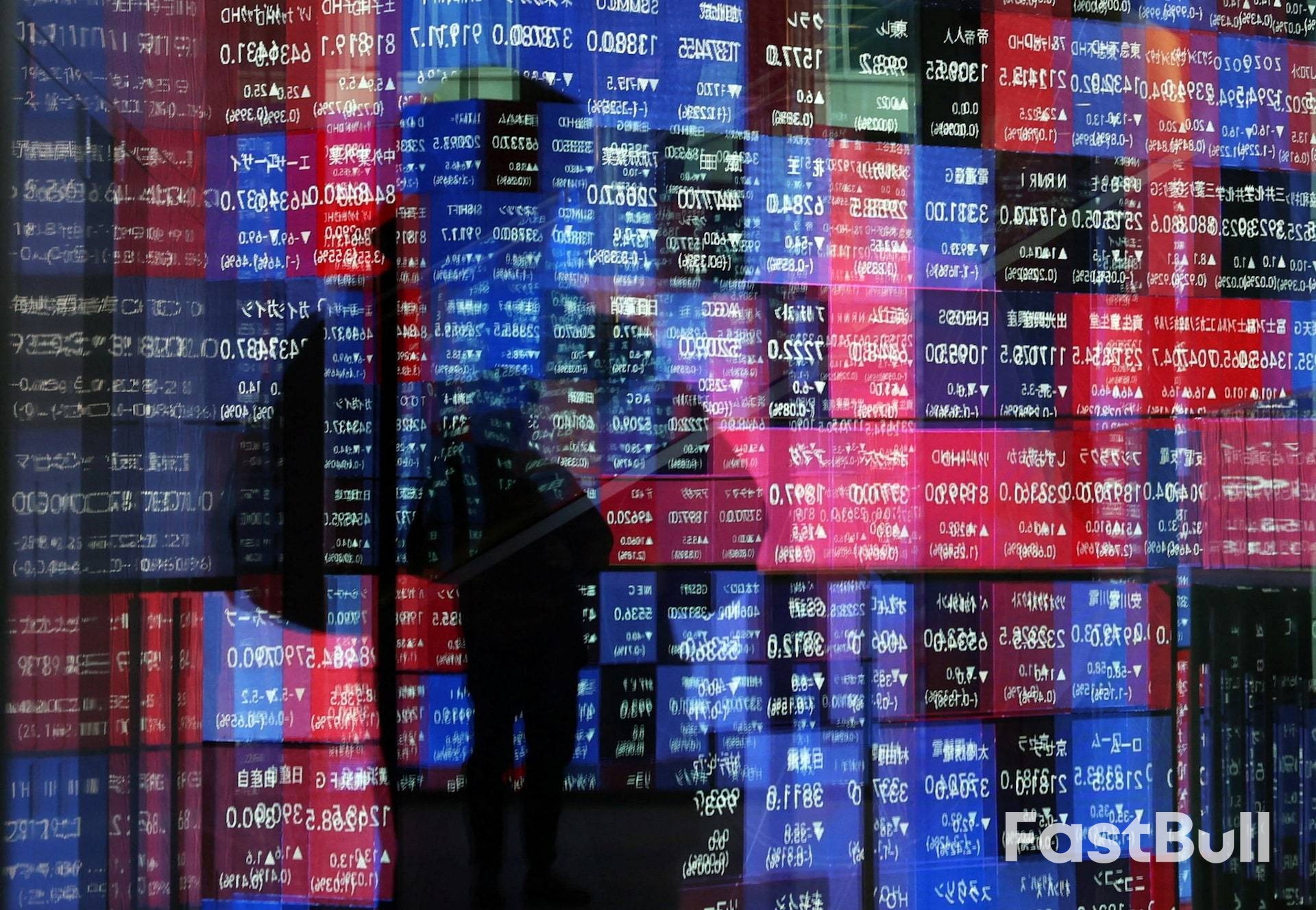
Japan is on the brink of facing market turmoil over its fiscal policy, with a former top currency diplomat warning that further tax relief could trigger a selloff in government bonds and the yen similar to the UK's "Truss shock."
Hiroshi Watanabe, a former vice finance minister for international affairs, stated that markets remain highly sensitive to any moves by the ruling Liberal Democratic Party (LDP) to expand sales tax cuts to secure voter support.
"We're somehow managing to hold the line for now, but it's right at the edge," Watanabe said in an interview. Watanabe, now a visiting professor at Tokyo Seitoku University, was in charge of Japan's currency policy from 2004 to 2007.
The warning comes as Prime Minister Sanae Takaichi seeks a new mandate for her economic reflation strategy in a snap election scheduled for February 8.
Investors are watching closely for any sign that the LDP might lean toward more tax cuts if the election campaign proves challenging. This political pressure is reviving concerns about fiscal discipline in a country where public debt is more than double the size of its economy.
A market rout last month provided a stark example after Takaichi pledged to cut the consumption tax on food for two years. The announcement triggered a sharp selloff in super-long Japanese government bonds and pushed the yen toward levels that had previously prompted government intervention.
Markets have stabilized since then, with the yen recovering to around 154 per dollar. This rebound followed speculation that Japanese and U.S. authorities conducted rate checks, a move often seen as a precursor to direct currency intervention.
Watanabe believes that top officials have taken note of the market's negative reaction. "I do think that Takaichi, as well as Finance Minister Satsuki Katayama, have registered the warnings coming from global capital markets," he said, suggesting that caution from U.S. and European investors has likely influenced policymakers' public statements.
However, he cautioned that investors would react strongly to any hint that tax relief could be expanded beyond the current pledges.
Looking ahead, Watanabe sees limited potential for a sustained recovery in the yen. While he noted that "there is a possibility that the yen could briefly move into the 140s per dollar," he does not foresee a prolonged period of appreciation.
Several key factors are expected to weigh on the Japanese currency:
• Persistent concerns over Japan's public finances.
• The country's structural trade deficit.
• A lack of clarity regarding the Bank of Japan's future interest rate path.
These combined pressures make it difficult to envision a scenario where "yen appreciation continues" for an extended period.
A second round of trilateral talks between Russia, Ukraine, and the United States is scheduled for February 1 in Abu Dhabi, according to Kremlin spokesman Dmitry Peskov. Russia's participation marks a significant policy shift, bringing the US directly into negotiations.
While details from the first round remain scarce, public statements and recent reports offer crucial clues into the high-stakes discussions. Here are five critical insights into the evolving diplomatic landscape.

Territory appears to be the central unresolved issue. On the eve of the initial talks, top Putin aide Yuri Ushakov stated that a lasting settlement was unlikely without addressing the territorial issue based on a previously agreed-upon formula.
This was echoed last week by US Secretary of State Marco Rubio, who told the Senate Foreign Relations Committee, "The one remaining item … is the territorial claim on Donetsk." This lends credibility to earlier reports that Russia is demanding Ukraine's withdrawal from Donbass.
Discussions are also underway regarding post-conflict security arrangements. Rubio revealed that "security guarantees basically involve the deployment of a handful of European troops, primarily French and the UK, and then a US backstop," a move that would require Russia's consent.
However, the US is still debating its commitment to a potential future conflict. This follows earlier signals from Steve Witkoff and Jared Kushner indicating American support for NATO troops in Ukraine. This topic will likely be a key focus in the upcoming second round of negotiations.
A potential trade-off may be emerging. According to the Financial Times, US security guarantees for Ukraine are contingent on its withdrawal from Donbass. The New York Times adds that the Kiev-controlled portion of the region could become a demilitarized zone or host neutral peacekeepers.
This suggests a possible deal: Ukraine cedes control of Donbass in exchange for US security guarantees and a NATO military presence. Russia might agree to such terms if neutral peacekeepers serve as a buffer.
Despite the promise of this potential arrangement, Ukrainian President Zelensky remains defiant about withdrawing from Donbass. For his part, President Trump has avoided publicly pressuring Zelensky with tangible consequences, such as halting arms sales to the EU destined for Ukraine.
This suggests there are clear limits to how far the United States is willing to go to secure a deal, even as it facilitates the talks.
Despite these limitations, the US diplomatic role has become indispensable. Russia's agreement to expand bilateral talks with Ukraine into a trilateral format is a major change in its foreign policy. This indicates that Moscow believes Washington is sincere in its efforts to negotiate an agreement, even if it won't use all its leverage.
With the US now formally at the table, the talks are unlikely to revert to a bilateral format unless the conflict is still ongoing by the time of a potential Trump 2.0 administration.
Overall, these developments suggest that President Putin may be considering significant compromises on the maximum goals set at the beginning of the special operation. While it is too early to draw definitive conclusions, any official agreement—whether a ceasefire, armistice, or peace treaty—will be heavily analyzed to understand the strategic calculations behind Russia's evolving position.
South Korea's exports surged in January, accelerating to their fastest pace in over four years and marking eight straight months of growth. Official data released Sunday shows that a global boom in demand for artificial intelligence servers has ignited semiconductor sales, positioning the country as a key bellwether for global trade.
Exports from Asia's fourth-largest economy jumped 33.9% year-over-year in January, reaching a total of US$65.85 billion. This performance significantly outpaced the 29.9% increase forecast by economists in a Reuters poll.
Imports also grew, rising 11.7% from the previous year to US$57.11 billion.
The semiconductor sector was the standout performer, with exports more than doubling by 102.7% compared to a year earlier. According to the trade ministry, this rally is fueled by consistently high demand for AI servers, which has sustained the rise in memory chip prices that began last year.
Market analysts expect this trend to hold. "The surge in chip sales is expected to continue for the time being due to factors such as soaring semiconductor prices and supply shortages," said Park Sang-hyun, an analyst at iM Securities. He also noted that January's strong performance was partly supported by having more working days compared to the same month last year.
The export growth was not limited to technology. Of South Korea's 15 primary export categories, 13 recorded an increase in sales. Key sectors showing strength included:
• Chips
• Cars
• Petrochemical products
• Steel
• Computers
Geographically, exports to China saw the most dramatic growth, jumping 46.7% year-over-year. Shipments to the United States increased by 29.5%, while exports to the European Union grew by 6.9%.
"It is positive that major items such as semiconductors and automobiles, as well as promising items such as consumer goods, showed even growth," said industry minister Kim Jung-kwan in a press statement.
Despite the strong performance, officials remain cautious about the global economic outlook. "Uncertainty in the trade environment has increased due to the US tariff policy and the spread of protectionism," Minister Kim warned.
His comments follow US President Donald Trump's announcement to raise tariffs. Kim stated on Saturday that South Korea requires further discussions with the United States regarding a trade deal reached last year, after holding two days of talks with his American counterpart through Friday.
The last major nuclear arms treaty between the United States and Russia is set to expire this Thursday, threatening to dismantle decades of agreements designed to prevent nuclear conflict. Without a last-minute deal, the New START treaty will dissolve, removing critical restrictions on the world's two largest nuclear arsenals.
The treaty's potential demise reflects President Donald Trump’s "America First" approach to international agreements. However, the current standoff appears driven more by political inertia than a deliberate strategy to end the accord.
Russian President Vladimir Putin proposed a one-year extension of New START back in September. When asked about the offer, President Trump told a reporter it "sounds like a good idea to me" before boarding his helicopter. Since then, there has been little public progress.
Dmitry Medvedev, who signed the treaty in 2010 as Russia’s president alongside Barack Obama, stated in a recent interview that Moscow has received no "substantive reaction" from Washington but was still giving the Trump administration time to act.
Jon Wolfsthal, director of global risk at the Federation of American Scientists, argued that Trump and Putin could have secured an extension with a simple phone call. "This is a piece of low-hanging fruit that the Trump administration should have seized months ago," he said. The potential failure to renew New START was a key factor in the decision to move the symbolic "Doomsday Clock" closer to midnight.
A White House official, speaking anonymously, confirmed that Trump wants to establish "limits on nuclear weapons and involve China in arms control talks." The official noted that the president "will clarify on his own timeline" how to achieve this.
During his first term, Trump also insisted that China—a rapidly growing nuclear power, though with a much smaller arsenal than the US or Russia—be included in any new treaty. This demand was highlighted when a US negotiator placed an empty chair with a Chinese flag at the negotiating table.
Analysts suggest the Trump administration's unconventional structure has hindered complex negotiations. Daryl Kimball, executive director of the Arms Control Association, noted that by sidelining career diplomats, the decision-making process has been limited to a small inner circle.
"Trump seems to have the right instinct on this issue but has thus far failed to follow through with a coherent strategy," Kimball said.
The treaty imposes a cap of 1,550 deployed strategic nuclear warheads for both the US and Russia, a nearly 30% reduction from a 2002 limit. It also restricts launchers and heavy bombers to 800 each—an arsenal still large enough to cause global devastation.
Some Russian military analysts believe the treaty has already lost its relevance. "It's clear that the treaty has reached its end," said Alexander Khramchikhin, describing its potential expiration as the disappearance of an "empty formality."
Vassily Kashin, director of Moscow's Center for Comprehensive European and International Studies, suggested Russia will adopt a wait-and-see approach. If the United States begins to expand its nuclear arsenal, Moscow will respond. "But if the Americans don't take any drastic measures... Russia will most likely simply wait, observe and remain silent," he said.
The New START treaty was previously extended in 2021, when President Joe Biden took office and quickly agreed to a five-year renewal, pushing its expiration to 2026. However, relations deteriorated following Russia's invasion of Ukraine, and in 2023, Russia suspended a key provision of the treaty that allowed for mutual inspections.
Despite the current tensions, Trump has renewed diplomatic engagement with Russia, inviting Putin to a summit and attempting to broker a deal in Ukraine.
Beyond the US and Russia, other nations possess nuclear weapons, including US allies France and Britain, as well as India, Pakistan, Israel, and North Korea. These countries are not part of existing international arms control agreements.
U.S. President Donald Trump announced Saturday that India has agreed to purchase Venezuelan oil, a move intended to steer New Delhi away from Iranian crude.
Speaking to reporters aboard Air Force One, Trump confirmed the arrangement, stating, "We've already made that deal, the concept of the deal."
This development follows reports that the United States had encouraged India to resume Venezuelan oil purchases. According to three sources familiar with the matter, the proposal was framed as a way for India to find an alternative to its imports of Russian oil.
The strategic goal for Washington is to curtail the oil revenue that is financing Russia's ongoing war in Ukraine.
The new arrangement marks a significant policy shift. In March of the previous year, the Trump administration had imposed 25% tariffs on countries buying Venezuelan oil, a policy that directly affected India.
In his remarks, President Trump also extended a similar offer to another major global energy consumer. He noted that China was also welcome to make a deal with the U.S. to buy oil from Venezuela.

As India prepares for its annual budget announcement this Sunday, Finance Minister Nirmala Sitharaman faces a series of competing demands. The Defence Ministry is pushing for a significant spending increase, industry groups are urging tax cuts, and the government is planning to relax rules on foreign investment.
The upcoming budget, for the fiscal year starting in April, will balance these pressures against a backdrop of fiscal consolidation.
A central focus of the budget is expected to be a reduction in government debt. Economists anticipate a plan to lower the debt-to-GDP ratio to a range of 49% to 51% by 2031, down from the current 56%.
To achieve this, the government is likely to target a fiscal deficit of 4.2% of GDP for the 2026-27 fiscal year, a slight improvement from this year's 4.4%. Gross borrowing is projected to rise, with estimates falling between 16 trillion and 16.8 trillion rupees ($174 billion-$183 billion), up from 14.6 trillion rupees this year.
Following a recent conflict with Pakistan, the Defence Ministry is requesting a 20% increase in military spending.
In parallel, New Delhi is expected to ease conditions for foreign investment in domestic defence firms. The Federation of Indian Chambers of Commerce and Industry (FICCI), representing 250,000 companies, has proposed establishing defence-industrial corridors and an export-promotion council. These initiatives are aimed at helping India meet its defence export target of $5.5 billion by 2029.
Government capital spending on infrastructure is expected to be maintained at around 3.1% of GDP. Recent cuts to income and consumption taxes have limited the government's capacity for a major spending increase.
As a result, capital expenditures are projected to rise modestly to 12 trillion rupees, up from 11.2 trillion rupees in the current fiscal year.
India's export sector is lobbying for policy support amid external pressures, including President Donald Trump's 50% tariffs on Indian goods entering the United States.
The Federation of Indian Export Organisations is asking for lower import duties on essential inputs for key export industries, such as textiles, electronic components, and chemicals, to boost domestic manufacturing. The group is also seeking more supportive regulations and better access to long-term financing.
Tax experts are calling for the abolition of the securities-transaction tax, which is levied on all equity and derivative trades, regardless of whether they result in a profit or loss.
Additionally, the FICCI lobby group is advocating for changes to income-tax rules that currently hinder contract manufacturing. These rules affect the ability of companies like Apple to supply machinery to their Indian manufacturing partners, and FICCI is pushing for reforms to strengthen this sector.
($1 = 91.6710 Indian rupees)
Prime Minister Narendra Modi's government is set to release its annual budget, a critical policy statement designed to shield India's economy from rising global uncertainties, including steep U.S. tariffs and geopolitical tensions.
Finance Minister Nirmala Sitharaman, who will present the budget for the next fiscal year, faces the difficult task of stimulating growth while managing tight finances. Her ability to increase spending is limited, as recent tax cuts are expected to reduce government revenue by 1.5 trillion rupees ($16 billion) this fiscal year. India's current deficit target stands at 4.4% of GDP for the 12 months ending in March.

Prime Minister Modi has emphasized a strategic shift toward sustainable, long-term solutions to build global trust and predictability. He has framed the next 25 years as a crucial period for transforming India into a developed economy through "next-generation reforms."
This forward-looking approach is supported by the government's recent economic survey, which forecasts GDP growth between 6.8% and 7.2% for the fiscal year beginning in April.

To boost private investment and domestic demand, New Delhi has already implemented several key reforms and is expected to announce more in the upcoming budget.
Recent initiatives include:
• Cuts to both consumption and income taxes.
• A comprehensive overhaul of national labor laws.
• Measures to open up the tightly controlled nuclear power sector.
The government also plans a third major push to expand manufacturing as a share of the economy, following two previous attempts. Additionally, the budget is expected to include measures to ease investment rules in the domestic defense manufacturing sector.

The budget will also address significant financial and international challenges. Gross government borrowing is projected to rise to between 16 trillion and 16.8 trillion rupees for the next fiscal year, up from 14.6 trillion rupees this year.
On the trade front, India is actively pursuing deals to mitigate external pressures. A landmark trade agreement with the European Union is a key part of this strategy, intended to offset the economic impact of the 50% tariffs imposed by U.S. President Donald Trump on certain Indian goods.
($1 = 91.6710 Indian rupees)
White Label
Data API
Web Plug-ins
Poster Maker
Affiliate Program
The risk of loss in trading financial instruments such as stocks, FX, commodities, futures, bonds, ETFs and crypto can be substantial. You may sustain a total loss of the funds that you deposit with your broker. Therefore, you should carefully consider whether such trading is suitable for you in light of your circumstances and financial resources.
No decision to invest should be made without thoroughly conducting due diligence by yourself or consulting with your financial advisors. Our web content might not suit you since we don't know your financial conditions and investment needs. Our financial information might have latency or contain inaccuracy, so you should be fully responsible for any of your trading and investment decisions. The company will not be responsible for your capital loss.
Without getting permission from the website, you are not allowed to copy the website's graphics, texts, or trademarks. Intellectual property rights in the content or data incorporated into this website belong to its providers and exchange merchants.
Not Logged In
Log in to access more features
Log In
Sign Up