Markets
News
Analysis
User
24/7
Economic Calendar
Education
Data
- Names
- Latest
- Prev


Signal Accounts for Members
All Signal Accounts
All Contests


European Central Bank's Kocher: Euro-Dollar Exchange Rate Has An Impact On Inflation, And As Such Is An Important Variable We Look At
European Central Bank's Kocher: Austrian National Bank Has No Intention Of Selling Any Gold From Reserves Or Adding To It
European Central Bank's Kocher: We Currently See Weakness Of The Dollar, Possibly Politically Desired, Rather Than Strength Of The Euro
Russian Foreign Minister Lavrov: Assassination Attempt On Russian General In Moscow Shows That Zelenskiy Seeks To Derail Peace Process
Russian Foreign Minister Lavrov: We Prefer Dialogue And We Will See If The United States Is Ready For It Too
Ukraine's Air Force Says Russia Conducted Overnight And Morning Attack With 328 Drones And 7 Missiles
Czech Policy Maker Frait: Discussion About Rate Cut On Thursday Reflected Potential Easing By Other Central Banks, Impact It Could Have On Exchange Rate
Abu Dhabi - German Chancellor Merz On Ukraine Peace Efforts: We Are Always Willing To Hold Talks With Russia
BofA Global Research Expects European Central Bank To Hold Interest Rates In 2026 Versus Prior Forecast Of A 25 BP Cut In March
Russia Ambassador On Disarmament: If There Is Serious Talk Of Multilateral Negotiations On Nuclear Weapons Control Or Reductions Then Russia Would In Principle Be Involved If UK And France Are Involved
Oman's Foreign Ministry Says Talks With Iran, US Focused On Preparing Appropriate Conditions For Resuming Diplomatic And Technical Negotiations

MPC Rate Statement
U.S. Challenger Job Cuts (Jan)A:--
F: --
P: --
U.S. Challenger Job Cuts MoM (Jan)A:--
F: --
P: --
U.S. Challenger Job Cuts YoY (Jan)A:--
F: --
P: --
Bank of England Governor Bailey held a press conference on monetary policy.
Euro Zone ECB Marginal Lending RateA:--
F: --
P: --
Euro Zone ECB Deposit RateA:--
F: --
P: --
Euro Zone ECB Main Refinancing RateA:--
F: --
P: --
ECB Monetary Policy Statement
U.S. Weekly Initial Jobless Claims (SA)A:--
F: --
P: --
U.S. Initial Jobless Claims 4-Week Avg. (SA)A:--
F: --
P: --
U.S. Weekly Continued Jobless Claims (SA)A:--
F: --
ECB Press Conference
U.S. JOLTS Job Openings (SA) (Dec)A:--
F: --
U.S. EIA Weekly Natural Gas Stocks ChangeA:--
F: --
P: --
BOC Gov Macklem Speaks
Mexico Policy Interest RateA:--
F: --
P: --
U.S. Weekly Treasuries Held by Foreign Central BanksA:--
F: --
P: --
Reserve Bank of Australia Governor Bullock testified before Parliament.
Japan Foreign Exchange Reserves (Jan)A:--
F: --
P: --
India Benchmark Interest RateA:--
F: --
P: --
India Cash Reserve RatioA:--
F: --
P: --
India Repo RateA:--
F: --
P: --
India Reverse Repo RateA:--
F: --
P: --
Japan Leading Indicators Prelim (Dec)A:--
F: --
P: --
Germany Industrial Output MoM (SA) (Dec)A:--
F: --
Germany Exports MoM (SA) (Dec)A:--
F: --
P: --
U.K. Halifax House Price Index YoY (SA) (Jan)A:--
F: --
U.K. Halifax House Price Index MoM (SA) (Jan)A:--
F: --
France Trade Balance (SA) (Dec)A:--
F: --
Canada Leading Index MoM (Jan)--
F: --
P: --
India Deposit Gowth YoY--
F: --
P: --
Canada Employment (SA) (Jan)--
F: --
Canada Full-time Employment (SA) (Jan)--
F: --
Canada Part-Time Employment (SA) (Jan)--
F: --
Canada Unemployment Rate (SA) (Jan)--
F: --
P: --
Canada Labor Force Participation Rate (SA) (Jan)--
F: --
P: --
Due to the previous government shutdown, the release date of the US January non-farm payroll report has been changed to February 11.
U.S. UMich Consumer Sentiment Index Prelim (Feb)--
F: --
P: --
Canada Ivey PMI (Not SA) (Jan)--
F: --
P: --
U.S. UMich Consumer Expectations Index Prelim (Feb)--
F: --
P: --
Canada Ivey PMI (SA) (Jan)--
F: --
P: --
U.S. UMich Current Economic Conditions Index Prelim (Feb)--
F: --
P: --
U.S. UMich 5-Year-Ahead Inflation Expectations Prelim YoY (Feb)--
F: --
P: --
U.S. 5-10 Year-Ahead Inflation Expectations (Feb)--
F: --
P: --
U.S. UMich 1-Year-Ahead Inflation Expectations Prelim (Feb)--
F: --
P: --
China, Mainland Foreign Exchange Reserves (Jan)--
F: --
P: --
Russia Retail Sales YoY (Dec)--
F: --
P: --
Russia Unemployment Rate (Dec)--
F: --
P: --
Russia Quarterly GDP Prelim YoY (Q1)--
F: --
P: --
U.S. Weekly Total Oil Rig Count--
F: --
P: --
U.S. Weekly Total Rig Count--
F: --
P: --
U.S. Consumer Credit (SA) (Dec)--
F: --
P: --
Japan Wages MoM (Dec)--
F: --
P: --
Japan Trade Balance (Customs Data) (SA) (Dec)--
F: --
P: --
Japan Trade Balance (Dec)--
F: --
P: --
Euro Zone Sentix Investor Confidence Index (Feb)--
F: --
P: --
Mexico CPI YoY (Jan)--
F: --
P: --
Mexico 12-Month Inflation (CPI) (Jan)--
F: --
P: --
Mexico PPI YoY (Jan)--
F: --
P: --
Mexico Core CPI YoY (Jan)--
F: --
P: --


No matching data
View All

No data
India signals massive Boeing orders amid US trade expansion, yet Trump's bold claims face skepticism and caution.
India's Commerce Minister Piyush Goyal has signaled a major expansion of trade with the United States, announcing that New Delhi is prepared to place orders for up to $80 billion in Boeing aircraft.
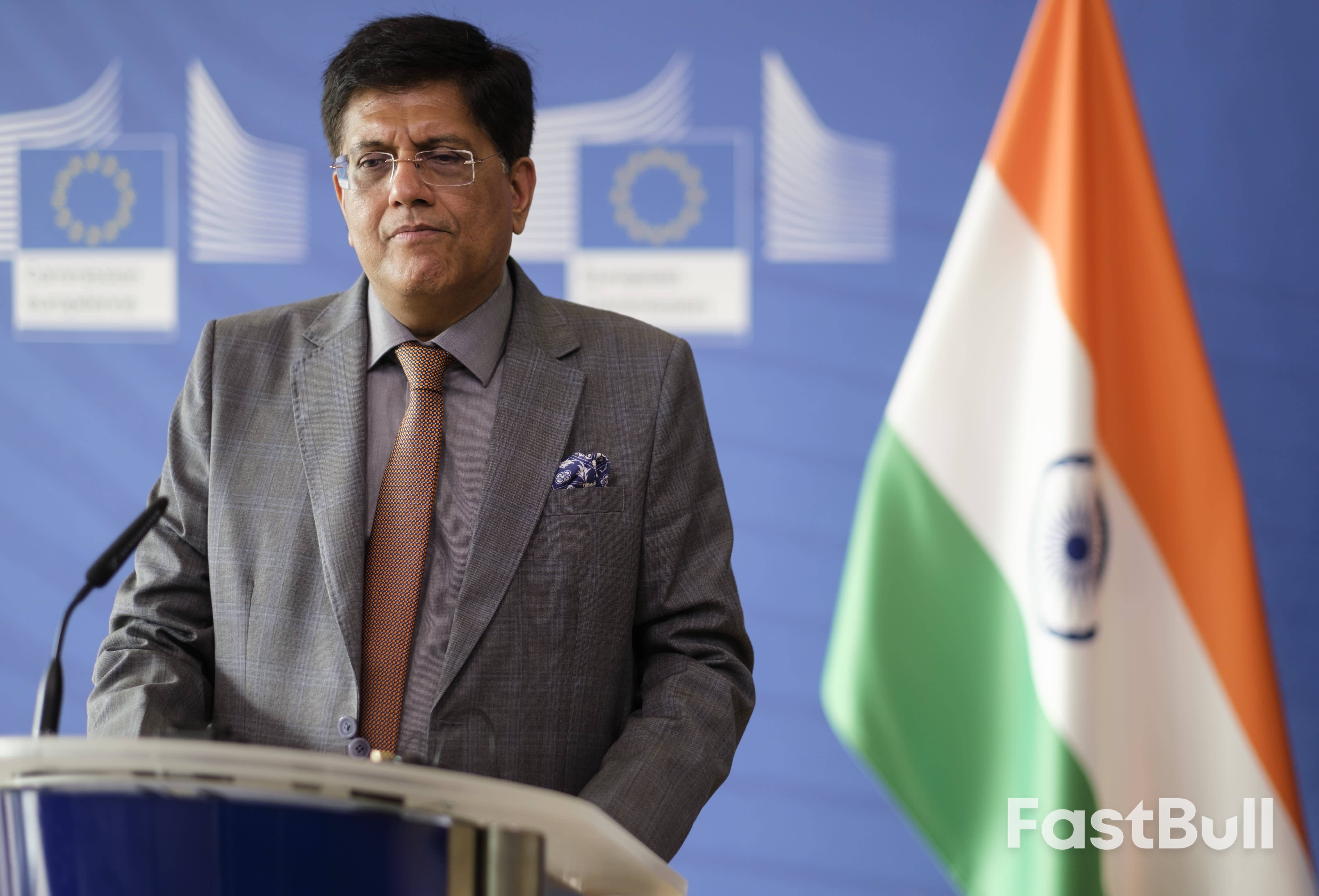
Speaking on Thursday, Goyal stated that India's demand for aircraft includes nearly $80 billion in orders for Boeing that are "yet to be placed but ready." He added that factoring in engines and spare parts could push the total value of these U.S. imports to over $100 billion from the aviation sector alone.
This potential deal comes as Boeing faces a lawsuit from the families of passengers who died in an Air India crash in Ahmedabad last June. The lawsuit alleges that defective dual switches contributed to the disaster, which claimed 241 of the 242 lives on board.
Beyond aviation, Goyal noted the potential for India to procure at least $500 billion in goods from the U.S. over the next five years. However, he clarified that this figure does not represent an explicit investment commitment within the U.S.-India trade agreement.
The announcement followed a social media post on Monday from U.S. President Donald Trump, who declared that Washington and New Delhi had reached a trade agreement.
According to Trump, the deal involves several key concessions:
• The U.S. will reduce tariffs on Indian goods to 18%.
• India will lower duties on American goods to zero.
• India will replace Russian oil with supplies from the U.S. and Venezuela.
• India will open sensitive markets, including agriculture.
• India will purchase $500 billion worth of American goods.
While the Indian Prime Minister welcomed the tariff cut from the current 50% rate, he did not confirm the other details outlined by Trump.
Experts have expressed skepticism about the feasibility of Trump's claims, particularly the $500 billion purchase target, which many have called "a stretch." For context, India's total goods imports for the 2025 financial year stood at $720.24 billion, with only $45.3 billion sourced from the United States.
The Indian government has remained tight-lipped on the specifics of the deal, drawing criticism from opposition parties. Rahul Gandhi, India's opposition leader, accused Prime Minister Modi of being "compromised" and of having "surrendered on Tariffs."
New Delhi has not officially confirmed key elements of Trump's announcement, such as the zero-duty commitment for U.S. goods, the halt of Russian oil imports, or the firm $500 billion purchase plan. Analysts warn that Trump's "unrealistic" claims could jeopardize the deal, drawing parallels to his threats to raise tariffs on South Korea despite a trade agreement.
Minister Goyal provided a timeline for finalizing the initial phase of the trade pact.
A joint statement is expected within the next 3-4 days, after which the new 18% U.S. tariff on Indian exports will take effect. A formal agreement is slated for mid-March, which will activate India's tariff concessions for U.S. goods.
Japan's two largest banks, Mitsubishi UFJ Financial Group (MUFG) and Sumitomo Mitsui Financial Group (SMFG), are preparing to increase their holdings of Japanese government bonds (JGBs), signaling a major strategy shift after more than a decade. The move is driven by rising interest rates that now promise higher returns, even as both institutions face unrealized losses on their existing bond portfolios.
For the last ten years, Japan's megabanks steadily reduced their exposure to JGBs. The Bank of Japan's ultra-low interest rate policy meant the returns on these bonds were negligible, forcing lenders to look elsewhere.
That long-standing trend now appears set to reverse.
Yields on JGBs have climbed sharply since November, a move initially triggered by Prime Minister Sanae Takaichi's proposed spending plans. While the sudden rise in yields hurt the value of existing bonds, the market has found a calmer footing in recent weeks. Demand has been solid across the last four debt auctions, and 30-year JGB yields have fallen 32 basis points from their record high of 3.88% on January 20.
"With long-term interest rates showing signs of peaking, I think we'll cautiously rebuild our JGB position," Takayuki Hara, managing director and head of MUFG's CFO office, said at a press briefing.
The decision to buy more JGBs comes with a significant caveat: rising yields have already inflicted paper losses on the banks' current holdings. When market yields rise, the value of older bonds bought at lower yields falls, creating unrealized losses.
MUFG, Japan's largest lender, reported unrealized losses of 200 billion yen ($1.3 billion) on its bond portfolio at the end of the year, a substantial increase from 40 billion yen at the end of March. The bank noted it had sold longer-duration bonds between September and December, a move that helped it avoid even greater losses.
SMFG, the country's second-largest bank, shares a similar outlook. A spokesperson at its earnings briefing confirmed the bank plans to "gradually increase our JGB positions, taking into account the market outlook." SMFG's own unrealized losses on JGBs more than doubled to 98 billion yen in the nine months leading up to the end of December.
To manage risk, Japan's major banks, including the third-largest player Mizuho Financial Group, have focused on short-duration bonds in recent years. As of December, Mizuho's average remaining period for its JGB holdings was just 1.8 years.
Despite the banks' statements, some investors and analysts believe a significant pivot into longer-duration bonds may not be immediate. Several factors could delay substantial purchases:
• The prospect of further rate hikes from the Bank of Japan.
• Market concerns over Japan's enormous national debt burden.
Political developments are also a key variable. With polls suggesting Prime Minister Takaichi is poised to win the upcoming general election, her expansionary fiscal policies could gain momentum, potentially pushing bond yields even higher.
"I think the JGB curve will rise, and the 10-year rate could reach 2.5%," said Toshinobu Chiba, a fund manager at Simplex Asset Management. He added that this level, compared to the current 2.195%, could serve as a more attractive entry point for the banks to start buying in size.
This strategic shift is taking place against a backdrop of renewed profitability for the banking sector. The Bank of Japan raised interest rates in March 2024 for the first time in 17 years, and three more hikes have followed, bringing the main policy rate to 0.75%.
This new rate environment has directly contributed to all megabanks forecasting record profits for the current financial year. The Topix banking index has surged, doubling in value since the first rate hike in March 2024 and significantly outperforming the broader Topix index's 33% gain.
Analysts predict that increasing their positions in higher-yielding JGBs will further boost bank earnings in the years ahead. Reflecting this optimism, Goldman Sachs analyst Makoto Kuroda recently raised her 2028 financial year forecasts for all three megabanks. Citing the BOJ's December rate hike, the jump in JGB yields, and a weaker yen, she increased net profit estimates for MUFG by 20%, SMFG by 11%, and Mizuho by 21%.
Vietnam’s trade surplus with the United States expanded by nearly 30% year-on-year in January, driven by a significant climb in exports. Simultaneously, imports from China surged to a new monthly record, according to official data released on Friday.
The export growth comes as Hanoi continues trade negotiations with Washington. These talks follow the Trump administration's imposition of 20% tariffs on Vietnamese products in August and threats of higher duties on goods made with components sourced from China. Despite these tariffs, Vietnam's exports to the U.S. have consistently risen, setting a record high last year.
The trend of strong exports to the U.S. continued into the new year, with shipments reaching a value of $13.9 billion in January. This marks a substantial increase from the $10.5 billion recorded in the same period a year earlier, though it is slightly below the $14.6 billion from December.
As a result, Vietnam’s trade surplus with the U.S. reached $12 billion for the month. This figure represents a nearly 30% increase compared to the previous year and is just shy of the $12.3 billion surplus seen in December.
While exports to the U.S. boomed, imports from China hit an all-time monthly high of $19 billion. This is an increase from $18.7 billion in December and a sharp rise from the $12 billion imported in January 2025.
This surge in imports contributed to a wider national trade picture. In total, Vietnam's exports rose 29.7% year-on-year to $43.19 billion. However, total imports soared by 49.2% to $44.97 billion, resulting in an overall trade deficit of $1.78 billion for January.
Beyond trade, other key economic indicators for January showed mixed but generally positive performance:
• Industrial Production: Grew by 21.5% compared to the previous year.
• Consumer Prices: Rose 2.53% year-on-year.
• Retail Sales: Increased by 9.3% from a year earlier.
Foreign investment data presented a more complex outlook. Actual foreign investment inflows into Vietnam during January reached $1.68 billion, an 11.3% increase year-on-year.
However, investment pledges, which serve as an indicator of future capital flows, declined. Pledges fell by 40.6% compared to the same month last year, totaling $2.58 billion.
U.S. President Donald Trump has issued a "total endorsement" for Japanese Prime Minister Sanae Takaichi just days before Japan's national election on Sunday. In a post on his Truth Social platform, Trump also announced he would host Takaichi at the White House on March 19.
Takaichi, Japan's first female prime minister, is seeking a clear mandate from voters for her economic and defense policies. While her coalition is projected to win, her plans have already created jitters among investors and increased diplomatic friction with China.
According to recent opinion polls, Takaichi's Liberal Democratic Party (LDP) and its coalition partner, the Japan Innovation Party (Ishin), are on track to secure around 300 seats in the 465-seat lower house of parliament. This would represent a significant expansion of the slim majority they currently hold.
In his statement, Trump praised Takaichi's leadership, saying she and her coalition deserve "powerful recognition" for their work.
"Therefore, as President of the United States of America, it is my Honor to give a Complete and Total Endorsement of her, and what her highly respected Coalition is representing," Trump wrote.
Despite the high-level backing, Takaichi’s core economic pledge has shaken financial markets. Her proposal to suspend the 8% sales tax on food to help households with rising costs has raised serious questions about fiscal stability in a nation with the world's largest public debt.
The plan is estimated to cost 5 trillion yen ($30 billion) in annual revenue. In response, investors have been selling off Japanese government bonds, sending the yen into a crisis. However, some analysts believe a decisive victory for the LDP, which has dominated post-war Japanese politics, might be the "least-worst option" for markets, given that other parties are proposing even larger tax cuts and spending programs.
The relationship between Takaichi and Trump has been a focal point since she became prime minister in October. One of her first acts was to host Trump in Tokyo, where she presented him with a putter that belonged to his late friend and former Prime Minister Shinzo Abe. The meeting, where Takaichi pledged billions in investments, was seen as a reaffirmation of the strong U.S.-Japan alliance.
However, her tenure has also been marked by a significant diplomatic dispute with China. Weeks after taking office, the 64-year-old prime minister publicly detailed how Japan might react to a Chinese attack on Taiwan, triggering the most significant row with Beijing in over a decade.
Sources revealed that Trump, who is working to preserve a trade truce with China, privately asked Takaichi in a November phone call to avoid further antagonizing Beijing. A strong election victory could give Takaichi more leverage in this dispute, though her plans to bolster Japan's military will likely draw further criticism from China, which views the move as a return to past militarism.
While the friction with China is beginning to impact Japan's economy, it has had little effect on Takaichi's high approval ratings at home. She has gained an almost iconic status among some supporters, who have rushed to buy the same handbag she carries and the pink pen she uses in parliament.
The final margin of victory could be influenced by several factors. Turnout among younger voters, who are historically less likely to vote, could play a key role. Record snowfall in parts of the country might also suppress turnout. Takaichi has stated that if she fails to maintain her coalition's majority, she will resign.
Trump's intervention in the Japanese election is part of a broader trend of his administration seeking to influence foreign political outcomes. He previously backed Argentine President Javier Milei, citing U.S. financial support as a key to Milei's legislative success in 2025. He also recently endorsed Hungarian Prime Minister Viktor Orban ahead of an April vote.
Analysts suggest these endorsements signal a growing pattern of aligning with and supporting right-wing leaders across the globe. In his final praise for Takaichi, Trump described her as "a strong, powerful and wise Leader, and one that truly loves her country."
Singapore is set to announce a fiscally conservative budget, signaling a strategic shift from the substantial household support seen in 2025 towards long-term financial stability and targeted growth initiatives.
Economists from leading banks, including Bank of America, Maybank, and DBS, are forecasting an overall fiscal surplus for Singapore, ranging from 0.3% to 1% of GDP. This cautious approach comes amid a positive economic outlook, where demand is expected to outpace supply in the coming quarters.
The upcoming budget will be delivered by Prime Minister and Finance Minister Lawrence Wong on February 12 at 3:30 p.m. (0730 GMT).
The 2026 budget is expected to stand in sharp contrast to the previous year's "household friendly" measures, which were rolled out when growth concerns were more prominent. Analysts at BMI anticipate a reduction in cash transfers to households following the elevated support provided in 2025.
This pivot towards fiscal prudence is also a matter of policy. The Singaporean government is required to balance its budget over each parliamentary term. By adopting a cautious stance early in the term that began after the 2025 general election, it preserves the flexibility to implement support measures if economic conditions worsen later.
The budget announcement comes as Singapore navigates a complex global environment marked by tariffs and supply chain disruptions. The nation's economic performance serves as a key indicator of how these international pressures are impacting business activity in the trade-reliant hub.
According to advance estimates, Singapore's economy grew by a robust 4.8% in 2025. However, Wong has already highlighted challenges to maintaining that momentum. The Trade Ministry's official forecast projects more moderate growth of 1.0% to 3.0% for 2026.
Meanwhile, inflationary pressures are building. In January, the Monetary Authority of Singapore (MAS) revised its core and headline inflation forecasts upward to a range of 1.0% to 2.0%.
A central theme of the budget will likely be long-term investment in innovation to address domestic constraints like an aging workforce and limited land. The global AI-led investment boom that benefited Singapore last year is expected to continue in 2026.
DBS economist Chua Han Teng expects the government to channel funds into technology and innovation. This aligns with a recent update to the country's Economic Strategy Review, which emphasized:
• Directing R&D resources to high-value industries.
• Pursuing emerging technologies like quantum, decarbonization, and space tech.
• Aggressively supporting local firms in their international expansion.
Singapore has already committed over S$1 billion ($779 million) to public AI research through 2030. Maybank economist Chua Hak Bin anticipates further support for AI adoption and upgrades to national tech infrastructure through existing funds.
While future-proofing the economy is a priority, the budget will also be watched for its approach to the labor market and its management of corporate tax revenues.
Tackling a Weaker Job Market
Concerns are growing over youth structural unemployment, which has hit a four-year high. According to preliminary data from the Manpower Ministry, the citizen unemployment rate also rose slightly to 3.0% in 2025 from 2.9% the previous year. In response, analysts believe the government may introduce new incentives to encourage hiring.
Surging Corporate Tax Collections
A bright spot for Singapore's finances has been the performance of corporate income tax collections, which have climbed by 1 to 4 percentage points of GDP since 2023. This increase has occurred despite uncertainty around global tax reforms.
The technology sector is a major contributor. Bank of America analysts noted that Nvidia's annual revenue booked in Singapore soared tenfold to $23.7 billion in the year ending January 2025. At the same time, both Google and Amazon have made significant investments to expand their cloud services in the nation, further boosting the tax base.
The risk of loss in trading financial instruments such as stocks, FX, commodities, futures, bonds, ETFs and crypto can be substantial. You may sustain a total loss of the funds that you deposit with your broker. Therefore, you should carefully consider whether such trading is suitable for you in light of your circumstances and financial resources.
No decision to invest should be made without thoroughly conducting due diligence by yourself or consulting with your financial advisors. Our web content might not suit you since we don't know your financial conditions and investment needs. Our financial information might have latency or contain inaccuracy, so you should be fully responsible for any of your trading and investment decisions. The company will not be responsible for your capital loss.
Without getting permission from the website, you are not allowed to copy the website's graphics, texts, or trademarks. Intellectual property rights in the content or data incorporated into this website belong to its providers and exchange merchants.
Not Logged In
Log in to access more features
Log In
Sign Up