





Markets
News
Analysis
User
24/7
Economic Calendar
Education
Data
- Names
- Latest
- Prev


Signal Accounts for Members
All Signal Accounts
All Contests


U.S. Dallas Fed New Orders Index (Jan)A:--
F: --
P: --
U.S. 2-Year Note Auction Avg. YieldA:--
F: --
P: --
U.K. BRC Shop Price Index YoY (Jan)A:--
F: --
P: --
China, Mainland Industrial Profit YoY (YTD) (Dec)A:--
F: --
P: --
Germany 2-Year Schatz Auction Avg. YieldA:--
F: --
P: --
Mexico Trade Balance (Dec)A:--
F: --
P: --
U.S. Weekly Redbook Index YoYA:--
F: --
P: --
U.S. S&P/CS 20-City Home Price Index YoY (Not SA) (Nov)A:--
F: --
P: --
U.S. S&P/CS 20-City Home Price Index MoM (SA) (Nov)A:--
F: --
U.S. FHFA House Price Index MoM (Nov)A:--
F: --
P: --
U.S. FHFA House Price Index (Nov)A:--
F: --
P: --
U.S. FHFA House Price Index YoY (Nov)A:--
F: --
U.S. S&P/CS 10-City Home Price Index YoY (Nov)A:--
F: --
P: --
U.S. S&P/CS 10-City Home Price Index MoM (Not SA) (Nov)A:--
F: --
P: --
U.S. S&P/CS 20-City Home Price Index (Not SA) (Nov)A:--
F: --
P: --
U.S. S&P/CS 20-City Home Price Index MoM (Not SA) (Nov)A:--
F: --
P: --
U.S. Richmond Fed Manufacturing Composite Index (Jan)A:--
F: --
P: --
U.S. Conference Board Present Situation Index (Jan)A:--
F: --
P: --
U.S. Conference Board Consumer Expectations Index (Jan)A:--
F: --
P: --
U.S. Richmond Fed Manufacturing Shipments Index (Jan)A:--
F: --
P: --
U.S. Richmond Fed Services Revenue Index (Jan)A:--
F: --
P: --
U.S. Conference Board Consumer Confidence Index (Jan)A:--
F: --
U.S. 5-Year Note Auction Avg. YieldA:--
F: --
P: --
U.S. API Weekly Refined Oil StocksA:--
F: --
P: --
U.S. API Weekly Crude Oil StocksA:--
F: --
P: --
U.S. API Weekly Gasoline StocksA:--
F: --
P: --
U.S. API Weekly Cushing Crude Oil StocksA:--
F: --
P: --
Australia RBA Trimmed Mean CPI YoY (Q4)A:--
F: --
P: --
Australia CPI YoY (Q4)A:--
F: --
P: --
Australia CPI QoQ (Q4)A:--
F: --
P: --
Germany GfK Consumer Confidence Index (SA) (Feb)--
F: --
P: --
Germany 10-Year Bund Auction Avg. Yield--
F: --
P: --
India Industrial Production Index YoY (Dec)--
F: --
P: --
India Manufacturing Output MoM (Dec)--
F: --
P: --
U.S. MBA Mortgage Application Activity Index WoW--
F: --
P: --
Canada Overnight Target Rate--
F: --
P: --
BOC Monetary Policy Report
U.S. EIA Weekly Crude Stocks Change--
F: --
P: --
U.S. EIA Weekly Cushing, Oklahoma Crude Oil Stocks Change--
F: --
P: --
U.S. EIA Weekly Crude Demand Projected by Production--
F: --
P: --
U.S. EIA Weekly Crude Oil Imports Changes--
F: --
P: --
U.S. EIA Weekly Heating Oil Stock Changes--
F: --
P: --
U.S. EIA Weekly Gasoline Stocks Change--
F: --
P: --
BOC Press Conference
Russia PPI MoM (Dec)--
F: --
P: --
Russia PPI YoY (Dec)--
F: --
P: --
U.S. Target Federal Funds Rate Lower Limit (Overnight Reverse Repo Rate)--
F: --
P: --
U.S. Interest Rate On Reserve Balances--
F: --
P: --
U.S. Federal Funds Rate Target--
F: --
P: --
U.S. Target Federal Funds Rate Upper Limit (Excess Reserves Ratio)--
F: --
P: --
FOMC Statement
FOMC Press Conference
Brazil Selic Interest Rate--
F: --
P: --
Australia Import Price Index YoY (Q4)--
F: --
P: --
Japan Household Consumer Confidence Index (Jan)--
F: --
P: --
Turkey Economic Sentiment Indicator (Jan)--
F: --
P: --
Euro Zone M3 Money Supply (SA) (Dec)--
F: --
P: --
Euro Zone Private Sector Credit YoY (Dec)--
F: --
P: --
Euro Zone M3 Money Supply YoY (Dec)--
F: --
P: --
Euro Zone 3-Month M3 Money Supply YoY (Dec)--
F: --
P: --
South Africa PPI YoY (Dec)--
F: --
P: --


No matching data
Latest Views
Latest Views
Trending Topics
Top Columnists
Latest Update
White Label
Data API
Web Plug-ins
Affiliate Program
View All

No data
Eurozone inflation hit the ECB's 2.0% target in December, driven by falling energy prices masking rising food costs.
Eurozone inflation slowed to 2.0% in December, precisely meeting the European Central Bank's long-standing target. The figure, down from 2.1% in November, was confirmed by data from Eurostat and aligned with economists' forecasts.
This reading marks a significant milestone for the currency bloc, showing that price growth has moderated to the ECB's desired level.
The primary driver behind the cooling inflation rate was a continued decline in energy prices. This drop successfully counteracted a simultaneous increase in the cost of food across the Eurozone during the month.
The dynamic suggests that falling energy costs are the main force helping to control the headline inflation number, even as other domestic price pressures persist.
The latest data indicates that the downward trend in inflation could continue into the coming months. As long as the decline in energy costs continues, it is expected to keep offsetting price pressures from other parts of the economy. This could potentially push the headline inflation rate even lower.
German government bonds extended their gains Wednesday as weak economic data fueled investor bets on future interest rate cuts, overpowering concerns about a coming surge in government debt sales.
The yield on Germany's benchmark 10-year bond is near its lowest level since December 5, marking its most significant three-day gain since September. The 30-year yield has also dropped to 3.42%, retreating from a 14-year high reached last month.
The rally is being driven by signs of trouble in Europe's largest economy. Recent reports revealed weaker-than-expected retail sales and slowing inflation, prompting traders to reassess the outlook for monetary policy.
Money markets have increased wagers on rate reductions from the European Central Bank (ECB). As recently as Monday, investors were predicting an interest-rate hike in December, but they now expect the first move to be delayed until early next year.
Adding to the bearish sentiment, Citi's Economic Surprise Index for the eurozone, which tracks how economic data performs relative to market expectations, has fallen to its lowest point in over a month. This suggests investors may have become too optimistic about the region's growth prospects.
According to Mohit Kumar, chief economist and strategist for Jefferies International, a build-up of short positions against bunds is now "looking stretched," based on the firm's proprietary indices. He recommended positioning for short-dated German notes to outperform longer-dated U.S. Treasuries.
A Wednesday sale of new German 10-year bonds was oversubscribed 1.29 times, a rate considerably lower than the previous offering. However, the amount sold nearly doubled to €4.5 billion ($5.3 billion).
While economic concerns are currently driving the market, a major increase in government borrowing could limit how far bunds can rally, especially at longer maturities.
German Chancellor Friedrich Merz has described "certain sectors" of the economy as being in a "very critical" condition, pledging that reviving growth is his government's top priority this year. To tackle the country's economic challenges, Merz plans a massive, long-term spending program to update infrastructure and modernize the military.
This initiative will be funded by a significant increase in borrowing. Germany is set to raise federal debt sales by a fifth to a record €512 billion in 2026.
Some analysts believe the market has already factored in this government spending. "Bunds have priced in the fiscal impulse from Germany," said Axel Botte, head of market strategy at Ostrum Asset Management. He added that yields on German 10-year notes "should hover around 2.80%" through 2026.
The rally in German debt has pulled other European bonds along with it. In the U.K., the 10-year gilt yield fell seven basis points to 4.41%, on track for its biggest daily drop since November. The 30-year yield declined eight basis points to 5.15%.
Bank of America economists see a low probability of Bank Negara Malaysia (BNM) raising interest rates, according to a recent research note. The financial institution’s base case is that Malaysia's central bank will continue its extended pause on interest rate adjustments.
Despite growing market chatter about potential policy changes, BofA analysts argue that the odds of near-term monetary tightening remain minimal in the current economic environment.
While speculation about Malaysia's monetary policy has been increasing, Bank of America is holding firm on its forecast. The bank's team believes that an extended pause is the most probable trajectory for BNM's interest rates.
The analysts emphasize that the overall probability of any rate change—either a hike or a cut—is currently low.
In the unlikely event that BNM does make an adjustment, BofA suggests a rate hike would be more plausible than a rate cut. This view is based on the bank's "broadly favorable growth outlook for Malaysia."
However, the report reiterates that this is a hypothetical scenario, as their primary assessment points toward policy stability.
For investors seeking clues about future policy, BofA analysts recommend closely monitoring the upcoming BNM Annual Report 2025. This document will be critical for gaining insight into the central bank's thinking.
Traders should look for two key elements in the report:
• Updated macroeconomic forecasts for 2026.
• Any shifts in the central bank's official policy tone or stance that could signal future rate movements.
Valero Energy Corp. is expecting to increase gasoline imports to the San Francisco Bay Area, as the company moves forward with plans to close a refinery in the region but stops short of fully exiting Northern California for now.
"Valero remains committed to fulfilling its contractual supply obligations in the California market and anticipates importing additional gasoline volumes to the Bay Area in the near term," the company said in a Tuesday statement.
California Governor Gavin Newsom said Valero's decision marked a "constructive development from an earlier announcement that included the possibility of full closure and exit from the Northern California market in early 2026," according to a statement sent by the governor's press office.
Valero plans to begin shutting some of the Benicia refinery operating units in February before fully winding it down by the end of April. Valero is evaluating all options for the plant and remains in close communications with the state of California, the company said in the statement.
"I appreciate the company planning responsibly, including planning for imports of refined products to supply the market in the meantime," Newsom said.
Newsom's praising of Valero is emblematic of a shift in tone for the California governor. He all but abandoned a yearslong crusade against fossil fuels and started courting Big Oil last year, under threat of spiking gas prices in California. The Democratic governor and possible presidential candidate has tried negotiating with Valero to dissuade the company from closing its refinery in Northern California, while state lawmakers considered pledging it hundreds of millions of dollars to cover maintenance costs.

India's economy is projected to expand by 7.4% in the fiscal year ending March 2026, a significant increase from the 6.5% growth seen in the previous year. This forecast, based on the government's first advance estimates, comes as the nation navigates persistent global trade uncertainties.
The projection reflects renewed momentum for the world's fastest-growing major economy. For fiscal year 2025, initial estimates had pegged growth at 6.4%—the lowest since the pandemic—before being revised upward to 6.5% in May.
Despite external pressures, the Indian economy demonstrated remarkable strength in the first half of fiscal 2026. Growth outpaced expectations, hitting 7.8% in the June quarter and accelerating to 8.2% in the three months ending in September.
This strong performance has bolstered confidence, leading to upgraded forecasts from key institutions.
A key challenge remains the trade relationship with the United States, India's largest trading partner. Indian exports have faced 50% tariffs since August of last year. While negotiations for a trade agreement are underway, the prolonged tariffs are expected to create economic headwinds.
Reflecting these concerns, the International Monetary Fund (IMF) projected in a recent report that India's real GDP would grow by 6.6% in fiscal 2026. The IMF's model, which assumes a continued delay in a U.S.-India trade deal, sees growth moderating further to 6.2% in fiscal 2027.
The Reserve Bank of India (RBI) has also taken note of the shifting economic landscape. Last month, India's central bank raised its real GDP growth forecast for fiscal 2026 to 7.3%, up from its previous estimate of 6.8%.
The RBI attributed this optimistic revision to easing price pressures. The bank lowered its consumer price inflation forecast for the current fiscal year from 2.6% to 2.0%. This improved inflation outlook provided the RBI with the necessary room to cut its policy rate by 25 basis points to 5.25%, even as it cautioned about weakness in certain key economic indicators.
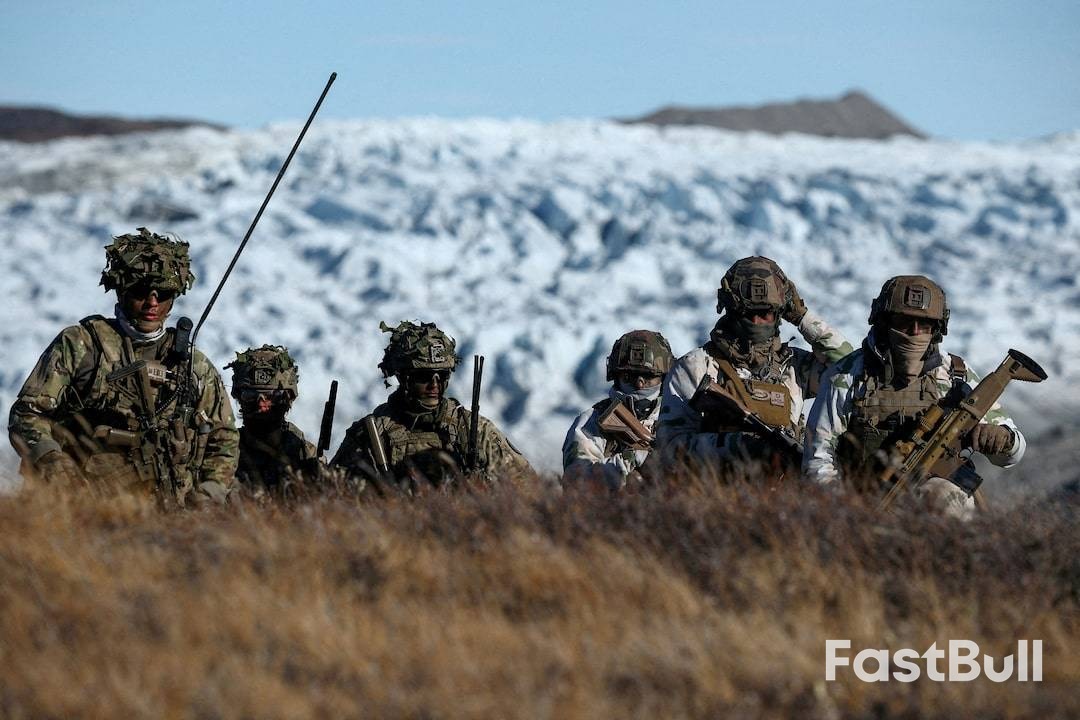
A renewed push by U.S. President Donald Trump to acquire Greenland is forcing a coordinated response from major European powers, threatening to deepen a rift within the NATO alliance. France and Germany are now working on a joint strategy to counter Washington's ambitions for the strategically vital Arctic island.
Any U.S. military move to seize Greenland from Denmark, a longtime ally, would create a significant crisis for the transatlantic partnership.

The diplomatic scramble comes after Trump recently revived his 2019 idea of gaining control over Greenland. He has argued that the island is critical to U.S. military strategy and that Denmark has failed to adequately protect it.
On Tuesday, the White House confirmed that Trump is actively discussing options for acquiring the territory, including the potential use of the military, despite European objections. This has prompted leaders from Europe and Canada to publicly rally behind Greenland, affirming that its future belongs to its people.
French Foreign Minister Jean-Noel Barrot stated the issue would be addressed at a meeting with his German and Polish counterparts. "We want to take action, but we want to do so together with our European partners," Barrot said.
A German government source confirmed the close collaboration, noting that officials are working with Denmark and other European nations on the "next steps regarding Greenland."
Diplomatic Channels and De-escalation
Despite the heated rhetoric, there are signs of diplomatic efforts to manage the situation. Barrot said he spoke with U.S. Secretary of State Marco Rubio, who reportedly ruled out an invasion. "He confirmed that this was not the approach taken," Barrot explained.
The context for this anxiety has been heightened by a recent U.S. military operation that seized the leader of Venezuela, raising concerns that a similar scenario could unfold in the Arctic.
An unnamed senior U.S. official acknowledged that Trump's advisors are exploring various acquisition methods, including a direct purchase. Both Greenland and Denmark have consistently stated that the island is not for sale. In response, Danish Foreign Minister Lars Lokke Rasmussen and Greenlandic Foreign Minister Vivian Motzfeldt have requested an urgent meeting with Rubio.
"The shouting match must be replaced by a more sensible dialogue," Rasmussen posted on social media.

Greenland, the world's largest island with a population of just 57,000, holds immense strategic value. While not an independent NATO member, it falls under Denmark's membership in the alliance.
Its key strategic attributes include:
• Location: Situated between North America and Europe, it has hosted critical components of the U.S. ballistic missile defense system for decades.
• Resources: Its mineral wealth is seen by Washington as a way to reduce economic reliance on China.
Disputed Claims of Foreign Activity
President Trump has justified his interest by repeatedly claiming that Russian and Chinese vessels are active in the waters around Greenland. However, Denmark has strongly refuted these assertions.
"The image that's being painted of Russian and Chinese ships right inside the Nuuk fjord and massive Chinese investments being made is not correct," Rasmussen told reporters.
This denial is supported by independent data. Vessel tracking information from MarineTraffic and LSEG shows no current presence of Chinese or Russian ships near Greenland's coast.

White Label
Data API
Web Plug-ins
Poster Maker
Affiliate Program
The risk of loss in trading financial instruments such as stocks, FX, commodities, futures, bonds, ETFs and crypto can be substantial. You may sustain a total loss of the funds that you deposit with your broker. Therefore, you should carefully consider whether such trading is suitable for you in light of your circumstances and financial resources.
No decision to invest should be made without thoroughly conducting due diligence by yourself or consulting with your financial advisors. Our web content might not suit you since we don't know your financial conditions and investment needs. Our financial information might have latency or contain inaccuracy, so you should be fully responsible for any of your trading and investment decisions. The company will not be responsible for your capital loss.
Without getting permission from the website, you are not allowed to copy the website's graphics, texts, or trademarks. Intellectual property rights in the content or data incorporated into this website belong to its providers and exchange merchants.
Not Logged In
Log in to access more features
Log In
Sign Up