• Trade
  • Markets
  • Copy
  • Contests
  • News
  • 24/7
  • Calendar
  • Q&A
  • Chats
Trending
Screeners
SYMBOL
LAST
BID
ASK
HIGH
LOW
NET CHG.
%CHG.
SPREAD
SPX
S&P 500 Index
6870.39
6870.39
6870.39
6895.79
6858.28
+13.27
+ 0.19%
--
DJI
Dow Jones Industrial Average
47954.98
47954.98
47954.98
48133.54
47871.51
+104.05
+ 0.22%
--
IXIC
NASDAQ Composite Index
23578.12
23578.12
23578.12
23680.03
23506.00
+72.99
+ 0.31%
--
USDX
US Dollar Index
98.880
98.960
98.880
98.960
98.730
-0.070
-0.07%
--
EURUSD
Euro / US Dollar
1.16534
1.16541
1.16534
1.16717
1.16341
+0.00108
+ 0.09%
--
GBPUSD
Pound Sterling / US Dollar
1.33254
1.33264
1.33254
1.33462
1.33136
-0.00058
-0.04%
--
XAUUSD
Gold / US Dollar
4207.27
4207.70
4207.27
4218.85
4190.61
+9.36
+ 0.22%
--
WTI
Light Sweet Crude Oil
59.167
59.197
59.167
60.084
58.980
-0.642
-1.07%
--

Community Accounts

Signal Accounts
--
Profit Accounts
--
Loss Accounts
--
View More

Become a signal provider

Sell trading signals to earn additional income

View More

Guide to Copy Trading

Get started with ease and confidence

View More

Signal Accounts for Members

All Signal Accounts

Best Return
  • Best Return
  • Best P/L
  • Best MDD
Past 1W
  • Past 1W
  • Past 1M
  • Past 1Y

All Contests

  • All
  • Trump Updates
  • Recommend
  • Stocks
  • Cryptocurrencies
  • Central Banks
  • Featured News
Top News Only
Share

White House Economic Adviser Hassett On Fed: Trump Has Lots Of Good Choices

Share

White House Economic Adviser Hassett On Fed: We Should Continue To Get The Rate Down Some

Share

Argus: Ukraine Wheat Crop Could Rise To 23.9 Million T Next Year

Share

Argus Media Forecasts Ukraine's 2026/27 Wheat Production At 23.9 Million T, Up From 23.0 Million T In 2025/26

Share

Standard Chartered Expects US Fed To Cut Interest Rates By 25 Bps In December Versus Prior Forecast Of No Rate Cut

Share

Morgan Stanley Sees Upside Risks To Copper Price Forecast (2026 Base Case $10650/T, Bull Case $12780/T)

Share

White House Official - Trump Set To Unveil $12 Billion Aid For Farmers Hit By Trade War

Share

German Foreign Minister Wadephul: Will Meet Chinese Counterpart Again On Sidelines Of Munich Security Conference

Share

German Foreign Minister Wadephul: EU Tariffs Would Be Measure Of Last Resort

Share

German Foreign Minister Wadephul: China Has Offered General Licenses, Asked Our Businesses To Submit Requests

Share

Congolese President Felix Tshisekedi: Rwanda Is Already Violating Its Peace Deal Commitments

Share

German Foreign Minister Wadephul: Chinese Partners Say They Want To Give Priority To Resolving Bottlenecks In Germany, Europe

Share

India Foreign Ministry: New Deputy USA Trade Representative Will Visit India On Dec 10-11

Share

India Foreign Ministry: Advise Indian Nationals To Exercise Caution While Travelling To Or Transiting Through China

Share

Agrural - Brazil's 2025/26 Total Corn Output Seen At 135.3 Million Tonnes Versus 141.1 Million Tonnes In Previous Season

Share

Agrural - Brazil's 2025/26 Soybean Planting Hits 94% Of Expected Area As Of Last Thursday

Share

SEBI: Modalities For Migration To Ai Only Schemes And Relaxations To Large Value Funds For Accredited Investors

Share

All 6 Bank Of Israel Monetary Policy Committee Members Voted To Lower Benchmark Interest Rate 25 Bps To 4.25% On Nov 24

Share

India Government: Cancellations Are On Account Of Developer Delays And Not Due To Transmission Side Delays

Share

Fitch: We See Moderation Of Export Performance In China In 2026

TIME
ACT
FCST
PREV
France Trade Balance (SA) (Oct)

A:--

F: --

P: --
Euro Zone Employment YoY (SA) (Q3)

A:--

F: --

P: --
Canada Part-Time Employment (SA) (Nov)

A:--

F: --

P: --

Canada Unemployment Rate (SA) (Nov)

A:--

F: --

P: --

Canada Full-time Employment (SA) (Nov)

A:--

F: --

P: --

Canada Labor Force Participation Rate (SA) (Nov)

A:--

F: --

P: --

Canada Employment (SA) (Nov)

A:--

F: --

P: --

U.S. PCE Price Index MoM (Sept)

A:--

F: --

P: --

U.S. Personal Income MoM (Sept)

A:--

F: --

P: --

U.S. Core PCE Price Index MoM (Sept)

A:--

F: --

P: --

U.S. PCE Price Index YoY (SA) (Sept)

A:--

F: --

P: --

U.S. Core PCE Price Index YoY (Sept)

A:--

F: --

P: --

U.S. Personal Outlays MoM (SA) (Sept)

A:--

F: --

P: --
U.S. 5-10 Year-Ahead Inflation Expectations (Dec)

A:--

F: --

P: --

U.S. Real Personal Consumption Expenditures MoM (Sept)

A:--

F: --

P: --
U.S. Weekly Total Rig Count

A:--

F: --

P: --

U.S. Weekly Total Oil Rig Count

A:--

F: --

P: --

U.S. Consumer Credit (SA) (Oct)

A:--

F: --

P: --
China, Mainland Foreign Exchange Reserves (Nov)

A:--

F: --

P: --

Japan Trade Balance (Oct)

A:--

F: --

P: --

Japan Nominal GDP Revised QoQ (Q3)

A:--

F: --

P: --

China, Mainland Imports YoY (CNH) (Nov)

A:--

F: --

P: --

China, Mainland Exports (Nov)

A:--

F: --

P: --

China, Mainland Imports (CNH) (Nov)

A:--

F: --

P: --

China, Mainland Trade Balance (CNH) (Nov)

A:--

F: --

P: --

China, Mainland Exports YoY (USD) (Nov)

A:--

F: --

P: --

China, Mainland Imports YoY (USD) (Nov)

A:--

F: --

P: --

Germany Industrial Output MoM (SA) (Oct)

A:--

F: --

P: --
Euro Zone Sentix Investor Confidence Index (Dec)

A:--

F: --

P: --

Canada National Economic Confidence Index

A:--

F: --

P: --

U.K. BRC Like-For-Like Retail Sales YoY (Nov)

--

F: --

P: --

U.K. BRC Overall Retail Sales YoY (Nov)

--

F: --

P: --

Australia Overnight (Borrowing) Key Rate

--

F: --

P: --

RBA Rate Statement
RBA Press Conference
Germany Exports MoM (SA) (Oct)

--

F: --

P: --

U.S. NFIB Small Business Optimism Index (SA) (Nov)

--

F: --

P: --

Mexico 12-Month Inflation (CPI) (Nov)

--

F: --

P: --

Mexico Core CPI YoY (Nov)

--

F: --

P: --

Mexico PPI YoY (Nov)

--

F: --

P: --

U.S. Weekly Redbook Index YoY

--

F: --

P: --

U.S. JOLTS Job Openings (SA) (Oct)

--

F: --

P: --

China, Mainland M1 Money Supply YoY (Nov)

--

F: --

P: --

China, Mainland M0 Money Supply YoY (Nov)

--

F: --

P: --

China, Mainland M2 Money Supply YoY (Nov)

--

F: --

P: --

U.S. EIA Short-Term Crude Production Forecast For The Year (Dec)

--

F: --

P: --

U.S. EIA Natural Gas Production Forecast For The Next Year (Dec)

--

F: --

P: --

U.S. EIA Short-Term Crude Production Forecast For The Next Year (Dec)

--

F: --

P: --

EIA Monthly Short-Term Energy Outlook
U.S. API Weekly Gasoline Stocks

--

F: --

P: --

U.S. API Weekly Cushing Crude Oil Stocks

--

F: --

P: --

U.S. API Weekly Crude Oil Stocks

--

F: --

P: --

U.S. API Weekly Refined Oil Stocks

--

F: --

P: --

South Korea Unemployment Rate (SA) (Nov)

--

F: --

P: --

Japan Reuters Tankan Non-Manufacturers Index (Dec)

--

F: --

P: --

Japan Reuters Tankan Manufacturers Index (Dec)

--

F: --

P: --

Japan Domestic Enterprise Commodity Price Index MoM (Nov)

--

F: --

P: --

Japan Domestic Enterprise Commodity Price Index YoY (Nov)

--

F: --

P: --

China, Mainland PPI YoY (Nov)

--

F: --

P: --

China, Mainland CPI MoM (Nov)

--

F: --

P: --

Q&A with Experts
    • All
    • Chatrooms
    • Groups
    • Friends
    Connecting
    .
    .
    .
    Type here...
    Add Symbol or Code

      No matching data

      All
      Trump Updates
      Recommend
      Stocks
      Cryptocurrencies
      Central Banks
      Featured News
      • All
      • Russia-Ukraine Conflict
      • Middle East Flashpoint
      • All
      • Russia-Ukraine Conflict
      • Middle East Flashpoint
      Search
      Products

      Charts Free Forever

      Chats Q&A with Experts
      Screeners Economic Calendar Data Tools
      Membership Features
      Data Warehouse Market Trends Institutional Data Policy Rates Macro

      Market Trends

      Market Sentiment Order Book Forex Correlations

      Top Indicators

      Charts Free Forever
      Markets

      News

      News Analysis 24/7 Columns Education
      From Institutions From Analysts
      Topics Columnists

      Latest Views

      Latest Views

      Trending Topics

      Top Columnists

      Latest Update

      Signals

      Copy Rankings Latest Signals Become a signal provider AI Rating
      Contests
      Brokers

      Overview Brokers Assessment Rankings Regulators News Claims
      Broker listing Forex Brokers Comparison Tool Live Spread Comparison Scam
      Q&A Complaint Scam Alert Videos Tips to Detect Scam
      More

      Business
      Events
      Careers About Us Advertising Help Center

      White Label

      Data API

      Web Plug-ins

      Affiliate Program

      Awards Institution Evaluation IB Seminar Salon Event Exhibition
      Vietnam Thailand Singapore Dubai
      Fans Party Investment Sharing Session
      FastBull Summit BrokersView Expo
      Recent Searches
        Top Searches
          Markets
          News
          Analysis
          User
          24/7
          Economic Calendar
          Education
          Data
          • Names
          • Latest
          • Prev

          View All

          No data

          Scan to Download

          Faster Charts, Chat Faster!

          Download App
          English
          • English
          • Español
          • العربية
          • Bahasa Indonesia
          • Bahasa Melayu
          • Tiếng Việt
          • ภาษาไทย
          • Français
          • Italiano
          • Türkçe
          • Русский язык
          • 简中
          • 繁中
          Open Account
          Search
          Products
          Charts Free Forever
          Markets
          News
          Signals

          Copy Rankings Latest Signals Become a signal provider AI Rating
          Contests
          Brokers

          Overview Brokers Assessment Rankings Regulators News Claims
          Broker listing Forex Brokers Comparison Tool Live Spread Comparison Scam
          Q&A Complaint Scam Alert Videos Tips to Detect Scam
          More

          Business
          Events
          Careers About Us Advertising Help Center

          White Label

          Data API

          Web Plug-ins

          Affiliate Program

          Awards Institution Evaluation IB Seminar Salon Event Exhibition
          Vietnam Thailand Singapore Dubai
          Fans Party Investment Sharing Session
          FastBull Summit BrokersView Expo

          Erdogan Wins Turkish Election, Extending Rule To Third Decade

          Thomas

          Political

          Summary:

          With 99.43% of the votes counted, preliminary official results announced by Turkey’s Supreme Election Council (YSK) on Sunday showed Erdogan winning with 52.14% of the votes. Kilicdaroglu received 47.86%.
          President Recep Tayyip Erdogan has won Turkey’s presidential election, defeating opposition leader Kemal Kilicdaroglu in Sunday’s runoff vote and stretching his rule into a third decade.
          With 99.43% of the votes counted, preliminary official results announced by Turkey’s Supreme Election Council (YSK) on Sunday showed Erdogan winning with 52.14% of the votes. Kilicdaroglu received 47.86%.
          Speaking to thousands of his supporters outside the presidential complex in Ankara, Erdogan said that now was the time to “put aside all the debates and conflicts regarding the election period and unite around our national goals and dreams.”
          “We are not the only winners, the winner is Turkey. The winner is all parts of our society, our democracy is the winner,” Erdogan said.
          Erdogan said among the government’s main priorities would be fighting inflation and healing the wounds from a catastrophic earthquake on February 6 which claimed more than 50,000 lives in Turkey and neighboring Syria.
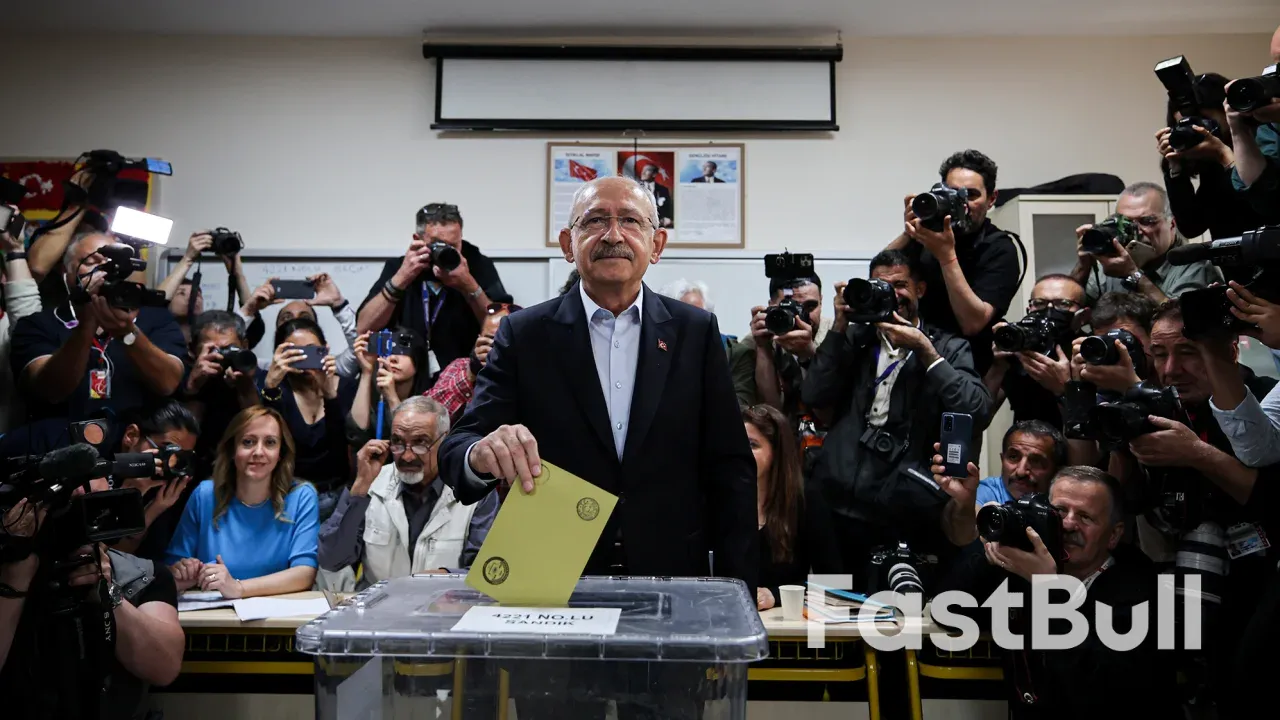
          Speaking at his party headquarters in the capital Ankara, Kilicdaroglu said he would continue to fight until there is “real democracy” in Turkey.
          “This was the most unfair election period in our history… We did not bow down to the climate of fear,” he said. “In this election, the will of the people to change an authoritarian government became clear despite all the pressures.”
          Kilicdaroglu said what “truly makes me sad is the hard days ahead for our country.”
          Foreign leaders including those of Russia, Qatar, Libya, Algeria, Hungary, Iran and the Palestinian Authority were among the first to congratulate Erdogan.
          In remarks published on the Kremlin’s website, Russian President Vladimir Putin said the election provided “clear evidence of the Turkish people’s support” for Erdogan’s efforts “to strengthen state sovereignty and pursue an independent foreign policy.”
          US President Joe Biden also congratulated Erdogan, tweeting that he looked forward to working together “as NATO allies” on “bilateral issues and shared global challenges.”
          Erdogan’s supporters gathered In Istanbul’s Taksim Square, chanting his name and “God is great.”
          Hundreds gathered outside the Istanbul headquarters of the ruling Justice and Development (AK) Party after preliminary results showed Erdogan in the lead. Some came with children while others waved flags, honked car horns and set off flares and fireworks.
          Speaking outside party headquarters amid the celebrations, Erdogan supporter Denel Anart said: “I hope he lives forever.”
          “He is my father, grandfather, uncle. He is my everything,” Anart said.
          Others struck a more religious note.
          “Muslims should rejoice. The whole world will know Muslims more,” said Sehat Pak, 33. “The Islamic world should rejoice.”
          But Mehmet Karli, adviser to Kilicdaroglu, called Erdogan’s election win a “pyrrhic victory” accusing the president of fueling tensions during the election.
          “It does appear that President Erdogan has won these elections. But it would be a mistake to call this a victory. Perhaps a pyrrhic victory is a better term to describe this situation,” Karli said.
          Erdogan’s victory over Kilicdaroglu, a 74-year-old bureaucrat and leader of the left-leaning CHP, leaves Turkey a deeply divided nation.
          “This is not a crushing defeat for those who wanted change,” Asli Aydintasbas, a visiting fellow at Brookings Institution, told CNN’s Becky Anderson. “We are once again looking at a divided country … both camps want entirely different things for Turkey.”
          In the first round of voting on May 14, Erdogan secured a nearly five-point lead over Kilicdaroglu but fell short of the 50% threshold needed to win.
          The president’s parliamentary bloc won a majority of seats in the parliamentary race on the same day.
          Erdogan Wins Turkish Election, Extending Rule To Third Decade_1

          Note: Opposition candidate Kemal Kilicdaroglu cast his vote at a polling station in Ankara.

          Electoral authorities said earlier that voting was passing “without any issues.”
          Last week, third-place candidate Sinan Ogan, who won 5% of the first-round vote, publicly endorsed Erdogan, further boosting the strongman leader’s chances of winning Sunday’s second and final presidential round.
          Many polls had incorrectly predicted that Kilicdaroglu would lead in the May 14 vote, which saw a high turnout of nearly 90% across the country.
          Six opposition groups had formed an unprecedented unified bloc behind Kilicdaroglu to try to wrest power from Erdogan.
          The opposition had described the election as a last stand for Turkish democracy, accusing Erdogan of hollowing out the country’s democratic institutions during his 20-year rule, eroding the power of the judiciary and repressing dissent.
          Erdogan also faces headwinds from a floundering economy and a shambolic initial response to the February earthquake.
          The government acknowledged its “mistakes” in its rescue operation and apologized to the public.
          Erdogan’s critics also spotlighted loose construction standards presided over by the ruling AK party, which turbocharged a construction boom since the early 2000s, and exacerbated the death toll. They also argued that the earthquake response underscored Erdogan’s alleged hollowing out of government entities in his bid to consolidate power.
          The country’s financial crisis – which saw the currency plummet and prices soar – is also partially blamed on Erdogan’s policies. The president suppressed interest rates leaving inflation unfettered, critics argued.
          Erdogan Wins Turkish Election, Extending Rule To Third Decade_2

          Note: Erdogan won the first round but fell short of the margin needed to avoid a runoff.

          In an interview with CNN’s Anderson last week, Erdogan vowed to double down on his unorthodox economic policies, arguing that interest rates and inflation were “positively correlated.”
          He also hailed his relationship with Russia’s President Putin as “special” and said he would continue to block Sweden’s access to NATO, despite Western criticism that he was obstructing a unified front against Moscow’s invasion of Ukraine.
          Erdogan, who controls the second-largest army in NATO, accused Sweden of harboring Kurdish terror groups and has preconditioned Stockholm’s accession on the extradition of wanted individuals. Sweden has refused Turkey’s repeated requests to extradite individuals Ankara describes as terrorists, arguing that the issue can only be decided by Swedish courts.
          Sweden’s Prime Minister Ulf Kristersson congratulated Erdogan for his victory. “Our common security is a future priority,” he tweeted.
          Since Russia launched its invasion of Ukraine in February 2022, the Turkish strongman has emerged as a key power broker, adopting a crucial balancing act between the two sides, widely known as “pro-Ukrainian neutrality.”
          He helped broker a key agreement known as the Black Sea Grain Corridor Initiative that unlocked millions of tons of wheat caught up in Russia’s invasion of Ukraine, averting a global hunger crisis. The agreement was extended for another two months last Wednesday, one day before it was set to expire.
          In a statement on Twitter, Ukrainian President Volodymyr Zelensky congratulated Erdogan for his victory.
          “We count on the further strengthening of the strategic partnership for the benefit of our countries, as well as the strengthening of cooperation for the security and stability of Europe,” Zelensky said.

          Source: CNN

          Risk Warnings and Disclaimers
          You understand and acknowledge that there is a high degree of risk involved in trading. Following any strategies or investment methods may lead to potential losses. The content on the site is provided by our contributors and analysts for information purposes only. You are solely responsible for determining whether any trading assets, securities, strategy, or any other product is suitable for investing based on your own investment objectives and financial situation.
          Comments
          Add to Favorites
          Share

          How Hong Kong Can Re-Establish Itself As a Global Digital Assets Hub

          Kevin Du

          Cryptocurrency

          • With the inclusion of retail investors in its new regulatory regime, Hong Kong is becoming known as a digital-asset-friendly jurisdiction.
          • To become a true hub, it must continue to regulate effectively, recognise the specific tech requirements and include emerging retail and institutional use cases.
          How Hong Kong Can Re-Establish Itself As a Global Digital Assets Hub_1

          Note: A Hong Kong Digital Asset Exchange booth is seen during Fintech Week in Hong Kong on October 31, 2022. The new regulatory regime could spur further innovation in Hong Kong and drive the adoption of digital assets.

          The recent announcement by the Hong Kong Securities and Futures Commission (SFC) that individual investors can from June 1 buy and sell digital assets – such as bitcoin or ethereum – has shifted the spotlight back on the city. While regulators around the world are clamping down on digital assets, Hong Kong seeks to re-establish its position as a global financial hub for digital asset innovation.
          But it is not just digital asset companies that will be supported by this new regulatory regime – financial institutions and corporations are beginning to produce distributed-ledger technology to increase efficiencies, reduce costs and offer new services to clients. This regime might just be the catalyst to spur further innovation in Hong Kong and drive the adoption of digital assets.
          With the oversight of the SFC, the Hong Kong Monetary Authority and the new regulatory guidance, financial institutions will have more incentive to explore the incorporation of blockchain technology, including tokenising traditional assets and offering digital asset trading using secure and flexible wallet technology.
          Tokenisation – a digital representation of a traditional asset that can be stored, transferred and settled over blockchain – allows for a common platform for traditional and digital assets to interact. This next phase in the evolution of digitisation will drive down transaction processing times, improve end-to-end transparency and attract a larger investor base.
          Tokenisation is being used across multiple asset classes, including commodities, debt securities, equity securities and real estate.
          In February, the Hong Kong government issued HK$800 million (US$102 million) of tokenised green bonds – the first to be issued by a government globally. In this case, tokenisation creates greater efficiencies in the bond life cycle by digitising coupon payments, settlement of secondary trading and maturity redemption, allowing the government to sell these bonds with ease.
          Late last year, Singapore’s Monetary Authority completed its first tokenisation industry pilot under “Project Guardian”, where foreign exchange and government bond transactions were executed against liquidity pools comprising tokenised Singapore government securities bonds, Japanese government bonds, the yen and Singapore dollar.
          Two more industry pilot projects are set to be conducted for trade finance and wealth management by some of Singapore’s biggest banks, including Standard Chartered, HSBC and United Overseas Bank, showcasing the government’s belief in the potential of distributed-ledger technology to transform capital markets.
          Hong Kong’s multifaceted regulatory licensing structure, led, managed and supervised by the SFC, allows for the safe operation of digital asset exchanges in Hong Kong through principle- or rules-based guidelines. These licensing requirements give institutional and retail investors confidence that they are engaging with mature and regulated operators.
          With the virtual-asset trading platform licence, Hong Kong has created regulatory clarity for digital asset exchanges to operate inclusive of retail investors, rather than imposing a blanket ban. The new licensing rules require retail digital asset exchanges to implement enhanced protective measures around their trading and custody operations. This includes onboarding steps that assess users’ risk profiles, strict token due diligence criteria, and robust operational governance controls that mitigate against internal fraud and protect against external attacks.
          Furthermore, it is encouraging to see that the SFC recognises the importance of the safe custody of clients’ virtual assets and requires that virtual-asset trading platforms have a direct regulatory handle over the companies exercising control of clients’ virtual assets.
          Between July 2021 and July 2022, the digital asset trading volume in Singapore was just over US$100 billion, compared with US$74 billion in Hong Kong. But the tide could turn in favour of Hong Kong, especially as new entrants decide to operate under the new licensing regime and explore new use cases within digital assets.
          Additionally, Hong Kong is urging banks to provide critical services to licensed digital asset companies, further easing digital asset business operations and establishing its position as a digital-asset-friendly jurisdiction.
          Further progress should be expected with the development of Hong Kong’s central bank digital currency – the e-HKD saw its pilot programme launch earlier this month – stablecoin, asset property rights and non-financial tokenisation in the coming months.
          To become a true digital assets hub, Hong Kong needs to effectively regulate these assets, recognise the technological requirements that differentiate digital assets from traditional assets, and it must be inclusive of emerging retail and institutional use cases.
          It also needs to think beyond the buying and selling of digital assets, and consider how to manage the risks arising from decentralised finance. For an instructive model, Hong Kong should turn towards the Middle East, specifically the Abu Dhabi Global Market’s Registration Authority, which has proposed a legal framework for distributed-ledger technology, targeting disclosures, liquidation and governance structures.
          Finally, the SFC needs to urge Hong Kong’s digital asset operators to use enterprise-grade technology, such as multiparty computation (MPC) custody solutions. MPC mitigates the risk involved with storing private keys and other sensitive data in one location, enabling stronger governance processes within organisations, ensuring the right level of operational oversight and risk mitigation.
          Furthermore, infrastructure that guards against operational errors and internal fraud will be critical as these operators scale up their teams and increase their transaction workflows.
          It might take a while to achieve harmonisation and a globally coordinated regulatory approach but, for now, Hong Kong has the opportunity to drive regulatory clarity that balances both innovation and consumer protection.

          Source: South China Morning Post

          Risk Warnings and Disclaimers
          You understand and acknowledge that there is a high degree of risk involved in trading. Following any strategies or investment methods may lead to potential losses. The content on the site is provided by our contributors and analysts for information purposes only. You are solely responsible for determining whether any trading assets, securities, strategy, or any other product is suitable for investing based on your own investment objectives and financial situation.
          Comments
          Add to Favorites
          Share

          Asian Oil Imports Set For A Rebound In May

          Alex

          Commodity

          Crude oil imports into Asia this month are expected to rise by 8.6% on the month as refineries in China and India exit maintenance season, Reuters’ Clyde Russell reported today, citing data from Refinitiv.
          The rebound follows a decline in Asian crude imports in April when the total dropped to the lowest in seven months. The numbers sparked concern about the outlook for oil demand as Chinese economic indicators also suggested a less smooth than expected post-pandemic recovery.
          Yet it seems the biggest reason for the decline was refinery maintenance, based on the strong rebound expected for this month when Refinitiv estimates total Asian imports would hit 27.73 million barrels of oil daily.
          For China specifically, the data service provider expects oil inflows at a rate of 11.96 million barrels daily, up by as much as a million barrels daily from April. Imports from Russia are seen hitting 2 million barrels daily, up from 1.74 million bpd last month.
          Almost the same amount of Russian crude is seen going to India this month, at 1.97 million bpd. Imports from Saudi Arabia, the subcontinent’s second-largest supplier are seen falling to 570,000 bpd from 690,000 bpd in April, and so are imports from Iraq—India’s number-three supplier.
          Meanwhile, Reuters’ Russell notes that India’s future fuel exports may be under threat as EU officials get uncomfortable that the fuels EU countries buy from India are probably produced from Russian crude.
          Just how serious this threat is, however, is yet to be seen because there are not a lot of alternative suppliers of the amounts of fuel the EU still consumes despite its green push.
          China’s fuel exports are also set for a decline, but for a different reason: the exhaustion of the first batch of export quotas for the year. Russell noted that a further rebound in local demand will also lead to lower exports.

          Source: oilprice.com

          Risk Warnings and Disclaimers
          You understand and acknowledge that there is a high degree of risk involved in trading. Following any strategies or investment methods may lead to potential losses. The content on the site is provided by our contributors and analysts for information purposes only. You are solely responsible for determining whether any trading assets, securities, strategy, or any other product is suitable for investing based on your own investment objectives and financial situation.
          Comments
          Add to Favorites
          Share

          As Gas Reserves Wane, Philippines Faces Rising Costs in Switch to LNG

          Thomas

          Energy

          With just four years before the Philippines' only gas field is set to run dry, the country has started importing liquefied natural gas (LNG), creating a fresh headache for a government struggling to curb high inflation.
          LNG is needed to help replace gas from the Malampaya field, which supplies power plants that meet a fifth of the electricity requirements on the country's main Luzon Island, or 13% of total installed capacity nationwide.
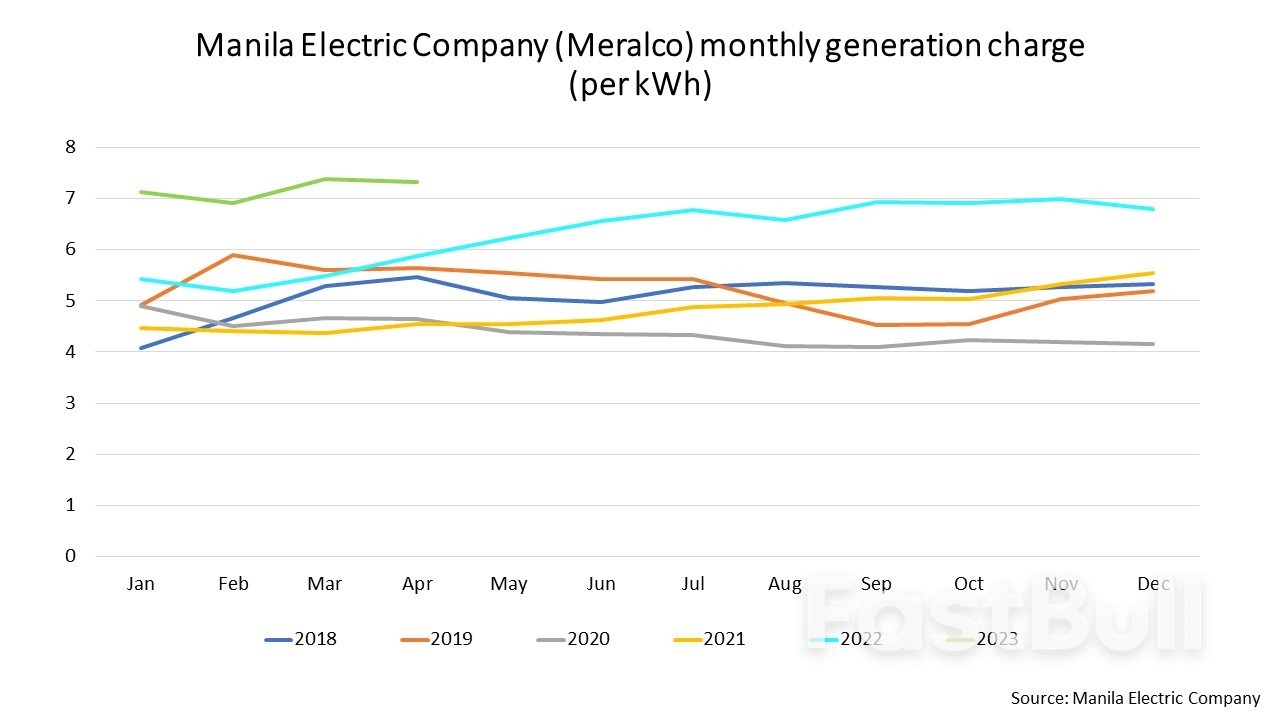
          Imported gas costs will be passed straight through to power prices, and as a result power prices could jump sharply, a challenge for a country where inflation hit a worrying 14-year high in January.
          While LNG prices have dropped from record highs hit last year amid Europe's scramble for gas, they are expected to rise again as demand climbs for winter, and as Hong Kong, Vietnam and the Philippines all become first-time LNG buyers this year.
          "A big challenge is LNG price volatility and how secure is supply," said Irwin Yeo, senior LNG analyst at Poten & Partners.
          The country "will face economic and political risks" from the passing through of LNG costs to power prices, he said.
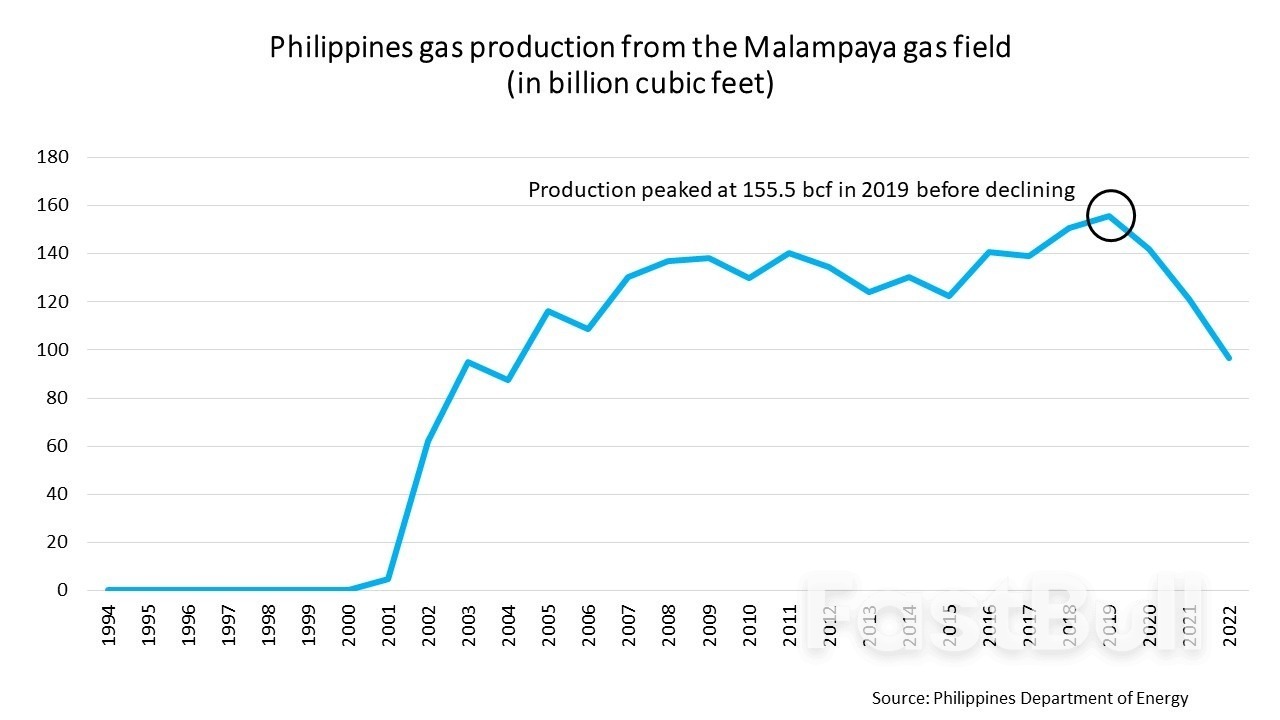
          Gas output at the Malampaya field has declined sharply since peaking in 2019, hitting its lowest since 2004 last year, data from the energy department showed.
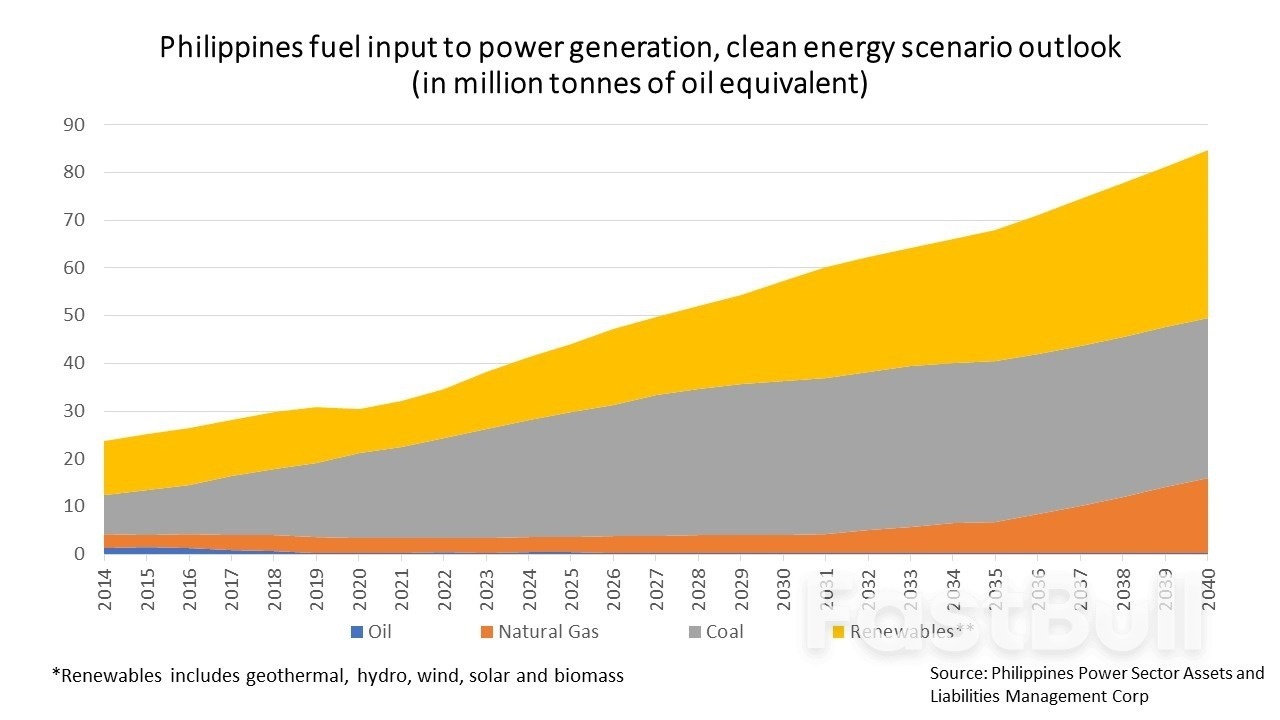
          As Gas Reserves Wane, Philippines Faces Rising Costs in Switch to LNG_1Initially the country will need around 3 million tonnes per year (tpy) of LNG to replace Malampaya's supply but that will fall to around 2.3 million-2.7 million tpy and possibly less by 2030, depending on how rapidly generation from renewable energy grows, said Kittithat Promthaveepong from consultancy The Lantau Group.
          The Philippines aims to have 35% of its power generated by renewables by 2030, up from about 23% currently.
          LNG Price Risk
          The country's debut LNG cargo with 137,000 billion cubic metres of gas arrived in April for trials at its first import terminal, to supply San Miguel Global Power Holdings.
          Next, First Gen, which uses Malampaya gas at four power plants with a combined capacity of 2,000 megawatts, plans to start LNG imports in September when its floating storage and regasification unit (FSRU) in Batangas province is ready.
          First Gen President Francis Giles Puno said without LNG the company would face even higher fuel costs as it would have to rely on expensive diesel.
          "So the LNG is there to temper the cost of fuel," he told reporters on May 17.
          Securing long-term LNG contracts will be challenging for the new market entrant despite current low prices, as supplies globally remain tight at a time when other emerging markets like Vietnam and Bangladesh are also competing for gas, analysts say.
          Fortuitously for new buyers, spot LNG prices have fallen to $9.80 per million British thermal units (mmBtu) in May following a mild winter and lower demand, after averaging nearly $40/mmBtu in 2022, propelled by the Russia-Ukraine war.
          "But the consensus is that this dip in prices isn't expected to last," said Sam Reynolds, an analyst at the Institute for Energy Economics and Financial Analysis (IEEFA).
          LNG is currently about $1-$3/mmBtu costlier than Philippine gas, based on a $70 a barrel oil price, two analysts said, which could lead to a 15%-35% increase in the cost of power generated from imported fuel.
          No Subsidies
          The government has approved seven LNG import terminal projects with a total capacity of 21.98 million tpy, looking to expand LNG usage into industrial, commercial, residential and transport sectors in addition to power.
          As Gas Reserves Wane, Philippines Faces Rising Costs in Switch to LNG_2The Philippines' department of energy undersecretary Rowena Guevara told Reuters there are no plans to shield consumers from potential higher electricity rates with subsidies and no plans to impose a power price cap.
          Distributors such as Manila Electric Company (Meralco) buy power directly from independent producers under supply contracts and from the Wholesale Electricity Spot Market.As Gas Reserves Wane, Philippines Faces Rising Costs in Switch to LNG_3
          In March, energy secretary Raphael Lotilla said the government and the Energy Regulatory Commission were looking at ways to prevent price shocks, but gave no details.
          "We are looking at measures to protect the people from the volatilities of LNG prices. But the most important consideration is that we should have adequate power supply," Lotilla told reporters on May 16.

          Source: Reuters

          Risk Warnings and Disclaimers
          You understand and acknowledge that there is a high degree of risk involved in trading. Following any strategies or investment methods may lead to potential losses. The content on the site is provided by our contributors and analysts for information purposes only. You are solely responsible for determining whether any trading assets, securities, strategy, or any other product is suitable for investing based on your own investment objectives and financial situation.
          Comments
          Add to Favorites
          Share

          Vietnam's Exports Down 11%, Weighed By Fewer Smartphone Shipments

          Devin
          Vietnam's exports in the first five months of this year fell 11.6% from a year earlier to $136.17 billion, government data showed on Monday, as weakened external demand weighs on its manufacturing-led economy.
          Its industrial output in the January-May period fell 2% from a year earlier, the General Statistics Office (GSO) said in a report, adding that average consumer prices in the period rose 3.55% from a year earlier.
          The latest data underlines a slowdown in economic growth for Vietnam, a key regional manufacturing center, due largely to subdued global demand.
          Imports in the first five months of this year fell 17.9% from a year earlier to $126.37 billion, resulting in a trade surplus of $9.8 billion, the GSO said.
          The sharp imports decline could indicate a further slowdown ahead in industrial production, as businesses reduce procurement of raw materials and equipment. Vietnam is a key exporter of electronics, garments and textiles, footwear and wooden items, including for top global brands.
          Deputy Prime Minister Le Minh Khai earlier in May said the economy would face unfavorable external conditions during 2023.
          Vietnam is targeting growth of 6.5% this year, slower than the expansion of 8.02% in 2022. Vietnam's gross domestic product growth slowed to 3.3% in the first quarter from an expansion of 5.9% in the fourth quarter of last year.
          Oxford Economics on Monday said it had cut its forecast for Vietnam's 2023 GDP growth to 3.0% from 4.2%.
          "We think that easing global growth, including a fading recovery momentum in China, mean that the depressing outlook for Vietnam's exports has further to run, casting clouds over the prospect of any rebound in GDP growth," it said in a note.
          Exports in smartphones, Vietnam's largest export earner, fell 16% in the January-May period to $21.17 billion, the GSO said.
          In May, its total exports fell 5.9% from a year earlier, while imports were down 18.4%, the GSO added.

          Source: Reuters

          Risk Warnings and Disclaimers
          You understand and acknowledge that there is a high degree of risk involved in trading. Following any strategies or investment methods may lead to potential losses. The content on the site is provided by our contributors and analysts for information purposes only. You are solely responsible for determining whether any trading assets, securities, strategy, or any other product is suitable for investing based on your own investment objectives and financial situation.
          Comments
          Add to Favorites
          Share

          Global Supply Chain Relocation: China's Loss Is India, Vietnam's Gain

          Owen Li

          Economic

          The ongoing global economic uncertainty has exposed many vulnerabilities with global supply chains. The recent events have even raised doubts over globalisation, with many economies now understanding the fragility of the global supply chains and mulling shifting to a model that is more regionally based.
          Keeping this situation at the centre, a World Economic Forum (WEF)’s report, Chief Economists Outlook, outlines the emerging contours of the current economic conditions and pinpoints priorities for further action by policymakers and businesses globally. The report states that the regions most likely to benefit from the global supply chain changes are South Asia, East Asia and the Pacific, Latin America and the Caribbean, and the US.
          The report specifically states that economies that are likely to benefit from these changes are India, Vietnam, Thailand, Indonesia, Mexico, Turkey, and Poland. These assertions are backed by the fact that many of these countries have managed to attract substantial foreign direct investment (FDI) in the last few years. For instance, the financial year 2021-22 recorded the highest FDI into India at $83.6 billion. Similarly, in 2021, Vietnam attracted more than $31.15 billion in FDI pledges, 9% higher than the previous year.

          China’s prospects to take a hit

          The WEF outlook also notes that amid this shift in supply chains, China is expected to be particularly affected. Most of the chief economists surveyed by the WEF say they expect supply-chain restructuring to have a negative impact on China’s economic prospects.
          Global Supply Chain Relocation: China's Loss Is India, Vietnam's Gain_1A classic example is the American tech firm Apple, which has plans to diversify its supply chains to other countries with an aim to reduce its heavy dependence on China. The iPhone-maker has been assembling its products in both India and Vietnam for a few years and aims to leverage its presence in these countries and increase its volume of production.
          A 2022 forecast by JP Morgan states that the percentage of Apple products made in China will fall to 75% from 95% by 2025. Apple may manufacture one out of four iPhones in India by 2025.
          The WEF survey states, “The twin pressures of deepening geopolitical tensions and intensifying industrial policy mean that further adjustments in the global supply chain are almost inevitable in the coming years.”
          Arun Singh, Chief Economist, Dun & Bradsheet, says that the geopolitical and economic uncertainties have highlighted that a large part of the global economy was relying on just a few suppliers.
          “We have seen China getting impacted with issues such as slowdown and closures in the recent past. It disrupted the global supply chain and hit the pricing and whatever demand we had at that time. We failed to meet even small demands at that time. Soon we realised the mistake of relying on just one supplier. Now you have the Russia-Ukraine crisis. There have been several regional developments in the near past which exposed countries to the supply chain risks. Now, companies are looking at diversification so that their supply chains are not impacted in such scenarios. In this new setting, we will see a supply chain approach shift,” says Singh.
          Many companies are shifting from China towards safer locations or nearshoring or even moving towards their local markets. “What’s worse for China is that its domestic market is also saturating, implying it will only have majorly relied on the exports market – which itself is subdued due to the global slowdown,” he says.
          Global Supply Chain Relocation: China's Loss Is India, Vietnam's Gain_2Singh dismisses the idea that China may re-emerge strongly and get back the full mojo once it completely beats Covid-19. “China was practically never shut. Even when the entire world was seeing a shutdown, Chinese factories were operational. Saying now that China’s performance would get back to its pre-pandemic days is too far-fetched. We should understand that Covid-19 is history now.”

          Supply chain diversification is here to stay

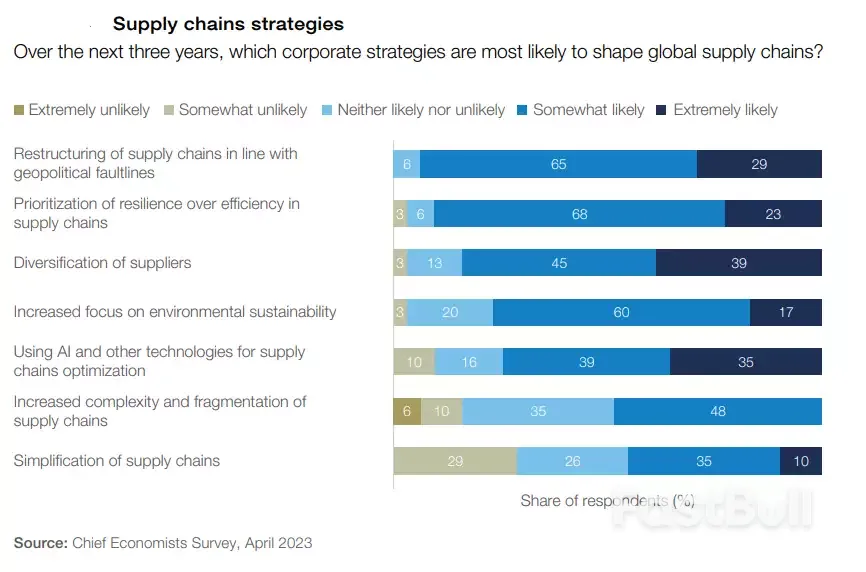
          The chief economists in the WEF report are unanimous in anticipating further changes in the structure of global supply chains. The business strategies they expect to contribute to this reconfiguration include adaptation to geopolitical fault lines, the prioritisation of resilience over efficiency, diversification of suppliers and an increased focus on environmental sustainability.
          On a sectoral basis, the WEF outlook highlights a range of industries where they expect supply chain changes to be most pronounced, including semiconductors, green energy, automotive, pharmaceuticals, food, energy and the broad technology category.

          Potential for India

          India may have huge potential but Vietnam has done relatively well in attracting big names in the past few years. Other than Apple, Samsung has also opted for Vietnam. The country has also attracted Google for producing Pixel phones, as well as Nike and Adidas.
          “We expect Vietnam to remain a key beneficiary for re-location or co-location of production, supported by its already well-known and favourable factors. These include competitive costs for a relatively skilled workforce, extensive free trade agreements (FTA), and proximity to China, beyond its bright medium-term growth prospects of 6%-7%. Vietnam’s growing electronics ecosystem will also be another advantage,” says DBS in its report released in April 2023.
          So, convincing big firms for relocation would not be a cake walk for India.
          Singh says India is working to attract FDI but a lot still needs to be done. “But I think there is a constant nudge from the government asking global manufacturers to settle their facilities in the country. We should not forget that India is equivalent to China and the US both from the market and cost-effectiveness perspective. Big efforts are still required and that is why we see the government pitching up with schemes such as PLI. Every country now is trying to get the benefit of this supply chain relocation. This is going to have an impact,” he adds.

          Source: economictimes.indiatimes.com

          To stay updated on all economic events of today, please check out our Economic calendar
          Risk Warnings and Disclaimers
          You understand and acknowledge that there is a high degree of risk involved in trading. Following any strategies or investment methods may lead to potential losses. The content on the site is provided by our contributors and analysts for information purposes only. You are solely responsible for determining whether any trading assets, securities, strategy, or any other product is suitable for investing based on your own investment objectives and financial situation.
          Comments
          Add to Favorites
          Share

          China Industrial Profits Slide As Demand Weakens

          Cohen

          Economic

          Profits at industrial firms in China kept falling in the first four months of 2023, underlining cooling demand and deepening factory-gate deflation in the world’s second-largest economy.
          Industrial profits fell 20.6 per cent in the January-to-April period from the same timeframe in 2022, data published on Saturday by the National Bureau of Statistics (NBS) showed. The drop was slower than a decline of 21.4 per cent logged in the first quarter.
          Profits for the single month of April were down 18.2 per cent from a year earlier, according to NBS figures, compared with March’s decline of 19.2 per cent.
          The weak recovery of effective demand “has continued to weigh on the capacity utilisation rate, which, coupled with the difficulty to bring down costs, means more patience is needed” for the rebound in industrial profit, said Mr Bruce Pang, chief economist for Greater China at Jones Lang LaSalle. “The cumulative year-on-year growth may not return to the positive territory until the fourth quarter.”
          More policy support and stimulus are needed for a full-year gain in industrial profit, he added.
          China’s post-Covid-19 recovery is faltering, recent data has shown, with export growth weakening and industrial deflation worsening in April. Falling profits bode ill for the economy’s outlook and are set to weigh on already weak sentiment among businesses – thus holding them back from investing.
          Industrial enterprises in China have been struggling to rebound from last year’s pandemic-induced slump, even though factory activity has picked up somewhat.
          Still, demand for goods remains sluggish, with the economic rebound led mainly by consumer spending in services. Foreign purchases of Chinese products are slowing as the United States and other developed economies seek to “de-risk” from China.
          Deteriorating producer deflation has also undercut factories’ ability to boost prices, hurting profits. The producer price index fell 3.6 per cent year on year in April, the biggest decline since May 2020.
          Foreign firms registered a 16.2 per cent drop in profits in the January-to-April period compared with a 24.9 per cent decline in the first quarter. Profits at private firms fell 22.5 per cent in the first four months, while those at state-owned enterprises slipped 17.9 per cent, according to NBS data.

          Source: BLOOMBERG

          To stay updated on all economic events of today, please check out our Economic calendar
          Risk Warnings and Disclaimers
          You understand and acknowledge that there is a high degree of risk involved in trading. Following any strategies or investment methods may lead to potential losses. The content on the site is provided by our contributors and analysts for information purposes only. You are solely responsible for determining whether any trading assets, securities, strategy, or any other product is suitable for investing based on your own investment objectives and financial situation.
          Comments
          Add to Favorites
          Share
          FastBull
          Copyright © 2025 FastBull Ltd

          728 RM B 7/F GEE LOK IND BLDG NO 34 HUNG TO RD KWUN TONG KLN HONG KONG

          TelegramInstagramTwitterfacebooklinkedin
          App Store Google Play Google Play
          Products
          Charts

          Chats

          Q&A with Experts
          Screeners
          Economic Calendar
          Data
          Tools
          Membership
          Features
          Function
          Markets
          Copy Trading
          Latest Signals
          Contests
          News
          Analysis
          24/7
          Columns
          Education
          Company
          Careers
          About Us
          Contact Us
          Advertising
          Help Center
          Feedback
          User Agreement
          Privacy Policy
          Business

          White Label

          Data API

          Web Plug-ins

          Poster Maker

          Affiliate Program

          Risk Disclosure

          The risk of loss in trading financial instruments such as stocks, FX, commodities, futures, bonds, ETFs and crypto can be substantial. You may sustain a total loss of the funds that you deposit with your broker. Therefore, you should carefully consider whether such trading is suitable for you in light of your circumstances and financial resources.

          No decision to invest should be made without thoroughly conducting due diligence by yourself or consulting with your financial advisors. Our web content might not suit you since we don't know your financial conditions and investment needs. Our financial information might have latency or contain inaccuracy, so you should be fully responsible for any of your trading and investment decisions. The company will not be responsible for your capital loss.

          Without getting permission from the website, you are not allowed to copy the website's graphics, texts, or trademarks. Intellectual property rights in the content or data incorporated into this website belong to its providers and exchange merchants.

          Not Logged In

          Log in to access more features

          FastBull Membership

          Not yet

          Purchase

          Become a signal provider
          Help Center
          Customer Service
          Dark Mode
          Price Up/Down Colors

          Log In

          Sign Up

          Position
          Layout
          Fullscreen
          Default to Chart
          The chart page opens by default when you visit fastbull.com