• Trade
  • Markets
  • Copy
  • Contests
  • News
  • 24/7
  • Calendar
  • Q&A
  • Chats
Trending
Screeners
SYMBOL
LAST
BID
ASK
HIGH
LOW
NET CHG.
%CHG.
SPREAD
SPX
S&P 500 Index
6827.42
6827.42
6827.42
6899.86
6801.80
-73.58
-1.07%
--
DJI
Dow Jones Industrial Average
48458.04
48458.04
48458.04
48886.86
48334.10
-245.98
-0.51%
--
IXIC
NASDAQ Composite Index
23195.16
23195.16
23195.16
23554.89
23094.51
-398.69
-1.69%
--
USDX
US Dollar Index
97.950
98.030
97.950
98.500
97.950
-0.370
-0.38%
--
EURUSD
Euro / US Dollar
1.17394
1.17409
1.17394
1.17496
1.17192
+0.00011
+ 0.01%
--
GBPUSD
Pound Sterling / US Dollar
1.33707
1.33732
1.33707
1.33997
1.33419
-0.00148
-0.11%
--
XAUUSD
Gold / US Dollar
4299.39
4299.39
4299.39
4353.41
4257.10
+20.10
+ 0.47%
--
WTI
Light Sweet Crude Oil
57.233
57.485
57.233
58.011
56.969
-0.408
-0.71%
--

Community Accounts

Signal Accounts
--
Profit Accounts
--
Loss Accounts
--
View More

Become a signal provider

Sell trading signals to earn additional income

View More

Guide to Copy Trading

Get started with ease and confidence

View More

Signal Accounts for Members

All Signal Accounts

Best Return
  • Best Return
  • Best P/L
  • Best MDD
Past 1W
  • Past 1W
  • Past 1M
  • Past 1Y

All Contests

  • All
  • Trump Updates
  • Recommend
  • Stocks
  • Cryptocurrencies
  • Central Banks
  • Featured News
Top News Only
Share

Iranian Media Says 18 Crew Members Of Foreign Tanker Seized In Gulf Of Oman Over Carrying 'Smuggled Fuel' Detained

Share

Regional Governor: Two Killed In Ukrainian Drone Strike On Russia's Saratov

Share

Chinese Foreign Ministry - China Foreign Minister Met With United Arab Emirates Counterpart On Dec 12

Share

China's Central Financial And Economic Affairs Commission Deputy Director: Will Expand Export And Increase Import In 2026

Share

Thai Leader Anutin: Landmine Blast That Killed Thai Soldiers 'Not A Roadside Accident'

Share

Thai Leader Anutin: Thailand To Continue Military Action Until 'We Feel No More Harm'

Share

Cambodian Prime Minister Hun Manet Says He Had Phone Calls With Trump And Malaysian Leader Anwar About Ceasefire

Share

Cambodia's Hun Manet Says USA, Malaysia Should Verify 'Which Side Fired First' In Latest Conflict

Share

Cambodia's Hun Manet: Cambodia Maintains Its Stance In Seeking Peaceful Resolution Of Disputes

Share

Nasdaq Companies: Allergan, Ferrovia, Insmed, Monolithic Power Systems, Seagate Technology, And Western Digital Will Be Added To The NASDAQ 100 Index. Biogen, CdW, GlobalFoundries, Lululemon, ON Semiconductor, And Tradedesk Will Be Removed From The NASDAQ 100 Index

Share

Witkoff Headed To Berlin This Weekend To Meet With Zelenskiy, European Leaders -Wsj Reporter On X

Share

Russia Attacks Two Ukrainian Ports, Damaging Three Turkish-Owned Vessels

Share

[Historic Flooding Occurs In At Least Four Rivers In Washington State Due To Days Of Torrential Rains] Multiple Areas In Washington State Have Been Hit By Severe Flooding Due To Days Of Torrential Rains, With At Least Four Rivers Experiencing Historic Flooding. Reporters Learned On The 12th That The Floods Caused By The Torrential Rains In Washington State Have Destroyed Homes And Closed Several Highways. Experts Warn That Even More Severe Flooding May Occur In The Future. A State Of Emergency Has Been Declared In Washington State

Share

Trump Says Proposed Free Economic Zone In Donbas Would Work

Share

Trump: I Think My Voice Should Be Heard

Share

Trump Says Will Be Choosing New Fed Chair In Near Future

Share

Trump Says Proposed Free Economic Zone In Donbas Complex But Would Work

Share

Trump Says Land Strikes In Venezuela Will Start Happening

Share

US President Trump: Thailand And Cambodia Are In A Good Situation

Share

State Media: North Korean Leader Kim Hails Troops Returning From Russia Mission

TIME
ACT
FCST
PREV
U.K. Trade Balance Non-EU (SA) (Oct)

A:--

F: --

P: --

U.K. Trade Balance (Oct)

A:--

F: --

P: --

U.K. Services Index MoM

A:--

F: --

P: --

U.K. Construction Output MoM (SA) (Oct)

A:--

F: --

P: --

U.K. Industrial Output YoY (Oct)

A:--

F: --

P: --

U.K. Trade Balance (SA) (Oct)

A:--

F: --

P: --

U.K. Trade Balance EU (SA) (Oct)

A:--

F: --

P: --

U.K. Manufacturing Output YoY (Oct)

A:--

F: --

P: --

U.K. GDP MoM (Oct)

A:--

F: --

P: --

U.K. GDP YoY (SA) (Oct)

A:--

F: --

P: --

U.K. Industrial Output MoM (Oct)

A:--

F: --

P: --

U.K. Construction Output YoY (Oct)

A:--

F: --

P: --

France HICP Final MoM (Nov)

A:--

F: --

P: --

China, Mainland Outstanding Loans Growth YoY (Nov)

A:--

F: --

P: --

China, Mainland M2 Money Supply YoY (Nov)

A:--

F: --

P: --

China, Mainland M0 Money Supply YoY (Nov)

A:--

F: --

P: --

China, Mainland M1 Money Supply YoY (Nov)

A:--

F: --

P: --

India CPI YoY (Nov)

A:--

F: --

P: --

India Deposit Gowth YoY

A:--

F: --

P: --

Brazil Services Growth YoY (Oct)

A:--

F: --

P: --

Mexico Industrial Output YoY (Oct)

A:--

F: --

P: --

Russia Trade Balance (Oct)

A:--

F: --

P: --

Philadelphia Fed President Henry Paulson delivers a speech
Canada Building Permits MoM (SA) (Oct)

A:--

F: --

P: --

Canada Wholesale Sales YoY (Oct)

A:--

F: --

P: --

Canada Wholesale Inventory MoM (Oct)

A:--

F: --

P: --

Canada Wholesale Inventory YoY (Oct)

A:--

F: --

P: --

Canada Wholesale Sales MoM (SA) (Oct)

A:--

F: --

P: --

Germany Current Account (Not SA) (Oct)

A:--

F: --

P: --

U.S. Weekly Total Rig Count

A:--

F: --

P: --

U.S. Weekly Total Oil Rig Count

A:--

F: --

P: --

Japan Tankan Large Non-Manufacturing Diffusion Index (Q4)

--

F: --

P: --

Japan Tankan Small Manufacturing Outlook Index (Q4)

--

F: --

P: --

Japan Tankan Large Non-Manufacturing Outlook Index (Q4)

--

F: --

P: --

Japan Tankan Large Manufacturing Outlook Index (Q4)

--

F: --

P: --

Japan Tankan Small Manufacturing Diffusion Index (Q4)

--

F: --

P: --

Japan Tankan Large Manufacturing Diffusion Index (Q4)

--

F: --

P: --

Japan Tankan Large-Enterprise Capital Expenditure YoY (Q4)

--

F: --

P: --

U.K. Rightmove House Price Index YoY (Dec)

--

F: --

P: --

China, Mainland Industrial Output YoY (YTD) (Nov)

--

F: --

P: --

China, Mainland Urban Area Unemployment Rate (Nov)

--

F: --

P: --

Saudi Arabia CPI YoY (Nov)

--

F: --

P: --

Euro Zone Industrial Output YoY (Oct)

--

F: --

P: --

Euro Zone Industrial Output MoM (Oct)

--

F: --

P: --

Canada Existing Home Sales MoM (Nov)

--

F: --

P: --

Euro Zone Total Reserve Assets (Nov)

--

F: --

P: --

U.K. Inflation Rate Expectations

--

F: --

P: --

Canada National Economic Confidence Index

--

F: --

P: --

Canada New Housing Starts (Nov)

--

F: --

P: --

U.S. NY Fed Manufacturing Employment Index (Dec)

--

F: --

P: --

U.S. NY Fed Manufacturing Index (Dec)

--

F: --

P: --

Canada Core CPI YoY (Nov)

--

F: --

P: --

Canada Manufacturing Unfilled Orders MoM (Oct)

--

F: --

P: --

Canada Manufacturing New Orders MoM (Oct)

--

F: --

P: --

Canada Core CPI MoM (Nov)

--

F: --

P: --

Canada Manufacturing Inventory MoM (Oct)

--

F: --

P: --

Canada CPI YoY (Nov)

--

F: --

P: --

Canada CPI MoM (Nov)

--

F: --

P: --

Canada CPI YoY (SA) (Nov)

--

F: --

P: --

Canada Core CPI MoM (SA) (Nov)

--

F: --

P: --

Q&A with Experts
    • All
    • Chatrooms
    • Groups
    • Friends
    Connecting
    .
    .
    .
    Type here...
    Add Symbol or Code

      No matching data

      All
      Trump Updates
      Recommend
      Stocks
      Cryptocurrencies
      Central Banks
      Featured News
      • All
      • Russia-Ukraine Conflict
      • Middle East Flashpoint
      • All
      • Russia-Ukraine Conflict
      • Middle East Flashpoint
      Search
      Products

      Charts Free Forever

      Chats Q&A with Experts
      Screeners Economic Calendar Data Tools
      Membership Features
      Data Warehouse Market Trends Institutional Data Policy Rates Macro

      Market Trends

      Market Sentiment Order Book Forex Correlations

      Top Indicators

      Charts Free Forever
      Markets

      News

      News Analysis 24/7 Columns Education
      From Institutions From Analysts
      Topics Columnists

      Latest Views

      Latest Views

      Trending Topics

      Top Columnists

      Latest Update

      Signals

      Copy Rankings Latest Signals Become a signal provider AI Rating
      Contests
      Brokers

      Overview Brokers Assessment Rankings Regulators News Claims
      Broker listing Forex Brokers Comparison Tool Live Spread Comparison Scam
      Q&A Complaint Scam Alert Videos Tips to Detect Scam
      More

      Business
      Events
      Careers About Us Advertising Help Center

      White Label

      Data API

      Web Plug-ins

      Affiliate Program

      Awards Institution Evaluation IB Seminar Salon Event Exhibition
      Vietnam Thailand Singapore Dubai
      Fans Party Investment Sharing Session
      FastBull Summit BrokersView Expo
      Recent Searches
        Top Searches
          Markets
          News
          Analysis
          User
          24/7
          Economic Calendar
          Education
          Data
          • Names
          • Latest
          • Prev

          View All

          No data

          Scan to Download

          Faster Charts, Chat Faster!

          Download App
          English
          • English
          • Español
          • العربية
          • Bahasa Indonesia
          • Bahasa Melayu
          • Tiếng Việt
          • ภาษาไทย
          • Français
          • Italiano
          • Türkçe
          • Русский язык
          • 简中
          • 繁中
          Open Account
          Search
          Products
          Charts Free Forever
          Markets
          News
          Signals

          Copy Rankings Latest Signals Become a signal provider AI Rating
          Contests
          Brokers

          Overview Brokers Assessment Rankings Regulators News Claims
          Broker listing Forex Brokers Comparison Tool Live Spread Comparison Scam
          Q&A Complaint Scam Alert Videos Tips to Detect Scam
          More

          Business
          Events
          Careers About Us Advertising Help Center

          White Label

          Data API

          Web Plug-ins

          Affiliate Program

          Awards Institution Evaluation IB Seminar Salon Event Exhibition
          Vietnam Thailand Singapore Dubai
          Fans Party Investment Sharing Session
          FastBull Summit BrokersView Expo

          Buoyant Bitcoin's Losing Its Liquidity

          Kevin Du

          Cryptocurrency

          Summary:

          Bullish bitcoin has been a surprise winner of the banking blowout. Yet investors aiming to ramp up their bets face an ominous obstacle: a lack of liquidity that could trigger wild price swings.
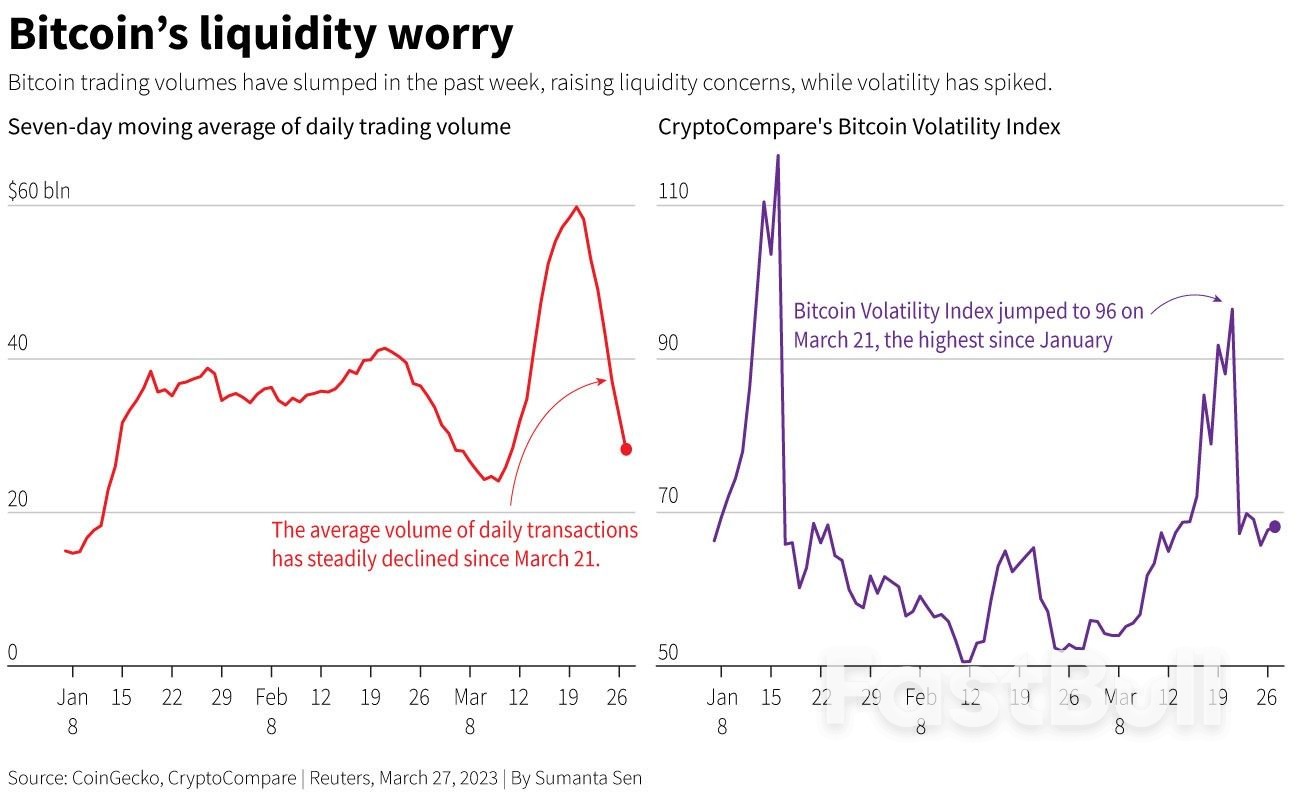
          Bullish bitcoin has been a surprise winner of the banking blowout. Yet investors aiming to ramp up their bets face an ominous obstacle: a lack of liquidity that could trigger wild price swings.
          The price of the No.1 cryptocurrency has jumped 40% to around $27,700 since March 10, when the failure of Silicon Valley Bank (SVB) careered into mainstream markets.
          On the flip side, though, its liquidity is drying up.
          Bitcoin's market depth indicates the asset is at its lowest level of liquidity in 10 months, even lower than in the aftermath of the FTX collapse in November, according to data provider Kaiko. The market depth for the two leading trading pairs - bitcoin-dollar and bitcoin-tether - stands at 5,600 bitcoin, the equivalent of about $155 million, Kaiko said.
          "As a market maker we try to provide liquidity where we can but we're facing a difficult situation," said Kevin de Patoul, CEO of Keyrock. "There is a big network effect here. In the short term at least, liquidity will remain a challenge."
          Slippage, a liquidity measure describing how much prices change between the placement and execution of a trade, has also increased. Slippage for buying bitcoin with U.S. dollars on the Coinbase exchange is 2.5 times higher than it was at the start of March, said Conor Ryder, research analyst at Kaiko.
          The slippage for a simulated $100,000 sell order has doubled in the past month, meaning the average price you get for each bitcoin is worse than a month ago, Kaiko said.
          The network effect de Patoul referred to was the collapses of Silvergate Capital and Signature Bank, whose networks had long been used by market makers - which expand liquidity by rapidly buying and selling tokens - to transact with exchanges.
          Lower liquidity typically translates to more volatile markets, especially in crypto. Kaiko's Ryder said this was possibly one factor behind bitcoin's leap this month.
          CryptoCompare's Bitcoin Volatility Index spiked to 96 last week, way higher than the range of 52 to 65 it saw last month as the cryptocurrency held its footing despite broader market turmoil. The index is currently hovering around 68.

          Buoyant Bitcoin's Losing Its Liquidity_1The alameda factor

          Further crimping liquidity, Binance - the world's most liquid crypto exchange - ended zero-fee trading for nearly all its bitcoin trading pairs last week, hitting market makers' ability to charge higher fees for executing trades on the platform.
          Liquidity for the bitcoin-tether pair on Binance has dropped 70% since the announcement, while trading volumes have fallen 90%, according to Kaiko data.
          The vanishing liquidity can be traced back to the collapse of Sam Bankman-Fried's FTX exchange and hedge fund Alameda Research. Alameda was one of the biggest liquidity providers in the crypto industry, and its bankruptcy left a void that has been exacerbated by the banking sector turmoil of 2023.
          While most market participants expect new contenders to gradually emerge to perform the network functions of Silvergate and Signature, they say complete replacements are unlikely to pop up overnight.
          Until then, "liquidity is probably going to get worse and worse", said Joseph Edwards, investment adviser at Enigma Securities.
          Furthermore, it's not just market-maker trouble that's crunching crypto liquidity; Despite bitcoin's recent rally following a lengthy downturn, many investors are still trading cautiously in the wake of the banking crises and rising interest rates, some specialists say.
          "Even if some players haven't left the place, they are on the sidelines right now because of what's happening with banking turmoil," Edwards said.

          Source: The Economic Times

          Risk Warnings and Disclaimers
          You understand and acknowledge that there is a high degree of risk involved in trading. Following any strategies or investment methods may lead to potential losses. The content on the site is provided by our contributors and analysts for information purposes only. You are solely responsible for determining whether any trading assets, securities, strategy, or any other product is suitable for investing based on your own investment objectives and financial situation.
          Comments
          Add to Favorites
          Share

          China's 2023 Crude Oil Imports Set for 6.2% Rise, But Risks Prevail

          Thomas

          Commodity

          China's crude oil imports will average 10.8 million barrels per day (bpd) in 2023, matching the previous record high from 2020, according to the think tank of the country's leading energy group.
          Imports will rise 6.2% from last year to 540 million tonnes, while refinery processing will gain 7.8% to 733 million tonnes, equivalent to 14.66 million bpd, China National Petroleum Corporation's Economics and Technology Research Institute (ETRI) said in its annual industry outlook released on Monday.
          The forecasts are largely in line with those of private analysts, who have tipped a rebound in China's fuel consumption as the world's second-largest economy reopens after ending its strict zero-COVID policy late last year.
          The ETRI forecast is for crude oil imports to rise by 630,000 bpd in 2023, which is below the 900,000 bpd expected by the International Energy Agency, but above estimates from some analysts, such as Wood Mackenzie and S&P Global Commodity Insights.
          Forecasts are useful insofar as they provide insight into the expectations of participants in the market, but it's also useful to look at some of the risks around the estimates.
          What is interesting with the ETRI forecasts is that they would seem to show that China's refiners are still expecting to add crude oil to stockpiles over 2023.
          Assuming domestic oil production remains relatively steady over 2023 at the 4.23 million bpd achieved in the first two months of the year, it implies that a total of 15.03 million bpd will be available to refiners from imports and local output.
          This is some 370,000 bpd more than the ETRI forecast for refinery throughput of 14.66 million bpd.
          If these sort of volumes are added to inventories in 2023, it would be lower than the 740,000 bpd added to storage tanks in 2022.
          China doesn't disclose the volumes of crude flowing into or out of strategic and commercial stockpiles, but an estimate can be made by deducting the amount of crude processed from the total of crude available from imports and domestic output.
          New Refineries
          It's likely that some of the oil heading for storage will go to build working inventories for new plants expected to be commissioned this year.
          Two new refineries - PetroChina's Guangdong Petrochemical and Jiangsu Shenghong Petrochemical with a combined capacity of 520,000 bpd - are expected to enter commercial operation in the coming months, industry sources said last month.
          A third new plant, Shandong Yulong Petrochemical's 400,000 bpd project, may also begin crude imports for possible test runs by the end of the year, a company source told Reuters.
          Flows in, or indeed out of, either commercial or strategic reserves are the biggest X-factor for China's crude oil imports.
          The assumption of modest inventory builds as part of the commissioning of new refining units is a safe choice, but it's worth noting that China's refiners and the authorities in Beijing tend to use stockpiles to smooth out prices, even if they don't talk about this in public.
          Imports could rise by more than expected if crude oil prices drop and remain low, a situation that is possible if the world economy goes into recession, or a banking crisis ensues after the collapse of two U.S. lenders and the forced sale of Credit Suisse.
          Conversely, if global oil demand growth is robust and prices head higher, Chinese refiners may choose to reduce imports and dip into their reserves.
          Another factor that isn't subject to market imperatives is the level of fuel exports, which is set by the government through the issuing of permits.
          Exports of refined products ramped up in recent months as Beijing sought quick economic stimulus and allowed refiners to take advantage of strong margins in Asia for fuels, especially diesel.
          But there is no guarantee this policy will persist over the whole of 2023, and if domestic demand does rebound, then it's likely fuel exports will be curbed.

          Source: Reuters

          Risk Warnings and Disclaimers
          You understand and acknowledge that there is a high degree of risk involved in trading. Following any strategies or investment methods may lead to potential losses. The content on the site is provided by our contributors and analysts for information purposes only. You are solely responsible for determining whether any trading assets, securities, strategy, or any other product is suitable for investing based on your own investment objectives and financial situation.
          Comments
          Add to Favorites
          Share

          March 28th Financial News

          FastBull Featured

          Daily News

          【Quick Facts】

          1. Bailey: Inflation control should be considered ahead of banking worries.
          2. First Citizens Bank's acquisition of Silicon Valley Bank is settled.
          3. The Hungarian parliament approved Finland's accession to NATO.
          4. SNB has taken emergency liquidity.
          5. Interest rate swaps show that the Fed is likely to raise interest rates in May by more than fifty percent.

          【News Details】

          1. Bailey: Inflation control should be considered ahead of banking worries.
          As the successive "collapses" of banks such as SVB and Credit Suisse have sparked market concerns, some investors believe that central banks should not separate monetary policy from financial stability at a time when worries that banking woes could lead to a widespread financial crisis have intensified.
          Bank of England Governor Andrew Bailey countered this view in a speech at the London School of Economics on Monday. He said rate-setters will focus on fighting inflation and should not be unduly influenced by concerns about the health of the global banking system. Britain's banks are resilient and able to support the economy.
          2. First Citizens Bank's acquisition of Silicon Valley Bank is settled.
          First Citizens Bank, a regional U.S. bank, said Monday it acquired the assets of the previously failed Silicon Valley Bank. The Federal Deposit Insurance Corporation (FDIC) has been given the right to increase the bank's equity worth up to $500 million, thereby acquiring all of Silicon Valley Bank's loans and deposits. Including $110 billion in assets, $56 billion in deposits and $72 billion in loans, with expansion in California. the FDIC retained about $90 billion in securities pending disposition.
          The First Citizens deal boosted the shares of other smaller regional banks, including First Republic Bank, which has been the one that has kept investors most on their toes, whose shares jumped about 12 percent on Monday. And it eased fears of systemic stress in the banking sector.
          3. The Hungarian parliament approved Finland's accession to NATO.
          Hungary's parliament approved a bill on Monday to allow Finland to join NATO. Hungary's ruling party, the Federation of Young Democrats (Fidesz), has reportedly been dragging its feet on the issue for months. Sweden's bill to apply for NATO membership is still lingering in the Hungarian parliament. Finland and Sweden requested NATO membership last year in response to Russia's special military operation against Ukraine, but the process has been blocked by Turkey and Hungary.
          4. SNB has taken emergency liquidity.
          Data show that the SNB's demand deposits rose sharply last week, with commercial banks' demand deposits with the SNB jumping to 567 billion Swiss francs ($619 billion) from 515 billion a week earlier. 52 billion Swiss francs was the second highest increase on record, second only to the 52.4 billion Swiss francs in August 2011, when the SNB sold a large number of Swiss francs to ease the pressure on the safe-haven currency The Swiss franc was under pressure. This suggests that Credit Suisse and UBS may have taken on significant emergency liquidity to ensure the completion of the merger.
          5. Interest rate swaps show that the Fed is likely to raise interest rates in May by more than fifty percent.
          Interest rates on swap contracts rose to about 4.96% on Monday, about 13 bps higher than the current federal funds rate. This suggests that the Fed is more likely to raise rates by 25 bps at its May meeting than to leave them unchanged. The likelihood of a rate hike is more than 50%.

          【Focus of the Day】

          UTC+8 16:00 ECB Governing Council member Muller to speak
          UTC+8 20:30 U.S. Monthly Wholesale Inventories Preliminary Rate (Feb)
          UTC+8 22:00 U.S. Conference Board Consumer Confidence Index (Mar)
          UTC+8 04:30 U.S. API Data
          UTC+8 [TBD] U.S. Senate Banking Committee hearing on Silicon Valley Bank incident, Fed Governor Barr will attend
          Risk Warnings and Disclaimers
          You understand and acknowledge that there is a high degree of risk involved in trading. Following any strategies or investment methods may lead to potential losses. The content on the site is provided by our contributors and analysts for information purposes only. You are solely responsible for determining whether any trading assets, securities, strategy, or any other product is suitable for investing based on your own investment objectives and financial situation.
          Comments
          Add to Favorites
          Share

          From Anomaly to Opportunity: High Yields on Short Bonds

          Justin

          Bond

          Historically, higher-rated short-duration high-yield bonds have provided strong returns with defensive characteristics. Now, with yield curves inverted across North America, Europe and parts of Asia, investors no longer need to increase interest-rate risk (duration) to earn extra income.

          Shorter Bonds Make for Lower Risk

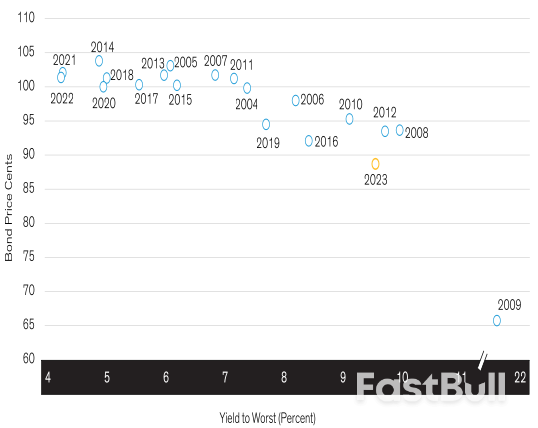
          Short-dated high-yield bonds are intrinsically less risky than longer-dated counterparts, as their shorter maturities leave them less exposed to both default- and interest-rate risk. Further, as these bonds currently trade below par (Display), their prices will likely rise as they approach maturity, generating capital gains.

          Short Duration High Yield at One of the Most Attractive Points in Last 20 Years

          Bloomberg Global High Yield Corporate 1-5 Year Index: Starting Annual Price and Yield
          From Anomaly to Opportunity: High Yields on Short Bonds_1
          What’s more, by concentrating on the higher-quality segment of short-dated high yield, investors can create more defensive portfolios for a relatively small reduction in yield (Display).

          High-Quality Short-Dated High-Yield Bonds Have Offered Attractive Yields

          Average Yields in US Dollars Over Different Timescales (Percent)
          From Anomaly to Opportunity: High Yields on Short Bonds_2
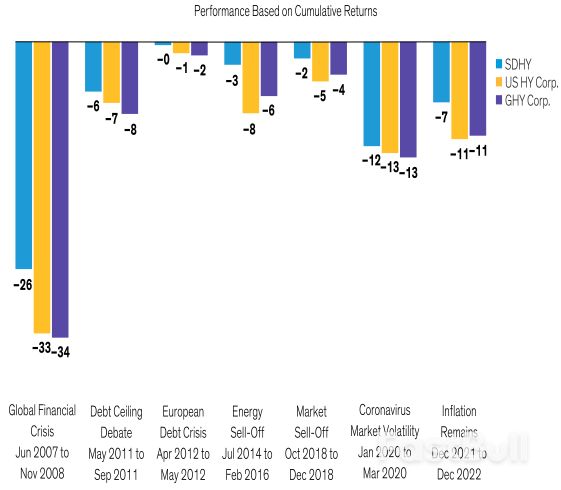
          Over the 20 years ending September 30, 2022, BB- and B-rated high-yield bonds between one and five years to maturity captured more than 80% of the broader High-yield market return, while experiencing approximately 50% of the average monthly drawdown. Consequently, they have provided better risk-adjusted returns than their longer-dated (five- to ten-year) high-yield counterparts. But they have really come into their own during periods of extreme market stress. At these times, higher-quality, short-duration high yield has exhibited much lower downside capture than both the global and US high-yield markets (Display).

          Higher-Quality Short-Duration High Yield Captured Less Downside When Spreads Widened

          Cumulative Return When US High-Yield Spreads Widened 50 Basis Points or More (Percent)
          From Anomaly to Opportunity: High Yields on Short Bonds_3
          In our analysis, dynamically managed short-duration high-yield strategies that can allocate tactically to higher-rated assets, including investment-grade bonds, may achieve even more consistent performance. By varying the allocations to return-seeking and more defensive bonds as market conditions change, investors may have the opportunity both to capture higher returns in risk-on periods and to guard against downside risks in choppier markets.

          Inverted Yield Curve Favors Shorter Bonds

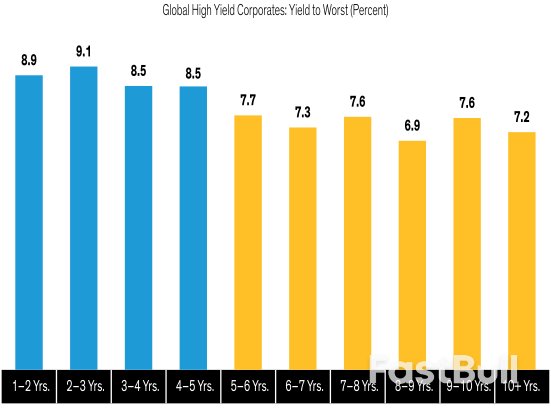
          Currently, owing to inverted yield curves, investors have a potentially highly attractive entry point for investing in short-duration high-yield bonds, as high-yield bonds with five or fewer years to maturity offer significantly higher yields than longer-dated counterparts (Display).

          Shorter-Duration High-Yield Bonds Offer Higher Yields than Their Longer Counterparts

          From Anomaly to Opportunity: High Yields on Short Bonds_4
          In an uncertain world, we think shorter-dated, higher-rated, high-yield strategies could be particularly well-suited to delivering attractive risk-adjusted returns.

          Source:Gershon M. Distenfeld

          Risk Warnings and Disclaimers
          You understand and acknowledge that there is a high degree of risk involved in trading. Following any strategies or investment methods may lead to potential losses. The content on the site is provided by our contributors and analysts for information purposes only. You are solely responsible for determining whether any trading assets, securities, strategy, or any other product is suitable for investing based on your own investment objectives and financial situation.
          Comments
          Add to Favorites
          Share

          Eurozone Bank Lending Dampened by ECB ’s Monetary Tightening

          Justin

          Central Bank

          Forex

          The monthly bank lending data from the ECB continues to show the effects of monetary tightening on the economy as non-financial corporates saw small negative growth for borrowing for the fourth consecutive month. Month-on-month growth was just below 0%. For households, monthly growth rates continue to be positive but have also been on a downward trend for some time now. The monthly rate slowed from 0.15 to 0.1%.
          We expect this trend of moderation to continue as the ECB's bank lending survey suggests that demand for borrowing is set to weaken further and credit conditions could become tighter. The latter could also be influenced by the recent global banking turmoil, as we argued in this recent piece.
          The monetary data released today also show a further contraction in money in the euro system. M1, the narrow definition of money and a solid leading indicator for economic activity ahead, fell again and is now down by 2.2% on the year. Broad money (M3) is still positive but showed a sharper decline than expected to 2.9% year-on-year growth. The reversal of monetary policy plays a key role here, especially through the decline in asset purchases.
          It is becoming more apparent that the hike cycle will have a significant dampening effect on the economy over the course of this year. The full effect of recent hikes on the economy still has to come through, and recent turmoil – while very uncertain at this point – will likely hamper economic activity. For an economy already quite weak at the start of the year, this means that the risks of a contraction remain significant.

          Source:ING

          Risk Warnings and Disclaimers
          You understand and acknowledge that there is a high degree of risk involved in trading. Following any strategies or investment methods may lead to potential losses. The content on the site is provided by our contributors and analysts for information purposes only. You are solely responsible for determining whether any trading assets, securities, strategy, or any other product is suitable for investing based on your own investment objectives and financial situation.
          Comments
          Add to Favorites
          Share

          Will Nepal be Made to Pick Between US and China in Geopolitical Dance?

          Thomas

          Political

          Nepal is at the centre of a delicate geopolitical balancing act, as the world's superpowers vie for its attention through major investments in areas such as energy and infrastructure.
          The Biden Administration released its Indo-Pacific strategy about a year ago, and continues to deepen security ties with allies like Japan and South Korea, while pursuing closer relations with others, including Nepal.
          However, Nepal's new Prime Minister Pushpa Kamal Dahal, who took office at the end of December last year, is seen by some as being friendly towards Beijing.
          With tensions between the US and China showing no signs of abating, and a looming India as its neighbour, the new Nepalese government has to balance its relations with all the countries, each with their own competing interests.
          A Balancing Act
          Prime Minister Dahal is viewed by some in both Washington and Delhi as a pro-China politician.
          In the last two months, the US under secretary of state for political affairs Victoria Nuland and United States Agency for International Development administrator Samantha Power, have visited Nepal to step up Washington's influence there.
          They announced new investments, including more than a billion dollars in clean energy and a grant of nearly US$60 million to strengthen civil society in Nepal.
          Meanwhile, Beijing had increased its foreign direct investments in Nepal by US$115 million last year.
          The complex geopolitical situation is made even more challenging with the involvement of its neighbour India.
          Mr Sujeev Shakya, chair of the Nepal Economic Forum, a private sector-led think tank in Nepal, said: "While the energy agreements are there between India and Nepal, implementation on the ground has been a challenge because India talks about not allowing Chinese-built power plants to supply energy into India and beyond."
          Aid For Nepal
          The US provided millions of dollars in humanitarian aid to Nepal following a devastating earthquake in 2015, and is focused on investing in the country in the longer term.
          Health Foundation Nepal, a non-profit organisation registered both in the United States and Nepal since 2013, raises funds for mental health programmes in rural Nepal.
          The organisation raised US$130,000 for the country after the 2015 earthquake.
          Meanwhile, the US$500 million Millennium Challenge Corporation (MCC) is an infrastructure project to develop roads and facilitate cross-border electricity trade between Nepal and India.
          It was signed in 2017 and ratified by Nepal last year.
          Former World Bank economist Prem Sangraula said it is just one of the programmes the US is conducting in Nepal, and has drawn criticism from China who accused the US of "coercive diplomacy".
          The MCC initially faced opposition from current Prime Minister Dahal, who was back then the Chair of the Communist Party of Nepal-Maoist Center, though he later voted for its ratification.
          While Washington hopes to compete with Beijing in the region by growing its ties with the Indo-Pacific, Asian countries do not want to be forced to choose sides.
          Mr Harry Bhandari, state delegate of Maryland since 2018, was the first lawmaker of Nepali origin to be elected in the US.
          "The relationship between Nepal and United States is based on peace, economic prosperity and human rights," he said, adding that there are benefits to greater alignment with the US.
          Much of the Nepalese diaspora in the US still feel a strong connection to their roots, and hope to strengthen those ties by improving health and education opportunities in Nepal, away from the complexities of geopolitics.

          Source: CNA

          Risk Warnings and Disclaimers
          You understand and acknowledge that there is a high degree of risk involved in trading. Following any strategies or investment methods may lead to potential losses. The content on the site is provided by our contributors and analysts for information purposes only. You are solely responsible for determining whether any trading assets, securities, strategy, or any other product is suitable for investing based on your own investment objectives and financial situation.
          Comments
          Add to Favorites
          Share

          Iraq's Ambition to Match Saudi Oil Output Is Out of Reach

          Devin

          Energy

          Iraq's oil output and capacity may peak following growth of around 25% over the next five years, analysts said, falling short of 2027 targets and ending a long-standing ambition to rival the output of top OPEC producer Saudi Arabia.
          Political infighting has cost Iraq the opportunity to invest in growing output more quickly. As the energy transition gathers pace, it means Baghdad may never be able to cash in the hundreds of billions of barrels it has in the ground, even with the efforts of the country's new energy minister to attract investment.
          Since 2016, Iraq's output has stalled at around 4.5 million barrels per day (bpd).
          Before then, capacity grew rapidly as the government opened up the sector in 2009 and international oil companies revamped the country's biggest oilfields.
          Iraq's Ambition to Match Saudi Oil Output Is Out of Reach_1Growth slowed in part because Iraq agreed to cap output under supply policy agreed with the Organization of the Petroleum Exporting Countries (OPEC) and allies, a group known as OPEC+.
          Iraq's Oil Minister Hayan Abdel-Ghani, who took office in October, plans to update Iraq's oil production strategies to meet local needs while complying with the OPEC+ agreement, oil ministry spokesman Asim Jihad told Reuters.
          It is too early for the new government to talk about any significant increases in Iraq's oil production outside the OPEC+ agreement, Jihad said. Under the agreement, Iraq's production target is 4.43 million bpd until December.
          As a result, Iraq has shifted focus to the refining and gas sectors and lowered capital expenditure in the oil sector, analysts at FGE consultancy and Rystad Energy told Reuters.

          'Hard, if not impossible'

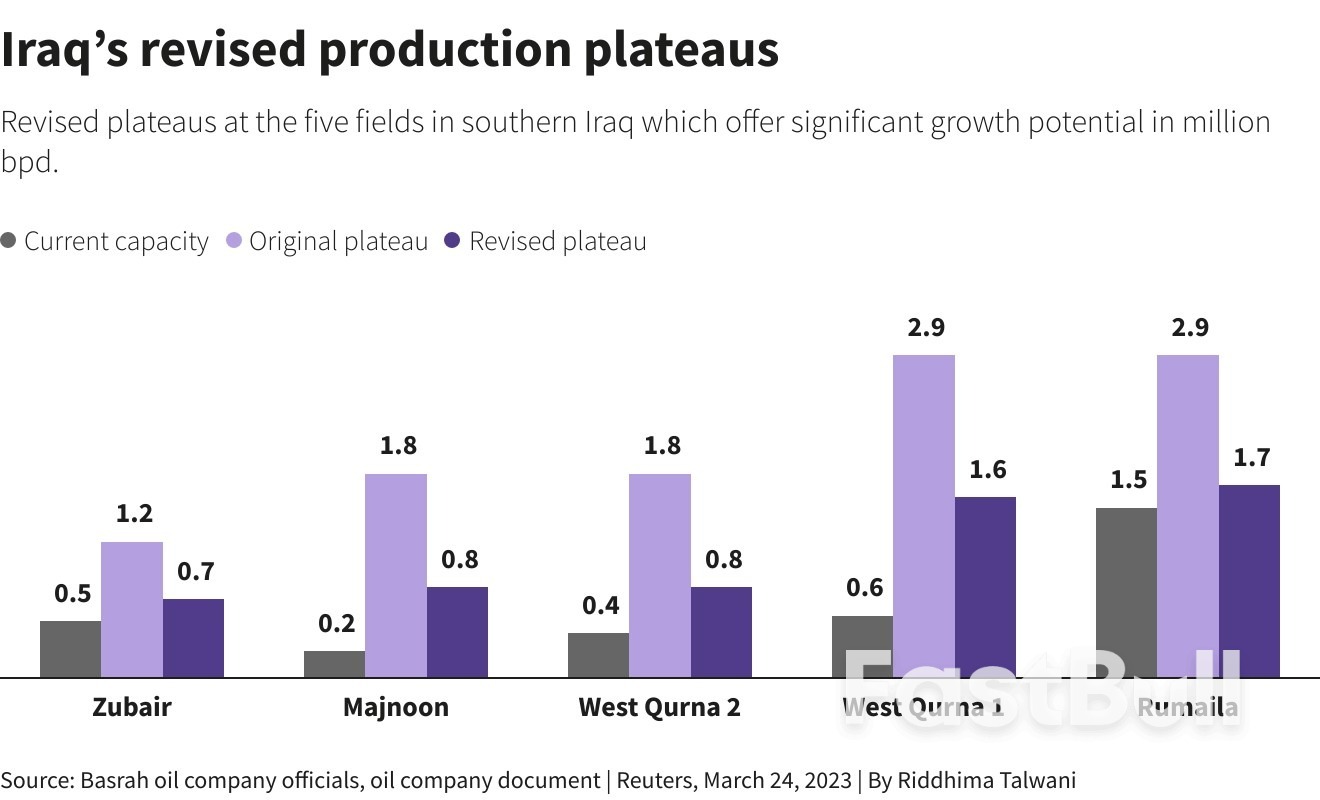
          For the oil sector, the country has repeatedly delayed a target to reach 7-8 million bpd capacity, from the current 5 million bpd. The previous government said last year it hoped to reach the higher levels by 2027.
          Some energy industry consultancies forecast that Iraq may never reach them.
          Capacity would peak and plateau at 6.3 million bpd by 2028 before declining, Iman Nasseri, managing director for the Middle East with FGE consultancy, said. Politics, security and the investment environment were all contributing to prevent Iraq from pushing output higher than that, he said.
          "We think Iraq's current target looks hard, if not impossible to achieve," Nasseri said.
          Rystad Energy expected production to be limited to 5.5 million bpd by 2027 as a result of midstream growth limitations and because projects that are crucial to boosting output are stuck.
          Two decades after the war began, the current targets and the even lower forecasts are far off Iraq's post-war goal to take capacity to 12 million bpd.
          The ambition was scaled back in 2012 after international oil companies operating in Iraq negotiated lower output targets for their fields because of low recovery factors, high natural decline rates and because Iraq was not investing enough in infrastructure, analysts said.
          The major oil companies had also hoped Baghdad would improve the terms of technical service contracts (TSCs). That never happened, and companies such as ExxonMobil Corp and Royal Dutch Shell Plc left.

          Iraq's Ambition to Match Saudi Oil Output Is Out of Reach_2Above-Ground Issues

          Analysts and industry insiders say the problems are above the ground rather than in the geology below, which has significant unexplored capacity, and include repeated changes to government, political infighting and red tape.
          Successive governments failed to sign off on Iraq's fifth licensing round in 2018. Six deals out of eleven oil and gas blocs on offer were eventually signed at the end of February, marking long-awaited reforms to the conditions of operating in the country.
          The beneficiaries were not the international oil companies, but UAE firm Crescent Petroleum and two Chinese companies.
          A source close to the Iraq energy industry who could not be named because they were not authorised to speak to the press said the contracts awarded pay royalties upfront and link revenues to oil prices.
          Abdel-Ghani's decision to sign the deals four months after his appointment may show a new resolve in government to cut deals more attractive to international energy companies, the source said.
          Still other issues remain.
          A large-scale seawater treatment project needed to boost output at the southern oilfields through water injection, has been stalled for over a decade because of haggling over terms.
          French oil major TotalEnergies is the latest to take on the project as part of a $27 billion deal to build four oil, gas and renewable projects over 25 years.
          TotalEnergies CEO Patrick Pouyanne said this month contractual disagreements were unresolved.
          "Iraq is not the easiest place to invest with all risk," Pouyanne said.
          The water project would boost output at the five Iraqi fields by 2 mln bpd of the 2.4 mln bpd growth needed to reach Iraq's 2027 targets, according to Rystad data and Reuters research.
          But completion before 2027 is unlikely, Rystad's vice president of Middle East upstream research Aditya Saraswat said.
          Iraq's oil minister this month revived seven investment opportunities in Iraq's refining sector.
          Even if Abdel-Ghani manages to find companies interested in those projects, Iraq's refining potential only allows 500,000 bpd of crude output growth and this would take time, Saraswat said.
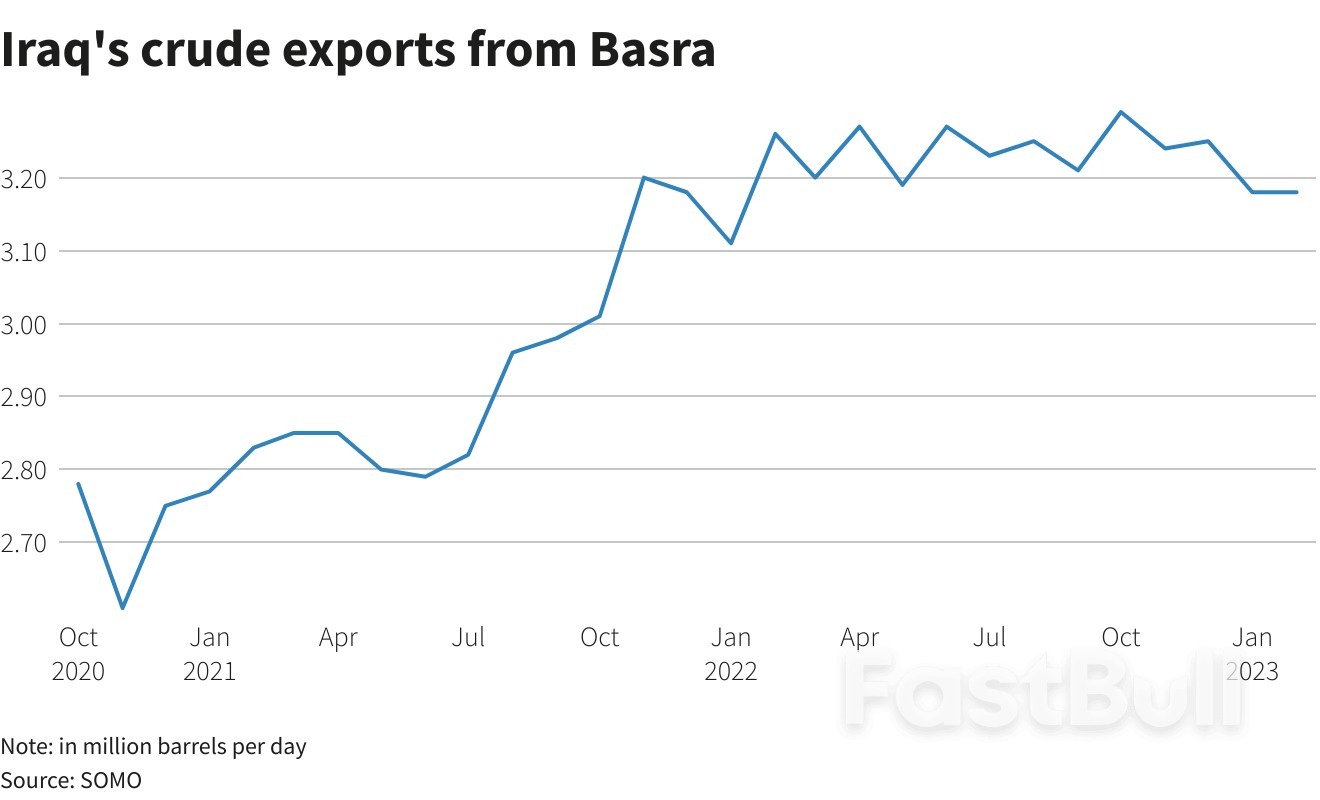
          Meanwhile, Iraq's southern export capacity has stalled at around 3.2-3.3 mln bpd for the last year following delays to infrastructure upgrades at its Gulf ports, data from state-owned marketer SOMO showed.

          Iraq's Ambition to Match Saudi Oil Output Is Out of Reach_3Source: Reuters

          Risk Warnings and Disclaimers
          You understand and acknowledge that there is a high degree of risk involved in trading. Following any strategies or investment methods may lead to potential losses. The content on the site is provided by our contributors and analysts for information purposes only. You are solely responsible for determining whether any trading assets, securities, strategy, or any other product is suitable for investing based on your own investment objectives and financial situation.
          Comments
          Add to Favorites
          Share
          FastBull
          Copyright © 2025 FastBull Ltd

          728 RM B 7/F GEE LOK IND BLDG NO 34 HUNG TO RD KWUN TONG KLN HONG KONG

          TelegramInstagramTwitterfacebooklinkedin
          App Store Google Play Google Play
          Products
          Charts

          Chats

          Q&A with Experts
          Screeners
          Economic Calendar
          Data
          Tools
          Membership
          Features
          Function
          Markets
          Copy Trading
          Latest Signals
          Contests
          News
          Analysis
          24/7
          Columns
          Education
          Company
          Careers
          About Us
          Contact Us
          Advertising
          Help Center
          Feedback
          User Agreement
          Privacy Policy
          Business

          White Label

          Data API

          Web Plug-ins

          Poster Maker

          Affiliate Program

          Risk Disclosure

          The risk of loss in trading financial instruments such as stocks, FX, commodities, futures, bonds, ETFs and crypto can be substantial. You may sustain a total loss of the funds that you deposit with your broker. Therefore, you should carefully consider whether such trading is suitable for you in light of your circumstances and financial resources.

          No decision to invest should be made without thoroughly conducting due diligence by yourself or consulting with your financial advisors. Our web content might not suit you since we don't know your financial conditions and investment needs. Our financial information might have latency or contain inaccuracy, so you should be fully responsible for any of your trading and investment decisions. The company will not be responsible for your capital loss.

          Without getting permission from the website, you are not allowed to copy the website's graphics, texts, or trademarks. Intellectual property rights in the content or data incorporated into this website belong to its providers and exchange merchants.

          Not Logged In

          Log in to access more features

          FastBull Membership

          Not yet

          Purchase

          Become a signal provider
          Help Center
          Customer Service
          Dark Mode
          Price Up/Down Colors

          Log In

          Sign Up

          Position
          Layout
          Fullscreen
          Default to Chart
          The chart page opens by default when you visit fastbull.com