Markets
News
Analysis
User
24/7
Economic Calendar
Education
Data
- Names
- Latest
- Prev


Signal Accounts for Members
All Signal Accounts
All Contests


Reserve Bank Of Australia Governor Bullock: Much Of The Recent Increase In Inflation Is Judged To Be Temporary - But Some Of It Seems To Be Persistent
Reserve Bank Of Australia Governor Bullock: We Need To Dampen The Growth Of Demand, Unless The Supply Side Of The Economy Can Expand A Little Quicker
[Russian Foreign Minister: Russia's Patience Is Not Without Limits] Russian Foreign Minister Sergey Lavrov, In A Media Interview On February 5, Addressed Russia's Previous Goodwill Gestures, Including The Reneging Of The 2025 Energy Truce Agreement With Ukraine. Lavrov Stated That Russia's Patience Is Not Without Limits, And That Russia Always Carefully Weighs Its Options Before Taking Any Action
(US Stocks) The Philadelphia Gold And Silver Index Closed Down 6.25% At 372.66 Points. (Global Session) The NYSE Arca Gold Miners Index Fell 6.03% To 2660.11 Points. (US Stocks) The Materials Index Closed Down 3.87%, And The Metals & Mining Index Closed Down 2.95%
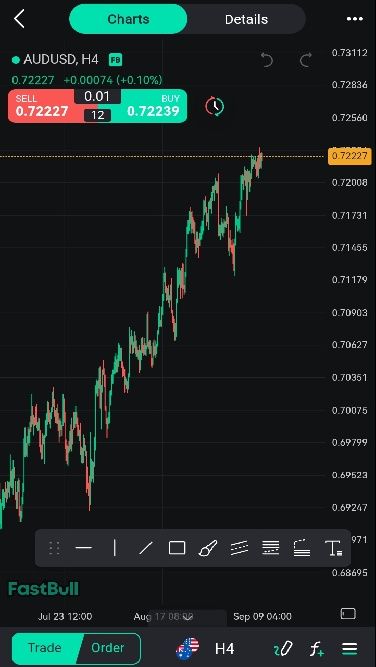
Spot Gold Fell 4.0% To $4,763.2 Per Ounce. New York Gold Fell 3.0% To $4,793 Per Ounce. New York Silver Fell 15.5% To $71.12 Per Ounce. Spot Silver Fell 18.5% To $71.67 Per Ounce. The Commodity Currency Australian Dollar Fell 1.0% Against The US Dollar To 0.6927
Securities And Exchange Commission (SEC) Chairman Atkins Will Appear Before The Senate On February 12
The Federal Reserve's Discount Window Lending Balance Was $4.52 Billion In The Week Ending February 4, Unchanged From The Previous Week
Argentina End-2026 Inflation Seen At 22.4%, Up 2.3 Percentage Points From Prior Forecast, In Central Bank Market Expectations Survey
Argentina End-2026 GDP Growth Seen At 3.2%,Down 0.3 Percentage Points From Prior Forecast, In Central Bank Market Expectations Survey
Toronto Stock Index .GSPTSE Unofficially Closes Down 576.95 Points, Or 1.77 Percent, At 31994.60
The Nasdaq Golden Dragon China Index Closed Up 0.8% Initially. Among Popular Chinese Concept Stocks, Dingdong Maicai Closed Down 15%, Canadian Solar Fell 8.4%, Alibaba And New Oriental Fell 1%, While Xiaomi, Li Auto, And Meituan Rose Over 2%, WeRide Rose 3.6%, Yum China Rose 4.6%, And NIO Rose 6%. In The ETF Market, Ashes Fell 1.7%, Ashr Fell 0.8%, Cqqq Fell 0.8%, And Kweb Fell 0.1%
On Thursday (February 5), The Bloomberg Electric Vehicle Price Return Index Fell 1.88% To 3467.18 Points In Late Trading. It Briefly Rose At 08:17 Beijing Time Before Continuing Its Decline. Among Its Components, Volvo Cars (European Shares) Closed Down 22.53%, Aurora Innovation Shares Fell 9.7%, Plug Power Systems Fell 9%, Mp Materials Fell 7.3%, RoboSense H Shares Closed Up 2.79%, Ranking Fifth, Xiaomi Group H Shares Closed Up 2.83%, WeRide Rose 3.5%, Horizon Robotics H Shares Closed Up 3.64%, And Panasonic Corporation Closed Up 8.41%
Argentina's Merval Index Closed Down 2.65% At 2.936 Million Points, Fluctuating At Low Levels For More Than Half Of The Trading Session
Chicago Soybean Futures Rose About 1.7%, And Soybean Meal Futures Rose More Than 2.2%. At The Close Of Trading In New York On Thursday (February 5), The Bloomberg Grains Index Rose 1.57% To 29.8095 Points. CBOT Corn Futures Rose 1.34%, And CBOT Wheat Futures Rose 1.57%. CBOT Soybean Futures Rose 1.69% To $11.1075 Per Bushel, Soybean Meal Futures Rose 2.26%, And Soybean Oil Futures Were Roughly Unchanged

Italy IHS Markit Construction PMI (Jan)A:--
F: --
P: --
Euro Zone IHS Markit Construction PMI (Jan)A:--
F: --
P: --
Germany Construction PMI (SA) (Jan)A:--
F: --
P: --
Italy Retail Sales MoM (SA) (Dec)A:--
F: --
P: --
U.K. Markit/CIPS Construction PMI (Jan)A:--
F: --
P: --
France 10-Year OAT Auction Avg. YieldA:--
F: --
P: --
Euro Zone Retail Sales YoY (Dec)A:--
F: --
Euro Zone Retail Sales MoM (Dec)A:--
F: --
U.K. BOE MPC Vote Cut (Feb)A:--
F: --
P: --
U.K. BOE MPC Vote Hike (Feb)A:--
F: --
P: --
U.K. BOE MPC Vote Unchanged (Feb)A:--
F: --
P: --
U.K. Benchmark Interest RateA:--
F: --
P: --
MPC Rate Statement
U.S. Challenger Job Cuts (Jan)A:--
F: --
P: --
U.S. Challenger Job Cuts MoM (Jan)A:--
F: --
P: --
U.S. Challenger Job Cuts YoY (Jan)A:--
F: --
P: --
Bank of England Governor Bailey held a press conference on monetary policy.
Euro Zone ECB Marginal Lending RateA:--
F: --
P: --
Euro Zone ECB Deposit RateA:--
F: --
P: --
Euro Zone ECB Main Refinancing RateA:--
F: --
P: --
ECB Monetary Policy Statement
U.S. Weekly Initial Jobless Claims (SA)A:--
F: --
P: --
U.S. Initial Jobless Claims 4-Week Avg. (SA)A:--
F: --
P: --
U.S. Weekly Continued Jobless Claims (SA)A:--
F: --
ECB Press Conference
U.S. JOLTS Job Openings (SA) (Dec)A:--
F: --
U.S. EIA Weekly Natural Gas Stocks ChangeA:--
F: --
P: --
BOC Gov Macklem Speaks
Mexico Policy Interest RateA:--
F: --
P: --
U.S. Weekly Treasuries Held by Foreign Central BanksA:--
F: --
P: --
Reserve Bank of Australia Governor Bullock testified before Parliament.
Japan Foreign Exchange Reserves (Jan)--
F: --
P: --
India Benchmark Interest Rate--
F: --
P: --
India Cash Reserve Ratio--
F: --
P: --
India Repo Rate--
F: --
P: --
India Reverse Repo Rate--
F: --
P: --
Japan Leading Indicators Prelim (Dec)--
F: --
P: --
Germany Industrial Output MoM (SA) (Dec)--
F: --
P: --
Germany Exports MoM (SA) (Dec)--
F: --
P: --
U.K. Halifax House Price Index YoY (SA) (Jan)--
F: --
P: --
U.K. Halifax House Price Index MoM (SA) (Jan)--
F: --
P: --
France Trade Balance (SA) (Dec)--
F: --
P: --
Canada Leading Index MoM (Jan)--
F: --
P: --
India Deposit Gowth YoY--
F: --
P: --
Canada Employment (SA) (Jan)--
F: --
Canada Full-time Employment (SA) (Jan)--
F: --
Canada Part-Time Employment (SA) (Jan)--
F: --
Canada Unemployment Rate (SA) (Jan)--
F: --
P: --
Canada Labor Force Participation Rate (SA) (Jan)--
F: --
P: --
Due to the previous government shutdown, the release date of the US January non-farm payroll report has been changed to February 11.
Canada Ivey PMI (Not SA) (Jan)--
F: --
P: --
Canada Ivey PMI (SA) (Jan)--
F: --
P: --
U.S. 5-10 Year-Ahead Inflation Expectations (Feb)--
F: --
P: --
U.S. UMich Consumer Sentiment Index Prelim (Feb)--
F: --
P: --
U.S. UMich 1-Year-Ahead Inflation Expectations Prelim (Feb)--
F: --
P: --
U.S. UMich 5-Year-Ahead Inflation Expectations Prelim YoY (Feb)--
F: --
P: --
U.S. UMich Current Economic Conditions Index Prelim (Feb)--
F: --
P: --
U.S. UMich Consumer Expectations Index Prelim (Feb)--
F: --
P: --
China, Mainland Foreign Exchange Reserves (Jan)--
F: --
P: --
Russia Retail Sales YoY (Dec)--
F: --
P: --
Russia Unemployment Rate (Dec)--
F: --
P: --


No matching data
View All

No data
The token is down roughly 22% year to date, with selling pressure intensifying last weekend after Kevin Warsh was nominated as the next Fed chair.
The U.S. agricultural sector faces growing financial stress, with a new forecast from the Department of Agriculture (USDA) projecting a drop in net farm income for 2026. This modest decline, however, is being softened by near-record government payments, which now account for nearly 29% of producers' total earnings.
Without this federal support, the industry's financial picture would be far bleaker, revealing deep-seated economic challenges for American farmers.
According to the USDA's latest data, net farm income—a key barometer of the agricultural economy's health—is forecast to fall by 0.7% to $153.4 billion in 2026 compared to the previous year.
When adjusted for inflation, the decline is more pronounced, with income projected to decrease by $4.1 billion, or 2.6%.
The outlook varies by commodity:
• Crops: Cash receipts are expected to rise for corn, remain steady for soybeans, and fall for wheat.
• Livestock: Overall receipts are projected to drop, driven by lower egg and milk prices, though cattle receipts are forecast to continue increasing.
This data, typically released three times a year, incorporated delayed findings from a December report that was postponed due to a federal government shutdown. Agricultural economists note this delay has made it more difficult to assess the full extent of financial stress in the sector.
Federal subsidies are playing an outsized role in stabilizing farm finances. The USDA projects producers will receive $30.5 billion in direct government payments in 2025 and a staggering $44.3 billion in 2026. These figures exclude additional payouts from federal crop insurance programs.
These support levels are approaching those seen in 2020 and 2021, a period marked by the COVID-19 pandemic and major trade disruptions. The USDA attributes the high payments to Farm Bill programs triggered by falling crop prices, as well as ongoing supplemental and disaster assistance.
The impact of this aid is dramatic. Without government payments, net farm income would plummet by nearly 12% to $109.1 billion, according to agency data.
"Government payments are doing a lot of the work in supporting crop producers," said Wesley Davis, a partner at the agricultural economics consultancy Meridian Agribusiness Advisors.
Even with historic levels of federal aid, many farmers are struggling to stay afloat as they take on record levels of debt. Economists, farmers, and lawmakers warn that current support may not be enough to counter a wave of economic pressures, including:
• Persistently low crop prices
• A global grain glut
• Rising operational costs
• Lost export sales resulting from Trump-era trade and economic policies
The growing dependency on federal aid has raised alarms. The chair of the U.S. Senate's agriculture committee stated on Tuesday that many farmers are already suffering heavy losses.
In a separate warning, more than two dozen former USDA officials and industry leaders cautioned lawmakers that U.S. agriculture is at risk of a "widespread collapse," citing the lingering effects of the Trump administration's policies as a key factor. As farmers rely more on federal support to pay their bills, the underlying stability of the sector remains a critical concern for policymakers.


Despite recent volatility shaking the metals market, analysts at Canadian bank CIBC are doubling down on their bullish outlook for gold and silver, expecting prices to climb significantly by year-end.
In a recent report, CIBC’s commodity analysts sharply raised their gold price forecast, projecting an average of $6,000 per ounce this year. This marks a substantial increase from their previous estimate of $4,500 per ounce. The bank sees a continued uptrend, with prices potentially peaking at an average of $6,500 an ounce in 2027.
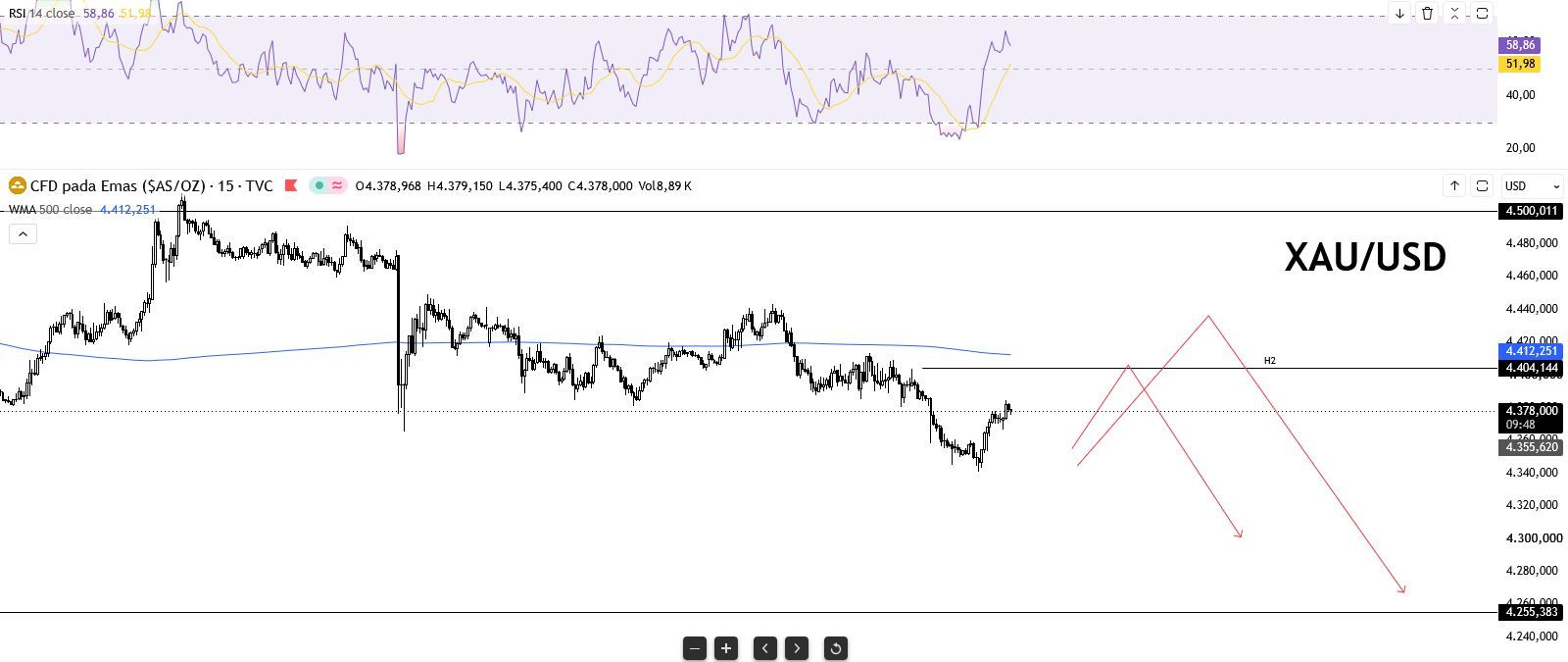
The bullish call comes as gold encounters fresh resistance at the $5,000 level and enters a consolidation phase. Spot gold was last trading at $4,863.10 an ounce. For silver, CIBC forecasts an average price of around $105 an ounce this year, rising to $120 an ounce in the next.

According to the bank's analysts, the fundamental drivers that supported precious metals in 2025 are still firmly in place, even with the recent price correction. Two factors stand out:
• Persistent Geopolitical Uncertainty: This is expected to continue fueling safe-haven demand for gold.
• Anticipated U.S. Dollar Weakness: This is viewed as a key tailwind that will push gold prices higher.
Analysts noted that "dollar debasement is likely to persist" as central banks and investors react to heightened uncertainty by quietly shifting allocations away from U.S. treasuries. They also anticipate that rate cuts and ongoing tension between the Federal Reserve and the White House will exert further pressure on the dollar.
CIBC noted that gold's recent selloff from record highs was triggered by President Donald Trump's announcement that he would nominate Kevin Warsh to replace Jerome Powell as head of the Federal Reserve.
Markets reacted negatively, expecting Warsh, a former Federal Reserve Governor, to tighten monetary policy. However, CIBC analysts describe Trump's pick as a "dove in hawk's clothing," suggesting the market’s initial reaction was misplaced.
Their report states, "Mr. Warsh is seemingly more aligned with a dovish stance than last week's negative market reaction would imply." The analysts point out that Warsh has previously argued for tightening the Fed's balance sheet as a method to control inflation, which would then allow for lower interest rates for "Main Street." More recently, he has supported Trump's government efficiency initiatives as another path to temper inflation and enable lower rates.
Ultimately, CIBC believes that "it is unlikely that any candidate would do anything but guide the Federal Reserve Board to lower rates in 2026."
Beyond U.S. monetary policy, CIBC points to the broader trend of global fiat currency debasement as a long-term catalyst for gold demand.
The report argues that with U.S. Treasuries—the traditional safe-haven asset—no longer considered "risk-free," both investors and central banks are actively seeking alternatives. The options are slim, as most Western economies face near-record debt-to-GDP ratios and are choosing to inflate rather than restrain their way out of the problem.
This environment has eroded investor confidence in fiat currencies, a trend that has directly fueled a "flight to safety" into gold.

The last remaining nuclear arms control treaty between the United States and Russia expired Thursday, removing caps on the world's two largest atomic arsenals for the first time in over 50 years and fueling expert warnings of a new, unconstrained arms race.
As the New START treaty officially ended, U.S. President Donald Trump renewed his call for a stronger, modernized pact to replace it, emphasizing that any new agreement must include China. The Kremlin, meanwhile, expressed regret over the treaty's expiration, a sentiment echoed by arms control advocates concerned about global stability.
President Trump has been a vocal critic of the existing agreement, framing it as a flawed deal for the United States. In a social media post, he argued against extending the pact.
"Rather than extend 'NEW START' (A badly negotiated deal by the United States that, aside from everything else, is being grossly violated), we should have our Nuclear Experts work on a new, improved, and modernized Treaty that can last long into the future," Trump stated.

A central pillar of Trump's position is the necessity of bringing China into any future negotiations. U.S. Secretary of State Marco Rubio reiterated this stance, stating that "in order to have true arms control in the 21st century, it's impossible to do something that doesn't include China because of their vast and rapidly growing stockpile."
During his first term, Trump's administration attempted to broker a three-way nuclear pact involving China, but the effort was unsuccessful.
Moscow officially views the treaty's expiration "negatively," according to Kremlin spokesman Dmitry Peskov. He stated that Russia will maintain a "responsible, thorough approach to stability when it comes to nuclear weapons" while being guided by its national interests.
Russian President Vladimir Putin had previously declared his readiness to extend the treaty's limits for another year, an offer the U.S. did not commit to. In a discussion with Chinese leader Xi Jinping, Putin noted the U.S. failure to respond to his proposal.
The Russian Foreign Ministry issued a statement confirming that Moscow "remains ready to take decisive military-technical measures to counter potential additional threats to the national security" but is also open to diplomatic solutions if the right conditions emerge.
What Was the New START Treaty?
Signed in 2010 by then-President Barack Obama and his Russian counterpart, Dmitry Medvedev, the New START treaty placed clear limits on nuclear stockpiles. It restricted each nation to:
• A maximum of 1,550 deployed nuclear warheads.
• A maximum of 700 deployed missiles and bombers.
The treaty, which included on-site inspections to verify compliance, was extended for five years in 2021. However, inspections were halted in 2020 due to the COVID-19 pandemic and never resumed. In February 2023, Putin suspended Moscow's participation, citing a lack of U.S. cooperation.
Beijing has consistently rejected calls to join nuclear disarmament negotiations, arguing that its arsenal is not comparable to those of the U.S. and Russia.
"China's nuclear forces are not at all on the same scale as those of the U.S. and Russia, and thus China will not participate in nuclear disarmament negotiations at the current stage," said Foreign Ministry spokesperson Lin Jian. He urged the U.S. to resume its nuclear dialogue with Russia.
Moscow has reaffirmed that it respects Beijing's position. Russian officials have suggested that if the treaty framework is to be expanded, it should also include the nuclear arsenals of NATO members France and the United Kingdom.
The end of New START has been met with alarm by arms control experts, who see it as a trigger for a dangerous period of strategic competition.
Daryl Kimball, executive director of the Arms Control Association, warned of the potential consequences if the U.S. increases its deployed strategic arsenal. He argued it would "only lead Russia to follow suit and encourage China to accelerate its ongoing strategic buildup."
"Such a scenario could lead to a years-long, dangerous three-way nuclear arms buildup," Kimball said.
Despite the treaty's termination, there was one sign of continued communication. The U.S. and Russia agreed Thursday to reestablish a high-level, military-to-military dialogue that had been suspended in 2021.
The United States and Iran are scheduled to hold direct talks in Oman this Friday, but the diplomatic effort is overshadowed by a fundamental disagreement on the agenda. Officials from both nations have confirmed the meeting will take place in Muscat.
A key sticking point remains Washington's insistence that the negotiations must cover Tehran's missile arsenal. Iran, however, has maintained that it will only discuss its nuclear program.
Iranian Foreign Minister Abbas Araqchi is leading the diplomatic delegation to the Omani capital.

On Thursday, Iranian Foreign Ministry spokesperson Esmail Baghaei stated that the country's objective is to achieve a "fair, mutually acceptable and dignified understanding on the nuclear issue." He emphasized that the Iranian delegation would engage in the talks "with authority."
"We hope the American side will also participate in this process with responsibility, realism and seriousness," Baghaei added, outlining Iran's expectations for the U.S. approach to the negotiations.
This delicate diplomatic initiative comes at a time of heightened tensions in the Middle East. The talks are set against a backdrop of a U.S. military buildup in the region, fueling concerns among regional actors.
Many observers fear that without a diplomatic breakthrough, the current situation could escalate into a military confrontation and potentially a wider war.
The risk of loss in trading financial instruments such as stocks, FX, commodities, futures, bonds, ETFs and crypto can be substantial. You may sustain a total loss of the funds that you deposit with your broker. Therefore, you should carefully consider whether such trading is suitable for you in light of your circumstances and financial resources.
No decision to invest should be made without thoroughly conducting due diligence by yourself or consulting with your financial advisors. Our web content might not suit you since we don't know your financial conditions and investment needs. Our financial information might have latency or contain inaccuracy, so you should be fully responsible for any of your trading and investment decisions. The company will not be responsible for your capital loss.
Without getting permission from the website, you are not allowed to copy the website's graphics, texts, or trademarks. Intellectual property rights in the content or data incorporated into this website belong to its providers and exchange merchants.
Not Logged In
Log in to access more features
Log In
Sign Up