Markets
News
Analysis
User
24/7
Economic Calendar
Education
Data
- Names
- Latest
- Prev


Signal Accounts for Members
All Signal Accounts
All Contests


U.S. Average Hourly Wage MoM (SA) (Dec)A:--
F: --
U.S. Average Weekly Working Hours (SA) (Dec)A:--
F: --
P: --
U.S. New Housing Starts Annualized MoM (SA) (Oct)A:--
F: --
U.S. Total Building Permits (SA) (Oct)A:--
F: --
P: --
U.S. Building Permits MoM (SA) (Oct)A:--
F: --
P: --
U.S. Annual New Housing Starts (SA) (Oct)A:--
F: --
U.S. U6 Unemployment Rate (SA) (Dec)A:--
F: --
P: --
U.S. Manufacturing Employment (SA) (Dec)A:--
F: --
U.S. Labor Force Participation Rate (SA) (Dec)A:--
F: --
P: --
U.S. Private Nonfarm Payrolls (SA) (Dec)A:--
F: --
U.S. Unemployment Rate (SA) (Dec)A:--
F: --
U.S. Nonfarm Payrolls (SA) (Dec)A:--
F: --
U.S. Average Hourly Wage YoY (Dec)A:--
F: --
Canada Full-time Employment (SA) (Dec)A:--
F: --
P: --
Canada Part-Time Employment (SA) (Dec)A:--
F: --
P: --
Canada Unemployment Rate (SA) (Dec)A:--
F: --
P: --
Canada Labor Force Participation Rate (SA) (Dec)A:--
F: --
P: --
U.S. Government Employment (Dec)A:--
F: --
P: --
Canada Employment (SA) (Dec)A:--
F: --
P: --
U.S. UMich Consumer Expectations Index Prelim (Jan)A:--
F: --
P: --
U.S. UMich Consumer Sentiment Index Prelim (Jan)A:--
F: --
P: --
U.S. UMich Current Economic Conditions Index Prelim (Jan)A:--
F: --
P: --
U.S. UMich 1-Year-Ahead Inflation Expectations Prelim (Jan)A:--
F: --
P: --
U.S. UMich 5-Year-Ahead Inflation Expectations Prelim YoY (Jan)A:--
F: --
P: --
U.S. 5-10 Year-Ahead Inflation Expectations (Jan)A:--
F: --
P: --
China, Mainland M1 Money Supply YoY (Dec)--
F: --
P: --
China, Mainland M0 Money Supply YoY (Dec)--
F: --
P: --
China, Mainland M2 Money Supply YoY (Dec)--
F: --
P: --
U.S. Weekly Total Oil Rig CountA:--
F: --
P: --
U.S. Weekly Total Rig CountA:--
F: --
P: --
Indonesia Retail Sales YoY (Nov)--
F: --
P: --
Euro Zone Sentix Investor Confidence Index (Jan)--
F: --
P: --
India CPI YoY (Dec)--
F: --
P: --
Germany Current Account (Not SA) (Nov)--
F: --
P: --
Canada National Economic Confidence Index--
F: --
P: --
FOMC Member Barkin Speaks
U.S. 3-Year Note Auction Yield--
F: --
P: --
U.S. 10-Year Note Auction Avg. Yield--
F: --
P: --
Japan Trade Balance (Customs Data) (SA) (Nov)--
F: --
P: --
Japan Trade Balance (Nov)--
F: --
P: --
U.K. BRC Overall Retail Sales YoY (Dec)--
F: --
P: --
U.K. BRC Like-For-Like Retail Sales YoY (Dec)--
F: --
P: --
Turkey Retail Sales YoY (Nov)--
F: --
P: --
U.S. NFIB Small Business Optimism Index (SA) (Dec)--
F: --
P: --
Brazil Services Growth YoY (Nov)--
F: --
P: --
Canada Building Permits MoM (SA) (Nov)--
F: --
P: --
U.S. CPI MoM (SA) (Dec)--
F: --
P: --
U.S. CPI YoY (Not SA) (Dec)--
F: --
P: --
U.S. Real Income MoM (SA) (Dec)--
F: --
P: --
U.S. CPI MoM (Not SA) (Dec)--
F: --
P: --
U.S. Core CPI (SA) (Dec)--
F: --
P: --
U.S. Core CPI YoY (Not SA) (Dec)--
F: --
P: --
U.S. Core CPI MoM (SA) (Dec)--
F: --
P: --
U.S. Weekly Redbook Index YoY--
F: --
P: --
U.S. New Home Sales Annualized MoM (Oct)--
F: --
P: --
U.S. Annual Total New Home Sales (Oct)--
F: --
P: --
U.S. Cleveland Fed CPI MoM (SA) (Dec)--
F: --
P: --
China, Mainland Imports YoY (CNH) (Dec)--
F: --
P: --
China, Mainland Trade Balance (CNH) (Dec)--
F: --
P: --
China, Mainland Imports YoY (USD) (Dec)--
F: --
P: --
China, Mainland Exports YoY (USD) (Dec)--
F: --
P: --


No matching data
Latest Views
Latest Views
Trending Topics
Top Columnists
Latest Update
White Label
Data API
Web Plug-ins
Affiliate Program
View All

No data
Bitcoin holds steady near $90,000, influenced by macroeconomic factors, as analysts ponder future government demand.
Bitcoin was trading near the $90,000 mark on Friday, finding stability after the U.S. Supreme Court delayed a key decision on Donald Trump's tariff policies, temporarily calming macroeconomic uncertainty across markets.
At the time of writing, Bitcoin's price stood at approximately $90,443, reflecting a 1% decline over the past 24 hours. Daily trading volume reached about $45 billion, while its total market capitalization fell slightly to $1.80 trillion.
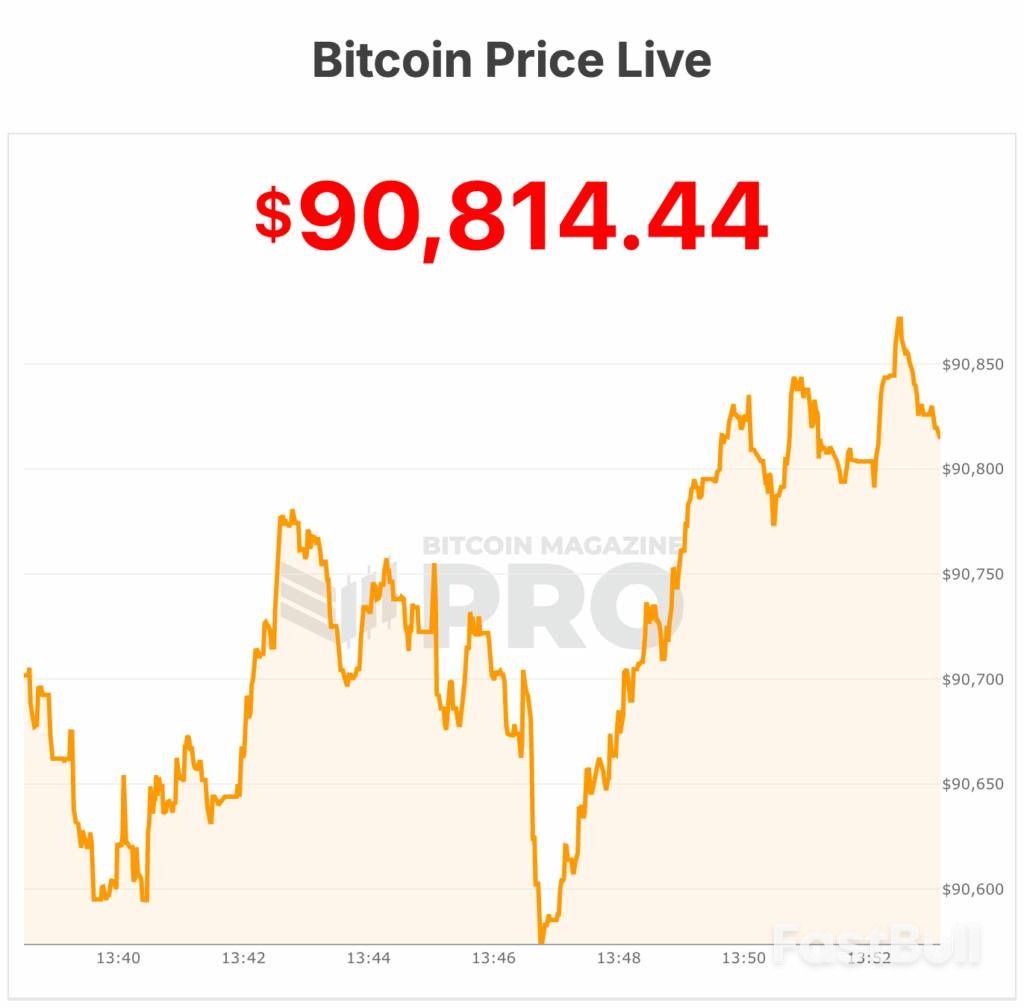
Despite the minor drop, the asset remains in a tight trading range. It is currently trading about 2% below its seven-day high of $91,839 and just 1% above its seven-day low of $89,671. Meanwhile, Bitcoin's circulating supply has reached 19,973,659 BTC, moving ever closer to its hard cap of 21 million coins—a core feature supporting its long-term value proposition.
Crypto markets initially showed signs of weakness this week as traders braced for a potential Supreme Court ruling on the legality of Trump-era global tariffs. The decision was widely seen as a major catalyst for broader market movements.
However, prices recovered on Friday after the court announced it would delay its ruling until the following week. This postponement reduced the immediate risk of market disruption, providing a lift to equities, bonds, and digital assets.
Analysts noted that the delay specifically eased concerns over a scenario where the U.S. Treasury might have to refund over $130 billion to importers if the tariffs were deemed illegal. Such an event could have created significant fiscal disruption.
The market's reaction underscores Bitcoin's growing sensitivity to macroeconomic factors, including shifts in policy expectations, liquidity conditions, and geopolitical events. While long-term adoption trends remain a primary driver, major legal and political developments continue to heavily influence its short-term price action.
Bitcoin's current price stability represents a cooling-off period following a surge in the opening days of the year. That early-January rally boosted bullish sentiment but eventually met resistance, triggering a round of profit-taking that stalled its momentum.
From a technical perspective, traders are closely watching the $90,000–$91,000 zone as a critical area of support.
• A sustained break below this level could open the door to further downside, potentially pushing the price toward the high-$80,000 range.
• Conversely, a decisive move back above $92,000 would signal renewed strength and likely clear a path toward higher resistance levels.
For now, Bitcoin remains locked in a consolidation pattern, with compressed volatility as traders await a new catalyst to dictate the next major move.
Looking ahead, Cathie Wood of ARK Invest recently suggested that political dynamics could lead the U.S. government to begin actively purchasing Bitcoin by 2026. In a podcast, Wood argued that cryptocurrency has become an important political issue for President Trump, which could shape future policy.
While the United States currently holds a Bitcoin reserve composed of seized assets, Trump has pledged not to sell any of it. Wood believes the administration's stance could evolve from merely holding confiscated coins to making outright purchases for a national strategic reserve. She noted that the original goal was to acquire one million BTC.
Crypto has also grown into an organized political force, supporting Trump and engaging with the White House through donations and events. This growing influence, combined with executive orders that have already established a reserve and stockpile, sets the stage for a potential policy shift.
Wood sees direct government purchases as a potential market inflection point. With nearly 20 million of the total 21 million BTC already mined, U.S. government buying would introduce a massive new source of demand, likely having a significant positive impact on the Bitcoin price.
As of the time of writing, Bitcoin is priced at $90,814.
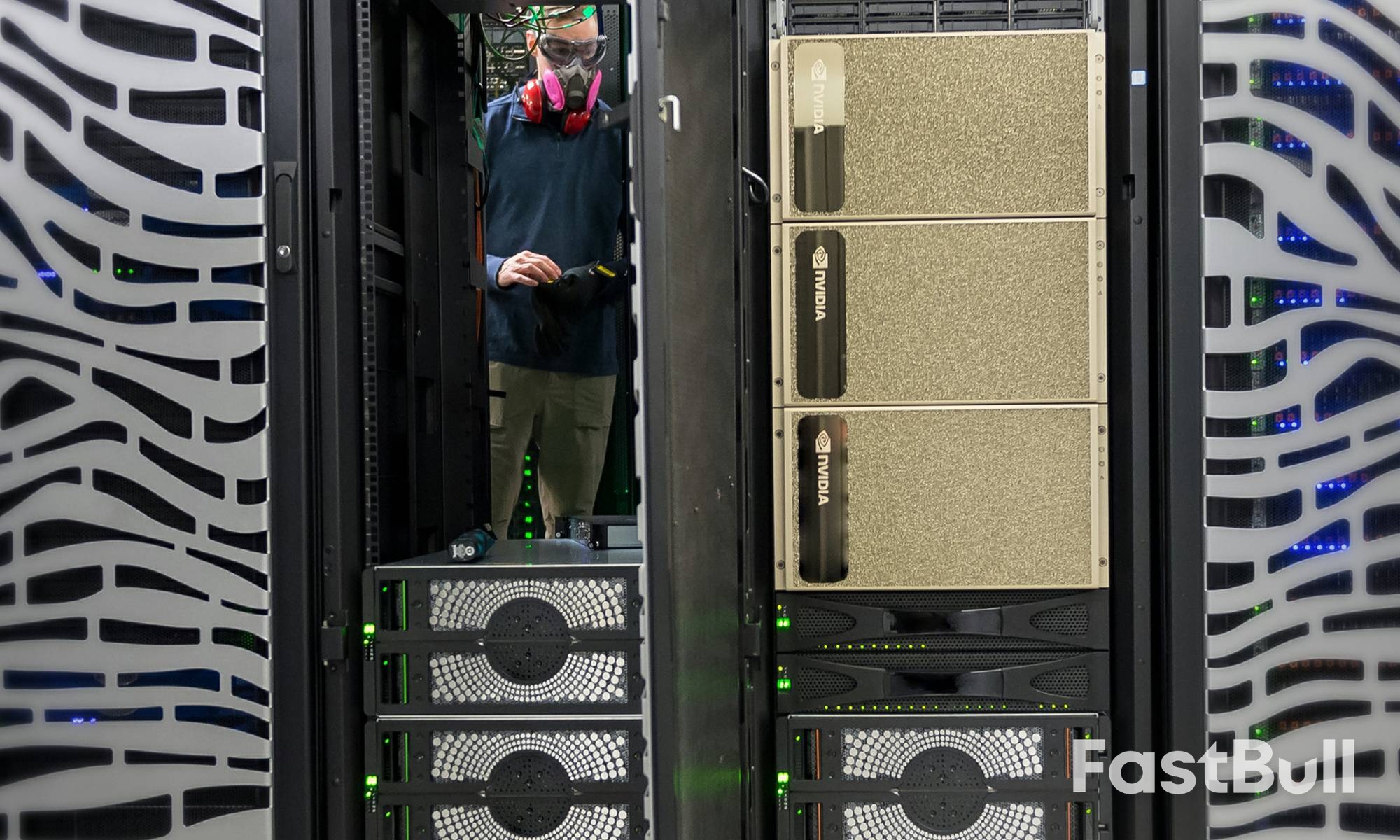
Recent reports suggest China is preparing to approve the import of older-generation Nvidia artificial intelligence (AI) chips, potentially reopening a critical market for the U.S. chipmaker after a previous ban.
While details are still emerging, regulators will reportedly allow sales of these AI processors to commercial and technology customers. However, significant limitations will apply. The Chinese government is expected to prohibit the use of these chips by government agencies, military operations, critical infrastructure, and state-owned businesses due to security concerns.

The financial stakes for Nvidia are enormous. In calendar 2024, the last full year of sales to China, the company generated $17.1 billion in revenue from the country despite initial export restrictions on its most advanced chips. Nvidia later estimated it absorbed an $8 billion revenue hit from expanded U.S. export controls.
Nvidia CEO Jensen Huang has highlighted the "very high" demand for the company's chips in China, suggesting that approved sales could exceed $50 billion annually. This figure may even be conservative.
According to a Reuters report, Nvidia has already received orders from Chinese customers for over 2 million H200 chips, priced at $27,000 each. This alone translates to approximately $54 billion in potential revenue. After accounting for a 25% export levy payable to the U.S. government, Nvidia could still clear more than $40 billion from these existing orders.
Crucially, potential sales to China are not included in Nvidia's current financial guidance, meaning any revenue would represent a significant boost to its forecasts. This comes as the company already expects to generate $500 billion from its AI-focused data center processors in the six quarters ending in early 2027—a figure Huang recently hinted was too conservative.
A return to the Chinese market could dramatically alter Nvidia's financial trajectory. Here’s a breakdown of the potential impact:
• Revenue Boost: Analysts currently forecast Nvidia's revenue for next year at $320 billion. An additional $40 billion would represent a major increase.
• Earnings Per Share (EPS): With a net profit margin of 56%, a $40 billion revenue injection could potentially drive the company's EPS to $8.29.
• Stock Price: Applying Nvidia’s current price-to-earnings (P/E) ratio of approximately 46 to that new EPS figure would imply a share price of around $380—more than double its present level.
Simply put, Nvidia's reentry into the Chinese market could unlock substantial growth and deliver a windfall for its shareholders.
Japan's Finance Minister, Satsuki Katayama, is calling for a strategic alliance with the U.S. and Europe to build a new supply chain for rare earths, directly challenging China's dominance over the critical minerals.
In a recent interview, Katayama stated the goal is to establish a "market of proper democracies and market economies" for these essential materials. The issue is set to be a key topic during her upcoming visit to the U.S. for a meeting of finance ministers hosted by the Treasury Department. Discussions will focus on creating a secure rare earths network that reduces reliance on China.
Katayama expressed deep concern over the Japanese manufacturing industry's heavy dependence on Chinese rare earths. She warned that without dismantling China's ability to monopolize and "weaponize" these metals, it would pose a "constant threat" far beyond traditional security issues.
"Predictability for businesses will become more and more limited, and they'll end up on the brink of a crisis," she explained.
This isn't a hypothetical risk. In April, Beijing restricted rare earth exports as a retaliatory measure against Washington's tariffs, leading to temporary production halts for some automakers. More recently, China curbed exports of dual-use products to Japan this past Tuesday, sparking fears that these restrictions could soon apply to rare earths.
When questioned about this possibility, Chief Cabinet Secretary Minoru Kihara declined to comment, citing a lack of clarity on the situation.
When asked about a potential crisis in Taiwan, Katayama noted the difficulty of outlining a response at this stage. However, she highlighted the island's critical economic role, particularly in semiconductors. "We'd have to see what the U.S.'s real intentions are," she added.
On other international matters, Katayama assessed that the recent capture of Venezuelan President Nicolas Maduro would have a limited impact on Japan. She pointed out that crude oil prices have remained stable and that Japan imports almost no crude oil from Venezuela.
As Japan's first female finance minister, Katayama is a key figure in Prime Minister Sanae Takaichi's government, which advocates for a "responsible and proactive" fiscal policy.
Katayama affirmed the government's commitment to dialogue with financial markets, stating it "will not hesitate to conduct foreign exchange intervention if the need arises." She emphasized that Takaichi's administration is focused on fiscal sustainability and creating a "virtuous cycle" where investment drives earnings and stimulates consumption.
Regarding rumors of a snap election, Katayama suggested the prime minister is more focused on policy than on dissolving the lower house. Despite Takaichi's high cabinet approval ratings, support for her Liberal Democratic Party (LDP) has not seen a corresponding increase.
"It seems that just because she's in the LDP doesn't mean there's a [popularity] premium" for the party, Katayama observed. She appeared cautious about an early election, suggesting it would be better for the LDP to first fully "embody" the Takaichi government's policies.
Katayama, a former minister for women's empowerment, also touched on the need for political reform to encourage more female participation. Based on her own experiences, she recommended focusing on rule changes to make electioneering less disadvantageous for women, rather than altering electoral districts.
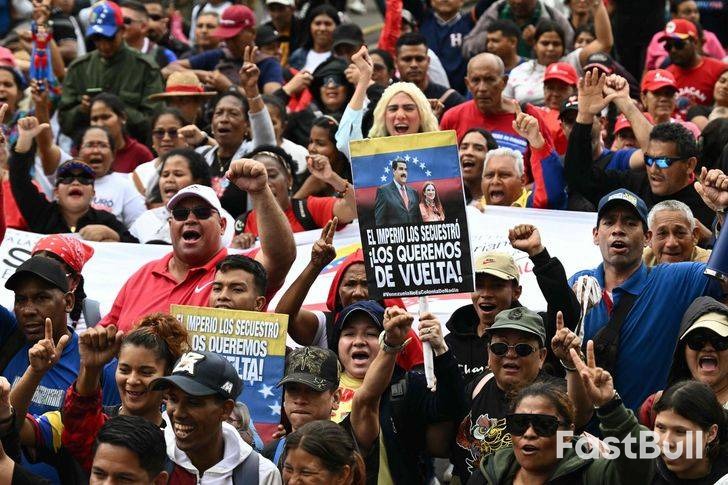
The United States and Venezuelan governments confirmed on Friday they are exploring the possibility of restoring diplomatic relations, signaling a potential shift in their historically strained relationship.
This development comes as a surprise, considering the Trump administration had previously stated its intent to influence Venezuela's leadership and control its oil sales following a potential removal of President Nicolas Maduro.

A small delegation of US diplomats and diplomatic security officials from the Trump administration arrived in Venezuela on Friday to begin discussions.
According to a statement from the US State Department, the team's primary objective is to conduct a preliminary assessment regarding the potential reopening of the US Embassy in Caracas.
Venezuela's government officially acknowledged the US delegation's presence and announced its own intention to send a delegation to the United States, though a specific date was not provided.
In a formal statement, the government of Delcy Rodríguez confirmed it "has decided to initiate an exploratory process of a diplomatic nature with the Government of the United States of America." The stated goal of these talks is "the re-establishment of diplomatic missions in both countries."
Just a week after President Donald Trump spoke of U.S. oil majors "going in and spending billions" to rebuild Venezuela's failing crude industry, his administration is clarifying a crucial detail: who pays. Washington is now signaling that American taxpayers will not directly fund the massive undertaking, even as top energy executives gather at the White House.

The President's initial comments fueled speculation that Washington might offer hefty financial guarantees or underwrite the risks for firms like Chevron, ExxonMobil, and ConocoPhillips to re-enter the politically volatile nation.
However, the administration has since shifted its emphasis, managing expectations about the level of direct government financial involvement.
On Friday, Interior Secretary Doug Burgum, who also heads the White House's National Energy Dominance Council, stated that the administration does not plan to use taxpayer money to underwrite the rebuilding of Venezuela's oil sector. He clarified that the necessary capital, estimated to be in the tens of billions over the next decade, must come from the companies themselves and private capital markets. The U.S. role, he suggested, would be to provide security and a stable operating environment, not direct funding.
Energy Secretary Chris Wright reinforced this position, noting that while institutions like the U.S. Export-Import Bank could offer credit support, companies have not yet requested direct government money.
This adjustment clarifies President Trump's earlier remarks, where he implied the government might backstop investments or allow companies to be reimbursed. The message from senior officials is now unambiguous: private capital is expected to carry the financial load.
To discuss this framework, the White House is hosting a high-level meeting with a wide array of global oil industry leaders. The guest list includes major U.S. and international players:
• Chevron
• ExxonMobil
• ConocoPhillips
• Continental Resources
• Halliburton
• HKN Energy
• Valero
• Marathon
• Shell
• Trafigura
• Vitol
• Repsol
• Eni
• Aspect Holdings
• Tallgrass
• Raisa Energy
• Hilcorp
Administration officials participating in the talks include Burgum, Wright, and Secretary of State Marco Rubio.
Any potential investment in Venezuela faces significant hurdles. Chevron is currently the only major U.S. producer with ongoing operations in the country, working under a special license. ExxonMobil and ConocoPhillips both left in the 2000s following the nationalization of their assets.
Industry leaders have been clear that a return would require strong legal, political, and financial guarantees from Washington to mitigate the decades of instability and expropriation risk.
Venezuela sits on one of the world's largest proven oil reserves, and a return to former production levels could reshape global crude markets and lower prices. However, the path forward is difficult. Decades of neglect have left the country's oil infrastructure in a state of disrepair. Compounding these operational challenges are significant political risks and geopolitical tensions, underscored by the U.S. seizing sanctioned tankers and controlling Venezuelan crude sales. Furthermore, current oil prices do not provide a strong incentive for the massive capital outlay required.
Ultimately, a genuine revival of Venezuela's oil sector will depend on private investment, supported by whatever assurances Washington can provide. Today's White House meeting is the first real test of whether that model is enough to convince the industry's key players to write the checks.
Richmond Fed President Tom Barkin characterized the latest employment data as a continuation of modest jobs growth within a low-hiring environment.
His comments followed a Bureau of Labor Statistics report showing that employers added 50,000 jobs last month, with the unemployment rate edging down to 4.4%.
"This fine balance between a modest job growth environment with a modest labor-supply growth environment seems to be continuing, and that was encouraging," Barkin told reporters on Friday.
According to the Richmond Fed chief, the current state of the jobs market is a reflection of two key factors: prevailing uncertainty among businesses and productivity gains that allow companies to operate with fewer new hires.
This landscape helps explain the restrained pace of hiring despite a relatively low unemployment rate.
Barkin emphasized that Federal Reserve policymakers must remain focused on the twin risks of rising unemployment and persistent inflation. The central bank cut its benchmark interest rate for the third consecutive time last month, but officials have signaled uncertainty about further reductions amid internal divisions over the economic outlook.
The challenge lies in balancing two conflicting trends.
On one hand, inflation remains a key concern. "Inflation has been above our target now for almost five years," Barkin noted. "It's in a lot better shape than it was two or three years ago, but it's certainly not all the way there."
On the other hand, the labor market is showing signs of cooling. "The unemployment rate has ticked up in the last year, and job growth is modest," he said.
This delicate situation requires careful monitoring from the central bank. "So I think you've got to watch both of them," Barkin concluded.
White Label
Data API
Web Plug-ins
Poster Maker
Affiliate Program
The risk of loss in trading financial instruments such as stocks, FX, commodities, futures, bonds, ETFs and crypto can be substantial. You may sustain a total loss of the funds that you deposit with your broker. Therefore, you should carefully consider whether such trading is suitable for you in light of your circumstances and financial resources.
No decision to invest should be made without thoroughly conducting due diligence by yourself or consulting with your financial advisors. Our web content might not suit you since we don't know your financial conditions and investment needs. Our financial information might have latency or contain inaccuracy, so you should be fully responsible for any of your trading and investment decisions. The company will not be responsible for your capital loss.
Without getting permission from the website, you are not allowed to copy the website's graphics, texts, or trademarks. Intellectual property rights in the content or data incorporated into this website belong to its providers and exchange merchants.
Not Logged In
Log in to access more features

FastBull Membership
Not yet
Purchase
Log In
Sign Up