• Trade
  • Markets
  • Copy
  • Contests
  • News
  • 24/7
  • Calendar
  • Q&A
  • Chats
Trending
Screeners
SYMBOL
LAST
BID
ASK
HIGH
LOW
NET CHG.
%CHG.
SPREAD
SPX
S&P 500 Index
6827.42
6827.42
6827.42
6899.86
6801.80
-73.58
-1.07%
--
DJI
Dow Jones Industrial Average
48458.04
48458.04
48458.04
48886.86
48334.10
-245.98
-0.51%
--
IXIC
NASDAQ Composite Index
23195.16
23195.16
23195.16
23554.89
23094.51
-398.69
-1.69%
--
USDX
US Dollar Index
97.890
97.970
97.890
98.070
97.810
-0.060
-0.06%
--
EURUSD
Euro / US Dollar
1.17497
1.17504
1.17497
1.17596
1.17262
+0.00103
+ 0.09%
--
GBPUSD
Pound Sterling / US Dollar
1.33881
1.33890
1.33881
1.33961
1.33546
+0.00174
+ 0.13%
--
XAUUSD
Gold / US Dollar
4333.30
4333.64
4333.30
4350.16
4294.68
+33.91
+ 0.79%
--
WTI
Light Sweet Crude Oil
56.885
56.915
56.885
57.601
56.789
-0.348
-0.61%
--

Community Accounts

Signal Accounts
--
Profit Accounts
--
Loss Accounts
--
View More

Become a signal provider

Sell trading signals to earn additional income

View More

Guide to Copy Trading

Get started with ease and confidence

View More

Signal Accounts for Members

All Signal Accounts

Best Return
  • Best Return
  • Best P/L
  • Best MDD
Past 1W
  • Past 1W
  • Past 1M
  • Past 1Y

All Contests

  • All
  • Trump Updates
  • Recommend
  • Stocks
  • Cryptocurrencies
  • Central Banks
  • Featured News
Top News Only
Share

Statement: US Travel Group Warns New Proposed Trump Administration Requirements For Foreign Tourists To Provide Social Media Histories Could Mean Millions Of People Opting Not To Visit

Share

Blackrock: Kerry White Will Become Head Of Citi Investment Management At Citi Wealth

Share

Blackrock: Rob Jasminski, Head Of Citi Investment Management, Has Joined With Team

Share

Blackrock: Effective Dec 15, Citi Investment Management Employees Will Join Blackrock

Share

Blackrock: Formally Launch Citi Portfolio Solutions Powered By Blackrock

Share

According To Data From The Federal Reserve Bank Of New York, The Secured Overnight Funding Rate (Sofr) Was 3.67% On The Previous Trading Day (December 15), Compared To 3.66% The Day Before

Share

Peru Energy And Mines Ministry: Copper Production Up 4.8% Year-On-Year In October To 248192 Metric Tons

Share

Security Source: Ukrainian Drones Hits Russian Oil Infrastructure In Caspian Sea For Third Time

Share

Spot Palladium Extends Gains, Last Up 5% To $1562.7/Oz

Share

Mexico's Economy Ministry Announces Start Of Anti-Dumping Investigation And Anti-Subsidy Investigations Into USA Pork Imports

Share

Canada Nov CPI Common +2.8%, CPI Median +2.8%, CPI Trim +2.8% On Year

Share

NY Fed's Empire State Prices Paid Index +37.6 In December Versus+49.0 In November

Share

Canada Nov Consumer Prices +0.1% On Month, +2.2% On Year

Share

Canada Nov CPI Core -0.1% On Month, +2.9% On Year

Share

Canada Nov Core CPI, Seasonally Adjusted +0.2% On Month, Oct +0.3% (Unrevised)

Share

UK Health Minister Streeting On Doctors' Strike: Vote To Go Ahead Reveals The Bma's Shocking Disregard For Patient Safety

Share

Venezuelan State Oil Company Pdvsa Says Was Subject To Cyber Attack But Operations Unaffected

Share

Russia Central Bank Says January-October Current Account Surplus At $37.1 Billion

Share

Polish Current Account Balance At +1924 Million Euros In October Versus+130 Million Euros Seen In Reuters Poll

Share

Statement: Germany, Ukraine Propose 10-Point Plan To Strengthen Armament Cooperation

TIME
ACT
FCST
PREV
Japan Tankan Small Manufacturing Outlook Index (Q4)

A:--

F: --

P: --

Japan Tankan Large Non-Manufacturing Outlook Index (Q4)

A:--

F: --

P: --

Japan Tankan Large Manufacturing Outlook Index (Q4)

A:--

F: --

P: --

Japan Tankan Small Manufacturing Diffusion Index (Q4)

A:--

F: --

P: --

Japan Tankan Large Manufacturing Diffusion Index (Q4)

A:--

F: --

P: --

Japan Tankan Large-Enterprise Capital Expenditure YoY (Q4)

A:--

F: --

P: --

U.K. Rightmove House Price Index YoY (Dec)

A:--

F: --

P: --

China, Mainland Industrial Output YoY (YTD) (Nov)

A:--

F: --

P: --

China, Mainland Urban Area Unemployment Rate (Nov)

A:--

F: --

P: --

Saudi Arabia CPI YoY (Nov)

A:--

F: --

P: --

Euro Zone Industrial Output YoY (Oct)

A:--

F: --

P: --

Euro Zone Industrial Output MoM (Oct)

A:--

F: --

P: --

Canada Existing Home Sales MoM (Nov)

A:--

F: --

P: --

Canada National Economic Confidence Index

A:--

F: --

P: --

Canada New Housing Starts (Nov)

A:--

F: --

P: --
U.S. NY Fed Manufacturing Employment Index (Dec)

A:--

F: --

P: --

U.S. NY Fed Manufacturing Index (Dec)

A:--

F: --

P: --

Canada Core CPI YoY (Nov)

A:--

F: --

P: --

Canada Manufacturing Unfilled Orders MoM (Oct)

A:--

F: --

P: --

U.S. NY Fed Manufacturing Prices Received Index (Dec)

A:--

F: --

P: --

U.S. NY Fed Manufacturing New Orders Index (Dec)

A:--

F: --

P: --

Canada Manufacturing New Orders MoM (Oct)

A:--

F: --

P: --

Canada Core CPI MoM (Nov)

A:--

F: --

P: --

Canada Trimmed CPI YoY (SA) (Nov)

A:--

F: --

P: --

Canada Manufacturing Inventory MoM (Oct)

A:--

F: --

P: --

Canada CPI YoY (Nov)

A:--

F: --

P: --

Canada CPI MoM (Nov)

A:--

F: --

P: --

Canada CPI YoY (SA) (Nov)

A:--

F: --

P: --

Canada Core CPI MoM (SA) (Nov)

A:--

F: --

P: --

Canada CPI MoM (SA) (Nov)

A:--

F: --

P: --

Federal Reserve Board Governor Milan delivered a speech
U.S. NAHB Housing Market Index (Dec)

--

F: --

P: --

Australia Composite PMI Prelim (Dec)

--

F: --

P: --

Australia Services PMI Prelim (Dec)

--

F: --

P: --

Australia Manufacturing PMI Prelim (Dec)

--

F: --

P: --

Japan Manufacturing PMI Prelim (SA) (Dec)

--

F: --

P: --

U.K. 3-Month ILO Employment Change (Oct)

--

F: --

P: --

U.K. Unemployment Claimant Count (Nov)

--

F: --

P: --

U.K. Unemployment Rate (Nov)

--

F: --

P: --

U.K. 3-Month ILO Unemployment Rate (Oct)

--

F: --

P: --

U.K. Average Weekly Earnings (3-Month Average, Including Bonuses) YoY (Oct)

--

F: --

P: --

U.K. Average Weekly Earnings (3-Month Average, Excluding Bonuses) YoY (Oct)

--

F: --

P: --

France Services PMI Prelim (Dec)

--

F: --

P: --

France Composite PMI Prelim (SA) (Dec)

--

F: --

P: --

France Manufacturing PMI Prelim (Dec)

--

F: --

P: --

Germany Services PMI Prelim (SA) (Dec)

--

F: --

P: --

Q&A with Experts
    • All
    • Chatrooms
    • Groups
    • Friends
    Connecting
    .
    .
    .
    Type here...
    Add Symbol or Code

      No matching data

      All
      Trump Updates
      Recommend
      Stocks
      Cryptocurrencies
      Central Banks
      Featured News
      • All
      • Russia-Ukraine Conflict
      • Middle East Flashpoint
      • All
      • Russia-Ukraine Conflict
      • Middle East Flashpoint
      Search
      Products

      Charts Free Forever

      Chats Q&A with Experts
      Screeners Economic Calendar Data Tools
      Membership Features
      Data Warehouse Market Trends Institutional Data Policy Rates Macro

      Market Trends

      Market Sentiment Order Book Forex Correlations

      Top Indicators

      Charts Free Forever
      Markets

      News

      News Analysis 24/7 Columns Education
      From Institutions From Analysts
      Topics Columnists

      Latest Views

      Latest Views

      Trending Topics

      Top Columnists

      Latest Update

      Signals

      Copy Rankings Latest Signals Become a signal provider AI Rating
      Contests
      Brokers

      Overview Brokers Assessment Rankings Regulators News Claims
      Broker listing Forex Brokers Comparison Tool Live Spread Comparison Scam
      Q&A Complaint Scam Alert Videos Tips to Detect Scam
      More

      Business
      Events
      Careers About Us Advertising Help Center

      White Label

      Data API

      Web Plug-ins

      Affiliate Program

      Awards Institution Evaluation IB Seminar Salon Event Exhibition
      Vietnam Thailand Singapore Dubai
      Fans Party Investment Sharing Session
      FastBull Summit BrokersView Expo
      Recent Searches
        Top Searches
          Markets
          News
          Analysis
          User
          24/7
          Economic Calendar
          Education
          Data
          • Names
          • Latest
          • Prev

          View All

          No data

          Scan to Download

          Faster Charts, Chat Faster!

          Download App
          English
          • English
          • Español
          • العربية
          • Bahasa Indonesia
          • Bahasa Melayu
          • Tiếng Việt
          • ภาษาไทย
          • Français
          • Italiano
          • Türkçe
          • Русский язык
          • 简中
          • 繁中
          Open Account
          Search
          Products
          Charts Free Forever
          Markets
          News
          Signals

          Copy Rankings Latest Signals Become a signal provider AI Rating
          Contests
          Brokers

          Overview Brokers Assessment Rankings Regulators News Claims
          Broker listing Forex Brokers Comparison Tool Live Spread Comparison Scam
          Q&A Complaint Scam Alert Videos Tips to Detect Scam
          More

          Business
          Events
          Careers About Us Advertising Help Center

          White Label

          Data API

          Web Plug-ins

          Affiliate Program

          Awards Institution Evaluation IB Seminar Salon Event Exhibition
          Vietnam Thailand Singapore Dubai
          Fans Party Investment Sharing Session
          FastBull Summit BrokersView Expo

          Yellen Says Treasury Is Ready to Take 'Additional Actions If Warranted' to Stabilize Banks

          Justin

          Central Bank

          Economic

          Summary:

          The federal emergency refunds to depositors at Silicon Valley Bank and Signature Bank could be deployed again if necessary, Treasury Secretary Janet Yellen told a House panel."The strong actions we have taken ensure that Americans' deposits are safe. Certainly, we would be prepared to take additional actions if warranted," said Yellen.The statement conveyed a different message than Yellen's remarks a day earlier, when she told senators that Treasury was not considering any plans to insure all U.S. bank deposits without congressional approval.

          Treasury Secretary Janet Yellen said Thursday that the federal emergency actions to back up Silicon Valley Bank and Signature Bank customers could be deployed again in the future if necessary.
          "We have used important tools to act quickly to prevent contagion. And they are tools we could use again," Yellen said in written testimony before a House Appropriations subcommittee.
          "The strong actions we have taken ensure that Americans' deposits are safe. Certainly, we would be prepared to take additional actions if warranted," she added.
          Yellen's testimony came amid growing market concerns over small and mid-sized regional banks that have experienced a rush of withdrawals in the wake of the SVB collapse, and specifically whether the federal government is prepared to backstop these banks in the event of a run.
          In Washington, Yellen has drawn criticism from lawmakers who argue that the decision to insure deposits at SVB and Signature amounted to a reward for big banks that took excessive risks.
          Meanwhile, lawmakers say, smaller institutions are being forced to confront a spike in deposit outflows — triggered by public fears about the big banks — without any special help.
          Regional bank stocks fell Wednesday in part because of comments Yellen made at a Senate hearing that afternoon, in which she said Treasury was not considering any plans to insure all U.S. bank deposits without congressional approval.
          Thursday's remarks appeared to shift somewhat, leaving open the prospect that Treasury could still take future emergency actions in order to prevent broader contagion and preserve large-scale financial stability.
          Last week, Yellen said uninsured deposits would only be covered in the event that a "failure to protect uninsured depositors would create systemic risk and significant economic and financial consequences."
          Outside of its emergency systemic risk exception, the executive branch has little control over U.S. bank deposit insurance, because the limit is set by Congress.
          The current FDIC insurance limit of $250,000 was set in 2010 as part of the Dodd-Frank financial reforms. Congress can also temporarily suspend the limit, like it did in 2020 as part of the government's response to Covid-19.
          But so far, only a handful of Democrats have openly suggested Congress consider raising the limit across all deposits in the wake of the SVB collapse. Meanwhile, an influential bloc of House Republicans has already come out against any hike. This makes it difficult to envision how a bill to raise the limit would pass the GOP-controlled House.

          Source:CNBC

          To stay updated on all economic events of today, please check out our Economic calendar
          Risk Warnings and Disclaimers
          You understand and acknowledge that there is a high degree of risk involved in trading. Following any strategies or investment methods may lead to potential losses. The content on the site is provided by our contributors and analysts for information purposes only. You are solely responsible for determining whether any trading assets, securities, strategy, or any other product is suitable for investing based on your own investment objectives and financial situation.
          Comments
          Add to Favorites
          Share

          Asia Week Ahead: Inflation Data from Australia and Japan

          Alex

          Economic

          Has the time come for a pivot by the Reserve Bank of Australia (RBA)?

          A further unwinding of the holiday-induced surge in travel and recreation prices in February, together with some lower food prices, will partly offset higher gasoline prices and some stickiness in other subcomponents to bring inflation in Australia back below 7% in February. If so, it will support the RBA's recent hints that rates are close to a peak, with one more 25bp hike looking like the most likely outcome now, taking the cash rate target to 3.85%.

          Positive signs for Japan's economy

          We think Japan's economy is on the road to recovery. Inflation seems to have finally passed the peak. Tokyo CPI inflation is expected to slow further, stabilising energy prices and base effects. Labour markets continue to tighten mainly in the service sector. Manufacturing activity should rebound in February as snowstorm disruptions normalise.

          Upcoming survey and activity data from Korea

          Survey and monthly activity data will be out next week. We believe that recent developments in global banking probably hurt consumer sentiment. On the other hand, China's reopening could help businesses be more optimistic for the future.
          Meanwhile, production activity among industries should continue to diverge; we expect auto production to rise firmly on the back of good demand for electric vehicles while semiconductor production declines due to sluggish global demand for IT products.

          China PMI data

          China is going to release PMI data next week. We expect a month-on-month fall in export orders but an expansion of domestic orders in the manufacturing PMI index. This is because of the slowing demand for goods in export markets. Non-manufacturing PMI should post slower growth as the recovery of the Chinese economy has been gradual. Real estate activities are included in the non-manufacturing PMI index. The recent increase in home transactions should support the non-manufacturing PMI index, but it should not be seen as a growth factor.

          Source: ING

          To stay updated on all economic events of today, please check out our Economic calendar
          Risk Warnings and Disclaimers
          You understand and acknowledge that there is a high degree of risk involved in trading. Following any strategies or investment methods may lead to potential losses. The content on the site is provided by our contributors and analysts for information purposes only. You are solely responsible for determining whether any trading assets, securities, strategy, or any other product is suitable for investing based on your own investment objectives and financial situation.
          Comments
          Add to Favorites
          Share

          Food Inflation, Currency Collapse 'Imperil Food Security in MENA'

          Devin
          The Middle East and North Africa (Mena) region is being hit by a worsening food security crisis due to high food price inflation and collapsing currencies, even as it celebrates the beginning of the Muslim Holy Month of Ramadan.
          This is affecting millions of people across the region, particularly those living in countries already facing conflict and instability, according to UN's World Food Programme.
          Food prices are skyrocketing and many countries in the region are dealing with crippling budget deficits, high levels of public debt, currency devaluation and dangerous levels of inflation.

          Lebanon and Syria

          Five countries in the region have seen food price inflation going beyond 60% just this year with Lebanon and Syria facing triple-digit food inflation at 138% and 105% respectively. In Iran, Türkiye, and Egypt, annual food inflation is more than 61%, making it difficult for families to afford essential food items like bread, rice, and vegetables.
          As national food production cannot satisfy domestic needs, heavy reliance on imports has exposed the region to fluctuations in global food prices –exacerbated by the war in Ukraine – as well as to supply chain disruptions caused most recently by the Covid-19 pandemic.
          "The region's dependency on food imports means millions of people – particularly the poorest – are vulnerable when internal or external shocks push up food prices," said WFP's Chief Economist Arif Husain. "The combination of high food inflation, collapsing currencies and stagnant incomes has left families unable to put food on the table."

          Global food prices

          Global food prices remain at a 10-year high despite a slight decline in recent months. "These fluctuations will not dent domestic food inflation in countries facing a toxic combination of tumbling currency values and high inflation," added Husain.
          According to February data, four out of 15 countries on WFP's currency watch list are in the region. In Lebanon, Egypt, Syria, and Iran, currencies have depreciated between 45% and 71% over the past 12 months alone.
          "In 2019, an average Syrian family earned enough to buy more than double what they needed every month for food," said WFP Country Director and Representative in Syria Kenn Crossley. "Right now, that same income, which has not gone up, can only buy a quarter of what a family need."
          At the same time, food production in the Mena region is curtailed by both conflict and a deepening climate crisis. In Iraq and Syria, prolonged droughts and the effects of conflicts have reduced cultivated areas and cut food production. The region has been hit hard by the climate crisis, and is seeing prolonged droughts and heat waves, wildfires, flooding, erratic rainfall and landslides.

          Taking action

          As the crisis continues, it is critical that governments, international organisations, and donor countries take action to address food security across the region. This includes increasing funding for humanitarian assistance, supporting local farmers to boost food production, and addressing the underlying causes of conflict and instability in the region.
          "Governments need to invest more in agriculture across the region where almost all countries are import-dependent," says WFP Regional Director for the Middle East, North Africa and Eastern Europe Corinne Fleischer. "This is a long-term strategy that will not help the poor cope with price rises now but will pay dividends some years down the line."
          The number of food-insecure people across the region increased by 20% over the past three years – reaching more than 41 million people, compared to 2019.
          In response, WFP is using integrated approaches, which aim to address the root causes of food insecurity while at the same time meeting immediate needs. In 2023, WFP is targeting nearly 35 million people across the Mena with food and nutrition assistance and working to increase the resilience of the most vulnerable in the face of regional and global shocks.

          Source: Trade Arabia

          Risk Warnings and Disclaimers
          You understand and acknowledge that there is a high degree of risk involved in trading. Following any strategies or investment methods may lead to potential losses. The content on the site is provided by our contributors and analysts for information purposes only. You are solely responsible for determining whether any trading assets, securities, strategy, or any other product is suitable for investing based on your own investment objectives and financial situation.
          Comments
          Add to Favorites
          Share

          India's Coal + Renewables Mix Makes for Messy Energy Transition

          Thomas

          Energy

          India has emerged as a renewable energy star after boosting solar capacity by a whopping 28% in 2022, rivalling China's growth rate and outpacing European heavyweights which deployed record funding on energy transition efforts last year.
          India installed 13.9 gigawatts (GW) of new solar capacity in 2022, according to think tank Ember, dwarfing the 7.9 GW capacity growth in Europe's top solar producer, Germany, and establishing India as a top-tier green energy leader.
          India's wind capacity expanded by 1.8 GW in 2022, slightly behind Germany's record 2.4 GW capacity climb, and helped push India's combined solar and wind capacity up by an impressive 17.5% within a single year.
          While China also added record solar and wind capacity in 2022 to widen its overall renewables lead, India's record build out of solar capacity last year has been widely celebrated by energy transition advocates.
          But even with such rip-roaring green energy momentum, India's utilities still struggled to keep up with the country's voracious energy demand growth, and had to crank coal use to record highs alongside the breakneck growth in renewables.
          India's Coal + Renewables Mix Makes for Messy Energy Transition_1In turn, the country's heavy power generation from coal - which produced nearly 75% of the country's electricity in 2022 - emitted close to one billion tonnes of carbon dioxide (CO2), and placed India as the third biggest fossil fuel polluter from power generation after China and the United States.
          This dual prominence in renewables and coal use rankings highlights India's awkward role as both hero and villain in climate circles, and underscores how messy the path towards energy transition targets can be for many major economies.

          Gas Reversal

          India's emissions footprint would be smaller had the country continued to integrate growing volumes of natural gas into its power mix while reducing use of dirtier-burning coal, as had been India's stated plan over the past two decades.
          Natural gas generated an average of 11% of India's electricity from 2000 through 2012, and the country had been expected to steadily increase gas use while reducing coal consumption as part of air-clearing efforts.
          However, a combination of delays in developing gas pipeline networks and regasification terminals for liquefied natural gas (LNG) imports started to reduce gas availability within India in recent years, forcing utilities to burn growing volumes of coal to meet rising energy demand needs.
          High and volatile global natural gas and LNG prices since 2020 have further trimmed India's gas supplies lately, forcing utilities to reduce gas-powered electricity generation to less than half the levels seen a decade ago.
          Only 2.2% of total India's electricity was produced from gas in 2022, according to Ember - the lowest in over 20 years.

          Coal Conundrum

          Such low utilisation of natural gas for power generation forced utilities to burn through coal at a record pace, straining the country's domestic coal supply system and pushing coal imports to historic highs.
          As global coal prices also scaled a record in 2022, the cost of those imports pushed to new highs too, draining the already-tight budgets of utilities and local governments and reducing the pool of funds available for energy system upgrades.
          In turn, that is forcing utilities and policymakers to continue to favour the lowest cost options for power generation, which further cements coal's status as India's primary source of baseload power.
          A slump in natural gas prices on international markets so far in 2023 is giving utilities a window to switch out some coal for cleaner burning gas.
          But with pipeline access still limited and LNG import terminals still under construction, power producers have little choice but continue to burn more coal.

          Renewable Drive

          While coal looks set to remain locked in as the main pillar of India's power sector for now, it is clear that a vast majority of future electricity supply capacity will be dedicated to renewables.
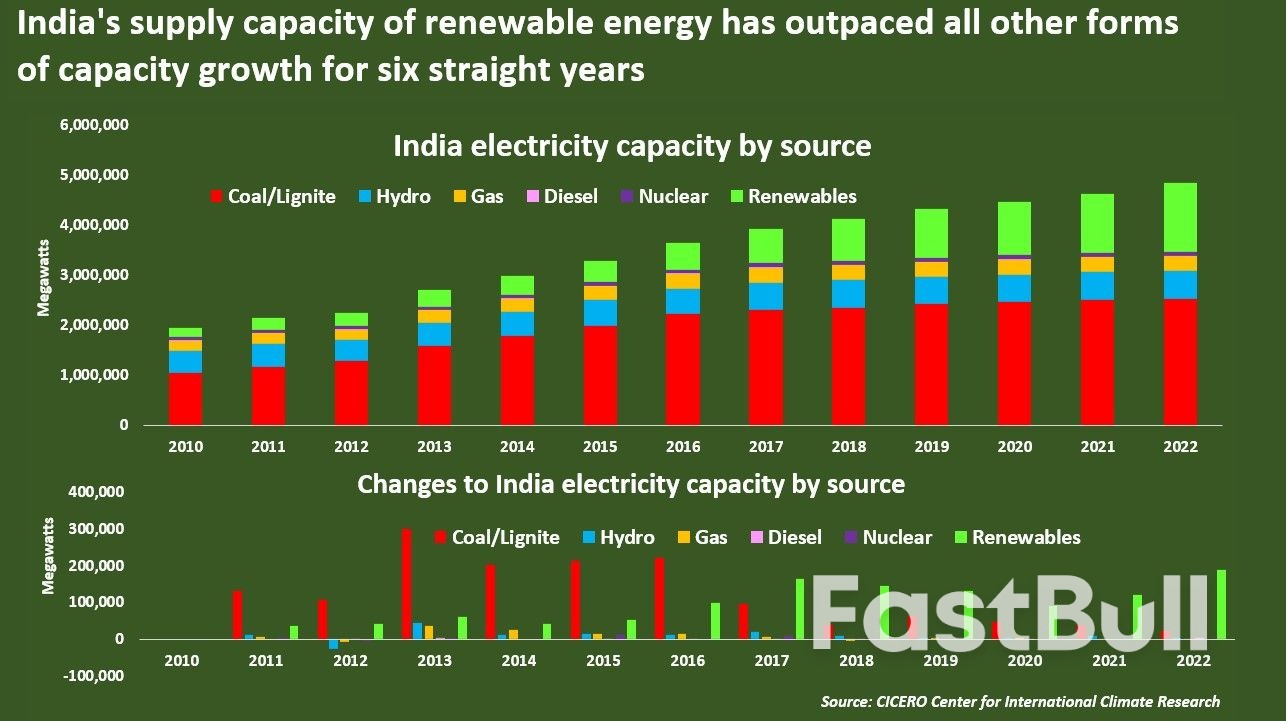
          Since 2017, annual capacity of renewables has grown by more than any other power source, and the government is pressing hard for continued rapid renewables growth to meet its target of sourcing half its energy from renewable sources by 2030.
          India's Coal + Renewables Mix Makes for Messy Energy Transition_2Simultaneously, however, authorities are pressuring power producers to boost coal-fired generation by invoking emergency laws that force coal plants that run on pricey imported coal to increase utilisation rates despite being less competitive than plants which run on cheaper domestic coal.
          On paper, such conflicting government stances on power sector priorities may appear to be counterproductive, and may potentially undermine India's energy transition efforts.
          But in reality, this messy mix of record dirty coal use alongside record renewable energy capacity growth may be the country's best option for sustaining current economic momentum while inching towards lower emissions targets of the future.

          Source: ETEnergyworld

          Risk Warnings and Disclaimers
          You understand and acknowledge that there is a high degree of risk involved in trading. Following any strategies or investment methods may lead to potential losses. The content on the site is provided by our contributors and analysts for information purposes only. You are solely responsible for determining whether any trading assets, securities, strategy, or any other product is suitable for investing based on your own investment objectives and financial situation.
          Comments
          Add to Favorites
          Share

          Dollar's Smile Looks a Little Lopsided

          Samantha Luan

          Forex

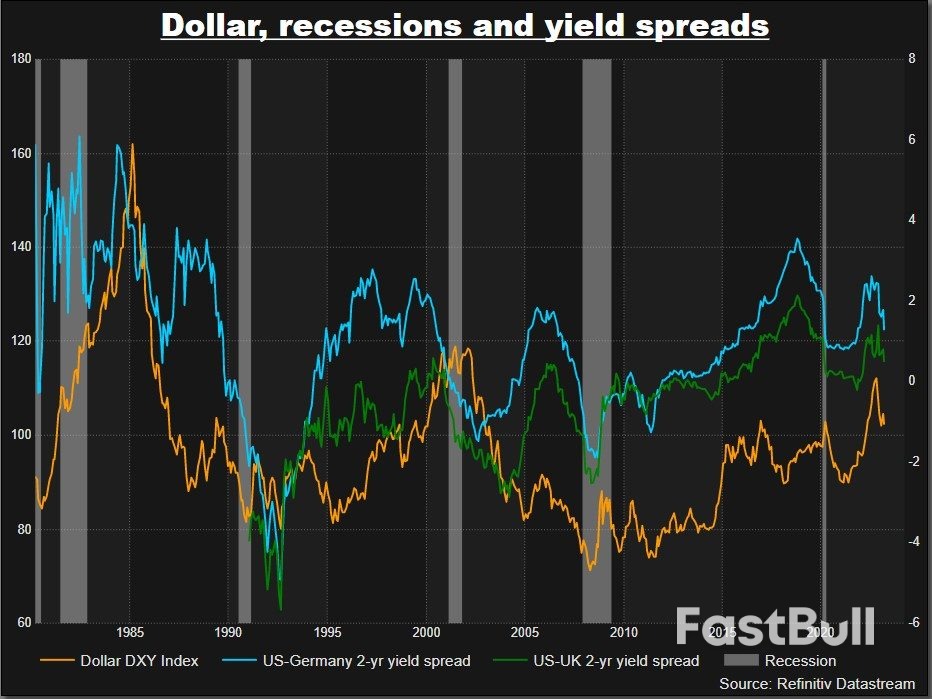
          According to the 'dollar smile' theory developed by currency expert and now hedge fund manager Stephen Jen 20 years ago, the dollar typically appreciates both in times of great financial stress and great investor ebullience - but it sags in between.
          That shape forms the 'smile' and knowing where the world is on that continuum at any given time can help global investors navigate often many competing narratives.
          All makes sense intuitively. A dash for dollar cash and liquidity during credit crunches, falling asset markets or international crises is well observed. Similarly, the U.S. economy and stock markets tend to outperform during booms and draw in overseas investment that lifts demand for dollars.
          What happens in between historically reflects the relative alacrity of the U.S. Federal Reserve in cutting interest rates, easing credit or even printing dollars in response to a shock that threatens recession over the horizon.
          But it's not easy to identify just what part of the grin we're on at any given time.
          The dollar's 3.75% drop since the failure of Silicon Valley Bank this month sparked a global banking shock that holed at least two other regional U.S. banks as well as the globally systemic Credit Suisse is a bit puzzling at first glance.
          Surely times of great banking and credit stress should boost the greenback?
          Looking back at the great financial crisis of 2008 as one reference, the dollar surged more than 10% between the collapse of Bear Stearns that March to the crash of Lehman Brothers in September - and then another 12% between that and yearend.
          Could that still be on the cards? Or does the dollar slide around this month's bank shock tell us the two are not comparable?
          Asset manager Schroders unpicked Jen's theory in a slightly different way and identified the dollar's mid-smile swoon as something of a reversal of U.S. asset market outperformance when the U.S. economy looks set for a lonely downturn.
          "This is where we are today," reckoned Schroders portfolio manager Caroline Houdril and strategist Joven Lee this week. "We are potentially in a rare situation where the U.S. may enter a recession ahead of other countries. (But) historically, a recession in the U.S. is always followed by a recession in the rest of the world."
          Their number crunch put average annualised returns for the dollar index at a negative 5.5% during periods in which the U.S. was in recession but a 30-economy sample of the rest of the world was not. However, average returns on the dollar during times when the U.S. and the rest of the world were contracting together were actually positive to the tune of 4.6%.
          "As our economists are forecasting the U.S. economy to enter a recession before the rest of the world later in 2023, the dollar may be subdued until a time comes when global economies follow suit," they said.Dollar's Smile Looks a Little Lopsided_1Dollar's Smile Looks a Little Lopsided_2

          Dollar's Smile Looks a Little Lopsided_3No Laughing Matter

          That may seem straightforward, but we've just been through a three-month period in which markets have lurched from assuming a 2023 U.S. recession to then pricing a 'no landing' rates scenario - and then back again this month. Over the same period, they've revised away a long-forecast euro zone recession and completely rethought China's economy on the sudden new year reopenings from strict COVID lockdowns.
          Gauging cycles can be dizzying in this environment.
          And now we face a bout of severe banking stress alongside stubbornly high inflation that had almost all major central banks raising interest rates again over the past week despite the pretty clear underlying credit stress.
          One way of reading the dollar's behaviour is seeing the new banking stress as merely a culmination of the past 12 months of market turbulence and interest rate rises that's only now coming to an end. The DXY soared more than 20% during the first 9 months of 2022 after all - and has already reversed half of that.
          The question is whether this is the beginning or the end of the squeeze. If it's the latter, then the Fed's tightening is near done - as the market reaction to the Fed's latest rate hike on Wednesday suggests - and rate cuts come next.
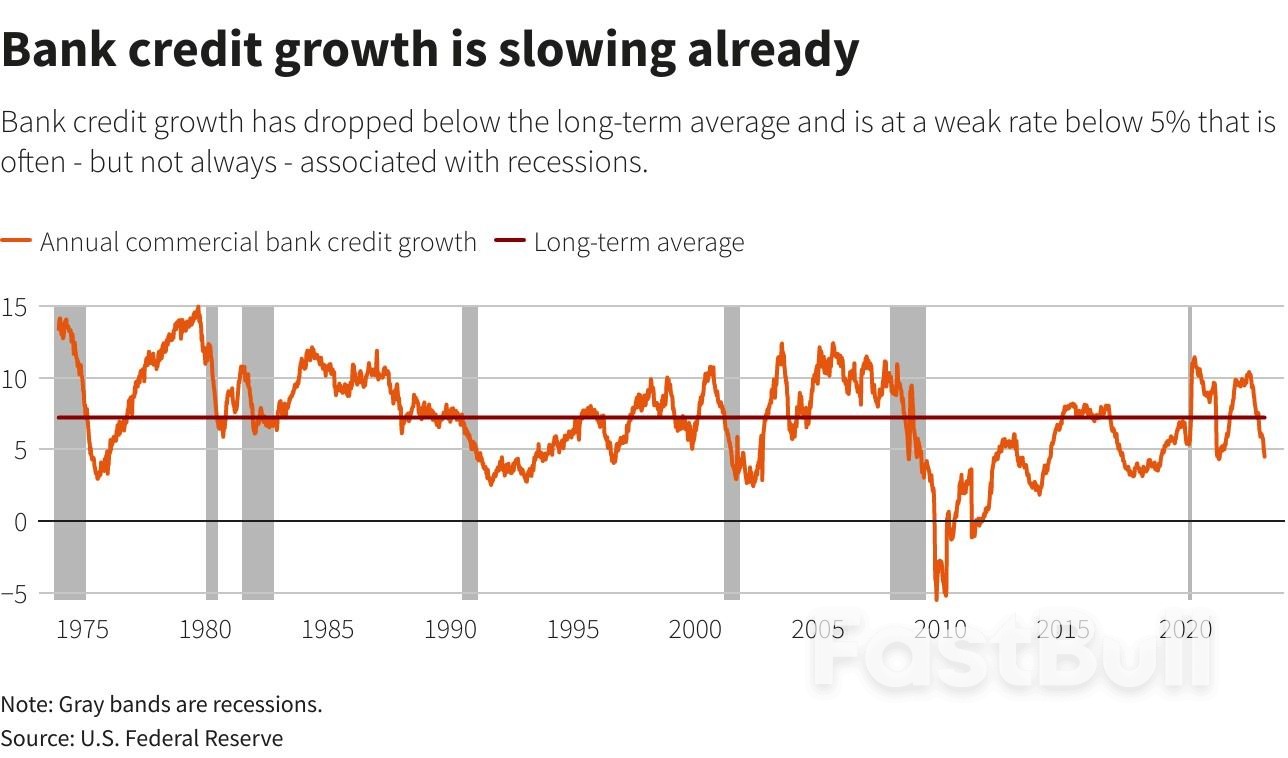
          Another way to view that is to judge America's bank crisis - or at least its implications for small bank credit to local businesses that employ half the country's workforce - as far worse than in Europe, where smaller banks are more tightly regulated and the system seemingly better capitalized.
          And if that's the case, then the rush to price the Fed's easing cycle - where historically the first cut has always come within six months of the last hike - is greater than in Europe.
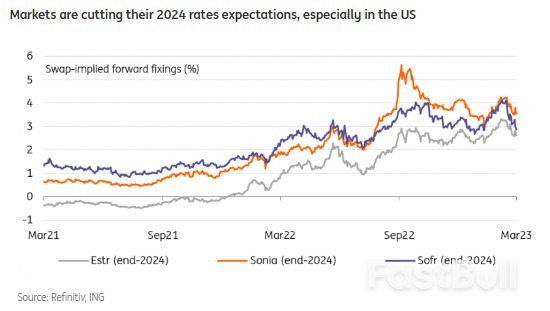
          Money markets now price a sharp crossover with the UK, for example, and see yearend U.S. policy rates 30 basis points lower than in Britain even though they are more than half a point higher at present.
          Although much higher UK inflation plays a role there, perhaps the fallout from relative banking hits does too.
          On the other hand, falling yields alone shouldn't necessarily undermine the dollar's haven status if they are driven by stress and that's the dominant factor as credit spreads widen. Two-year yields dropped 230 bp in the second half of 2008 but the dollar soared regardless.
          JPMorgan's take on the stressed side of the dollar smile last week pointed out that "the underlying macro-financial pathology that necessitates lower yields is the primary determinant of dollar direction".
          Clearly, the dollar smile is no laughing matter.Dollar's Smile Looks a Little Lopsided_4Dollar's Smile Looks a Little Lopsided_5

          Dollar's Smile Looks a Little Lopsided_6Source: ZAWYA

          Risk Warnings and Disclaimers
          You understand and acknowledge that there is a high degree of risk involved in trading. Following any strategies or investment methods may lead to potential losses. The content on the site is provided by our contributors and analysts for information purposes only. You are solely responsible for determining whether any trading assets, securities, strategy, or any other product is suitable for investing based on your own investment objectives and financial situation.
          Comments
          Add to Favorites
          Share

          Rates Spark: Late-Cycle Dynamics

          Owen Li

          Bond

          Central banks hiked, but the market is focusing on cuts already

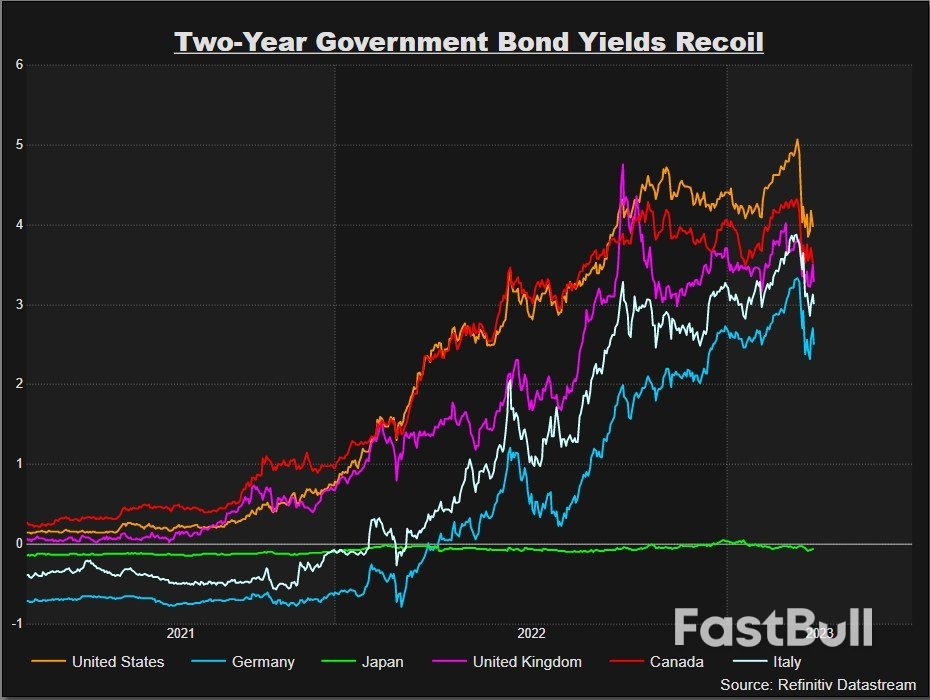
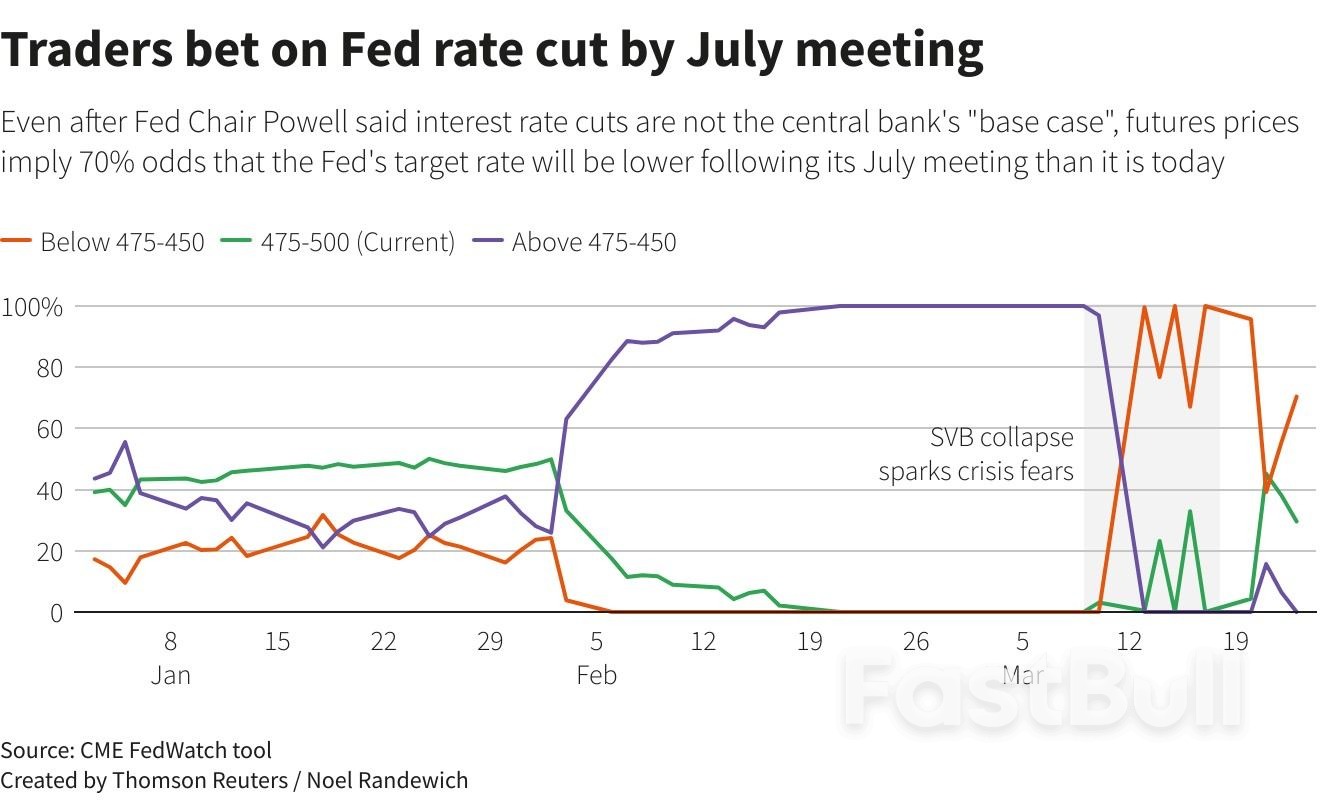
          The past two weeks has seen central banks across the globe still hiking rates. Yet, despite all displays of confidence and efforts to shore up the system, financial stability concerns are not going away. Markets are growing used to the idea that we have probably seen the last of the tightening from central banks and now the prospect of rate cuts is moving into focus. The late-cycle dynamics are taking over and resteepening the yield curves. In the US, money markets are now hardly discounting any chance for another Fed hike in May. Instead, they are discounting at least three 25bp cuts before the year is out.
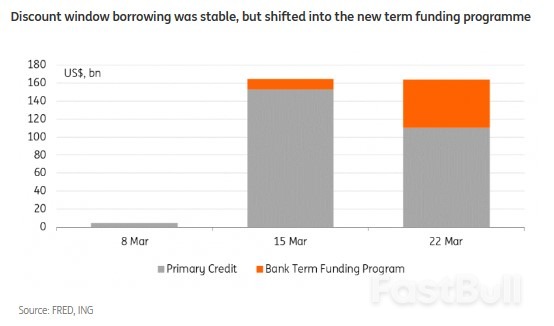
          Officials had been unsure of the impact the market turmoil would have, but by the week we are getting more information on how it has impacted the flow of liquidity in the system. In the second week since the failure of Silicon Valley Bank, the combined recourse to the Fed's primary credit and new bank term funding programme has even slightly declined to just below US$164bn, though with more now going in to term programme. The latter is up to US$54bn from US$12bn in the first week.
          As encouraging as the latest Fed's data is, suggesting that at least there are no others yet in need of an immediate lifeline, it should not distract that the broader banking system is probably still seeing a drain of its deposit base. Hinting to that, in the week to 22 March money market funds in the US saw another US$117bn of inflows, taking the total for the last two weeks to US$238bn, based on ICI data. This is a quick acceleration of a trend that had already been driven by the rise in interest rates. We are witnessing a tightening of financial conditions in real time, whose economic impact will have yet to be determined.

          Rates Spark: Late-Cycle Dynamics_1Current inflation is still running too high

          The Bank of England got a taste of still hot inflation just this week. This will have helped to tip the scales in favour of the 25bp hike that was delivered yesterday and also in favour of the still overall more balanced messaging – notwithstanding wider measueres of price persistency.
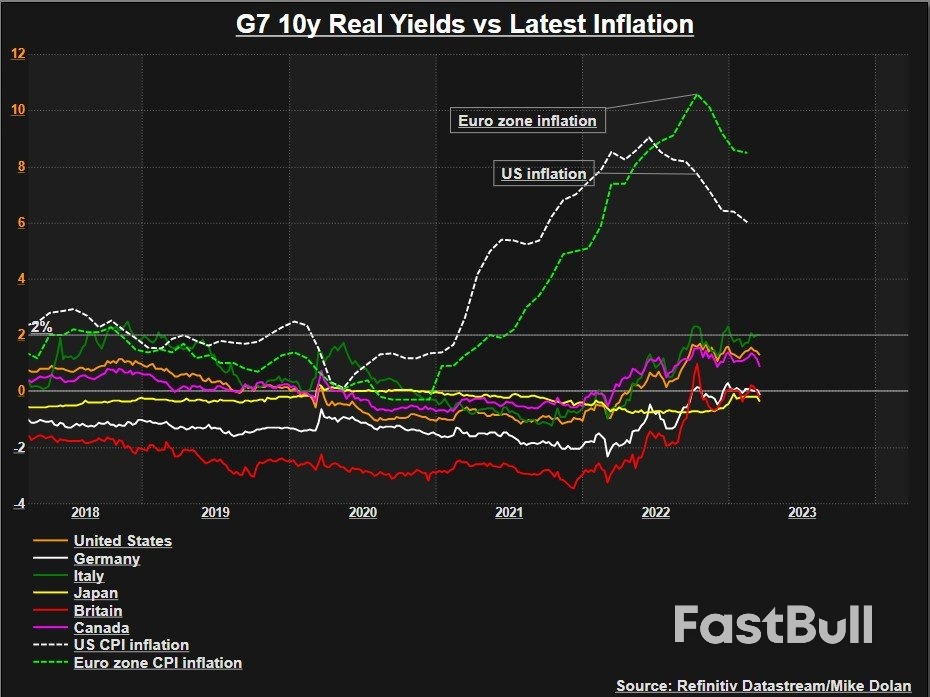
          Next week's focus will first turn to the eurozone where we will get the preliminary inflation reading for March. While headline inflation is seen to further edge back from its peak by falling to below 7%, the more relevant core inflation rate is still expected to edge higher to a new record. That is the worrying trend in underlying price pressures that ECB officials had pointed to, justifying their hawkish positions before the banking turmoil.
          For now, eurozone rates have fallen in line with the global late-cycle dynamics. While the ECB had still hiked by 50bp last week, it abstained from providing any further guidance. Even the most hawkish ECB members are now toeing the line that one has to await the data before concluding how much more tightening is needed. However, the next inflation release will be an important data point and may embolden the hawks again. That said, markets and officials alike will have to weigh current inflation against the prospects of a more lasting knock-on effects of the financial turmoil.
          We will also see inflation data out of the US, with the release of the PCE deflator. The current market expectation is that the drop back of the month-on-month core rate to 0.4% will support the narrative that the Fed is close to the end of its hiking cycle.

          Rates Spark: Late-Cycle Dynamics_2Today's events and market view

          Concerns over financial system persist, and the flip-flopping of US officials over potentially broadening the deposit insurance does not help – do we have a problem or not? While there is still a base case scenario that we will further emerge from immediate banking stresses, it is also clear that the operating environment for banks is likely to stay more restrictive for a while. This justifies shaving of terminal rate expectations, but we would argue that there should still be some more distinction. Next week's eurozone inflation data should show that especially the ECB is still a stretch way from being able to call its job done.
          In today's data the focus will be on the flash PMIs for March. One could argue that these indicators have been overtaken by recent events now that an additional financial tightening factor has to be reckoned with. Banking issues aside, the economic situation in the eurozone had been stagnating to begin with. As our economists point out, sentiment data has painted a relatively positive picture of the economy in February, but hard data for the first quarter shows little sign of a strong rebound.

          Source: ING

          Risk Warnings and Disclaimers
          You understand and acknowledge that there is a high degree of risk involved in trading. Following any strategies or investment methods may lead to potential losses. The content on the site is provided by our contributors and analysts for information purposes only. You are solely responsible for determining whether any trading assets, securities, strategy, or any other product is suitable for investing based on your own investment objectives and financial situation.
          Comments
          Add to Favorites
          Share

          FX Daily: Trading Places

          Samantha Luan

          Forex

          USD: Yellen is the new Powell

          As discussed in yesterday's FX daily, the Federal Reserve's unclear communication may have set the stage for a dollar decline by leaving market pricing of rate expectations strictly tied to news on the banking crisis and the regional bank turmoil which is still looking unresolved in the US. At the same time, we highlighted how a further depreciation in the greenback is unlikely to look like a straight line: in an environment where news flies and changes rapidly, corrections – even of large magnitudes – are the norm.
          The most obvious symptom of how the Fed has lost its grip on the market is US Treasury secretary Janet Yellen "stealing" Fed Chair Jerome Powell's spotlight as a market driver. This happened blatantly on Wednesday when a dovish Fed hike was out-shadowed by Yellen's backtracking on a "blanket" bank deposit insurance. Yesterday, she offered some reassurance to markets in that sense, saying: "Certainly, we would be prepared to take additional actions if warranted". This was enough to offer some relief to market concerns on the US regional banking troubles and take some pressure off rate cut speculation and off the dollar. And it is another testament to how markets seriously struggle to see the US small bank troubles being resolved without substantial support from the government.
          Ultimately, this continues to endorse our baseline bearish bias on the dollar, as a situation that neither develops into a fully-fledged systemic crisis (which would be USD positive) nor significantly improves on the US regional banking side which should keep markets betting on Fed easing later this year. At the moment, there are around 90bp of cuts priced in, starting in July, and the unclear Fed communication is doing very little to reliably push back against those.
          Today, we'll hear from Fed hawk James Bullard, and monitor PMI releases across the world. US figures are expected to stabilise around February's levels. Anyway, data are playing a secondary role now.

          EUR: Hawks fly high in Europe

          Since the onset of the banking crisis, central banks in the eurozone (last week) and in Switzerland and Norway (yesterday) all surprised on the hawkish side. This shows how the restoration of investor sentiment has come a long way in Europe since the fear of a black-swan Credit Suisse collapse a couple of weeks ago. Here are our review notes of the SNB (50bp) and Norges Bank (25bp) rate hikes. The latter went a step further into hawkish territory as it announced another hike in May, and projected a total of 50bp of extra tightening before reaching the peak this summer. The ultimate goal is clearly to offer support to the krone and limit imported inflation.
          The focus today will be on PMI readings in the eurozone today. Like in the US, expectations are for a stabilisation in the survey around February's numbers, and barring huge surprises, the releases may not have a major market impact given how macro fundamentals are playing second fiddle to financial market stress at the moment. EUR/USD pulled back after breaking above 1.0900 as the dollar staged a comeback, but we think that 1.1000 can be tested quite soon as the dollar bias should stay mostly bearish and European currencies are backed by hawkish central banks and a quieter banking environment.

          GBP: BoE hiked but gave very little guidance

          The Bank of England hiked by 25bp yesterday, which was fully in line with expectations. We only got a statement this time (no press conference), and it appears quite clear that the MPC has tried to keep all options open. We strongly suspected the BoE would refrain from offering any real bit of guidance to markets and that would have meant that the impact on the pound would have been very short-lived. This indeed appears to be the case.
          Our economics team thinks that a May pause is likely despite the recent rise in inflation: with around 30bp of tightening in the price, there is room for a repricing lower to favour a modestly higher EUR/GBP. Looking at Cable, the BoE does not appear to be much of a factor, and our view for dollar downside risks means that the key 1.2420 and 1.2500 levels can be tested quite soon.
          Today, UK PMIs will be watched after significantly stronger-than-expected retail sales this morning. Bank of England policymaker Catherine Mann speaks this afternoon.

          CEE: Ready to rally further

          Today's calendar offers only Czech consumer confidence data, the first leading indicator for March. We are seeing a strong rebound from historically record lows this year and further improvement can be expected this time around.
          We will see more interesting news after the end of trading today. We have sovereign rating reviews in Romania and Poland. Fitch has held a negative outlook on Romania BBB- since April 2020 and we think there's more than a 50% chance that we could see a return to a stable outlook. Moody's holds a stable outlook on Poland A2 and we do not expect any changes this time. However, it will be interesting to follow the agency's view on recent developments in the government's relations with the European Commission, access to EU money and the FX mortgage saga.
          On the FX market, our bullish view on the Hungarian forint and the Czech koruna is materialising, benefiting all week from higher EUR/USD, reduced risk aversion and record-low gas prices. We expect this trend to continue in the coming days and especially next week when the National Bank of Hungary and the Czech National Bank are both scheduled to hold meetings. Both central banks should confirm stable rates and a hawkish tone and push back against the dovish market pricing coming from the global story. In our view, this should extend the rally in the forint and the koruna.

          Source: ING

          Risk Warnings and Disclaimers
          You understand and acknowledge that there is a high degree of risk involved in trading. Following any strategies or investment methods may lead to potential losses. The content on the site is provided by our contributors and analysts for information purposes only. You are solely responsible for determining whether any trading assets, securities, strategy, or any other product is suitable for investing based on your own investment objectives and financial situation.
          Comments
          Add to Favorites
          Share
          FastBull
          Copyright © 2025 FastBull Ltd

          728 RM B 7/F GEE LOK IND BLDG NO 34 HUNG TO RD KWUN TONG KLN HONG KONG

          TelegramInstagramTwitterfacebooklinkedin
          App Store Google Play Google Play
          Products
          Charts

          Chats

          Q&A with Experts
          Screeners
          Economic Calendar
          Data
          Tools
          Membership
          Features
          Function
          Markets
          Copy Trading
          Latest Signals
          Contests
          News
          Analysis
          24/7
          Columns
          Education
          Company
          Careers
          About Us
          Contact Us
          Advertising
          Help Center
          Feedback
          User Agreement
          Privacy Policy
          Business

          White Label

          Data API

          Web Plug-ins

          Poster Maker

          Affiliate Program

          Risk Disclosure

          The risk of loss in trading financial instruments such as stocks, FX, commodities, futures, bonds, ETFs and crypto can be substantial. You may sustain a total loss of the funds that you deposit with your broker. Therefore, you should carefully consider whether such trading is suitable for you in light of your circumstances and financial resources.

          No decision to invest should be made without thoroughly conducting due diligence by yourself or consulting with your financial advisors. Our web content might not suit you since we don't know your financial conditions and investment needs. Our financial information might have latency or contain inaccuracy, so you should be fully responsible for any of your trading and investment decisions. The company will not be responsible for your capital loss.

          Without getting permission from the website, you are not allowed to copy the website's graphics, texts, or trademarks. Intellectual property rights in the content or data incorporated into this website belong to its providers and exchange merchants.

          Not Logged In

          Log in to access more features

          FastBull Membership

          Not yet

          Purchase

          Become a signal provider
          Help Center
          Customer Service
          Dark Mode
          Price Up/Down Colors

          Log In

          Sign Up

          Position
          Layout
          Fullscreen
          Default to Chart
          The chart page opens by default when you visit fastbull.com