• Trade
  • Markets
  • Copy
  • Contests
  • News
  • 24/7
  • Calendar
  • Q&A
  • Chats
Trending
Screeners
SYMBOL
LAST
BID
ASK
HIGH
LOW
NET CHG.
%CHG.
SPREAD
SPX
S&P 500 Index
6827.42
6827.42
6827.42
6899.86
6801.80
-73.58
-1.07%
--
DJI
Dow Jones Industrial Average
48458.04
48458.04
48458.04
48886.86
48334.10
-245.98
-0.51%
--
IXIC
NASDAQ Composite Index
23195.16
23195.16
23195.16
23554.89
23094.51
-398.69
-1.69%
--
USDX
US Dollar Index
97.950
98.030
97.950
98.500
97.950
-0.370
-0.38%
--
EURUSD
Euro / US Dollar
1.17394
1.17409
1.17394
1.17496
1.17192
+0.00011
+ 0.01%
--
GBPUSD
Pound Sterling / US Dollar
1.33707
1.33732
1.33707
1.33997
1.33419
-0.00148
-0.11%
--
XAUUSD
Gold / US Dollar
4299.39
4299.39
4299.39
4353.41
4257.10
+20.10
+ 0.47%
--
WTI
Light Sweet Crude Oil
57.233
57.485
57.233
58.011
56.969
-0.408
-0.71%
--

Community Accounts

Signal Accounts
--
Profit Accounts
--
Loss Accounts
--
View More

Become a signal provider

Sell trading signals to earn additional income

View More

Guide to Copy Trading

Get started with ease and confidence

View More

Signal Accounts for Members

All Signal Accounts

Best Return
  • Best Return
  • Best P/L
  • Best MDD
Past 1W
  • Past 1W
  • Past 1M
  • Past 1Y

All Contests

  • All
  • Trump Updates
  • Recommend
  • Stocks
  • Cryptocurrencies
  • Central Banks
  • Featured News
Top News Only
Share

Iranian Media Says 18 Crew Members Of Foreign Tanker Seized In Gulf Of Oman Over Carrying 'Smuggled Fuel' Detained

Share

Regional Governor: Two Killed In Ukrainian Drone Strike On Russia's Saratov

Share

Chinese Foreign Ministry - China Foreign Minister Met With United Arab Emirates Counterpart On Dec 12

Share

China's Central Financial And Economic Affairs Commission Deputy Director: Will Expand Export And Increase Import In 2026

Share

Thai Leader Anutin: Landmine Blast That Killed Thai Soldiers 'Not A Roadside Accident'

Share

Thai Leader Anutin: Thailand To Continue Military Action Until 'We Feel No More Harm'

Share

Cambodian Prime Minister Hun Manet Says He Had Phone Calls With Trump And Malaysian Leader Anwar About Ceasefire

Share

Cambodia's Hun Manet Says USA, Malaysia Should Verify 'Which Side Fired First' In Latest Conflict

Share

Cambodia's Hun Manet: Cambodia Maintains Its Stance In Seeking Peaceful Resolution Of Disputes

Share

Nasdaq Companies: Allergan, Ferrovia, Insmed, Monolithic Power Systems, Seagate Technology, And Western Digital Will Be Added To The NASDAQ 100 Index. Biogen, CdW, GlobalFoundries, Lululemon, ON Semiconductor, And Tradedesk Will Be Removed From The NASDAQ 100 Index

Share

Witkoff Headed To Berlin This Weekend To Meet With Zelenskiy, European Leaders -Wsj Reporter On X

Share

Russia Attacks Two Ukrainian Ports, Damaging Three Turkish-Owned Vessels

Share

[Historic Flooding Occurs In At Least Four Rivers In Washington State Due To Days Of Torrential Rains] Multiple Areas In Washington State Have Been Hit By Severe Flooding Due To Days Of Torrential Rains, With At Least Four Rivers Experiencing Historic Flooding. Reporters Learned On The 12th That The Floods Caused By The Torrential Rains In Washington State Have Destroyed Homes And Closed Several Highways. Experts Warn That Even More Severe Flooding May Occur In The Future. A State Of Emergency Has Been Declared In Washington State

Share

Trump Says Proposed Free Economic Zone In Donbas Would Work

Share

Trump: I Think My Voice Should Be Heard

Share

Trump Says Will Be Choosing New Fed Chair In Near Future

Share

Trump Says Proposed Free Economic Zone In Donbas Complex But Would Work

Share

Trump Says Land Strikes In Venezuela Will Start Happening

Share

US President Trump: Thailand And Cambodia Are In A Good Situation

Share

State Media: North Korean Leader Kim Hails Troops Returning From Russia Mission

TIME
ACT
FCST
PREV
U.K. Trade Balance Non-EU (SA) (Oct)

A:--

F: --

P: --

U.K. Trade Balance (Oct)

A:--

F: --

P: --

U.K. Services Index MoM

A:--

F: --

P: --

U.K. Construction Output MoM (SA) (Oct)

A:--

F: --

P: --

U.K. Industrial Output YoY (Oct)

A:--

F: --

P: --

U.K. Trade Balance (SA) (Oct)

A:--

F: --

P: --

U.K. Trade Balance EU (SA) (Oct)

A:--

F: --

P: --

U.K. Manufacturing Output YoY (Oct)

A:--

F: --

P: --

U.K. GDP MoM (Oct)

A:--

F: --

P: --

U.K. GDP YoY (SA) (Oct)

A:--

F: --

P: --

U.K. Industrial Output MoM (Oct)

A:--

F: --

P: --

U.K. Construction Output YoY (Oct)

A:--

F: --

P: --

France HICP Final MoM (Nov)

A:--

F: --

P: --

China, Mainland Outstanding Loans Growth YoY (Nov)

A:--

F: --

P: --

China, Mainland M2 Money Supply YoY (Nov)

A:--

F: --

P: --

China, Mainland M0 Money Supply YoY (Nov)

A:--

F: --

P: --

China, Mainland M1 Money Supply YoY (Nov)

A:--

F: --

P: --

India CPI YoY (Nov)

A:--

F: --

P: --

India Deposit Gowth YoY

A:--

F: --

P: --

Brazil Services Growth YoY (Oct)

A:--

F: --

P: --

Mexico Industrial Output YoY (Oct)

A:--

F: --

P: --

Russia Trade Balance (Oct)

A:--

F: --

P: --

Philadelphia Fed President Henry Paulson delivers a speech
Canada Building Permits MoM (SA) (Oct)

A:--

F: --

P: --

Canada Wholesale Sales YoY (Oct)

A:--

F: --

P: --

Canada Wholesale Inventory MoM (Oct)

A:--

F: --

P: --

Canada Wholesale Inventory YoY (Oct)

A:--

F: --

P: --

Canada Wholesale Sales MoM (SA) (Oct)

A:--

F: --

P: --

Germany Current Account (Not SA) (Oct)

A:--

F: --

P: --

U.S. Weekly Total Rig Count

A:--

F: --

P: --

U.S. Weekly Total Oil Rig Count

A:--

F: --

P: --

Japan Tankan Large Non-Manufacturing Diffusion Index (Q4)

--

F: --

P: --

Japan Tankan Small Manufacturing Outlook Index (Q4)

--

F: --

P: --

Japan Tankan Large Non-Manufacturing Outlook Index (Q4)

--

F: --

P: --

Japan Tankan Large Manufacturing Outlook Index (Q4)

--

F: --

P: --

Japan Tankan Small Manufacturing Diffusion Index (Q4)

--

F: --

P: --

Japan Tankan Large Manufacturing Diffusion Index (Q4)

--

F: --

P: --

Japan Tankan Large-Enterprise Capital Expenditure YoY (Q4)

--

F: --

P: --

U.K. Rightmove House Price Index YoY (Dec)

--

F: --

P: --

China, Mainland Industrial Output YoY (YTD) (Nov)

--

F: --

P: --

China, Mainland Urban Area Unemployment Rate (Nov)

--

F: --

P: --

Saudi Arabia CPI YoY (Nov)

--

F: --

P: --

Euro Zone Industrial Output YoY (Oct)

--

F: --

P: --

Euro Zone Industrial Output MoM (Oct)

--

F: --

P: --

Canada Existing Home Sales MoM (Nov)

--

F: --

P: --

Euro Zone Total Reserve Assets (Nov)

--

F: --

P: --

U.K. Inflation Rate Expectations

--

F: --

P: --

Canada National Economic Confidence Index

--

F: --

P: --

Canada New Housing Starts (Nov)

--

F: --

P: --

U.S. NY Fed Manufacturing Employment Index (Dec)

--

F: --

P: --

U.S. NY Fed Manufacturing Index (Dec)

--

F: --

P: --

Canada Core CPI YoY (Nov)

--

F: --

P: --

Canada Manufacturing Unfilled Orders MoM (Oct)

--

F: --

P: --

Canada Manufacturing New Orders MoM (Oct)

--

F: --

P: --

Canada Core CPI MoM (Nov)

--

F: --

P: --

Canada Manufacturing Inventory MoM (Oct)

--

F: --

P: --

Canada CPI YoY (Nov)

--

F: --

P: --

Canada CPI MoM (Nov)

--

F: --

P: --

Canada CPI YoY (SA) (Nov)

--

F: --

P: --

Canada Core CPI MoM (SA) (Nov)

--

F: --

P: --

Q&A with Experts
    • All
    • Chatrooms
    • Groups
    • Friends
    Connecting
    .
    .
    .
    Type here...
    Add Symbol or Code

      No matching data

      All
      Trump Updates
      Recommend
      Stocks
      Cryptocurrencies
      Central Banks
      Featured News
      • All
      • Russia-Ukraine Conflict
      • Middle East Flashpoint
      • All
      • Russia-Ukraine Conflict
      • Middle East Flashpoint
      Search
      Products

      Charts Free Forever

      Chats Q&A with Experts
      Screeners Economic Calendar Data Tools
      Membership Features
      Data Warehouse Market Trends Institutional Data Policy Rates Macro

      Market Trends

      Market Sentiment Order Book Forex Correlations

      Top Indicators

      Charts Free Forever
      Markets

      News

      News Analysis 24/7 Columns Education
      From Institutions From Analysts
      Topics Columnists

      Latest Views

      Latest Views

      Trending Topics

      Top Columnists

      Latest Update

      Signals

      Copy Rankings Latest Signals Become a signal provider AI Rating
      Contests
      Brokers

      Overview Brokers Assessment Rankings Regulators News Claims
      Broker listing Forex Brokers Comparison Tool Live Spread Comparison Scam
      Q&A Complaint Scam Alert Videos Tips to Detect Scam
      More

      Business
      Events
      Careers About Us Advertising Help Center

      White Label

      Data API

      Web Plug-ins

      Affiliate Program

      Awards Institution Evaluation IB Seminar Salon Event Exhibition
      Vietnam Thailand Singapore Dubai
      Fans Party Investment Sharing Session
      FastBull Summit BrokersView Expo
      Recent Searches
        Top Searches
          Markets
          News
          Analysis
          User
          24/7
          Economic Calendar
          Education
          Data
          • Names
          • Latest
          • Prev

          View All

          No data

          Scan to Download

          Faster Charts, Chat Faster!

          Download App
          English
          • English
          • Español
          • العربية
          • Bahasa Indonesia
          • Bahasa Melayu
          • Tiếng Việt
          • ภาษาไทย
          • Français
          • Italiano
          • Türkçe
          • Русский язык
          • 简中
          • 繁中
          Open Account
          Search
          Products
          Charts Free Forever
          Markets
          News
          Signals

          Copy Rankings Latest Signals Become a signal provider AI Rating
          Contests
          Brokers

          Overview Brokers Assessment Rankings Regulators News Claims
          Broker listing Forex Brokers Comparison Tool Live Spread Comparison Scam
          Q&A Complaint Scam Alert Videos Tips to Detect Scam
          More

          Business
          Events
          Careers About Us Advertising Help Center

          White Label

          Data API

          Web Plug-ins

          Affiliate Program

          Awards Institution Evaluation IB Seminar Salon Event Exhibition
          Vietnam Thailand Singapore Dubai
          Fans Party Investment Sharing Session
          FastBull Summit BrokersView Expo

          Worst Month Since 2022 Bear Market? 5 Things to Know in Bitcoin This Week

          Warren Takunda

          Economic

          Commodity

          Summary:

          Bitcoin is on course for 12% losses in April, and with the monthly close just days away, it could end up sparking the weakest BTC price action in more than a year.
          Bitcoin heads into the April monthly close on an uncertain footing as BTC price action falls to ten-day lows.
          The largest cryptocurrency continues to tread water beneath significant resistance levels after a week of sustained selling during Wall Street trading hours.
          Macro and geopolitical instability have added to what has become a potent mixture for Bitcoin bulls to grapple with this month — can they turn things around?
          The April candle close has just days left to avoid becoming Bitcoin’s worst month of 2024 so far.
          The immediate landscape remains problematic — seller interest between spot price and new all-time highs is considerable, and while price discovery is only around $12,000 away, such levels seem firmly out of reach.
          Market observers are thus looking the other way — to key areas of support should downside pressure keep piling on.
          Optimists argue that BTC/USD is merely ranging, meanwhile, and that time will produce a bull market continuation of the sort enjoyed in Q1.
          Its comeback may be helped by a dose of deja vu this week — less than four months after the United States, Hong Kong is set to launch its own spot Bitcoin exchange-traded funds (ETFs).
          Cointelegraph takes a look at these key topics and more in the weekly rundown of all things BTC price-related.

          Bitcoin risks worst month since November 2022

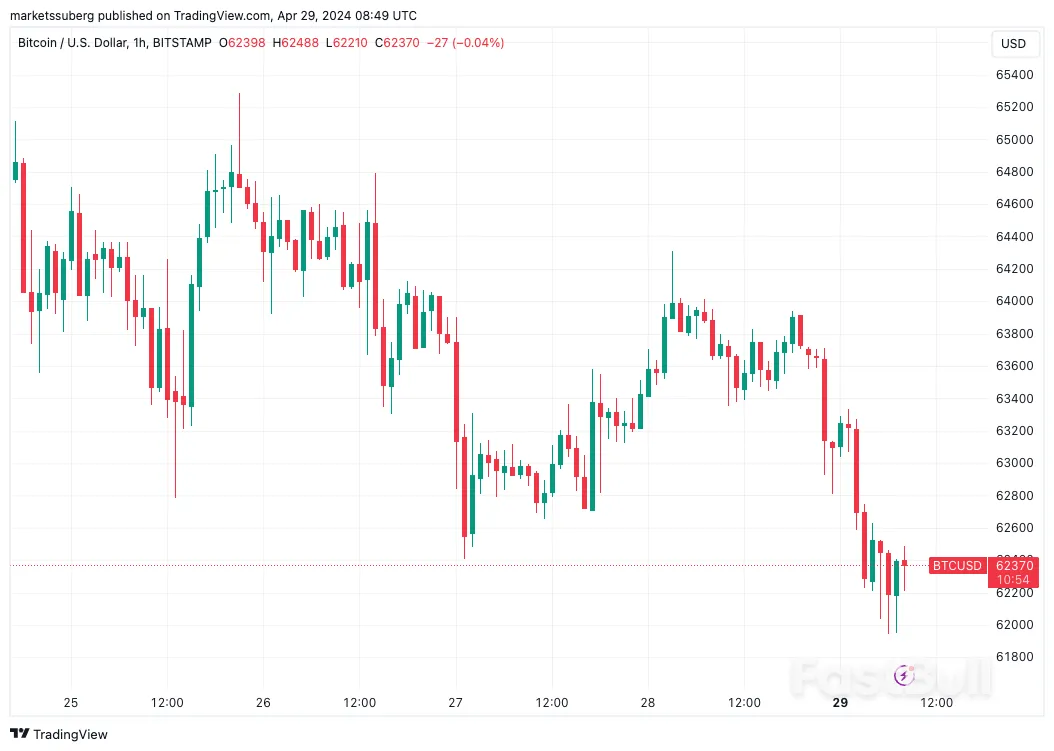
          The weekly close provided little respite for battered Bitcoin traders as BTC/USD continued dropping into the Asia session.Worst Month Since 2022 Bear Market? 5 Things to Know in Bitcoin This Week _1

          BTC/USD 1-hour chart.

          Hitting lows of $61,943 on Bitstamp, per data from Cointelegraph Markets Pro and TradingView, the pair thus saw its lowest levels since April 19.
          The week prior, relief bounces toward $65,000 had repeatedly encountered selling pressure around the Wall Street open which commentators including popular trader Skew attributed to U.S. automated trading algorithms.
          “I do see the potential for longer crab between $67K - $58K till proper flow supported breakout,” he continued in fresh analysis on X (formerly Twitter) on April 29.
          Bears have so far failed to keep the market below $60,000 for long. Even at current levels around $62,000, however, April is on track to deliver more than 12% losses.
          Data from monitoring resource CoinGlass confirms that this would make it Bitcoin’s worst-performing month since November 2022 — the height of the latest bear market.Worst Month Since 2022 Bear Market? 5 Things to Know in Bitcoin This Week _2

          BTC/USD monthly returns (screenshot). Source: CoinGlass

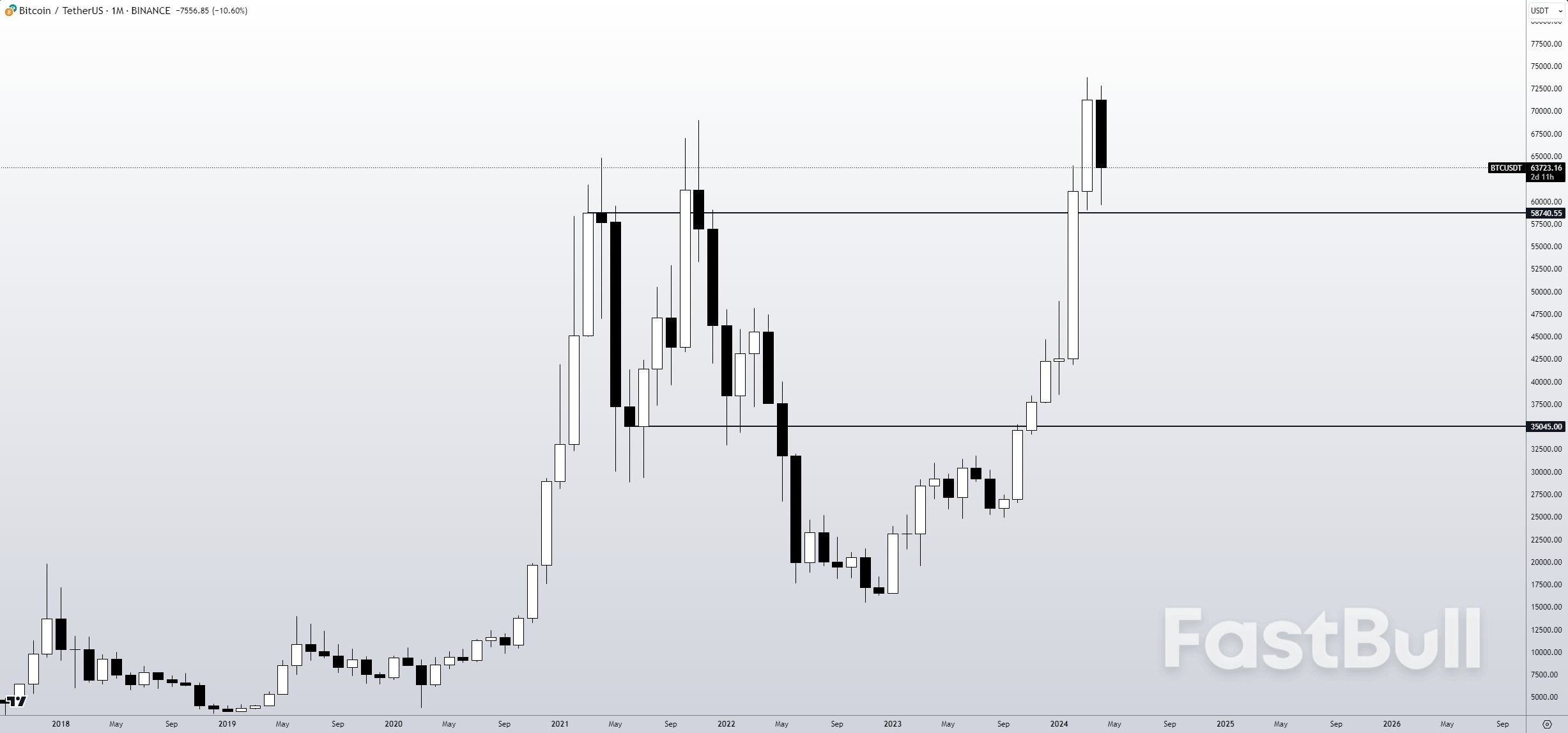
          Skew continued that wherever it ends up, the monthly close would form a key new BTC price focus in its own right.
          “1M close is in 2days roughly, following that close monthly & weekly open will act as very pivotal levels,” he wrote, describing one-month timeframes as “not bad at all” and reiterating the significance of $58,000 as support.Worst Month Since 2022 Bear Market? 5 Things to Know in Bitcoin This Week _3

          BTC/USD chart. Source: Skew/X

          Dramatic yen volatility greets FOMC week

          Significant macroeconomic events keep coming this week with the next interest rates decision by the U.S. Federal Reserve.
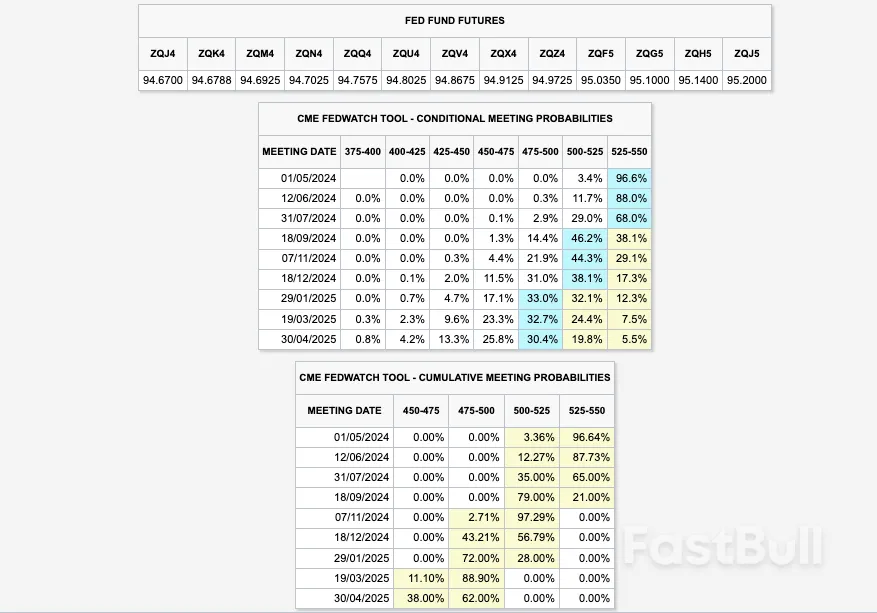
          While markets expect no surprises from the latest meeting of the Federal Open Market Committee (FOMC), recent macro data prints have concerned risk-asset bulls. Lower rates may come much later than anticipated at the start of the year, they fear, as shown in estimates from CME Group’s FedWatch Tool.Worst Month Since 2022 Bear Market? 5 Things to Know in Bitcoin This Week _4

          Fed funds probabilities (screenshot). Source: CME Group

          “We have a massive week ahead of us,” trading resource The Kobeissi Letter summarized in its weekly macro outlook thread on X.
          “After a month full of hot inflation data, we will finally get the Fed's updated views.”
          It is not just FOMC; headlining the week’s macro events is accompanying commentary from Fed Chair Jerome Powell on May 1, followed by jobless claims and unemployment data on May 2 and May 3, respectively.
          For Bitcoin and risk assets, however, all may not be so bad — unless views turn to favor a significant worsening of economic circumstances.
          “Worst case scenario would be consecutively bad spells for risk assets & potentially leads to bets of economy somehow breaking apart,” Skew explained about the outlook.
          “Probably see sweep of $50K - $46K area. Don't see that happening till there's HTF close below $58K & narrative for a breakdown.

          Worst Month Since 2022 Bear Market? 5 Things to Know in Bitcoin This Week _5”USD/JPY 4-hour chart.

          Some signs of stress are clearly apparent this week. The U.S. witnessed a fresh regional bank failure, while in Japan, the yen hit its lowest levels against the dollar since 1990 in flash volatility, passing 160 before rebounding.

          Hong Kong Bitcoin ETFs due for launch

          Sticking in Asia, the coming week marks a seminal moment in Bitcoin institutional adoption.
          Like the U.S. in January, Hong Kong is about to open the doors to spot Bitcoin ETFs — and anticipation of copycat interest and price impact is already building.
          Citing a 2022 report from crypto exchange Huobi, Willy Woo, creator of on-chain statistics platform Woobull, underscored what could be serious demand for spot ETF products.
          “The Asian market in user count is BIGGER than the US and European markets combined,” part of an X post noted.
          In a preliminary report on the upcoming release, blockchain research and advisory group House of Chimera put potential inflows at $25 billion, citing estimates from crypto financial services platform Matrixport.
          “The substantial capital potential might lead to increased liquidity and possibly stabilize Bitcoin prices,” it wrote on X.
          “It also sets a precedent for other Asian markets, potentially influencing further regulatory adjustments in favor of crypto.”
          House of Chimera noted that investor participation from mainland China — which would represent a key turnaround in a country which has repeatedly attempted to quash crypto activity — could end up “restricted” due to regulatory hurdles.
          “While the introduction of Bitcoin ETFs in Hong Kong is a landmark development, its success and impact on the broader market will depend heavily on regulatory environments, investor sentiment, and macroeconomic factors influencing cryptocurrency valuations,” it concluded.

          Key BTC price support lines ready for retest

          As Bitcoin lingers close to significant support levels — among them, $60,000 and $58,000 — one trendline in particular is beginning to stand out as a line in the sand.
          As Cointelegraph reported, the aggregate cost basis of Bitcoin’s short-term holders (STHs) is now of interest to analysts.
          This investor cohort corresponds to entities holding a portion of BTC for a maximum of 155 days, essentially making up the speculative end of the investor spectrum.
          STH realized price, currently at just under $59,800, now forms a key level to watch. Throughout the recovery from 2022 bear market lows, it has acted as support, with only a brief period in September last year breaking the paradigm.
          “Will it hold as support this time?” Philip Swift, creator of on-chain data platform Look Into Bitcoin, queried.Worst Month Since 2022 Bear Market? 5 Things to Know in Bitcoin This Week _6

          Bitcoin STH realized price chart. Source: Philip Swift/X

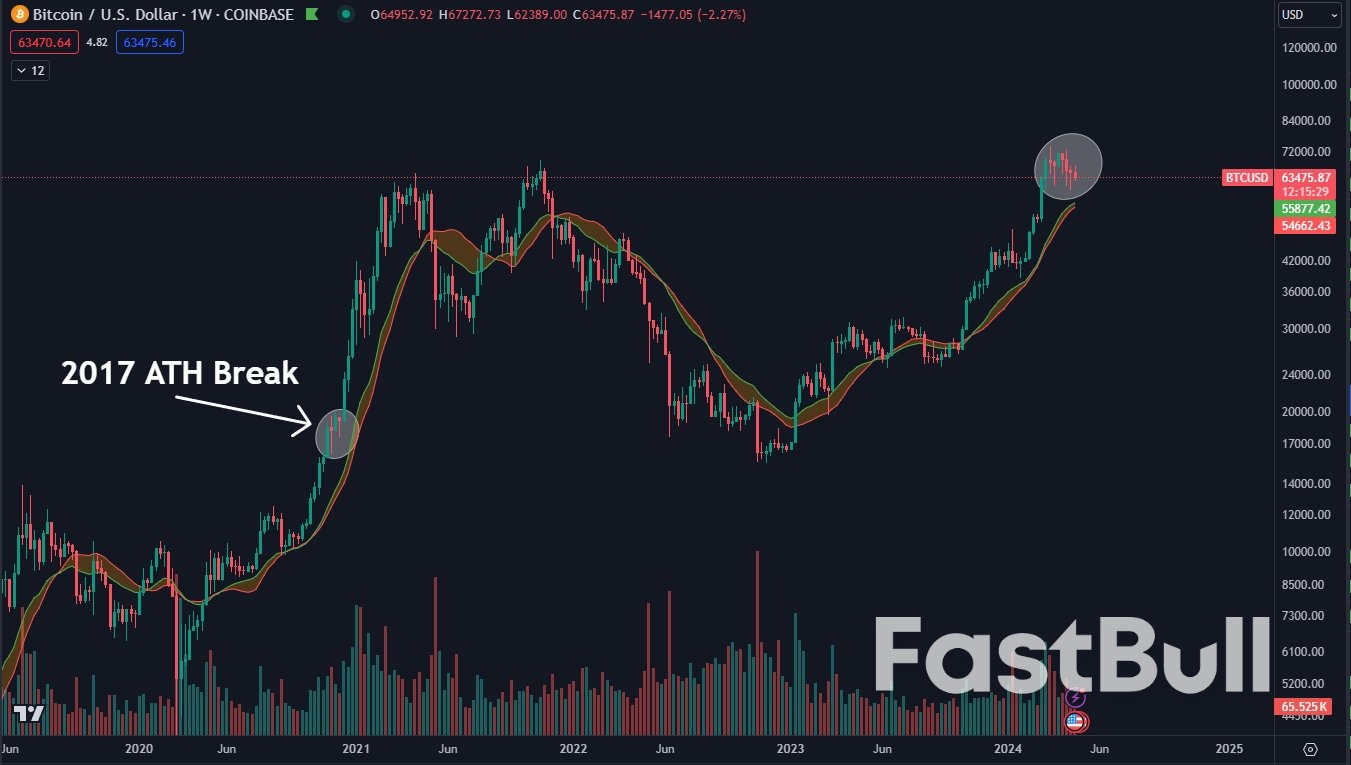
          Two mid-term exponential moving averages, or EMAs, which form what is known as the “bull market support band,” are meanwhile also lining up to act as damage control in the event of a deeper retracement.
          “As we keep consolidating, the bull market support band is catching up to price,” popular trader Daan Crypto Trades wrote in his latest post on the topic.
          “This should offer good support if we were to touch it. Back in 2021 when we broke the 2017 all time high, we ended up not needing it but took off before the band could catch up.”BTC/USD chart with bull market support band.

          Worst Month Since 2022 Bear Market? 5 Things to Know in Bitcoin This Week _7 Source: Daan Crypto Trades/X

          Retail investors circle back to Bitcoin

          In a potential sign of encouragement despite lackluster BTC price action, smaller retail investor interest is returning.
          As noted by Checkmate, the pseudonymous lead on-chain analyst at on-chain data platform Glassnode, wallets with less than 100 BTC are busy increasing exposure.
          He referred to data from his own resource, Checkonchain, which showed 30-day rolling wallet balances flipping positive on April 8 for the first time since mid-January.
          “The Bitcoin retail holders, who are apparently degenerates who will sell on the first sign of a correction... ...appear to be stacking sats once again,” he concluded.
          “Shrimp (<1 $BTC) are accumulating 12.2k $BTC per month as it stands.”Worst Month Since 2022 Bear Market? 5 Things to Know in Bitcoin This Week _8

          Bitcoin retail holder rolling balance change. Source: Checkonchain

          Source: Cointelegraph

          To stay updated on all economic events of today, please check out our Economic calendar
          Risk Warnings and Disclaimers
          You understand and acknowledge that there is a high degree of risk involved in trading. Following any strategies or investment methods may lead to potential losses. The content on the site is provided by our contributors and analysts for information purposes only. You are solely responsible for determining whether any trading assets, securities, strategy, or any other product is suitable for investing based on your own investment objectives and financial situation.
          Add to Favorites
          Share

          Inflation Overshadows US Economic Resilience, Hurts Biden’s Re-Election Chances

          Kevin Du

          Political

          Economic

          Given time to digest April 25’s gross domestic product (GDP) report, most economists looked past the weak headline number and declared the underlying momentum of the US economy remained strong. But growth and jobs – which have been surprisingly sturdy for more than a year – have generated little tangible benefit to Mr Biden’s hopes for re-election.
          What they did generate was more of the one thing that has truly stung Mr Biden: inflation.
          “This is a lose-lose for the President,” said Mr Stuart Paul, an economist at Bloomberg Economics. “He doesn’t get to realise the benefit of the hot growth because it’s coming at the cost of high inflation and interest rates. This economic resilience is – borderline – a problem for Mr Biden.”
          The report comes at a perilous time for the president’s campaign. Americans were already sour on economic conditions, and research suggests that voters begin to make up their minds about the direction of the US economy about six months before an election – right about now.
          A Bloomberg News/Morning Consult poll of voters in seven battleground states in April showed that more than half expect the US economy to be worse by 2024. And at least half of voters say they expect the inflation rate and borrowing costs to rise even higher than they are now.
          As a result, the Biden campaign has largely retired the “Bidenomics” branding that used to define his economic case for re-election, and is emphasising issues like abortion rights and protecting democracy.
          Even though Mr Biden has been inundated with unfavourable polls showing him trailing former US president Donald Trump in key states and predicting a November general election loss, at least one widely trusted economic model offers him hope.
          Economist Ray Fair of Yale University said his model shows economic fundamentals suggest Mr Biden remains on track to win the popular vote even amid decelerating growth and persistent high inflation. The model, which has been mostly successful in predicting the outcome of presidential elections since 1980, implies a 51.7 per cent vote share for Mr Biden head-to-head against Trump.

          Inflation revived

          How different it seemed just three months ago. An aggressive campaign of interest-rate increases by the US Federal Reserve appeared finally to be bringing inflation to heel. After peaking above 7 per cent in June of 2022, the US central bank’s favourite gauge of prices, the personal consumption expenditures index (PCE), tumbled all the way to 2.4 per cent in the 12 months through January.
          Remarkably, the drop in inflation came without damaging growth or employment. GDP outpaced all predictions by expanding 2.5 per cent in 2023, and unemployment wowed forecasters by remaining below 4 per cent.
          Unfortunately for Mr Biden, the decline of inflation in the US now looks badly derailed. Monthly inflation figures since January have largely flattened. And the April 25 report showed that core PCE – which excludes volatile food and energy – rose by an annualised 3.7 per cent in the first quarter, its first acceleration in a year.
          More detailed data released on April 26 that focused on March confirmed the view that inflation pressures were persisting, dashing any hopes the Fed might soon cut interest rates and thereby lower borrowing costs for households and businesses.
          As recently as April 10, Mr Biden stood by his prediction that the Fed would cut rates – which stand at a two-decade high – before the end of 2024. Yet with the latest economic data in hand, policymakers are expected to delay rate reductions and may even reconsider whether borrowing costs are high enough.
          It’s also getting harder for Mr Biden to avoid getting blamed for rising prices. At its peak, inflation was clearly driven by the supply-side snarls triggered by the Covid-19 pandemic. Those problems have largely been resolved. What remains appears more linked to demand, driven in part by deficit spending.
          Mr Biden helped usher a series of measures through Congress during his tenure that intends to bolster American manufacturing, renew infrastructure and fight climate change.
          According to Mr Jason Furman, a former adviser to ex-US president Barack Obama, those programmes have a chance to accomplish all that in the longer term, making them solid investments. But in the short term, the giant price tag is doing two things: It’s adding to growth, for which Mr Biden gets little credit, and it’s spurring the inflation that damages his standing.
          “If there was a huge spending programme to dig and refill holes, the macroeconomic impact would probably be pretty similar to what we’ve seen,” he said.
          This is a devilish combination for Mr Biden, who has tried hard to make the case for why “Bidenomics” has helped the average American.
          “The administration can certainly spell out a case for why their policies, along with legislation passed by Congress, has laid the groundwork for spurring this post-pandemic economy,” said Washington’s Brookings Institution senior fellow Sarah Binder.
          But, she added, with inflation dominating Americans’ experience of the economy, and also because of the polarisation that has divided the electorate, he’s getting little credit.
          “Declining inflation and interest rates would be good for voters and for President Biden,” said Bloomberg Economics’ Mr Paul. “But the thing that would get the Fed to cut rates is really bad economic data.”

          Source: Bloomberg

          To stay updated on all economic events of today, please check out our Economic calendar
          Risk Warnings and Disclaimers
          You understand and acknowledge that there is a high degree of risk involved in trading. Following any strategies or investment methods may lead to potential losses. The content on the site is provided by our contributors and analysts for information purposes only. You are solely responsible for determining whether any trading assets, securities, strategy, or any other product is suitable for investing based on your own investment objectives and financial situation.
          Add to Favorites
          Share

          Wall Street Prepares for Policy, Payrolls, and Profits: Key Data Events to Watch Next Week

          Warren Takunda

          Economic

          Stocks

          Bond

          Global markets brace for a data-heavy week, with the US Federal Reserve meeting and a wave of key economic releases taking center stage. The spotlight will be particularly intense on the Fed's policy decision on Wednesday, with investors keenly awaiting any hints on the timing and pace of potential interest rate cuts later in the year.
          The Federal Open Market Committee (FOMC) meeting on Wednesday is undoubtedly the most anticipated event of the week. While policymakers are widely expected to keep interest rates at record lows, Chair Jerome Powell's press conference will be dissected for even the subtlest clues regarding the Fed's future path. The lingering presence of inflation will likely prompt investors to scrutinize Powell's remarks for any signals about potential rate cuts, a prospect that has been priced into the market to some extent.
          Following the FOMC meeting, Friday's non-farm payrolls report will be another key data point for the US. Analysts forecast a slowdown in job growth compared to March, with estimates hovering around 210,000 new positions added. The unemployment rate is projected to hold steady at 3.8%, while wage growth is expected to remain unchanged at 0.3%.
          Adding further fuel to the fire, the first-quarter earnings season reaches a critical juncture next week. Heavyweights such as Apple, Amazon, Coca-Cola, McDonald's, Mastercard, and Pfizer are all set to unveil their financial results. These reports will be closely scrutinized for insights into corporate health and their potential impact on broader market sentiment.
          Across the Atlantic, the Eurozone and major European economies like Germany, France, Spain, and Italy will also be releasing key data points. Flash GDP figures for the first quarter, along with inflation data for April and unemployment levels for March, will be on the docket. The Eurozone is expected to exhibit a slight rebound in growth after stagnating in late 2023, while inflation is projected to remain subdued near 2.4%.
          In Asia, the initial batch of Purchasing Managers' Indexes (PMIs) for April from China will be a focal point. While a moderate slowdown from March is anticipated, investors will be looking for any signs of momentum in the world's second-largest economy. Major companies across Europe and Asia will also be reporting earnings next week, providing further insights into the health of the global economy.
          The coming week presents a significant juncture for global markets. The Fed's policy stance, the health of the US labor market, and the performance of major companies will all be instrumental in shaping investor sentiment and determining the direction of markets in the days ahead.
          To stay updated on all economic events of today, please check out our Economic calendar
          Risk Warnings and Disclaimers
          You understand and acknowledge that there is a high degree of risk involved in trading. Following any strategies or investment methods may lead to potential losses. The content on the site is provided by our contributors and analysts for information purposes only. You are solely responsible for determining whether any trading assets, securities, strategy, or any other product is suitable for investing based on your own investment objectives and financial situation.
          Add to Favorites
          Share

          South African Rand Eyes Data-Heavy Week, FOMC Guidance

          Warren Takunda

          Central Bank

          Economic

          The South African rand (ZAR) kicked off the week with a modest gain against the US dollar, buoyed by the previous week's positive close and investor anticipation ahead of a data-heavy domestic calendar and a crucial US Federal Reserve policy meeting.South African Rand Eyes Data-Heavy Week, FOMC Guidance _1
          The rand opened at 18.7525 per dollar on Monday, representing a 0.29% increase from its Friday close. The uptick follows a week where the rand found support from an Ipsos poll suggesting the ruling African National Congress (ANC) would likely retain power despite declining public approval.
          This week, however, promises to be a test for the rand as a flurry of local economic data releases are scheduled for Tuesday. Investors will be keenly dissecting figures on March money supply, trade balance, and budget balance, all of which will provide crucial insights into the health of the South African economy and potentially influence the rand's trajectory in the coming days.
          The global market spotlight remains firmly on the upcoming Federal Open Market Committee (FOMC) meeting on Wednesday. While market expectations are already priced in for a delay in US rate cuts, the FOMC's policy statement and any forward guidance it offers will be closely scrutinized. A hawkish tilt from the Fed could strengthen the US dollar, potentially exerting downward pressure on the rand.
          The FOMC meeting will be the key event this week for the rand. Investors will be looking for any signs about the future path of US monetary policy, as this could have a significant impact on the global risk environment and, consequently, on emerging market currencies like the rand.
          The South African stock market also exhibited a cautiously optimistic start to the week. Both the Top-40 (.JTOPI) and the broader all-share (.JALSH) indices rose by around 0.5% in early trading, suggesting a tentative sense of confidence among domestic investors.
          The local equity market seems to be taking heart from the rand's recent stability and the ongoing political clarity following the Ipsos poll.However, investor sentiment remains fragile, and the outcome of the FOMC meeting could trigger some volatility.
          The South African bond market mirrored the positive sentiment, with the benchmark 2030 government bond trading stronger in early deals. The yield on this bond dipped by 4 basis points to 10.745%, indicating increased demand for South African debt.
          The rand's performance in the coming week will likely hinge on a delicate balance between internal and external factors. While positive local data releases could bolster the rand, a hawkish Fed stance or a deterioration in global risk sentiment could quickly dampen its gains.
          To stay updated on all economic events of today, please check out our Economic calendar
          Risk Warnings and Disclaimers
          You understand and acknowledge that there is a high degree of risk involved in trading. Following any strategies or investment methods may lead to potential losses. The content on the site is provided by our contributors and analysts for information purposes only. You are solely responsible for determining whether any trading assets, securities, strategy, or any other product is suitable for investing based on your own investment objectives and financial situation.
          Add to Favorites
          Share

          Oil Prices Fall 1% On Israel-Hamas Ceasefire Talks, US Inflation Concerns

          Alex

          Economic

          Commodity

          Oil prices were down 1% on Monday, erasing gains from Friday as Israel-Hamas peace talks in Cairo eased fears of a wider conflict in the Middle East and US inflation data further dimmed the prospects of interest rate cuts anytime soon.
          Brent crude futures fell by as much as 98 cents, or 1.09%, to US$88.52 a barrel by 0644 GMT. West Texas Intermediate (WTI) futures were down 83 cents, or 0.99%, at US$83.02 a barrel.
          Stepped-up efforts to mediate a ceasefire between Israel and Hamas moderated geopolitical tensions and contributed to the weak opening on Monday, IG market analyst Tony Sycamore said. A Hamas delegation will visit Cairo on Monday for peace talks, a Hamas official told Reuters.
          Israel's foreign minister said on Saturday a planned incursion into Rafah, where more than one million displaced Palestinians are sheltering, could be put off in the event of a deal that involves the release of Israeli hostages.
          A White House spokesperson said Israel had agreed to listen to US concerns about the humanitarian effects of the potential invasion.
          Markets are also on watch for the US Federal Reserve's (Fed) May 1 policy review.
          "Also playing a part are some nerves ahead of this week’s Federal Open Market Committee meeting which is expected to come with a more hawkish tone," Sycamore said.
          US inflation rose 2.7% in the 12 months through March, data on Friday showed, above the Fed's target of 2%. Lower inflation would have increased the likelihood of interest rate cuts, which would stimulate economic growth and oil demand.
          "The sticky US inflation sparks concerns for 'higher-for-longer' interest rates", leading to a stronger US dollar and putting pressure on commodity prices, independent market analyst Tina Teng said.
          The dollar strengthened on the prospect of higher-for-longer interest rates. A stronger dollar makes oil more expensive for those holding other currencies.
          Further weighing on the outlook for oil demand, China's industrial profit growth slowed down in March, official data showed on Saturday, in the latest sign of frail domestic demand in the world's second largest economy.
          Cumulative profits of China's industrial firms rose 4.3% to 1.5 trillion yuan (RM990 billion) in the first quarter from a year earlier, compared to a 10.2% rise in the first two months.
          But oil prices could swing higher again if US inventory data and China's PMI index show improvements this week, Teng said.
          Brent had settled up 49 cents and WTI up 28 cents on Friday on concerns about disruptions to supply from events in the Middle East.
          The market brushed aside potential supply disruptions stemming from Ukranian drone strikes on the Ilsky and Slavyansk oil refineries in Russia's Krasnodar region over the weekend. The Slavyansk refinery had to suspend some operations after the attack, a plant executive said.

          Source:Reuters

          To stay updated on all economic events of today, please check out our Economic calendar
          Risk Warnings and Disclaimers
          You understand and acknowledge that there is a high degree of risk involved in trading. Following any strategies or investment methods may lead to potential losses. The content on the site is provided by our contributors and analysts for information purposes only. You are solely responsible for determining whether any trading assets, securities, strategy, or any other product is suitable for investing based on your own investment objectives and financial situation.
          Add to Favorites
          Share

          Japan Chooses to Maintain Secrecy Regarding Intervention Activities for Traders

          Ukadike Micheal

          Economic

          Forex

          Japan's top currency official chose not to disclose whether Tokyo intervened in the currency market following a sharp move that saw a 2% drop in the dollar-yen exchange rate on Monday. Masato Kanda, vice minister for international affairs, simply stated, "No comment for now," when asked by reporters about any intervention actions taken. The yen's slip beyond the 160 mark against the dollar marked its first occurrence since 1990, contributing to losses exceeding 10% for the year. Despite briefly rebounding to 155.06 during lunchtime, the yen later reached 154.54.
          The rapid appreciation of the yen, particularly a 4 yen increase within an hour, raised eyebrows among economists and market observers. Takahide Kiuchi, executive economist at the Nomura Research Institute, noted that such movements are uncommon in normal trading conditions. The yen's continued weakness is attributed to the significant interest rate gap between the US and Japan. Despite the Bank of Japan's rate hike in March, expectations of Federal Reserve rate cuts have diminished, further pressuring the yen.
          Last week's decision by Japan's central bank to maintain its stance and Governor Kazuo Ueda's comments during the press briefing exacerbated the currency's decline. The yen's depreciation, now worth less than half its value against the dollar compared to 2012, has led to rising import prices and inflation, impacting households and businesses.
          However, Japanese currency officials face constraints in taking action. They must navigate between stabilizing the yen's decline and adhering to international commitments to market-determined exchange rates. Moreover, any intervention carries the risk of being perceived as a failure, potentially fueling further speculation in the market.
          The uncertainty surrounding Japan's stance on currency intervention may persist, contributing to market volatility. While some attribute the currency movements to jittery market players and trading algorithms, others speculate on deliberate actions by the finance ministry. Japan's Finance Minister Shunichi Suzuki's recent meeting with Treasury Secretary Janet Yellen in April hinted at concerns over currency volatility, although joint intervention remains unlikely.
          Yellen emphasized that market intervention should occur sparingly and under specific conditions, aligning with Group of Seven agreements advocating for market-determined exchange rates. As the yen's movements continue to attract attention, market participants remain vigilant, with uncertainty prevailing over the ministry's potential intervention tactics.

          Source: Bloomberg

          To stay updated on all economic events of today, please check out our Economic calendar
          Risk Warnings and Disclaimers
          You understand and acknowledge that there is a high degree of risk involved in trading. Following any strategies or investment methods may lead to potential losses. The content on the site is provided by our contributors and analysts for information purposes only. You are solely responsible for determining whether any trading assets, securities, strategy, or any other product is suitable for investing based on your own investment objectives and financial situation.
          Add to Favorites
          Share

          The Commodities Feed: Speculators Dump Oil

          ING

          Energy

          Commodity

          Energy - Specs dump oil
          After a relatively strong end to the week the oil market has started the week under pressure. ICE Brent is trading back below US$89/bbl at the time of writing. Geopolitical risks appear to have eased considerably, removing some of the risk premium priced into the market.
          However, there are still signs of tightening in the physical market with prompt timespreads continuing to strengthen. The Brent Jun/Jul spread traded to a high of $1.34/bbl on Friday, after trading closer to a backwardation of US$0.70/bbl at the start of the week. The strength in spreads is aligned with our oil balance which continues to show a deep deficit over the second quarter of the year. The outlook for the year's second half is less clear and depends on OPEC+ policy.
          The easing of geopolitical risk in the market has resulted in speculators heading for the exit. The latest positioning data shows that speculators reduced their net long in ICE Brent by 39,101 lots to 295,831 lots as of last Tuesday. This move was exclusively driven by longs liquidating. NYMEX WTI saw a similar move with speculators cutting their net long by 24,251 lots to 179,646 lots over the reporting week. There were also big reductions in positioning in ICE gasoil. Speculators reduced their net longs by 31,589 lots to 49,536 lots - the smallest position speculators have held in gasoil since January.
          The fundamentals in middle distillates have shifted significantly in recent weeks and the market looks increasingly bearish. Inventories have been building at a good pace, and in Europe, gasoil stocks in the ARA region increased by 52kt last week to 2.18mt, taking stocks above the 5-year average for this time of year. The prompt ICE gasoil spread has been trading in contango since mid-April, while the prompt gasoil crack is trading at its weakest since June last year.
          While middle distillate fundamentals are more bearish, there are still lingering risks in the market. There were reports over the weekend of another Ukrainian drone attack on Russian refining capacity. The Slavyansk oil refinery in Krasnodar was the latest to be attacked, and reportedly led to a halt in its operations. The refinery has a capacity of around 1m b/d.
          There is not much on the energy calendar this week. We could get the latest Saudi official selling prices later in the week. In contrast, there is a lot on the macro calendar this week, which will also be important for energy and commodity markets. The Fed will meet on Wednesday, where no change in interest rates is expected, while the April US jobs report will be released on Friday.

          Metals – Copper hits $10,000/t

          Copper hit $10,000/t for the first time in two years on Friday on expectations for a global recovery in demand this year, especially from the green energy sector, and tightening supplies after setbacks at global mines. However, in the short-term, there are still signs of weak demand. In China, copper inventories remain elevated while premia for imported metal in China has sunk to zero. In addition, the higher-for-longer narrative from the US Fed could put some downward pressure on copper prices. We believe, in the short term, the upside to copper prices might be capped by macro drivers, including ongoing demand concerns in China and lingering uncertainty over US monetary policy.

          Agriculture – Specs reduce bearish positioning

          The latest CFTC data shows that money managers reduced their net bearish bets in CBOT wheat by 20,219 lots over the last week to 76,184 lots as of 23 April. The move was predominantly driven by falling gross shorts. Similarly, the speculative net short in CBOT corn decreased by 41,024 lots to 238,546 lots, after reporting gains for four consecutive weeks. Meanwhile, for soybeans, speculators reduced their net shorts by 18,861 lots, leaving them with a net short position of 149,014 lots over the last reporting week, following a decrease in gross shorts by 16,705 lots to 196,259 lots.
          Risk Warnings and Disclaimers
          You understand and acknowledge that there is a high degree of risk involved in trading. Following any strategies or investment methods may lead to potential losses. The content on the site is provided by our contributors and analysts for information purposes only. You are solely responsible for determining whether any trading assets, securities, strategy, or any other product is suitable for investing based on your own investment objectives and financial situation.
          Add to Favorites
          Share
          FastBull
          Copyright © 2025 FastBull Ltd

          728 RM B 7/F GEE LOK IND BLDG NO 34 HUNG TO RD KWUN TONG KLN HONG KONG

          TelegramInstagramTwitterfacebooklinkedin
          App Store Google Play Google Play
          Products
          Charts

          Chats

          Q&A with Experts
          Screeners
          Economic Calendar
          Data
          Tools
          Membership
          Features
          Function
          Markets
          Copy Trading
          Latest Signals
          Contests
          News
          Analysis
          24/7
          Columns
          Education
          Company
          Careers
          About Us
          Contact Us
          Advertising
          Help Center
          Feedback
          User Agreement
          Privacy Policy
          Business

          White Label

          Data API

          Web Plug-ins

          Poster Maker

          Affiliate Program

          Risk Disclosure

          The risk of loss in trading financial instruments such as stocks, FX, commodities, futures, bonds, ETFs and crypto can be substantial. You may sustain a total loss of the funds that you deposit with your broker. Therefore, you should carefully consider whether such trading is suitable for you in light of your circumstances and financial resources.

          No decision to invest should be made without thoroughly conducting due diligence by yourself or consulting with your financial advisors. Our web content might not suit you since we don't know your financial conditions and investment needs. Our financial information might have latency or contain inaccuracy, so you should be fully responsible for any of your trading and investment decisions. The company will not be responsible for your capital loss.

          Without getting permission from the website, you are not allowed to copy the website's graphics, texts, or trademarks. Intellectual property rights in the content or data incorporated into this website belong to its providers and exchange merchants.

          Not Logged In

          Log in to access more features

          FastBull Membership

          Not yet

          Purchase

          Become a signal provider
          Help Center
          Customer Service
          Dark Mode
          Price Up/Down Colors

          Log In

          Sign Up

          Position
          Layout
          Fullscreen
          Default to Chart
          The chart page opens by default when you visit fastbull.com