Markets
News
Analysis
User
24/7
Economic Calendar
Education
Data
- Names
- Latest
- Prev



Signal Accounts for Members
All Signal Accounts
All Contests


U.S. Cleveland Fed CPI MoM (SA) (Dec)A:--
F: --
P: --
U.S. Cleveland Fed CPI MoM (Dec)A:--
F: --
P: --
China, Mainland M0 Money Supply YoY (Dec)--
F: --
P: --
China, Mainland M1 Money Supply YoY (Dec)--
F: --
P: --
China, Mainland M2 Money Supply YoY (Dec)--
F: --
P: --
U.S. EIA Natural Gas Production Forecast For The Next Year (Jan)A:--
F: --
P: --
U.S. EIA Short-Term Crude Production Forecast For The Next Year (Jan)A:--
F: --
P: --
U.S. EIA Short-Term Crude Production Forecast For The Year (Jan)A:--
F: --
P: --
EIA Monthly Short-Term Energy Outlook
U.S. 30-Year Bond Auction Avg. YieldA:--
F: --
P: --
Argentina 12-Month CPI (Dec)A:--
F: --
P: --
U.S. Budget Balance (Dec)A:--
F: --
P: --
Argentina CPI MoM (Dec)A:--
F: --
P: --
Argentina National CPI YoY (Dec)A:--
F: --
P: --
Richmond Federal Reserve President Barkin delivered a speech.
U.S. API Weekly Cushing Crude Oil StocksA:--
F: --
P: --
U.S. API Weekly Crude Oil StocksA:--
F: --
P: --
U.S. API Weekly Refined Oil StocksA:--
F: --
P: --
U.S. API Weekly Gasoline StocksA:--
F: --
P: --
South Korea Unemployment Rate (SA) (Dec)A:--
F: --
P: --
Japan Reuters Tankan Non-Manufacturers Index (Jan)A:--
F: --
P: --
Japan Reuters Tankan Manufacturers Index (Jan)A:--
F: --
P: --
China, Mainland Exports YoY (CNH) (Dec)A:--
F: --
P: --
China, Mainland Trade Balance (USD) (Dec)A:--
F: --
P: --
China, Mainland Trade Balance (CNH) (Dec)A:--
F: --
P: --
China, Mainland Exports (Dec)A:--
F: --
P: --
China, Mainland Imports YoY (CNH) (Dec)A:--
F: --
P: --
China, Mainland Imports (CNH) (Dec)A:--
F: --
P: --
China, Mainland Imports YoY (USD) (Dec)A:--
F: --
P: --
China, Mainland Exports YoY (USD) (Dec)A:--
F: --
P: --
China, Mainland Outstanding Loans Growth YoY (Dec)--
F: --
P: --
U.K. 10-Year Note Auction Yield--
F: --
P: --
Canada Leading Index MoM (Dec)--
F: --
P: --
U.S. MBA Mortgage Application Activity Index WoW--
F: --
P: --
U.S. Core PPI YoY (Nov)--
F: --
P: --
U.S. PPI MoM (SA) (Nov)--
F: --
P: --
U.S. PPI YoY (Nov)--
F: --
P: --
U.S. Current Account (Q3)--
F: --
P: --
U.S. Retail Sales YoY (Nov)--
F: --
P: --
U.S. Retail Sales (Nov)--
F: --
P: --
U.S. Core Retail Sales MoM (Nov)--
F: --
P: --
U.S. PPI YoY (Excl. Food, Energy & Trade) (Nov)--
F: --
P: --
U.S. PPI MoM Final (Excl. Food, Energy and Trade) (SA) (Nov)--
F: --
P: --
U.S. Core Retail Sales (Nov)--
F: --
P: --
U.S. Retail Sales MoM (Excl. Automobile) (SA) (Nov)--
F: --
P: --
U.S. Retail Sales MoM (Nov)--
F: --
P: --
U.S. Retail Sales MoM (Excl. Gas Stations & Vehicle Dealers) (SA) (Nov)--
F: --
P: --
U.S. Core PPI MoM (SA) (Nov)--
F: --
P: --
Philadelphia Fed President Henry Paulson delivers a speech
U.S. Commercial Inventory MoM (Oct)--
F: --
P: --
U.S. Existing Home Sales Annualized Total (Dec)--
F: --
P: --
U.S. Existing Home Sales Annualized MoM (Dec)--
F: --
P: --
U.S. EIA Weekly Cushing, Oklahoma Crude Oil Stocks Change--
F: --
P: --
U.S. EIA Weekly Crude Stocks Change--
F: --
P: --
U.S. EIA Weekly Gasoline Stocks Change--
F: --
P: --
U.S. EIA Weekly Crude Demand Projected by Production--
F: --
P: --
U.S. EIA Weekly Crude Oil Imports Changes--
F: --
P: --
U.S. EIA Weekly Heating Oil Stock Changes--
F: --
P: --
U.S. Refinitiv/Ipsos Primary Consumer Sentiment Index (PCSI) (Jan)--
F: --
P: --
Japan Domestic Enterprise Commodity Price Index YoY (Dec)--
F: --
P: --
Japan Domestic Enterprise Commodity Price Index MoM (Dec)--
F: --
P: --


No matching data
Latest Views
Latest Views
Trending Topics
Top Columnists
Latest Update
White Label
Data API
Web Plug-ins
Affiliate Program
View All

No data
High tariffs and mixed signals stall US-India trade talks, challenging a bilateral deal.
U.S. Secretary of State Marco Rubio and India's External Affairs Minister Subrahmanyam Jaishankar held discussions on trade Tuesday, raising questions about the future of a long-awaited bilateral deal.
According to a U.S. Department of State statement, the two officials discussed ongoing trade negotiations, energy security, and critical minerals. The conversation also touched on their "shared interest in strengthening economic cooperation" and expanding bilateral civil nuclear cooperation.
The call took place just one day after Sergio Gor, the new U.S. ambassador to India, expressed confidence that the two nations, as close partners, would resolve their differences, including the delayed trade agreement.
The negotiations are happening against a backdrop of a sharp downturn in U.S.-India relations during Donald Trump's second presidency. Washington has imposed tariffs of 50% on India—among the highest in the world—partly due to its purchases of Russian oil.
Despite months of negotiations and multiple phone calls between Trump and Indian Prime Minister Narendra Modi, India remains one of the few major economies without a trade agreement with the United States.
Recent official comments have sent mixed messages about the deal's progress. Last week, U.S. Commerce Secretary Howard Lutnick claimed a trade agreement failed to materialize last year because Modi did not call Trump. India dismissed this assertion as inaccurate.
Despite the friction, India has taken steps to appease the Trump administration, such as reducing its purchases of Russian oil. Ambassador Gor noted this week that both sides "continue to actively engage" and are determined to get the trade talks across the finish line.
Japan's latest auction of five-year government bonds showed a clear drop in investor appetite on Wednesday, signaling that mounting political risks are beginning to weigh on the market.
Bond futures slid after the results were released, confirming investor nervousness. The selloff comes as markets digest reports that Prime Minister Sanae Takaichi is considering a snap election, a move that has revived the so-called "Takaichi trade" and sent the yen tumbling.
The auction's results pointed to weaker-than-average demand. The bid-to-cover ratio, a key metric of investor interest, stood at 3.08. This figure is a decline from the 3.17 ratio recorded at the previous sale in December and falls short of the 12-month average of 3.54.
In response to the political uncertainty, the five-year government bond rate has surged to 1.615%, its highest level since the bond was first issued in 2000. Another indicator of weak demand, the "tail"—the difference between the average and lowest accepted prices—widened to 0.05 from 0.04 last month.
Investors are now bracing for heightened fiscal risks. A snap election could solidify the position of the ruling Liberal Democratic Party, potentially clearing the path for increased government stimulus spending.
This prospect arrives as Takaichi's government prepares to introduce a record initial budget for the fiscal year starting in April. According to the Ministry of Finance, this new budget will involve reducing the issuance of super-long government bonds while increasing sales of two- and five-year debt.
At the same time, the yen has fallen to its lowest point against the U.S. dollar since July 2024. This currency weakness is increasing the pressure on the Bank of Japan (BOJ) to consider an early interest rate hike to stabilize the yen.
While most economists anticipate the central bank will wait until June before hiking rates again—following its December move to a three-decade high—the yen's persistent slide could force the BOJ to act sooner.
Former BOJ board member Makoto Sakurai stated in an interview that concerns over Takaichi's fiscal policy could prompt the central bank to raise its benchmark interest rates as early as April.
Current market pricing reflects this uncertainty. Overnight index swaps show that traders have not fully priced in the first rate hike of the year until July, leaving significant room for market sentiment to shift if the yen's weakness continues.
The South Korean won extended its decline toward its weakest level since the global financial crisis, intensifying pressure on authorities to defend the currency as local investors shift funds overseas.
The currency slipped as much as 0.2% on Wednesday to 1,478.25 won per dollar, on track for a ten-day losing streak and nearing its lowest level since March 2009.
Dollar demand in Korea has remained strong, fueled by local investors pouring into US equities and importers seeking the greenback for payments. Korean retail investors bought about $2.2 billion of US stocks through January 13, according to Korea Securities Depository data. Additional pressure on the won has come from foreign funds accelerating their selloff of Korean equities.
Despite authorities' broad-based efforts to support the won late last year, the currency has also faced renewed pressure from external factors. Strong US economic data has boosted the dollar, while the yen has weakened amid early election headlines in Japan. Rising oil price concerns, driven by escalating tensions in the Middle East, have added another layer of strain.
In recent weeks, authorities intensified efforts to prop up the won with verbal interventions and by waiving the foreign-exchange stability levy for banks. Yet these measures have done little to halt the currency's slide, and markets are now focused on what further steps policymakers might take to counter a decline that risks fueling imported inflation and eroding consumer demand.
The won has fallen over 2.6% against the dollar this year, making it Asia's worst-performing currency and one of the weakest globally.
Japan declined on Wednesday to comment on the Bank of Japan's absence from a statement by other central banks supporting U.S. Federal Reserve chair Jerome Powell, following the Trump administration's threat of criminal indictment.
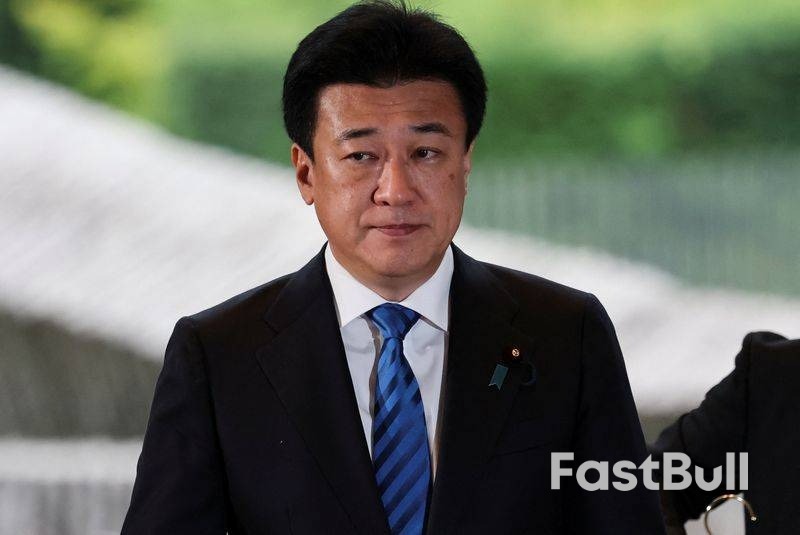
"The matter concerns the BOJ's own judgment, so the government will refrain from commenting," said Japan's top government spokesman, Chief Cabinet Secretary Minoru Kihara, in a regular press conference.
The BOJ was not among the major central banks that issued the joint statement backing Powell.
The rare joint statement was signed by the heads of the European Central Bank, the Bank of England, the Bank of Canada, as well as the central bank chiefs of Sweden, Denmark, Switzerland, Australia, South Korea, Brazil and France.

Asked about the importance of independence of central banks, Kihara said the government believes that the ultimate responsibility for macroeconomic policy lies with the government.
"As stipulated by law that monetary policy is part of overall economic policy, the BOJ is required to maintain close coordination and sufficient communication with the government," he said. "That said, the specific methods of monetary policy should be entrusted to the BOJ," he added.
New Zealand's Foreign Affairs Minister, Winston Peters, has publicly rebuked the governor of the country's central bank for getting involved in U.S. domestic politics. The criticism came after Reserve Bank of New Zealand (RBNZ) Governor Anna Breman co-signed a statement with other global central bankers in support of U.S. Federal Reserve Chair Jerome Powell.
In a direct statement on the social media platform X, Peters warned the RBNZ governor to focus on her domestic mandate.
"The RBNZ has no role, nor should it involve itself, in US domestic politics," Peters wrote. "We remind the governor to stay in her New Zealand lane and stick to domestic monetary policy."
He added that the Ministry of Foreign Affairs and Trade would have given the same advice if consulted, which it was not. Peters did, however, acknowledge that the RBNZ operates independently from the government on matters of monetary policy.
The RBNZ and Finance Minister Nicola Willis both declined to comment on Peters's statement.
The controversy highlights the delicate position of smaller, export-reliant nations like New Zealand in the current global political climate. Governments are increasingly cautious that even symbolic acts of international cooperation could be interpreted as political alignment, potentially inviting trade pressure or tariffs.
Governor Breman, who began her five-year term on December 1, joined a prominent group of central bankers defending Powell. Other signatories included European Central Bank President Christine Lagarde, Bank of England Governor Andrew Bailey, and Reserve Bank of Australia Governor Michele Bullock.
The joint statement was a direct response to the U.S. Justice Department serving grand jury subpoenas to the Federal Reserve, which Powell described as a dramatic escalation in attacks on the institution's independence.
"The independence of central banks is a cornerstone of price, financial and economic stability in the interest of the citizens that we serve," the central bankers declared. "It is therefore critical to preserve that independence, with full respect for the rule of law and democratic accountability."
Breman is New Zealand's first female central bank governor and the first foreigner to hold the position since its inaugural head, Leslie Lefeaux, in 1934.
Analysts noted the significance of the joint statement while also acknowledging the potential risks.
Su-Lin Ong, chief economist for Australia & New Zealand at Royal Bank of Canada, called it a "powerful gesture" that "underscores the importance of independent central banks." She added that smart governments understand the role central bank independence plays in a nation's long-term prosperity.
However, the risk of backlash remains. Jonathan Kearns, a former department head at the Reserve Bank of Australia and now chief economist at Challenger Ltd., said that while the statement was carefully worded and hard to disagree with, "you can't rule out the US seeking to retaliate."
Luci Ellis, former assistant governor at the RBA and now chief economist at Westpac Banking Corp., suggested that the absence of signatories from countries like Japan, Mexico, and India was likely due to logistical issues like internal governance and translation needs, rather than a reluctance to show support.
Ellis explained that the global central banking community is highly interconnected through forums like the Bank for International Settlements and the International Monetary Fund. These relationships build trust and solidarity, making it natural for governors to support a colleague under pressure.
Still, she warned of the long-term consequences of the political pressure on the Fed. "This week's events suggest there is a limit to Trump's ability to coerce the central bank," Ellis wrote, "but it also poisons the well for Powell's successor."
White Label
Data API
Web Plug-ins
Poster Maker
Affiliate Program
The risk of loss in trading financial instruments such as stocks, FX, commodities, futures, bonds, ETFs and crypto can be substantial. You may sustain a total loss of the funds that you deposit with your broker. Therefore, you should carefully consider whether such trading is suitable for you in light of your circumstances and financial resources.
No decision to invest should be made without thoroughly conducting due diligence by yourself or consulting with your financial advisors. Our web content might not suit you since we don't know your financial conditions and investment needs. Our financial information might have latency or contain inaccuracy, so you should be fully responsible for any of your trading and investment decisions. The company will not be responsible for your capital loss.
Without getting permission from the website, you are not allowed to copy the website's graphics, texts, or trademarks. Intellectual property rights in the content or data incorporated into this website belong to its providers and exchange merchants.
Not Logged In
Log in to access more features

FastBull Membership
Not yet
Purchase
Log In
Sign Up