Markets
News
Analysis
User
24/7
Economic Calendar
Education
Data
- Names
- Latest
- Prev



Signal Accounts for Members
All Signal Accounts
All Contests


U.S. IHS Markit Manufacturing PMI Prelim (SA) (Jan)A:--
F: --
P: --
U.S. IHS Markit Services PMI Prelim (SA) (Jan)A:--
F: --
P: --
U.S. UMich Consumer Sentiment Index Final (Jan)A:--
F: --
P: --
U.S. UMich Current Economic Conditions Index Final (Jan)A:--
F: --
P: --
U.S. UMich Consumer Expectations Index Final (Jan)A:--
F: --
P: --
U.S. Conference Board Leading Economic Index MoM (Nov)A:--
F: --
P: --
U.S. Conference Board Coincident Economic Index MoM (Nov)A:--
F: --
P: --
U.S. Conference Board Lagging Economic Index MoM (Nov)A:--
F: --
P: --
U.S. UMich 1-Year-Ahead Inflation Expectations Final (Jan)A:--
F: --
P: --
U.S. Conference Board Leading Economic Index (Nov)A:--
F: --
P: --
U.S. Weekly Total Rig CountA:--
F: --
P: --
U.S. Weekly Total Oil Rig CountA:--
F: --
P: --
Japanese Prime Minister Sanae Takaichi delivers a speech
Germany Ifo Business Expectations Index (SA) (Jan)A:--
F: --
P: --
Germany IFO Business Climate Index (SA) (Jan)A:--
F: --
P: --
Germany Ifo Current Business Situation Index (SA) (Jan)A:--
F: --
P: --
Brazil Current Account (Dec)A:--
F: --
P: --
Mexico Unemployment Rate (Not SA) (Dec)A:--
F: --
P: --
Canada National Economic Confidence IndexA:--
F: --
P: --
U.S. Non-Defense Capital Durable Goods Orders MoM (Excl. Aircraft) (Nov)A:--
F: --
U.S. Durable Goods Orders MoM (Excl. Defense) (SA) (Nov)A:--
F: --
U.S. Durable Goods Orders MoM (Excl.Transport) (Nov)A:--
F: --
P: --
U.S. Durable Goods Orders MoM (Nov)A:--
F: --
U.S. Chicago Fed National Activity Index (Nov)A:--
F: --
U.S. Dallas Fed New Orders Index (Jan)A:--
F: --
P: --
U.S. Dallas Fed General Business Activity Index (Jan)A:--
F: --
U.S. 2-Year Note Auction Avg. YieldA:--
F: --
P: --
U.K. BRC Shop Price Index YoY (Jan)A:--
F: --
P: --
China, Mainland Industrial Profit YoY (YTD) (Dec)A:--
F: --
P: --
Germany 2-Year Schatz Auction Avg. YieldA:--
F: --
P: --
Mexico Trade Balance (Dec)A:--
F: --
P: --
U.S. Weekly Redbook Index YoY--
F: --
P: --
U.S. S&P/CS 20-City Home Price Index YoY (Not SA) (Nov)--
F: --
P: --
U.S. S&P/CS 20-City Home Price Index MoM (SA) (Nov)--
F: --
P: --
U.S. FHFA House Price Index MoM (Nov)--
F: --
P: --
U.S. FHFA House Price Index (Nov)--
F: --
P: --
U.S. FHFA House Price Index YoY (Nov)--
F: --
P: --
U.S. S&P/CS 10-City Home Price Index YoY (Nov)--
F: --
P: --
U.S. S&P/CS 10-City Home Price Index MoM (Not SA) (Nov)--
F: --
P: --
U.S. S&P/CS 20-City Home Price Index (Not SA) (Nov)--
F: --
P: --
U.S. S&P/CS 20-City Home Price Index MoM (Not SA) (Nov)--
F: --
P: --
U.S. Richmond Fed Manufacturing Composite Index (Jan)--
F: --
P: --
U.S. Conference Board Present Situation Index (Jan)--
F: --
P: --
U.S. Conference Board Consumer Expectations Index (Jan)--
F: --
P: --
U.S. Richmond Fed Manufacturing Shipments Index (Jan)--
F: --
P: --
U.S. Richmond Fed Services Revenue Index (Jan)--
F: --
P: --
U.S. Conference Board Consumer Confidence Index (Jan)--
F: --
P: --
U.S. 5-Year Note Auction Avg. Yield--
F: --
P: --
U.S. API Weekly Refined Oil Stocks--
F: --
P: --
U.S. API Weekly Crude Oil Stocks--
F: --
P: --
U.S. API Weekly Gasoline Stocks--
F: --
P: --
U.S. API Weekly Cushing Crude Oil Stocks--
F: --
P: --
Australia RBA Trimmed Mean CPI YoY (Q4)--
F: --
P: --
Australia CPI YoY (Q4)--
F: --
P: --
Australia CPI QoQ (Q4)--
F: --
P: --
Germany GfK Consumer Confidence Index (SA) (Feb)--
F: --
P: --
Germany 10-Year Bund Auction Avg. Yield--
F: --
P: --
India Industrial Production Index YoY (Dec)--
F: --
P: --
India Manufacturing Output MoM (Dec)--
F: --
P: --
U.S. MBA Mortgage Application Activity Index WoW--
F: --
P: --
Canada Overnight Target Rate--
F: --
P: --


No matching data
Latest Views
Latest Views
Trending Topics
Top Columnists
Latest Update
White Label
Data API
Web Plug-ins
Affiliate Program
View All

No data
The number of Americans filing new applications for unemployment benefits increased less than expected last week, suggesting the labour market maintained a steady pace of job growth in January.
Initial claims for state unemployment benefits rose 1,000 to a seasonally adjusted 200,000 for the week ended Jan 17, the Labor Department said on Thursday. Economists polled by Reuters had forecast 210,000 claims for the latest week.
Challenges adjusting the data for seasonal fluctuations around the year-end holiday season and turn of the year have made claims noisy in recent weeks. But through the volatility, the labour market has remained in what economists and policymakers call a "low-hiring, low-firing" state.
Economists say President Donald Trump's aggressive trade and immigration policies have reduced both demand for and supply of workers. Businesses are also unsure of their staffing needs as they invest heavily in artificial intelligence, limiting hiring.
The claims data covered the period during which the government surveyed employers for the non-farm payrolls component of January's employment report. Non-farm payrolls increased by 50,000 jobs in December, roughly in line with the monthly average for 2025.
The Bureau of Labor Statistics' annual payrolls benchmark revision, to be published with January's employment report next month, is likely to show the loss of momentum started in 2024. The BLS has estimated about 911,000 fewer jobs were created in the 12 months through March 2025 than previously reported.
The overcounting has been blamed on the birth-death model, which is used by the BLS to estimate how many jobs were gained or lost because of companies opening or closing in a given month. Starting with the January report, the BLS will change the birth-death model by incorporating current sample information each month.
The number of people receiving unemployment benefits after an initial week of aid, a proxy for hiring, fell 26,000 to a seasonally adjusted 1.849 million during the week ended Jan 10, the claims report showed.
Part of the decline in the so-called continuing claims is likely due to some people exhausting their eligibility for benefits, limited to 26 weeks in most states. Laid-off people are finding it difficult to land new work opportunities, evident in surveys of consumers.
Turkey's central bank has slowed the pace of its monetary easing, delivering a smaller-than-expected interest rate cut in its first policy meeting of 2026. The move signals growing caution from policymakers as they navigate stubborn inflation and signs of a rebound in domestic demand.
The Central Bank of Turkey (CBT) reduced its main policy rate by 100 basis points, bringing it down from 38% to 37%. This decision fell short of the 150-basis-point cut that markets had anticipated and marked a deceleration from the bank's actions in December. The interest rate corridor was held steady at 450 basis points.

The central bank's more conservative stance appears directly linked to recent inflation data. In its Monetary Policy Committee (MPC) statement, the CBT noted that while the underlying inflation trend declined last month, "monthly consumer inflation has firmed in January."
This aligns with recent warnings from the CBT governor, who highlighted several upside risks to the January and February consumer price index (CPI) figures. Key factors expected to fuel price pressures include:
• Rising food prices, potentially linked to the upcoming Ramadan period.
• Persistent inflation expectations among the public and businesses.
• Administrative price hikes on regulated goods and services.
• Statistical re-weighting of the inflation basket by TurkStat.
Current projections forecast a 4.2% rise in the January CPI. Despite this monthly increase, favorable base effects from the previous year are expected to help lower the annual inflation rate to 29.8% in January 2026, down from 30.9% a month earlier.
Alongside inflation, a recovery in domestic demand during the last quarter of the year influenced the bank's decision. While the CBT acknowledged that this economic backdrop still supports the disinflation process, it noted the pace of progress is moderating.
Meanwhile, a recent survey of market participants shows a slight improvement in long-term inflation forecasts. The year-end CPI forecast for 2026 has been revised down by 12 basis points to 23.23%. Similarly, 12-month and 24-month inflation expectations have fallen to 22.2% and 16.9%, respectively.
Looking ahead, the central bank offered limited clarity on its near-term rate plans, reemphasizing that future decisions will be data-driven and made on a meeting-by-meeting basis.
The MPC repeated its commitment to maintaining a tight monetary stance to support disinflation in line with its "interim targets." It also stressed that it would not hesitate to tighten policy "in case of a significant deviation in inflation outlook from the interim targets," leaving the door open to a policy reversal if necessary. The bank also implied it would not change its existing macroprudential framework.
Despite the challenges, the CBT has some positive factors on its side. The bank has seen a recent acceleration in reserve accumulation, with both gross and net reserves reaching new peaks. This provides a crucial buffer against external shocks.
Furthermore, depositor behavior remains stable. Although there have been gradual purchases of foreign currency, the overall dollarization rate in the economy remains below its long-term average of around 40%, supported by attractive interest rates on the Turkish Lira (TRY).
Given this complex backdrop, the central bank is expected to continue its rate-cutting cycle, though the size of future moves will likely remain in the cautious 100-to-150-basis-point range for the near term as it monitors inflation and demand.
Despite a year of market turmoil and rising trade tensions, European investors emerged as the dominant foreign buyers of U.S. Treasuries, challenging the popular "Sell America" narrative that gained traction among analysts.
Data tracked by Citi reveals that from April to November of last year, Europe was behind a staggering 80% of all foreign purchases of U.S. government debt, demonstrating sustained confidence in American assets even as political rhetoric intensified.
The numbers paint a clear picture. In the months following President Donald Trump's announcement of "Liberation Day" tariffs in April, foreign holdings of U.S. Treasuries grew by a total of €301 billion. Of that increase, European investors accounted for €240 billion ($280.85 billion).
This wave of investment pushed total foreign holdings of U.S. Treasuries to a record high in November, according to data released by the U.S. Treasury.
A key nuance in this data, however, is the role of Europe's major financial hubs. These centers are often used by international market participants to trade and hold assets, which means the figures may overstate direct ownership by European investors.
The strong inflow from Europe stands in contrast to persistent market concerns about the stability of U.S. assets. Last year, doubts over the safe-haven status of the dollar and Treasuries grew as President Trump clashed with allies over trade and openly criticized the Federal Reserve.
More recently, threats to raise tariffs on European countries over a bid to purchase Greenland prompted analysts at institutions like Deutsche Bank to question whether European investors might finally begin offloading their U.S. holdings.
In a note to clients, Citi analysts led by Aman Bansal suggested that while headline risk keeps the "sell America" idea in focus, the actual capital flow data provides useful context.
While the overall trend shows strong European buying, not every institution is on board. In a notable counter-movement, some Nordic pension funds have actively reduced their exposure to U.S. debt.
• Alecta: The Swedish pension fund announced it had sold the majority of its U.S. Treasury holdings over the last year.
• AkademikerPension: The Danish fund stated its intention to sell all of its U.S. Treasury holdings by the end of the month.
Separate data from the European Central Bank (ECB) shows that foreign investors have also increased their purchasing rate of eurozone debt since April. This suggests a growing global appetite for European fixed-income assets.
However, Citi's analysis indicates this is not a zero-sum game. The increased interest in eurozone debt has occurred alongside, not at the expense of, powerful inflows into U.S. Treasuries.
According to the analysts, the data shows "no signs of European selling since Liberation Day." The conclusion is that while global investors are diversifying into European bonds, the appeal of U.S. Treasuries remains firmly intact.

Remarks of Officials

Commodity

Data Interpretation

Daily News

Political

Russia-Ukraine Conflict

Economic

Energy
Oil prices declined on Thursday, erasing gains from previous sessions as geopolitical tensions appeared to cool and new data pointed to a well-supplied market. The retreat followed comments from U.S. President Donald Trump that eased concerns over potential conflicts involving Greenland and Iran.
Brent crude fell $1.25, a 1.92% drop, to trade at $63.99 a barrel. West Texas Intermediate (WTI) for March delivery saw a similar decline, falling $1.24, or 2.05%, to $59.38 a barrel.
This downturn marks a reversal from earlier in the week, when prices climbed after a power issue halted production at Kazakhstan's Tengiz and Korolev oilfields.
Analysts pointed to a significant reduction in the market's risk premium, which had previously supported prices. "There is a deflation of risk premium related to the Greenland debacle and Iran supply risk has also been reduced," noted Ole Hansen, chief commodity analyst at Saxo Bank.
The shift in sentiment came after President Trump took a softer stance on several foreign policy issues on Wednesday:
• Greenland and Europe: Trump ruled out using force to acquire Greenland and backed away from tariff threats against European allies.
• Iran: He expressed hope that further U.S. military action in Iran could be avoided, contingent on Tehran not resuming its nuclear program.
• Russia and Ukraine: The president stated he was "reasonably close" to a deal to end the war between Russia and Ukraine. An end to the conflict could lead to the removal of U.S. sanctions on Russia, potentially increasing global oil supply and pressuring prices downward.
Against this backdrop of de-escalation, prices are expected to stabilize. Tony Sycamore, an analyst at IG, suggested oil prices should hold around the $60 per barrel mark.
Adding to the downward pressure, weekly data from the American Petroleum Institute (API) revealed a build in U.S. crude and gasoline stockpiles.
According to market sources citing the API figures for the week ending January 16:
• Crude stocks rose by 3.04 million barrels.
• Gasoline inventories increased by 6.21 million barrels.
• Distillate inventories fell by a modest 33,000 barrels.
The rise in crude inventories surpassed analyst expectations. A Reuters poll had forecast a smaller increase of about 1.1 million barrels.
"High crude inventories are limiting further gains in oil prices in an oversupplied market," said Yang An, an analyst at Haitong Futures.
While immediate supply data weighed on the market, the long-term demand outlook saw a slight revision. The International Energy Agency (IEA), in its latest monthly report, raised its global oil demand growth forecast for 2026. The adjustment suggests the market surplus could be slightly narrower this year than previously anticipated. However, for now, the combination of easing political tensions and rising U.S. inventories is proving to be the dominant force driving oil prices lower.
The European Central Bank is signaling a prolonged pause in its monetary policy, with officials indicating they are in no rush to change interest rates. Minutes from the ECB's December meeting reveal a central bank comfortable with market expectations for steady rates through 2026, as inflation remains close to its target.
At its December 17-18 meeting, the ECB held its key interest rate at 2% and raised its growth projections. This move was widely interpreted by markets as a sign that the central bank has a very high bar for any further policy easing.
Philip Lane, the ECB's chief economist, has since reinforced this message, stating that as long as the economic outlook holds, interest rate adjustments are not on the immediate agenda. This confirms market sentiment that the ECB will remain on hold after a series of eight rate cuts that ended last June.
The accounts from the December meeting emphasized that the ECB’s Governing Council can afford to be "patient." However, policymakers were clear that this patience should not be mistaken for a hesitation to act if economic conditions change.
"Overall, the ECB was currently in a good place from a monetary policy point of view," the summary stated, adding that this "did not mean the stance was to be seen as static."
This cautious stance is rooted in significant uncertainty about the future. The summary highlighted a split among policymakers over the direction of inflation risks. While "some" members believed the risks were tilted toward inflation falling below the target, a "few" were more concerned about it overshooting.
This division is fueled by a range of novel risks, including the economic impact of the AI boom, potential U.S. tariffs, and Chinese dumping.
No Clear Bias for the Next Move
Given the uncertainty, the ECB is deliberately avoiding any signals about its next policy decision. "It was important not to give the impression that the next move would be in one direction or the other, or to suggest any tightening or easing bias," the bank said. This means that even the direction of the next rate change, whenever it might occur, remains unclear.
The ECB’s next policy meeting is scheduled for February 5, with financial markets currently pricing in no change to interest rates for the entire year.
While central bankers rarely comment directly on market pricing, the accounts suggest they are comfortable with the current outlook. The ECB noted that "the current market pricing of interest rates was seen as consistent with the latest fixings and in line with the Governing Council's reaction function."
This alignment suggests that as long as the economic forecast remains stable, the ECB sees no reason to challenge investor expectations. Even the threat of new U.S. tariffs from President Donald Trump did not significantly move market expectations, indicating a belief that trade barriers may not materially impact the price outlook without major retaliation.
The ECB's primary focus, inflation, has been fluctuating around the 2% target for most of the last year. Official projections show it is expected to stay near this level for the foreseeable future.
Although lower energy prices could cause a modest undershoot this year, domestic inflation remains relatively high, supported by robust wage growth. This underlying strength supports the argument that price growth will rebound back toward the target once the effects of cheaper energy fade from the yearly data.
U.S. Energy Secretary Chris Wright delivered a stark message at the World Economic Forum in Davos, calling for global oil production to more than double and criticizing green energy policies in the European Union and California as inefficient and wasteful.
Speaking alongside Occidental Petroleum CEO Vicki Hollub, Wright argued that despite the recent focus on lower-carbon initiatives, the world will remain dependent on oil for decades. This perspective challenges the prevailing energy narrative often heard at the annual Davos summit.
Wright also highlighted America's capacity to replace Russian gas in Europe, thanks to increased natural gas production and investment in LNG export terminals following the 2022 conflict in Ukraine.
A significant point of contention raised by Wright is the EU's corporate environmental regulations, which he described as a potential barrier to energy cooperation with the United States.
Specifically, the EU requires importers of oil and gas to monitor and report methane emissions associated with their products. Wright warned that these rules could expose U.S. producers to liability risks when sending natural gas to Europe. "We're working with our colleagues here in Europe to remove those barriers," he stated.
The European Union recently scaled back its sustainability disclosure rules after months of pressure from companies and governments. However, investors have expressed concern that reduced transparency will make it more difficult to distinguish which companies are genuinely transitioning to low-carbon operations.
The EU did not provide an immediate comment on the matter.
The U.S. state of California became a key example in the discussion, with Wright comparing its energy policies to Europe's and linking them to higher costs for residents.
Production Decline and Industry Exit
Vicki Hollub noted that strict regulations were the primary reason Occidental Petroleum left California in 2014. The state's energy landscape has changed dramatically since then.
• Plummeting Production: California's crude oil output has fallen from a peak of 1.1 million barrels per day (bpd) in 1985 to just 300,000 bpd in 2024, according to U.S. Energy Information Administration data.
• Refinery Closures: Two major refineries, accounting for about 17% of the state's gasoline production capacity, are scheduled to close. This has put pressure on Governor Gavin Newsom to prevent a surge in fuel prices.
Market Isolation and Legislative Response
California is geographically isolated from major refining hubs on the U.S. Gulf Coast and in the Midwest, making it susceptible to significant price swings. In response to these pressures, state lawmakers passed a bill in September aimed at making oil more affordable for refineries by allowing the construction of thousands of new wells.
The California Energy Commission did not immediately respond to a request for comment.
To put the call for increased production in context, the International Energy Agency reported that global oil supply stood at 107.4 million barrels per day last month.
China relies on Iran and Venezuela for a significant portion of its oil imports, with up to 20% coming from Iran and another 4-5% from Venezuela. These supplies are often secured through unofficial channels to navigate US sanctions.
However, recent actions by the United States have intensified pressure on this arrangement. Former President Donald Trump’s moves to challenge Venezuelan leader Nicolas Maduro, redirect the country's oil to the US, and apply 25% tariffs on Iran-related trade have created serious energy security concerns for Beijing. The threat to discounted Iranian crude caused a brief spike in oil prices, while experts warn that US seizures of tankers linked to Venezuela could further squeeze supply.
This raises a critical question: Can China's domestic production absorb the shock?
Beijing has long viewed its dependence on imported oil, particularly through the congested Malacca Strait patrolled by the US Navy, as a strategic vulnerability. This concern grew during the Trump administration as tensions with Washington escalated.
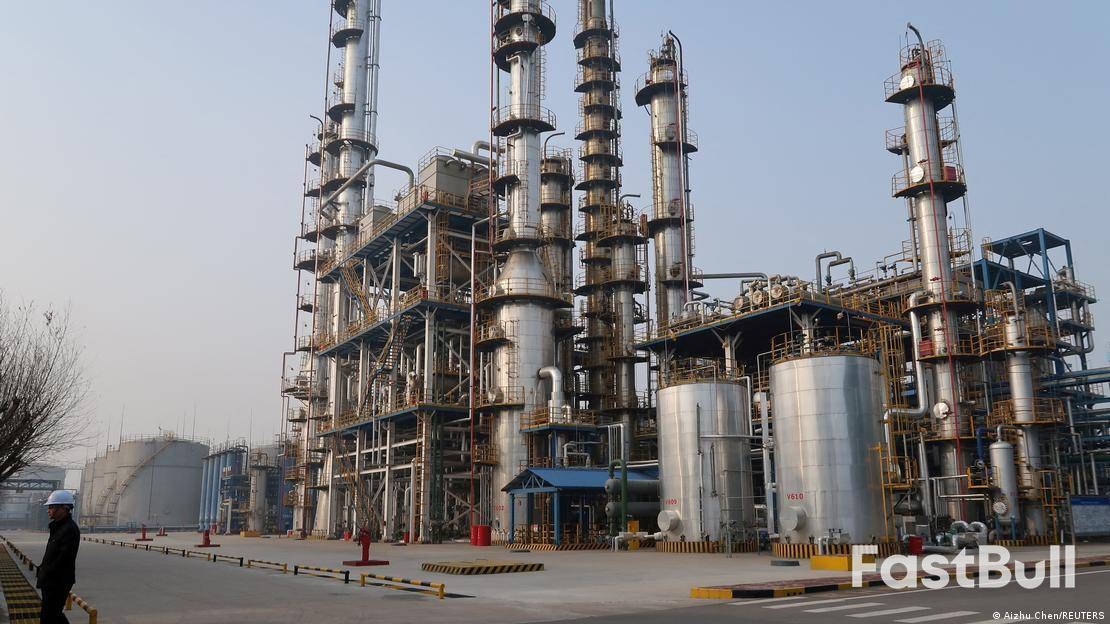
In response, President Xi Jinping launched the Seven-Year Action Plan in 2019, directing state-owned oil giants CNPC, Sinopec, and CNOOC to ramp up domestic exploration and refining with billions in new investment.

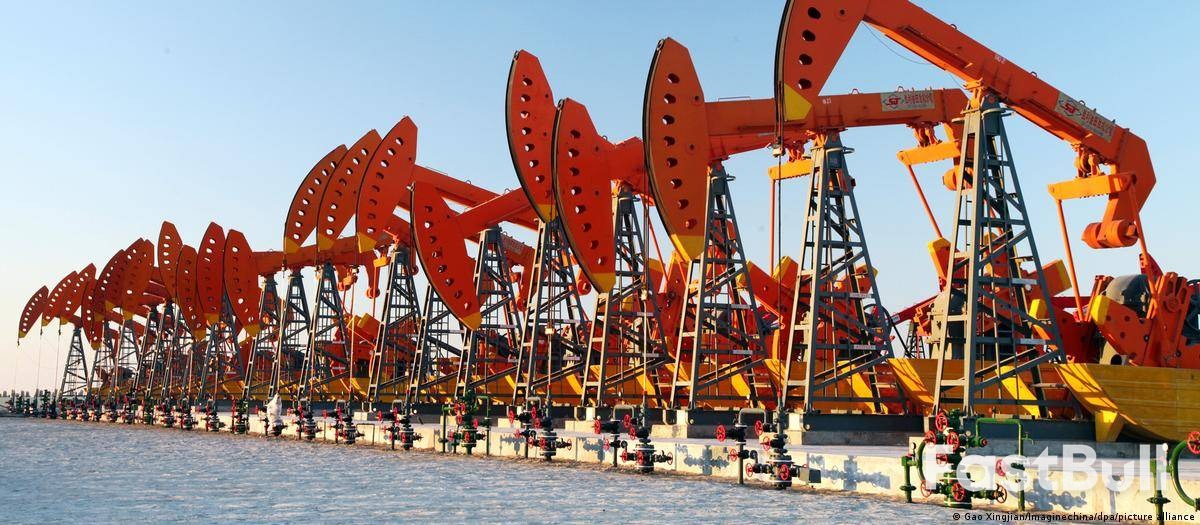
The results have been modest. Domestic production increased from 3.8 million barrels per day (bpd) in 2018 to about 4.32 million bpd last year. This growth, driven by new wells and shale fracking, has primarily served to offset the declining output from China’s massive legacy fields, such as Daqing and Shengli.
June Goh, a senior oil market analyst at Sparta Commodities, described the 8.9% cumulative output growth since 2021 as "huge," noting that it surpassed Beijing's target. "The recent supply risk serves to prove that what they are doing is right," she told DW. However, Goh cautioned that future growth is unlikely to be "exponential" because China's oil majors are struggling to find new reserves.
Other analysts are more direct. Lauri Myllyvirta, lead analyst at the Center for Research on Energy and Clean Air, said that despite "a huge amount of investment over the past 15 years or more," domestic production has largely been "running to stay still."
With limited upside from domestic drilling, China is increasingly relying on its strategic petroleum reserves (SPR). Since late 2023, policymakers have accelerated the filling of these emergency stockpiles, driven by geopolitical instability following Russia's invasion of Ukraine and volatile global energy prices.
China has cushioned itself by securing heavily discounted crude from sanctioned nations. Russia was its top supplier until last year, when US sanctions on Russian firms and tankers caused a dip in flows. Iran has since stepped in, covertly exporting up to 2 million bpd to China through shadow fleets and relabeled shipments.

To bolster its reserves, China planned to make 11 new storage sites operational by early this year, according to a Reuters report. Goh believes stockpiling, not production, is the key to China's energy independence.
"China currently has 110 days of cover, which is higher than the OECD target of 90 days," she explained, referring to both strategic and commercial reserves. "They have set a target of 180 days, so efforts to stockpile will now be accelerated."
While oil reserves offer an immediate buffer, China's long-term strategy for energy security is centered on rapid electrification and a massive build-out of renewable energy.
Over the past five years, Beijing has aggressively shifted major oil-consuming sectors like transport and heavy industry toward electricity. According to state oil producer CNPC, oil consumption in the transport sector peaked in 2023. This transition is supported by grid upgrades and the construction of ultra-high-voltage lines.
The adoption of electric vehicles (EVs) has been a game-changer. EVs now represent over half of new car sales, and entire city bus fleets in Shenzhen, Guangzhou, and other major cities are fully electric. A nationwide network of over a million EV charging stations has helped limit gasoline demand growth.
Simultaneously, China's renewable energy expansion is breaking records. In 2024 and 2025 alone, the country added more solar capacity than the rest of the world combined, complemented by major wind power projects. "China's wind and solar capacity growth has been more than 300 gigawatts per year over the past three years and is likely to have reached 400 gigawatts last year," noted Myllyvirta.
These efforts cannot eliminate China's dependence on imported oil overnight, but they significantly reduce the impact of potential supply disruptions. As leaders prepare the next five-year plan, which will set economic and energy priorities into the early 2030s, these strategies are expected to remain central.
"For the next 5-year plan, China has a wide range of possible targets," Myllyvirta said. He added that maintaining the current pace of renewable energy growth, combined with expanded storage, could displace significant amounts of gas and coal in power generation, while electrification continues to replace fossil fuels across industry, transportation, and buildings.
White Label
Data API
Web Plug-ins
Poster Maker
Affiliate Program
The risk of loss in trading financial instruments such as stocks, FX, commodities, futures, bonds, ETFs and crypto can be substantial. You may sustain a total loss of the funds that you deposit with your broker. Therefore, you should carefully consider whether such trading is suitable for you in light of your circumstances and financial resources.
No decision to invest should be made without thoroughly conducting due diligence by yourself or consulting with your financial advisors. Our web content might not suit you since we don't know your financial conditions and investment needs. Our financial information might have latency or contain inaccuracy, so you should be fully responsible for any of your trading and investment decisions. The company will not be responsible for your capital loss.
Without getting permission from the website, you are not allowed to copy the website's graphics, texts, or trademarks. Intellectual property rights in the content or data incorporated into this website belong to its providers and exchange merchants.
Not Logged In
Log in to access more features
Log In
Sign Up