

Markets
News
Analysis
User
24/7
Economic Calendar
Education
Data
- Names
- Latest
- Prev



Signal Accounts for Members
All Signal Accounts
All Contests
 U.S. Average Hourly Wage MoM (SA) (Dec)
A:--
F: --
U.S. Average Weekly Working Hours (SA) (Dec)A:--
F: --
P: --
U.S. New Housing Starts Annualized MoM (SA) (Oct)A:--
F: --
U.S. Total Building Permits (SA) (Oct)A:--
F: --
P: --
U.S. Building Permits MoM (SA) (Oct)A:--
F: --
P: --
U.S. Annual New Housing Starts (SA) (Oct)A:--
F: --
U.S. U6 Unemployment Rate (SA) (Dec)A:--
F: --
P: --
U.S. Manufacturing Employment (SA) (Dec)A:--
F: --
U.S. Labor Force Participation Rate (SA) (Dec)A:--
F: --
P: --
U.S. Private Nonfarm Payrolls (SA) (Dec)A:--
F: --
U.S. Unemployment Rate (SA) (Dec)A:--
F: --
U.S. Nonfarm Payrolls (SA) (Dec)A:--
F: --
U.S. Average Hourly Wage YoY (Dec)A:--
F: --
 Canada Full-time Employment (SA) (Dec)
A:--
F: --
P: --
Canada Part-Time Employment (SA) (Dec)A:--
F: --
P: --
Canada Unemployment Rate (SA) (Dec)A:--
F: --
P: --
Canada Labor Force Participation Rate (SA) (Dec)A:--
F: --
P: --
U.S. Government Employment (Dec)A:--
F: --
P: --
Canada Employment (SA) (Dec)A:--
F: --
P: --
U.S. UMich Consumer Expectations Index Prelim (Jan)A:--
F: --
P: --
U.S. UMich Consumer Sentiment Index Prelim (Jan)A:--
F: --
P: --
U.S. UMich Current Economic Conditions Index Prelim (Jan)A:--
F: --
P: --
U.S. UMich 1-Year-Ahead Inflation Expectations Prelim (Jan)A:--
F: --
P: --
U.S. UMich 5-Year-Ahead Inflation Expectations Prelim YoY (Jan)A:--
F: --
P: --
U.S. 5-10 Year-Ahead Inflation Expectations (Jan)A:--
F: --
P: --
 China, Mainland M1 Money Supply YoY (Dec)
--
F: --
P: --
China, Mainland M0 Money Supply YoY (Dec)--
F: --
P: --
China, Mainland M2 Money Supply YoY (Dec)--
F: --
P: --
U.S. Weekly Total Oil Rig CountA:--
F: --
P: --
U.S. Weekly Total Rig CountA:--
F: --
P: --
 Indonesia Retail Sales YoY (Nov)
--
F: --
P: --
 Euro Zone Sentix Investor Confidence Index (Jan)
--
F: --
P: --
 India CPI YoY (Dec)
--
F: --
P: --
 Germany Current Account (Not SA) (Nov)
--
F: --
P: --
Canada National Economic Confidence Index--
F: --
P: --
FOMC Member Barkin Speaks U.S. 3-Year Note Auction Yield--
F: --
P: --
U.S. 10-Year Note Auction Avg. Yield--
F: --
P: --
 Japan Trade Balance (Customs Data) (SA) (Nov)
--
F: --
P: --
Japan Trade Balance (Nov)--
F: --
P: --
 U.K. BRC Overall Retail Sales YoY (Dec)
--
F: --
P: --
U.K. BRC Like-For-Like Retail Sales YoY (Dec)--
F: --
P: --
 Turkey Retail Sales YoY (Nov)
--
F: --
P: --
U.S. NFIB Small Business Optimism Index (SA) (Dec)--
F: --
P: --
 Brazil Services Growth YoY (Nov)
--
F: --
P: --
Canada Building Permits MoM (SA) (Nov)--
F: --
P: --
U.S. CPI MoM (SA) (Dec)--
F: --
P: --
U.S. CPI YoY (Not SA) (Dec)--
F: --
P: --
U.S. Real Income MoM (SA) (Dec)--
F: --
P: --
U.S. CPI MoM (Not SA) (Dec)--
F: --
P: --
U.S. Core CPI (SA) (Dec)--
F: --
P: --
U.S. Core CPI YoY (Not SA) (Dec)--
F: --
P: --
U.S. Core CPI MoM (SA) (Dec)--
F: --
P: --
U.S. Weekly Redbook Index YoY--
F: --
P: --
U.S. New Home Sales Annualized MoM (Oct)--
F: --
P: --
U.S. Annual Total New Home Sales (Oct)--
F: --
P: --
U.S. Cleveland Fed CPI MoM (SA) (Dec)--
F: --
P: --
China, Mainland Imports YoY (CNH) (Dec)--
F: --
P: --
China, Mainland Trade Balance (CNH) (Dec)--
F: --
P: --
China, Mainland Imports YoY (USD) (Dec)--
F: --
P: --
China, Mainland Exports YoY (USD) (Dec)--
F: --
P: --







No matching data

Latest Views
Latest Views
Trending Topics
Top Columnists
Latest Update
White Label
Data API
Web Plug-ins
Affiliate Program
View All
No data
The UK commits £200M for potential Ukraine troop readiness and advanced drones, signaling robust support for a multinational force.

The United Kingdom has allocated £200 million ($270 million) to fund preparations for a potential troop deployment to Ukraine. This move follows a pledge made earlier this week for British soldiers to join a multinational force designed to operate in the country should a ceasefire be reached.
The commitment solidifies a "declaration of intent" agreed upon Tuesday by British Prime Minister Keir Starmer, French President Emmanuel Macron, and Ukrainian President Volodymyr Zelenskiy at a summit of Ukraine’s allies.
During a visit to Kyiv on Friday, British Defence Minister John Healey confirmed the new funding. He detailed that the money is earmarked for critical military preparations, including:
• Upgrading vehicles and communication systems
• Enhancing counter-drone protection
• Ensuring troops are fully prepared for deployment
The announcement came just hours after Russia launched a powerful hypersonic missile, an act that Kyiv’s European partners described as an attempt to intimidate them from supporting Ukraine.
The proposed Multinational Force for Ukraine (MNFU) is aimed at reinforcing security guarantees for Kyiv. While France has indicated it could send thousands of troops, Britain has not yet specified the size of its potential contribution. Prime Minister Starmer stated on Wednesday that the UK's plans are still being finalized.
Healey emphasized that the new funding demonstrates the government's commitment to "surging investment" into its Ukraine preparations.
A statement from the Ministry of Defence added that the capital spending "sends a clear signal to allies and adversaries of the UK's intent to lead the MNFU, (and) fulfil our promises to secure the peace in Ukraine."
UK to Supply Advanced "Octopus" Drones
In addition to the funding, Healey informed President Zelenskiy that production of Octopus interceptor drones will begin in January. The drones, which are based on a Ukrainian design but manufactured in Britain, will be sent to Ukraine by the thousands each month. This initiative is intended to help the country bolster its defenses against Russian drone attacks.
A coalition of major investment firms has announced its readiness to negotiate Venezuela's $60 billion in defaulted government bonds, potentially paving the way for one of the largest sovereign debt workouts in decades.
The Venezuela Creditor Committee, which includes heavyweights like Fidelity Management & Research Company LLC, Morgan Stanley Investment Management, and Greylock Capital Management, stated on Friday that they are prepared to begin talks once they receive the necessary authorization. A successful debt restructuring, the group noted, would "accelerate financing across all sectors of the Venezuelan economy."
This development follows a thaw in relations between Caracas and Washington after a US military operation ousted President Nicolas Maduro. Acting leader Delcy Rodriguez has expressed a willingness to collaborate with the Trump administration to boost oil production and stabilize the economy.
The political shift has ignited a rally in Venezuelan bonds, which have been in default since 2017.
• Government notes due in 2027 surged over 10 cents this week, marking their largest weekly gain since 2023.
• Debt from the state-owned oil company, Petroleos de Venezuela SA (PDVSA), also saw upward movement.
This recent bond surge has captured the interest of ETF managers and investors specializing in distressed debt. Bondholders are optimistic that negotiations could begin this year, though the timeline remains highly dependent on political factors.
While the focus is on the $60 billion in bonds, Venezuela's total debt is estimated to be as high as $170 billion when factoring in past-due interest, loans, and other financial obligations. This scale positions the potential workout as one of the most significant in recent history.
However, major obstacles remain. Venezuela is still under US economic sanctions that block its access to capital markets—a critical component for any restructuring plan. Furthermore, the future of the nation's oil industry is uncertain, and oil revenue will be the primary determinant of Venezuela's ability to repay its creditors.
The creditor committee, which formed about eight years ago after Venezuela's initial defaults, met on Monday to discuss the latest developments. According to sources familiar with the matter, some members believe Maduro's removal has accelerated the timeline for a potential restructuring.
One key proposal under consideration is to combine Venezuela's sovereign debt and PDVSA's debt into a single, unified restructuring. This approach would create a single pricing baseline for the country's debt and simplify the negotiation process.
The committee is represented by Thomas Laryea of Orrick, Herrington & Sutcliffe LLP. Its membership also includes Grantham Mayo Van Otterloo & Co, Fidera, HBK Capital Management, Mangart Capital, T. Rowe Price Associates, and VR Advisory Services Ltd.
American involvement in Venezuela's oil sector could create significant opportunities for international banks. JPMorgan Chase, in particular, appears well-positioned due to its historical presence in the country and experience with international trade financing.
While banks like JPMorgan and Citigroup reduced or ceased operations in Venezuela over the past few decades, the current situation may open doors for financing trade or investing in oil infrastructure. Despite the potential, significant challenges to doing business would persist even under an interim government.
JPMorgan could hold a competitive advantage from its 60-year history in Venezuela. The bank maintained a dormant office in Caracas for years after scaling back its operations in 2002, which could be reactivated.
The Department of Energy stated on Wednesday that oil proceeds would be settled in US-controlled accounts at global banks. ConocoPhillips CEO Ryan Lance also noted that US banks, including the Export-Import Bank, might need to be involved in financing Venezuelan oil investments.
Several strategic avenues could open for JPMorgan. One internal idea involved creating a trade bank to finance oil exports, mirroring the Trade Bank of Iraq established in 2003. The bank could also leverage its $1.5 trillion, 10-year Security and Resiliency Initiative to finance investments in critical minerals, which are abundant in Venezuela. Currently, JPMorgan trades non-sanctioned Venezuelan sovereign bonds with offshore counterparties.
A White House official confirmed that the Trump administration is carefully weighing all options, with a focus on the best interests of the American people. The official added that any formal announcements would come directly from the administration, dismissing other reports as speculation.
Although Latin America accounts for a small portion of US banks' revenue—just 2.19% for JPMorgan Chase in 2024—Venezuela's strategic importance transcends its economic size. While its economy represents only 0.1% of global GDP, its vast oil reserves give it immense geopolitical and economic significance, as highlighted in a January 5 note from Deutsche Bank economists.
The Trump administration has directed mortgage finance giants Fannie Mae and Freddie Mac to purchase $200 billion in mortgage-backed securities (MBS). The move is a significant intervention aimed at tackling the persistent housing affordability crisis in the United States.
According to FHFA Director William Pulte, the Federal Housing Finance Agency—which oversees the two companies—has already initiated the program with a $3 billion round of purchases.
U.S. Treasury Secretary Scott Bessent clarified that the policy is designed to directly offset the Federal Reserve's ongoing reduction of its own bond holdings. The Fed has been allowing its massive $6.3 trillion bond portfolio to shrink, with MBS holdings declining by approximately $15 billion each month.
"What is happening is the Fed has about $15 billion of roll-off every month," Bessent explained in an interview with Reuters. "So I think the idea is to roughly match the Fed, which has been pushing the other way."
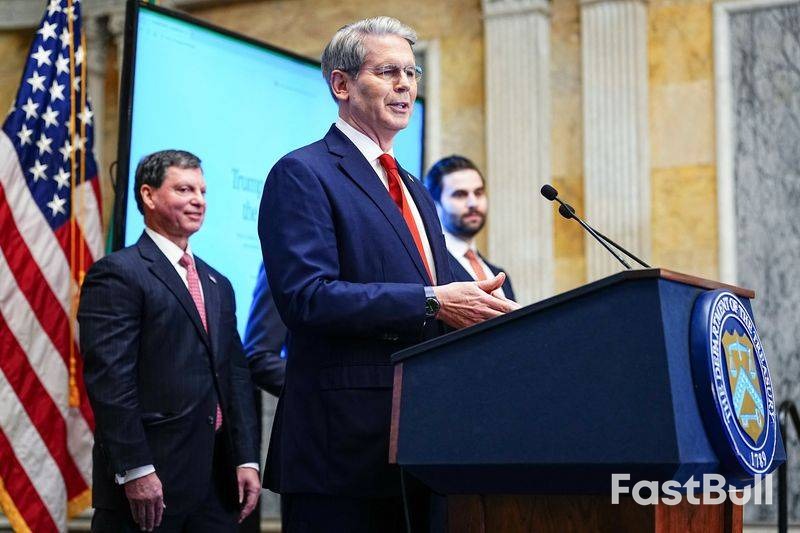
For over two years, the central bank has been steadily reducing its more than $2 trillion stash of MBS at a rate of $15 billion to $17 billion per month. Some analysts believe this process, a legacy of stimulus efforts during the global financial crisis and the pandemic, has prevented mortgage rates from falling more significantly.
The combination of high borrowing costs and elevated home prices has created a severe affordability problem, a key issue weighing on President Trump's approval ratings.
While the average rate on a 30-year fixed-rate mortgage has dropped to around 6.2% from a peak of nearly 8% in 2024, it remains far above the 3% levels seen during the pandemic.
Bessent noted that the new MBS purchases are not expected to lower mortgage rates directly. Instead, the goal is to achieve this indirectly by narrowing the yield spread between the securities issued by Fannie and Freddie and benchmark U.S. Treasuries.
Fannie Mae and Freddie Mac are central to the U.S. housing market. They buy home loans from banks and other lenders, package them into bonds, and sell them to investors. This process frees up capital for lenders to make new loans.
The new bond purchases will be funded from the two firms' own balance sheets. Amid ongoing discussions about reprivatizing the government-controlled entities, Bessent asserted that the move would not undermine their financial stability. He stated that both companies have sufficient cash and that the purchases could potentially increase their earnings.
Colombian President Gustavo Petro has renewed his sharp criticism of US policy, ending a brief diplomatic truce that followed a phone call with President Donald Trump earlier this week.
In a Thursday interview with the BBC, Petro accused Washington of treating other nations as part of a "US empire." He also leveled a severe charge against US Immigration and Customs Enforcement (ICE), comparing its agents to "Nazi brigades."
This return to a confrontational stance marks a sharp reversal from the tone struck just days ago, highlighting the volatile relationship between the two leaders.
The temporary de-escalation began after Petro and Trump held their first phone conversation. Petro described the call as an opportunity to address what he called the US president's "misconceptions" about drug trafficking.
The discussion appeared productive. Trump stated it was an honor to speak with Petro and that he appreciated his tone. Following the call, Petro told supporters in Bogota that he had intended to deliver a "tough" speech critical of Trump but would now soften his language.
However, for the firebrand former guerrilla, this moderation proved short-lived.
In his interview with the BBC, Petro's criticism was unambiguous. He claimed the threat of US military intervention in Colombia was real, citing a history of US violence against his country at the beginning of the 20th century.
His most pointed comments targeted US immigration enforcement, made in response to an ICE officer shooting and killing a woman in Minneapolis. The incident had already triggered demonstrations across the United States.
"For us, ICE operates the same way as the Nazi and Italian fascist brigades," Petro said. "They no longer just persecute Latin Americans in the streets, which for us is an affront, but they also kill US citizens."
In a separate, more measured interview with CBS News published Friday, Petro noted areas of alignment. He said that he and Trump share a similar vision for a power-sharing arrangement in Venezuela between the government of acting President Delcy Rodríguez and the opposition.
Still, he warned that a US attack on Colombia would be a "dumb policy" that could ignite a civil war. The two presidents are scheduled for a face-to-face meeting at the White House in the first week of February.
Petro's foreign policy approach, often characterized by combative late-night social media posts, sets him apart from other leftist presidents in Latin America. Leaders like Mexico's Claudia Sheinbaum and Brazil's Luiz Inácio Lula da Silva have generally adopted more measured tactics, seeking to avoid direct conflict with the Trump administration.
Petro's defiance was on full display last week. After Trump mentioned the possibility of military action against Colombia following the capture of Venezuelan President Nicolás Maduro, Petro called Trump senile and challenged him, saying, "Come and get me!"
The friction between the two leaders is rooted in long-standing issues beyond personality clashes. Trump has consistently complained about record levels of cocaine production in Colombia.
These tensions have led to significant diplomatic and economic consequences. Last year, the US government added Colombia to its list of rogue drug-trafficking nations. Washington also canceled Petro's visa after he urged Colombian troops to disobey orders from Trump.
In a more direct move, the US Treasury sanctioned Petro and members of his inner circle in October, effectively cutting him off from the US financial system.

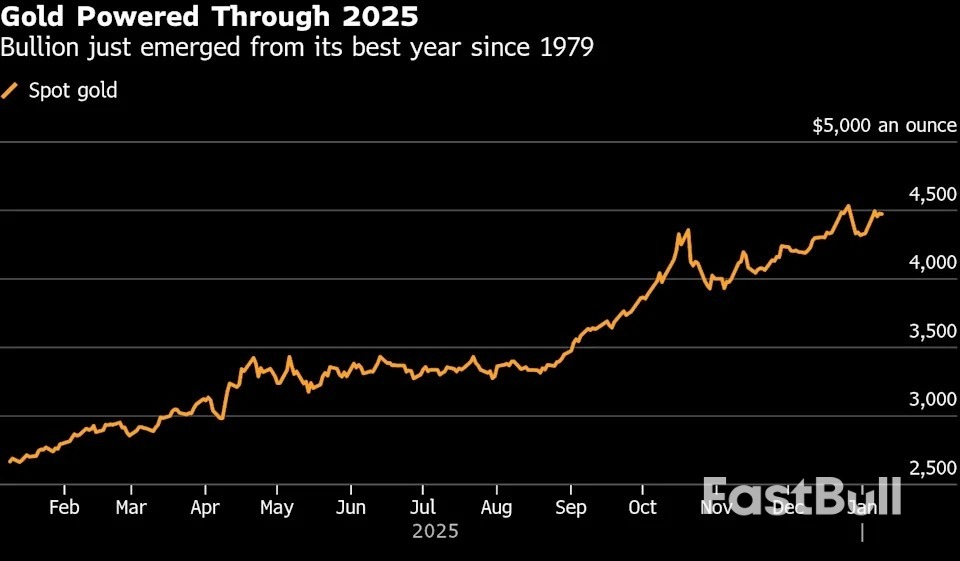
Gold and silver have kicked off the new year with powerful momentum, testing critical resistance levels despite elevated market volatility. Bullish sentiment has driven gold to $4,500 an ounce, marking a nearly 4% gain since last Friday. Silver has performed even more strongly, nearing $80 an ounce for a weekly gain of almost 10%.
Silver's resilience is particularly noteworthy. The metal has bounced back effectively from a sharp drop last week, which followed a move by the CME Group to raise margin requirements in an effort to curb speculative activity.
Despite the strong start, both precious metals face a significant short-term headwind from the annual rebalancing of major commodity indexes.
Commodity indexes like the Bloomberg Commodity Index (BCOM) and the S&P GSCI Index are preparing for their annual rebalancing, an event that can create temporary selling pressure for top-performing assets.
These indexes hold a basket of commodities, with weightings determined by factors like liquidity and global production.
• Gold: Represents about 14% of BCOM and 3% to 4% of the S&P GSCI.
• Silver: Represents about 9% of BCOM and 1.5% of the GSCI.
Last year’s massive rallies—over 60% for gold and nearly 150% for silver—significantly increased their weightings within these indexes. To bring the allocations back in line, index managers must sell their overweight positions. According to some estimates, this rebalancing will force the sale of roughly $5 billion in gold and silver.
The good news for bulls is that this process is expected to conclude next week. Analysts widely believe that once this technical selling pressure is gone, the broader fundamentals supporting precious metals will reassert themselves, reinforcing the "buy the dip" strategy that proved effective last year.
Beyond temporary market mechanics, the fundamental outlook for silver appears exceptionally strong. A classic supply-demand squeeze is tightening its grip on the market as industrial consumption and investor demand compete for dwindling supplies.
The supply side is inelastic; new silver mines cannot be built in a few months to meet the demand surge. While moving silver stockpiles from the U.S. to other markets like London could improve liquidity, it doesn't solve the core problem: there isn't enough silver to satisfy persistent demand. In this environment, expectations are growing that silver prices could easily push past $100 an ounce.
Gold continues to perform its traditional role as the ultimate geopolitical safe-haven. Analysts note that a U.S. international policy of "might makes right" and the continued weaponization of the economy are pushing nations to diversify their reserves away from the U.S. dollar.
This trend underpins forecasts from many analysts who believe it is only a matter of time before gold prices reach $5,000 an ounce this year.
The final piece of the bullish puzzle for both gold and silver is the U.S. central bank's monetary policy. While markets do not anticipate the Federal Reserve will cut interest rates later this month, a cooling labor market suggests that rate cuts are inevitable.
For investors, the primary question is not if the cuts will happen, but how steep the decline in rates will be. As we move further into 2026, the one certainty is that it won't be a boring year. Judging by the first week, the volatility is here to stay.
The Trump administration has reversed course on its 11-month effort to defund the Consumer Financial Protection Bureau (CFPB), requesting $145 million from the Federal Reserve to keep the consumer watchdog agency solvent. The move, disclosed in a court filing, comes after a federal judge mandated the funding.
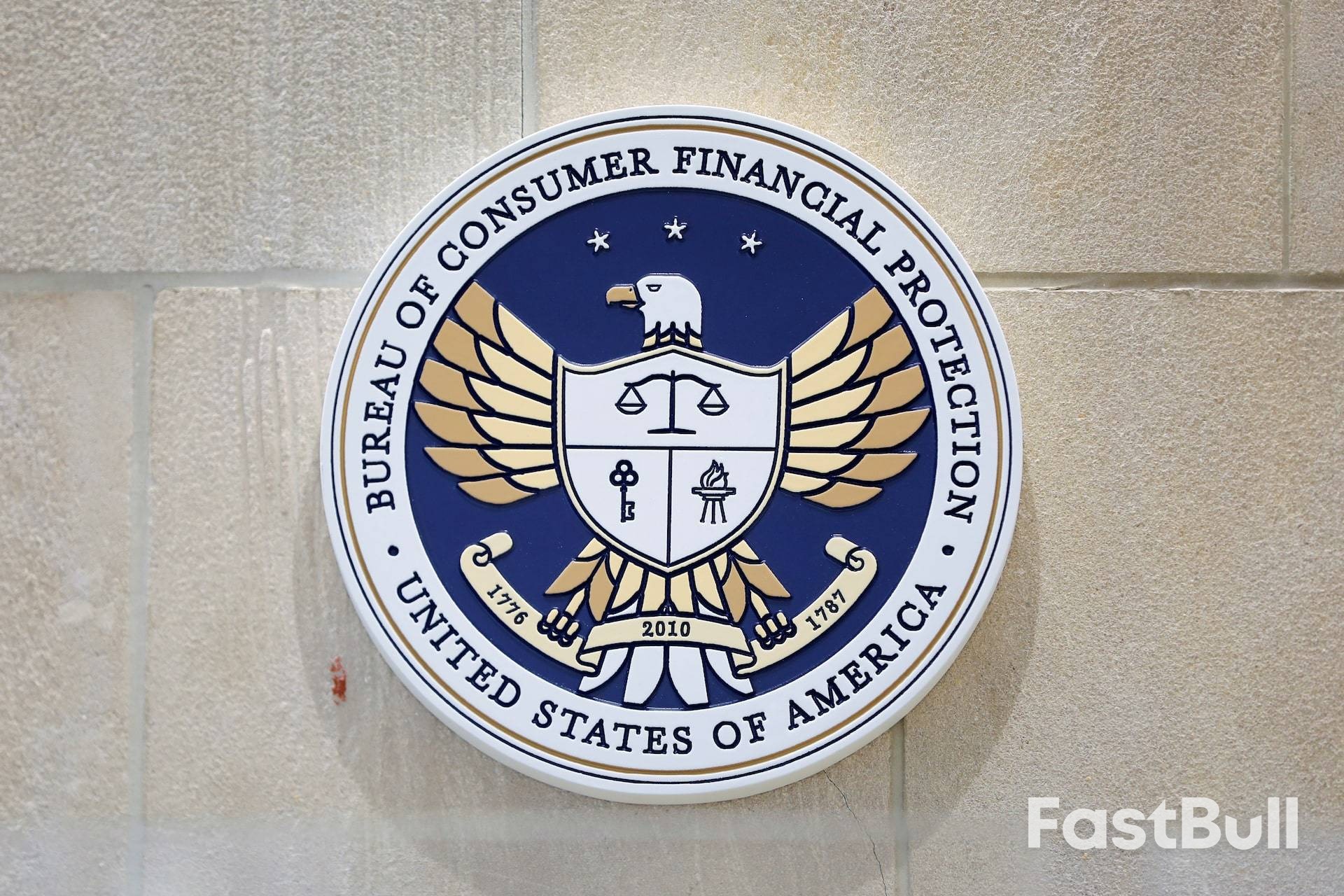
According to a letter filed in federal court, President Trump's budget director, Russell Vought, has formally requested the funds from the Federal Reserve. This action follows a court decision a month ago that rejected the administration's argument that it was legally prohibited from drawing money from the central bank for the CFPB's budget.
Vought, who serves as both the head of the Office of Management and Budget and the acting CFPB director, stated in a letter to Fed Chair Jerome Powell that he disagreed with the court's order. However, he confirmed the $145 million would be sufficient to fund the CFPB's functions from January to March.
A spokesperson for the Federal Reserve declined to comment on the request. Historically, the Fed has always supplied the funding requested by the consumer agency.
This funding reversal marks a significant setback for the administration's campaign to dismantle the CFPB. Throughout the year, top officials have pursued strategies ranging from reducing the agency's size to shutting it down completely, accusing it of politicized enforcement that burdens free enterprise—claims that the agency's staff and supporters reject.
The decision is the administration's second recent defeat concerning the CFPB. Last month, an appeals court threw out a previous ruling that would have allowed the agency's leadership to proceed with mass firings.
The $145 million arrives as a critical lifeline for the CFPB, which was potentially just weeks away from insolvency. The agency had previously informed a judge it could not guarantee sufficient funding to cover its expenses beyond December 31.
The requested amount aligns with the CFPB's average quarterly funding draw over the last decade. While the agency had been drawing down its available finances for nearly a year, its costs are currently lower due to the suspension of most activities and an exodus of workers.
728 RM B 7/F GEE LOK IND BLDG NO 34 HUNG TO RD KWUN TONG KLN HONG KONG


White Label
Data API
Web Plug-ins
Poster Maker
Affiliate Program
The risk of loss in trading financial instruments such as stocks, FX, commodities, futures, bonds, ETFs and crypto can be substantial. You may sustain a total loss of the funds that you deposit with your broker. Therefore, you should carefully consider whether such trading is suitable for you in light of your circumstances and financial resources.
No decision to invest should be made without thoroughly conducting due diligence by yourself or consulting with your financial advisors. Our web content might not suit you since we don't know your financial conditions and investment needs. Our financial information might have latency or contain inaccuracy, so you should be fully responsible for any of your trading and investment decisions. The company will not be responsible for your capital loss.
Without getting permission from the website, you are not allowed to copy the website's graphics, texts, or trademarks. Intellectual property rights in the content or data incorporated into this website belong to its providers and exchange merchants.
Not Logged In
Log in to access more features

FastBull Membership
Not yet
Purchase


Log In
Sign Up


