• Trade
  • Markets
  • Copy
  • Contests
  • News
  • 24/7
  • Calendar
  • Q&A
  • Chats
Screeners
SYMBOL
LAST
ASK
BID
HIGH
LOW
NET CHG.
%CHG.
SPREAD
SPX
S&P 500 Index
6915.62
6915.62
6915.62
6932.95
6895.49
+2.26
+ 0.03%
--
DJI
Dow Jones Industrial Average
49098.70
49098.70
49098.70
49265.46
48963.05
-285.30
-0.58%
--
IXIC
NASDAQ Composite Index
23501.23
23501.23
23501.23
23610.74
23374.26
+65.22
+ 0.28%
--
USDX
US Dollar Index
97.100
97.180
97.100
97.120
96.730
-0.130
-0.13%
--
EURUSD
Euro / US Dollar
1.18453
1.18462
1.18453
1.18975
1.18441
+0.00172
+ 0.15%
--
GBPUSD
Pound Sterling / US Dollar
1.36449
1.36462
1.36449
1.36824
1.36427
+0.00019
+ 0.01%
--
XAUUSD
Gold / US Dollar
5034.04
5034.42
5034.04
5043.73
5003.35
+47.59
+ 0.95%
--
WTI
Light Sweet Crude Oil
60.983
61.018
60.983
61.114
60.514
-0.122
-0.20%
--

Community Accounts

Signal Accounts
--
Profit Accounts
--
Loss Accounts
--
View More

Become a signal provider

Sell trading signals to earn additional income

View More

Guide to Copy Trading

Get started with ease and confidence

View More

Signal Accounts for Members

All Signal Accounts

Best Return
  • Best Return
  • Best P/L
  • Best MDD
Past 1W
  • Past 1W
  • Past 1M
  • Past 1Y

All Contests

  • All
  • Trump Updates
  • Recommend
  • Stocks
  • Cryptocurrencies
  • Central Banks
  • Featured News
Top News Only
Share

South Korea Kang: Will Discuss Canada Wide Range Of Industrial Cooperation

Share

Yield On 2-Year Japanese Government Bond Falls 1.0 Basis Points To 1.240%

Share

Yoshihiko Noda, Leader Of Japan's Constitutional Democratic Party: The Government Must Avoid Interfering With The Bank Of Japan's Efforts To Raise Interest Rates

Share

Yoshihiko Noda, Leader Of The Constitutional Democratic Party Of Japan, Said: "The Government And The Bank Of Japan Should Adjust Their Current Joint Agreement, Which Focuses On Combating Deflation, And Formulate An Agreement That Clarifies The Respective Roles Of Both Parties In Curbing Inflation."

Share

Yoshihiko Noda, Leader Of Japan's Constitutional Democratic Party: Currency Intervention May Have Limited Effectiveness In Sustainably Curbing The Yen's Decline

Share

Noda: Government, Bank Of Japan Should Tweak Current Joint Agreement Focusing On Beating Deflation To One Clarifying Role Each Would Play In Taming Inflation

Share

Noda: Government Must Avoid Interfering In Bank Of Japan Efforts To Raise Interest Rates

Share

Japan Ex-Finance Minister And Head Of Largest Opposition Party Cra Noda: Currency Intervention Likely To Have Limited Effect In Sustainably Halting Yen Slide

Share

US President Trump: The Possibility Of Eventually Withdrawing Immigration Enforcement Officials From The Minneapolis Area Cannot Be Ruled Out

Share

Japan Top Forex Diplomat Mimura: Declined To Comment On The Reported Currency Intervention

Share

Japan Top Forex Diplomat Mimura: Will Take Appropriate Steps On Forex Based On Japan-US Joint Statement

Share

Spot Gold Rises 1% To $5035.09

Share

US President Trump: The Government Is “reassessing” All The Details Of The Minneapolis Shooting

Share

Yield On 10-Year Japanese Government Bond Falls 4.0 Basis Points To 2.215%

Share

[US Navy's USS Abraham Lincoln Carrier Strike Group Arrives In The Middle East] According To Israeli Sources On The 25th, The US Navy's USS Abraham Lincoln Carrier Strike Group Has Arrived In The Middle East And Is Conducting Operations Within The US Central Command's Area Of ​​responsibility. The US Air Force Stated That Day That It Would Soon Begin A Multi-day Combat Readiness Exercise In The Middle East. The US Air Force Stated That The Exercise Aims To Demonstrate The US Military's Ability To Deploy And Sustain Air Combat Power In The Region

Share

U.S. State Department: Rubio Told The Iraqi Prime Minister That A Government Controlled By Iran Could Not Successfully Prioritize Iraq's Own Interests

Share

U.S. State Department: Secretary Of State Rubio Discussed With The Iraqi Prime Minister The Ongoing Diplomatic Efforts To Ensure The SWIFT Repatriation Of Citizens From Iraq

Share

U.S. State Department: U.S. Secretary Of State Marco Rubio Discussed With The Iraqi Prime Minister The Possibility Of Transferring And Detaining ISIS Militants In Iraqi Security Facilities

Share

Japan Finance Minister Katayama Declined To Comment On Reported Rate Checks By New York Fed

Share

U.S. State Department: Rubio Held Call On Sunday With Iraqi Prime Minister Mohammed Shiaa Al-Sudani

TIME
ACT
FCST
PREV
U.K. Retail Sales MoM (SA) (Dec)

A:--

F: --

P: --

France Manufacturing PMI Prelim (Jan)

A:--

F: --

P: --

France Services PMI Prelim (Jan)

A:--

F: --

P: --

France Composite PMI Prelim (SA) (Jan)

A:--

F: --

P: --

Germany Manufacturing PMI Prelim (SA) (Jan)

A:--

F: --

P: --

Germany Services PMI Prelim (SA) (Jan)

A:--

F: --

P: --

Germany Composite PMI Prelim (SA) (Jan)

A:--

F: --

P: --

Euro Zone Composite PMI Prelim (SA) (Jan)

A:--

F: --

P: --

Euro Zone Manufacturing PMI Prelim (SA) (Jan)

A:--

F: --

P: --

Euro Zone Services PMI Prelim (SA) (Jan)

A:--

F: --

P: --

U.K. Composite PMI Prelim (Jan)

A:--

F: --

P: --

U.K. Manufacturing PMI Prelim (Jan)

A:--

F: --

P: --

U.K. Services PMI Prelim (Jan)

A:--

F: --

P: --

Mexico Economic Activity Index YoY (Nov)

A:--

F: --

P: --

Russia Trade Balance (Nov)

A:--

F: --

P: --

Canada Core Retail Sales MoM (SA) (Nov)

A:--

F: --

P: --

Canada Retail Sales MoM (SA) (Nov)

A:--

F: --

P: --
U.S. IHS Markit Manufacturing PMI Prelim (SA) (Jan)

A:--

F: --

P: --

U.S. IHS Markit Services PMI Prelim (SA) (Jan)

A:--

F: --

P: --

U.S. IHS Markit Composite PMI Prelim (SA) (Jan)

A:--

F: --

P: --

U.S. UMich Consumer Sentiment Index Final (Jan)

A:--

F: --

P: --

U.S. UMich Current Economic Conditions Index Final (Jan)

A:--

F: --

P: --

U.S. UMich Consumer Expectations Index Final (Jan)

A:--

F: --

P: --

U.S. Conference Board Leading Economic Index MoM (Nov)

A:--

F: --

P: --

U.S. Conference Board Coincident Economic Index MoM (Nov)

A:--

F: --

P: --

U.S. Conference Board Lagging Economic Index MoM (Nov)

A:--

F: --

P: --

U.S. UMich 1-Year-Ahead Inflation Expectations Final (Jan)

A:--

F: --

P: --

U.S. Conference Board Leading Economic Index (Nov)

A:--

F: --

P: --

U.S. Weekly Total Rig Count

A:--

F: --

P: --

U.S. Weekly Total Oil Rig Count

A:--

F: --

P: --

Germany Ifo Business Expectations Index (SA) (Jan)

--

F: --

P: --

Germany IFO Business Climate Index (SA) (Jan)

--

F: --

P: --

Germany Ifo Current Business Situation Index (SA) (Jan)

--

F: --

P: --

U.S. Dallas Fed PCE Price Index YoY (Nov)

--

F: --

P: --

Brazil Current Account (Dec)

--

F: --

P: --

Mexico Unemployment Rate (Not SA) (Dec)

A:--

F: --

P: --

Canada National Economic Confidence Index

--

F: --

P: --

U.S. Non-Defense Capital Durable Goods Orders MoM (Excl. Aircraft) (Nov)

--

F: --

P: --

U.S. Durable Goods Orders MoM (Excl. Defense) (SA) (Nov)

--

F: --

P: --

U.S. Durable Goods Orders MoM (Excl.Transport) (Nov)

--

F: --

P: --

U.S. Durable Goods Orders MoM (Nov)

--

F: --

P: --

U.S. Chicago Fed National Activity Index (Nov)

--

F: --

P: --

U.S. Dallas Fed New Orders Index (Jan)

--

F: --

P: --

U.S. Dallas Fed General Business Activity Index (Jan)

--

F: --

P: --

U.K. BRC Shop Price Index YoY (Jan)

--

F: --

P: --

China, Mainland Industrial Profit YoY (YTD) (Dec)

--

F: --

P: --

Mexico Trade Balance (Dec)

--

F: --

P: --

U.S. S&P/CS 20-City Home Price Index YoY (Not SA) (Nov)

--

F: --

P: --

U.S. S&P/CS 20-City Home Price Index MoM (SA) (Nov)

--

F: --

P: --

U.S. FHFA House Price Index MoM (Nov)

--

F: --

P: --

U.S. FHFA House Price Index (Nov)

--

F: --

P: --

U.S. Richmond Fed Manufacturing Composite Index (Jan)

--

F: --

P: --

U.S. Conference Board Present Situation Index (Jan)

--

F: --

P: --

U.S. Conference Board Consumer Expectations Index (Jan)

--

F: --

P: --

U.S. Richmond Fed Manufacturing Shipments Index (Jan)

--

F: --

P: --

U.S. Richmond Fed Services Revenue Index (Jan)

--

F: --

P: --

U.S. Conference Board Consumer Confidence Index (Jan)

--

F: --

P: --

Australia RBA Trimmed Mean CPI YoY (Q4)

--

F: --

P: --

Australia CPI YoY (Q4)

--

F: --

P: --

Australia CPI QoQ (Q4)

--

F: --

P: --

Q&A with Experts
    • All
    • Chatrooms
    • Groups
    • Friends
    just Brendon flag
    just Brendon
    gold buy now 5014/2012 target 5017 target 5020 target 5030 Open stop loss 5006
    xauusd Buy Tp3 4030 Hit Successfully running Profits +160 Pip's pro Entry Clean Execution ❤️‍🔥 let's Close All
    Rochim flag
    Great. Thank you Mr.
    dimas eyhh flag
    gold will correct again soon
    dimas eyhh flag
    The gold will soon be mined.
    dimas eyhh flag
    gold will correct
    dimas eyhh flag
    gold will correct
    dimas eyhh flag
    gold will correct
    dimas eyhh flag
    gold will correct
    dimas eyhh flag
    gold will correct
    Rochim flag
    ok
    Lucifer flag
    dimas eyhh
    gold will correct
    @dimas eyhhto where
    dimas eyhh flag
    4800
    3152361 flag
    How many gaps has gold failed to close?
    ali flag
    dimas eyhh
    gold will correct
    @dimas eyhhyes brother but right now not possible
    24QM48JYWV flag
    every week market opens with fresh high
    win flag
    Why do you need to borrow money?
    ali flag
    silver may be go down right now running 104 down 99
    Shreshth B flag
    What a rally in Gold and Silver. Pure Gamble in Silver though. Gold price make sense but Silver price too high need a super correction.
    Muhammad Bakir Adam flag
    Hii every one
    dimas eyhh flag
    Shreshth B
    What a rally in Gold and Silver. Pure Gamble in Silver though. Gold price make sense but Silver price too high need a super correction.
    @Shreshth Bsame as gold
    Type here...
    Add Symbol or Code

      No matching data

      All
      Trump Updates
      Recommend
      Stocks
      Cryptocurrencies
      Central Banks
      Featured News
      • All
      • Russia-Ukraine Conflict
      • Middle East Flashpoint
      • All
      • Russia-Ukraine Conflict
      • Middle East Flashpoint
      Search
      Products

      Charts Free Forever

      Chats Q&A with Experts
      Screeners Economic Calendar Data Tools
      Membership Features
      Data Warehouse Market Trends Institutional Data Policy Rates Macro

      Market Trends

      Market Sentiment Order Book Forex Correlations

      Top Indicators

      Charts Free Forever
      Markets

      News

      News Analysis 24/7 Columns Education
      From Institutions From Analysts
      Topics Columnists

      Latest Views

      Latest Views

      Trending Topics

      Top Columnists

      Latest Update

      Signals

      Copy Rankings Latest Signals Become a signal provider AI Rating
      Contests
      Brokers

      Overview Brokers Assessment Rankings Regulators News Claims
      Broker listing Forex Brokers Comparison Tool Live Spread Comparison Scam
      Q&A Complaint Scam Alert Videos Tips to Detect Scam
      More

      Business
      Events
      Careers About Us Advertising Help Center

      White Label

      Data API

      Web Plug-ins

      Affiliate Program

      Awards Institution Evaluation IB Seminar Salon Event Exhibition
      Vietnam Thailand Singapore Dubai
      Fans Party Investment Sharing Session
      FastBull Summit BrokersView Expo
      Recent Searches
        Top Searches
          Markets
          News
          Analysis
          User
          24/7
          Economic Calendar
          Education
          Data
          • Names
          • Latest
          • Prev

          View All

          No data

          Scan to Download

          Faster Charts, Chat Faster!

          Download App
          English
          • English
          • Español
          • العربية
          • Bahasa Indonesia
          • Bahasa Melayu
          • Tiếng Việt
          • ภาษาไทย
          • Français
          • Italiano
          • Türkçe
          • Русский язык
          • 简中
          • 繁中
          Open Account
          Search
          Products
          Charts Free Forever
          Markets
          News
          Signals

          Copy Rankings Latest Signals Become a signal provider AI Rating
          Contests
          Brokers

          Overview Brokers Assessment Rankings Regulators News Claims
          Broker listing Forex Brokers Comparison Tool Live Spread Comparison Scam
          Q&A Complaint Scam Alert Videos Tips to Detect Scam
          More

          Business
          Events
          Careers About Us Advertising Help Center

          White Label

          Data API

          Web Plug-ins

          Affiliate Program

          Awards Institution Evaluation IB Seminar Salon Event Exhibition
          Vietnam Thailand Singapore Dubai
          Fans Party Investment Sharing Session
          FastBull Summit BrokersView Expo

          Trump's Vetoes Spark GOP Clash in Key House Vote

          Hannah Ellis

          Remarks of Officials

          Political

          Summary:

          The House prepares a pivotal vote to override President Trump's first vetoes, testing GOP loyalty on bipartisan bills.

          The U.S. House of Representatives is set for a high-stakes vote on Thursday to override President Donald Trump's first vetoes of his second term, testing Republican loyalty and setting the stage for a major political confrontation over two bipartisan bills.

          The measures, which support local infrastructure projects in Colorado and Florida, initially passed both the House and Senate unanimously by voice vote, making the president's subsequent rejection of them a significant political challenge.

          Colorado Water Project Ignites Republican Pushback

          At the center of the dispute is the "Finish the Arkansas Valley Conduit Act," a bill sponsored by Representative Lauren Boebert, a Republican from Colorado and typically a staunch ally of the president. The legislation is designed to lower the financial burden on local communities for the construction of a pipeline that will deliver clean drinking water to rural areas in her state.

          Rep. Lauren Boebert, a key Trump ally, is leading the charge to override the president's veto of her Colorado infrastructure bill.

          The veto has infuriated some Colorado Republicans, who are now leading the charge to overturn it. Speaking on the House floor, Boebert defended the bill as being consistent with the administration's goals.

          "This bill makes good ... on President Trump's commitment to rural communities," she stated ahead of the vote.

          Her colleague, Representative Jeff Hurd, who co-sponsored the bill, delivered a more direct warning to fellow lawmakers. "[Trump's veto] should give every member pause," Hurd said. "My constituents are watching, and your constituents are watching."

          Trump's Rationale for the Veto

          In a message explaining his decision, President Trump argued that the Colorado bill forces federal taxpayers to shoulder an unfair share of the costs for a local project. He claimed it would "continue the failed policies of the past by forcing Federal taxpayers to bear even more of the massive costs of a local water project — a local water project that, as initially conceived, was supposed to be paid for by the localities using it."

          Both Boebert and Hurd have confirmed they will vote to override the veto.

          Second Veto Targets Florida Land Transfer

          The House will also hold a separate vote to override Trump's veto of the "Miccosukee Reserved Area Amendments Act." This bill would transfer the Osceola Camp, a tract of land within Florida's Everglades National Park, to the reserved area for the Miccosukee Tribe. It would also mandate that the Department of the Interior assist with flood-proofing structures on the land.

          Trump stated he vetoed this bill to prevent "American taxpayers from funding projects for special interests, especially those that are unaligned with my Administration's policy of removing violent criminal illegal aliens from the country."

          The Path to an Override

          To successfully override a presidential veto, a two-thirds majority is required in both the House and the Senate. If the House vote on Thursday is successful, the measures will proceed to the Senate for a final vote.

          The White House has issued formal policy statements "strongly opposing" both override attempts. Some Republicans have already signaled they will side with the president.

          "I support the president, so I'm not going to vote to override him," Representative Randy Fine, a Republican from Florida, told CNBC.

          Risk Warnings and Disclaimers
          You understand and acknowledge that there is a high degree of risk involved in trading. Following any strategies or investment methods may lead to potential losses. The content on the site is provided by our contributors and analysts for information purposes only. You are solely responsible for determining whether any trading assets, securities, strategy, or any other product is suitable for investing based on your own investment objectives and financial situation.
          Add to Favorites
          Share

          Goldman Sachs: Thin Inventories Fuel Extreme Silver Volatility

          Alex

          Economic

          Traders' Opinions

          Remarks of Officials

          Commodity

          Central Bank

          Political

          Data Interpretation

          China–U.S. Trade War

          Persistently thin silver inventories mean prices are likely to remain highly sensitive to market flows, creating significant upside potential and downside risk, according to new analysis from Goldman Sachs.

          Analysts Lina Thomas and Daan Struyven noted that depleted stockpiles have set the stage for market squeezes. "Thinner inventories have created conditions for squeezes, where rallies accelerate as investor flows absorb remaining metal in the London vaults and reverse sharply when tightness eases," they wrote in a Wednesday note.

          However, the analysts clarified that recent price turbulence is not a symptom of a global silver shortage. Instead, it stems from localized supply bottlenecks that are distorting the market.

          The London Squeeze Effect

          A key driver of this volatility is the unusually low level of silver supplies in London, where the global benchmark price is determined. This situation arose after a large volume of the metal was moved into U.S. vaults last year due to concerns that the Trump administration might impose trade tariffs.

          While silver’s landmark 2025 rally was fueled by fundamental investor demand—driven by safe-haven buying, expectations of Fed rate cuts, and asset diversification—the squeeze in London is dramatically amplifying the impact of these capital flows.

          Price Sensitivity Has Surged

          Under normal market conditions, a weekly net demand of 1,000 metric tons would typically push silver prices up by about 2%. In the current environment, Goldman Sachs estimates that price sensitivity has surged to approximately 7% for the same volume.

          The analysts warned that these extreme price movements are likely to persist, creating sharp swings in both directions.

          The Bull Case: Room for More Investor Demand

          Even with silver at all-time highs, Goldman Sachs suggests that investor demand may not be overstretched. They point out that holdings in silver ETFs remain below their 2021 peak, indicating that further inflows could be triggered by rate cuts and continued investor diversification.

          The Bear Case: Policy Uncertainty Holds the Key

          On the other hand, a significant price pullback could occur if trade policies are clarified, allowing silver to flow from U.S. vaults back to London. However, any lingering policy uncertainty will likely keep the metal on American soil.

          Goldman noted a similar pattern with gold. Much of the gold that moved into New York COMEX vaults remained there even after Washington confirmed the metal would be exempt from tariffs. "If silver follows the same pattern, most silver may remain in New York COMEX vaults and extreme price action could persist even after a definitive statement on US silver tariffs," Thomas and Struyven wrote.

          China's New Rules Add Another Layer of Risk

          Further complicating the global picture are China's new 2026 export restrictions, which now require official approval for outbound silver shipments. Goldman Sachs believes this policy could fragment the global silver market, ultimately reducing liquidity and amplifying price swings.

          "Disruption risk may prompt participants to secure their own stockpiles rather than share buffers globally," the analysts explained. This could transform the market from an integrated global system into a fragmented one. "This shift from a pooled global system to isolated regional inventories would create an inefficient structure — transforming a smooth, integrated market into one prone to sharp, localized price swings."

          To stay updated on all economic events of today, please check out our Economic calendar
          Risk Warnings and Disclaimers
          You understand and acknowledge that there is a high degree of risk involved in trading. Following any strategies or investment methods may lead to potential losses. The content on the site is provided by our contributors and analysts for information purposes only. You are solely responsible for determining whether any trading assets, securities, strategy, or any other product is suitable for investing based on your own investment objectives and financial situation.
          Add to Favorites
          Share

          US Trade Deficit Plunges to Lowest Level Since 2009

          Michael Ross

          Data Interpretation

          Economic

          Political

          The U.S. trade deficit narrowed dramatically in October, hitting its lowest point since 2009 after a sharp, unexpected drop in goods imports coincided with the implementation of President Donald Trump's tariffs.

          According to government data released on January 8, the overall trade gap fell by 39% to $29.4 billion. This figure was significantly smaller than the $58.4 billion median forecast from economists surveyed by Dow Jones Newswires and The Wall Street Journal. The release of the report was delayed by over a month due to a government shutdown in 2025.

          In October, total imports fell by $11.0 billion to $331.4 billion, while exports increased by $7.8 billion to $302.0 billion. The previous month's trade deficit in September was recorded at $48.1 billion.

          What's Driving the Decline in Imports?

          The primary driver behind the shrinking deficit was a major reduction in goods imports. The Commerce Department reported that imports of consumer goods declined by $14.0 billion, with pharmaceutical preparations experiencing a particularly steep fall.

          Additionally, imports of industrial supplies and materials, including nonmonetary gold, also decreased.

          KPMG senior economist Meagan Schoenberger noted that while falling pharmaceutical imports were the main factor, trade in nonmonetary gold also played a significant role. Gold accounted for a large portion of the export increase and a smaller part of the import decline.

          "The run-up in gold in 2025 has clouded the trade picture and during the month of October made the trade deficit look narrower than the remainder of the product mixture implies," Schoenberger explained. She added that outside of gold, "the main contributors to declining imports were pharmaceuticals, which fell $14.3 billion alone."

          The pharmaceuticals sector has been volatile following significant inventory stockpiling by firms in early 2025 and could have been affected by trade policy announcements in October.

          Other imported goods showing modest declines included:

          • Auto parts

          • Oil and natural gas

          • Fruits and vegetables

          In contrast, Schoenberger pointed out that "imports of high-tech capital goods continued their upward march given tariff waivers for the industry and the build-out of data centres to feed AI demand."

          The Impact of Trump's Tariff Strategy

          These trade figures highlight the influence of the sweeping tariff policies introduced since President Trump returned to office in 2025. As his administration rolled out broad tariffs on imports from multiple trading partners, many U.S. businesses accelerated their purchasing to build up inventory before the duties took effect. This strategy has, for now, helped many companies avoid passing the full cost of the tariffs on to consumers.

          Amid rising concerns about the cost of living, Trump has recently expanded the list of goods exempted from certain tariffs, particularly covering key agricultural imports. However, many of these exemptions were scheduled to begin in November.

          According to an estimate from the Budget Lab at Yale University as of mid-November, American consumers are facing the highest overall average effective tariff rate since the 1930s.

          Legal Hurdles and Future Uncertainty

          While Trump's tariffs have reshaped trade flows, a significant portion of them are also facing legal challenges. The Supreme Court is expected to rule on the legality of tariffs imposed under the International Emergency Economic Powers Act after hearing arguments in November.

          A decision by the court that the president overstepped his authority could temporarily invalidate numerous country-specific tariffs, though it would likely not affect those applied to specific sectors.

          To stay updated on all economic events of today, please check out our Economic calendar
          Risk Warnings and Disclaimers
          You understand and acknowledge that there is a high degree of risk involved in trading. Following any strategies or investment methods may lead to potential losses. The content on the site is provided by our contributors and analysts for information purposes only. You are solely responsible for determining whether any trading assets, securities, strategy, or any other product is suitable for investing based on your own investment objectives and financial situation.
          Add to Favorites
          Share

          Iran Faces Blackout Amid Nationwide Economic Protests

          King Ten

          Middle East Situation

          Remarks of Officials

          Economic

          Political

          Iran experienced a nationwide internet blackout on Thursday, according to the monitoring group NetBlocks. The outage coincided with the government's rollout of high-stakes subsidy reforms as street protests over economic hardship intensified across the country.

          While further details on the internet disruption were not immediately available, witnesses in Tehran, Mashhad, and Isfahan confirmed that demonstrators returned to the streets, chanting slogans against the Islamic Republic's clerical leadership.

          Unrest Spreads From Tehran's Markets

          The current wave of dissent, the largest in three years, began last month when shopkeepers in Tehran's Grand Bazaar protested the free fall of the rial. The unrest has since gone nationwide, fueled by public distress over skyrocketing inflation, Western sanctions, and restrictions on political and social freedoms.

          Adding to the pressure, Reza Pahlavi, the exiled son of Iran's late Shah, urged for more protests in a video posted on X. Social media posts, which could not be independently verified, reported demonstrators chanting pro-Pahlavi slogans in several cities.

          Government Responds to Economic Crisis

          In response to the economic turmoil, President Masoud Pezeshkian issued a warning to domestic suppliers against hoarding goods or overpricing, state media reported. "People should not feel any shortage in terms of goods' supply and distribution," he stated, ordering his government to ensure adequate supplies and monitor prices.

          The government's actions come as it implements major subsidy reforms designed to favor consumers over importers. The new policy eliminates the preferential currency exchange rates that gave importers access to foreign currency at cheaper rates than ordinary citizens.

          Under the new system, Iranians will receive approximately $7 per month to buy basic goods at selected grocery stores. However, the policy's announcement has already led to significant price increases for essential items like cooking oil and eggs.

          International Pressure Mounts

          The domestic crisis is unfolding under the shadow of international pressure. U.S. President Donald Trump has threatened to aid protesters if security forces open fire on them.

          This statement follows a period of heightened tension, coming seven months after Israeli and U.S. forces conducted bombing raids on Iranian nuclear sites.

          To stay updated on all economic events of today, please check out our Economic calendar
          Risk Warnings and Disclaimers
          You understand and acknowledge that there is a high degree of risk involved in trading. Following any strategies or investment methods may lead to potential losses. The content on the site is provided by our contributors and analysts for information purposes only. You are solely responsible for determining whether any trading assets, securities, strategy, or any other product is suitable for investing based on your own investment objectives and financial situation.
          Add to Favorites
          Share

          Crypto Markets on Edge Ahead of US Tariff Ruling

          Natalie Gordon

          Economic

          Cryptocurrency

          Traders' Opinions

          Daily News

          Remarks of Officials

          Central Bank

          Political

          A critical Friday is on the horizon for cryptocurrency markets, with a Supreme Court ruling on tariffs and the release of U.S. employment figures set to converge. Tariff discussions have been a source of market sensitivity since 2025, contributing to increased volatility this January as investors monitor the situation closely.

          Supreme Court Tariff Decision: What to Expect

          U.S. tariff policies, a historically contentious issue, are once again in focus. According to U.S. Treasury Secretary Bessent, the administration has contingency plans ready in the event the Supreme Court decides to repeal the tariffs.

          While the prevailing market sentiment leans toward the tariffs being lifted, any deviation from this expectation could introduce turbulence across financial markets.

          Trump Administration Signals Readiness

          The Trump administration has been preparing its strategy for months to handle any potential policy shift. Treasury Secretary Bessent and other officials have emphasized their readiness to adapt to the court's decision. Bessent commented on the administration's planning for both the Federal Reserve and tariffs.

          Our ability to sustain tariffs at current levels is undeniable. IEEPA tariffs have driven Mexico and Canada to negotiate on fentanyl. The Chinese seem to be taking serious steps on fentanyl due to IEEPA tariffs. Alongside other officials, we hold authority to revise tariffs.

          Economic Outlook: Interest Rates and Deficit Targets

          Beyond tariffs, Bessent provided insights into the broader economic picture, highlighting several key areas:

          • Fraud Recovery and Defense: Funds recovered from fraud could help finance a larger defense budget.

          • Interest Rates: Rates are currently well above neutral, and Bessent advised against adopting a restrictive monetary stance. Economic models project the Federal Reserve's interest rate to land in the 2.5% to 3.25% range.

          • Deficit Reduction: For the current year, the administration anticipates a deficit reduction between $300 billion and $500 billion.

          While Bitcoin's recent rally suggests a degree of resilience, the upcoming announcements could still introduce unexpected market behavior. As traders and observers await the dual news on tariffs and employment, Friday’s events are positioned to heavily influence the future trajectory of the cryptocurrency landscape.

          To stay updated on all economic events of today, please check out our Economic calendar
          Risk Warnings and Disclaimers
          You understand and acknowledge that there is a high degree of risk involved in trading. Following any strategies or investment methods may lead to potential losses. The content on the site is provided by our contributors and analysts for information purposes only. You are solely responsible for determining whether any trading assets, securities, strategy, or any other product is suitable for investing based on your own investment objectives and financial situation.
          Add to Favorites
          Share

          Mexico's Central Bank Taps Brakes on Rate Cuts

          Michael Ross

          Remarks of Officials

          Economic

          Traders' Opinions

          Central Bank

          Mexico's central bank is signaling a more cautious approach to future interest rate cuts, citing new uncertainty from trade tariffs and domestic taxes. Minutes from Banxico's December policy meeting reveal that while policymakers approved another rate cut, they are growing wary of inflation risks looming in 2026.

          This development is strengthening market expectations that the central bank could soon pause the monetary easing cycle that began in 2024.

          December Rate Cut Masks Deeper Concerns

          In its December meeting, Banxico’s board voted 4-1 to cut its benchmark interest rate by 25 basis points to 7.00%, its lowest point since April 2022. Deputy Governor Jonathan Heath was the sole vote against the cut, preferring to hold rates steady.

          The majority argued the reduction was justified by recent progress on inflation, a weak economy, and a strong peso. However, the meeting's minutes show that policymakers flagged several factors that demand a more careful outlook for future decisions.

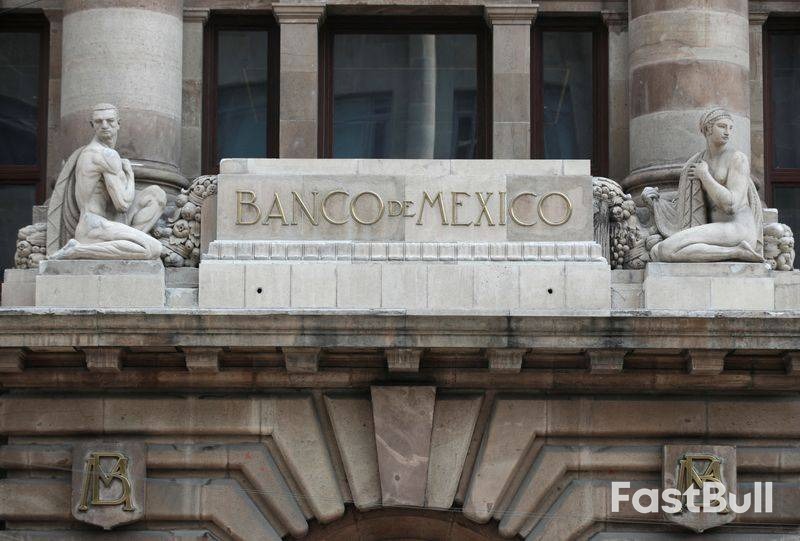
          The Bank of Mexico headquarters, where policymakers are signaling a more cautious stance on future interest rate cuts.

          New Tariffs and Taxes Fuel Inflation Fears

          The primary sources of concern are new government policies expected to drive up prices. A majority of the bank's governors believe these measures will create inflationary pressure in 2026.

          Key policy changes include:

          • Import Tariffs: Mexico has implemented tariff hikes of up to 50% on goods from China and several other Asian nations with which it lacks a trade agreement. The measure is designed to support local industry.

          • Special Taxes: Lawmakers approved new taxes on specific products, including soda, cigarettes, and video games.

          Actinver Research noted that these policies, combined with a 13% increase in Mexico's minimum wage for 2026, could cause a rebound in inflation during the first quarter.

          A "Wait-and-See" Approach Emerges

          While most governors view the inflationary impact of these new policies as temporary, they stressed the need for caution. The minutes reveal a shared concern that these price shocks could persist longer than anticipated.

          "The shocks anticipated for 2026 could impact price dynamics over the planning horizon and delay inflation convergence," one board member who voted for the rate cut stated.

          Another member, who also supported the cut, commented that while special taxes don't typically distort market prices, it will take time to ensure no "second-round effects" materialize. This member concluded that "a wait-and-see approach will need to be adopted."

          Stubborn Core Inflation Complicates Policy

          The central bank's cautious turn is also driven by persistent core inflation, which excludes volatile food and energy prices. This key index has remained outside Banxico's target range since May and rose for much of 2025.

          Although it ticked down to 4.33% in December, it remains stubbornly above the bank's 3% target, which has a tolerance band of plus or minus one percentage point. In contrast, annual headline inflation for 2025 came in below forecasts at 3.69%.

          The hawkish Deputy Governor Heath argued for holding rates steady to analyze how to bring down core inflation and prevent a new surge in the headline rate.

          What's Next? Analysts Expect a Pause

          Market analysts widely anticipate that Banxico will pause its rate-cutting cycle sometime in the first half of the year.

          Kimberley Sperrfechter, an economist at Capital Economics, said that while December's easing price pressures leave the door open for another cut, "the central bank's cautious tone, alongside still elevated core price pressures, means that we think a hold is a slightly more likely outcome."

          Alberto Ramos, an economist at Goldman Sachs, expects Banxico to pause rate cuts at its next two meetings. He noted that four of the five board members "seem committed to extending the cutting cycle, likely after a pause to evaluate the impact of the upcoming increase in taxes and import tariffs."

          To stay updated on all economic events of today, please check out our Economic calendar
          Risk Warnings and Disclaimers
          You understand and acknowledge that there is a high degree of risk involved in trading. Following any strategies or investment methods may lead to potential losses. The content on the site is provided by our contributors and analysts for information purposes only. You are solely responsible for determining whether any trading assets, securities, strategy, or any other product is suitable for investing based on your own investment objectives and financial situation.
          Add to Favorites
          Share

          U.S. to Exit UN Bodies, Sparking Funding Showdown

          Isaac Bennett

          Remarks of Officials

          Economic

          Daily News

          Political

          The United Nations has pushed back against a decision by the United States to withdraw from dozens of international entities, emphasizing that U.S. funding for many of these groups is a mandatory legal obligation.

          U.N. Secretary-General Antonio Guterres expressed regret over the move, which was announced by U.S. President Donald Trump. The Trump administration justified the withdrawal by stating that the targeted organizations, including a key climate treaty and a U.N. body for gender equality, "operate contrary to U.S. national interests."

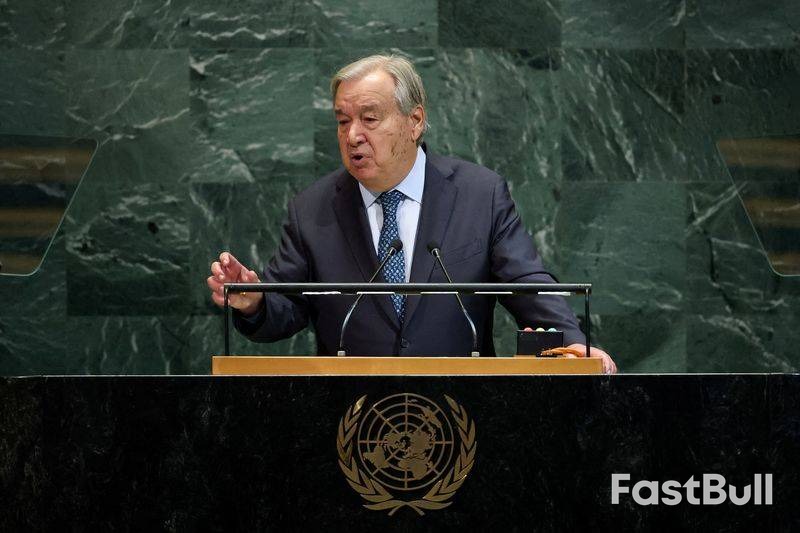
          United Nations Secretary-General António Guterres addresses member states amid rising tensions over U.S. funding commitments.

          UN Stresses U.S. Financial Obligations

          According to U.N. spokesperson Stephane Dujarric, the U.N. has not yet received any formal notification from Washington about the plan, which targets 31 U.N. entities. Dujarric noted that withdrawing from treaty organizations would require official letters.

          He stressed that a "large number" of the organizations on the U.S. list are financed through the U.N.'s regular budget. These payments, known as assessed contributions, are not optional.

          "Assessed contributions to the United Nations regular budget and peacekeeping budget, as approved by the General Assembly, are a legal obligation under the U.N. Charter for all member states, including the United States," Dujarric stated.

          The United States is the largest single contributor to the U.N. regular budget, responsible for a 22% share. However, Dujarric confirmed the U.S. made no payments to the regular budget last year and currently owes approximately $1.5 billion.

          Mandatory vs. Voluntary Funding Explained

          The U.N.'s financial structure distinguishes between mandatory and voluntary funding.

          • The Regular Budget: This budget is mandatory for all members. For 2026, it is set at $3.45 billion and covers core activities in political affairs, humanitarian work, disarmament, and communications.

          • Voluntary Contributions: Funding for most specialized U.N. agencies, such as the World Food Programme and UNICEF, is voluntary.

          Despite the U.S. plan, the U.N. remains committed to its work. "All United Nations entities will go on with the implementation of their mandates as given by member states," Dujarric said. "The United Nations has a responsibility to deliver for those who depend on us."

          Pressure for Reform Amidst Tensions

          The funding dispute comes as President Trump continues to criticize the U.N., stating that while it has "great potential," it is failing to fulfill it. His administration has consistently sought to slash U.S. funding to the international body.

          In response to widespread calls for greater efficiency, Secretary-General Guterres launched a reform task force known as UN80 in March, with the goal of cutting costs and improving operational effectiveness.

          To stay updated on all economic events of today, please check out our Economic calendar
          Risk Warnings and Disclaimers
          You understand and acknowledge that there is a high degree of risk involved in trading. Following any strategies or investment methods may lead to potential losses. The content on the site is provided by our contributors and analysts for information purposes only. You are solely responsible for determining whether any trading assets, securities, strategy, or any other product is suitable for investing based on your own investment objectives and financial situation.
          Add to Favorites
          Share
          FastBull
          Copyright © 2026 FastBull Ltd

          728 RM B 7/F GEE LOK IND BLDG NO 34 HUNG TO RD KWUN TONG KLN HONG KONG

          TelegramInstagramTwitterfacebooklinkedin
          App Store Google Play Google Play
          Products
          Charts

          Chats

          Q&A with Experts
          Screeners
          Economic Calendar
          Data
          Tools
          Membership
          Features
          Function
          Markets
          Copy Trading
          Latest Signals
          Contests
          News
          Analysis
          24/7
          Columns
          Education
          Company
          Careers
          About Us
          Contact Us
          Advertising
          Help Center
          Feedback
          User Agreement
          Privacy Policy
          Personal Information Protection Statement
          Business

          White Label

          Data API

          Web Plug-ins

          Poster Maker

          Affiliate Program

          Risk Disclosure

          The risk of loss in trading financial instruments such as stocks, FX, commodities, futures, bonds, ETFs and crypto can be substantial. You may sustain a total loss of the funds that you deposit with your broker. Therefore, you should carefully consider whether such trading is suitable for you in light of your circumstances and financial resources.

          No decision to invest should be made without thoroughly conducting due diligence by yourself or consulting with your financial advisors. Our web content might not suit you since we don't know your financial conditions and investment needs. Our financial information might have latency or contain inaccuracy, so you should be fully responsible for any of your trading and investment decisions. The company will not be responsible for your capital loss.

          Without getting permission from the website, you are not allowed to copy the website's graphics, texts, or trademarks. Intellectual property rights in the content or data incorporated into this website belong to its providers and exchange merchants.

          Not Logged In

          Log in to access more features

          Connect Broker
          Become a signal provider
          Help Center
          Customer Service
          Dark Mode
          Price Up/Down Colors

          Log In

          Sign Up

          Position
          Layout
          Fullscreen
          Default to Chart
          The chart page opens by default when you visit fastbull.com