Markets
News
Analysis
User
24/7
Economic Calendar
Education
Data
- Names
- Latest
- Prev




Signal Accounts for Members
All Signal Accounts
All Contests


U.S. Dallas Fed New Orders Index (Jan)A:--
F: --
P: --
U.S. 2-Year Note Auction Avg. YieldA:--
F: --
P: --
U.K. BRC Shop Price Index YoY (Jan)A:--
F: --
P: --
China, Mainland Industrial Profit YoY (YTD) (Dec)A:--
F: --
P: --
Germany 2-Year Schatz Auction Avg. YieldA:--
F: --
P: --
Mexico Trade Balance (Dec)A:--
F: --
P: --
U.S. Weekly Redbook Index YoYA:--
F: --
P: --
U.S. S&P/CS 20-City Home Price Index YoY (Not SA) (Nov)A:--
F: --
P: --
U.S. S&P/CS 20-City Home Price Index MoM (SA) (Nov)A:--
F: --
U.S. FHFA House Price Index MoM (Nov)A:--
F: --
P: --
U.S. FHFA House Price Index (Nov)A:--
F: --
P: --
U.S. FHFA House Price Index YoY (Nov)A:--
F: --
U.S. S&P/CS 10-City Home Price Index YoY (Nov)A:--
F: --
P: --
U.S. S&P/CS 10-City Home Price Index MoM (Not SA) (Nov)A:--
F: --
P: --
U.S. S&P/CS 20-City Home Price Index (Not SA) (Nov)A:--
F: --
P: --
U.S. S&P/CS 20-City Home Price Index MoM (Not SA) (Nov)A:--
F: --
P: --
U.S. Richmond Fed Manufacturing Composite Index (Jan)A:--
F: --
P: --
U.S. Conference Board Present Situation Index (Jan)A:--
F: --
P: --
U.S. Conference Board Consumer Expectations Index (Jan)A:--
F: --
P: --
U.S. Richmond Fed Manufacturing Shipments Index (Jan)A:--
F: --
P: --
U.S. Richmond Fed Services Revenue Index (Jan)A:--
F: --
P: --
U.S. Conference Board Consumer Confidence Index (Jan)A:--
F: --
U.S. 5-Year Note Auction Avg. YieldA:--
F: --
P: --
U.S. API Weekly Refined Oil StocksA:--
F: --
P: --
U.S. API Weekly Crude Oil StocksA:--
F: --
P: --
U.S. API Weekly Gasoline StocksA:--
F: --
P: --
U.S. API Weekly Cushing Crude Oil StocksA:--
F: --
P: --
Australia RBA Trimmed Mean CPI YoY (Q4)A:--
F: --
P: --
Australia CPI YoY (Q4)A:--
F: --
P: --
Australia CPI QoQ (Q4)A:--
F: --
P: --
Germany GfK Consumer Confidence Index (SA) (Feb)--
F: --
P: --
Germany 10-Year Bund Auction Avg. Yield--
F: --
P: --
India Industrial Production Index YoY (Dec)--
F: --
P: --
India Manufacturing Output MoM (Dec)--
F: --
P: --
U.S. MBA Mortgage Application Activity Index WoW--
F: --
P: --
Canada Overnight Target Rate--
F: --
P: --
BOC Monetary Policy Report
U.S. EIA Weekly Crude Stocks Change--
F: --
P: --
U.S. EIA Weekly Cushing, Oklahoma Crude Oil Stocks Change--
F: --
P: --
U.S. EIA Weekly Crude Demand Projected by Production--
F: --
P: --
U.S. EIA Weekly Crude Oil Imports Changes--
F: --
P: --
U.S. EIA Weekly Heating Oil Stock Changes--
F: --
P: --
U.S. EIA Weekly Gasoline Stocks Change--
F: --
P: --
BOC Press Conference
Russia PPI MoM (Dec)--
F: --
P: --
Russia PPI YoY (Dec)--
F: --
P: --
U.S. Target Federal Funds Rate Lower Limit (Overnight Reverse Repo Rate)--
F: --
P: --
U.S. Interest Rate On Reserve Balances--
F: --
P: --
U.S. Federal Funds Rate Target--
F: --
P: --
U.S. Target Federal Funds Rate Upper Limit (Excess Reserves Ratio)--
F: --
P: --
FOMC Statement
FOMC Press Conference
Brazil Selic Interest Rate--
F: --
P: --
Australia Import Price Index YoY (Q4)--
F: --
P: --
Japan Household Consumer Confidence Index (Jan)--
F: --
P: --
Turkey Economic Sentiment Indicator (Jan)--
F: --
P: --
Euro Zone M3 Money Supply (SA) (Dec)--
F: --
P: --
Euro Zone Private Sector Credit YoY (Dec)--
F: --
P: --
Euro Zone M3 Money Supply YoY (Dec)--
F: --
P: --
Euro Zone 3-Month M3 Money Supply YoY (Dec)--
F: --
P: --
South Africa PPI YoY (Dec)--
F: --
P: --


No matching data
Latest Views
Latest Views
Trending Topics
Top Columnists
Latest Update
White Label
Data API
Web Plug-ins
Affiliate Program
View All

No data
The U.S. dollar slid to its weakest level since early 2022 after President Donald Trump openly dismissed concerns about the currency’s decline...
Sri Lanka's central bank has decided to hold its key policy rate steady at 7.75%, a move widely anticipated by economists as the nation awaits a critical review of its US$2.9 billion IMF bailout program.
This marks another pause from the Central Bank of Sri Lanka (CBSL), which has kept the rate unchanged since May. The decision reflects a period of relative stability as the country continues its recovery from the severe financial crisis of 2022, which was triggered by a critical shortage of US dollars.
The central bank's steady stance is underpinned by several positive economic indicators. Economists who unanimously predicted the hold pointed to a combination of stable inflation, healthy credit growth, and steady economic expansion as justification for maintaining the current policy.
According to the monetary authority, the current interest rate level will help guide inflation toward its 5% target. As of the end of 2025, inflation stood at 2.1%. However, the central bank anticipates that core inflation will accelerate as demand in the economy strengthens.
An International Monetary Fund (IMF) mission is currently in Colombo conducting a fact-finding visit to evaluate government policies. This assessment is a prerequisite for approving the sixth tranche of Sri Lanka's four-year debt bailout program.
Meeting the targets set by the IMF is crucial for several reasons:
• Credit Rating: It is essential for improving Sri Lanka's credit rating following its default.
• Market Access: A positive review will help the nation re-enter international financial markets.
• Future Borrowing: Regaining access is vital for borrowing and repaying debts scheduled to begin in 2028.
The nation's tentative economic recovery recently faced a setback from Cyclone Ditwah. In late November, the cyclone killed approximately 650 people and affected nearly 10% of the country's 22 million citizens.
The World Bank has estimated the damage to housing, roads, and other critical infrastructure at US$4.1 billion. Despite the slowdown in economic activity following the disaster, the central bank noted that early indicators suggest the economy is showing greater resilience.
The Federal Reserve is holding its benchmark interest rate steady, a move led by Chair Jerome Powell that directly challenges pressure from President Trump to implement cuts. This decision, announced at the FOMC meeting in Washington on January 28, prioritizes economic stability and has significant implications for risk assets, including cryptocurrencies like Bitcoin (BTC) and Ethereum (ETH).
In a clear assertion of its independence, the Federal Reserve has opted to maintain current interest rates despite calls from the White House for monetary easing. The decision underscores the central bank's focus on managing inflation and fostering stable economic growth over responding to short-term political demands.
Jerome Powell's leadership is central to this policy, though the potential for dissent from figures like Governor Stephan Miran highlights the ongoing debate within the institution over the best path forward for the U.S. economy.
The Fed's decision to hold rates has a direct impact on the cryptocurrency market. Higher interest rates typically make holding non-yielding assets like BTC and ETH less attractive to investors, who can find safer returns elsewhere. This dynamic can place downward pressure on crypto valuations.
As a result, economists and market analysts are closely monitoring how the sustained rate environment will continue to influence investor behavior and the broader crypto ecosystem.
The current strategy is not without precedent. The Fed's decision to pause rate adjustments mirrors similar actions taken in 2023-2024, which successfully cooled inflation without tipping the economy into a recession. This historical context suggests the central bank is following a tested playbook aimed at achieving equilibrium.
Furthermore, a high-debt environment limits the government's ability to use fiscal policy to stimulate the economy. As noted by KPMG's Benjamin Shoesmith, this fiscal constraint places more weight on the Fed's monetary policy decisions to maintain stability.
Expert Outlook: A Cautious Path Forward
Market experts largely see the Fed's stance as a prudent measure designed to ensure a gradual and controlled approach to future policy. Analysts like Gregory Daco and Seema Shah suggest this rate stability is crucial for long-term monetary health amid fluctuating inflation.
Daco provides a specific forecast on the timeline for future adjustments, stating, "We anticipate 50 basis points of easing through 2026... first 2026 rate cut is unlikely... before June." This outlook indicates that investors should prepare for a prolonged period of steady rates before any significant easing begins.
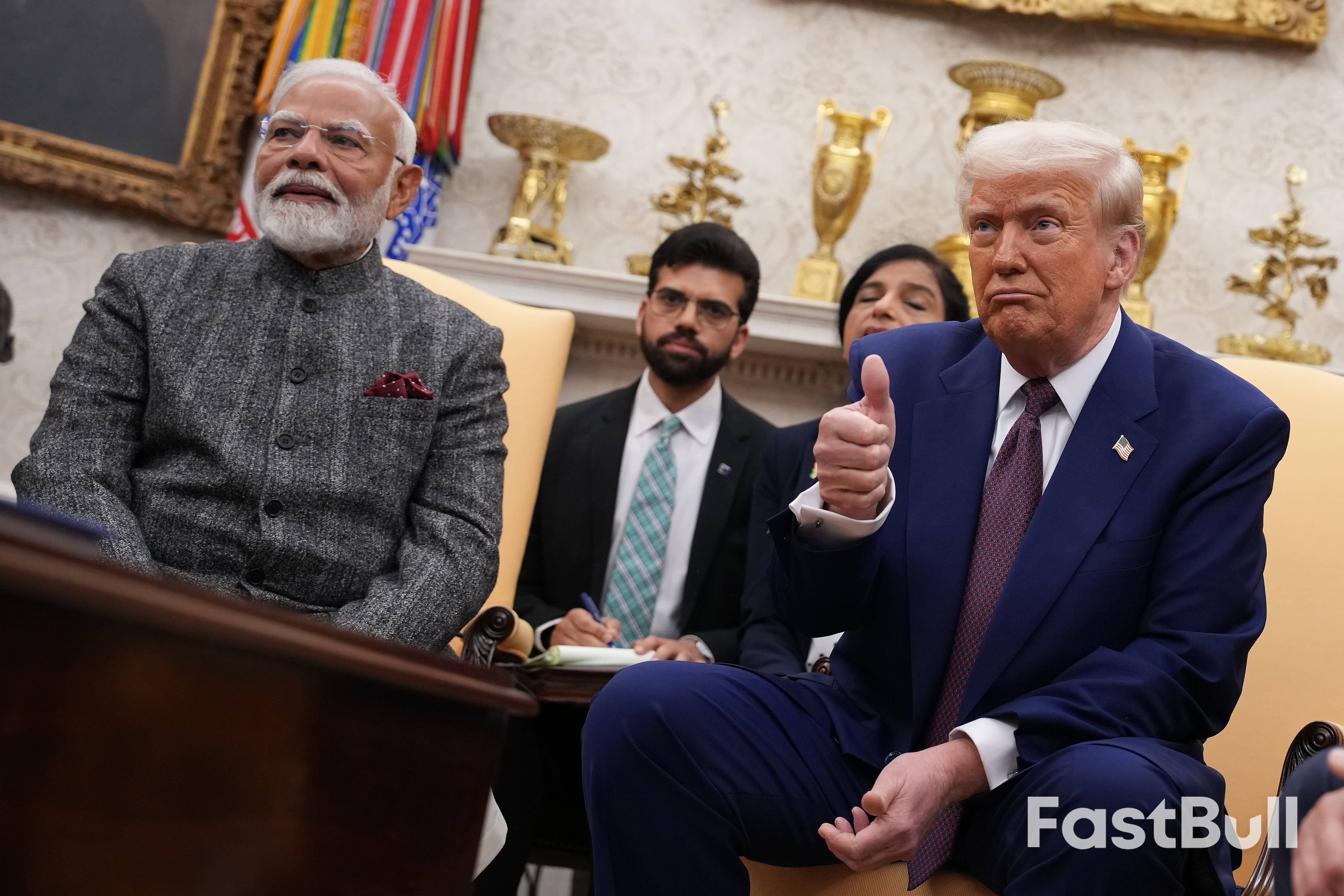
India and the European Union have unveiled a landmark free trade agreement designed to eliminate or cut tariffs on over 90% of goods traded between them. The deal, which has been nearly two decades in the making, will see India lower import duties in the politically sensitive agriculture and auto sectors.
The agreement arrives as nations worldwide forge new bilateral deals, recalibrating supply chains and commercial relationships in response to Washington's aggressive use of tariffs. This global shift is already underway. Canadian Prime Minister Mark Carney recently visited China—the first such visit by a Canadian leader in 17 years—to strengthen economic ties. UK Prime Minister Keir Starmer is also scheduled for a three-day trip to China, the first by a British prime minister since 2018.
Despite its significance, the India-EU pact, dubbed the "mother of all deals" by European Commission President Ursula von der Leyen, now faces its most unpredictable challenge: U.S. President Donald Trump.
President Trump, known for imposing punitive tariffs on both allies and adversaries, has not yet commented on the India-EU agreement. His silence is conspicuous and hangs over the deal.
Last August, the U.S. hit Indian goods with higher levies over India's oil purchases from Russia, just days after applying a separate 25% duty on New Delhi. With Trump's increasingly sharp rhetoric aimed at the EU, including threats related to Greenland, his potential reaction casts a long shadow.

That shadow grew darker on Sunday when U.S. Treasury Secretary Scott Bessent criticized the EU for finalizing a trade agreement with India in an interview with ABC News.
However, there may be cause for optimism. India's Minister of Petroleum and Natural Gas, Hardeep Singh Puri, told CNBC on Tuesday that the U.S. and India are at "a very advanced stage" of completing their own highly anticipated trade deal.
Under the terms of the free trade agreement, India will reduce tariffs on European automobiles and agricultural products. In return, the EU will lower duties on Indian exports, including textiles, leather, marine products, and gems and jewelry.

While India is the EU's ninth-largest trading partner, making up 2.4% of the bloc's goods trade in 2024, the EU is one of India's top partners, alongside the U.S. and China. For comparison, the U.S. accounted for 17.3% of EU trade, China for 14.6%, and the U.K. for 10.1%.
Investors are also closely monitoring the U.S. Federal Reserve, which concludes its policy meeting on Wednesday. While interest rates are expected to hold steady, Chairman Jerome Powell's comments will be scrutinized amid rising political pressure on the central bank.
Here’s what else you need to know:
• S&P 500 Hits Record High: On Tuesday, the S&P 500 index reached a new all-time intraday high, driven by gains in Big Tech stocks ahead of their earnings reports. The Nasdaq Composite also advanced, though the Dow Jones Industrial Average declined. European markets closed higher following the EU-India deal announcement.
• Potential U.S. Government Shutdown: A partial U.S. government shutdown could begin early Saturday. The risk stems primarily from strong Senate Democratic opposition to funding for the Department of Homeland Security and other agencies following the recent killing of a U.S. citizen by federal agents in Minneapolis.
• Anthropic Secures Major Funding: The AI company closed a funding round totaling between $10 billion and $15 billion, exceeding its $10 billion target. According to sources, the round was led by Coatue and Singapore's sovereign wealth fund GIC.
The Australian dollar paused near three-year peaks on Wednesday as a selloff in the greenback turned into a rout, while a hot set of inflation figures at home ramped up the chance of a rate hike as soon as next week.
The Aussie was enjoying the view at $0.6994 , climbing 1.4% overnight to as high as $0.7016. That was the first visit to 70 cents since early 2023 and left the Aussie up more than 4% in just five sessions. The breach of the $0.69435 resistance triggered further momentum buying and targets $0.7158 next.
It got a further lift when Australian data showed a key trimmed mean measure of core inflation rose 0.9% in the December quarter, above forecasts of a 0.8% increase.
The annual pace quickened to 3.4%, up from 3.0% the previous quarter and the fastest in more than a year. It was also above the Reserve Bank of Australia's target range of 2% to 3%, setting the scene for a hike when it meets on February 3.
Markets now imply a 70% probability of a quarter-point rise in the 3.6% cash rate, up from 60% before the data. An increase to 3.85% is fully priced in by May, with 4.10% seen by September. (0#AUDIRPR)
Analysts at ANZ responded by changing their call to a hike next week, though they assumed it would be one and done, as inflation should moderate through this year.
Abhijit Surya, a senior APAC economist at Capital Economics, looks for rate rises in both February and May.
"Household spending has been growing strongly, business investment is rising in tandem, and the labour market is also tightening," he argued. "All of these factors will fuel the RBA's concerns that the economy is operating above potential."
Yields on 10-year bonds were left at 4.82%, after hitting their highest since late 2023 overnight at 4.901%. The spread over Treasuries stood at 58 basis points, offering an attractive premium to the out-of-favour U.S. dollar.
The New Zealand dollar was also firm at $0.6030 , after surging 1.2% overnight to clear $0.6007 resistance. The next targets are $0.6059 and $0.6120.
The Reserve Bank of New Zealand next meets on February 18 and is considered certain to hold rates at 2.25%, though again investors believe the next move will be up.
White Label
Data API
Web Plug-ins
Poster Maker
Affiliate Program
The risk of loss in trading financial instruments such as stocks, FX, commodities, futures, bonds, ETFs and crypto can be substantial. You may sustain a total loss of the funds that you deposit with your broker. Therefore, you should carefully consider whether such trading is suitable for you in light of your circumstances and financial resources.
No decision to invest should be made without thoroughly conducting due diligence by yourself or consulting with your financial advisors. Our web content might not suit you since we don't know your financial conditions and investment needs. Our financial information might have latency or contain inaccuracy, so you should be fully responsible for any of your trading and investment decisions. The company will not be responsible for your capital loss.
Without getting permission from the website, you are not allowed to copy the website's graphics, texts, or trademarks. Intellectual property rights in the content or data incorporated into this website belong to its providers and exchange merchants.
Not Logged In
Log in to access more features
Log In
Sign Up