Markets
News
Analysis
User
24/7
Economic Calendar
Education
Data
- Names
- Latest
- Prev



Signal Accounts for Members
All Signal Accounts
All Contests


France Industrial Output MoM (SA) (Nov)A:--
F: --
P: --
Italy Retail Sales MoM (SA) (Nov)A:--
F: --
P: --
Euro Zone Retail Sales MoM (Nov)A:--
F: --
Euro Zone Retail Sales YoY (Nov)A:--
F: --
Italy 12-Month BOT Auction Avg. YieldA:--
F: --
P: --
India Deposit Gowth YoYA:--
F: --
P: --
Brazil IPCA Inflation Index YoY (Dec)A:--
F: --
P: --
Mexico Industrial Output YoY (Nov)A:--
F: --
P: --
Brazil CPI YoY (Dec)A:--
F: --
P: --
U.S. Building Permits Revised YoY (SA) (Oct)--
F: --
P: --
U.S. Building Permits Revised MoM (SA) (Oct)--
F: --
P: --
U.S. Average Hourly Wage MoM (SA) (Dec)A:--
F: --
U.S. Average Weekly Working Hours (SA) (Dec)A:--
F: --
P: --
U.S. New Housing Starts Annualized MoM (SA) (Oct)A:--
F: --
P: --
U.S. Total Building Permits (SA) (Oct)A:--
F: --
P: --
U.S. Building Permits MoM (SA) (Oct)A:--
F: --
P: --
U.S. Annual New Housing Starts (SA) (Oct)A:--
F: --
P: --
U.S. U6 Unemployment Rate (SA) (Dec)A:--
F: --
P: --
U.S. Manufacturing Employment (SA) (Dec)A:--
F: --
U.S. Labor Force Participation Rate (SA) (Dec)A:--
F: --
P: --
U.S. Private Nonfarm Payrolls (SA) (Dec)A:--
F: --
U.S. Unemployment Rate (SA) (Dec)A:--
F: --
U.S. Nonfarm Payrolls (SA) (Dec)A:--
F: --
U.S. Average Hourly Wage YoY (Dec)A:--
F: --
Canada Full-time Employment (SA) (Dec)A:--
F: --
P: --
Canada Part-Time Employment (SA) (Dec)A:--
F: --
P: --
Canada Unemployment Rate (SA) (Dec)A:--
F: --
P: --
Canada Labor Force Participation Rate (SA) (Dec)A:--
F: --
P: --
U.S. Government Employment (Dec)A:--
F: --
P: --
Canada Employment (SA) (Dec)A:--
F: --
P: --
U.S. UMich Consumer Expectations Index Prelim (Jan)--
F: --
P: --
U.S. UMich Consumer Sentiment Index Prelim (Jan)--
F: --
P: --
U.S. UMich Current Economic Conditions Index Prelim (Jan)--
F: --
P: --
U.S. UMich 1-Year-Ahead Inflation Expectations Prelim (Jan)--
F: --
P: --
U.S. UMich 5-Year-Ahead Inflation Expectations Prelim YoY (Jan)--
F: --
P: --
U.S. 5-10 Year-Ahead Inflation Expectations (Jan)--
F: --
P: --
U.S. Weekly Total Oil Rig Count--
F: --
P: --
U.S. Weekly Total Rig Count--
F: --
P: --
Germany Current Account (Not SA) (Nov)--
F: --
P: --
Indonesia Retail Sales YoY (Nov)--
F: --
P: --
Euro Zone Sentix Investor Confidence Index (Jan)--
F: --
P: --
India CPI YoY (Dec)--
F: --
P: --


No matching data
Latest Views
Latest Views
Trending Topics
Top Columnists
Latest Update
White Label
Data API
Web Plug-ins
Affiliate Program
View All

No data
The U.S. formally exited the Green Climate Fund, signaling a broader Trump administration shift from global climate initiatives.
The United States has officially pulled out of the Green Climate Fund (GCF), a major international climate institution based in South Korea, the Treasury Department announced Thursday. The decision is effective immediately.
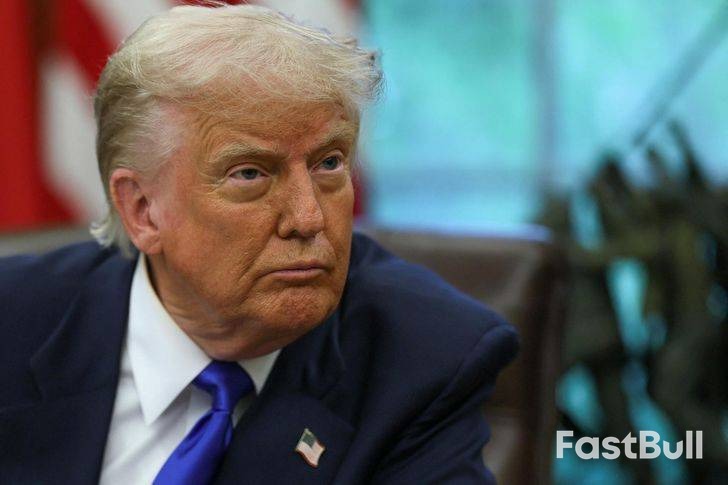
This move comes just one day after President Donald Trump signed a memorandum to exit 66 global organizations identified as running contrary to U.S. interests.
In a formal notification to the Green Climate Fund, the Treasury Department confirmed the U.S. would not only withdraw from the fund but also give up its seat on the GCF board.
The GCF, headquartered in Incheon, was established in 2010 under the U.N. Framework Convention on Climate Change (UNFCCC). Its primary mission is to support developing nations in their efforts to mitigate and adapt to climate change. The Trump administration's withdrawal from the GCF is consistent with its previous decision to leave the UNFCCC.
The Trump administration justified the withdrawal by framing the GCF's objectives as incompatible with its own economic goals.
"Our nation will no longer fund radical organizations like the GCF whose goals run contrary to the fact that affordable, reliable energy is fundamental to economic growth and poverty reduction," said Secretary of the Treasury Scott Bessent.
The Treasury Department stated that continued U.S. participation was no longer consistent with the administration's priorities. It also reiterated a commitment to advancing all sources of affordable and reliable energy as essential tools for reducing poverty and fostering economic expansion.
The exit from the Green Climate Fund is part of a wider policy shift. On Wednesday, President Trump initiated the process to withdraw the U.S. from 66 international organizations, agencies, and commissions.
Secretary of State Marco Rubio explained that these organizations were flagged during a review of international bodies that the Trump administration considers "wasteful," "ineffective," and "harmful."
WASHINGTON (dpa-AFX) - After ending the previous session on opposite sides of the unchanged line, the major U.S. stock indexes are turning in another mixed performance during trading on Thursday.
While the Dow has moved back to the upside following yesterday's pullback, the tech-heavy Nasdaq has moved notably lower.
Currently, the Nasdaq is well off its worst levels of the day but still down 148.06 points or 0.6 percent at 23,436.21.
The S&P 500 is also down 4.34 points or 0.1 percent at 6,916.59, while the narrower Dow is up 179.84 points or 0.4 percent at 49,175.92.
The mixed performance on Wall Street comes as traders seem reluctant to make more significant moves ahead of the release of the Labor Department's closely watched monthly jobs report on Friday.
Economists currently expect employment to increase by 60,000 jobs in December after climbing by 64,000 jobs in November. The unemployment rate is expected to edge down to 4.5 percent from 4.6 percent.
The jobs data could have a significant impact on the outlook for interest rates ahead of the Federal Reserve's next monetary policy meeting later this month.
The Fed is widely expected to leave interest rates at its January 27th-28th meeting but is seen as likely to cut rates by at least another quarter point in the coming months.
Ahead of the monthly jobs report, a report released by the Labor Department this morning showed first-time claims for U.S. unemployment benefits edged up by slightly less than expected in the week ended January 3rd.
The Labor Department said initial jobless claims crept up to 208,000, an increase of 8,000 from the previous week's revised level of 200,000.
Economists had expected jobless claims to rise to 210,000 from the 199,000 originally reported for the previous week.
Housing stocks have shown a strong move back to the upside after falling sharply on Wednesday, with the Philadelphia Housing Sector Index surging by 2.7 percent.
A sharp increase by the price of crude oil is also contributing to significant strength among oil service stocks, as reflected by the 1.9 percent jump by the Philadelphia Oil Service Index.
On the other hand, semiconductor, computer hardware and networking stocks have shown significant moves to the downside, contributing to the drop by the tech-heavy Nasdaq.
In overseas trading, stock markets across the Asia-Pacific region moved mostly lower during trading on Thursday. Japan's Nikkei 225 Index tumbled by 1.6 percent, while Hong Kong's Hang Seng Index slumped by 1.2 percent.
Meanwhile, the major European markets have moved slightly higher on the day. While the French CAC 40 Index is up by 0.2 percent, the German DAX Index is up by 0.1 percent and the U.K.'s FTSE 100 Index is just above the unchanged line.
In the bond market, treasuries have moved back to the downside amid concerns about the national debt. Subsequently, the yield on the benchmark ten-year note, which moves opposite of its price, is up by 3.7 basis points at 4.175 percent.
Institutional investors are signaling their most negative outlook on oil in nearly a decade, driven by a growing global supply glut and shifting geopolitical landscapes. A recent survey from Goldman Sachs reveals that sentiment is hovering just above record lows, painting a bleak picture for crude prices.
According to a Goldman Sachs survey conducted between January 5-7, a striking 59% of its 1,100 clients are either bearish or slightly bearish on crude oil. This positions current market sentiment near its most pessimistic level in a monthly dataset that tracks investor views back to January 2016.
The only time investors held a slightly more negative view was in April of last year, when President Donald Trump was threatening major tariffs against U.S. trading partners.
Adding to the bearish consensus, the survey also found that a record number of institutional investors now consider oil their favorite short position.
This overwhelmingly negative sentiment follows a challenging year for oil, which saw its worst performance since 2020. The primary cause is a significant oversupply driven by several key factors:
• Increased OPEC+ Production: The producer group raised its output targets.
• Record U.S. Pumping: The United States has been producing oil at record levels.
• New Global Supply: Countries like Brazil and Guyana have significantly boosted their contributions to the market.
While Brent crude, the international benchmark, traded above $61 a barrel on Thursday, it remains substantially down from its levels a year ago.
Market analysts expect the oil glut to expand even further this year, with several geopolitical developments threatening to add more barrels to the market.
A potential end to the war in Ukraine could remove supply disruptions and lift sanctions on Russian crude, releasing more oil globally. Meanwhile, the U.S. is planning to manage future sales of Venezuelan oil, which would bring the nation's crude back to the market. Even a marginal increase in Venezuela's production capacity could contribute to the growing surplus.
This bearish outlook is clearly reflected in current trading strategies. According to data from Kpler's Bridgeton Research Group, trend-following commodity trading advisers were 91% short in West Texas Intermediate (WTI), the U.S. benchmark, as of Wednesday. This heavy short positioning underscores the market's conviction that prices have more room to fall.
France and the United Kingdom have reportedly agreed to deploy troops to Ukraine once a ceasefire with Russia is achieved. While similar unconfirmed reports involve Washington, President Trump has not formally approved such a plan.
Moscow would almost certainly reject any such deployment, viewing it as a direct threat from NATO forces operating on its border. This geopolitical tension formed the backdrop of a recent Paris conference hosted by French President Macron. Despite strong rhetoric from European leaders, Ukrainian President Zelenskyy later complained that a finalized agreement on security guarantees remains ambiguous and unconfirmed.
When asked directly about Western security guarantees against a future Russian attack post-truce, Zelenskyy was blunt: "I am asking this very question to all our partners and I have not received a clear, unambiguous answer yet."

The messaging from the United States has been particularly inconsistent. Following the summit, President Trump's envoy, Steve Witkoff, claimed "significant progress" had been made.
"We have made significant progress on several critical workstreams, including our bilateral security guarantee framework and a prosperity plan," Witkoff stated on X. "We agree with the Coalition that durable security guarantees and robust prosperity commitments are essential to a lasting peace in the Ukraine."
However, this optimistic tone contrasts with the intentionally vague rhetoric from Washington. This has been a source of ongoing frustration for Zelenskyy, who receives robust verbal commitments from European allies while the U.S. appears to drag its feet. The result is a cycle of bickering among Western partners without any final, signed agreements.
Furthermore, President Trump is unlikely to support any measure that could be perceived as violating his campaign promise of no American "boots on the ground" in Ukraine.

Adding another layer of complexity, President Trump has been pushing for Zelenskyy to hold elections. The issue is included in a 20-point peace plan developed between Washington and Kyiv.
In response, Ukraine's parliament has approved a cross-party working group to draft legislation for holding elections under martial law. On January 8, the group met for the second time, with the Central Election Commission (CEC) presenting its proposals.
However, Zelenskyy has outlined his own requirements for an election, including a short-term truce to allow for voting. This presents a major obstacle, as Russia would first have to agree. Moscow has consistently resisted short-term ceasefires, pushing instead for a permanent political resolution to end the conflict.
If Zelenskyy continues to test Washington's patience on these issues, he risks losing the very security guarantees he is trying to secure.
The US seizure of a Russian-flagged oil tanker, the Marinera, in the North Atlantic marks a significant escalation in Washington's naval blockade of Venezuela. This action directly challenges a Kremlin strategy to protect its "shadow fleet" by reflagging ships and amplifies tensions with Moscow.
The move follows a clear pattern. According to maritime intelligence firm Windward, 21 previously flagless vessels adopted the Russian flag after the US seized another shadow fleet tanker, the Skipper, in the Caribbean on December 10. The seizures are part of a broader blockade announced by US President Donald Trump targeting sanctioned oil tankers moving in and out of Venezuela.

Under international maritime law, a flagged ship typically cannot be boarded without permission from the flag-granting country, while a flagless vessel has no such protection. However, despite warnings from Moscow, US Coast Guard helicopters boarded and took control of the Marinera, which had recently been renamed from Bella 1.
"This individual action threatens to undermine the security and sanctuary that registering or re-registering in Russia might otherwise create," John Burgess, a senior fellow at Tufts University's Center for International Law and Governance, told RFE/RL on January 7.
The Marinera adopted the Russian flag on December 30, shortly after a previous US boarding attempt near Venezuelan waters. Burgess noted this made the tanker's legal status "ambiguous," rendering its new flag—which the crew had painted onto the hull—ineffective. "Ships are not supposed to change flags for convenience. There's supposed to be a substantive reason," he explained.
Washington's position was blunt. "The vessel was deemed stateless after flying a false flag," stated White House Press Secretary Karoline Leavitt, dismissing Russian claims that the seizure was a violation of maritime law or even "piracy."
The shadow fleets used by Russia, Iran, and Venezuela to circumvent international sanctions are estimated to comprise around 1,000 vessels. These fleets have grown as the nations work to maintain oil sales crucial to their state budgets. The ships are often old, poorly maintained, and uninsured, with hundreds blacklisted by the US, the European Union, and others.
Maritime analysts believe recent US actions, along with Ukrainian drone strikes on sanctioned ships in the Black Sea, signal a tougher era for the shadow fleet. The seizure of the Marinera takes this a step further.
"US regulators are watching. More seizures are likely," said Michelle Bockmann, a senior maritime intelligence analyst at Windward, during a January 7 webinar.
Bockmann suggested the operation provides "a template" for Baltic Sea nations concerned about the safety, security, and environmental threats posed by falsely flagged tankers. "The US has shown that it is possible to interdict and to seize and to deal with tankers," she added.
The operation was also a coordinated effort. The UK's Defense Ministry confirmed that its air force provided surveillance and naval refueling to support the US mission. Defense Secretary John Healey stated that US forces were permitted to use UK bases for the operation, justifying it under international law because the Marinera was part of "a Russian-Iranian axis of sanctions evasion which is fueling terrorism, conflict, and misery from the Middle East to Ukraine."
This seizure adds another layer of complexity to the geopolitical landscape. It comes as Washington engages in delicate negotiations with Russia, Ukraine, and European allies over ending the war in Ukraine, with proposed security guarantees for Kyiv that Moscow finds unacceptable. The incident also deals a blow to Moscow's prestige, following a US raid that led to the detention of key Kremlin ally and ousted Venezuelan leader Nicolas Maduro.
The immediate consequences continue to unfold. Russia's Foreign Ministry has demanded that the US ensure "humane and proper treatment of Russian citizens aboard the Marinera" and allow for their prompt return home. Washington, however, has indicated that the seafarers could face trial in the United States, setting the stage for further diplomatic conflict.
The United States government is actively considering an investment in critical minerals mining projects in Greenland, according to Amaroq CEO Eldur Olafsson. The discussions precede high-stakes talks between Washington and Danish officials over the strategic future of the Arctic island.
Amaroq is a mining company focused on South Greenland, where it is exploring and extracting deposits of gold, copper, germanium, and gallium, among other key minerals.
In an interview, Amaroq's CEO Eldur Olafsson confirmed that discussions with U.S. government bodies about potential investment opportunities are ongoing, though no final agreements have been reached.
Olafsson detailed that a potential deal could involve several forms of U.S. support, including:
• Offtake agreements
• Infrastructure support
• Credit lines
He declined to specify which projects have attracted U.S. interest.
When asked for comment, a U.S. State Department spokesperson stated, "The United States is eager to build lasting commercial relationships that benefit Americans and the people of Greenland." The spokesperson also noted that "President Trump reiterated the importance of Greenland to U.S. defense and underscored his commitment to the relationship by designating Governor Landry as Special Envoy to Greenland."
The Export-Import Bank of the United States (EXIM) did not respond to a request for comment.
These investment talks are unfolding as U.S. President Donald Trump has increased his focus on acquiring Greenland, which he views as vital to national security. The renewed interest follows a recent military operation to seize Venezuelan President Nicolas Maduro.
European governments have been working to formulate a response to the escalating rhetoric from the U.S., which has not ruled out military action. Adding to the urgency, U.S. Secretary of State Marco Rubio is scheduled to meet with Danish officials next week to discuss the future of Greenland, which is a self-governing Danish territory.
For the White House, Greenland's vast mineral deposits represent a strategic opportunity to challenge China's control over the global supply of critical minerals.
Earlier this week, rare earth companies with projects in Greenland saw their stock prices surge following U.S. comments about acquiring the island. While President Trump has recently framed the issue around national security, former national security advisor Mike Waltz clarified in January 2025 that the U.S. fixation on the island was primarily about "critical minerals."
Despite the strategic interest, some experts have raised concerns that extracting minerals from Greenland is not economically feasible due to the island's harsh conditions and lack of infrastructure.
However, Amaroq's CEO, Eldur Olafsson, argued that mining is realistic with careful planning and logistics. He drew parallels to major mining operations in Russia and Alaska, which were developed under similar challenging conditions.
Olafsson noted that while transporting minerals over long distances on land is a major hurdle for many mining projects, Greenland offers a unique advantage. Many of its mineral deposits are located near "deep fjords," which could significantly simplify the process of shipping them to global markets.
Furthermore, climate change is altering Greenland's landscape. Melting ice has exposed wetlands, shrub areas, and barren rock, making some of the island's strategic mineral reserves more accessible to mining companies.
U.S. Treasury yields rose on Thursday as investors braced for two pivotal events: the release of December's employment data and a potential Supreme Court decision on key tariffs.
Yields ticked higher across the curve by less than three basis points, rebounding from earlier lows. The move was supported by fresh economic data showing improved productivity and weekly jobless claims holding near recent lows. A rise in oil prices after a two-day slide also contributed to the upward pressure on yields.
Despite the sell-off, some analysts believe the Treasury market has a "strong underlying bid" that could cushion the impact of strong economic news, according to Andrew Brenner, vice chairman at Natalliance Securities. Brenner noted that a ruling on tariffs "could send rates in either direction," highlighting the uncertainty facing bond investors.
The upcoming December employment report is the main event for market participants, as it could reshape expectations for Federal Reserve interest rate policy in the year ahead.
Last year, the Fed delivered three rate cuts in response to signs of a weakening job market. However, with some central bank officials now signaling a desire to pause due to inflation risks, the new data carries significant weight.
Currently, traders of short-term interest rate products are pricing in minimal odds of a rate cut at the Fed's next meeting on January 28. The market is, however, anticipating two cuts by the end of the year. In a notable move in the options market on Thursday, one trader purchased a $7.5 million call option on 10-year note futures, a position that protects against a rally in bond prices (a fall in yields).
Investors are also closely watching the Supreme Court, which could rule on the legality of tariffs implemented by the current administration. These tariffs have become a source of revenue that helped narrow the U.S. budget deficit in fiscal 2025.
An abrupt end to this revenue stream could trigger a negative knee-jerk reaction in the Treasury market, reflecting concerns over the nation's fiscal health. A similar market response was observed in early November when the court heard oral arguments on the case, even though the White House has alternative legal options available.
Supply dynamics are also playing a crucial role in pushing yields higher. This week is shaping up to be one of the largest on record for new investment-grade corporate bond sales, which directly compete with Treasuries for investor capital. A staggering $88.4 billion in corporate debt was sold in just the first three days of the week.
Adding to the supply pressure, the Treasury Department is scheduled to auction new three-year and 10-year notes on Monday. All of next week's auctions have been scheduled earlier than usual to ensure they conclude by their January 15 settlement date.
White Label
Data API
Web Plug-ins
Poster Maker
Affiliate Program
The risk of loss in trading financial instruments such as stocks, FX, commodities, futures, bonds, ETFs and crypto can be substantial. You may sustain a total loss of the funds that you deposit with your broker. Therefore, you should carefully consider whether such trading is suitable for you in light of your circumstances and financial resources.
No decision to invest should be made without thoroughly conducting due diligence by yourself or consulting with your financial advisors. Our web content might not suit you since we don't know your financial conditions and investment needs. Our financial information might have latency or contain inaccuracy, so you should be fully responsible for any of your trading and investment decisions. The company will not be responsible for your capital loss.
Without getting permission from the website, you are not allowed to copy the website's graphics, texts, or trademarks. Intellectual property rights in the content or data incorporated into this website belong to its providers and exchange merchants.
Not Logged In
Log in to access more features

FastBull Membership
Not yet
Purchase
Log In
Sign Up