

Markets
News
Analysis
User
24/7
Economic Calendar
Education
Data
- Names
- Latest
- Prev



Signal Accounts for Members
All Signal Accounts
All Contests
 U.S. Average Hourly Wage MoM (SA) (Dec)
A:--
F: --
U.S. Average Weekly Working Hours (SA) (Dec)A:--
F: --
P: --
U.S. New Housing Starts Annualized MoM (SA) (Oct)A:--
F: --
U.S. Total Building Permits (SA) (Oct)A:--
F: --
P: --
U.S. Building Permits MoM (SA) (Oct)A:--
F: --
P: --
U.S. Annual New Housing Starts (SA) (Oct)A:--
F: --
U.S. U6 Unemployment Rate (SA) (Dec)A:--
F: --
P: --
U.S. Manufacturing Employment (SA) (Dec)A:--
F: --
U.S. Labor Force Participation Rate (SA) (Dec)A:--
F: --
P: --
U.S. Private Nonfarm Payrolls (SA) (Dec)A:--
F: --
U.S. Unemployment Rate (SA) (Dec)A:--
F: --
U.S. Nonfarm Payrolls (SA) (Dec)A:--
F: --
U.S. Average Hourly Wage YoY (Dec)A:--
F: --
 Canada Full-time Employment (SA) (Dec)
A:--
F: --
P: --
Canada Part-Time Employment (SA) (Dec)A:--
F: --
P: --
Canada Unemployment Rate (SA) (Dec)A:--
F: --
P: --
Canada Labor Force Participation Rate (SA) (Dec)A:--
F: --
P: --
U.S. Government Employment (Dec)A:--
F: --
P: --
Canada Employment (SA) (Dec)A:--
F: --
P: --
U.S. UMich Consumer Expectations Index Prelim (Jan)A:--
F: --
P: --
U.S. UMich Consumer Sentiment Index Prelim (Jan)A:--
F: --
P: --
U.S. UMich Current Economic Conditions Index Prelim (Jan)A:--
F: --
P: --
U.S. UMich 1-Year-Ahead Inflation Expectations Prelim (Jan)A:--
F: --
P: --
U.S. UMich 5-Year-Ahead Inflation Expectations Prelim YoY (Jan)A:--
F: --
P: --
U.S. 5-10 Year-Ahead Inflation Expectations (Jan)A:--
F: --
P: --
 China, Mainland M1 Money Supply YoY (Dec)
--
F: --
P: --
China, Mainland M0 Money Supply YoY (Dec)--
F: --
P: --
China, Mainland M2 Money Supply YoY (Dec)--
F: --
P: --
U.S. Weekly Total Oil Rig CountA:--
F: --
P: --
U.S. Weekly Total Rig CountA:--
F: --
P: --
 Indonesia Retail Sales YoY (Nov)
--
F: --
P: --
 Euro Zone Sentix Investor Confidence Index (Jan)
--
F: --
P: --
 India CPI YoY (Dec)
--
F: --
P: --
 Germany Current Account (Not SA) (Nov)
--
F: --
P: --
Canada National Economic Confidence Index--
F: --
P: --
FOMC Member Barkin Speaks U.S. 3-Year Note Auction Yield--
F: --
P: --
U.S. 10-Year Note Auction Avg. Yield--
F: --
P: --
 Japan Trade Balance (Customs Data) (SA) (Nov)
--
F: --
P: --
Japan Trade Balance (Nov)--
F: --
P: --
 U.K. BRC Overall Retail Sales YoY (Dec)
--
F: --
P: --
U.K. BRC Like-For-Like Retail Sales YoY (Dec)--
F: --
P: --
 Turkey Retail Sales YoY (Nov)
--
F: --
P: --
U.S. NFIB Small Business Optimism Index (SA) (Dec)--
F: --
P: --
 Brazil Services Growth YoY (Nov)
--
F: --
P: --
Canada Building Permits MoM (SA) (Nov)--
F: --
P: --
U.S. CPI MoM (SA) (Dec)--
F: --
P: --
U.S. CPI YoY (Not SA) (Dec)--
F: --
P: --
U.S. Real Income MoM (SA) (Dec)--
F: --
P: --
U.S. CPI MoM (Not SA) (Dec)--
F: --
P: --
U.S. Core CPI (SA) (Dec)--
F: --
P: --
U.S. Core CPI YoY (Not SA) (Dec)--
F: --
P: --
U.S. Core CPI MoM (SA) (Dec)--
F: --
P: --
U.S. Weekly Redbook Index YoY--
F: --
P: --
U.S. New Home Sales Annualized MoM (Oct)--
F: --
P: --
U.S. Annual Total New Home Sales (Oct)--
F: --
P: --
U.S. Cleveland Fed CPI MoM (SA) (Dec)--
F: --
P: --
China, Mainland Imports YoY (CNH) (Dec)--
F: --
P: --
China, Mainland Trade Balance (CNH) (Dec)--
F: --
P: --
China, Mainland Imports YoY (USD) (Dec)--
F: --
P: --
China, Mainland Exports YoY (USD) (Dec)--
F: --
P: --













No matching data

Latest Views
Latest Views
Trending Topics
Top Columnists
Latest Update
White Label
Data API
Web Plug-ins
Affiliate Program
View All
No data
Trump's executive order blocks creditors from Venezuelan oil revenue, securing funds for U.S. policy goals.
President Donald Trump has signed an executive order declaring a national emergency to control the proceeds from future sales of Venezuelan oil. The directive is designed to block creditors and other claimants from seizing the revenue.
According to a White House fact sheet, the order safeguards Venezuelan oil revenue held in U.S. Treasury accounts. It prevents the money from being used to satisfy debts or other legal claims lodged against the Latin American country.
The executive order affirms that the funds are the "sovereign property of Venezuela," even when held in U.S. custody for diplomatic and governmental purposes. This designation, the White House stated, makes the revenue not subject to private claims.
The stated goal is to ensure the funds are preserved to advance U.S. foreign policy objectives.
The Trump administration has announced its intention to use the proceeds from Venezuelan oil sales to benefit both the Venezuelan and American people. The initial sales are expected to involve what the president has claimed to be 30 million to 50 million barrels of crude.
These sales are also meant to help clear a growing accumulation of oil in storage and maintain a flow of revenue following the capture of Nicolás Maduro.
The White House warned that allowing other countries or creditors to access the funds would jeopardize American objectives. It specified that such claims could "empower malign actors like Iran and Hezbollah."
By blocking these claims, the administration aims to maintain control over the funds and direct them toward its stated policy goals.
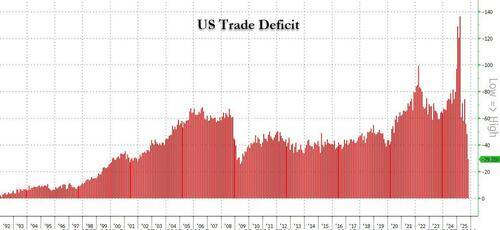
The U.S. trade deficit saw a stunning collapse in October, a development revealed in data delayed by last year's government shutdown. This sharp correction highlights structural shifts in the global economy driven by new trade policies and energy market dynamics.
For years, the deficit has reflected America's industrial base and the unique status of the U.S. dollar as the world's reserve currency, which fueled cheap imports and the outsourcing of manufacturing. In the year before the 2024 inauguration, this gap reached $918 billion, a figure comparable to China’s entire trade surplus.
However, recently released survey data from the U.S. Chamber of Commerce shows a dramatic change for October. The monthly trade deficit fell from $48.1 billion to just $29.4 billion, defying market expectations of a nearly $60 billion deficit.
A core objective of the Trump administration has been to tackle the trade deficit through a combination of restrictive policies and a push for reindustrialization.
This strategy involves two main fronts. First, tariffs have made imports more expensive, significantly reducing trade volumes with China. President Trump's diplomatic trip to the Arab Gulf states, which resulted in investment pledges worth hundreds of billions for American industrial production, complements this effort.
Second, there is a systematic push to rebuild U.S. industry, which recently constituted only about 10 percent of GDP. This is most visible through massive investments in key sectors like artificial intelligence and energy. As a result, China and its subsidized export economy are being forced to find other markets, increasing competitive pressure on the European Union.
The delayed data brings several critical factors into focus that explain the sharp drop in the U.S. deficit.
• The Inventory Cycle: In anticipation of U.S. tariffs, companies stockpiled imports to avoid price hikes and supply risks. That trend is now reversing, leading to a drop in import demand that is reflected in the new trade figures.
• Surging LNG Exports: U.S. exports of liquefied natural gas (LNG) are being used as a strategic geopolitical tool. Last year, LNG exports climbed 25 percent to 116 million tons. With market prices estimated between $8.50 and $9.50 per MMBtu, the total value of these exports likely exceeds $50 billion. Germany, in particular, has become a major buyer after halting cheap Russian gas imports, though at a significantly higher price.
• Domestic Household Spending: A less visible factor may be a pullback in demand from middle- and lower-income U.S. households dealing with high prices. However, this effect is likely tempered by the strong momentum of the U.S. economy, which grew at an annualized rate of roughly 4.5 percent in the last two quarters of the previous year.
Furthermore, falling domestic energy prices and easing housing costs in some regions may be providing relief to households. The government recently reported the repatriation of approximately 2.6 million illegally residing immigrants, a move that could dampen rent and housing prices.
While the International Monetary Fund (IMF) projects global economic growth of around 3 percent this year—below the historical trend of 3.5–4 percent—other indicators signal a potential rebound.
Dynamic measures like shipping indices suggest a tentative recovery in global trade. The Drewry World Container Index (WCI), a key benchmark, has shown early signs of improvement on major routes connecting China with the U.S. and European ports. This indicates that companies across global supply chains have adapted to U.S. tariffs and are gradually normalizing operations.
In contrast to the U.S., Germany's export sector had a modest performance last year. While nominal exports grew by 0.6 percent to approximately €1.6 trillion, volume-adjusted exports fell by about 2 percent.
The causes are familiar: the energy crisis and declining competitiveness are weighing on Germany's industrial core, particularly the automotive and machinery sectors. As a result, Germany's trade surplus with the U.S. shrank by 7.3 percent.
The decline in trade with China was even steeper, with German exporters losing around 10 percent of their business volume. At the same time, Germany's imports from China rose 4.4 percent, driven by capital goods. This signals a reversal in knowledge transfer, with China increasingly exporting technology rather than just serving as the world's low-cost factory.
For the full year 2025, Germany's trade surplus is projected to be around €195 billion, its lowest level since 2012, excluding the outlier year of the Corona lockdown.
Israeli Prime Minister Benjamin Netanyahu has outlined a plan to end Israel's long-standing dependence on American military aid, setting a goal to achieve complete self-reliance within the next decade.
While Netanyahu has previously advocated for reducing reliance on foreign military support, he has now attached a firm timeline to this strategic shift.
In an interview with The Economist, Netanyahu stated his ambition to "taper off the military [aid] within the next 10 years." When asked if this meant reducing the aid "down to zero," he confirmed, "Yes."
The Prime Minister also noted that he had communicated this perspective to U.S. President Donald Trump during a recent visit. Netanyahu said he expressed Israel's deep appreciation for America's historical military support but emphasized that the nation has "come of age and we've developed incredible capacities."
This push for self-sufficiency is backed by significant financial commitment. In December, Netanyahu announced that Israel would invest 350 billion shekels ($110 billion) to develop its independent arms industry, directly aiming to reduce dependency on other countries.
This new direction comes even as a major aid package remains in effect. In 2016, the U.S. and Israeli governments signed a memorandum of understanding that provides $38 billion in military assistance over ten years, running through September 2028. The package includes $33 billion in grants for military equipment and $5 billion for missile defense systems.
Underscoring the growing strength of its domestic sector, Israel's defense exports saw a 13 percent increase last year. This growth was driven by major contracts for advanced Israeli defense technology, including its multi-layered aerial defense systems.
Fears of a market shock rippled through financial circles this week, centered on a potential U.S. Supreme Court ruling that could strike down tariffs from the Trump administration. For traders, the logic was simple: a massive, court-ordered tariff refund could force the U.S. Treasury to flood the system with liquidity, potentially destabilizing bond markets and sending risk assets like crypto into a tailspin.
However, U.S. Treasury officials have moved quickly to address these concerns, signaling that the risk of a financial cataclysm is minimal.
U.S. Treasury Secretary Scott Bessent has reassured markets that the government is fully equipped to handle any potential tariff refunds. He clarified that even a worst-case scenario would not involve a single, massive payout.
Instead, any refunds would be distributed gradually over weeks, months, or longer. This staggered approach is designed to prevent the kind of sudden liquidity event that could rattle markets.
Bessent stated that the Treasury is well-prepared for this contingency and does not foresee the process disrupting government funding or overall financial stability. While expressing doubt that the Supreme Court would overturn the tariffs, he emphasized that robust contingency plans are in place regardless.
Beyond the Treasury's capacity to pay, the refund process itself is expected to be highly complex. According to Bessent, any court ruling would likely come with conditions that complicate how the money flows back into the economy.
There is also significant uncertainty about whether corporations that paid the tariffs, such as large retailers, would pass the refunds on to consumers. These logistical challenges make a rapid, market-disrupting payout even less probable.
Earlier in the week, analysts had warned that a ruling against the tariffs could trigger a broad market correction. The primary concern was that a large refund obligation might compel the Treasury to issue more bonds, which would push yields higher and drain liquidity from speculative assets, including the crypto market.
These fears began to subside after the Supreme Court adjusted its timeline in a separate case, effectively delaying the tariff decision. This postponement reduced immediate market pressure and helped stabilize investor sentiment.
A key factor calming the market is the Treasury's exceptionally strong cash position. Government cash balances currently stand near $774 billion and are projected to grow to approximately $850 billion by the end of March 2026.
This substantial buffer means there is no need for emergency borrowing or an aggressive bond issuance to fund potential refunds. For crypto markets, this suggests that the threat of a liquidity-driven crash tied to the Trump-era tariffs is largely overblown.
For now, the systemic risk from this issue appears to be contained. Here are the key takeaways:
• Gradual Payouts: Any tariff refunds would be spread out over time, preventing a sudden shock to the financial system.
• Ample Liquidity: The U.S. Treasury confirms it has more than enough cash on hand to manage refunds without disrupting bond markets.
• Delayed Timeline: The Supreme Court has pushed its decision further out, removing any immediate threat to market stability.
• No Forced Selling: With a strong cash position, the Treasury will not need to issue a wave of new bonds that could pull capital away from risk assets like crypto.
Prominent German economist Moritz Schularick, president of the Kiel Institute for the World Economy, has suggested that Germany’s path out of its economic slump lies in a pivot toward a war economy, signaling a striking embrace of central planning over market principles.
In an interview with the Neue Osnabrücker Zeitung, Schularick identified a leadership vacuum in German arms policy. He framed a state-directed industrial policy focused on weapons manufacturing as the solution to Germany's economic challenges, even calling increased arms production a potential "job booster."

His argument is rooted in geopolitical strategy. "If we want Europe to truly stand on its own in defense soon and not remain dependent on the MAGA-USA," Schularick stated, "then Defense Minister Boris Pistorius must be given the order to work with European partners to eventually replace the USA and its capabilities."
This rhetoric of "orders to march" and military self-sufficiency reveals a dangerous convergence between politics and state-aligned economic research. Instead of advocating for deregulation and lower taxes to cure economic ills, the focus has shifted to centrally managed industrial policy.
Schularick proposes a top-level arms coordinator to manage investment funds, citing the Russian threat as justification. With over €500 billion in defense investments planned by the end of the decade, the goal is to reduce Germany's security dependence on the United States.
A key frustration for Schularick is the slow pace of ramping up arms production. He notes that four years into the war, little has been done to significantly boost manufacturing capacity.
"How many Taurus missiles are finished per month? Not even a handful," he lamented, diagnosing this as a clear deficit in industrial policy.
This perspective highlights a new trend in German economic thinking, where state-aligned research champions an active industrial policy directed by Berlin and Brussels. Central planners like Schularick appear to believe that idle German industrial capacity can simply be repurposed for the defense sector. The assumption is that civilian car production can be easily converted into tank production.
However, this approach creates a new subsidy-dependent industry that pulls resources from civilian manufacturing, produces goods not demanded by private households, and artificially inflates costs for consumers.
Schularick seems to find a "rediscovered" work ethic in the prospect of a war economy, noting that arms production still operates on a single-shift, five-day work week. The implication is that these state-directed jobs represent Germany's economic future.
Yet, this vision overlooks critical questions. Little thought is given to what civilian goods should be produced to prevent empty shelves during a potential conflict. Schularick acknowledges that Germany has fallen behind not just in producing armored vehicles but also in future technologies like autonomous systems, satellites, AI, and robotics.
The interview fails to address the source of this competitive disadvantage. The possibility that burdensome German policy and Brussels bureaucracy are the primary antagonists is seemingly ignored. This reveals a growing gap between economic reality and the insulated world of politics and state-backed research, which promotes massive economic mismanagement while failing to critically assess Russia's actual military capabilities.
The practical challenges of converting civilian production lines to military manufacturing are immense. Beyond financing, the knowledge transfer required to build a centrally planned war economy is a massive and time-consuming undertaking. Germany's political learning curve appears flat, even after decades of a green transformation that primarily succeeded in driving capital out of the country.
This raises a cynical question: Was the goal of restrictive climate policies to corner industry until it faltered, only to fill the resulting capacity with arms production?
As the climate subsidy model fails, a new one appears to be emerging: the European defense sector. Whether this experiment can survive real-world economic pressures like falling productivity and rising debt is highly doubtful.
No deep economic expertise is needed to see that such a militarization strategy is likely to fail. A brief look at 20th-century history reveals the pitfalls of massive resource mismanagement under central planning. Furthermore, modern obstacles include issues of national sovereignty, divergent geopolitical interests within the EU, and a divided union in which Eastern European nations are wary of conflict with Russia.
When economists like Schularick champion the logic of powerful central planning, it suggests a departure from sound economic principles. The allure of high-level positions, such as a ministerial-level arms coordinator, may be a powerful incentive, but it risks leading the economy down a path of short-term ambition and long-term failure.
China is deliberately concealing its nuclear doctrine as a cornerstone of its national strategy, a policy that dramatically increases the risk of a global nuclear catastrophe. This approach marks a stark departure from the norms established during the Cold War.
Despite their intense rivalry, the United States and the Soviet Union worked to maintain open channels regarding their nuclear arsenals. Both superpowers understood the need for clear communication and a mutual understanding of each other's intentions. This cooperative framework was crucial in preventing multiple crises from escalating into a full-scale nuclear exchange between 1945 and 1991.
Today, the People's Republic of China (PRC), a rapidly growing nuclear power, has rejected this model of transparency. Beijing seems intent on keeping the U.S. and the international community in the dark, not only obscuring its true nuclear capabilities but also neglecting basic crisis-management tools like a direct military hotline with Washington.
Beijing's refusal to let the West understand its nuclear capabilities—and therefore its intentions—is a calculated strategy rooted in the ruling party's obsession with secrecy. This opaqueness has already had major geopolitical consequences.
One significant outcome was the Trump administration's 2019 decision to withdraw from the 1987 Intermediate-Range Nuclear Forces (INF) Treaty with Russia. The move was less about hostility toward Moscow and more a response to a critical strategic imbalance: China was never a signatory to the treaty and faced no restrictions on its missile development.
Freed from the INF Treaty's constraints, the Chinese military aggressively developed and deployed a vast arsenal of advanced intermediate-range ballistic missiles (IRBMs). This unchecked expansion created a significant threat to U.S. military assets and allies across the Indo-Pacific.
In recent years, Western intelligence has uncovered a massive construction campaign for new nuclear missile silos. These findings have fueled concerns that China's nuclear arsenal is far larger than previously assessed by U.S. intelligence agencies.
China's strategy of concealment extends to its operational forces. Recent evidence suggests that mobile nuclear missile launchers are being disguised to look like civilian construction cranes.
Specifically, transporter-erector-launchers (TELs)—the massive trucks used to move and fire China's Dong Feng series of ballistic missiles—are being camouflaged with external covers and markings to resemble equipment from Zoomlion, a major Chinese construction company.
This tactic is a clear example of China's "military-civil fusion" (MCF) program, which aims to seamlessly integrate its military and civilian sectors. The strategy serves two purposes:
• It allows Beijing to marshal national resources for a single grand strategic objective.
• It confuses American adversaries, who maintain a clear separation between their military and civilian domains.
This systematic deception exponentially raises the risk of miscalculation during a major geopolitical crisis. If U.S. intelligence cannot accurately assess the capabilities and intentions of China's nuclear forces, and if no reliable communication channels exist, American leaders would be forced to assume the worst-case scenario.
Acting on worst-case assumptions during a nuclear standoff is a nightmare scenario. The combination of Beijing's aggressive rhetoric, its refusal to communicate, and its efforts to mask its nuclear forces suggests it may be developing a first-strike capability, a departure from a purely deterrent posture.
Given these developments, Washington must prepare for such contingencies. This reality underscores the importance of proposals like the Trump administration's call for a "Golden Dome" national missile defense system.
At the same time, any calls to dismantle portions of America's nuclear arsenal appear increasingly dangerous. The U.S. arsenal is aging, and its size may no longer be sufficient to deter multiple adversaries. Instead of reductions, a strategic expansion of American nuclear forces, not seen since the Cold War, may be necessary to ensure stability.
Ultimately, unless Beijing and Washington establish a crisis-management framework similar to the one that prevented catastrophe between the U.S. and the Soviet Union, the world faces the real possibility of its first nuclear war—an event that would undoubtedly be the final conflict of our time.
Major financial institutions, including Morgan Stanley and Citigroup, are revising their forecasts to predict more aggressive Federal Reserve rate cuts in 2026. This shift reflects a growing consensus on Wall Street that as economic momentum cools, the central bank is preparing to ease monetary policy.
The updated outlook is driven by a combination of weaker economic data and anticipation of new leadership at the Federal Reserve. With President Trump set to nominate a new Fed Chair, analysts are reassessing how quickly policymakers might pivot to support economic growth.
Morgan Stanley now projects a total of 50 basis points in rate reductions for 2026, delivered through two separate 25-basis-point cuts. The bank has pushed back its expected timing for these moves from January and April to June and September.
This adjustment signals a degree of caution regarding near-term inflation, even as signs of an economic slowdown become more apparent. Morgan Stanley’s forecast suggests the Fed will likely wait for clearer economic signals before taking action.
Citigroup has adopted a more dovish stance, now forecasting 75 basis points of cuts in 2026. The bank anticipates three 25-basis-point reductions occurring in March, July, and September.
This outlook places Citigroup at the more aggressive end of the spectrum among major banks. It indicates a heightened concern about growth risks and a strong conviction that inflation will subside enough to justify earlier and more substantial rate cuts.
The move toward expecting more rate cuts is not limited to Morgan Stanley and Citigroup. A broader Wall Street consensus has emerged, with several key players aligning their forecasts.
Major banks now projecting 50 basis points of total cuts in 2026 include:
• Goldman Sachs
• Bank of America
• Wells Fargo
• Barclays
While specific timelines vary between institutions, the general agreement on policy easing marks a significant shift from earlier expectations.
The revised forecasts are shaped by two primary factors. First, recent jobs reports have been weaker than anticipated, fueling concerns about slowing economic activity. However, persistent inflation remains a complicating variable, leading some analysts to believe the Fed may pause in early 2026 before initiating cuts.
Second, political dynamics are playing a key role. Wall Street widely expects that a new Fed Chair appointed by President Trump could be more inclined to favor lower interest rates. This view aligns with comments from Treasury Secretary Scott Bessent, who has emphasized the need to reduce borrowing costs.
Based on these projections, the federal funds rate is expected to settle into a neutral range of approximately 2.75% to 3.25% by the end of 2026. Whether the Fed ultimately delivers two or three cuts, the message from Wall Street is becoming increasingly unified: the next major policy move will be downward.
728 RM B 7/F GEE LOK IND BLDG NO 34 HUNG TO RD KWUN TONG KLN HONG KONG


White Label
Data API
Web Plug-ins
Poster Maker
Affiliate Program
The risk of loss in trading financial instruments such as stocks, FX, commodities, futures, bonds, ETFs and crypto can be substantial. You may sustain a total loss of the funds that you deposit with your broker. Therefore, you should carefully consider whether such trading is suitable for you in light of your circumstances and financial resources.
No decision to invest should be made without thoroughly conducting due diligence by yourself or consulting with your financial advisors. Our web content might not suit you since we don't know your financial conditions and investment needs. Our financial information might have latency or contain inaccuracy, so you should be fully responsible for any of your trading and investment decisions. The company will not be responsible for your capital loss.
Without getting permission from the website, you are not allowed to copy the website's graphics, texts, or trademarks. Intellectual property rights in the content or data incorporated into this website belong to its providers and exchange merchants.
Not Logged In
Log in to access more features

FastBull Membership
Not yet
Purchase


Log In
Sign Up


