

Markets
News
Analysis
User
24/7
Economic Calendar
Education
Data
- Names
- Latest
- Prev



Signal Accounts for Members
All Signal Accounts
All Contests
 U.K. Input PPI MoM (Not SA) (Dec)
A:--
F: --
U.K. Core CPI MoM (Dec)A:--
F: --
P: --
U.K. Retail Prices Index MoM (Dec)A:--
F: --
P: --
U.K. Input PPI YoY (Not SA) (Dec)A:--
F: --
P: --
U.K. CPI YoY (Dec)A:--
F: --
P: --
U.K. Output PPI MoM (Not SA) (Dec)A:--
F: --
P: --
U.K. Output PPI YoY (Not SA) (Dec)A:--
F: --
P: --
U.K. Core Retail Prices Index YoY (Dec)A:--
F: --
P: --
U.K. Core CPI YoY (Dec)A:--
F: --
P: --
U.K. Retail Prices Index YoY (Dec)A:--
F: --
P: --
 Indonesia 7-Day Reverse Repo Rate
A:--
F: --
P: --
Indonesia Loan Growth YoY (Dec)A:--
F: --
P: --
Indonesia Deposit Facility Rate (Jan)A:--
F: --
P: --
Indonesia Lending Facility Rate (Jan)A:--
F: --
P: --
 South Africa Core CPI YoY (Dec)
A:--
F: --
P: --
South Africa CPI YoY (Dec)A:--
F: --
P: --
 IEA Oil Market Report U.K. CBI Industrial Output Expectations (Jan)
A:--
F: --
U.K. CBI Industrial Prices Expectations (Jan)A:--
F: --
P: --
South Africa Retail Sales YoY (Nov)A:--
F: --
P: --
U.K. CBI Industrial Trends - Orders (Jan)A:--
F: --
P: --
 Mexico Retail Sales MoM (Nov)
A:--
F: --
P: --
 U.S. MBA Mortgage Application Activity Index WoW
A:--
F: --
P: --
 Canada Industrial Product Price Index YoY (Dec)
A:--
F: --
Canada Industrial Product Price Index MoM (Dec)A:--
F: --
U.S. Weekly Redbook Index YoYA:--
F: --
P: --
U.S. Pending Home Sales Index YoY (Dec)A:--
F: --
P: --
U.S. Pending Home Sales Index MoM (SA) (Dec)A:--
F: --
P: --
U.S. Construction Spending MoM (Oct)A:--
F: --
U.S. Pending Home Sales Index (Dec)A:--
F: --
P: --
U.S. API Weekly Refined Oil Stocks--
F: --
P: --
U.S. API Weekly Gasoline Stocks--
F: --
P: --
U.S. API Weekly Cushing Crude Oil Stocks--
F: --
P: --
U.S. API Weekly Crude Oil Stocks--
F: --
P: --
 South Korea GDP Prelim YoY (SA) (Q4)
--
F: --
P: --
South Korea GDP Prelim QoQ (SA) (Q4)--
F: --
P: --
 Japan Imports YoY (Dec)
--
F: --
P: --
Japan Exports YoY (Dec)--
F: --
P: --
Japan Goods Trade Balance (SA) (Dec)--
F: --
P: --
Japan Trade Balance (Not SA) (Dec)--
F: --
 Australia Employment (Dec)
--
F: --
P: --
Australia Labor Force Participation Rate (SA) (Dec)--
F: --
P: --
Australia Unemployment Rate (SA) (Dec)--
F: --
P: --
Australia Full-time Employment (SA) (Dec)--
F: --
P: --
 Turkey Consumer Confidence Index (Jan)
--
F: --
P: --
Turkey Capacity Utilization (Jan)--
F: --
P: --
Turkey Late Liquidity Window Rate (LON) (Jan)--
F: --
P: --
Turkey Overnight Lending Rate (O/N) (Jan)--
F: --
P: --
Turkey 1-Week Repo Rate--
F: --
P: --
U.K. CBI Distributive Trades (Jan)--
F: --
P: --
U.K. CBI Retail Sales Expectations Index (Jan)--
F: --
P: --
U.S. Weekly Continued Jobless Claims (SA)--
F: --
P: --
U.S. Initial Jobless Claims 4-Week Avg. (SA)--
F: --
P: --
U.S. Real Personal Consumption Expenditures Final QoQ (Q3)--
F: --
P: --
Canada New Housing Price Index MoM (Dec)--
F: --
P: --
U.S. Weekly Initial Jobless Claims (SA)--
F: --
P: --
U.S. Real GDP Annualized QoQ Final (Q3)--
F: --
P: --
U.S. PCE Price Index Final QoQ (AR) (Q3)--
F: --
P: --
U.S. Personal Outlays MoM (SA) (Nov)--
F: --
P: --
U.S. Core PCE Price Index YoY (Nov)--
F: --
P: --















No matching data

Latest Views
Latest Views
Trending Topics
Top Columnists
Latest Update
White Label
Data API
Web Plug-ins
Affiliate Program
View All
No data
Donald Trump, in Davos, declared a Ukraine peace deal "reasonably close," citing a new willingness from both leaders.
Speaking in Davos, Switzerland, U.S. President Donald Trump announced on Wednesday that a peace deal to end the war in Ukraine could be imminent. He stated that both Ukrainian President Volodymyr Zelenskiy and Russian President Vladimir Putin are now positioned to reach an agreement.
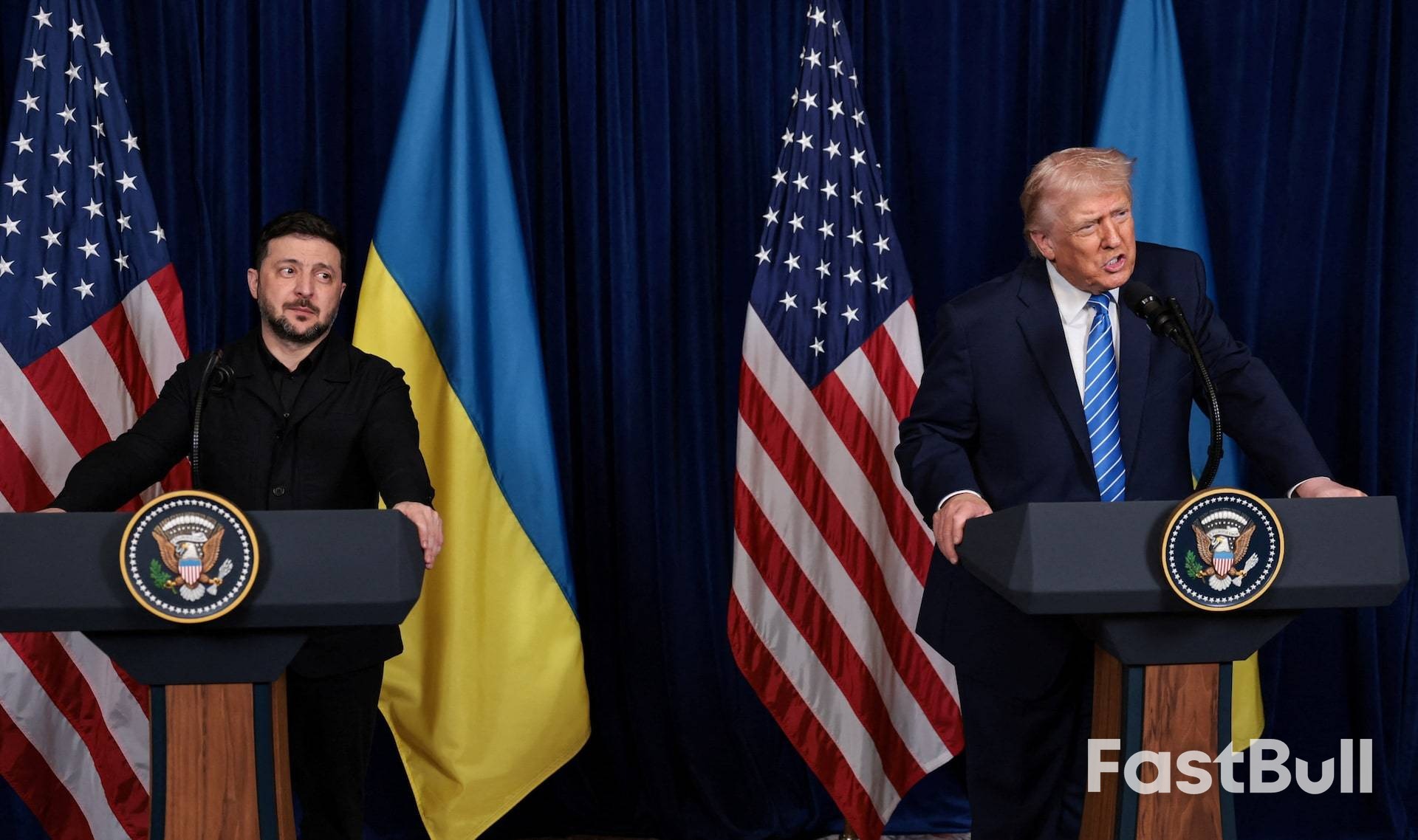
Trump asserted that he is actively dealing with Putin, who he said is keen to make a deal. He added his belief that Zelenskiy is also prepared to finalize an agreement to conclude the conflict, which is approaching its fourth year.
During a discussion following his formal remarks to global leaders and business executives, Trump expressed confidence that a deal was now "reasonably close," despite previous setbacks where both leaders had backed away from potential agreements.
"I think I can say that we're reasonably close," Trump said, emphasizing the urgency of ending the conflict. "We have to get it stopped."
Trump's comments come as Ukraine prepares to mark the fourth anniversary of Russia's full-scale invasion on February 24.
President Trump also stated he would meet with President Zelenskiy in Switzerland. He initially mentioned the meeting was scheduled for Wednesday, a detail that was disputed by a source familiar with Zelenskiy's agenda. Trump later clarified that the meeting was planned for Thursday.
This new optimism follows a period of frustration for the U.S. President, who said he had expected to negotiate an end to the war sooner but cited "abnormal hatred" between the two leaders as a major obstacle. Just last week, Trump had told Reuters that he viewed Zelenskiy as the primary impediment to reaching a peace accord.
On Wednesday, however, Trump’s tone shifted, suggesting Washington was making progress in brokering a ceasefire.
"I believe they're at a point now where they can come together and get a deal done," he concluded. "And if they don't, they're stupid."
DAVOS, Switzerland, Jan 21 (Reuters) - U.S. President Donald Trump said he has interviewed several strong candidates for Federal Reserve chair, but complained that nominees tend to change once they take office.
"Everyone that I interviewed is great. Everyone could do, I think, a fantastic job. Problem is they change once they get the job," Trump said at the World Economic Forum in Davos, Switzerland.
The president also renewed his criticism of current Federal Reserve Chair Jerome Powell for not lowering interest rates fast enough and said an announcement on the next Fed chair is coming soon.
"I'll be announcing a new Fed chairman in the not too distant future. I think he'll do a very good job. See, I gave away some of it," Trump said.
The leading four candidates to succeed Powell are Trump economic adviser Kevin Hassett, Fed Governor Christopher Waller, former Fed Governor Kevin Warsh and BlackRock's chief bond investment manager, Rick Rieder. On Tuesday, Treasury Secretary Scott Bessent said the president has whittled down the field to four candidates.
Trump and Bessent have repeatedly taken aim at Powell over his handling of monetary policy and interest rates, as well as his broader leadership of the Federal Reserve.
More recently, the Justice Department has issued a subpoena to Powell tied to the renovation of the Fed's headquarters.
Trump nominated Powell for the position in 2017, and former President Joe Biden reappointed him.
US President Donald Trump has fired back at Canadian leader Mark Carney, accusing him of ingratitude for American military defense. The sharp rebuke came after Carney used a speech at the World Economic Forum in Davos to call for mid-sized nations to unite against the aggressive tactics of superpowers.
Speaking at the same forum, Trump highlighted that his proposed "Golden Dome" missile shield would also protect Canadian airspace.
"Canada gets a lot of freebies from us, by the way. They should be grateful also, but they're not," Trump said on Wednesday. "I watched your prime minister yesterday. He wasn't so grateful."
He concluded with a direct warning: "Canada lives because of the United States. Remember that, Mark, the next time you make your statements."
Carney's speech on Tuesday grabbed the attention of the global political and business elites gathered in Davos. He argued that the international rules-based order is effectively over, replaced by an era "where the most powerful pursue their interests using economic integration as coercion."
While he did not mention Trump by name, Carney cited tactics closely associated with the US president, including:
• Tariffs used as leverage
• Financial infrastructure used for coercion
• Supply chains exploited as vulnerabilities
He urged countries to counter these pressures by forming new alliances. "Middle powers must act together because if you are not at the table, you are on the menu," he declared.
The comments were notable given Canada's deep economic reliance on and long-standing military cooperation with the United States. Carney, a former central banker, won office last year pledging to reduce that dependence. He has since inked a limited trade deal with China and initiated billions in new defense spending.
The dispute brings new focus to the "Golden Dome," a proposed missile defense system that the US president estimates will cost $175 billion. A separate analysis by Bloomberg suggests the price tag could be as high as $1.1 trillion. The system, which includes unproven space-based technology, is designed to protect North America from ballistic missiles, hypersonic weapons, and advanced cruise missiles.
The two nations already jointly manage the North American Aerospace Defense Command (NORAD). In 2022, Canada committed C$38.6 billion ($28 billion) to modernize the system. This funding includes a new Australian-developed radar network, announced by Carney in March, designed to detect incoming missile threats.

Remarks of Officials

Middle East Situation

Palestinian-Israeli conflict

Russia-Ukraine Conflict

Political
U.S. President Donald Trump is inviting world leaders to join a new "Board of Peace," an initiative designed to resolve global conflicts. However, diplomats express concern that the new body could interfere with the work of the United Nations.
The proposal has received mixed reactions globally. While some nations, including those with historically strained relationships with Washington, have accepted the invitation, many traditional U.S. allies are responding with caution or have outright rejected the offer.
First proposed in September as part of a plan to end the Gaza war, the Board of Peace's mission has since expanded to address conflicts worldwide.
According to a draft charter, the U.S. president will serve as the board's inaugural chairman, with the stated goal of promoting global peace and resolving conflicts.
Membership and Funding Structure
The terms of participation are unique and financially demanding for those seeking long-term influence:
• Standard Membership: Nations can join for three-year terms.
• Permanent Membership: A payment of $1 billion is required to secure a permanent seat on the board and help fund its activities.
The initiative's founding Executive Board includes U.S. Secretary of State Marco Rubio, Trump's special envoy Steve Witkoff, former British Prime Minister Tony Blair, and Trump's son-in-law, Jared Kushner.
As of Wednesday, special envoy Steve Witkoff confirmed that up to 25 countries have accepted the invitation to join. The list of participants reveals shifting geopolitical alignments.
Nations That Have Accepted
The group of accepting nations includes a mix of U.S. allies and states seeking closer ties with the Trump administration.
• Middle East Allies: Israel, the United Arab Emirates, Bahrain, and Egypt.
• NATO Members: Turkey and Hungary, whose leaders have cultivated strong personal relationships with Trump.
• Recent Peacemakers: Armenia and Azerbaijan, which reached a U.S.-brokered peace agreement in August after meeting with Trump.
• Controversial Members: Belarusian President Alexander Lukashenko has accepted, marking a potential rapprochement between Minsk and Washington despite Belarus's human rights record and support for Russia's war in Ukraine.
Russia and China, both permanent, veto-wielding members of the U.N. Security Council, have not yet announced their decision. As traditional supporters of the United Nations, they are expected to be cautious about any initiative that might undermine the existing global body.
Cautious Allies and Outright Rejections
Several close U.S. allies have expressed reservations, reflecting a transatlantic rift over Trump's "America First" diplomatic style.
• Declined Invitations: Norway and Sweden have refused to join. Italy's Economy Minister, Giancarlo Giorgetti, stated that joining would be problematic, with reports suggesting it could violate the country's constitution.
• France's Refusal: A source close to President Emmanuel Macron indicated that France also plans to decline. In response, Trump threatened to impose 200% tariffs on French wines and champagnes unless Paris reversed its decision.
• Undecided or Non-Committal: Canada has agreed "in principle" but is still working out the details. Other key allies like Britain, Germany, and Japan have not yet taken a clear public stance. A German government spokesperson did confirm Chancellor Friedrich Merz would not attend the board's signing ceremony in Davos.
• Ukraine's Stance: Ukrainian diplomats are reviewing the invitation, but President Volodymyr Zelenskiy has expressed difficulty in imagining joining any board that includes Russia after four years of war.
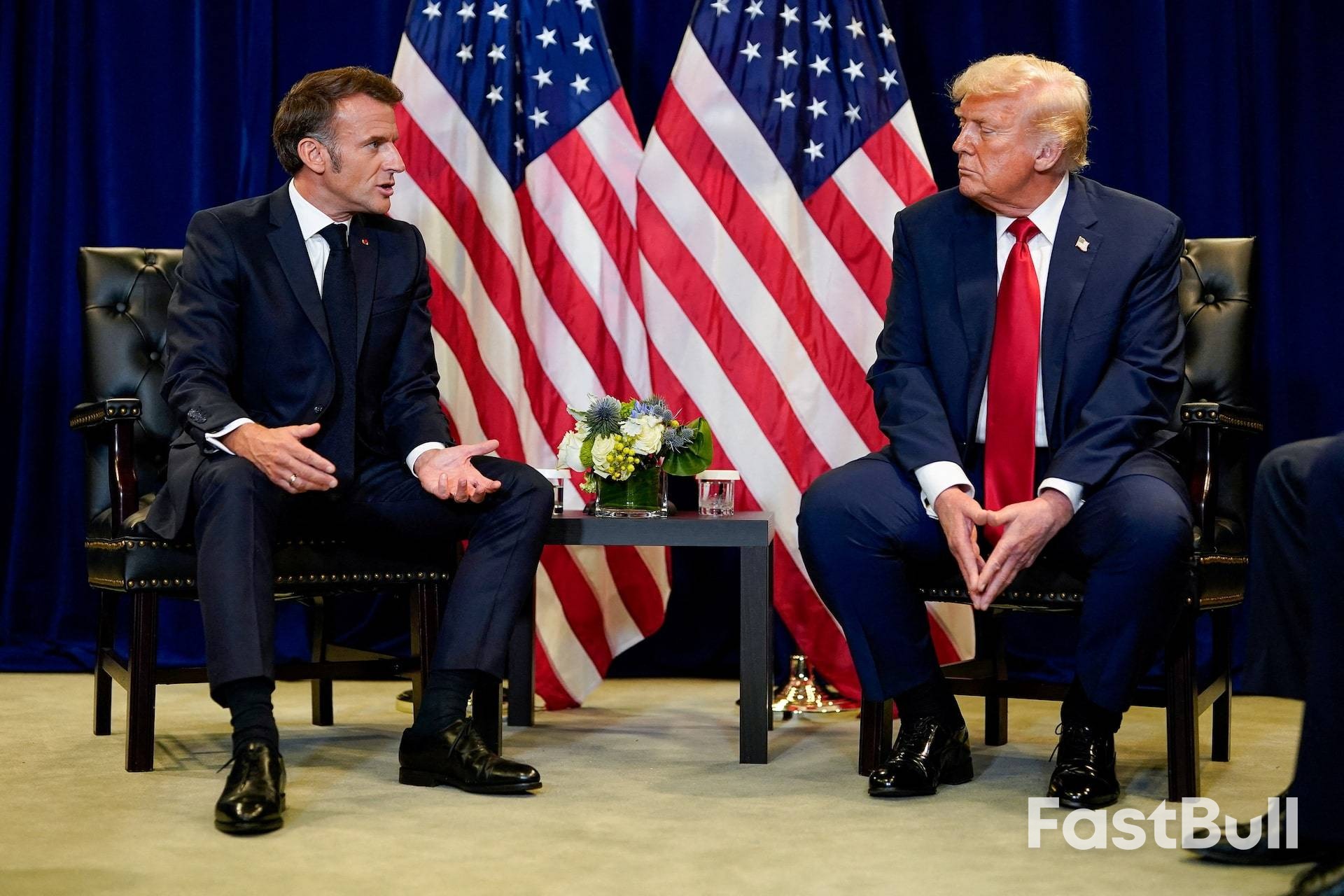
A major question surrounding the Board of Peace is what legal authority or enforcement mechanisms it will possess and how it will coexist with the United Nations. Trump, a frequent critic of the UN, recently downplayed concerns that his board is intended to replace it, stating, "I believe you got to let the U.N. continue because the potential is so great."
The board's charter grants its chairman—Trump—extensive executive power, including the ability to veto decisions and remove members, although some constraints apply. It states the board will carry out "peace-building functions in accordance with international law."
Separately, the White House has announced a Gaza Executive Board to oversee a transitional Palestinian administration. With overlapping members, it remains unclear how this body will function alongside the main Board of Peace's Executive Board.
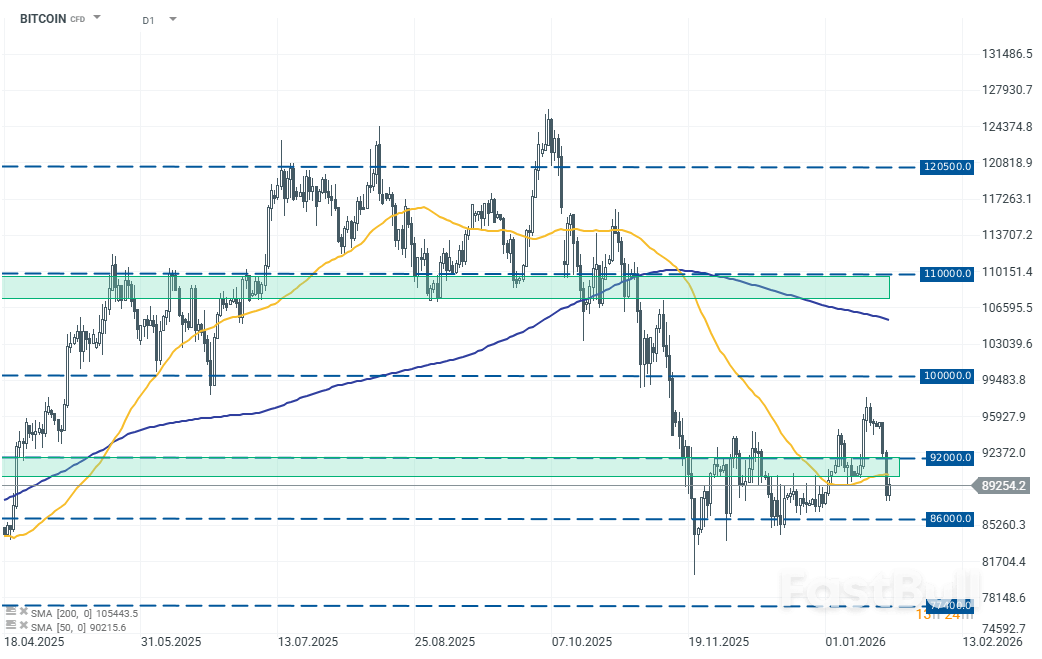
The Australian Parliament has passed two new bills that will set up a national gun buyback scheme, and attempt to combat anti-Semitism and hate speech in response to the Bondi terror attack.
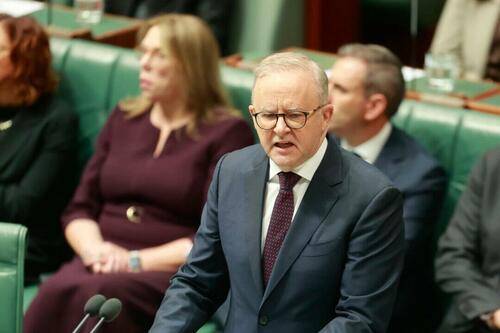 Prime Minister Anthony Albanese speaks at Parliament House in Canberra, Australia, on Jan. 19, 2026. Hilary Wardhaugh/Getty Images
In Australia's lower house, the gun buyback bill passed 96 to 45 with the Liberal-National Coalition opposing, while the hate and extremism-focused bill passed with amendments, securing 116 votes to just seven.
Later on the evening of Jan. 20, both bills made it through the Senate.
Prime Minister Anthony Albanese wrote on X that the government was "standing against hate and strengthening" national security.
The Combatting Antisemitism, Hate and Extremism (Firearms and Customs Laws) Bill 2026 introduces not only the national gun buyback scheme, but new restrictions around background checks, the sale of firearm types, and new offences relating to accessing information online about firearms, ammunition, and accessories.
Home Affairs Minister Tony Burke told parliament that had such measures been in place earlier, the Bondi Beach attackers would not have been able to legally obtain weapons.
The father of the terrorist duo, Sajid Akram, owned six firearms, despite his son being interviewed and cleared by intelligence agencies over concerns of radicalisation.
The bill was debated for close to three hours, with several MPs proposing amendments.
Independent MP Zali Steggall sought to ensure firearms background checks explicitly included "criminal history or proceedings relating to domestic violence or AVOs issued in local courts."
Bob Katter, the federal MP of Kennedy, moved an amendment that would automatically revoke a firearm licence for anyone placed on an ASIO watchlist. That amendment was defeated, 88 votes to 13.
Katter, who opposed the broader reforms, blamed the Bondi attack on failures in the immigration system and argued the legislation undermined gun ownership.
"If they get their way, then the only people that will have guns are the people in uniforms. And we know what sort of society that is, that the only people that have guns are the people in uniforms," he said.
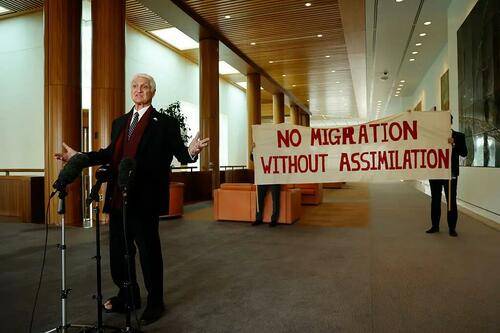 Member for Kennedy Bob Katter speaks to the media at Parliament House in Canberra, Australia on Jan. 20, 2026. Hilary Wardhaugh/Getty Images
Nationals leader David Littleproud opposed the bill, describing it as a diversion.
"This is nothing more than a cheap political diversion, a cheap political diversion that is not facing up to the real problem in this country, which is radical Islamists," Littleproud said.
He argued the Bondi attack reflected failures in enforcement rather than licensing.
"The fact is, the authorities did not act and take away the licence and the weapons as they should have," he said.
Prime Minister Anthony Albanese defended the reforms, stressing they were not aimed at lawful firearm owners.
"This legislation is not about targeting farmers. It's not about competitive shooters. It's not about ... law-abiding firearm owners," he said.
"The federal bill will establish a national gun buyback scheme to purchase surplus, newly banned and illegal firearms. The gun buybacks scheme is based on the same scheme that was introduced under John Howard, Tim Fischer and Kim Beazley, three leaders who all stood up at an important moment for Australia."
The Combatting Antisemitism, Hate and Extremism (Criminal and Migration Laws) Bill 2026 also passed with amendments from the opposition.
The legislation introduces a new federal offence making it illegal to publicly promote or incite racial hatred where the conduct would cause a reasonable person to feel intimidated, harassed or fearful of violence.
The offence applies to speech, symbols, gestures and online communication targeting people "because of the race, colour or national or ethnic origin of the target."
The law does not require proof that hatred was actually generated or that a victim felt fear—only that the conduct itself would reasonably cause intimidation or fear.
Maximum penalties of up to five years' imprisonment apply, with higher penalties for aggravated offences, including cases involving religious officials or attempts to radicalise children. A narrow defence applies where speech or writing consists solely of quoting religious texts for teaching or discussion.
Opposition Leader Sussan Ley confirmed Liberal MPs supported the amended bill.
"In the national interest, the Liberal party has today stepped up to fix legislation that the Albanese government badly mishandled," Ley said in a statement issued after passing of the bill.
Ley said the amendments narrowed the bill's scope to anti-Semitism and Islamic extremism, ensured new powers focused on serious criminal conduct, and required consultation with the opposition before extremist organisations could be listed or de-listed.
Independent Teal MP Allegra Spender criticised both major parties for removing anti-vilification provisions from the bill, saying those measures had been sought by Jewish community groups and the government's anti-Semitism envoy.
"My question is, what are the mechanisms you are saying that we can use now because you have rejected something that the Jewish community has been calling for a long time," she said.
Spender warned that the current law was not specific enough, arguing Muslim and other migrant groups could be made to feel "suspect by association by failing to confront hateful individuals and ideologies directly."
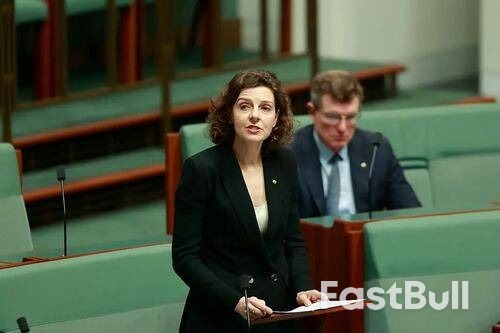 Independent "Teal" Member for Wentworth Allegra Spender speaks in the House of Representatives at Parliament House in Canberra, Australia on Jan. 19, 2026. Hilary Wardhaugh/Getty Images
"We drift towards a culture of guilt by association rather than accountability," she said.
Independent MP Helen Haines also raised concerns about the legislative process.
"The inquiry into this bill was only tabled this morning," she said. "But the consequence of haste, as a legislator, is the missed opportunity to carefully consider and improve this significant legislation."
U.S. Treasury yields eased on Wednesday, retreating from multi-month highs as a recovery in Japan’s bond market helped calm global sentiment. The move follows a sharp selloff on Tuesday, which was driven by turmoil in Japanese government bonds and geopolitical jitters.
Yields on U.S. government debt had previously climbed after President Donald Trump threatened tariffs on European goods related to the potential U.S. acquisition of Greenland. However, markets found some relief when Trump clarified on Wednesday that while he still intends to pursue the acquisition, he would not use force.
A key factor in Wednesday's market stabilization was the shift in tone from the White House. President Trump’s comments in Davos, Switzerland, helped push Treasury prices higher, lowering their yields.
"The market likes the fact that Trump won't use force on Greenland, although it didn't like the things he said before that," said Tom di Galoma, managing director of rates and trading at Mischler Financial. He noted the president's remarks about Denmark being ungrateful for U.S. support after World War Two.
Di Galoma suggested that any potential deal would likely involve a financial settlement rather than a military confrontation. "At the end of the day, there's going to be some kind of financial settlement that will take place if this goes on," he added.
The recovery in U.S. Treasuries also coincided with a rebound in Japanese government bonds (JGBs), which helped steady the global fixed-income landscape.
The 30-year JGB yield tumbled after hitting an unprecedented 3.88% in the previous session. Similarly, Japan's benchmark 10-year yield fell after reaching a 27-year high on Tuesday.
While the JGB recovery provided a supportive backdrop, some analysts believe its direct impact on U.S. rates is limited. "The magnitude of the pass-through is consistent with our take on the limited medium-term influence of JGB yields on U.S. rates," BMO Capital stated in a research note. However, the firm acknowledged that "the bearish repricing underway in Japan will provide a touchstone for those investors anticipating higher U.S. rates."
In morning trading, the benchmark U.S. 10-year Treasury yield fell 1.2 basis points to 4.281%. This was a pullback from its highest level since late August, which was hit on Tuesday.
Other key movements included:
• The 30-year Treasury yield dipped slightly to 4.912% after rising to its highest point since early September.
• The 2-year Treasury yield slipped by 1 basis point to 3.589%.
Investors are now closely watching an upcoming auction of $13 billion in 20-year bonds. The sale is seen as a test of demand, especially after the "sell America" sentiment that characterized Tuesday's session.
Looking ahead, J.P. Morgan suggested that the impact from a potential European selloff of Treasuries would likely be contained. The bank noted that European holdings are primarily in private hands, which limits the ability of governments to orchestrate a large-scale reallocation. "The technical backdrop is also less vulnerable to a sharp rise in yields relative to last April," the investment bank added.
728 RM B 7/F GEE LOK IND BLDG NO 34 HUNG TO RD KWUN TONG KLN HONG KONG


White Label
Data API
Web Plug-ins
Poster Maker
Affiliate Program
The risk of loss in trading financial instruments such as stocks, FX, commodities, futures, bonds, ETFs and crypto can be substantial. You may sustain a total loss of the funds that you deposit with your broker. Therefore, you should carefully consider whether such trading is suitable for you in light of your circumstances and financial resources.
No decision to invest should be made without thoroughly conducting due diligence by yourself or consulting with your financial advisors. Our web content might not suit you since we don't know your financial conditions and investment needs. Our financial information might have latency or contain inaccuracy, so you should be fully responsible for any of your trading and investment decisions. The company will not be responsible for your capital loss.
Without getting permission from the website, you are not allowed to copy the website's graphics, texts, or trademarks. Intellectual property rights in the content or data incorporated into this website belong to its providers and exchange merchants.
Not Logged In
Log in to access more features

FastBull Membership
Not yet
Purchase


Log In
Sign Up


