Markets
News
Analysis
User
24/7
Economic Calendar
Education
Data
- Names
- Latest
- Prev


Signal Accounts for Members
All Signal Accounts
All Contests


U.K. Retail Sales MoM (SA) (Dec)A:--
F: --
P: --
France Manufacturing PMI Prelim (Jan)A:--
F: --
P: --
France Services PMI Prelim (Jan)A:--
F: --
P: --
France Composite PMI Prelim (SA) (Jan)A:--
F: --
P: --
Germany Manufacturing PMI Prelim (SA) (Jan)A:--
F: --
P: --
Germany Services PMI Prelim (SA) (Jan)A:--
F: --
P: --
Germany Composite PMI Prelim (SA) (Jan)A:--
F: --
P: --
Euro Zone Composite PMI Prelim (SA) (Jan)A:--
F: --
P: --
Euro Zone Manufacturing PMI Prelim (SA) (Jan)A:--
F: --
P: --
Euro Zone Services PMI Prelim (SA) (Jan)A:--
F: --
P: --
U.K. Composite PMI Prelim (Jan)A:--
F: --
P: --
U.K. Manufacturing PMI Prelim (Jan)A:--
F: --
P: --
U.K. Services PMI Prelim (Jan)A:--
F: --
P: --
Mexico Economic Activity Index YoY (Nov)A:--
F: --
P: --
Russia Trade Balance (Nov)A:--
F: --
P: --
Canada Core Retail Sales MoM (SA) (Nov)A:--
F: --
P: --
Canada Retail Sales MoM (SA) (Nov)A:--
F: --
U.S. IHS Markit Manufacturing PMI Prelim (SA) (Jan)A:--
F: --
P: --
U.S. IHS Markit Services PMI Prelim (SA) (Jan)A:--
F: --
P: --
U.S. IHS Markit Composite PMI Prelim (SA) (Jan)A:--
F: --
P: --
U.S. UMich Consumer Sentiment Index Final (Jan)A:--
F: --
P: --
U.S. UMich Current Economic Conditions Index Final (Jan)A:--
F: --
P: --
U.S. UMich Consumer Expectations Index Final (Jan)A:--
F: --
P: --
U.S. Conference Board Leading Economic Index MoM (Nov)A:--
F: --
P: --
U.S. Conference Board Coincident Economic Index MoM (Nov)A:--
F: --
P: --
U.S. Conference Board Lagging Economic Index MoM (Nov)A:--
F: --
P: --
U.S. UMich 1-Year-Ahead Inflation Expectations Final (Jan)A:--
F: --
P: --
U.S. Conference Board Leading Economic Index (Nov)A:--
F: --
P: --
U.S. Weekly Total Rig CountA:--
F: --
P: --
U.S. Weekly Total Oil Rig CountA:--
F: --
P: --
Germany Ifo Business Expectations Index (SA) (Jan)--
F: --
P: --
Germany IFO Business Climate Index (SA) (Jan)--
F: --
P: --
Germany Ifo Current Business Situation Index (SA) (Jan)--
F: --
P: --
U.S. Dallas Fed PCE Price Index YoY (Nov)--
F: --
P: --
Brazil Current Account (Dec)--
F: --
P: --
Mexico Unemployment Rate (Not SA) (Dec)A:--
F: --
P: --
Canada National Economic Confidence Index--
F: --
P: --
U.S. Non-Defense Capital Durable Goods Orders MoM (Excl. Aircraft) (Nov)--
F: --
P: --
U.S. Durable Goods Orders MoM (Excl. Defense) (SA) (Nov)--
F: --
P: --
U.S. Durable Goods Orders MoM (Excl.Transport) (Nov)--
F: --
P: --
U.S. Durable Goods Orders MoM (Nov)--
F: --
P: --
U.S. Chicago Fed National Activity Index (Nov)--
F: --
P: --
U.S. Dallas Fed New Orders Index (Jan)--
F: --
P: --
U.S. Dallas Fed General Business Activity Index (Jan)--
F: --
P: --
U.K. BRC Shop Price Index YoY (Jan)--
F: --
P: --
China, Mainland Industrial Profit YoY (YTD) (Dec)--
F: --
P: --
Mexico Trade Balance (Dec)--
F: --
P: --
U.S. S&P/CS 20-City Home Price Index YoY (Not SA) (Nov)--
F: --
P: --
U.S. S&P/CS 20-City Home Price Index MoM (SA) (Nov)--
F: --
P: --
U.S. FHFA House Price Index MoM (Nov)--
F: --
P: --
U.S. FHFA House Price Index (Nov)--
F: --
P: --
U.S. Richmond Fed Manufacturing Composite Index (Jan)--
F: --
P: --
U.S. Conference Board Present Situation Index (Jan)--
F: --
P: --
U.S. Conference Board Consumer Expectations Index (Jan)--
F: --
P: --
U.S. Richmond Fed Manufacturing Shipments Index (Jan)--
F: --
P: --
U.S. Richmond Fed Services Revenue Index (Jan)--
F: --
P: --
U.S. Conference Board Consumer Confidence Index (Jan)--
F: --
P: --
Australia RBA Trimmed Mean CPI YoY (Q4)--
F: --
P: --
Australia CPI YoY (Q4)--
F: --
P: --
Australia CPI QoQ (Q4)--
F: --
P: --


No matching data
Latest Views
Latest Views
Trending Topics
Top Columnists
Latest Update
White Label
Data API
Web Plug-ins
Affiliate Program
View All

No data
Japanese PM Takaichi calls a snap election, betting her high personal popularity against a weak party and united opposition.
Just months into her tenure, Japanese Prime Minister Sanae Takaichi has called a snap election, dissolving the Lower House on January 23 and setting the vote for February 8. The move comes despite her term running until October 2028, sparking questions about the strategy behind the early poll.
"I am putting my future as prime minister on this election," Takaichi stated at a press conference, adding, "I would like the people to make a direct decision on whether they can entrust the management of the nation to Sanae Takaichi."
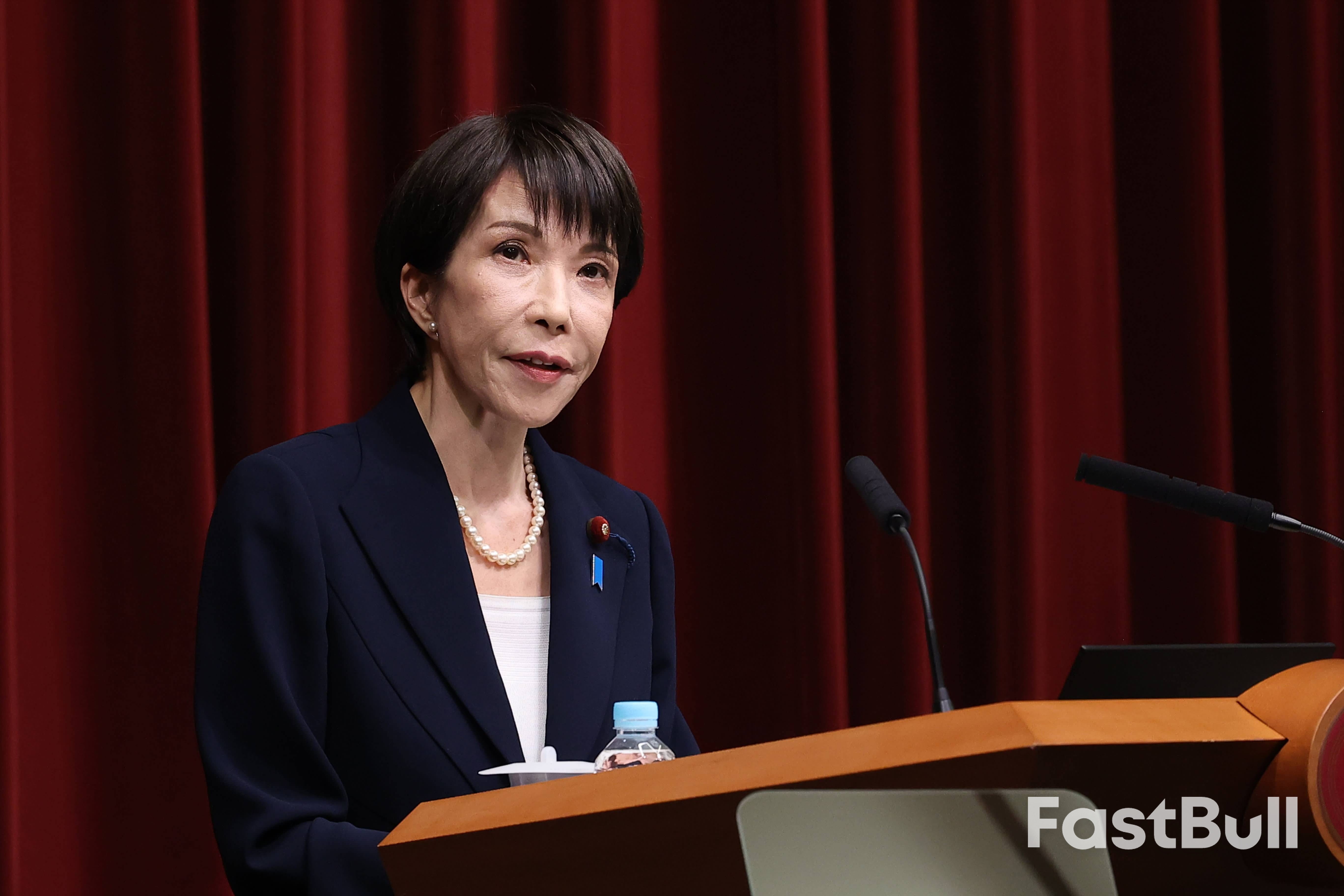
Analysts believe the decision is a calculated effort to leverage Takaichi's immense personal popularity to secure a stronger majority for the ruling Liberal Democratic Party (LDP) and its coalition.
There is a stark contrast between support for the prime minister and her party. Since taking office, Takaichi has enjoyed historically high approval ratings, with a recent NHK survey pegging her support at 62%. Other polls show even higher numbers, including 75% reported by Nikkei and 78.1% from a Japan News Network poll.
The LDP, however, has an approval rating of just 29.7%. Currently, the party and its junior partner, the Japan Innovation Party, hold a combined 230 seats in the 456-seat Lower House. With the support of three independents, their coalition commands a razor-thin majority of just one seat.
A stronger majority would provide Takaichi with a firmer political mandate, a crucial asset in international relations. Sam Jochim, an economist at Swiss private bank EFG, noted this would be particularly important ahead of a potential meeting with U.S. President Donald Trump as early as March.
Jochim also suggested that Takaichi is aiming to capitalize on her popularity before escalating tensions with China begin to erode public sentiment. Diplomatic relations have cooled since Takaichi's statement on November 8 that Japan's Self-Defense Forces could intervene if China attempted to take Taiwan by force. In response, Beijing has imposed export controls on dual-use items to Japan and issued travel advisories for its citizens.
Despite Takaichi's high approval ratings, analysts warn that her popularity may not automatically translate into electoral gains for the LDP.
A Newly United Opposition
Jochim describes the move as "taking a risk," highlighting a key challenge: "while she is an extremely popular Prime Minister, her party is less popular and faces a united opposition following a surprise partnership between the main opposition party and the former LDP coalition partner."
On January 16, the Constitutional Democratic Party of Japan, the largest opposition force, joined with Komeito—the LDP's coalition partner for 26 years—to form the "Centrist Reform Alliance." Together, they control 172 seats in the Lower House. Norihiro Yamaguchi, lead Japan Economist at Oxford Economics, cautioned that without Komeito's organizational backing, many LDP candidates could face significant struggles at the ballot box.
The Power of Personal Appeal
Other observers are more optimistic. Jesper Koll, expert director at Monex Group, believes Takaichi's personal story could be the decisive factor. He described her as an "inspiration" to both older and younger Japanese voters, suggesting her appeal could drive a landslide victory.
"Takaichi is the living example of a self-made woman rising to the top against all the odds," Koll said, noting her working-class background and rise through "hard work, dedication, passion, and willingness to do what is right." The election will reveal whether this personal brand is enough to overcome her party's weakness and a newly unified opposition.
China is preparing a major policy overhaul for the 2026-2030 period designed to tackle a fundamental imbalance in its economy: factory output is strong, but domestic demand is lagging. The country's state planner announced the new strategy will pivot toward boosting the services sector to supercharge household consumption.
According to the National Development and Reform Commission (NDRC), this shift is a direct response to a "prominent problem" facing the economy.
While China’s economy hit its 5% growth target last year, the headline number masked a growing internal gap. The core issue lies in the mismatch between production and spending.
In 2025, industrial output expanded by 5.9%, but retail sales only grew by 3.7%. This divergence highlights an economy that is producing more than its citizens are consuming, a dynamic that has been propped up by a boom in exports—a strategy seen as increasingly difficult to sustain.
"The issue of having strong supply, but weak demand in the current economic operation is indeed a prominent problem," said Wang Changlin, vice head of the NDRC, at a recent press conference.
To address this, Chinese leaders have pledged to "significantly" increase household consumption's share of the economy. The new strategy moves the spotlight from goods to services.
NDRC official Zhou Chen stated that the "services sector has now become a key focus in efforts to expand domestic demand." The government sees substantial room for growth in several key areas, including:
• Elderly care
• Healthcare
• Leisure and recreation
This marks a strategic shift in how Beijing plans to stimulate its domestic market over the next five years.
The new focus on services does not mean existing support for goods consumption will disappear. The government will continue to use policies like trade-in subsidies to encourage purchases of items such as electric vehicles (EVs) and home appliances.
For instance, in December, China deployed 62.5 billion yuan ($8.98 billion) from special treasury bond funds to support its 2026 consumer trade-in programs, demonstrating an ongoing commitment to stimulating spending on big-ticket goods alongside the new services-oriented push.
The United Kingdom and China have quietly established a new high-level forum for security officials to discuss cyberattacks, a significant development as relations remain strained by persistent hacking allegations.
According to sources familiar with the private agreement, the new "Cyber Dialogue" is designed to create a direct channel for managing national security threats, improving communication, and preventing miscalculations from escalating.
This marks the first time a single, dedicated mechanism exists for senior officials from both nations to address cyber incidents. Previously, establishing clear lines of communication on these sensitive issues was often a difficult process.
The primary goal of the dialogue is to allow for private discussions on deterrence measures and to help manage the fallout from cyber activities. The forum provides a structured way for London and Beijing to engage directly on security matters that have soured their relationship.
This initiative comes at a critical juncture. The UK government is expected to decide by January 20 on China's request to build a new super-embassy in London. Following that, Prime Minister Keir Starmer is scheduled to meet with President Xi Jinping in Beijing at the end of the month.
The UK government declined to comment on the matter, citing policy on security issues. China's embassy in London stated it was unaware of the agreement, and the Foreign Ministry in Beijing did not immediately respond to a request for comment.
Since being elected 18 months ago, the Labour government has attempted to improve ties with Beijing. However, these efforts have been consistently undermined by British allegations of a near-constant Chinese cyber campaign targeting the UK's national infrastructure and government systems. Diplomatic relations were already under pressure due to the COVID-19 pandemic and China’s support for Russia's war in Ukraine.
Sources believe this new cyber forum is the first of its kind between China and any other country, highlighting it as a crucial step toward improving diplomatic engagement.
In November, China's top diplomat Wang Yi met with British National Security Adviser Jonathan Powell in Beijing. While the official statement from China did not mention cyber activities, it noted that the two had agreed to "confront and resolve issues" and "further enhance regular dialogues."
The creation of the forum follows reports that underscore the severity of the cyber threat. In October, Bloomberg reported that British officials believe Chinese hackers have been spying on UK government computer systems for over a decade. Officials have also indicated that state-backed actors from China have compromised critical infrastructure to a greater extent than has been publicly disclosed.
While the new dialogue is unlikely to halt these cyber operations entirely, insiders suggest it offers a valuable opportunity to mitigate the risk of a dangerous miscalculation between the two powers.
China has reversed its restrictions on Canadian canola, a policy shift that unblocks a major import channel and is set to increase the supply of livestock feed ingredients. This move reopens the Chinese market to its largest canola source and complements the recent resumption of US soybean imports and trial cargoes of Australian rapeseed.
By diversifying its sources for critical oilseeds, Beijing is bolstering its food security strategy. The increased competition among global suppliers is expected to drive down prices for essential feed components. This marks a notable change from recent years, where agricultural trade was often used as leverage in disputes with major partners.
The decision to ease tariffs on Canadian canola shipments follows a visit to Beijing by Prime Minister Mark Carney. This thaws a trade relationship that saw China impose duties on Canadian canola products and the crop itself in two separate rulings last year. Those measures were a response to Ottawa placing levies on Chinese electric vehicles, steel, and aluminum.
The wider availability of oilseeds is already weighing on domestic markets. Futures for soybean meal, a primary feed ingredient, closed on Monday 15% below their August peak. At the same time, rapeseed meal futures have fallen to a 16-month low.
With supply channels now fully open, the focus shifts to China's management of domestic consumption, particularly from its enormous hog herd.
While China’s pork production reached a record in 2025, pig numbers have begun to decline. This is a deliberate policy by Beijing to reduce excess capacity, support farm incomes, and combat downward price pressures in the economy.
The anticipated drop in feed demand is already being priced into the market. Forward contracts for soymeal are currently trading at a discount, reflecting traders' expectations for weaker consumption ahead.
This downtrend could be amplified if geopolitical commitments lead China to import more oilseeds than it needs. Beijing’s pledge to purchase at least 25 million tons of soybeans from the US annually for the next three years is a key factor. While lower feed costs will improve margins for livestock producers, they will also reinforce deflationary forces within the agricultural sector.
Beyond agriculture, several other sectors are signaling major shifts in the Chinese economy.
Export Strategy and Trade Tensions
As President Xi Jinping confronts deflation and falling investment, his administration is betting on boosting exports to drive growth. In this context, threats made by Donald Trump against key US allies are seen as a potential opportunity for China. Meanwhile, China's rare-earth magnet exports to Japan in December eased from the previous month's record, with investors watching for any signs of Beijing restricting critical materials amid tensions with Tokyo.
Moves in the Commodities Sector
• Iron Ore: RBC Capital Markets noted that iron ore discounts from BHP Group, following pressure from China, are likely "optical, temporary and economically bounded" and do not signal a decline in the miner's pricing power.
• Copper & Mining Finance: Leading smelter Jiangxi Copper Co. announced plans to issue up to 25 billion yuan ($3.6 billion) in bonds to potentially fund mining expansion as prices rally. Separately, Chinese miner CMOC Group Ltd. raised $1.2 billion from a zero-coupon convertible bond sale.
Infrastructure and Energy Investment
State-owned China Southern Power Grid Co. intends to increase its annual spending to a record 180 billion yuan ($26 billion) this year. The investment is part of Beijing's broader push to modernize its electrical grids to handle the growth of renewable energy. According to Bloomberg Intelligence, China's 4 trillion-yuan grid upgrade plan for 2026-2030 will also drive a faster expansion of battery storage.
In other industrial news, reports indicate that China's long-running cement boom has definitively ended.
The International Monetary Fund (IMF) has upgraded its economic growth forecast for Saudi Arabia for the third consecutive year, signaling renewed confidence in the Kingdom's economic trajectory.
In its January report, the IMF projected the Saudi economy will expand by 4.5% this year. This marks a notable increase from the 4% growth rate forecasted in its October 2025 outlook.
The positive revisions extend beyond the current year. The IMF also raised its 2025 growth forecast for Saudi Arabia to 4.3%, up from the previous 4% estimate. Looking ahead, the Fund anticipates the economy will grow by 3.6% next year, an improvement over the 3.2% projected in October.
This regional optimism is part of a broader global update, where the IMF also increased its worldwide growth forecast for 2026 to 3.3%, a 0.2 percentage point rise from its October assessment.
The IMF's projections closely align with those from Saudi Arabia's own Ministry of Finance, which forecasts growth of 4.6% this year, 3.7% in 2027, and 4.5% in 2028. This alignment underscores the realism of the ministry's financial planning.
The IMF attributes its optimistic forecast to two primary factors:
• A strong non-oil economy: Continued momentum in the Kingdom's diversified sectors provides a stable foundation for growth.
• An oil sector rebound: The expected easing of oil production limits under the OPEC+ agreement is set to boost the oil sector's contribution to GDP.
Other major financial bodies share a similar outlook on Saudi Arabia's economy.
The World Bank projects the Saudi economy will grow by 4.3% this year and 4.4% in 2027. Its analysis points to a faster-than-expected increase in oil production in early 2025, complemented by robust and sustained growth in non-oil business activities.
Meanwhile, Fitch Ratings forecasts an even more robust 4.8% expansion for the Saudi economy in 2026. The ratings agency also expects the nation's deficit to narrow to 3.6% of GDP by the end of the year, driven by strengthening non-oil revenues and greater efficiency.
White Label
Data API
Web Plug-ins
Poster Maker
Affiliate Program
The risk of loss in trading financial instruments such as stocks, FX, commodities, futures, bonds, ETFs and crypto can be substantial. You may sustain a total loss of the funds that you deposit with your broker. Therefore, you should carefully consider whether such trading is suitable for you in light of your circumstances and financial resources.
No decision to invest should be made without thoroughly conducting due diligence by yourself or consulting with your financial advisors. Our web content might not suit you since we don't know your financial conditions and investment needs. Our financial information might have latency or contain inaccuracy, so you should be fully responsible for any of your trading and investment decisions. The company will not be responsible for your capital loss.
Without getting permission from the website, you are not allowed to copy the website's graphics, texts, or trademarks. Intellectual property rights in the content or data incorporated into this website belong to its providers and exchange merchants.
Not Logged In
Log in to access more features
Log In
Sign Up