Markets
News
Analysis
User
24/7
Economic Calendar
Education
Data
- Names
- Latest
- Prev



Signal Accounts for Members
All Signal Accounts
All Contests


U.S. Average Hourly Wage MoM (SA) (Dec)--
F: --
P: --
U.S. Average Weekly Working Hours (SA) (Dec)--
F: --
P: --
U.S. New Housing Starts Annualized MoM (SA) (Oct)--
F: --
P: --
U.S. Total Building Permits (SA) (Oct)--
F: --
P: --
U.S. Building Permits MoM (SA) (Oct)--
F: --
P: --
U.S. Annual New Housing Starts (SA) (Oct)--
F: --
P: --
U.S. Government Employment (Dec)--
F: --
P: --
U.S. UMich 5-Year-Ahead Inflation Expectations Prelim YoY (Jan)--
F: --
P: --
U.S. UMich Consumer Sentiment Index Prelim (Jan)--
F: --
P: --
U.S. UMich Current Economic Conditions Index Prelim (Jan)--
F: --
P: --
U.S. UMich Consumer Expectations Index Prelim (Jan)--
F: --
P: --
U.S. UMich 1-Year-Ahead Inflation Expectations Prelim (Jan)--
F: --
P: --
U.S. 5-10 Year-Ahead Inflation Expectations (Jan)--
F: --
P: --
U.S. Weekly Total Oil Rig Count--
F: --
P: --
U.S. Weekly Total Rig Count--
F: --
P: --
Indonesia Retail Sales YoY (Nov)A:--
F: --
P: --
Euro Zone Sentix Investor Confidence Index (Jan)A:--
F: --
P: --
India CPI YoY (Dec)A:--
F: --
P: --
Canada National Economic Confidence IndexA:--
F: --
P: --
Germany Current Account (Not SA) (Nov)A:--
F: --
P: --
U.S. Conference Board Employment Trends Index (SA) (Dec)A:--
F: --
China, Mainland M0 Money Supply YoY (Dec)--
F: --
P: --
China, Mainland M2 Money Supply YoY (Dec)--
F: --
P: --
China, Mainland M1 Money Supply YoY (Dec)--
F: --
P: --
U.S. 3-Year Note Auction YieldA:--
F: --
P: --
Richmond Federal Reserve President Barkin delivered a speech.
U.S. 10-Year Note Auction Avg. YieldA:--
F: --
P: --
New York Federal Reserve President Williams delivered a speech.
Japan Trade Balance (Customs Data) (SA) (Nov)A:--
F: --
P: --
Japan Trade Balance (Nov)A:--
F: --
P: --
U.K. BRC Overall Retail Sales YoY (Dec)A:--
F: --
P: --
U.K. BRC Like-For-Like Retail Sales YoY (Dec)A:--
F: --
P: --
Turkey Retail Sales YoY (Nov)--
F: --
P: --
U.S. NFIB Small Business Optimism Index (SA) (Dec)--
F: --
P: --
Brazil Services Growth YoY (Nov)--
F: --
P: --
Canada Building Permits MoM (SA) (Nov)--
F: --
P: --
U.S. CPI MoM (SA) (Dec)--
F: --
P: --
U.S. CPI YoY (Not SA) (Dec)--
F: --
P: --
U.S. Real Income MoM (SA) (Dec)--
F: --
P: --
U.S. CPI MoM (Not SA) (Dec)--
F: --
P: --
U.S. Core CPI (SA) (Dec)--
F: --
P: --
U.S. Core CPI YoY (Not SA) (Dec)--
F: --
P: --
U.S. Core CPI MoM (SA) (Dec)--
F: --
P: --
U.S. Weekly Redbook Index YoY--
F: --
P: --
U.S. New Home Sales Annualized MoM (Oct)--
F: --
P: --
U.S. Annual Total New Home Sales (Oct)--
F: --
P: --
U.S. Cleveland Fed CPI MoM (SA) (Dec)--
F: --
P: --
U.S. Cleveland Fed CPI MoM (Dec)--
F: --
P: --
China, Mainland Exports (Dec)--
F: --
P: --
China, Mainland Imports YoY (CNH) (Dec)--
F: --
P: --
China, Mainland Imports (CNH) (Dec)--
F: --
P: --
China, Mainland Trade Balance (CNH) (Dec)--
F: --
P: --
China, Mainland Imports YoY (USD) (Dec)--
F: --
P: --
China, Mainland Exports YoY (USD) (Dec)--
F: --
P: --
U.S. EIA Natural Gas Production Forecast For The Next Year (Jan)--
F: --
P: --
U.S. EIA Short-Term Crude Production Forecast For The Next Year (Jan)--
F: --
P: --
U.S. EIA Short-Term Crude Production Forecast For The Year (Jan)--
F: --
P: --
EIA Monthly Short-Term Energy Outlook
U.S. 30-Year Bond Auction Avg. Yield--
F: --
P: --
U.S. Budget Balance (Dec)--
F: --
P: --
Argentina 12-Month CPI (Dec)--
F: --
P: --


No matching data
Latest Views
Latest Views
Trending Topics
Top Columnists
Latest Update
White Label
Data API
Web Plug-ins
Affiliate Program
View All

No data
President Lai's defense budget faces deadlock, deepening Taiwan's power struggle amid rising threats and US pressure.
President Lai Ching-te is escalating a power struggle with Taiwan's opposition-controlled legislature, with a record-breaking defense budget at the center of the conflict. His ability to pass this monumental spending package has become a critical test of his young presidency.
In a sharp break from tradition, Lai's premier recently refused to sign tax legislation that threatened the central government's funding, a move opponents decried as unconstitutional. His administration followed this with a legal victory, successfully challenging a court revamp that would have weakened his power to contest laws passed by parliament.
These maneuvers represent a significant advance for a leader who took office in early 2024 with the slimmest victory margin in over two decades. However, they have also deepened political polarization. Lai's opponents are now threatening a long-shot impeachment and labeling his administration a "green dictatorship," accusing him of eroding legislative authority.
This sets the stage for his next major challenge: passing a special budget to bolster Taiwan's defenses by an extra $40 billion in the coming years without inflaming the already tense political climate.
Failure to pass the defense budget could have serious international consequences, particularly with the United States. The proposed spending aligns with US President Donald Trump's public calls for Taiwan to significantly increase its own military investment.
"Such an outcome would be detrimental to Taiwan's relationship with the US and the Trump administration," said William Yang, a senior analyst at the International Crisis Group.
The Lai government is also in the final stages of negotiating a tariff agreement as part of a broader trade deal with the US. According to the New York Times, this deal could pave the way for Taiwan Semiconductor Manufacturing Co. (TSMC) to build five new chip facilities in Arizona.
President Lai’s Democratic Progressive Party (DPP) is scheduled to make its seventh attempt on Tuesday to advance the budget-related legislation for a reading. The president's office did not respond to a request for comment.
The budget standoff is unfolding amid escalating military aggression from China. In the final days of 2025, President Xi Jinping ordered military drills around Taiwan to protest an $11 billion US weapons package for the self-governed island, which Beijing claims as its own territory.
During these exercises, the People’s Liberation Army fired long-range projectiles into the Taiwan Strait for the first time since 2022, disrupting one of the world's most vital shipping lanes. This pressure has reinforced Lai's pledge to accelerate the development of the T-Dome, a sophisticated and costly system for intercepting aerial threats.
Chieh Chung, an assistant professor at Tamkang University, emphasized that the special budget, which helps fund the T-Dome, is "extremely important for Taiwan's future combat capability."
Lai first detailed the plan in a Washington Post commentary last November, stating the funds would be used for "significant new arms acquisitions from the United States" and to "vastly enhance Taiwan's asymmetrical capabilities." His cabinet has suggested financing the budget through previous fiscal surpluses or government borrowing.
Despite the clear external threats, the opposition, led by the Kuomintang (KMT) party which advocates for closer relations with Beijing, has blocked the budget legislation from its first reading on six separate occasions.
Opposition parties have also delayed the review of the annual general budget, which includes standard defense spending. While Taiwan's general budget is usually passed by February, delays are not unprecedented. In 2007, another minority DPP government saw its budget held up until June.
While the opposition agrees on the need for increased defense spending, they disagree on the priorities and demand more transparency.
Niu Hsu-ting, a lawmaker who frequently represents the KMT's positions, argued that "improving the treatment of military personnel is the most important issue." She suggested the annual budget should first incorporate opposition-backed legislation mandating pay raises for soldiers.
Opponents have also criticized the special military budget for its lack of specifics and have asked Lai to submit to questioning by legislators. The president has offered to deliver a "state of the nation" address but only "in a manner that fits the constitution," implying he would not take questions.
"The continued stalling of the special military budget by opposition parties is an indicator the political stalemate is far from being resolved," noted Yen Wei-ting, an assistant research fellow at Academia Sinica's Institute of Political Science.
Ultimately, pressure from the United States, Taiwan’s most crucial military ally, might be the key to breaking the legislative gridlock.
On January 7, representatives from the American Institute in Taiwan (AIT) met with the speaker of Taiwan's legislature and his deputy. According to an AIT Facebook post, the meeting aimed to "strengthen US-Taiwan cooperation" on security and economic matters.
Lin Ying-yu, an associate professor at Tamkang University, believes the US is likely already engaging in quiet diplomacy with the opposition.
"The US will likely engage with members of opposition parties and take advantage of year-end or New Year events to communicate with them on a wide range of issues, including arms sales," Lin said.
President Donald Trump's pledge to deliver affordable energy to Americans has created a fundamental conflict with the U.S. oil industry, which has been struggling with low prices. As the prospect of cheap Venezuelan crude enters the market, this rift is deepening, leaving geopolitical instability as the main force supporting prices—a positive for producers but a negative for consumers.

At the start of the year, most market forecasters anticipated that oil prices would fall even further than they did in 2025, when benchmarks lost about a fifth of their value. The consensus view put Brent crude at an average below $60 per barrel, with West Texas Intermediate expected to hover closer to $50 and possibly dip lower.
This forecast was built on a solid argument: sustained low prices would compel a production response from non-OPEC nations, particularly the United States. At $50 or less, American shale drillers—who drive the majority of U.S. output—would struggle to remain profitable and would eventually curb production. While this historical logic holds, any resulting price increase would directly contradict President Trump’s campaign promise.
From the beginning, Trump's cheap oil pledge was a risky proposition for independent oil companies. While major integrated firms, or "Big Oil," can withstand prolonged periods of low prices, smaller independents in the shale patch face greater pressure.
The Trump administration has made efforts to support the industry by easing regulations and opening new areas for exploration. However, the simultaneous promise of cheap oil has made it difficult for producers to capitalize on these changes.
This pressure isn't limited to the U.S. The sustained price decline last year drove down global capital expenditure on exploration and production below 2024 levels. According to Wood Mackenzie, upstream capex is projected to fall again in 2026. The energy consultancy noted that spending declines are expected in North America and Europe, while investment is set to rise in Latin America, the Middle East, and Africa.
The bearish sentiment has been fueled by perceptions of a global oversupply, supported by:
• Record amounts of oil in transit on the water.
• A gap between China's oil import volumes and its processing rates.
• Forecasts from the International Energy Agency (IEA) and the U.S. Energy Information Administration (EIA) predicting that crude supply will exceed demand by six figures this year.
Despite the bearish fundamentals, oil prices are climbing again as geopolitical risks take center stage. Intensifying protests in Iran have sparked trader concerns over the security of OPEC supply, which is exported almost exclusively to China.
This anxiety appears significant enough to overshadow the bearish news of the U.S. beginning to sell Venezuelan oil. Adding to the complexity, reports indicate that not all major oil companies are eager to help rebuild Venezuela's oil sector. Exxon, for instance, called the country "uninvestable," which prompted President Trump to threaten to block the supermajor from operating there.
Meanwhile, trouble in Iran raises the risk of disruptions to oil transport through the Strait of Hormuz, the world's most critical chokepoint for oil markets. Given the Trump administration's surprise incursion into Venezuela, markets are now on edge for potential military actions beyond South America.
However, market analysts suggest that expectations alone won't be enough to drive prices substantially higher. "The market is saying show me the disruption to supply before materially responding," Saul Kavonic, head of energy research at MST Marquee, told Reuters.
That disruption could be imminent. ANZ energy analysts noted in a report that "there have also been calls for workers in the oil industry to down tools amid the protests." They added, "The situation puts at least 1.9 million barrels per day of oil exports at risk of disruption."
This turn of events places President Trump in a complicated position. Higher oil prices would benefit the domestic energy industry, a priority in his second term. Yet, they would break his promise of affordable energy for consumers.
Adding another layer of uncertainty, OPEC could reverse its production policy and decide to cut output once again. With these conflicting pressures, the oil market is set for another interesting year.
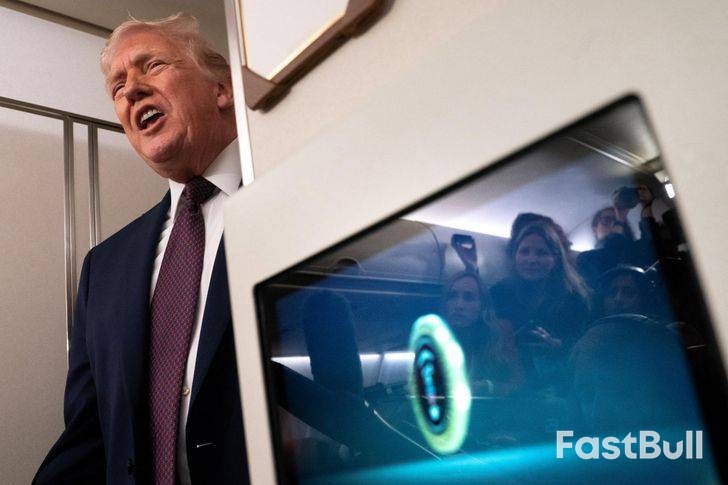
U.S. President Donald Trump said on Monday that any country that does business with Iran will be subjected to a tariff rate of 25% on any business conducted with the United States.
"Effective immediately, any Country doing business with the Islamic Republic of Iran will pay a Tariff of 25% on any and all business being done with the United States of America," Trump said in a post on Truth Social.
"This Order is final and conclusive," he said.
Japanese stocks are gearing up for a strong open after a long weekend, propelled by a weakening yen and growing speculation that Prime Minister Sanae Takaichi will call a snap election.
As of 8 a.m. Tuesday, Nikkei 225 futures in Osaka were trading 4% higher at 54,150. Meanwhile, the yen sits near its weakest point since January 2025, trading at approximately 158.18 to the dollar. This combination of factors is setting a bullish tone for the Tokyo market.
Chatter about Takaichi dissolving parliament as early as next month intensified over the weekend following local media reports. This has reignited interest in the so-called "Takaichi trade," a market strategy centered on the prime minister's expansionary fiscal policy and accommodative monetary stance.
The core bet is that Takaichi's ruling Liberal Democratic Party (LDP) would secure a stronger mandate in an election, paving the way for more stimulus. This scenario historically fuels equity gains while pushing the yen lower.
Analysts at Citi Research, Ryota Sakagami and Keishi Ueda, noted that the market is leaning into this narrative. "The market view is likely to increasingly be that high cabinet approval ratings mean an LDP victory and hence a stable political platform, making the initial Japanese market reaction likely to be a renewed flare-up of the Takaichi trade," they wrote.
A renewed push for Takaichi's economic agenda is expected to benefit specific industries. According to the Citi analysts, investors should watch for potential "significant gains" in several key areas:
• Government Spending Beneficiaries: Sectors like defense and nuclear power are expected to gain from increased fiscal spending.
• Exporters: A weaker yen is a major tailwind for forex-sensitive exporters, particularly auto manufacturers.
• Financials: The analysts also predict that long-term Japanese government bond yields could climb on expectations of fiscal expansion. Higher yields would likely boost the performance of financial stocks.
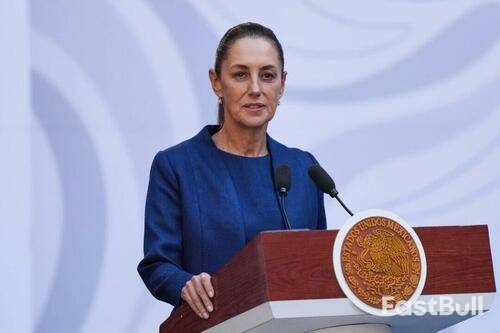
Mexican President Claudia Sheinbaum held a productive conversation with U.S. President Donald Trump on January 12, covering critical issues like security, drug trafficking, and trade. While the dialogue was described as positive, Sheinbaum reaffirmed Mexico's opposition to the deployment of U.S. military forces on its soil.
In a social media post on Monday, Sheinbaum characterized her discussion with Trump as "very good." She noted that their conversation touched on a range of mutual concerns, including security, drug trafficking reduction, trade, and investment.
"Collaboration and cooperation within a framework of mutual respect always yield results," Sheinbaum stated, signaling a commitment to partnership despite underlying tensions.

The call comes amid increased pressure from the Trump administration on Mexico and other Latin American nations to intensify their efforts against drug trafficking. Following the capture of Venezuelan leader Nicolás Maduro by U.S. forces in a pre-dawn raid on January 3, Trump urged Mexico to "get its act together" in dealing with drug cartels.
Trump has consistently offered to send U.S. forces to assist Mexico in these efforts. On January 8, he escalated his rhetoric by suggesting that future U.S. military strikes could target land-based cartel operations inside Mexico.
Sheinbaum Rejects US Troops on Mexican Soil
During a press conference on Monday, Sheinbaum confirmed that she and Trump discussed the possibility of a U.S. force deployment. She recounted that she once again declined the offer and that Trump was understanding of her position.
"He didn't insist," Sheinbaum explained. "I told him, 'Well, no, I've already told you several times that that's not on the table,' but we continue to collaborate within the framework of our sovereignties."
The high-level conversation between the two presidents is part of a broader diplomatic push by the United States. On January 11, U.S. Secretary of State Marco Rubio held a separate call with Mexican Foreign Secretary Juan Ramón de la Fuente.
State Department spokesman Tommy Pigott reported that their discussion focused on "the need for stronger cooperation to dismantle Mexico's violent narcoterrorist networks and stop the trafficking of fentanyl and weapons." Pigott added that Rubio stressed the need for "tangible results."
Tensions with Colombia and Cuba
The Trump administration, emboldened by the Maduro raid, is also applying pressure on other nations in the region, including Colombia and Cuba.
• Colombia: Trump and Colombian President Gustavo Petro have recently exchanged criticisms, with Trump faulting Petro for insufficient cooperation on curbing cocaine production. However, Trump later reported a productive phone call with Petro and announced plans to host him at the White House soon.
• Cuba: In a Truth Social post on Sunday, Trump declared that he had cut off Cuba from Venezuelan oil supplies. "There will be no more oil or money going to Cuba—zero! I strongly suggest they make a deal, before it is too late," he wrote.
For decades, the United States has maintained limited engagement with Cuba's communist government. In response to Trump's comments, Cuban leader Miguel Díaz-Canel Bermúdez stated that U.S.-Cuba relations "must be based on International Law rather than on hostility, threats, and economic coercion."

U.S. President Donald Trump announced on Monday a sweeping new policy, imposing an immediate 25% tariff on any country that conducts business with Iran. The move comes as Washington monitors Tehran's response to widespread anti-government protests.
In a post on the social media platform Truth Social, Trump laid out the new economic penalty.
"Effective immediately, any Country doing business with the Islamic Republic of Iran will pay a Tariff of 25% on any and all business being done with the United States of America," he wrote. He emphasized the decisiveness of the move, adding, "This Order is final and conclusive."
The announcement signals a significant escalation in economic pressure, directly linking international trade relations with U.S. foreign policy on Iran.
This new tariff is framed as a response to the Iranian government's handling of recent nationwide demonstrations. According to reports, hundreds of protesters have been killed in over two weeks of demonstrations fueled by economic difficulties and other grievances.
Earlier this month, Trump stated that the United States would "come to their rescue" if Iran "violently kills peaceful protesters."
The tariff policy was announced shortly after comments from White House Press Secretary Karoline Leavitt. Speaking to Fox News, Leavitt confirmed that while diplomacy remains the administration's "first option" in dealing with Iran, the use of military force is still among the options available to the president.
White Label
Data API
Web Plug-ins
Poster Maker
Affiliate Program
The risk of loss in trading financial instruments such as stocks, FX, commodities, futures, bonds, ETFs and crypto can be substantial. You may sustain a total loss of the funds that you deposit with your broker. Therefore, you should carefully consider whether such trading is suitable for you in light of your circumstances and financial resources.
No decision to invest should be made without thoroughly conducting due diligence by yourself or consulting with your financial advisors. Our web content might not suit you since we don't know your financial conditions and investment needs. Our financial information might have latency or contain inaccuracy, so you should be fully responsible for any of your trading and investment decisions. The company will not be responsible for your capital loss.
Without getting permission from the website, you are not allowed to copy the website's graphics, texts, or trademarks. Intellectual property rights in the content or data incorporated into this website belong to its providers and exchange merchants.
Not Logged In
Log in to access more features

FastBull Membership
Not yet
Purchase
Log In
Sign Up