Markets
News
Analysis
User
24/7
Economic Calendar
Education
Data
- Names
- Latest
- Prev




Signal Accounts for Members
All Signal Accounts
All Contests


U.S. Annual Total New Home Sales (Oct)A:--
F: --
U.S. Cleveland Fed CPI MoM (SA) (Dec)A:--
F: --
P: --
U.S. Cleveland Fed CPI MoM (Dec)A:--
F: --
P: --
China, Mainland M0 Money Supply YoY (Dec)--
F: --
P: --
China, Mainland M1 Money Supply YoY (Dec)--
F: --
P: --
China, Mainland M2 Money Supply YoY (Dec)--
F: --
P: --
U.S. EIA Natural Gas Production Forecast For The Next Year (Jan)A:--
F: --
P: --
U.S. EIA Short-Term Crude Production Forecast For The Next Year (Jan)A:--
F: --
P: --
U.S. EIA Short-Term Crude Production Forecast For The Year (Jan)A:--
F: --
P: --
EIA Monthly Short-Term Energy Outlook
U.S. 30-Year Bond Auction Avg. YieldA:--
F: --
P: --
Argentina 12-Month CPI (Dec)A:--
F: --
P: --
U.S. Budget Balance (Dec)A:--
F: --
P: --
Argentina CPI MoM (Dec)A:--
F: --
P: --
Argentina National CPI YoY (Dec)A:--
F: --
P: --
Richmond Federal Reserve President Barkin delivered a speech.
U.S. API Weekly Cushing Crude Oil StocksA:--
F: --
P: --
U.S. API Weekly Crude Oil StocksA:--
F: --
P: --
U.S. API Weekly Refined Oil StocksA:--
F: --
P: --
U.S. API Weekly Gasoline StocksA:--
F: --
P: --
South Korea Unemployment Rate (SA) (Dec)A:--
F: --
P: --
Japan Reuters Tankan Non-Manufacturers Index (Jan)A:--
F: --
P: --
Japan Reuters Tankan Manufacturers Index (Jan)A:--
F: --
P: --
China, Mainland Exports YoY (CNH) (Dec)A:--
F: --
P: --
China, Mainland Trade Balance (USD) (Dec)A:--
F: --
P: --
China, Mainland Trade Balance (CNH) (Dec)A:--
F: --
P: --
China, Mainland Exports (Dec)A:--
F: --
P: --
China, Mainland Imports YoY (CNH) (Dec)A:--
F: --
P: --
China, Mainland Imports (CNH) (Dec)A:--
F: --
P: --
China, Mainland Imports YoY (USD) (Dec)A:--
F: --
P: --
China, Mainland Exports YoY (USD) (Dec)A:--
F: --
P: --
China, Mainland Outstanding Loans Growth YoY (Dec)--
F: --
P: --
U.K. 10-Year Note Auction Yield--
F: --
P: --
Canada Leading Index MoM (Dec)--
F: --
P: --
U.S. MBA Mortgage Application Activity Index WoW--
F: --
P: --
U.S. Core PPI YoY (Nov)--
F: --
P: --
U.S. PPI MoM (SA) (Nov)--
F: --
P: --
U.S. PPI YoY (Nov)--
F: --
P: --
U.S. Current Account (Q3)--
F: --
P: --
U.S. Retail Sales YoY (Nov)--
F: --
P: --
U.S. Retail Sales (Nov)--
F: --
P: --
U.S. Core Retail Sales MoM (Nov)--
F: --
P: --
U.S. PPI YoY (Excl. Food, Energy & Trade) (Nov)--
F: --
P: --
U.S. PPI MoM Final (Excl. Food, Energy and Trade) (SA) (Nov)--
F: --
P: --
U.S. Core Retail Sales (Nov)--
F: --
P: --
U.S. Retail Sales MoM (Excl. Automobile) (SA) (Nov)--
F: --
P: --
U.S. Retail Sales MoM (Nov)--
F: --
P: --
U.S. Retail Sales MoM (Excl. Gas Stations & Vehicle Dealers) (SA) (Nov)--
F: --
P: --
U.S. Core PPI MoM (SA) (Nov)--
F: --
P: --
Philadelphia Fed President Henry Paulson delivers a speech
U.S. Commercial Inventory MoM (Oct)--
F: --
P: --
U.S. Existing Home Sales Annualized Total (Dec)--
F: --
P: --
U.S. Existing Home Sales Annualized MoM (Dec)--
F: --
P: --
U.S. EIA Weekly Cushing, Oklahoma Crude Oil Stocks Change--
F: --
P: --
U.S. EIA Weekly Crude Stocks Change--
F: --
P: --
U.S. EIA Weekly Gasoline Stocks Change--
F: --
P: --
U.S. EIA Weekly Crude Demand Projected by Production--
F: --
P: --
U.S. EIA Weekly Crude Oil Imports Changes--
F: --
P: --
U.S. EIA Weekly Heating Oil Stock Changes--
F: --
P: --
U.S. Refinitiv/Ipsos Primary Consumer Sentiment Index (PCSI) (Jan)--
F: --
P: --
Japan Domestic Enterprise Commodity Price Index YoY (Dec)--
F: --
P: --


No matching data
Latest Views
Latest Views
Trending Topics
Top Columnists
Latest Update
White Label
Data API
Web Plug-ins
Affiliate Program
View All

No data
Saudi Arabia's ambitious Jafurah gas project aims to transform its energy sector, yet historical data suggests its lofty output projections may again fall short of critical goals.
Saudi Arabia is pivoting aggressively toward its vast shale resources, with the giant Jafurah basin at the heart of its strategy. The Kingdom's goals are clear: enhance energy security, free up more crude oil for export under tight OPEC+ quotas, and fuel a growing domestic industrial base. This move is also a direct response to the U.S. shale boom, which fundamentally reshaped global energy markets and diluted OPEC's influence.
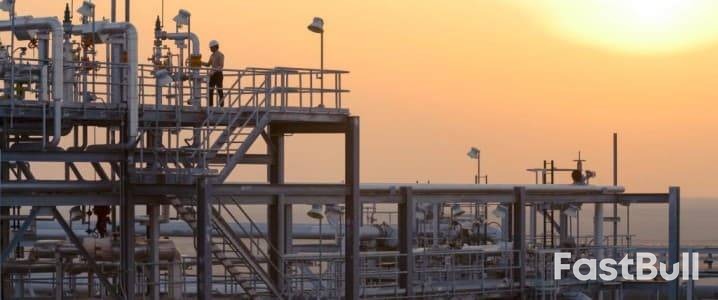
Positioned as a cornerstone of a new energy era, the Jafurah field is one of the world's largest unconventional gas reserves. Riyadh recently announced its first condensate exports from the Jafurah gas plant are scheduled for February. However, a significant gap often exists between Saudi Arabia's official projections and on-the-ground reality. A closer analysis of the Jafurah project suggests its ambitious targets may continue this trend.
The US$100-billion Jafurah development is built on massive resource estimates: approximately 229 trillion standard cubic feet (Tscf) of natural gas and 75 billion barrels of condensate. The plan outlines a phased production increase:
• Phase 1: 200 million standard cubic feet per day (Mscfd)
• By 2030: 2 billion standard cubic feet per day (Bscfd)
Achieving the 2030 target would increase Aramco's total gas output capacity by around 60%, aligning with its broader goal of an 80% boost by the end of the decade.
This new gas supply is primarily intended to satisfy surging domestic power demand, which is growing by 3-4% annually and could be 2.5 times higher by 2050. This forecast is further supported by the explosive growth of artificial intelligence and data centers, which could drive 40-50% of new global gas demand by 2040.
Ultimately, Aramco projects that its unconventional gas program will displace the equivalent of 500,000 barrels per day (bpd) of crude oil currently burned for electricity. A key strategic advantage is that since Jafurah is a gas project, its output will not be subject to Saudi Arabia's OPEC oil production quota.
While the Jafurah plan appears solid on paper, Saudi Arabia's historical energy statistics invite scrutiny. The Kingdom's global influence is deeply tied to its oil and gas reserves, creating a powerful incentive to present figures that amplify its geopolitical weight.
The Mystery of Saudi Arabia's Oil Reserves
A historical review of the Kingdom's proven oil reserves reveals puzzling discrepancies.
• In 1989, Saudi Arabia declared 170 billion barrels of proven oil reserves.
• Just one year later, this official figure jumped by 51.2% to 257 billion barrels, without any major new oil discoveries to justify the increase.
• By 2017, the official number had climbed again to 268.5 billion barrels.
Between 1990 and 2017, the country extracted an average of 8.162 million bpd, totaling approximately 80.43 billion barrels permanently removed from the ground. Despite this massive extraction and a lack of new finds, Saudi Arabia's official reserves still managed to grow by 98.5 billion barrels over the period.
Production Capacity vs. On-the-Ground Reality
The Kingdom's claims about its production capacity have also faced challenges. After the September 14, 2019 attacks on its Abqaiq and Khurais facilities, the Energy Minister stated that capacity would be restored to 11 million bpd that month and recover to a full 12 million bpd two months later.
Historical data shows these figures were not reflective of sustained capabilities.
• From 1973 to the day of the attacks, Saudi Arabia's average crude oil production was just 8.151 million bpd.
• It had only briefly averaged 11 million bpd once (November 2018) and has only hit the 12 million bpd mark once (April 2020), failing to sustain it.
Furthermore, it became clear that Saudi Arabia had expanded its definition of "spare capacity" beyond the industry standard set by the Energy Information Administration (EIA), which defines it as production that can be brought online within 30 days and sustained for 90 days. The Kingdom's revised definition appeared to include crude held in storage and barrels purchased from other sources.
This pattern of strategic overstatement appears to extend to the Jafurah project. In early 2024, an additional 15 Tscf of gas was declared proven, raising the total to 229 Tscf. But the critical question remains: is the projected output sufficient to meet the Kingdom's goals?
A simple calculation reveals the potential shortfall.
• Jafurah's 2030 production target is 2 billion standard cubic feet per day of gas.
• This is equivalent to approximately 334,000 barrels of oil per day (0.3340 million barrels of oil equivalent).
According to EIA data, Saudi Arabia burned well over 500,000 bpd of crude for power in the second half of 2024, with industry estimates putting the 2025 figure around 470,000 bpd.
The conclusion is stark: the total new gas supply projected from Jafurah by 2030 is not enough to cover even the current volume of crude being burned for power generation. This calculation does not even account for the expected increase in domestic energy demand over the next six years. While Jafurah is a strategic priority, the numbers suggest its impact may be more limited than official forecasts imply.
The likelihood of the Federal Reserve cutting interest rates in April has climbed to 42%, driven by the latest Consumer Price Index (CPI) report. This shift has financial markets recalibrating their expectations for U.S. monetary policy.
However, not all forecasts are aligned. Goldman Sachs, for instance, projects a different timeline, anticipating rate cuts in June and September of 2026.
The recent CPI data has become a key catalyst for adjusting financial strategies. Following the release, analytics showed the probability of a rate reduction in April hitting 42%, prompting stakeholders to monitor financial conditions closely.
Markets are now actively responding to this revised outlook. A potential policy change by the Federal Reserve reflects its historical responsiveness to evolving economic indicators. If key indices continue to signal a change in conditions, policy adjustments become more likely.
Despite the market's reaction, Federal Reserve officials, including Chair Jay Powell, continue to emphasize a cautious strategy focused on maintaining economic stability.
Powell recently stated that "the economy is not 'hot' and not generating Phillips curve inflation," providing the rationale behind the central bank's current policy stance. This comment suggests that while the Fed is data-dependent, it is not rushing to alter its course based on a single report.
An anticipated change in interest rates is already influencing behavior across the economy. Investors and financial institutions may begin to adjust their funding and investment strategies to align with new economic forecasts.
Potential rate cuts could significantly affect asset liquidity and investment flows in the coming months. As a result, market participants are preparing to adapt to a new economic environment potentially shaped by a more accommodative Federal Reserve policy.
Bitcoin has climbed to a striking $94,500, showing remarkable strength as global instability intensifies. This unexpected rally coincides with signals from the U.S. Department of State and comments from former President Trump, suggesting significant market-moving events could be approaching.
Recent statements from Trump have fueled speculation. He has twice advised observers to be patient, stating, "Hold on, help is on the way." This message comes as the U.S. reportedly orchestrated the escape of Venezuela's Maduro, leading to theories that similar strategies could be applied in Iran.
Despite rising geopolitical tensions, Bitcoin’s value continues to push higher, defying historical trends. During past conflicts, such as the one between Russia and Ukraine, markets typically experienced downturns rather than rallies.
One prevailing theory is that Iranian assets are being moved into Bitcoin to hedge against war-related anxieties. While USDT is considered by some to be a more stable alternative, it carries the risk of being frozen. Separately, rumors have also surfaced about a potential leak concerning an upcoming U.S. Supreme Court decision, adding another layer of uncertainty.
The U.S. government is taking a clear stance on the situation. The Department of State has issued a strong advisory, urging American citizens to leave Iran immediately. Trump has indicated he is closely monitoring developments and consulting with international allies to manage the escalating crisis.
He also hinted at forthcoming announcements related to the death toll from Iranian protests, which could shape his next decisions. While leaving the door open for potential negotiations with allied nations, Trump stressed the urgent need for improved conduct from Iran.
In a separate discussion on economic policy, Trump disagreed with JPMorgan CEO Dimon, advocating for a reduction in interest rates. He also expressed optimism about expanding American trade within Chinese markets, signaling broader economic priorities.
As the global landscape remains highly unpredictable, the cryptocurrency markets are reflecting these mounting tensions and strategic shifts. The financial world is on high alert, waiting to see how these geopolitical and economic factors will unfold next.
The White House is considering military action against Iran in response to the deaths of protesters, while simultaneously exploring diplomatic solutions. President Donald Trump has signaled that all options are on the table, creating a tense geopolitical landscape with potential consequences for global markets.
Washington is actively discussing its response to the situation in Iran, with President Trump contemplating military strikes. White House Press Secretary Caroline Leavitt confirmed that airstrikes remain a viable option should diplomatic efforts prove unsuccessful.
Despite the preparations for a potential military response, Trump has also publicly suggested that Iran's leadership may be open to negotiations. This dual-track approach keeps both military and diplomatic pathways active as the administration determines its next steps.
In a significant economic move, President Trump announced a new policy aimed at isolating Tehran. He declared that any country engaging in trade with Iran will face a 25% tariff on all business conducted with the United States.
This move applies immediate economic pressure on nations maintaining trade relationships with Iran, potentially impacting global commerce and supply chains. Iran has warned it will retaliate against any hostile actions.
The prospect of military intervention in Iran raises concerns about regional market stability. However, the precise financial consequences remain difficult to forecast, particularly for digital assets. So far, no major cryptocurrencies have reportedly been affected by these geopolitical developments.
Mona Yacoubian of the Center for Strategic and International Studies (CSIS) voiced concerns that an increase in protester deaths could trigger a military escalation. Market observers note that while historical tensions involving Iran or brief conflicts with Israel have not directly impacted the cryptocurrency market, they often lead to wider economic ramifications. The current situation suggests a similar pattern, with the most immediate effects likely to be felt in traditional trade and regional markets rather than crypto.
President Donald Trump has pushed back against criticism from JPMorgan Chase CEO Jamie Dimon, flatly stating the executive is "wrong" to suggest a Justice Department probe undermines the Federal Reserve's independence.
"I think it's fine what I'm doing," Trump said, adding that Fed Chair Jerome Powell is "a bad Fed person."
The dispute centers on a federal investigation into Powell regarding the cost of renovating the central bank's headquarters and his subsequent testimony to Congress on the matter.
The public disagreement highlights a growing tension between the White House and the financial industry over the central bank's autonomy.
Dimon Warns Against Political Interference
Earlier, Dimon had voiced strong concerns about the probe, emphasizing the importance of institutional independence.
"Everyone we know believes in Fed independence," he stated. "And anything that chips away at that is probably not a great idea."
Dimon warned that such actions could have the "reverse consequences," potentially leading to higher inflation expectations and increased interest rates over time. When asked about these remarks, Trump’s response was blunt: "I think he's wrong."
Political Fallout Mounts Over Powell's Successor
Despite the controversy, Trump confirmed he intends to announce Powell's replacement within "the next few weeks."
However, this plan faces resistance from Republican lawmakers. Senator Thom Tillis, a key Republican on the Senate Banking Committee, has threatened to block all new nominations to the Fed until the investigation is resolved.
The conflict also extended to consumer finance, with Trump defending his proposal for a one-year, 10% cap on credit card interest rates, a move that would likely require congressional approval.
The banking industry has warned that such a cap could restrict access to credit for many consumers and dismantle popular rewards programs.
Trump, however, framed the policy as a protective measure for borrowers. "I think that people that are paying 28% interest should be protected," he said, noting the cap would be for "a one-year period."
He then took another direct aim at the JPMorgan chief, stating that he did not believe it was right for "Jamie Dimon or anybody else" to charge customers high interest rates on their credit cards.
White Label
Data API
Web Plug-ins
Poster Maker
Affiliate Program
The risk of loss in trading financial instruments such as stocks, FX, commodities, futures, bonds, ETFs and crypto can be substantial. You may sustain a total loss of the funds that you deposit with your broker. Therefore, you should carefully consider whether such trading is suitable for you in light of your circumstances and financial resources.
No decision to invest should be made without thoroughly conducting due diligence by yourself or consulting with your financial advisors. Our web content might not suit you since we don't know your financial conditions and investment needs. Our financial information might have latency or contain inaccuracy, so you should be fully responsible for any of your trading and investment decisions. The company will not be responsible for your capital loss.
Without getting permission from the website, you are not allowed to copy the website's graphics, texts, or trademarks. Intellectual property rights in the content or data incorporated into this website belong to its providers and exchange merchants.
Not Logged In
Log in to access more features

FastBull Membership
Not yet
Purchase
Log In
Sign Up