• Trade
  • Markets
  • Copy
  • Contests
  • News
  • 24/7
  • Calendar
  • Q&A
  • Chats
Trending
Screeners
SYMBOL
LAST
BID
ASK
HIGH
LOW
NET CHG.
%CHG.
SPREAD
SPX
S&P 500 Index
6827.42
6827.42
6827.42
6899.86
6801.80
-73.58
-1.07%
--
DJI
Dow Jones Industrial Average
48458.04
48458.04
48458.04
48886.86
48334.10
-245.98
-0.51%
--
IXIC
NASDAQ Composite Index
23195.16
23195.16
23195.16
23554.89
23094.51
-398.69
-1.69%
--
USDX
US Dollar Index
97.870
97.950
97.870
98.070
97.810
-0.080
-0.08%
--
EURUSD
Euro / US Dollar
1.17516
1.17523
1.17516
1.17596
1.17262
+0.00122
+ 0.10%
--
GBPUSD
Pound Sterling / US Dollar
1.33903
1.33912
1.33903
1.33961
1.33546
+0.00196
+ 0.15%
--
XAUUSD
Gold / US Dollar
4340.47
4340.88
4340.47
4350.16
4294.68
+41.08
+ 0.96%
--
WTI
Light Sweet Crude Oil
56.822
56.852
56.822
57.601
56.789
-0.411
-0.72%
--

Community Accounts

Signal Accounts
--
Profit Accounts
--
Loss Accounts
--
View More

Become a signal provider

Sell trading signals to earn additional income

View More

Guide to Copy Trading

Get started with ease and confidence

View More

Signal Accounts for Members

All Signal Accounts

Best Return
  • Best Return
  • Best P/L
  • Best MDD
Past 1W
  • Past 1W
  • Past 1M
  • Past 1Y

All Contests

  • All
  • Trump Updates
  • Recommend
  • Stocks
  • Cryptocurrencies
  • Central Banks
  • Featured News
Top News Only
Share

According To Data From The Federal Reserve Bank Of New York, The Secured Overnight Funding Rate (Sofr) Was 3.67% On The Previous Trading Day (December 15), Compared To 3.66% The Day Before

Share

Peru Energy And Mines Ministry: Copper Production Up 4.8% Year-On-Year In October To 248192 Metric Tons

Share

Security Source: Ukrainian Drones Hits Russian Oil Infrastructure In Caspian Sea For Third Time

Share

Spot Palladium Extends Gains, Last Up 5% To $1562.7/Oz

Share

Mexico's Economy Ministry Announces Start Of Anti-Dumping Investigation And Anti-Subsidy Investigations Into USA Pork Imports

Share

Canada Nov CPI Common +2.8%, CPI Median +2.8%, CPI Trim +2.8% On Year

Share

NY Fed's Empire State Prices Paid Index +37.6 In December Versus+49.0 In November

Share

Canada Nov Consumer Prices +0.1% On Month, +2.2% On Year

Share

Canada Nov CPI Core -0.1% On Month, +2.9% On Year

Share

Canada Nov Core CPI, Seasonally Adjusted +0.2% On Month, Oct +0.3% (Unrevised)

Share

UK Health Minister Streeting On Doctors' Strike: Vote To Go Ahead Reveals The Bma's Shocking Disregard For Patient Safety

Share

Venezuelan State Oil Company Pdvsa Says Was Subject To Cyber Attack But Operations Unaffected

Share

Russia Central Bank Says January-October Current Account Surplus At $37.1 Billion

Share

Polish Current Account Balance At +1924 Million Euros In October Versus+130 Million Euros Seen In Reuters Poll

Share

Statement: Germany, Ukraine Propose 10-Point Plan To Strengthen Armament Cooperation

Share

London Metal Exchange Three Month Copper Falls More Than 3% To $11541.50 A Metric Ton

Share

[Market Update] Spot Silver Surged $2.00 During The Day, Returning To $64/ounce, A Gain Of 3.23%

Share

European Central Bank: Italy's Recurrent Ad Hoc Tax Provisions Cause Uncertainty, Damage Investor Confidence, And May Affect Banks' Funding Costs

Share

Stats Office: Nigeria Consumer Inflation At 14.45% Year-On-Year In November

Share

European Central Bank: Italy's Budget Measures Weighing On Domestic Banks Could Have "Negative Implications" On Their Credit Liquidity

TIME
ACT
FCST
PREV
Japan Tankan Small Manufacturing Outlook Index (Q4)

A:--

F: --

P: --

Japan Tankan Large Non-Manufacturing Outlook Index (Q4)

A:--

F: --

P: --

Japan Tankan Large Manufacturing Outlook Index (Q4)

A:--

F: --

P: --

Japan Tankan Small Manufacturing Diffusion Index (Q4)

A:--

F: --

P: --

Japan Tankan Large Manufacturing Diffusion Index (Q4)

A:--

F: --

P: --

Japan Tankan Large-Enterprise Capital Expenditure YoY (Q4)

A:--

F: --

P: --

U.K. Rightmove House Price Index YoY (Dec)

A:--

F: --

P: --

China, Mainland Industrial Output YoY (YTD) (Nov)

A:--

F: --

P: --

China, Mainland Urban Area Unemployment Rate (Nov)

A:--

F: --

P: --

Saudi Arabia CPI YoY (Nov)

A:--

F: --

P: --

Euro Zone Industrial Output YoY (Oct)

A:--

F: --

P: --

Euro Zone Industrial Output MoM (Oct)

A:--

F: --

P: --

Canada Existing Home Sales MoM (Nov)

A:--

F: --

P: --

Canada National Economic Confidence Index

A:--

F: --

P: --

Canada New Housing Starts (Nov)

A:--

F: --

P: --
U.S. NY Fed Manufacturing Employment Index (Dec)

A:--

F: --

P: --

U.S. NY Fed Manufacturing Index (Dec)

A:--

F: --

P: --

Canada Core CPI YoY (Nov)

A:--

F: --

P: --

Canada Manufacturing Unfilled Orders MoM (Oct)

A:--

F: --

P: --

U.S. NY Fed Manufacturing Prices Received Index (Dec)

A:--

F: --

P: --

U.S. NY Fed Manufacturing New Orders Index (Dec)

A:--

F: --

P: --

Canada Manufacturing New Orders MoM (Oct)

A:--

F: --

P: --

Canada Core CPI MoM (Nov)

A:--

F: --

P: --

Canada Trimmed CPI YoY (SA) (Nov)

A:--

F: --

P: --

Canada Manufacturing Inventory MoM (Oct)

A:--

F: --

P: --

Canada CPI YoY (Nov)

A:--

F: --

P: --

Canada CPI MoM (Nov)

A:--

F: --

P: --

Canada CPI YoY (SA) (Nov)

A:--

F: --

P: --

Canada Core CPI MoM (SA) (Nov)

A:--

F: --

P: --

Canada CPI MoM (SA) (Nov)

A:--

F: --

P: --

Federal Reserve Board Governor Milan delivered a speech
U.S. NAHB Housing Market Index (Dec)

--

F: --

P: --

Australia Composite PMI Prelim (Dec)

--

F: --

P: --

Australia Services PMI Prelim (Dec)

--

F: --

P: --

Australia Manufacturing PMI Prelim (Dec)

--

F: --

P: --

Japan Manufacturing PMI Prelim (SA) (Dec)

--

F: --

P: --

U.K. 3-Month ILO Employment Change (Oct)

--

F: --

P: --

U.K. Unemployment Claimant Count (Nov)

--

F: --

P: --

U.K. Unemployment Rate (Nov)

--

F: --

P: --

U.K. 3-Month ILO Unemployment Rate (Oct)

--

F: --

P: --

U.K. Average Weekly Earnings (3-Month Average, Including Bonuses) YoY (Oct)

--

F: --

P: --

U.K. Average Weekly Earnings (3-Month Average, Excluding Bonuses) YoY (Oct)

--

F: --

P: --

France Services PMI Prelim (Dec)

--

F: --

P: --

France Composite PMI Prelim (SA) (Dec)

--

F: --

P: --

France Manufacturing PMI Prelim (Dec)

--

F: --

P: --

Germany Services PMI Prelim (SA) (Dec)

--

F: --

P: --

Q&A with Experts
    • All
    • Chatrooms
    • Groups
    • Friends
    Connecting
    .
    .
    .
    Type here...
    Add Symbol or Code

      No matching data

      All
      Trump Updates
      Recommend
      Stocks
      Cryptocurrencies
      Central Banks
      Featured News
      • All
      • Russia-Ukraine Conflict
      • Middle East Flashpoint
      • All
      • Russia-Ukraine Conflict
      • Middle East Flashpoint
      Search
      Products

      Charts Free Forever

      Chats Q&A with Experts
      Screeners Economic Calendar Data Tools
      Membership Features
      Data Warehouse Market Trends Institutional Data Policy Rates Macro

      Market Trends

      Market Sentiment Order Book Forex Correlations

      Top Indicators

      Charts Free Forever
      Markets

      News

      News Analysis 24/7 Columns Education
      From Institutions From Analysts
      Topics Columnists

      Latest Views

      Latest Views

      Trending Topics

      Top Columnists

      Latest Update

      Signals

      Copy Rankings Latest Signals Become a signal provider AI Rating
      Contests
      Brokers

      Overview Brokers Assessment Rankings Regulators News Claims
      Broker listing Forex Brokers Comparison Tool Live Spread Comparison Scam
      Q&A Complaint Scam Alert Videos Tips to Detect Scam
      More

      Business
      Events
      Careers About Us Advertising Help Center

      White Label

      Data API

      Web Plug-ins

      Affiliate Program

      Awards Institution Evaluation IB Seminar Salon Event Exhibition
      Vietnam Thailand Singapore Dubai
      Fans Party Investment Sharing Session
      FastBull Summit BrokersView Expo
      Recent Searches
        Top Searches
          Markets
          News
          Analysis
          User
          24/7
          Economic Calendar
          Education
          Data
          • Names
          • Latest
          • Prev

          View All

          No data

          Scan to Download

          Faster Charts, Chat Faster!

          Download App
          English
          • English
          • Español
          • العربية
          • Bahasa Indonesia
          • Bahasa Melayu
          • Tiếng Việt
          • ภาษาไทย
          • Français
          • Italiano
          • Türkçe
          • Русский язык
          • 简中
          • 繁中
          Open Account
          Search
          Products
          Charts Free Forever
          Markets
          News
          Signals

          Copy Rankings Latest Signals Become a signal provider AI Rating
          Contests
          Brokers

          Overview Brokers Assessment Rankings Regulators News Claims
          Broker listing Forex Brokers Comparison Tool Live Spread Comparison Scam
          Q&A Complaint Scam Alert Videos Tips to Detect Scam
          More

          Business
          Events
          Careers About Us Advertising Help Center

          White Label

          Data API

          Web Plug-ins

          Affiliate Program

          Awards Institution Evaluation IB Seminar Salon Event Exhibition
          Vietnam Thailand Singapore Dubai
          Fans Party Investment Sharing Session
          FastBull Summit BrokersView Expo

          RBA Shoots up Aussie, Dollar Consolidating Against Europeans and Yen

          Samantha Luan

          Forex

          Summary:

          Australian Dollar surges broadly after surprised RBA rate hike.

          Australian Dollar surges broadly after surprised RBA rate hike. Tightening bias is also maintained, so more hike(s) could still be in the pipeline. The move in Aussie is taking other commodity currencies higher. Now, a focus will be on whether BoC would follow and surprises the markets too. At the other end of the spectrum, Dollar is sold off broadly today. Yen is following as the second worst and then Euro. Swiss Franc and Sterling are mixed.
          Technically, some attention will also be on Dollar in the early part of the week. Near term price actions in EUR/USD, USD/CHF, USD/JPY and even GBP/USD are displaying corrective structures. That is, the greenback's rally against European majors and Yen shouldn't be over yet. Break of any of 1.0634 support in EUR/USD, 1.2306 support in GBP/USD, 0.9146 resistance in USD/CHF and 140.90 resistance in USD/JPY could be the early signal of resumption in Dollar's rise.
          RBA Shoots up Aussie, Dollar Consolidating Against Europeans and Yen_1In Asia, at the time of writing, Nikkei is up 0.69%. Hong Kong HSI is up 0.51%. China Shanghai SSE is up 0.05%. Singapore Strait Times is up 0.04%. Japan 10-year JGB yield is down -0.0040 at 0.430. Overnight, DOW dropped -0.59%. S&P 500 dropped -0.20%. NASDAQ dropped -0.09%. 10-year yield rose 0.0002 to 3.693.

          RBA surprises with 25bps hike, to give itself greater confidence

          RBA surprises the market by raising the cash rate target rate, by 25bps to 4.10. Tightening bias is maintained as "Some further tightening of monetary policy may be required to ensure that inflation returns to target in a reasonable timeframe".
          The central bank noted that while inflation is "still too high" even though it has "passed its peak." Also, it will be "some time yet" before inflation falls back to target range. It explained, "this further increase in interest rates is to provide greater confidence that inflation will return to target within a reasonable timeframe".
          Growth "has slowed" and labor market conditions "remain very tight" even though eased. Wages growth "has picked up" but is "still consistent with the inflation target". The path to soft landing "remains a narrow one" and a "significant source" of uncertainty continues to be household consumption.

          AUD/NZD breaks structural resistance after RBA hike

          AUD/NZD surges after RBA's surprised rate hike and breaks through 1.0928 structural resistance. The development should confirm that corrective fall from 1.1085 has completed with three waves down to 1.0556.
          Intraday bias is now on the upside as long as 1.0881 minor support holds. Sustained trading above 1.0928 could prompt upside acceleration 1.1085 resistance. Break there will resume whole rally from 1.0469 (2022 low) to 100% projection of 1.0469 to 1.1085 from 1.0556 at 1.1172.

          RBA Shoots up Aussie, Dollar Consolidating Against Europeans and Yen_2RBA Shoots up Aussie, Dollar Consolidating Against Europeans and Yen_3Looking ahead

          Germany factor orders, UK PMI construction, Eurozone retail sales will be released in European session. Later in the day, Canada will publish building permits and Ivey PMI.

          EUR/AUD Daily Outlook

          EUR/AUD's decline continues today and break of 1.6134 support confirms resumption of whole fall from 1.6785. Intraday bias stays on the downside for 100% projection of 1.6785 to 1.6134 from 1.6513 at 1.5862. On the upside, above 1.6207 minor resistance will turn intraday bias neutral first. But risk will stay on the downside as long as 1.6513 resistance holds, in case of recovery.RBA Shoots up Aussie, Dollar Consolidating Against Europeans and Yen_4
          In the bigger picture, a medium term top is possibly in place at 1.6785 already, on bearish divergence condition in D MACD. Fall from there is seen as correcting whole up trend from 1.4281 (2022 low). Deeper decline is expected as long as 1.6513 resistance holds, to 38.2% retracement of 1.4281 to 1.6785 at 1.5828. Strong support could be seen there to complete the first leg of the corrective pattern.

          RBA Shoots up Aussie, Dollar Consolidating Against Europeans and Yen_5Source: ActionForex.com

          Risk Warnings and Disclaimers
          You understand and acknowledge that there is a high degree of risk involved in trading. Following any strategies or investment methods may lead to potential losses. The content on the site is provided by our contributors and analysts for information purposes only. You are solely responsible for determining whether any trading assets, securities, strategy, or any other product is suitable for investing based on your own investment objectives and financial situation.
          Comments
          Add to Favorites
          Share

          Former Vice President Mike Pence Officially Launches 2024 Presidential Bid, Setting Up a Showdown with Trump

          Warren Takunda

          Economic

          Political

          Des Moines, Iowa - In a surprising turn of events, former Vice President Mike Pence has formally announced his candidacy for the 2024 presidential race, setting the stage for a high-stakes showdown with his former boss, Donald Trump. Pence's decision to challenge Trump's bid for a second term has sparked intense speculation and raised questions about the future of the Republican Party.
          Pence, who served as Vice President under the Trump administration, filed the necessary paperwork with the Federal Election Commission on Monday, solidifying his entry into the race¹. This move signals his intention to pursue the Republican nomination and presents a direct challenge to Trump's hold on the party.
          According to sources close to Pence, he is expected to personally launch his campaign on Wednesday in Des Moines, Iowa, a strategic choice to kickstart his bid for the presidency⁴. Iowa holds the first-in-the-nation caucuses, making it a critical battleground for candidates seeking to build early momentum and secure crucial support.
          The announcement of Pence's candidacy comes as no surprise to political observers who have closely followed his trajectory since leaving office. While serving as Vice President, Pence was widely seen as a loyal ally to Trump, often providing a calming and measured presence to counterbalance the former President's more controversial statements and actions.
          However, as the 2024 race began to take shape, Pence's relationship with Trump became more strained. Reports suggest that the rift between the two escalated following the storming of the Capitol on January 6, 2021, with Pence facing immense pressure from Trump to overturn the election results. Pence's refusal to comply with Trump's demands led to a noticeable deterioration in their once-close bond.
          Pence's decision to challenge a sitting President from his own party is a bold move that underscores the growing divisions within the Republican Party. Trump, who has maintained a strong grip on the party's base, wasted no time in announcing his intention to seek re-election, setting the stage for an intriguing battle between the two figures².
          The upcoming clash between Pence and Trump is likely to have significant implications for the Republican Party's future direction and the broader political landscape. It remains to be seen how other Republican contenders will position themselves in the face of this high-profile confrontation. Will they align with Pence, attempt to rally behind Trump, or carve out their own paths?
          The financial markets will undoubtedly keep a close eye on this contest as it unfolds. The outcome of the 2024 presidential race will have far-reaching consequences for various sectors, including energy, healthcare, infrastructure, and taxation, among others. Investors will carefully evaluate the policy proposals put forth by both candidates and consider the potential impact on industries and markets.
          As the race for the Republican nomination gains momentum, the spotlight will be on Mike Pence and Donald Trump, two influential figures who will vie for control of the party's future. Their clash will test the loyalty of Republican voters and reshape the dynamics of the 2024 presidential race.
          Only time will tell how this showdown will ultimately unfold, but one thing is certain: the battle for the Republican nomination is set to be a closely watched and pivotal moment in American politics.
          To stay updated on all economic events of today, please check out our Economic calendar
          Risk Warnings and Disclaimers
          You understand and acknowledge that there is a high degree of risk involved in trading. Following any strategies or investment methods may lead to potential losses. The content on the site is provided by our contributors and analysts for information purposes only. You are solely responsible for determining whether any trading assets, securities, strategy, or any other product is suitable for investing based on your own investment objectives and financial situation.
          Comments
          Add to Favorites
          Share

          European Stocks Set for Flat Open as RBA Raises Rates Again

          Devin

          Stocks

          Commodity

          European markets got off to a negative start to the week as the effects of the Friday U.S. employment report rebound were tempered by a disappointing ISM services report which painted a contrastingly different picture of the U.S. economy.
          The weekend Saudi Arabia oil production cut, which ordinarily should have prompted a sharp upwards move in oil prices initially saw prices move to one-month highs, however most of the gains quickly disappeared on concerns over the demand outlook.
          U.S. markets initially got off to a reasonably positive start but the disappointment over the May ISM services report tempered gains, as well as prompting a sharp reversal in yields which had been higher in the lead-up to yesterday's 3pm data drop.
          The weak nature of the ISM services report was in sharp contrast to other service sector numbers, raising more questions, than answers about the strength of the U.S. economy, ahead of next week's Fed meeting.
          While the S&P500 managed to put in a fresh 9-month high the index finished the session slightly lower, as did the Nasdaq 100 after Apple shares which had initially posted a new record high, rolled out into the close after the first day of the WWDC got underway.
          The unveiling of the new Vision Pro Headset was the centrepiece of a host of product and software upgrades. The Vision Pro will allow users to view content in virtual and mixed reality, with Disney+ signing a deal with Apple to stream its content by way of the headset, with a total price tag of $3,499. The headset looks a little like a pair of ski goggles or scuba mask, with initial impressions seeing the shares rollover into the close to finish lower.
          With U.S. central bank officials now muzzled until after next week's rate decision markets now must reassess whether we do see a pause next week, or whether we see another 25bps hike. The odds still favour a pause even more so after yesterday's ISM report, however we still have next week's CPI numbers to contend with.
          Earlier today we saw the RBA kick off an important two weeks for central bank rate decisions by raising rates by 25bps taking the headline rate to 4.10%. Today's decision could have gone either way, but in the past few weeks there has been a sea change in Australia when it comes to how the RBA is viewed as well as its competence.
          Last month the RBA surprised the markets by unexpectedly hiking the cash rate by 25bps to 3.85%. Only days before that decision the RBA had been heavily criticised for being too slow in spotting the inflation surge seen at the end of 2021, and through 2022.
          This criticism appears to have stung, and now the hawkish turn we're currently raises the prospect the central bank could possibly overcompensate in the opposite direction. This runs the risk of them tightening too hard and unsettling the housing market That said the headline rate in Australia remains well below its immediate peer the RBNZ where it sits at 5.5%, so the RBA still has plenty of room to catch up.
          Today's European market session is set to see EU retail sales for April which are predicted to see a modest improvement of 0.2% after the sharp -1.2% decline in March.
          Before that we have German factory orders for April, with the hope that after an awful March number of -10.7% and an economy in recession that Q2 will get off to a positive start with a gain of 2.8%.
          EUR/USD – the failure at the 1.0780 area last week has seen the euro slip back, still within a tight range, with support back at the recent lows at 1.0635. We need to see a break of this range with broader resistance at the 1.0820/30 level.
          GBP/USD – after slipping back the 1.2540 area last week we remain in a broader uptrend with support at the 1.2300 area and trend line resistance from the 2021 highs at 1.2630. This, along with the May highs at 1.2680 is a key barrier for a move towards the 1.3000 area.
          EUR/GBP – found support at the 0.8560 level last week, just above the December 2022 lows at 0.8558. Is currently squeezing higher with the next resistance now at the 0.8660 area. We also have major resistance at the 0.8720 area.
          USD/JPY – rebounded back towards last week's highs at the 140.95 area, falling short and slipping back below the 140.00 area. Is the U.S. dollar trying to carve out a top? We have support at the 138.40 area which if broken could see a move back to the 137.00 area.
          Source: CMC
          European markets got off to a negative start to the week as the effects of the Friday U.S. employment report rebound were tempered by a disappointing ISM services report which painted a contrastingly different picture of the U.S. economy.
          The weekend Saudi Arabia oil production cut, which ordinarily should have prompted a sharp upwards move in oil prices initially saw prices move to one-month highs, however most of the gains quickly disappeared on concerns over the demand outlook.
          U.S. markets initially got off to a reasonably positive start but the disappointment over the May ISM services report tempered gains, as well as prompting a sharp reversal in yields which had been higher in the lead-up to yesterday's 3pm data drop.
          The weak nature of the ISM services report was in sharp contrast to other service sector numbers, raising more questions, than answers about the strength of the U.S. economy, ahead of next week's Fed meeting.
          While the S&P500 managed to put in a fresh 9-month high the index finished the session slightly lower, as did the Nasdaq 100 after Apple shares which had initially posted a new record high, rolled out into the close after the first day of the WWDC got underway.
          The unveiling of the new Vision Pro Headset was the centrepiece of a host of product and software upgrades. The Vision Pro will allow users to view content in virtual and mixed reality, with Disney+ signing a deal with Apple to stream its content by way of the headset, with a total price tag of $3,499. The headset looks a little like a pair of ski goggles or scuba mask, with initial impressions seeing the shares rollover into the close to finish lower.
          With U.S. central bank officials now muzzled until after next week's rate decision markets now must reassess whether we do see a pause next week, or whether we see another 25bps hike. The odds still favour a pause even more so after yesterday's ISM report, however we still have next week's CPI numbers to contend with.
          Earlier today we saw the RBA kick off an important two weeks for central bank rate decisions by raising rates by 25bps taking the headline rate to 4.10%. Today's decision could have gone either way, but in the past few weeks there has been a sea change in Australia when it comes to how the RBA is viewed as well as its competence.
          Last month the RBA surprised the markets by unexpectedly hiking the cash rate by 25bps to 3.85%. Only days before that decision the RBA had been heavily criticised for being too slow in spotting the inflation surge seen at the end of 2021, and through 2022.
          This criticism appears to have stung, and now the hawkish turn we're currently raises the prospect the central bank could possibly overcompensate in the opposite direction. This runs the risk of them tightening too hard and unsettling the housing market That said the headline rate in Australia remains well below its immediate peer the RBNZ where it sits at 5.5%, so the RBA still has plenty of room to catch up.
          Today's European market session is set to see EU retail sales for April which are predicted to see a modest improvement of 0.2% after the sharp -1.2% decline in March.
          Before that we have German factory orders for April, with the hope that after an awful March number of -10.7% and an economy in recession that Q2 will get off to a positive start with a gain of 2.8%.
          EUR/USD – the failure at the 1.0780 area last week has seen the euro slip back, still within a tight range, with support back at the recent lows at 1.0635. We need to see a break of this range with broader resistance at the 1.0820/30 level.
          GBP/USD – after slipping back the 1.2540 area last week we remain in a broader uptrend with support at the 1.2300 area and trend line resistance from the 2021 highs at 1.2630. This, along with the May highs at 1.2680 is a key barrier for a move towards the 1.3000 area.
          EUR/GBP – found support at the 0.8560 level last week, just above the December 2022 lows at 0.8558. Is currently squeezing higher with the next resistance now at the 0.8660 area. We also have major resistance at the 0.8720 area.
          USD/JPY – rebounded back towards last week's highs at the 140.95 area, falling short and slipping back below the 140.00 area. Is the U.S. dollar trying to carve out a top? We have support at the 138.40 area which if broken could see a move back to the 137.00 area.

          Source: CMC

          Risk Warnings and Disclaimers
          You understand and acknowledge that there is a high degree of risk involved in trading. Following any strategies or investment methods may lead to potential losses. The content on the site is provided by our contributors and analysts for information purposes only. You are solely responsible for determining whether any trading assets, securities, strategy, or any other product is suitable for investing based on your own investment objectives and financial situation.
          Comments
          Add to Favorites
          Share

          Turkish Lira's Downward Trend Persists Despite Cabinet Changes

          Warren Takunda

          Traders' Opinions

          Istanbul, Turkey - The Turkish lira, the nation's currency, has extended its downward trajectory, hitting a new all-time low against the US dollar at over 21 lira per USD. This decline comes amidst a backdrop of uncertainty as investors eagerly anticipate insights into Turkey's economic policies following President Erdogan's recent re-election for a third term and the unveiling of his new cabinet. Despite the appointment of Mehmet Simsek, a pro-market advocate, hopes for a reversal of the unconventional policies that had resulted in soaring inflation, low interest rates, a plummeting lira, and negative net foreign exchange reserves remain tentative.
          Turkish Lira's Downward Trend Persists Despite Cabinet Changes_1Addressing the concerns of market participants, Simsek acknowledged the urgent need for a return to a "rational ground" to restore predictability to the Turkish economy. The new Finance Minister emphasized the importance of adopting a more orthodox approach to address the prevailing challenges. However, traders and investors are anxiously awaiting further details on the specific measures that will be implemented to guide Turkey's economic trajectory.
          Inflation in Turkey, on the other hand, has shown signs of abating for the seventh consecutive month, marking its lowest level since December 2021. However, economists caution that this decline can be partially attributed to the pre-election promise of providing unlimited free natural gas to all households for a year. As the impact of this temporary measure fades, the underlying inflationary pressures that have plagued the Turkish economy will likely regain prominence.
          The Turkish economy has faced significant headwinds in recent years, with high inflation eroding purchasing power and unsettling foreign investors. The previous administration's policies of suppressing interest rates and favoring fiscal expansion over orthodox economic principles contributed to the erosion of market confidence. As a result, the Turkish lira has experienced substantial depreciation, heightening concerns over the nation's economic stability.
          While the cabinet changes, including the appointment of Simsek, indicate a potential shift towards more market-friendly policies, investors remain cautious, yearning for greater clarity on the government's roadmap for economic reform. International market observers and domestic stakeholders are keenly monitoring the upcoming policy announcements, hoping for concrete steps to address the pressing economic challenges and restore confidence in the Turkish economy.
          As the Turkish lira continues to face downward pressure, market participants and citizens alike are anxiously awaiting comprehensive reforms that prioritize stability, encourage foreign investment, and provide a robust framework for sustainable economic growth. The forthcoming period will be critical in determining Turkey's economic path and its ability to regain the confidence of both domestic and international investors.
          Risk Warnings and Disclaimers
          You understand and acknowledge that there is a high degree of risk involved in trading. Following any strategies or investment methods may lead to potential losses. The content on the site is provided by our contributors and analysts for information purposes only. You are solely responsible for determining whether any trading assets, securities, strategy, or any other product is suitable for investing based on your own investment objectives and financial situation.
          Comments
          Add to Favorites
          Share

          SEC Files Lawsuit Against Binance and CEO CZ for Alleged Illegal Practices and Fraudulent Behaviour

          Warren Takunda

          Traders' Opinions

          Cryptocurrency

          In a significant development that has sent shockwaves throughout the cryptocurrency industry, the United States Securities and Exchange Commission (SEC) has filed a lawsuit against Binance, the world's largest crypto exchange, and its charismatic CEO, Changpeng Zhao (CZ). The allegations put forth by the SEC outline a range of serious illegal practices and fraudulent behavior that could have far-reaching consequences for Binance, CZ, and the broader crypto market.
          According to the SEC's complaint, Binance and CZ stand accused of operating illegal trading platforms that offered unregistered crypto asset securities to U.S. customers. This violation of securities laws raises concerns about the protection of investors and the potential risks associated with investing in digital assets.
          One of the most shocking allegations revolves around the commingling of customers' funds with Binance's own funds, which were subsequently transferred to a separate company secretly controlled by CZ. Such commingling and unauthorized transfers not only undermine the integrity of the trading platform but also raise serious questions about the security and protection of user assets.
          The SEC's complaint further contends that Binance and CZ diverted customer assets for their personal gain, including the purchase of luxury items such as a yacht. If proven true, this would expose a gross misuse of customer funds and a betrayal of the trust placed in the exchange by its users.
          Additionally, the SEC accuses Binance and CZ of deceiving regulators and investors by providing false information about their business practices and compliance efforts. Such alleged misrepresentation of facts could have serious consequences not only for Binance and CZ but also for the overall reputation of the cryptocurrency industry, which has been striving to establish trust and credibility among traditional financial institutions and regulators.
          These allegations come at a time when the crypto market is already grappling with heightened scrutiny and evolving regulations. If the SEC's claims are substantiated, the fallout could extend beyond Binance and CZ, leading to increased regulatory scrutiny of other crypto exchanges and a potential reevaluation of the regulatory landscape governing the industry.
          It is important to note that Binance and CZ have not yet issued an official response to the SEC's lawsuit. The outcome of this legal battle will undoubtedly have a profound impact on the future trajectory of Binance and the wider crypto market, as well as serve as a litmus test for the regulatory environment surrounding digital assets.
          As the legal proceedings unfold, investors, industry experts, and stakeholders will be closely monitoring the case, awaiting further clarity on the allegations and potential repercussions. The outcome of this lawsuit has the potential to shape the future of the crypto industry and its relationship with regulators worldwide.
          Risk Warnings and Disclaimers
          You understand and acknowledge that there is a high degree of risk involved in trading. Following any strategies or investment methods may lead to potential losses. The content on the site is provided by our contributors and analysts for information purposes only. You are solely responsible for determining whether any trading assets, securities, strategy, or any other product is suitable for investing based on your own investment objectives and financial situation.
          Comments
          Add to Favorites
          Share

          Debt Ceiling Deal Ignores U.S. Debt Time Bomb

          Alex

          Bond

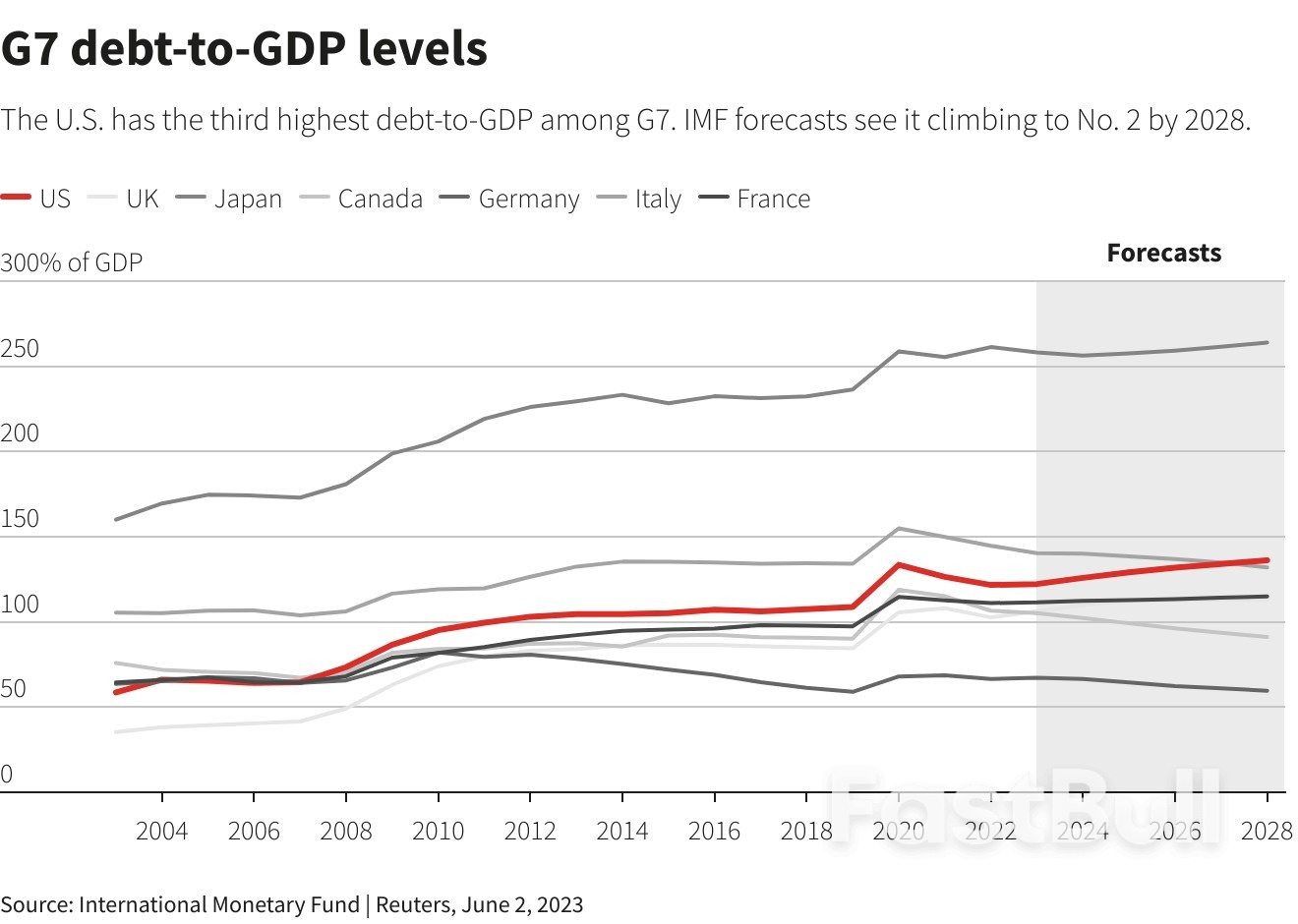
          Republicans and Democrats are touting a hastily-written debt ceiling deal that staves off a devastating U.S. default, but does little to slow a massive buildup of total federal debt now on pace to exceed $50 trillion in a decade.
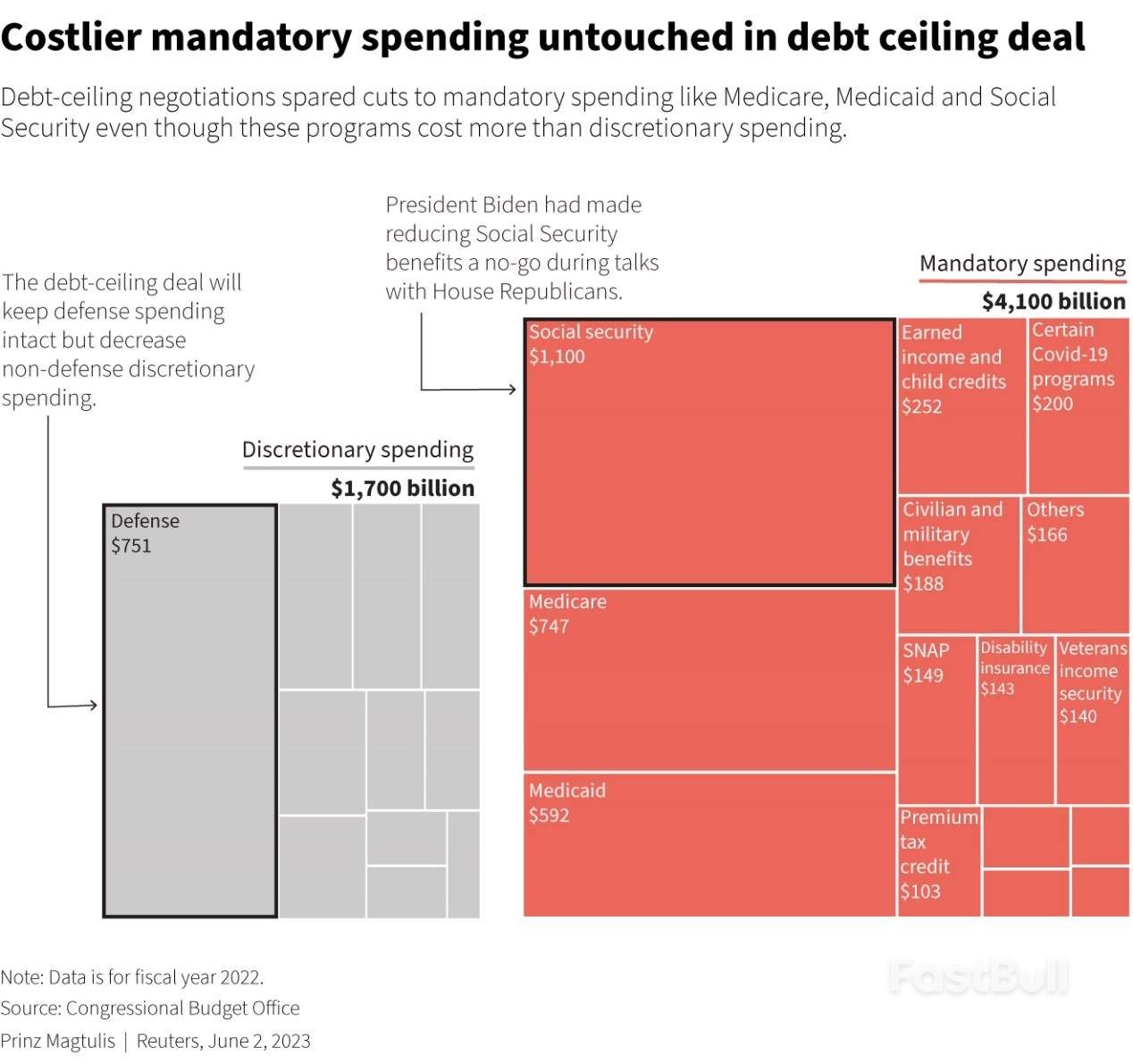
          The deal's first problem, budget experts say, is it only curbs non-defense discretionary spending, or just about one-seventh of this year's $6.4 trillion federal budget. Defense, veterans' care and big-ticket safety-net programs are spared.
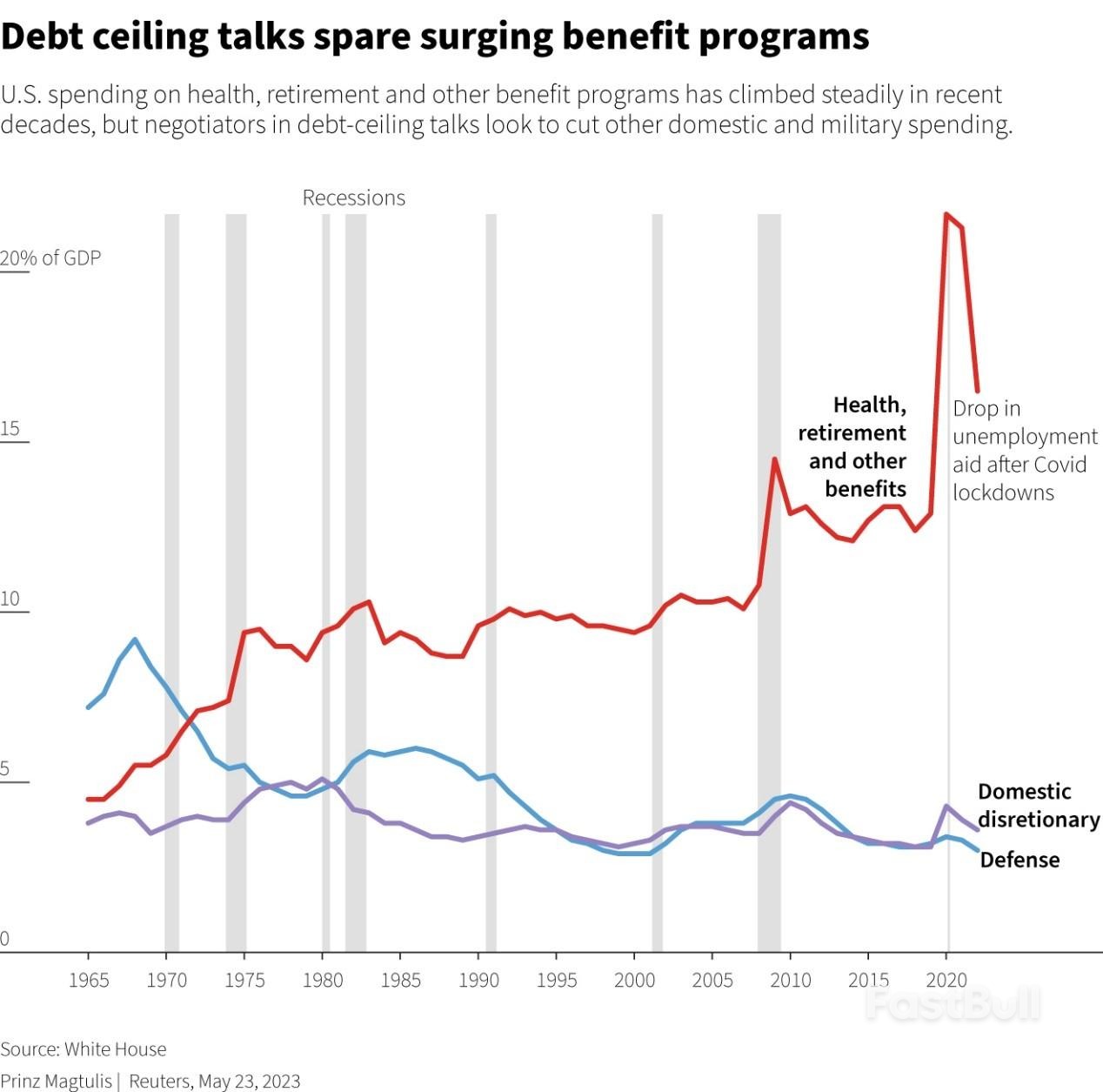
          Longer term, it fails to alter the U.S.'s chronic and growing revenue shortfall, thanks to health and retirement spending on the country's aging population and Congress's failure to raise taxes.
          "If you're worried about the deficit and debt problem, this thing does nothing," said Dennis Ippolito, a public policy professor and fiscal expert at Southern Methodist University.
          "What you've got in place is essentially Democratic spending policy and Republican tax policy, and there is nothing in the works that suggests any change to either of those," he said.
          The deal to suspend the $31.4 trillion debt ceiling until January 2025 holds non-defense discretionary spending largely flat this year, with a 1% increase in fiscal 2024.
          The Congressional Budget Office (CBO) estimates this would result in $1.3 trillion in savings over a decade.Debt Ceiling Deal Ignores U.S. Debt Time Bomb_1
          Even those savings may prove illusory, as Congress would be free to abandon its self-imposed spending limits within two years. On top of that, tax cuts passed by Republicans in 2017 expire on schedule in 2025, but the party is pushing to extend them.
          Making matters worse, higher interest rates are pushing up the government's debt service costs. CBO projects that these will triple to $1.4 trillion by 2033 -- far exceeding the projected defense budget at that time.

          Social Security, Medicare Off Limits

          In their debt limit negotiations, both President Joe Biden and House of Representatives Speaker Kevin McCarthy vowed not to touch the main driver of U.S. debt: rising Social Security pension and Medicare health benefit costs.
          Social Security costs are projected to increase by 67% by 2032, and the Medicare health program for seniors will nearly double in cost during that period, according to CBO, as Americans 65 or older top 46% of the U.S. population, up from 34% this year.
          Together, these two programs account for roughly 37% of current federal spending and are both on a path toward insolvency in about a decade. Other programs for veterans and low-income people push such safety-net spending to over half the budget.
          Debt Ceiling Deal Ignores U.S. Debt Time Bomb_2Unlike discretionary programs, which are given a fixed amount of money each year, these "mandatory" programs pay benefits to all who qualify for them. CBO projects the government will spend $6 trillion on mandatory spending programs in the 2033 fiscal year, up from $4.1 trillion this year.
          To start to shrink debt, the International Monetary Fund has recommended that the U.S. cut Social Security and Medicare costs with higher eligibility ages, means testing and other restrictions.
          But Washington policymakers aren't discussing such options, especially heading into the 2024 presidential election.
          There is a simple reason for this: they are popular with the public, in part because they are available to nearly everybody and form a lifeline for many U.S. seniors. A January Reuters/Ipsos poll found 84% of Democratic voters and 73% of Republican voters opposed reducing spending on the two programs.

          Higher Taxes, Not Just on The Wealthy

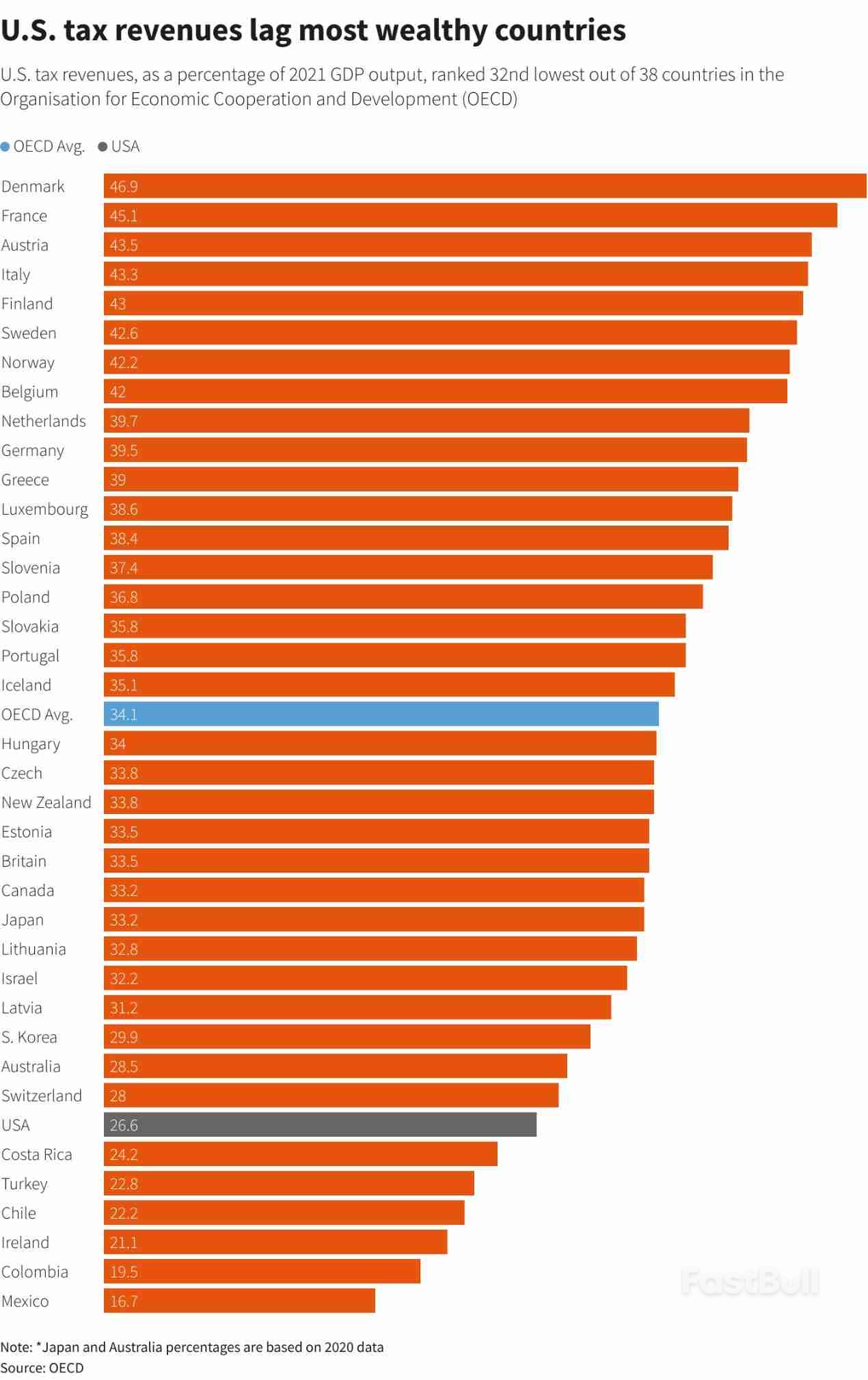
          U.S. tax revenues are among the lowest among wealthy OECD countries and should be increased, some budget experts say.
          Debt Ceiling Deal Ignores U.S. Debt Time Bomb_3"The pure math of the federal budget is such that there has to be action on the revenue side," said Nigel Chalk, the IMF's Western Hemisphere Department acting director.
          That is not likely in the next several years. Biden was unable to get many of his proposed tax hikes passed last year, when his Democrats controlled both chambers of Congress, and Republicans who now control the House of Representatives say they are out of the question.
          Biden's proposal would raise taxes on the wealthy and corporations while sparing those earning less than $400,000 from tax hikes, a carve-out that the IMF says is "unfeasible."
          Brian Riedl, a fellow at the conservative Manhattan Institute, has estimated that the full menu of Democratic-backed tax hikes would not balance the budget over 10 years.
          The IMF suggested higher tax rates on corporations and wealthy individuals as well as revenue raisers well outside of the normal Washington fiscal debate: broad-based consumption taxes, carbon taxes and cutting long-cherished tax breaks for employer-provided health care benefits, mortgage interest and gains on sales of primary residences.
          Debt Ceiling Deal Ignores U.S. Debt Time Bomb_4Linda Bilmes, a Harvard Kennedy School professor and former Commerce Department finance officer who helped achieve the last balanced budgets at the turn of the millennium, said the deal ignores a growing array of tax breaks that are routinely extended with little debate.
          "We have $1 trillion in tax expenditures which stop money coming in, that are very, very targeted to the 'haves' of society. We haven't even glanced at that in this agreement," she said.

          New way forward?

          Fiscal experts believe making painful changes to spending and revenues will require a new bipartisan fiscal commission that is given the authority to revamp a broken budget process that was last updated in 1974.
          These have had marginal success. A 1983 commission led to payroll tax and retirement age increases for Social Security. In 2010, when the federal debt was $13.5 trillion, the bipartisan Bowles-Simpson Commission recommended $4 trillion in 10-year deficit reduction through tax hikes and spending cuts.
          But the plan failed when then-president Barack Obama declined to endorse it, setting up Congress for the debt ceiling battle of 2011.
          A new commission would need to go further, changing the unwieldy fiscal committee structure in Congress and possibly replacing the debt ceiling, Bilmes said.
          That limit "doesn't force some kind of Hamiltonian thoughtfulness around how we allocate resources in society. It is just a gun to the head."

          Source: News24

          Risk Warnings and Disclaimers
          You understand and acknowledge that there is a high degree of risk involved in trading. Following any strategies or investment methods may lead to potential losses. The content on the site is provided by our contributors and analysts for information purposes only. You are solely responsible for determining whether any trading assets, securities, strategy, or any other product is suitable for investing based on your own investment objectives and financial situation.
          Comments
          Add to Favorites
          Share

          Oil Prices Rebound as Supply Constraints Overshadow Demand Concerns

          Warren Takunda

          Commodity

          In a surprising turn of events, oil prices experienced a significant surge on Monday, with WTI crude futures trading over 1% higher, reaching approximately $72.5 per barrel. Despite apprehensions regarding slowing demand, the market was buoyed by expectations of reduced supply. The rally was prompted by Saudi Arabia's announcement during the high-stakes OPEC+ meeting that it would curtail production by an additional 1 million barrels per day, bringing it to a historic low of around 9 million barrels per day in July. This commitment by the world's largest oil exporter aimed to stabilize the market. However, while some OPEC+ members supported the decision to maintain existing production cuts until the end of 2024, others, such as Russia, did not commit to further reductions. Additionally, the United Arab Emirates was permitted to raise its output targets for the upcoming year. Notably, oil prices had experienced a sharp decline of 11% in May and are currently down by nearly 10% for the year.
          Supply Constraints Outweighing Demand Concerns
          The recent price rebound in the oil market can be primarily attributed to the anticipation of lower oil supply. Saudi Arabia's commitment to deepening production cuts signifies its determination to ensure market stability. By reducing output, the country aims to counterbalance any potential oversupply and prevent a downward spiral in oil prices. Such a move demonstrates Saudi Arabia's willingness to take necessary measures to sustain a favorable price environment. Although Russia did not pledge additional reductions, the impact of Saudi Arabia's decision to curtail production should still have a notable effect on rebalancing supply and demand dynamics.
          While concerns regarding slowing global oil demand persist, they were overshadowed by the positive market sentiment generated by the supply-side developments. The ongoing global economic recovery and the resumption of travel and industrial activities in many parts of the world provide a glimmer of hope for oil demand growth. Moreover, the Organization for Economic Cooperation and Development (OECD) recently revised its global economic growth forecast upward, further underpinning expectations of improved oil consumption.
          Challenges Ahead
          Despite the recent uptick in oil prices, challenges remain on the horizon. Geopolitical tensions, such as the uncertain future of the Iran nuclear deal and potential disruptions in oil-producing regions, could impact global supply dynamics. Any setbacks in the recovery or the emergence of new variants could dampen the positive outlook for oil consumption.
          Furthermore, the divergence within the OPEC+ alliance regarding production levels could introduce volatility to the market. Disagreements among member countries may hinder the organization's ability to swiftly respond to changing market conditions and effectively manage supply levels. The resolution of such disagreements will be crucial in maintaining stability and avoiding price fluctuations.
          The recent surge in oil prices, driven by expectations of reduced supply, presents a welcome relief for the market. Saudi Arabia's commitment to further production cuts, albeit unilaterally, has instilled confidence among investors and stakeholders. Nevertheless, challenges persist, including uncertainties surrounding global oil demand and potential geopolitical disruptions. Market participants should closely monitor developments within the OPEC+ alliance, as any changes in production levels or disagreements among member nations could introduce volatility. As the world continues its recovery from the COVID-19 pandemic, the path to a sustained and balanced oil market remains contingent upon careful supply management and a gradual resurgence in global demand.
          Risk Warnings and Disclaimers
          You understand and acknowledge that there is a high degree of risk involved in trading. Following any strategies or investment methods may lead to potential losses. The content on the site is provided by our contributors and analysts for information purposes only. You are solely responsible for determining whether any trading assets, securities, strategy, or any other product is suitable for investing based on your own investment objectives and financial situation.
          Comments
          Add to Favorites
          Share
          FastBull
          Copyright © 2025 FastBull Ltd

          728 RM B 7/F GEE LOK IND BLDG NO 34 HUNG TO RD KWUN TONG KLN HONG KONG

          TelegramInstagramTwitterfacebooklinkedin
          App Store Google Play Google Play
          Products
          Charts

          Chats

          Q&A with Experts
          Screeners
          Economic Calendar
          Data
          Tools
          Membership
          Features
          Function
          Markets
          Copy Trading
          Latest Signals
          Contests
          News
          Analysis
          24/7
          Columns
          Education
          Company
          Careers
          About Us
          Contact Us
          Advertising
          Help Center
          Feedback
          User Agreement
          Privacy Policy
          Business

          White Label

          Data API

          Web Plug-ins

          Poster Maker

          Affiliate Program

          Risk Disclosure

          The risk of loss in trading financial instruments such as stocks, FX, commodities, futures, bonds, ETFs and crypto can be substantial. You may sustain a total loss of the funds that you deposit with your broker. Therefore, you should carefully consider whether such trading is suitable for you in light of your circumstances and financial resources.

          No decision to invest should be made without thoroughly conducting due diligence by yourself or consulting with your financial advisors. Our web content might not suit you since we don't know your financial conditions and investment needs. Our financial information might have latency or contain inaccuracy, so you should be fully responsible for any of your trading and investment decisions. The company will not be responsible for your capital loss.

          Without getting permission from the website, you are not allowed to copy the website's graphics, texts, or trademarks. Intellectual property rights in the content or data incorporated into this website belong to its providers and exchange merchants.

          Not Logged In

          Log in to access more features

          FastBull Membership

          Not yet

          Purchase

          Become a signal provider
          Help Center
          Customer Service
          Dark Mode
          Price Up/Down Colors

          Log In

          Sign Up

          Position
          Layout
          Fullscreen
          Default to Chart
          The chart page opens by default when you visit fastbull.com