Markets
News
Analysis
User
24/7
Economic Calendar
Education
Data
- Names
- Latest
- Prev



Signal Accounts for Members
All Signal Accounts
All Contests


U.S. NY Fed Manufacturing Prices Received Index (Jan)A:--
F: --
P: --
U.S. NY Fed Manufacturing New Orders Index (Jan)A:--
F: --
P: --
U.S. NY Fed Manufacturing Employment Index (Jan)A:--
F: --
P: --
U.S. Export Price Index YoY (Nov)A:--
F: --
P: --
U.S. NY Fed Manufacturing Index (Jan)A:--
F: --
U.S. Initial Jobless Claims 4-Week Avg. (SA)A:--
F: --
U.S. Export Price Index MoM (Nov)A:--
F: --
P: --
Canada Manufacturing Unfilled Orders MoM (Nov)A:--
F: --
P: --
Canada Manufacturing New Orders MoM (Nov)A:--
F: --
P: --
U.S. Philadelphia Fed Manufacturing Employment Index (Jan)A:--
F: --
P: --
Canada Wholesale Sales YoY (Nov)A:--
F: --
P: --
Canada Wholesale Inventory MoM (Nov)A:--
F: --
P: --
U.S. Philadelphia Fed Business Activity Index (SA) (Jan)A:--
F: --
P: --
U.S. EIA Weekly Natural Gas Stocks ChangeA:--
F: --
P: --
Richmond Federal Reserve President Barkin delivered a speech.
U.S. Weekly Treasuries Held by Foreign Central BanksA:--
F: --
P: --
Germany CPI Final MoM (Dec)A:--
F: --
P: --
Germany CPI Final YoY (Dec)A:--
F: --
P: --
Germany HICP Final MoM (Dec)A:--
F: --
P: --
Germany HICP Final YoY (Dec)A:--
F: --
P: --
Brazil PPI MoM (Nov)A:--
F: --
P: --
Canada New Housing Starts (Dec)A:--
F: --
U.S. Capacity Utilization MoM (SA) (Dec)A:--
F: --
U.S. Industrial Output YoY (Dec)A:--
F: --
P: --
U.S. Manufacturing Capacity Utilization (Dec)A:--
F: --
P: --
U.S. Manufacturing Output MoM (SA) (Dec)A:--
F: --
U.S. Industrial Output MoM (SA) (Dec)A:--
F: --
U.S. NAHB Housing Market Index (Jan)A:--
F: --
P: --
Russia CPI YoY (Dec)A:--
F: --
P: --
U.S. Weekly Total Rig CountA:--
F: --
P: --
U.S. Weekly Total Oil Rig CountA:--
F: --
P: --
Japan Core Machinery Orders YoY (Nov)--
F: --
P: --
Japan Core Machinery Orders MoM (Nov)--
F: --
P: --
U.K. Rightmove House Price Index YoY (Jan)--
F: --
P: --
China, Mainland GDP YoY (YTD) (Q4)--
F: --
P: --
China, Mainland Industrial Output YoY (YTD) (Dec)--
F: --
P: --
Japan Industrial Output Final MoM (Nov)--
F: --
P: --
Japan Industrial Output Final YoY (Nov)--
F: --
P: --
Euro Zone Core HICP Final MoM (Dec)--
F: --
P: --
Euro Zone HICP Final MoM (Dec)--
F: --
P: --
Euro Zone HICP Final YoY (Dec)--
F: --
P: --
Euro Zone HICP MoM (Excl. Food & Energy) (Dec)--
F: --
P: --
Euro Zone Core CPI Final YoY (Dec)--
F: --
P: --
Euro Zone Core HICP Final YoY (Dec)--
F: --
P: --
Euro Zone CPI YoY (Excl. Tobacco) (Dec)--
F: --
P: --
Euro Zone Core CPI Final MoM (Dec)--
F: --
P: --
Canada National Economic Confidence Index--
F: --
P: --
Canada CPI MoM (SA) (Dec)--
F: --
P: --
Canada Core CPI MoM (SA) (Dec)--
F: --
P: --
Canada CPI YoY (SA) (Dec)--
F: --
P: --
Canada Trimmed CPI YoY (SA) (Dec)--
F: --
P: --
Canada CPI YoY (Dec)--
F: --
P: --
Canada CPI MoM (Dec)--
F: --
P: --
Canada Core CPI YoY (Dec)--
F: --
P: --
Canada Core CPI MoM (Dec)--
F: --
P: --
South Korea PPI MoM (Dec)--
F: --
P: --
China, Mainland 1-Year Loan Prime Rate (LPR)--
F: --
P: --
China, Mainland 5-Year Loan Prime Rate--
F: --
P: --
Germany PPI YoY (Dec)--
F: --
P: --
Germany PPI MoM (Dec)--
F: --
P: --


No matching data
Latest Views
Latest Views
Trending Topics
Top Columnists
Latest Update
White Label
Data API
Web Plug-ins
Affiliate Program
View All

No data
Russia's Putin mediates escalating Iran tensions, advocating dialogue while the US imposes new sanctions.
Russian President Vladimir Putin is actively mediating the situation in Iran, aiming for a rapid de-escalation of tensions, the Kremlin confirmed Friday. The move follows direct phone calls between the Russian leader, Israeli Prime Minister Benjamin Netanyahu, and Iranian President Masoud Pezeshkian.
Moscow has also condemned threats of new military action from the United States, which came after protests broke out in Iran late last month.
During his call with Prime Minister Netanyahu, President Putin affirmed Russia's readiness to "continue its mediation efforts and to promote constructive dialogue," according to a Kremlin statement. Putin outlined his vision for enhancing stability across the Middle East, though further details of his mediation proposal were not disclosed.
In a separate conversation, Iranian President Pezeshkian briefed Putin on what the Kremlin described as Tehran's "sustained efforts" to normalize the internal situation.
The Kremlin reported that both Russia and Iran are aligned in their support for de-escalating tensions as quickly as possible. The two nations agree that any emerging issues, both concerning Iran and the wider region, must be resolved "through exclusively political and diplomatic means." Putin and Pezeshkian also reaffirmed their commitment to the strategic partnership between their countries and to ongoing joint economic projects.
The Shanghai Cooperation Organization (SCO)—a bloc that includes Russia, China, India, and Iran—publicly opposed any external interference in Iran’s affairs. The organization pointed to Western sanctions as a key factor creating the conditions for the recent unrest.
"Unilateral sanctions have had a significant negative impact on the economic stability of the state, led to a deterioration in people's living conditions, and objectively limited the ability of the Government of the Islamic Republic of Iran to implement measures to ensure the country's socio-economic development," the SCO declared in a statement.
The protests, which began on December 28, were triggered by soaring inflation in an economy heavily impacted by international sanctions.
In contrast to Russia's diplomatic approach, the U.S. Treasury announced fresh sanctions on Thursday. The new measures target Iranian officials, including Ali Larijani, the secretary of Iran's Supreme Council for National Security.
When asked what specific support Russia might offer Iran, Kremlin spokesman Dmitry Peskov emphasized Moscow's broader role. "Russia is already providing assistance not only to Iran but also to the entire region, and to the cause of regional stability and peace," Peskov stated. "This is partly thanks to the president's efforts to help de-escalate tensions."
Federal Reserve Vice Chair Philip Jefferson indicated he supports holding interest rates steady at the central bank's upcoming January meeting, citing a "cautiously optimistic" outlook for the U.S. economy.
Speaking in Boca Raton, Florida, on Friday, Jefferson suggested that previous rate cuts have positioned monetary policy in a neutral range, allowing the Fed to adopt a more patient stance.
In his first public comments on monetary policy since November, Jefferson argued that the current policy is appropriate for evaluating future economic data.
"The current policy stance leaves us well positioned to determine the extent and timing of additional adjustments to our policy rate based on the incoming data, the evolving outlook, and the balance of risks," he stated.
This language closely mirrors the Fed's December post-meeting statement, which was widely interpreted as a signal that the central bank would pause its rate adjustments. The Fed's policy rate currently sits in a range of 3.50% to 3.75% following three consecutive quarter-point cuts. Jefferson was part of the 9-3 majority that voted for the last reduction in December.
He described last year's rate cuts as "the right step" to balance the risks of persistent inflation against the potential for a weakening labor market, adding, "This policy stance puts the economy in a good position moving forward."
Looking ahead, Jefferson laid out a stable forecast for the economy. He expects near-term growth to be around 2% and the unemployment rate to hold steady near its December level of 4.4%.
While acknowledging upside risks to inflation, he projected that it would return to a sustainable path toward the Fed's 2% target. He addressed the rise in core goods prices last year, attributing much of it to tariffs.
"It is a reasonable base case that the effects of tariffs on inflation will not be long-lasting—effectively, a one-time shift in the price level," Jefferson explained, noting that inflation expectations remain anchored.
Reflecting this sentiment, financial markets are currently pricing in only a 5% probability of another rate cut at the Fed's meeting on January 27-28.
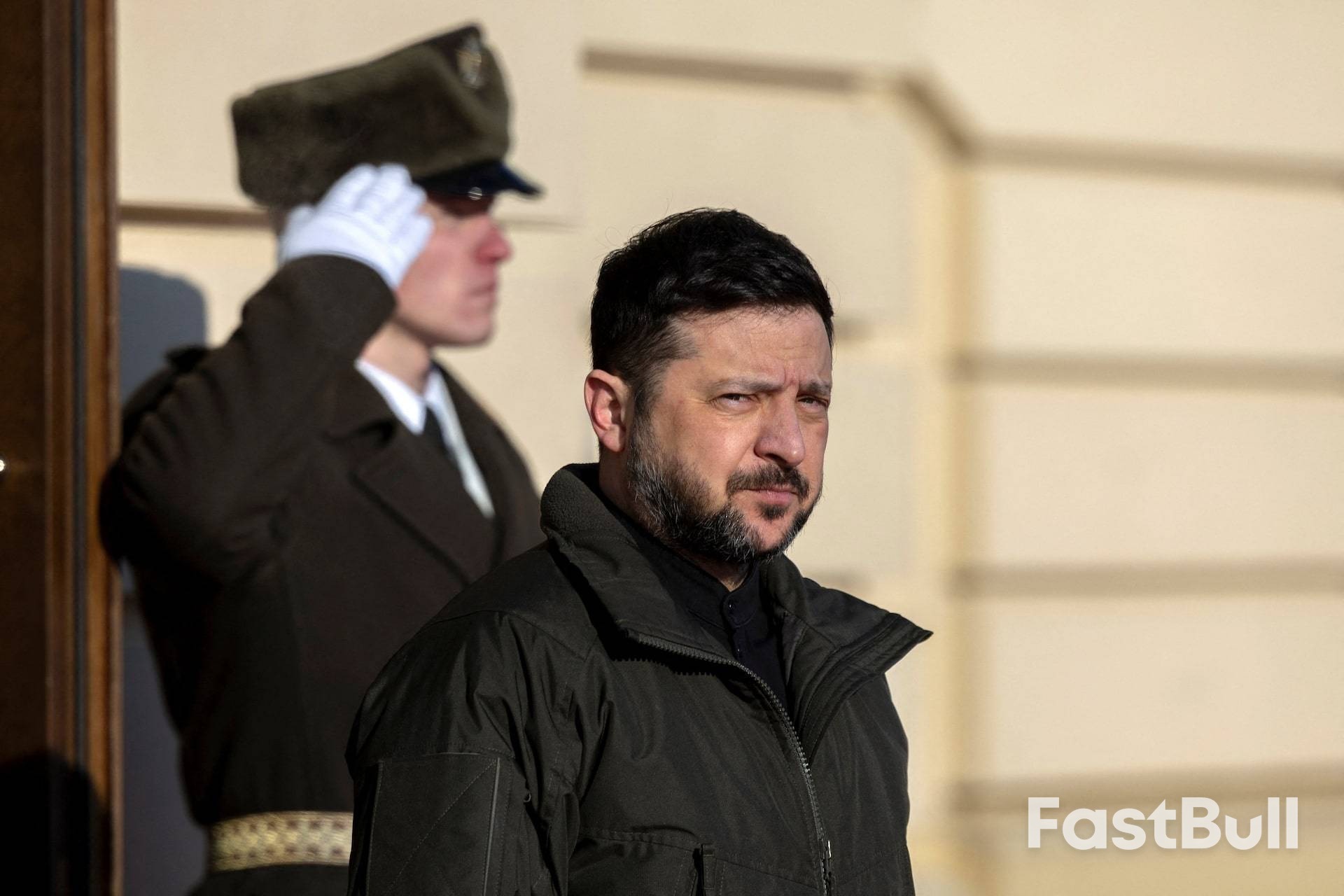
Ukraine is dispatching a delegation to the United States to finalize crucial talks on security guarantees and a massive post-war recovery package, President Volodymyr Zelenskiy announced Friday. The Ukrainian leader expressed hope that the agreements could be formally signed at the World Economic Forum in Davos next week.
Speaking at a press conference in Kyiv alongside Czech President Petr Pavel, Zelenskiy highlighted that the discussions are also aimed at gaining clarity on Washington's perspective regarding Russia's stance on U.S.-backed peace initiatives to end the nearly four-year conflict.
"I think we have worked well with the American side, we are just not on the same side on some issues," Zelenskiy noted, alluding to the ongoing negotiations with Washington.

The potential signing at Davos sets the stage for a high-profile diplomatic event. U.S. President Donald Trump told Reuters earlier this week that he might meet with Zelenskiy at the forum, a meeting the Ukrainian president has actively sought.
Ukrainian officials have stated the country needs an estimated $800 billion for its post-war reconstruction. Zelenskiy confirmed that Ukraine has completed its work on the documents for this "prosperity package" and the U.S. security guarantees, which are designed to deter future Russian aggression.
According to Ukraine's ambassador to the U.S., Olha Stefanishyna, senior Ukrainian officials were set to participate in bilateral talks in Miami on Friday to refine the two agreements. "The purpose of the visit is to refine these agreements with American partners," she wrote on Facebook, adding they "may be signed ... in Davos."
The delegation includes several key figures:
• Kyrylo Budanov, head of Zelenskiy's office
• Rustem Umerov, secretary of Ukraine's national security and defence council
• Davyd Arakhamia, head of Zelenskiy's parliamentary faction
A key point of friction revolves around the framework for ending the war. Washington has encouraged Ukraine to agree to a peace framework to present to Moscow. Meanwhile, Kyiv and its European allies are focused on ensuring that any deal includes robust guarantees against future attacks from Russia.
"Ultimatums are not, in my view, a workable model for democratic relations between countries," Zelenskiy stated, without elaborating on the specific context of his comment.
The diplomatic landscape is further complicated by recent remarks from President Trump, who on Wednesday claimed that Russia was ready for a peace deal and positioned the Ukrainian leader as the primary obstacle. This assessment sharply contrasts with the views held by European leaders.
Zelenskiy firmly rejected the notion that he is stalling peace efforts. Instead, he pointed to Moscow's recent strikes on Ukraine's energy infrastructure as clear evidence of Russia's true intentions.
"Each of these strikes against our energy sector and our cities quite clearly shows Russia's real interests and intentions: they are not interested in agreements, but in the further destruction of Ukraine," he posted on social media following the press conference.
During the conference, Zelenskiy also made an urgent plea for more air defence ammunition to protect the country's power grid. He revealed that until a new aid package arrived on Friday morning, several of Ukraine's air defence systems had been left without missiles.
"We need to fight for these (aid) packages with blood, with people's lives," he told reporters.
As India prepares for its February 1 federal budget announcement, expectations are centered on continued fiscal consolidation, though the pace may slow. For equity markets, the budget is unlikely to offer significant near-term relief, with government finances once again leaning on a substantial dividend from the Reserve Bank of India (RBI).
Analysts at Jefferies project the Indian government will aim for a fiscal deficit of approximately 4.2% of GDP in fiscal year 2027, a significant reduction from the 9.2% peak seen in FY21.
However, an alternative scenario is possible. If the government chooses to prioritize short-term economic growth, the deficit could be held closer to 4.4%. While this approach would likely benefit equities, it could also exert upward pressure on bond yields.
The government's ability to meet its fiscal targets, especially amidst weaker tax collections, is expected to be bolstered by the RBI. Jefferies estimates the central bank's dividend for FY27 could increase by 10% to 15%, reaching around Rs 3 trillion, partly aided by rupee depreciation.
Government capital expenditure is forecast to grow by about 12% in FY27, totaling Rs 12.5 trillion. The allocation, however, reveals a clear strategic priority.
• Defence Capex: Spending in this sector could rise by approximately 25%, building on the 57% year-to-date growth in FY26.
• Non-Defence Capex: Growth is expected to slow considerably, falling into the 5% to 10% range.
The budget may also address long-delayed pay hikes for central government employees, linked to the next Central Pay Commission. According to Jefferies, salary increases for central government staff alone could widen the fiscal deficit by 20 to 30 basis points of GDP. The combined effect, including state-level adjustments, could reach as high as 100 basis points over a two-year period.
Investors will be closely watching for specific policy measures that could sway market sentiment and channel funds into key sectors.
Any relief on capital gains for select foreign portfolio investors would be a clear positive for the stock market. Conversely, measures designed to boost bank deposits, such as new tax incentives, would support the banking sector but could be a negative for equities by diverting investment flows.
Key areas to monitor in the budget include:
• Defence: Allocations will be a major focus.
• Manufacturing: Funding for the mobile manufacturing Production-Linked Incentive (PLI) scheme.
• Renewable Energy: Support for the PM Kusum programme.
• Consumer Goods: Any pay-related measures that could lift demand for consumer durables and vehicles.
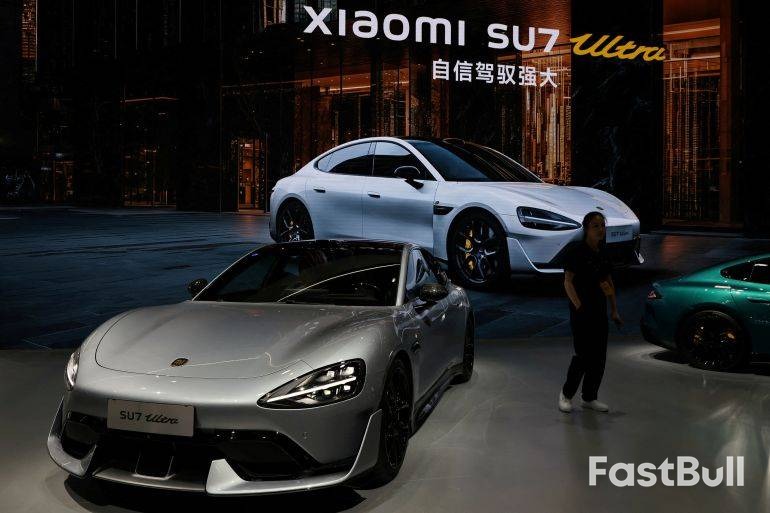
A new trade agreement between Canada and China is drawing sharp criticism from Washington, with top US officials warning that Ottawa will regret its decision to allow a limited number of Chinese-made electric vehicles into its market. The move is seen by the Trump administration as a potential threat to the North American auto industry.

"I think they'll look back at this decision and surely regret it to bring Chinese cars into their market," US Transportation Secretary Sean Duffy stated on Friday during an event at a Ford factory in Ohio.
The controversy stems from an announcement by Canadian Prime Minister Mark Carney in Beijing. The new deal permits up to 49,000 Chinese EVs to enter Canada under a 6.1% most-favoured-nation tariff. This marks a sharp reversal from Canada's 2024 policy, which imposed a 100% tariff on Chinese EVs, aligning with a similar US measure.
The agreement has sparked alarm in Washington, with officials concerned it could give China a strategic foothold in the North American auto market, even as the US intensifies its hardline stance on vehicle and parts imports.
As part of the broader trade agreements, Carney also announced that he expects China to lower its tariffs on Canadian canola seed to approximately 15% by March 1, a significant reduction from the current 85%.
US officials have been clear that while they disapprove of the deal, the vehicles are not expected to cross the border into the United States.
"Those cars are going to Canada – they're not coming here," said US Trade Representative Jamieson Greer, adding that he does not anticipate the deal will disrupt American vehicle exports to Canada.
Despite this, Greer labeled Canada's decision "problematic" in a separate interview with CNBC. "There's a reason why we don't sell a lot of Chinese cars in the United States," he explained. "It's because we have tariffs to protect American auto workers and Americans from those vehicles."
Greer also expressed skepticism about the canola seed agreement, predicting, "I think in the long run, they're not going to like having made that deal."
Cybersecurity as a Key Barrier
Greer highlighted that US regulations present a significant obstacle for Chinese vehicles. He pointed to rules established in January 2025 governing the cybersecurity of internet-connected vehicles and their navigation systems.
"I think it would be hard for them to operate here," Greer commented. "There are rules and regulations in place in America about the cybersecurity of our vehicles and the systems that go into those, so I think it might be hard for the Chinese to comply with those kind of rules."
While President Donald Trump has previously expressed interest in having Chinese automakers build vehicles in the US, there is strong, bipartisan opposition from lawmakers. Major American car manufacturers have also warned that China poses a threat to the domestic auto sector.
This sentiment was echoed at the Ohio event, where Republican Senator Bernie Moreno received applause for his firm stance.
"As long as I have air in my body, there will not be Chinese vehicles sold in the United States of America — period," Moreno declared.
The Canadian Embassy in Washington has not yet provided a comment on the matter.
White Label
Data API
Web Plug-ins
Poster Maker
Affiliate Program
The risk of loss in trading financial instruments such as stocks, FX, commodities, futures, bonds, ETFs and crypto can be substantial. You may sustain a total loss of the funds that you deposit with your broker. Therefore, you should carefully consider whether such trading is suitable for you in light of your circumstances and financial resources.
No decision to invest should be made without thoroughly conducting due diligence by yourself or consulting with your financial advisors. Our web content might not suit you since we don't know your financial conditions and investment needs. Our financial information might have latency or contain inaccuracy, so you should be fully responsible for any of your trading and investment decisions. The company will not be responsible for your capital loss.
Without getting permission from the website, you are not allowed to copy the website's graphics, texts, or trademarks. Intellectual property rights in the content or data incorporated into this website belong to its providers and exchange merchants.
Not Logged In
Log in to access more features

FastBull Membership
Not yet
Purchase
Log In
Sign Up