Markets
News
Analysis
User
24/7
Economic Calendar
Education
Data
- Names
- Latest
- Prev


Signal Accounts for Members
All Signal Accounts
All Contests


The Thailand Futures Exchange (TFEX) Has Announced A Temporary Suspension Of Online Trading In Silver Futures
Source: Trump Offered To Unfreeze Funding For Nyc Tunnel If Dulles Airport, Train Station Renamed For Him
USA Military Says It Attacked An Alleged Drug Vessel In The Eastern Pacific On Thursday And Killed Two People
Spot Gold Has Climbed Back Above $4,800 Per Ounce, Rebounding Nearly $150 From Its Daily Low, Up 0.43% On The Day

Germany Construction PMI (SA) (Jan)A:--
F: --
P: --
Italy Retail Sales MoM (SA) (Dec)A:--
F: --
P: --
U.K. Markit/CIPS Construction PMI (Jan)A:--
F: --
P: --
France 10-Year OAT Auction Avg. YieldA:--
F: --
P: --
Euro Zone Retail Sales YoY (Dec)A:--
F: --
Euro Zone Retail Sales MoM (Dec)A:--
F: --
U.K. BOE MPC Vote Cut (Feb)A:--
F: --
P: --
U.K. BOE MPC Vote Hike (Feb)A:--
F: --
P: --
U.K. BOE MPC Vote Unchanged (Feb)A:--
F: --
P: --
U.K. Benchmark Interest RateA:--
F: --
P: --
MPC Rate Statement
U.S. Challenger Job Cuts (Jan)A:--
F: --
P: --
U.S. Challenger Job Cuts MoM (Jan)A:--
F: --
P: --
U.S. Challenger Job Cuts YoY (Jan)A:--
F: --
P: --
Bank of England Governor Bailey held a press conference on monetary policy.
Euro Zone ECB Marginal Lending RateA:--
F: --
P: --
Euro Zone ECB Deposit RateA:--
F: --
P: --
Euro Zone ECB Main Refinancing RateA:--
F: --
P: --
ECB Monetary Policy Statement
U.S. Weekly Initial Jobless Claims (SA)A:--
F: --
P: --
U.S. Initial Jobless Claims 4-Week Avg. (SA)A:--
F: --
P: --
U.S. Weekly Continued Jobless Claims (SA)A:--
F: --
ECB Press Conference
U.S. JOLTS Job Openings (SA) (Dec)A:--
F: --
U.S. EIA Weekly Natural Gas Stocks ChangeA:--
F: --
P: --
BOC Gov Macklem Speaks
Mexico Policy Interest RateA:--
F: --
P: --
U.S. Weekly Treasuries Held by Foreign Central BanksA:--
F: --
P: --
Reserve Bank of Australia Governor Bullock testified before Parliament.
Japan Foreign Exchange Reserves (Jan)A:--
F: --
P: --
India Benchmark Interest Rate--
F: --
P: --
India Cash Reserve Ratio--
F: --
P: --
India Repo Rate--
F: --
P: --
India Reverse Repo Rate--
F: --
P: --
Japan Leading Indicators Prelim (Dec)--
F: --
P: --
Germany Industrial Output MoM (SA) (Dec)--
F: --
P: --
Germany Exports MoM (SA) (Dec)--
F: --
P: --
U.K. Halifax House Price Index YoY (SA) (Jan)--
F: --
P: --
U.K. Halifax House Price Index MoM (SA) (Jan)--
F: --
P: --
France Trade Balance (SA) (Dec)--
F: --
P: --
Canada Leading Index MoM (Jan)--
F: --
P: --
India Deposit Gowth YoY--
F: --
P: --
Canada Employment (SA) (Jan)--
F: --
Canada Full-time Employment (SA) (Jan)--
F: --
Canada Part-Time Employment (SA) (Jan)--
F: --
Canada Unemployment Rate (SA) (Jan)--
F: --
P: --
Canada Labor Force Participation Rate (SA) (Jan)--
F: --
P: --
Due to the previous government shutdown, the release date of the US January non-farm payroll report has been changed to February 11.
Canada Ivey PMI (Not SA) (Jan)--
F: --
P: --
Canada Ivey PMI (SA) (Jan)--
F: --
P: --
U.S. 5-10 Year-Ahead Inflation Expectations (Feb)--
F: --
P: --
U.S. UMich Consumer Sentiment Index Prelim (Feb)--
F: --
P: --
U.S. UMich 1-Year-Ahead Inflation Expectations Prelim (Feb)--
F: --
P: --
U.S. UMich 5-Year-Ahead Inflation Expectations Prelim YoY (Feb)--
F: --
P: --
U.S. UMich Current Economic Conditions Index Prelim (Feb)--
F: --
P: --
U.S. UMich Consumer Expectations Index Prelim (Feb)--
F: --
P: --
China, Mainland Foreign Exchange Reserves (Jan)--
F: --
P: --
Russia Retail Sales YoY (Dec)--
F: --
P: --
Russia Unemployment Rate (Dec)--
F: --
P: --
Russia Quarterly GDP Prelim YoY (Q1)--
F: --
P: --
U.S. Weekly Total Oil Rig Count--
F: --
P: --


No matching data
View All

No data
The Fed's upbeat economic assessment counters Trump's rate cut push, setting a complex political stage.
Following its January meeting, the Federal Reserve delivered an optimistic assessment of the U.S. economy, but the positive report creates a complex political landscape for former President Donald Trump. Fed Chair Jerome Powell's confident tone suggests the central bank sees little reason to implement the interest rate cuts that Trump has publicly demanded, setting the stage for a potential conflict between monetary policy and political objectives.
In his post-meeting press conference, Chair Powell outlined several indicators pointing to a surprisingly durable economy, a stabilizing labor market, and progress on inflation.
Key takeaways from his assessment include:
• Inflation: Disinflation is now visible in the services sector, although tariffs continue to keep goods inflation elevated. Crucially, long-term inflation expectations remain anchored within the Fed's preferred 2% target.
• Economic Activity: Powell noted that economic activity has been solid, with resilient consumers and continued business investment. He acknowledged, however, that the housing sector remains a notable weak spot.
• Labor Market: After a period of softening, data suggests the labor market is stabilizing. While job growth is slowing—partly due to slower workforce growth from lower immigration and participation—key metrics like job openings, layoffs, and wage growth have held steady.
Powell also acknowledged that the previous government shutdown likely had a temporary negative impact on the economy but expects a rebound in the current quarter.
A strong economic report presents a direct challenge to Donald Trump, who has been a vocal proponent of the Fed lowering interest rates to stimulate the economy further. The central bank's dual mandate requires it to pursue stable prices and maximum employment. With inflation still running at 3% in January and the labor market showing signs of stability, the justification for rate cuts weakens considerably.
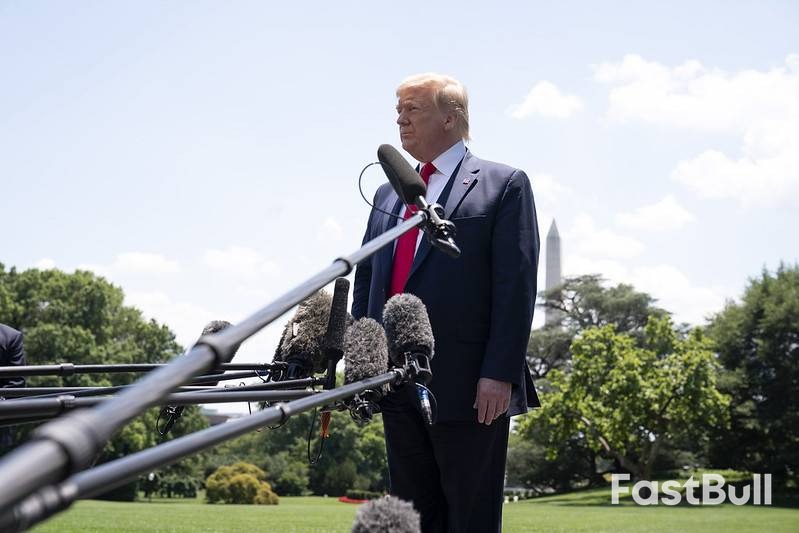
If the Fed were to cut rates now, it would risk over-stimulating demand and reigniting inflationary pressures. As long as consumers remain resilient and employment holds up, the Fed has a strong case for maintaining its current policy stance. While Trump's criticism of the Fed is prominent, he is not the first president to pressure the central bank on interest rate policy.
The debate over interest rates is unfolding against a backdrop of widespread economic anxiety among voters. Many Americans are grappling with an affordability crisis, as the surge in inflation since the pandemic has driven up the cost of living.
Housing costs, in particular, now consume a much larger share of income. For many, even rising salaries have not been enough to cover daily expenses while also saving for retirement or a home purchase. With midterm elections scheduled for later this year, the economy is a top issue for voters. Trump and the Republican party are keen to maintain their congressional majority to advance their agenda, making interest rates and affordability central political concerns.
Despite the Fed's steady message, financial markets are still pricing in two interest rate cuts this year. However, if incoming data continues to confirm a stable labor market and ongoing disinflation, the central bank will have little incentive to act.
A decision to hold off on cuts could negatively impact the stock market, creating another political headache for Trump. At the same time, the economic outlook can change rapidly. Monthly inflation and labor reports have been difficult to predict, meaning the potential for more rate cuts than expected—or none at all—remains a key uncertainty for investors to monitor.
The recent rally in oil prices has hit a wall, with crude posting its first decline in three days. A combination of factors is weighing on the market, including the potential selection of a more dovish Federal Reserve chair, cooling rhetoric between the U.S. and Iran, a routine OPEC+ meeting, and a reduction in U.S. tariffs on India.

However, the most significant catalyst was Iran's announcement that it will hold direct talks with the United States, easing market fears of an imminent military confrontation.
Iranian Foreign Minister Abbas Araghchi confirmed that negotiations with the U.S. are scheduled for Friday in Oman. The news immediately sent oil prices down, as traders priced out some of the geopolitical risk premium.
At 11:50 a.m. ET, Brent crude for March delivery fell 2.9% to $67.54 per barrel. The corresponding West Texas Intermediate (WTI) contract declined 3.0% to $63.19 per barrel.
Prices had spiked last week after U.S. President Donald Trump threatened force against Iran following a crackdown on nationwide protests that resulted in thousands of deaths. Despite the planned talks, a U.S. official told the AP that the White House remains "very skeptical" about a positive outcome. Trump also issued a warning that Iran's Supreme Leader Ayatollah Ali Khamenei "should be very worried."
On the supply side, the OPEC+ alliance met on February 1 and agreed to maintain its current voluntary production cuts through March 2026. The decision means the planned, gradual return of 1.65 million barrels per day (bpd) to the market will remain paused for the first quarter of 2026, citing expectations of weaker seasonal demand. The group reiterated that it retains "full flexibility" to adjust output based on market conditions.
Member countries also reaffirmed their commitment to compensating for any overproduction since January 2024. This is achieved through "make-up" cuts monitored by the Joint Ministerial Monitoring Committee (JMMC).
Key overproducers—including Iraq, Russia, and Kazakhstan—have submitted detailed schedules to offset a cumulative 4.779 million bpd of excess production from 2024 through early 2025. Kazakhstan is set to make the largest adjustment, cutting nearly 670,000 bpd by June. However, full implementation remains uncertain, as both Kazakhstan and Iraq have historically struggled to meet compensation targets.
Meanwhile, in the United States, the American Petroleum Institute (API) reported a massive draw in crude inventories. For the week ending February 4, stockpiles fell by 11.1 million barrels to 420.3 million barrels, dramatically exceeding market expectations of a 640,000-barrel draw. The decline was largely attributed to severe winter storm "Fern," which disrupted energy infrastructure and caused production freeze-offs, especially in the Permian Basin. Distillate fuel stocks also dropped by 4.8 million barrels, while gasoline inventories rose by 4.7 million barrels.
Despite the recent price drop, commodity analysts at Standard Chartered report that market sentiment is gradually turning more positive for the second half of 2026. The bank suggests that the bearish oversupply narrative that dominated late 2025 is fading.
This shift is driven by changes beneath the market's surface. The Brent forward curve has strengthened significantly, with backwardation now extending toward early 2027. This signals that traders are reassessing the depth and duration of the previously feared oversupply.
Standard Chartered also notes that:
• Many large projected supply surpluses from last year are likely to be revised toward more typical seasonal balances.
• Demand expectations for 2026 are already being adjusted higher, partly due to fiscal stimulus in China.
• Speculative long positions in crude are not overstretched, leaving room for more buying.
• U.S. shale growth is slowing in response to lower prices, making supply more price-sensitive.
Based on this, the analysts expect OPEC+ to restart incremental production increases in the second quarter of 2026. They argue this will happen not because the market is loose, but because tighter fundamentals will allow it to absorb the extra barrels, ultimately exposing how concentrated global spare capacity has become.
In the natural gas market, U.S. prices have pulled back sharply. After recently trading above $7/MMBtu, Henry Hub prices have been cut in half to $3.48/MMBtu. This move was driven by forecasts of milder weather, which reduces heating demand and eases supply concerns.
The EIA forecasts that Henry Hub prices will average just under $3.50/MMBtu in 2026, while European TTF gas prices are expected to stabilize around €30/MWh. Over the long term, however, gas prices are projected to trend upward, fueled by explosive demand growth from AI-driven data centers, even as demand in Europe is expected to weaken due to electrification and renewable energy adoption.
Mexican officials are navigating a diplomatic minefield, exploring ways to send essential fuel to Cuba without triggering punishing tariffs from the United States. According to four sources familiar with the discussions, high-level talks are underway to find a solution that balances humanitarian support with economic reality.
The core of the issue is an executive order from U.S. President Donald Trump threatening tariffs against any country supplying fuel to the island nation. Mexican officials have been in frequent contact with their U.S. counterparts to understand the full scope of this threat and determine if any exemptions for aid are possible.
The outcome of these negotiations remains uncertain. When asked about the situation, the White House pointed to earlier remarks from President Trump, who told reporters on Monday he believed Mexico would cease oil shipments to Cuba, though he did not specify why.
The Mexican presidency and the U.S. State Department did not immediately provide comments, while Mexico's Foreign Ministry stated it had no information on the matter.
"There are talks happening almost every other day," said one source, who spoke on the condition of anonymity. "Mexico doesn't want tariffs imposed, but it is also firm in its policy of helping the Cuban people."
Three of the sources indicated that the talks are progressing, expressing hope that a resolution can be found. If an agreement is reached, two sources noted that Mexico could dispatch a tanker with gasoline, food, and other supplies classified as humanitarian aid within days.
The need for fuel in Cuba is critical. The country imports two-thirds of its energy and is currently facing severe power outages and long lines at gas stations.
The crisis intensified after a U.S. blockade of Venezuelan tankers in December, followed by the capture of President Nicolas Maduro in early January, which halted oil shipments from Venezuela. This left Mexico as Cuba's largest supplier, but that relief was short-lived.
In mid-January, the Mexican government stopped its own shipments of crude and refined products following pressure from the Trump administration. Washington then issued its tariff threat, justifying it by claiming Cuba poses an "extraordinary threat" to U.S. national security—a charge Havana denies.
In response to the shortages, the Cuban government announced on Thursday that it was developing a plan to address "acute fuel shortages," with more details expected next week.
The situation has drawn international attention. U.N. Secretary-General António Guterres warned this week that Cuba could face a humanitarian "collapse" if its energy needs are not met.
Domestically, Mexican President Claudia Sheinbaum is facing pressure from her own coalition. The ruling Morena party has long-standing ideological and historical ties to Cuba, and there is a strong desire within the party not to abandon Havana in its time of need.
Sheinbaum herself highlighted the potential human cost of the U.S. policy. "Imposing tariffs on countries that supply oil to Cuba could trigger a far-reaching humanitarian crisis, directly affecting hospitals, food, and other basic services for the Cuban people," she stated last Friday. "A situation that must be avoided through respect for international law and dialogue."
The United States and Argentina have finalized a new trade and investment agreement that gives preferential market access to American goods, establishes rules for digital trade, and deepens cooperation on critical economic and security issues.
The deal, signed by U.S. Trade Representative Jamieson Greer and Argentine Foreign Minister Pablo Quirno, builds on a framework first established on November 13. According to the U.S. Trade Representative's office, the agreement is set to significantly reduce or eliminate tariffs on a wide range of U.S. products.
Under the terms of the agreement, Argentina will lower trade barriers for numerous American industries. The tariff cuts will apply to a diverse list of U.S. goods, including:
• Medicines and medical devices
• Chemicals and machinery
• Motor vehicles
• Information technology products
• A wide range of agricultural products
In a key move, Argentina has also agreed to accept U.S. safety and regulatory standards for imported goods like automobiles and medical devices. This alignment extends to food safety, with Argentina committing to recognize U.S. Department of Agriculture standards for meat and poultry.
The agreement delivers several specific wins for the U.S. agricultural sector. Within a year, Argentina will open its market to American poultry and poultry products. It will also work to simplify bureaucratic processes for U.S. exporters of beef and pork.
Furthermore, Argentina has committed not to restrict U.S. exporters' use of certain cheese names, such as "asiago," "feta," or "camembert." This addresses a long-standing issue where the European Union seeks to label these as geographic indications exclusive to its own regions.
The pact also addresses modern economic challenges. Argentina has pledged not to impose customs duties on cross-border data transmissions or implement a digital services tax aimed at U.S. technology companies.
On the security front, the agreement calls for closer cooperation on enforcing export controls for sensitive dual-use items that could have military applications. The two nations will also work together to ensure the integrity of Argentina's telecommunications infrastructure. While not naming China directly, the U.S. Trade Representative's office stated the deal would enhance cooperation in fighting the unfair trade practices of third countries.
Focus on Critical Minerals
A major component of the deal involves strategic resources. Argentina has committed to facilitating investment by U.S. companies in its critical mineral projects, including copper and lithium. The country will also prioritize the United States as a trading partner for these minerals over "market manipulating economies or enterprises," another implicit reference to China.
This trade agreement deepens the economic partnership between the administrations of U.S. President Donald Trump and Argentine President Javier Milei. The deal follows a $20 billion currency swap line launched by the U.S. Treasury in October to help stabilize the peso. At the time, President Trump hailed Milei's party's election victory as a key step in Argentina's economic recovery.
"The deepening partnership between President Trump and President Milei serves as a model of how countries in the Americas... can advance our shared ambitions and safeguard our economic and national security," Greer said in a statement.
Quirno echoed this sentiment in a social media message, calling the agreement a "great achievement" for both nations.
However, the financial support underpinning this relationship faces some scrutiny. Earlier on Thursday, U.S. Senator Elizabeth Warren, the top Democrat on the Senate Banking Committee, called on Treasury Secretary Scott Bessent to end the $20 billion currency swap, arguing it was intended as a temporary measure.

After a long period of disagreement, Canada's federal government and the oil-producing province of Alberta are now aligned on a new vision for the country's energy exports. A significant shift in trade relations with the United States has catalyzed federal support for a new oil pipeline from Alberta to Canada's West Coast, a project designed to ship nearly 1 million barrels per day (bpd) of crude to Asia and tap into the world's fastest-growing energy market.
Canada is actively diversifying its trade relationships in response to tariffs and ongoing trade threats from the Trump Administration, which have strained the historically close partnership. The government, led by Prime Minister Mark Carney, aims to establish Canada as an energy superpower by increasing seaborne crude exports from Alberta to Asia.
This move is critical for reducing Canada's heavy reliance on the U.S., which currently purchases over 95% of all Canadian oil exports. The expanded Trans Mountain pipeline (TMX) is, for now, the only route shipping landlocked Albertan crude to tankers on the West Coast.
For years, Alberta has advocated for more coastal pipeline access to capitalize on its increasing crude oil supply. The province's oil production reached a new record in 2025, averaging 4.1 million bpd—a 4.2% increase of 166,000 bpd from 2024. Oil sands accounted for 84% of this output.
The TMX expansion was a game-changer, tripling the pipeline's capacity from 300,000 bpd to 890,000 bpd. This expansion directly fueled Alberta's record production and opened the door for significant exports to Asia.
According to ATB Economics, the value of Alberta's oil exports to Asia climbed from zero to over US$804 million (C$1.1 billion) by October 2025, following the TMX expansion. While analysts expect pipeline enhancements to support production growth in 2026 and 2027, they warn that capacity could become a constraint again as early as 2028 without another new pipeline.
Pushing the Limits of Existing Infrastructure
The demand for Canadian crude is already testing current limits. Trans Mountain Corporation recently sought approval from the Canada Energy Regulator to boost oil flows by 10% using drag-reducing agents (DRA). The company stated this project would not increase vessel traffic beyond what was previously approved for the expansion.
Alberta's Premier Danielle Smith welcomed the move, stating, "Alberta is happy to see TMX working on increasing oil exports by 10%." She added, "The world needs our energy exports, notably Asian markets. We will continue pushing for more export capacity, including a new pipeline to the Canadian northwest coast."
The federal government is now firmly behind this push. As early as last July, Prime Minister Carney suggested a new oil pipeline to the Pacific coast was "highly likely" to be designated a project of national interest. This policy shift was solidified during a visit to China, where Carney signed a strategic energy and trade cooperation agreement, signaling "a new era" in relations.
In November, the governments of Canada and Alberta signed an agreement to boost oil exports to Asia, reduce investment uncertainty, and address emissions. This accord paves the way for a new, Indigenous co-owned pipeline.
The project, provisionally named the West Coast Oil Pipeline, is currently in a preliminary assessment phase, with a technical advisory group evaluating potential routes. Alberta's government plans to submit the project to Canada's federal Major Projects Office by July 2026.
In a recent interview with Bloomberg, Premier Smith confirmed that five potential West Coast ports are under consideration. The port of Prince Rupert in northwest British Columbia appears to be a leading candidate due to its less congested location, which could also facilitate exports of other high-value products.
While the project will inevitably face complex negotiations with First Nations and the government of British Columbia, the unified support from both Alberta and the federal government marks a decisive step toward diversifying Canada's energy future and reducing its dependence on the U.S. market.
Australia's central bank has made it clear that curbing demand is essential to control inflation, with its governor signaling a hawkish stance just days after delivering the first interest rate hike in two years.
Speaking on Friday, Reserve Bank of Australia (RBA) Governor Michele Bullock warned that stronger-than-expected demand growth combined with supply issues is fueling persistent inflationary pressures. The central bank's key challenge is to slow the economy enough to bring prices back under control.
The RBA reversed course this week, raising its benchmark interest rate by 25 basis points to 3.85%. The move follows three rate cuts last year that failed to contain rising prices.
Consumer inflation has now surprised to the upside for two consecutive quarters, running well above the RBA's target band of 2% to 3%.
Underlying inflation, a key metric for the central bank, hit an annual pace of 3.4% in the fourth quarter—the highest in over a year. The RBA projects this figure will climb further to 3.7% by mid-year and only return to its target range in 2028. This forecast was based on assumptions of at least two rate rises this year, even before Tuesday's decision.
Governor Bullock stated that the RBA board is intensely focused on whether the current inflation is temporary or a sign that the economy is running beyond its sustainable capacity.
"The Board will be closely monitoring the incoming data and continually assessing the extent of capacity constraints," Bullock said, indicating that future policy decisions will be highly data-dependent.
She also noted that the global economy has been more resilient than anticipated, though geopolitical and trade risks remain significant uncertainties.
Recent economic indicators reinforce the argument that Australia's economy is operating at or near its limits, suggesting that financial conditions may not be restrictive enough. Key data points include:
• A Tightening Labor Market: The unemployment rate unexpectedly fell to a seven-month low of 4.1%, suggesting renewed tightness in the job market.
• Robust Consumer Spending: Households continue to spend, fueling demand across the economy.
• Record-High Housing Prices: The property market remains hot, contributing to wealth effects and spending power.
• Easy Credit Conditions: Access to credit for both households and businesses remains relatively easy.
Reflecting this economic strength, financial markets are now pricing in an additional 38 basis points of tightening by the end of 2026, equivalent to more than one standard rate hike.
The risk of loss in trading financial instruments such as stocks, FX, commodities, futures, bonds, ETFs and crypto can be substantial. You may sustain a total loss of the funds that you deposit with your broker. Therefore, you should carefully consider whether such trading is suitable for you in light of your circumstances and financial resources.
No decision to invest should be made without thoroughly conducting due diligence by yourself or consulting with your financial advisors. Our web content might not suit you since we don't know your financial conditions and investment needs. Our financial information might have latency or contain inaccuracy, so you should be fully responsible for any of your trading and investment decisions. The company will not be responsible for your capital loss.
Without getting permission from the website, you are not allowed to copy the website's graphics, texts, or trademarks. Intellectual property rights in the content or data incorporated into this website belong to its providers and exchange merchants.
Not Logged In
Log in to access more features
Log In
Sign Up