• Trade
  • Markets
  • Copy
  • Contests
  • News
  • 24/7
  • Calendar
  • Q&A
  • Chats
Trending
Screeners
SYMBOL
LAST
BID
ASK
HIGH
LOW
NET CHG.
%CHG.
SPREAD
SPX
S&P 500 Index
6827.42
6827.42
6827.42
6899.86
6801.80
-73.58
-1.07%
--
DJI
Dow Jones Industrial Average
48458.04
48458.04
48458.04
48886.86
48334.10
-245.98
-0.51%
--
IXIC
NASDAQ Composite Index
23195.16
23195.16
23195.16
23554.89
23094.51
-398.69
-1.69%
--
USDX
US Dollar Index
97.950
98.030
97.950
98.500
97.950
-0.370
-0.38%
--
EURUSD
Euro / US Dollar
1.17394
1.17409
1.17394
1.17496
1.17192
+0.00011
+ 0.01%
--
GBPUSD
Pound Sterling / US Dollar
1.33707
1.33732
1.33707
1.33997
1.33419
-0.00148
-0.11%
--
XAUUSD
Gold / US Dollar
4299.39
4299.39
4299.39
4353.41
4257.10
+20.10
+ 0.47%
--
WTI
Light Sweet Crude Oil
57.233
57.485
57.233
58.011
56.969
-0.408
-0.71%
--

Community Accounts

Signal Accounts
--
Profit Accounts
--
Loss Accounts
--
View More

Become a signal provider

Sell trading signals to earn additional income

View More

Guide to Copy Trading

Get started with ease and confidence

View More

Signal Accounts for Members

All Signal Accounts

Best Return
  • Best Return
  • Best P/L
  • Best MDD
Past 1W
  • Past 1W
  • Past 1M
  • Past 1Y

All Contests

  • All
  • Trump Updates
  • Recommend
  • Stocks
  • Cryptocurrencies
  • Central Banks
  • Featured News
Top News Only
Share

Iranian Media Says 18 Crew Members Of Foreign Tanker Seized In Gulf Of Oman Over Carrying 'Smuggled Fuel' Detained

Share

Regional Governor: Two Killed In Ukrainian Drone Strike On Russia's Saratov

Share

Chinese Foreign Ministry - China Foreign Minister Met With United Arab Emirates Counterpart On Dec 12

Share

China's Central Financial And Economic Affairs Commission Deputy Director: Will Expand Export And Increase Import In 2026

Share

Thai Leader Anutin: Landmine Blast That Killed Thai Soldiers 'Not A Roadside Accident'

Share

Thai Leader Anutin: Thailand To Continue Military Action Until 'We Feel No More Harm'

Share

Cambodian Prime Minister Hun Manet Says He Had Phone Calls With Trump And Malaysian Leader Anwar About Ceasefire

Share

Cambodia's Hun Manet Says USA, Malaysia Should Verify 'Which Side Fired First' In Latest Conflict

Share

Cambodia's Hun Manet: Cambodia Maintains Its Stance In Seeking Peaceful Resolution Of Disputes

Share

Nasdaq Companies: Allergan, Ferrovia, Insmed, Monolithic Power Systems, Seagate Technology, And Western Digital Will Be Added To The NASDAQ 100 Index. Biogen, CdW, GlobalFoundries, Lululemon, ON Semiconductor, And Tradedesk Will Be Removed From The NASDAQ 100 Index

Share

Witkoff Headed To Berlin This Weekend To Meet With Zelenskiy, European Leaders -Wsj Reporter On X

Share

Russia Attacks Two Ukrainian Ports, Damaging Three Turkish-Owned Vessels

Share

[Historic Flooding Occurs In At Least Four Rivers In Washington State Due To Days Of Torrential Rains] Multiple Areas In Washington State Have Been Hit By Severe Flooding Due To Days Of Torrential Rains, With At Least Four Rivers Experiencing Historic Flooding. Reporters Learned On The 12th That The Floods Caused By The Torrential Rains In Washington State Have Destroyed Homes And Closed Several Highways. Experts Warn That Even More Severe Flooding May Occur In The Future. A State Of Emergency Has Been Declared In Washington State

Share

Trump Says Proposed Free Economic Zone In Donbas Would Work

Share

Trump: I Think My Voice Should Be Heard

Share

Trump Says Will Be Choosing New Fed Chair In Near Future

Share

Trump Says Proposed Free Economic Zone In Donbas Complex But Would Work

Share

Trump Says Land Strikes In Venezuela Will Start Happening

Share

US President Trump: Thailand And Cambodia Are In A Good Situation

Share

State Media: North Korean Leader Kim Hails Troops Returning From Russia Mission

TIME
ACT
FCST
PREV
U.K. Trade Balance Non-EU (SA) (Oct)

A:--

F: --

P: --

U.K. Trade Balance (Oct)

A:--

F: --

P: --

U.K. Services Index MoM

A:--

F: --

P: --

U.K. Construction Output MoM (SA) (Oct)

A:--

F: --

P: --

U.K. Industrial Output YoY (Oct)

A:--

F: --

P: --

U.K. Trade Balance (SA) (Oct)

A:--

F: --

P: --

U.K. Trade Balance EU (SA) (Oct)

A:--

F: --

P: --

U.K. Manufacturing Output YoY (Oct)

A:--

F: --

P: --

U.K. GDP MoM (Oct)

A:--

F: --

P: --

U.K. GDP YoY (SA) (Oct)

A:--

F: --

P: --

U.K. Industrial Output MoM (Oct)

A:--

F: --

P: --

U.K. Construction Output YoY (Oct)

A:--

F: --

P: --

France HICP Final MoM (Nov)

A:--

F: --

P: --

China, Mainland Outstanding Loans Growth YoY (Nov)

A:--

F: --

P: --

China, Mainland M2 Money Supply YoY (Nov)

A:--

F: --

P: --

China, Mainland M0 Money Supply YoY (Nov)

A:--

F: --

P: --

China, Mainland M1 Money Supply YoY (Nov)

A:--

F: --

P: --

India CPI YoY (Nov)

A:--

F: --

P: --

India Deposit Gowth YoY

A:--

F: --

P: --

Brazil Services Growth YoY (Oct)

A:--

F: --

P: --

Mexico Industrial Output YoY (Oct)

A:--

F: --

P: --

Russia Trade Balance (Oct)

A:--

F: --

P: --

Philadelphia Fed President Henry Paulson delivers a speech
Canada Building Permits MoM (SA) (Oct)

A:--

F: --

P: --

Canada Wholesale Sales YoY (Oct)

A:--

F: --

P: --

Canada Wholesale Inventory MoM (Oct)

A:--

F: --

P: --

Canada Wholesale Inventory YoY (Oct)

A:--

F: --

P: --

Canada Wholesale Sales MoM (SA) (Oct)

A:--

F: --

P: --

Germany Current Account (Not SA) (Oct)

A:--

F: --

P: --

U.S. Weekly Total Rig Count

A:--

F: --

P: --

U.S. Weekly Total Oil Rig Count

A:--

F: --

P: --

Japan Tankan Large Non-Manufacturing Diffusion Index (Q4)

--

F: --

P: --

Japan Tankan Small Manufacturing Outlook Index (Q4)

--

F: --

P: --

Japan Tankan Large Non-Manufacturing Outlook Index (Q4)

--

F: --

P: --

Japan Tankan Large Manufacturing Outlook Index (Q4)

--

F: --

P: --

Japan Tankan Small Manufacturing Diffusion Index (Q4)

--

F: --

P: --

Japan Tankan Large Manufacturing Diffusion Index (Q4)

--

F: --

P: --

Japan Tankan Large-Enterprise Capital Expenditure YoY (Q4)

--

F: --

P: --

U.K. Rightmove House Price Index YoY (Dec)

--

F: --

P: --

China, Mainland Industrial Output YoY (YTD) (Nov)

--

F: --

P: --

China, Mainland Urban Area Unemployment Rate (Nov)

--

F: --

P: --

Saudi Arabia CPI YoY (Nov)

--

F: --

P: --

Euro Zone Industrial Output YoY (Oct)

--

F: --

P: --

Euro Zone Industrial Output MoM (Oct)

--

F: --

P: --

Canada Existing Home Sales MoM (Nov)

--

F: --

P: --

Euro Zone Total Reserve Assets (Nov)

--

F: --

P: --

U.K. Inflation Rate Expectations

--

F: --

P: --

Canada National Economic Confidence Index

--

F: --

P: --

Canada New Housing Starts (Nov)

--

F: --

P: --

U.S. NY Fed Manufacturing Employment Index (Dec)

--

F: --

P: --

U.S. NY Fed Manufacturing Index (Dec)

--

F: --

P: --

Canada Core CPI YoY (Nov)

--

F: --

P: --

Canada Manufacturing Unfilled Orders MoM (Oct)

--

F: --

P: --

Canada Manufacturing New Orders MoM (Oct)

--

F: --

P: --

Canada Core CPI MoM (Nov)

--

F: --

P: --

Canada Manufacturing Inventory MoM (Oct)

--

F: --

P: --

Canada CPI YoY (Nov)

--

F: --

P: --

Canada CPI MoM (Nov)

--

F: --

P: --

Canada CPI YoY (SA) (Nov)

--

F: --

P: --

Canada Core CPI MoM (SA) (Nov)

--

F: --

P: --

Q&A with Experts
    • All
    • Chatrooms
    • Groups
    • Friends
    Connecting
    .
    .
    .
    Type here...
    Add Symbol or Code

      No matching data

      All
      Trump Updates
      Recommend
      Stocks
      Cryptocurrencies
      Central Banks
      Featured News
      • All
      • Russia-Ukraine Conflict
      • Middle East Flashpoint
      • All
      • Russia-Ukraine Conflict
      • Middle East Flashpoint
      Search
      Products

      Charts Free Forever

      Chats Q&A with Experts
      Screeners Economic Calendar Data Tools
      Membership Features
      Data Warehouse Market Trends Institutional Data Policy Rates Macro

      Market Trends

      Market Sentiment Order Book Forex Correlations

      Top Indicators

      Charts Free Forever
      Markets

      News

      News Analysis 24/7 Columns Education
      From Institutions From Analysts
      Topics Columnists

      Latest Views

      Latest Views

      Trending Topics

      Top Columnists

      Latest Update

      Signals

      Copy Rankings Latest Signals Become a signal provider AI Rating
      Contests
      Brokers

      Overview Brokers Assessment Rankings Regulators News Claims
      Broker listing Forex Brokers Comparison Tool Live Spread Comparison Scam
      Q&A Complaint Scam Alert Videos Tips to Detect Scam
      More

      Business
      Events
      Careers About Us Advertising Help Center

      White Label

      Data API

      Web Plug-ins

      Affiliate Program

      Awards Institution Evaluation IB Seminar Salon Event Exhibition
      Vietnam Thailand Singapore Dubai
      Fans Party Investment Sharing Session
      FastBull Summit BrokersView Expo
      Recent Searches
        Top Searches
          Markets
          News
          Analysis
          User
          24/7
          Economic Calendar
          Education
          Data
          • Names
          • Latest
          • Prev

          View All

          No data

          Scan to Download

          Faster Charts, Chat Faster!

          Download App
          English
          • English
          • Español
          • العربية
          • Bahasa Indonesia
          • Bahasa Melayu
          • Tiếng Việt
          • ภาษาไทย
          • Français
          • Italiano
          • Türkçe
          • Русский язык
          • 简中
          • 繁中
          Open Account
          Search
          Products
          Charts Free Forever
          Markets
          News
          Signals

          Copy Rankings Latest Signals Become a signal provider AI Rating
          Contests
          Brokers

          Overview Brokers Assessment Rankings Regulators News Claims
          Broker listing Forex Brokers Comparison Tool Live Spread Comparison Scam
          Q&A Complaint Scam Alert Videos Tips to Detect Scam
          More

          Business
          Events
          Careers About Us Advertising Help Center

          White Label

          Data API

          Web Plug-ins

          Affiliate Program

          Awards Institution Evaluation IB Seminar Salon Event Exhibition
          Vietnam Thailand Singapore Dubai
          Fans Party Investment Sharing Session
          FastBull Summit BrokersView Expo

          Oil Giant Caught in Middle as Bulgaria Unpicks Russian Ties

          Kevin Du

          Commodity

          Political

          Summary:

          It’s hard to miss Lukoil in Bulgaria. Its sprawling oil refinery near the Black Sea coast, surrounded by fields of freshly ploughed soil, dominates the area...

          It’s hard to miss Lukoil in Bulgaria. Its sprawling oil refinery near the Black Sea coast, surrounded by fields of freshly ploughed soil, dominates the area. A quarter of the people in the nearby town of Kameno either work there or have ties to the plant. The Russian company also has more than 220 gasoline stations in the country.
          Yet the peaceful and lucrative co-existence between Lukoil and the European Union’s poorest outpost was broken when Vladimir Putin attacked Ukraine a little over two years ago. Now, decades of good business between Bulgaria and Russia face a moment of reckoning as Lukoil looks at selling up and leaving because of what it calls political pressure.
          Dismantling ties with Russia more than three decades after the end of communist rule would complete Bulgaria’s shift to embrace the EU and NATO allies and mark a stark contrast to Hungary and Serbia.
          Key to that is for the Lukoil Neftohim refinery to be taken over by “a reputable international company” either from Europe, the US or the Gulf, Finance Minister Assen Vassilev said. Opponents of Lukoil say the Russian giant’s network of influence runs deep into Bulgaria’s political and business elite.
          “We need to make sure that the business would operate responsibly in the country and would not be used to influence politics,” Vassilev said in an interview in Sofia. “We are making sure that we do not depend for our critical supplies on a country that sees us as unfriendly.”
          Unpicking ties with Russia hasn’t been easy, though, and faces some popular opposition. Bonded by history, a related language and the Orthodox religion, Bulgaria has long been defined by its division between Russophiles and Russophobes.
          The nation won independence from Ottoman rule in 1878 in the Russo-Turkish war, an event commemorated with a national holiday every March 3. Locals lay flowers at monuments, including the statue of Tsar Alexander II in Sofia. It was then the closest ally of the Soviet Union during communism, nicknamed the 16th republic because former dictator Todor Zhivkov tried to join the USSR.
          Just a year before Bulgaria joined the EU in 2007, Russia’s ambassador to the bloc said that it would be useful to have a “Trojan horse” inside the alliance. Bulgaria was solely dependent on Russia for energy.
          While the push against Russia is winning points for Bulgaria among its western allies, it’s caused unease in Kameno near the city of Burgas.
          Some locals blame Ukraine for resisting Putin and risking an ongoing war they say could spill over from across the Black Sea. Meanwhile, they speak fondly of Lukoil Neftohim, which employs about 1,300 people. They talk of the free supplies kids get on the first day of school and for paying competitive wages. They fear the good days will soon be over.
          “People are getting scared — it’s hard to find a job if you’re older,” said Hiulia Alieva, who runs a flower and gift shop in Kameno. “People fear the new owner at the refinery will keep some operations but aren’t sure about the rest. The older people also talk about the war, how it will come here.”
          President Rumen Radev, who has repeatedly refused to provide military aid for Ukraine and has questioned EU sanctions toward Russia, has rebuked the effort to oust Lukoil. It was on his watch that ministers negotiated for the refinery to pay tax in Bulgaria.
          The nationalist Revival party, whose support has surged in recent years to become the third-largest party ahead of another election, said the plan is simply to curry favor with the Americans.
          “The war came and now it is very trendy for politicians to fight with Russia, so they started talking about this,” said Deyan Nikolov, Revival’s secretary in Sofia, adding he didn’t believe that Lukoil wielded political influence in Bulgaria. “Lukoil here is quite clearly just a business.”
          In reality, staying in Russia’s orbit became untenable after Putin’s invasion of Ukraine in February 2022.
          Bulgaria had its gas supply shut off by Russia after refusing to pay in rubles, causing trouble for a nation solely dependent on Gazprom PJSC. In October, it angered Hungary and Serbia by imposing a tax on Russian gas transiting its territory via a pipeline before backtracking.
          The parliament in Sofia has since approved a ban on Russian oil imports and the country is looking at alternative supplies for a vital nuclear plant that’s fed by Russian fuel.
          On the political front, the country joined other nations in expelling Russian diplomats, having sent dozens back home on suspicion of espionage. It expelled the head of the Russian Church in Bulgaria and two other clerical employees.
          Albeit long after other countries, Bulgaria has officially started sending weapons to Ukraine. In the backdrop was intensifying Russian cyberwarfare aiming to disrupt Bulgaria’s shift westward and plans to adopt the euro next year.
          The US welcomed Bulgaria’s response, calling its role critical. “Bulgaria has stepped up in important ways, including by hosting a multinational NATO Battle Group, by providing a range of assistance to Ukraine, and by standing firmly in the face of Russia’s dangerous threats, lies, and provocations,” Kenneth Merten, the American ambassador in Sofia, said in an interview last month.
          The pivot wasn’t lost on Lukoil. In December, the company said that because of the pressure it is facing in Bulgaria, it had decided to review its strategy, including the potential sale of the business.
          The revision of its plans “is a consequence of the adoption by the Bulgarian state authorities of discriminatory laws and other unfair, biased political decisions toward the refinery, which have nothing to do either with the civilized regulation of a large business or with increasing the revenue part of the country’s budget,” the company said.
          The shift in Bulgaria reflects the change in the political narrative after five elections since April 2021 highlighted the debate over the nation’s orientation. A sixth vote, after another spate of political turmoil and the collapse of the latest government, could boost support for pro-Kremlin parties.
          Indeed, the plan to push out Lukoil has backers who might ordinarily have been expected to side with the company, though are now blowing with a different prevailing wind.
          One is Boyko Borissov, a former bodyguard who became prime minister and ran Bulgaria on and off for 11 years. Borissov used to court Putin, giving him a puppy when he visited in 2010 to sign a gas deal. He has called Valentin Zlatev, the former head of Lukoil in Bulgaria, his friend.
          A year before Russia’s invasion, Borissov’s government forced the construction of the pipeline securing Russian gas supplies to Serbia and Hungary, bypassing an existing route via Ukraine. He was slammed for having served the Kremlin with the project while for years he delayed building routes to alternative sources.
          Another supporter of Lukoil’s ouster is Delyan Peevski, a member of parliament and a former media mogul sanctioned by the US for his extensive role in graft in Bulgaria.
          “Russia’s criminal regime got richer under the benevolent gaze of the Bulgarian government,” he said in November, urging to end an exemption from EU sanctions. “The Bulgarian citizens were only harmed from this derogation.”
          Lukoil hasn’t said that it’s actually proceeding with the refinery sale, while Litasco SA, the Russian company’s international marketing and trading firm that officially owns the plant, declined to comment when contacted for this story.
          Finance Minister Vassilev, though, is convinced the company is already looking for a buyer and Bulgaria does and will have the political conviction to make it happen.
          “Bulgarians like a good deal,” he said. “Diversification provides a good deal for the country, a good deal for the industry. Given the choice between ideology and a good deal, we’ll always take the good deal.”

          Source: Bloomberg

          Risk Warnings and Disclaimers
          You understand and acknowledge that there is a high degree of risk involved in trading. Following any strategies or investment methods may lead to potential losses. The content on the site is provided by our contributors and analysts for information purposes only. You are solely responsible for determining whether any trading assets, securities, strategy, or any other product is suitable for investing based on your own investment objectives and financial situation.
          Add to Favorites
          Share

          USD/INR Drifts Higher Following Indian Manufacturing PMI Data

          Samantha Luan

          Forex

          Indian Rupee (INR) trades with mild negative bias on Tuesday, despite the firmer US Dollar (USD) and weaker-than-expected Indian data. India’s HSBC Manufacturing Purchasing Managers Index (PMI) data rose to 59.1 in March from the flash estimate of 56.9, below the market consensus of 59.2. The INR loses some ground after the data.
          The Reserve Bank of India (RBI) will schedule its first bi-monthly monetary policy meeting for Wednesday to Friday. Various polls indicate that the RBI will keep the repo rate steady at 6.50% in the upcoming meeting as it weighs robust domestic economic growth prospects amid sticky food inflation, while Fed officials hinted at potential rate cuts later this year. The high-for-longer rate narrative in India might lift the INR and create a tailwind for the USD/INR pair. Looking ahead, all eyes will be on the RBI interest rate decision and the US March Nonfarm Payrolls on Friday.

          Daily digest market movers: Indian Rupee remains weak amid uncertainties

          India’s Prime Minister Narendra Modi said on Monday that the RBI must prioritize the country's economic growth and also ensure the rupee is made more accessible and acceptable globally. ”
          India's GDP will be the fastest expanding among the G-20 countries by 2024. In the previous three quarters, India's GDP grew by 7.8% in Q1, 7.6% in Q2, and 8.4% in Q3.
          The US ISM Manufacturing PMI climbed to 50.3 in March from 47.8 in the previous reading, above the market consensus of 48.4. The reading registered the highest level since September 2022, with increased production and new orders,
          Investors have priced in nearly 61% odds of the Fed cutting rates by 25 basis points (bps) in June, up from 55.2 before the data release, according to the CME FedWatch Tool.
          Fed Chairman Jerome Powell said on Friday that recent US inflation data was in line with expectations and that the Fed's goal for the interest rate this year remained unchanged.

          Technical analysis: USD/INR maintains a positive outlook in the longer term

          Indian Rupee trades softer on the day. USD/INR maintains a bullish bias in the longer term since the pair rose above a nearly four-month-old descending trend channel last week.
          In the near term, USD/INR remains above the key 100-day Exponential Moving Average (EMA) on the daily timeframe. The upward momentum is supported by the 14-day Relative Strength Index, which lies above the 50 midline. This indicates more room for further upside.
          A bullish break past a high of November 10, 2023, at 83.49 could spur a rally to an all-time high of 83.70 en route to 84.00 (psychological level). On the other hand, a break below the support level near a high of March 21 at 83.20 would sustain its bearish move to 83.00 (round mark, the 100-day EMA), followed by a low of March 14 at 82.80.

          Source:FXStreet

          Risk Warnings and Disclaimers
          You understand and acknowledge that there is a high degree of risk involved in trading. Following any strategies or investment methods may lead to potential losses. The content on the site is provided by our contributors and analysts for information purposes only. You are solely responsible for determining whether any trading assets, securities, strategy, or any other product is suitable for investing based on your own investment objectives and financial situation.
          Add to Favorites
          Share

          DAX Index Today: German Inflation Data, ECB Rate Cut Odds, and 18,650

          Zi Cheng

          Stocks

          German Employment Figures Offset the Impact of Retail Sales Data

          On Thursday, German retail sales tumbled by 1.9% month-on-month in February. Economists expected retail sales to increase by 0.3%. However, employment figures painted a rosier economic outlook, with persons in employment up 0.4% year-over-year in February. Month-on-month, employment rose by 14,000 after increasing by 56,000 in January.

          The Thursday Market Movers

          Auto stocks had a positive end to the first quarter. Volkswagen advanced by 0.89%. BMW and Mercedes Benz Group ended the day up 0.75% and 0.39%, respectively. Porsche gained 0.16%.
          Retail stocks also ended the day in positive territory despite falling German retail sales. Adidas gained 1.12% as investors reacted to pre-tax profits for JD Sports. Online retailer Zalando SE rose by 0.11%. A more positive outlook toward the euro area economy and expectations of a June ECB rate cut fueled buyer demand.

          German Manufacturing and Inflation in the Spotlight

          On Tuesday, the finalized German Manufacturing PMI and preliminary inflation figures need investor consideration. According to preliminary numbers, the Manufacturing PMI declined from 42.5 to 41.6 in March. Revisions to the preliminary PMI numbers could influence sentiment toward the German economic outlook.
          However, inflation numbers will impact the DAX more. Economists forecast the annual inflation rate to fall from 2.5% to 2.2% in March. Softer-than-expected numbers could fuel speculation about a May ECB rate cut.
          Beyond the numbers, ECB commentary also needs consideration. Talk about a May ECB interest rate cut may drive buyer demand for DAX-listed stocks.

          Short-term Forecast

          Near-term trends for the DAX will hinge on German inflation numbers and ECB chatter. Softer-than-expected inflation numbers from Germany could raise bets on a May ECB rate cut. However, hawkish Fed speakers could limit the upside.
          In the futures, the DAX was up 12 points, while the Nasdaq mini was down by 11 points.

          DAX Technical Indicators

          Daily Chart
          The DAX hovered comfortably above the 50-day and 200-day EMAs, confirming the bullish price trends.
          A DAX breakout from the March 28 all-time high of 18,514 could give the bulls a run at the 18,650 handle.
          ECB chatter, German inflation data, and the US economic calendar warrant investor consideration.
          A fall through the 18,450 handle could signal a DAX drop below the 18,350 handle.
          The 14-day RSI at 86.93 shows the DAX in overbought territory. Selling pressure may intensify at the March 28 high of 18,514.
          DAX Index Today: German Inflation Data, ECB Rate Cut Odds, and 18,650_1
          4-Hourly Chart
          The DAX remained well above its 50-day and 200-day EMAs, reconfirming the bullish price trends.
          A DAX return to the March 28 all-time high of 18,514 would support a move to the 18,650 handle.
          Conversely, a break below the 18,450 handle could give the bears a run at the 18,350 level.
          The 14-period 4-hour RSI at 82.71 shows the DAX in overbought territory. Selling pressure could intensify at the all-time high of 18,514.

          Source: FX Empire

          Risk Warnings and Disclaimers
          You understand and acknowledge that there is a high degree of risk involved in trading. Following any strategies or investment methods may lead to potential losses. The content on the site is provided by our contributors and analysts for information purposes only. You are solely responsible for determining whether any trading assets, securities, strategy, or any other product is suitable for investing based on your own investment objectives and financial situation.
          Add to Favorites
          Share

          The Commodities Feed: Gold Hits Record Highs

          ING

          Commodity

          Energy

          Energy – Tensions grow amid tightening oil market

          Oil prices continued to edge higher yesterday with Brent hitting an intra-day high of almost US$88/bbl – levels last seen back in early November. And this momentum has only continued in early morning trading today. An escalation in tensions in the Middle East would have pushed prices higher. Iran has accused Israel of carrying out an airstrike on its embassy in Syria, which killed three senior members of Iran’s Revolutionary Guards.
          This renewed tension comes at a time when oil fundamentals continue to firm thanks to the rollover of OPEC+ voluntary additional supply cuts. The tightening in the oil market is evident in the price action we have seen in the timespreads for both Brent and WTI, with them moving into deeper backwardation. The prompt ICE Brent timespread is trading at just shy of US$1/bbl, up from US$0.70/bbl towards the end of last week. The deficit environment through the second quarter should keep timespreads firm.
          Adding to tightness concerns are media reports that Mexico will cut exports of its Maya crude in order to improve supply for domestic refineries. If seen, this would only tighten up the market further, particularly for heavier sour grades.
          The European 2023/24 winter is officially behind us now and the region has finished the winter with very comfortable natural gas storage levels. Data from GIE shows that storage in Europe was slightly less than 59% full at the end of March. Not only is this above the almost 56% full seen at the same stage last year, but it is also a record high for this time of year. Comfortable storage levels at the start of the injection season suggests that we could see further downward pressure on European gas prices. Forecasts also show that temperatures in Northwest Europe should be above average over the next two weeks.
          There is little on the energy calendar for today. Apart from US inventory numbers from the API, we should also start to get preliminary OPEC production numbers for March.

          Metals – Gold hits fresh record highs

          Gold's upward rally continues with spot prices reaching a record high of US$2,265.73/oz yesterday following inflation data from the US late last week. However, stronger-than-expected US factory data for March dampened the rally in gold as the trading session progressed. The unexpected expansion in factory activity would have called into question the market’s expectation for the Fed to start cutting rates in June. We are likely to see further volatility in gold this week, particularly with the US jobs report scheduled for later this week. Gold remains in overbought territory and so there is certainly the potential for a pullback in the short term, particularly if we get a strong jobs report on Friday.
          Meanwhile, ETF holdings in gold continue to not align with price action. ETF holdings continue to decline with them standing at around 82moz, down from 85.6moz at the start of the year. Over the same time period, spot gold prices are up around 9%. There is plenty of room for investors to buy the gold market, but maybe we need to wait for the Fed to actually start cutting rates before investors jump fully into the market.
          Iron ore prices had a volatile session yesterday with prices falling to an intra-day low of US$95.2/t (the lowest since August 2023), only to settle above US$101/t as of yesterday. However, prices recovered most of the losses later in a volatile trading session yesterday. Iron ore prices are down more than 27% this year on the back of disappointing end-use demand along with ample supplies. Last week, the China Iron and Steel Association (CISA) noted that the depressed property sector and relatively weak infrastructure are delaying a recovery in steel demand. Meanwhile, the latest Steelhome data shows that Chinese iron ore port inventories rose by 1.6mt, with total stocks standing at 142.1mt as of 29 March, the highest since September 2022. Net inflows for March stood at 9mt as of last Friday, compared to net outflows of 5.7mt during the same time last year.

          Agriculture – US crop conditions improving

          The USDA’s first crop progress report for the season showed that the US corn plantings have started at the usual pace with around 2% planted for the week ending 31 March. This was above the 5-year average of 1%. Similarly, winter wheat crop conditions improved significantly for this stage of the season due to good rains in major producing regions. The agency rated around 56% of the winter wheat crop in good-to-excellent condition, compared to around 28% a year ago.
          Export inspection data from the USDA for the week ending 28 March shows that the US exports for corn and wheat remained strong, while soybean shipments slowed over the last week. US weekly inspections of corn for export stood at 1,431.5kt, up from 1,255.2kt in the previous week and 1,098.5kt reported a year ago. Similarly, export inspections for wheat stood at 499kt over the week, up from 432.8kt in the previous week and 168.5kt reported a year ago. Meanwhile, US soybean export inspections fell to 414.5kt compared with 785.1kt a week ago and 503.9kt seen a year earlier.
          Risk Warnings and Disclaimers
          You understand and acknowledge that there is a high degree of risk involved in trading. Following any strategies or investment methods may lead to potential losses. The content on the site is provided by our contributors and analysts for information purposes only. You are solely responsible for determining whether any trading assets, securities, strategy, or any other product is suitable for investing based on your own investment objectives and financial situation.
          Add to Favorites
          Share

          Natural Gas and Oil Forecast: Middle East Risks Elevate Bullish Oil Trends

          Zi Cheng

          Commodity

          Market Overview

          Oil prices experienced a surge, driven by promising demand indicators from China and the U.S., alongside escalating Middle East tensions impacting supply concerns. Improved manufacturing activity in China and the U.S. hints at a robust demand rebound for oil.
          Meanwhile, the conflict in Gaza, with Iran’s involvement, raises apprehensions about potential disruptions in oil supply. Upcoming OPEC+ meetings will be crucial in determining future supply cuts and production policies.
          The compounded effect of geopolitical risks and demand recovery is poised to push oil prices higher, potentially affecting the broader energy market, including natural gas, as market dynamics shift.

          Natural Gas Price Forecast

          Natural Gas and Oil Forecast: Middle East Risks Elevate Bullish Oil Trends_1

          Natural Gas (NG) trades at $1.8950, marking a 0.68% decline, with a bearish outlook below the $1.9128 pivot point. Key resistance levels are at $1.9396, $1.9720, and $2.0068, while immediate support is found at $1.8797, followed by $1.8587 and $1.8257, coinciding with Fibonacci retracement levels.
          The 50 EMA and 200 EMA, at $1.8198 and $1.8235 respectively, suggest a potential downward trend continuation. A shift above the pivot could introduce a bullish sentiment, but current indicators and Fibonacci levels emphasize a bearish trend for Natural Gas.

          WTI Oil Price Forecast

          Natural Gas and Oil Forecast: Middle East Risks Elevate Bullish Oil Trends_2
          USOIL stands at $84.09, a slight increase of 0.21%. The pivot point is $83.54, acting as a vital marker for trend direction. Resistance levels are identified at $84.53, $85.26, and $86.10, while support levels are at $82.89, $82.14, and $81.45. The 50-day EMA at $81.99 and the 200-day EMA at $79.62 provide foundational support, hinting at a bullish trend.
          However, the market remains sensitive to shifts, with a potential downturn if it falls below the pivot. The overall sentiment is bullish, but with a keen eye on the pivotal $83.54 mark to sustain momentum.

          Brent Oil Price Forecast

          Natural Gas and Oil Forecast: Middle East Risks Elevate Bullish Oil Trends_3
          UKOIL is trading at $87.81, marking a modest increase of 0.08%. The pivotal price is set at $87.56. Resistance levels ascend at $88.46, $89.35, and $90.06, while support tiers descend at $86.84, $85.76, and $84.80.
          The 50-day EMA at $86.09 and the 200-day EMA at $84.01 bolster a bullish sentiment, further confirmed by a bullish engulfing candle pattern.
          The technical landscape leans towards an upward trajectory, maintaining bullishness above the $87.56 threshold. However, a dip beneath this pivot could catalyze a sell-off, urging traders to monitor closely.

          Source: FX Empire

          Risk Warnings and Disclaimers
          You understand and acknowledge that there is a high degree of risk involved in trading. Following any strategies or investment methods may lead to potential losses. The content on the site is provided by our contributors and analysts for information purposes only. You are solely responsible for determining whether any trading assets, securities, strategy, or any other product is suitable for investing based on your own investment objectives and financial situation.
          Add to Favorites
          Share

          Xi’s Cryptic Bond Comments Hint At PBOC Becoming More Like Fed

          Samantha Luan

          Central Bank

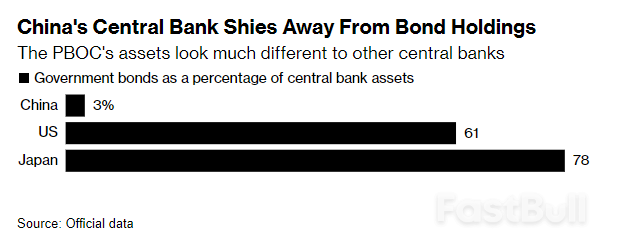
          A resurfaced speech from Chinese President Xi Jinping suggests policymakers may start trading government bonds to regulate liquidity in the market, pushing the nation toward strategies used by the Federal Reserve and other major central banks around the world.
          Xi’s call for the People’s Bank of China to “gradually increase the buying and selling of government bonds” in its open market operations sparked a frenzy of speculation among traders last week. The remarks — made in October but publicized recently in a new book and newspaper article — may hint at a policy pivot for a central bank that hasn’t made a significant bond purchase since 2007.
          “Central banks in other countries generally use government bonds, or sovereign credit, as a basis to issue money,” said Liu Lei, a researcher at the National Institution for Finance and Development, a state think tank advising government agencies in China. “This is a necessary path for China’s central bank and monetary system to move into modern times.”Xi’s Cryptic Bond Comments Hint At PBOC Becoming More Like Fed_1
          The vague comments from the Chinese leader led some traders to initially argue that Beijing may be considering quantitative easing — an unconventional form of stimulus that involves purchasing sovereign bonds and other assets to push down yields and boost economic activity. First adopted by the Bank of Japan more than two decades ago, the tactic was later used by the Fed and other policymakers after the global financial crisis and the coronavirus pandemic.
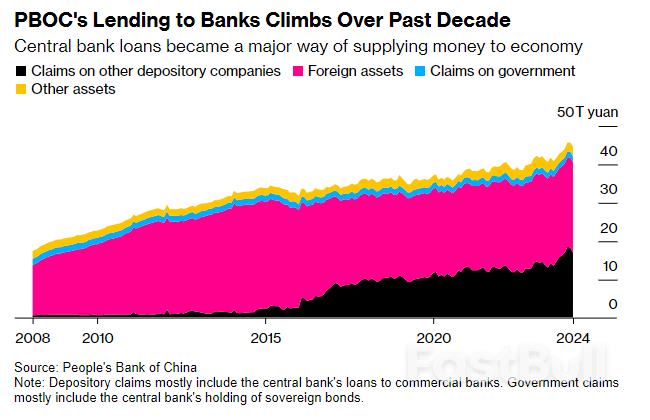
          China’s economic woes have stirred debate in recent months about whether the world’s second-largest economy would consider drastic policies to shore up some sectors, like property. The PBOC has already been using targeted lending programs that some analysts liken to QE because they expand the central bank’s balance sheet.
          Several economists demurred from interpreting Xi’s appeal for government bond trading as a revolutionary shift in policy.
          For one thing, Xi specifically mentioned both buying and selling — a notable distinction from QE, which generally involves buying and holding government bonds and other assets, especially at a large scale. Interest rates in China are also still well above zero, giving less reason for the PBOC to consider a tactic that’s usually regarded as an emergency tool to spur demand when short-term rates have flatlined.Xi’s Cryptic Bond Comments Hint At PBOC Becoming More Like Fed_2
          The PBOC didn’t respond to a faxed request for comment from Bloomberg News late last week about Xi’s speech. In the past, it has signaled disapproval over QE: Former governors have pointed to potential risks from US-led QE and warned that asset purchases would damage markets, hurt the reputation of central banks and create “moral hazards.”
          Instead, the trading of sovereign bonds may be best viewed as an additional tool for the PBOC to pump liquidity into the market and ensure rates are stable.
          The central bank already has several ways to provide money to the economy. It can inject funds through its monthly medium-term lending facility to support commercial bank lending, or lower the amount of cash banks need to keep in reserve.
          Those methods have shortcomings, though. Economists see shrinking space for further cuts to the reserve requirement ratio. Loans need to be renewed. And any misjudgment of demand for liquidity risks leading to a serious cash crunch.
          The PBOC “needs more flexibilities in managing liquidity and more tools to expand its balance sheet,” UBS Group AG economists Nina Zhang and Wang Tao wrote in a Thursday note. Because the size of the government bond market has expanded over the years, central bank bond trading has become “more necessary and feasible,” they added.
          While the directive from the most important man in China certainly indicates the central bank may start buying up bonds, the actual timing of any purchase remains up for debate.
          Central bank bond buying will likely be a “very slow process,” said NIFD’s Liu, adding that the shift is still in its “design phase.”
          Others suggest forthcoming fiscal stimulus may mean the PBOC pulls the trigger on purchases sometime this year. That would help alleviate liquidity pressure from an upcoming surge in bond supply resulting from the planned issuance of 1 trillion yuan ($138 billion) worth of special sovereign debt in 2024, according to a report from Goldman Sachs Group Inc. economists on Thursday.
          It’s also not clear how ramped up bond purchases would impact Chinese yields. They’d likely fall in the short term, according to Citigroup Inc. strategist Philip Yin, since the central bank’s debt purchases “should help improve market confidence about liquidity and digesting future government bond supply.”
          The longer-term effects may be mixed. If China combines the use of more liquidity tools with further policies to stabilize economic growth, investors may shy away from safe haven assets in favor of riskier ones.
          Whatever China’s strategy, there’s a reason Xi’s comments have created such a stir: Once a central bank decides to start trading government bonds, things can snowball quickly.
          The Bank of Japan, for example, intended to limit the scope of its initial program in 2001 before ramping up the amount of bonds it bought. When it embarked on a second round of QE in 2013, Japanese policymakers folded their regular bond trading program, called rinban, into their massive new asset purchasing plan.
          In other words, there’s sometimes little real difference between buying bonds as a liquidity tool versus doing so to stimulate the economy.

          Source:Bloomberg

          Risk Warnings and Disclaimers
          You understand and acknowledge that there is a high degree of risk involved in trading. Following any strategies or investment methods may lead to potential losses. The content on the site is provided by our contributors and analysts for information purposes only. You are solely responsible for determining whether any trading assets, securities, strategy, or any other product is suitable for investing based on your own investment objectives and financial situation.
          Add to Favorites
          Share

          Goldilocks at Chifley Square

          Westpac

          Economic

          Central Bank

          The minutes of the late-March meeting of the RBA Board (the last in the Martin Place building) recorded that the data had turned out broadly as expected, and that this supported keeping the cash rate on hold. Unlike the February minutes, there was no mention of multiple policy options. While the Board endorsed the language of not ruling anything in or out, it seems that policy actions other than keeping rates unchanged were not on the table at this meeting. The current level of the cash rate is assessed as being just right, at least for the time being.
          The minutes noted that the staff assessed that demand still exceeded supply, but the gap was diminishing quickly. A slowing in labour demand was called out, and growth in labour costs was assessed to have peaked. The Board nonetheless remains concerned that domestic costs could continue to rise quickly. The recent turnaround in productivity was noted, as was the role of the pandemic and economic cycle in driving the recent slump. However, the Board is uncertain whether this turnaround will continue. The possibility of a faster snapback in productivity than expected was not mentioned.
          The ongoing decline in inflation was highlighted, with the three-month-ended rate for the monthly indicator used as a timelier metric. Monthly inflation was expected to rebound in coming months as special factors such as electricity rebates unwind. The pace of decline in goods prices was also expected to slow, though the minutes did not elaborate on the reasoning for this view. The minutes highlighted the bumpiness of the decline in inflation in other countries and noted that something similar could happen in Australia.
          Policy was still assessed as restrictive, so at some point the policy rate will need to decline to prevent inflation from declining so far that it starts undershooting the target. But unlike its peers overseas, the Board is not ready to talk about this decision yet. The minutes again highlighted that interest rates had peaked at a lower level than in some peer economies, and that this reflected the Board’s intention to preserve the gains on employment made since the pandemic period.
          A related difference that the minutes did not highlight is the varying squeeze on household sectors across peer economies. Debt-servicing as a share of household income is well above average in Australia at present. By contrast, the financial stability section of the minutes noted that it is below historical averages in many peer economies – despite higher policy rates.
          The global outlook was seen as supporting risk sentiment. The chance of a significant downturn had fallen, while interest rates were still expected to decline later in the year. This combination is seen as boosting prices of risk assets and contributing to a more ‘risk on’ tone in markets. This has also been supportive of the Australian dollar exchange rate despite narrower interest differentials and a decline in key commodity prices. Improved risk sentiment also underpins Westpac Economics’ expectation of further upward pressure on the AUD/USD exchange rate later this year; the declines in commodity prices were largely expected and so already priced in.
          We expect the RBA to reach the required level of assurance about the path of inflation later in the year, after the full suite of data for the first half of 2024 are released. We continue to expect the first rate cut to occur at the late-September Board meeting.

          Ample considerations of a happy medium

          The other main decision recorded in the minutes related to the operational arrangements for monetary policy. This decision was further elaborated in a speech this morning by Assistant Governor (Financial Markets) Chris Kent.
          The background to this decision is that the policy interest rate that the RBA focuses on is the interest rate that banks (and other deposit-taking institutions) charge each other to borrow unsecured overnight in the cash market. The asset that is being borrowed and repaid is exchange settlement funds – that is, banks’ deposits with the RBA, also known as reserves. These deposits are remunerated at a rate that is set below the policy target rate; currently, the spread is 10 basis points.
          Prior to the pandemic, the RBA ran a ‘scarce reserves’ regime. Its balance sheet was small, and the staff needed to forecast daily liquidity flows into and out of the system – for example from tax payments and government spending – to keep the amount of reserves at whatever level would keep the cash rate at target. When the pandemic hit, banks wanted more liquidity, so the RBA switched to a regime of excess reserves.
          This was also a by-product of the various asset purchase programs introduced during that period. The RBA’s balance sheet expanded, and the actual interest rate banks transacted at in the cash market drifted below the published cash rate target, while remaining above the remuneration rate on exchange settlement balances.
          Other central banks, including the Federal Reserve, Bank of Canada and RBNZ, have decided to stick with the excess reserves model even as they wind down their asset purchase programs. Others, including the Bank of England and European Central Bank, have instead settled on a happy medium of ‘ample’, but not excess, reserves. A key distinction between this operating model and its alternatives is that it is managed with full-allotment repo at a pre-specified interest rate, which fixes the price (interest rate) and accepts whatever quantity of reserves is needed to achieve this.
          By contrast, in both the ‘scarce’ and ‘excess’ reserve regimes, it is up to the central bank to determine the quantity of reserves that it thinks will achieve the desired price. Still to be determined is the composition of assets the RBA will hold under repurchase agreements on the other side of its balance sheet.
          As both the speech and minutes emphasise, this is an operational decision with no implications for the stance of monetary policy. Relative to reverting to the pre-pandemic scarce-reserves regime, though, the RBA’s balance sheet will be larger, with implications for the average size of future earnings to be distributed to the government. It will also mean that the RBA continues to hold some fraction of the government bonds on issue. These will not be available to banks and other deposit takers to meet their prudential liquidity requirements (the Liquidity Coverage Ratio).
          To stay updated on all economic events of today, please check out our Economic calendar
          Risk Warnings and Disclaimers
          You understand and acknowledge that there is a high degree of risk involved in trading. Following any strategies or investment methods may lead to potential losses. The content on the site is provided by our contributors and analysts for information purposes only. You are solely responsible for determining whether any trading assets, securities, strategy, or any other product is suitable for investing based on your own investment objectives and financial situation.
          Add to Favorites
          Share
          FastBull
          Copyright © 2025 FastBull Ltd

          728 RM B 7/F GEE LOK IND BLDG NO 34 HUNG TO RD KWUN TONG KLN HONG KONG

          TelegramInstagramTwitterfacebooklinkedin
          App Store Google Play Google Play
          Products
          Charts

          Chats

          Q&A with Experts
          Screeners
          Economic Calendar
          Data
          Tools
          Membership
          Features
          Function
          Markets
          Copy Trading
          Latest Signals
          Contests
          News
          Analysis
          24/7
          Columns
          Education
          Company
          Careers
          About Us
          Contact Us
          Advertising
          Help Center
          Feedback
          User Agreement
          Privacy Policy
          Business

          White Label

          Data API

          Web Plug-ins

          Poster Maker

          Affiliate Program

          Risk Disclosure

          The risk of loss in trading financial instruments such as stocks, FX, commodities, futures, bonds, ETFs and crypto can be substantial. You may sustain a total loss of the funds that you deposit with your broker. Therefore, you should carefully consider whether such trading is suitable for you in light of your circumstances and financial resources.

          No decision to invest should be made without thoroughly conducting due diligence by yourself or consulting with your financial advisors. Our web content might not suit you since we don't know your financial conditions and investment needs. Our financial information might have latency or contain inaccuracy, so you should be fully responsible for any of your trading and investment decisions. The company will not be responsible for your capital loss.

          Without getting permission from the website, you are not allowed to copy the website's graphics, texts, or trademarks. Intellectual property rights in the content or data incorporated into this website belong to its providers and exchange merchants.

          Not Logged In

          Log in to access more features

          FastBull Membership

          Not yet

          Purchase

          Become a signal provider
          Help Center
          Customer Service
          Dark Mode
          Price Up/Down Colors

          Log In

          Sign Up

          Position
          Layout
          Fullscreen
          Default to Chart
          The chart page opens by default when you visit fastbull.com