Markets
News
Analysis
User
24/7
Economic Calendar
Education
Data
- Names
- Latest
- Prev



Signal Accounts for Members
All Signal Accounts
All Contests


China Central Bank Injects 75 Billion Yuan Via 7-Day Reverse Repos At 1.40% Versus Prior 1.40%
US Official - US Has Returned Remaining $200 Million From Initial $500 Million Oil Sale To Venezuela
New York And New Jersey Are Seeking Emergency Assistance In Response To Plans To Suspend Construction On Friday
The U.S. States Of New York And New Jersey Have Filed A Lawsuit Against President Trump For His Decision To Withhold $16 Billion In Tunnel Project Funds
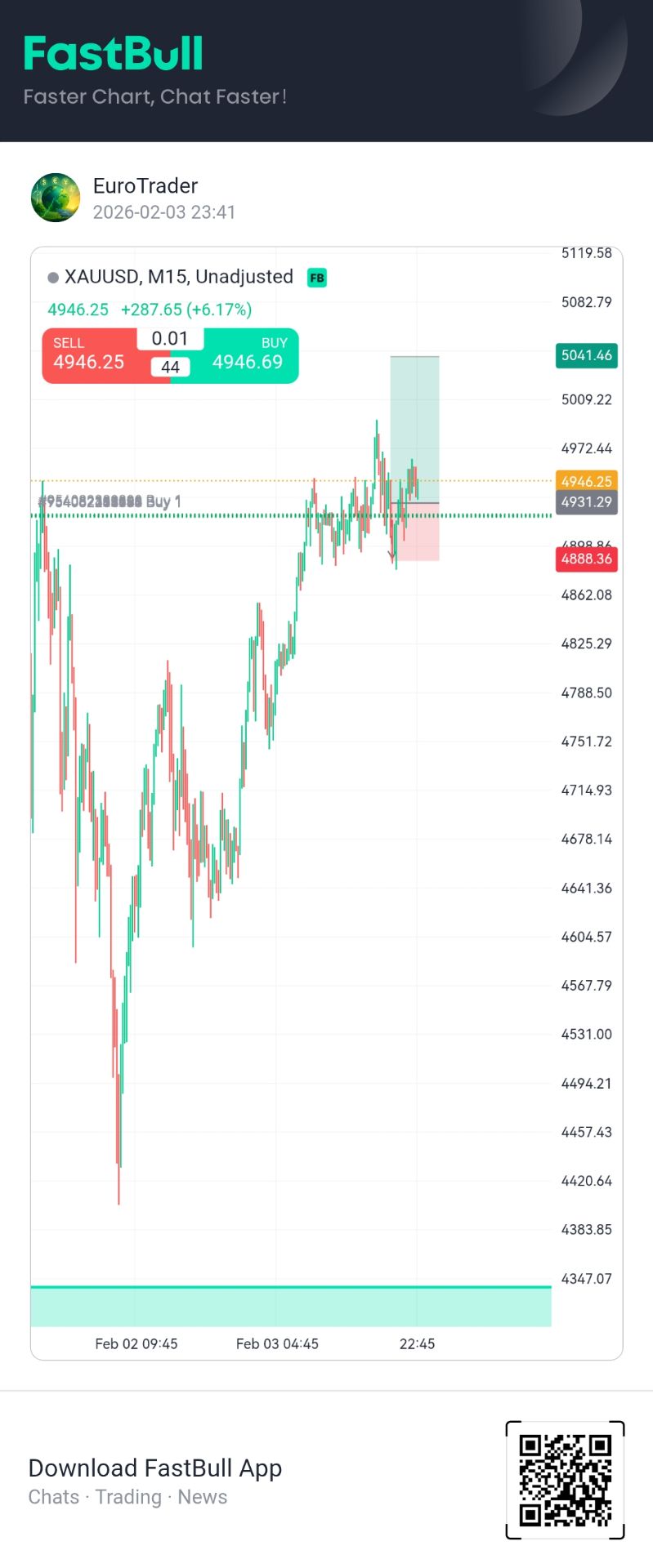
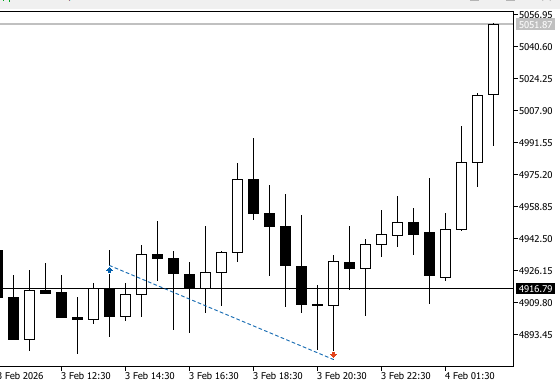
Spot Gold Broke Through $5,000 Per Ounce, With Intraday Gains Widening To 1.1%, Rebounding Nearly $600 From This Week's Low
Spot Silver Rebounded During The Day After Falling More Than 2%, And Is Currently Trading At $85.4 Per Ounce
A U.S. Official Said The Iranian Revolutionary Guard Had Planned To Conduct Live-fire Military Exercises In The Strait Of Hormuz On Sunday And Monday, But Canceled The Exercises After Receiving A Warning From The United States
U.S. Trade Representative Greer: The Government Will Work With Congress To Modernize And Reform The Africa Trade Preference Program
U.S. Trade Representative Greer: The African Growth And Opportunity Act's Trade Preference Program Has Been Authorized To Be Extended To December 31, 2026, With Retroactive Effect Until September 30, 2025
USA Trade Representative Greer: President Trump Signed Into Law Legislation That Reauthorizes African Growth And Opportunity Act
A South Korean Trade Negotiator Stated That Discussions Regarding The Proposed Additional Tariffs On South Korea Are Currently Underway Among Various U.S. Departments

U.S. ISM Inventories Index (Jan)A:--
F: --
P: --
U.S. ISM Manufacturing Employment Index (Jan)A:--
F: --
P: --
U.S. ISM Manufacturing New Orders Index (Jan)A:--
F: --
P: --
U.S. ISM Manufacturing PMI (Jan)A:--
F: --
P: --
US President Trump delivered a speech
South Korea CPI YoY (Jan)A:--
F: --
P: --
Japan Monetary Base YoY (SA) (Jan)A:--
F: --
P: --
Australia Building Approval Total YoY (Dec)A:--
F: --
Australia Building Permits MoM (SA) (Dec)A:--
F: --
Australia Building Permits YoY (SA) (Dec)A:--
F: --
P: --
Australia Private Building Permits MoM (SA) (Dec)A:--
F: --
Australia Overnight (Borrowing) Key RateA:--
F: --
P: --
RBA Rate Statement
Japan 10-Year Note Auction YieldA:--
F: --
P: --
The U.S. House of Representatives voted on a short-term spending bill to end the partial government shutdown.
Saudi Arabia IHS Markit Composite PMI (Jan)A:--
F: --
P: --
RBA Press Conference
Turkey PPI YoY (Jan)A:--
F: --
P: --
Turkey CPI YoY (Jan)A:--
F: --
P: --
Turkey CPI YoY (Excl. Energy, Food, Beverage, Tobacco & Gold) (Jan)A:--
F: --
P: --
U.K. 10-Year Note Auction YieldA:--
F: --
P: --
Richmond Federal Reserve President Barkin delivered a speech.
U.S. Weekly Redbook Index YoYA:--
F: --
P: --
Mexico Manufacturing PMI (Jan)A:--
F: --
P: --
U.S. API Weekly Refined Oil StocksA:--
F: --
P: --
U.S. API Weekly Gasoline StocksA:--
F: --
P: --
U.S. API Weekly Cushing Crude Oil StocksA:--
F: --
P: --
U.S. API Weekly Crude Oil StocksA:--
F: --
P: --
Japan IHS Markit Services PMI (Jan)A:--
F: --
P: --
Japan IHS Markit Composite PMI (Jan)A:--
F: --
P: --
China, Mainland Caixin Services PMI (Jan)--
F: --
P: --
China, Mainland Caixin Composite PMI (Jan)--
F: --
P: --
India HSBC Services PMI Final (Jan)--
F: --
P: --
India IHS Markit Composite PMI (Jan)--
F: --
P: --
Russia IHS Markit Services PMI (Jan)--
F: --
P: --
South Africa IHS Markit Composite PMI (SA) (Jan)--
F: --
P: --
Italy Services PMI (SA) (Jan)--
F: --
P: --
Italy Composite PMI (Jan)--
F: --
P: --
Germany Composite PMI Final (SA) (Jan)--
F: --
P: --
Euro Zone Composite PMI Final (Jan)--
F: --
P: --
Euro Zone Services PMI Final (Jan)--
F: --
P: --
U.K. Composite PMI Final (Jan)--
F: --
P: --
U.K. Total Reserve Assets (Jan)--
F: --
P: --
U.K. Services PMI Final (Jan)--
F: --
P: --
U.K. Official Reserves Changes (Jan)--
F: --
P: --
Euro Zone Core CPI Prelim YoY (Jan)--
F: --
P: --
Euro Zone Core HICP Prelim YoY (Jan)--
F: --
P: --
Euro Zone PPI MoM (Dec)--
F: --
P: --
Euro Zone HICP Prelim YoY (Jan)--
F: --
P: --
Euro Zone Core HICP Prelim MoM (Jan)--
F: --
P: --
Italy HICP Prelim YoY (Jan)--
F: --
P: --
Euro Zone Core CPI Prelim MoM (Jan)--
F: --
P: --
Euro Zone PPI YoY (Dec)--
F: --
P: --
U.S. MBA Mortgage Application Activity Index WoW--
F: --
P: --
Brazil IHS Markit Composite PMI (Jan)--
F: --
P: --
Brazil IHS Markit Services PMI (Jan)--
F: --
P: --
U.S. ADP Employment (Jan)--
F: --
P: --
The U.S. Treasury Department released its quarterly refinancing statement.
U.S. IHS Markit Composite PMI Final (Jan)--
F: --
P: --
U.S. IHS Markit Services PMI Final (Jan)--
F: --
P: --
U.S. ISM Non-Manufacturing PMI (Jan)--
F: --
P: --


No matching data
View All

No data
Soaring demand and industry hype drove Nvidia’s market cap past $5 trillion at its peak in October, though the stock is down 15% from its high, pushing the valuation to $4.4 trillion.

Private-sector analysts have raised their expectations for Mexico's economic growth in 2026, according to the central bank's January survey. The updated outlook follows stronger-than-anticipated economic performance at the end of 2025.
The median forecast for Mexico's 2026 GDP growth now stands at 1.3%, an increase from the 1.15% projected in the mid-December survey. In contrast, the outlook for 2027 saw a slight downward revision to 1.8% from 1.85%.
This optimism is rooted in new data showing Mexico's economy expanded by 1.6% year-over-year in the fourth quarter of 2025. The expansion was led by solid performance in the agriculture sector, with more modest growth recorded in the industrial and services sectors.
According to market sources, growth prospects for both 2026 and 2027 hinge on the successful and timely renewal of the US-Mexico-Canada (USMCA) free trade agreement. Negotiations are scheduled to conclude in July.
Optimism surrounding the talks is reflected in the survey’s quarterly breakdown, which projects GDP growth will accelerate to 1.54% in the third quarter of 2026, up from 1.1% in the second quarter.
Despite the positive outlook, analysts identified public security as the primary short-term risk to economic growth. This concern significantly outpaced foreign trade issues, with both factors cited far more frequently than any other potential headwind in the survey.
Analysts slightly increased their inflation expectations for 2026, with the forecast moving to 3.95% from 3.88%. The estimate for core inflation, which excludes volatile food and energy prices, remained unchanged from the previous survey at 3.75%.
Annual inflation slowed to 3.69% in December—the lowest December reading since 2020. However, core inflation, despite easing to 4.33% from 4.43%, remained above the central bank's 4% upper target for the eighth consecutive month.
The central bank cut its target rate to 7% on December 18, down from 10% at the start of 2025. Analysts expect the tightening cycle to end this year and forecast the rate will close 2026 at 6.5%. The bank's next monetary policy decision is scheduled for February 5.
The survey also revealed a stronger forecast for the Mexican peso. Analysts now project an exchange rate of Ps18.50 per US dollar by the end of 2026, a significant improvement from the previous forecast of Ps19.23. The end-2027 forecast was also strengthened, moving to Ps19.00 from Ps19.45.
This view aligns with recent market performance. The US dollar weakened by roughly 4% against the peso over the last month, trading at Ps17.26 on February 3 compared to Ps17.9 on January 3.
U.S. Treasury yields declined on Tuesday as traders weighed the possibility of a major policy shift at the Federal Reserve and navigated economic data delays caused by a partial government shutdown.
Market focus has intensified on Kevin Warsh, who President Donald Trump selected on Friday to lead the central bank when Jerome Powell’s term concludes in May. Though previously known as an inflation hawk, Warsh is now advocating for lower interest rates.
This potential change at the top is creating complex crosscurrents in the bond market, pushing yields lower while reshaping expectations for the Fed's long-term strategy.
Jason Pride, chief of investment strategy and research at Glenmede, anticipates the Fed will cut rates twice this year by 25 basis points each—a scenario he notes is already largely priced into the market.
However, the more significant impact of a Warsh-led Fed could be on its massive balance sheet. Warsh has been a vocal critic of the Fed's large holdings, arguing they distort the financial system. In a November Wall Street Journal opinion piece, he stated, "the Fed's bloated balance sheet, designed to support the biggest firms in a bygone crisis era, can be reduced significantly."
This stance is causing the yield curve to steepen. Pride explained that Warsh has been "a strong advocate against the overuse of the Federal Reserve's balance sheet." At the same time, his view on short-term rates "is very much in line with the Federal Reserve's policy up until now, and maybe even a little bit dovish relative to it."
The mixed signals are being reflected in Treasury prices:
• The 2-year Treasury note yield, sensitive to Fed rate expectations, edged down 0.2 basis points to 3.568%.
• The benchmark 10-year Treasury note yield fell 1 basis point to 4.268%.
The spread between the two-year and 10-year yields, a key gauge of the yield curve, narrowed slightly by half a basis point to 69.5 basis points. This followed a move to 72.7 basis points on Monday, its steepest level since April. Adding to the downward pressure on yields was a sharp selloff in stocks on Tuesday, which likely boosted safe-haven demand for government debt.
Compounding the uncertainty is a lack of clear economic signals. Thomas Simons, chief U.S. economist at Jefferies, pointed out that some traditional market correlations have broken down recently, making it difficult to determine what is driving asset prices.
"It feels like the market's having a hard time assessing whether or not there is a kind of broad risk-off or risk-on tone at any given time because of all the crosscurrents," Simons said.
The partial government shutdown has exacerbated this issue by delaying the release of January's crucial employment report, originally scheduled for Friday. While the U.S. House of Representatives narrowly approved a deal on Tuesday to end the shutdown, the data blackout has left investors flying blind.
Recent economic data had pushed market expectations for the next Fed rate cut to June. However, a significant slowdown in the labor market, once the data is released, could accelerate that timeline.
Looking further ahead, Pride projects the U.S. economy could see above-average growth in 2026 as tariff headwinds fade and fiscal stimulus takes effect. He warned this could raise inflation risks, keeping it a primary focus for the Fed.
The debate within the central bank continues. On Tuesday, Richmond Fed President Tom Barkin noted that while rising productivity is helping to ease cost pressures, its persistence is hard to predict, making future monetary policy decisions difficult. In contrast, Fed Governor Stephen Miran, speaking on Fox Business Network, continued to argue for aggressive interest-rate cuts this year.
President Donald Trump’s call for Republicans to “nationalize” U.S. elections has sparked sharp criticism from lawmakers, including some in his own party. Democrats, meanwhile, are voicing renewed alarm that the move signals an intent to interfere with the upcoming November midterm elections, which will decide control of Congress.
In a podcast interview released Monday, Trump repeated his false claims of a stolen 2020 election and declared that his party should “take over” and “nationalize” voting in at least 15 locations, though he did not specify what that would entail.
Under the U.S. Constitution, state and local governments are responsible for administering elections, not the federal government. Democratic officials and voting rights advocates argue Trump's comments are part of a plan to undermine or manipulate this year's results.
"This is not about the 2020 election," Democratic Senator Mark Warner of Virginia stated at a press conference. "This is frankly about what comes next."
While Trump’s base has embraced his calls to overhaul the nation's voting systems, key Republican leaders pushed back on the idea of federalizing elections.
Senate Majority Leader John Thune told reporters he was "not in favor of federalizing elections." He defended the current system, noting, "I'm a big believer in decentralized and distributed power. It's harder to hack 50 election systems than it is to hack one."
House Speaker Mike Johnson argued that a federal takeover was unnecessary but maintained that Trump's concerns about election integrity were justified. The White House later clarified that Trump wants Congress to pass the SAVE Act, a Republican bill that would impose new voter ID and citizenship verification requirements.
"The president believes in the United States Constitution," said press secretary Karoline Leavitt. "However, he believes there has obviously been a lot of fraud and irregularities that have taken place in American elections."
The controversy comes just months before the critical midterm elections. Historically, the president's party tends to lose seats, and Democrats need to flip just three Republican-held districts to win control of the House of Representatives.
Election experts warned against dismissing the president's rhetoric. "The last time he started talking like this, his allies minimized the risks and we ended up with Jan 6," wrote Brendan Nyhan, a political science professor at Dartmouth College, referencing the 2021 attack on the U.S. Capitol.
Some of Trump’s allies have suggested he could use federal funding as leverage. The government provides states with hundreds of millions of dollars annually for election administration, including cybersecurity and voting equipment. Allies believe Trump might threaten to withhold these funds from states that resist new voting measures like ID requirements or restrictions on mail-in ballots.
Concerns were amplified by recent events in Fulton County, Georgia, a key battleground in Trump’s 2020 efforts to overturn the election. Last week, the FBI executed a search warrant for 2020 ballots in the county's election office.
Alarmingly for Democrats, Tulsi Gabbard, the director of national intelligence, was present during the search. The involvement of the DNI in a domestic election operation without a clear foreign threat is highly unusual and raised immediate red flags.
Senator Warner, who co-chairs the Senate Intelligence Committee, said Gabbard’s office had not notified Congress of any foreign threats to election infrastructure. He criticized her appearance in Georgia as an act that "politicizes an institution that must remain neutral and apolitical."
In a letter to Warner and Congressman Jim Himes, Gabbard stated that Trump had requested her presence at the FBI operation. She also asserted her legal authority to coordinate and analyze election security matters. This follows her comments at an April cabinet meeting where she announced her office was investigating election integrity issues, claiming electronic voting systems are "vulnerable to exploitation."
NATO confirmed on Tuesday that it is planning a new mission in the Arctic, a move that comes just weeks after U.S. President Donald Trump created friction within the alliance by insisting the U.S. needed to control Greenland. Trump cited unverified security threats from Russia and China as justification for his stance.

Martin O'Donnell, a spokesperson for NATO's Supreme Headquarters Allied Powers Europe, announced that a "NATO enhanced vigilance activity" is being developed to "further strengthen NATO's posture in the Arctic and High North." As planning has just begun, he did not provide additional details.
The location for the exercises remains unclear. This initiative is separate from the ongoing NATO exercise in Greenland, "Operation Arctic Endurance," which is currently led by Denmark.
Germany's Spiegel newsmagazine first reported on the plans, revealing that NATO's commander, U.S. General Alexus G. Grynkewich, had ordered the development of a mission titled "Arctic Sentry." According to the report, NATO defense ministers may convene in Brussels in the coming weeks to discuss the preliminary operation plans.
The push for a stronger NATO presence follows a period of diplomatic strain. In the lead-up to the World Economic Forum in Davos last month, President Trump suggested he might use force to acquire Greenland, a strategically valuable Arctic island.
The White House did not retract these claims, with the president later repeating his assertion that the U.S. would "have" Greenland "one way or the other."
The statements put Washington's European allies in a difficult position, forcing them to balance their support for Denmark's sovereignty over Greenland with the need to avoid further antagonizing Trump and risking the integrity of the defense alliance.
Tensions appeared to ease after Trump met with NATO Secretary General Mark Rutte at Davos. Following the meeting, Trump announced he had secured a "framework" deal to protect U.S. interests and seemed to back away from his threats of force.
Rutte confirmed he had discussed with Trump how NATO allies could work together to ensure Arctic security. However, the specific details of the deal mentioned by Trump have not been made public.
Despite the apparent de-escalation, Greenland remains cautious. On Monday, Prime Minister Jens-Frederik Nielsen warned that the U.S. is still pursuing "paths to ownership and control over Greenland."
Last week, senior officials from the U.S., Denmark, and Greenland initiated diplomatic talks. According to Denmark's foreign ministry, the discussions aim to "address American concerns about security in the Arctic while respecting the Kingdom's red lines."
The risk of loss in trading financial instruments such as stocks, FX, commodities, futures, bonds, ETFs and crypto can be substantial. You may sustain a total loss of the funds that you deposit with your broker. Therefore, you should carefully consider whether such trading is suitable for you in light of your circumstances and financial resources.
No decision to invest should be made without thoroughly conducting due diligence by yourself or consulting with your financial advisors. Our web content might not suit you since we don't know your financial conditions and investment needs. Our financial information might have latency or contain inaccuracy, so you should be fully responsible for any of your trading and investment decisions. The company will not be responsible for your capital loss.
Without getting permission from the website, you are not allowed to copy the website's graphics, texts, or trademarks. Intellectual property rights in the content or data incorporated into this website belong to its providers and exchange merchants.
Not Logged In
Log in to access more features
Log In
Sign Up