Markets
News
Analysis
User
24/7
Economic Calendar
Education
Data
- Names
- Latest
- Prev




Signal Accounts for Members
All Signal Accounts
All Contests


U.K. Retail Sales MoM (SA) (Dec)A:--
F: --
P: --
France Manufacturing PMI Prelim (Jan)A:--
F: --
P: --
France Services PMI Prelim (Jan)A:--
F: --
P: --
France Composite PMI Prelim (SA) (Jan)A:--
F: --
P: --
Germany Manufacturing PMI Prelim (SA) (Jan)A:--
F: --
P: --
Germany Services PMI Prelim (SA) (Jan)A:--
F: --
P: --
Germany Composite PMI Prelim (SA) (Jan)A:--
F: --
P: --
Euro Zone Composite PMI Prelim (SA) (Jan)A:--
F: --
P: --
Euro Zone Manufacturing PMI Prelim (SA) (Jan)A:--
F: --
P: --
Euro Zone Services PMI Prelim (SA) (Jan)A:--
F: --
P: --
U.K. Composite PMI Prelim (Jan)A:--
F: --
P: --
U.K. Manufacturing PMI Prelim (Jan)A:--
F: --
P: --
U.K. Services PMI Prelim (Jan)A:--
F: --
P: --
Mexico Economic Activity Index YoY (Nov)A:--
F: --
P: --
Russia Trade Balance (Nov)A:--
F: --
P: --
Canada Core Retail Sales MoM (SA) (Nov)A:--
F: --
P: --
Canada Retail Sales MoM (SA) (Nov)A:--
F: --
U.S. IHS Markit Manufacturing PMI Prelim (SA) (Jan)A:--
F: --
P: --
U.S. IHS Markit Services PMI Prelim (SA) (Jan)A:--
F: --
P: --
U.S. IHS Markit Composite PMI Prelim (SA) (Jan)A:--
F: --
P: --
U.S. UMich Consumer Sentiment Index Final (Jan)A:--
F: --
P: --
U.S. UMich Current Economic Conditions Index Final (Jan)A:--
F: --
P: --
U.S. UMich Consumer Expectations Index Final (Jan)A:--
F: --
P: --
U.S. Conference Board Leading Economic Index MoM (Nov)A:--
F: --
P: --
U.S. Conference Board Coincident Economic Index MoM (Nov)A:--
F: --
P: --
U.S. Conference Board Lagging Economic Index MoM (Nov)A:--
F: --
P: --
U.S. UMich 1-Year-Ahead Inflation Expectations Final (Jan)A:--
F: --
P: --
U.S. Conference Board Leading Economic Index (Nov)A:--
F: --
P: --
U.S. Weekly Total Rig CountA:--
F: --
P: --
U.S. Weekly Total Oil Rig CountA:--
F: --
P: --
Germany Ifo Business Expectations Index (SA) (Jan)--
F: --
P: --
Germany IFO Business Climate Index (SA) (Jan)--
F: --
P: --
Germany Ifo Current Business Situation Index (SA) (Jan)--
F: --
P: --
U.S. Dallas Fed PCE Price Index YoY (Nov)--
F: --
P: --
Brazil Current Account (Dec)--
F: --
P: --
Mexico Unemployment Rate (Not SA) (Dec)A:--
F: --
P: --
Canada National Economic Confidence Index--
F: --
P: --
U.S. Non-Defense Capital Durable Goods Orders MoM (Excl. Aircraft) (Nov)--
F: --
P: --
U.S. Durable Goods Orders MoM (Excl. Defense) (SA) (Nov)--
F: --
P: --
U.S. Durable Goods Orders MoM (Excl.Transport) (Nov)--
F: --
P: --
U.S. Durable Goods Orders MoM (Nov)--
F: --
P: --
U.S. Chicago Fed National Activity Index (Nov)--
F: --
P: --
U.S. Dallas Fed New Orders Index (Jan)--
F: --
P: --
U.S. Dallas Fed General Business Activity Index (Jan)--
F: --
P: --
U.K. BRC Shop Price Index YoY (Jan)--
F: --
P: --
China, Mainland Industrial Profit YoY (YTD) (Dec)--
F: --
P: --
Mexico Trade Balance (Dec)--
F: --
P: --
U.S. S&P/CS 20-City Home Price Index YoY (Not SA) (Nov)--
F: --
P: --
U.S. S&P/CS 20-City Home Price Index MoM (SA) (Nov)--
F: --
P: --
U.S. FHFA House Price Index MoM (Nov)--
F: --
P: --
U.S. FHFA House Price Index (Nov)--
F: --
P: --
U.S. Richmond Fed Manufacturing Composite Index (Jan)--
F: --
P: --
U.S. Conference Board Present Situation Index (Jan)--
F: --
P: --
U.S. Conference Board Consumer Expectations Index (Jan)--
F: --
P: --
U.S. Richmond Fed Manufacturing Shipments Index (Jan)--
F: --
P: --
U.S. Richmond Fed Services Revenue Index (Jan)--
F: --
P: --
U.S. Conference Board Consumer Confidence Index (Jan)--
F: --
P: --
Australia RBA Trimmed Mean CPI YoY (Q4)--
F: --
P: --
Australia CPI YoY (Q4)--
F: --
P: --
Australia CPI QoQ (Q4)--
F: --
P: --


No matching data
Latest Views
Latest Views
Trending Topics
Top Columnists
Latest Update
White Label
Data API
Web Plug-ins
Affiliate Program
View All

No data
Unexpected UK inflation data pushes Morgan Stanley to delay its BoE rate cut forecast to March, revising the easing timeline.
Morgan Stanley has revised its forecast for the Bank of England's (BoE) first interest rate cut, pushing its expectation from February to March. The shift follows new data revealing that UK inflation in December rose more than anticipated.
The Wall Street investment bank now projects a 25-basis-point (bps) cut in March. This initial move is expected to be followed by two additional 25 bps reductions later in the year, one in July and another in November.
This new timeline marks a significant departure from Morgan Stanley's previous forecast, which had anticipated a series of cuts starting earlier and spaced closer together in February, April, and June.
The primary driver for this updated forecast was Wednesday's inflation report. UK headline inflation climbed to 3.4% in December, marking its first increase since July. This figure surpassed the 3.3% rise that economists polled by Reuters had predicted.
In response to the data, Morgan Stanley is not acting alone. UBS Global Research also adjusted its call for the first BoE rate cut, similarly moving its forecast from February to March.
Despite sluggish economic growth, inflation in Britain continues to be the highest among major developed economies.
However, analysts expect the pace of price increases to slow considerably in the coming months. This is largely because significant rises in utility costs and other government-controlled tariffs from the previous year will soon fall out of the annual inflation comparison, providing a more favorable baseline.
The Bank of England's next monetary policy meeting is scheduled for February 5. The consensus view is that the central bank will hold its key interest rate steady at 3.75%.
Looking further ahead, financial markets are pricing in approximately 42.33 basis points of total cuts by the end of 2026, according to data from LSEG.
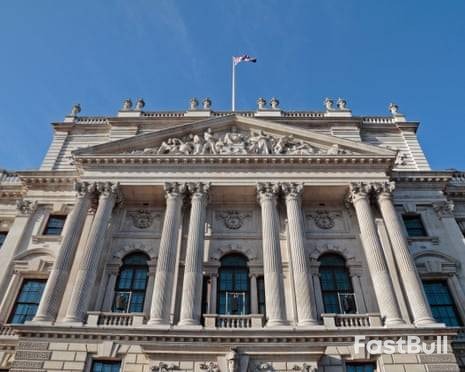
The UK government borrowed significantly less than expected in December, as stronger-than-anticipated income receipts provided a boost to public finances, according to official figures.

The Office for National Statistics (ONS) reported that public sector net borrowing—the gap between government spending and income—stood at £11.6 billion last month. This figure is a sharp decrease from the £18.7 billion recorded in December of the previous year and came in below the £13 billion forecast by economists in a Reuters poll.
For the financial year to date, total borrowing reached £140.4 billion, which is £300 million lower than the same period last year. The ONS also revised down its borrowing estimates for previous months by a combined £3.5 billion.
Tom Davies, a senior statistician at the ONS, explained the change succinctly: "Borrowing in December was substantially down on the same month in 2024, as a result of receipts being up strongly on last year whereas spending is only modestly higher."
A key priority for Chancellor Rachel Reeves has been to reduce government borrowing, particularly as debt servicing costs remain high. The December data underscores this challenge: interest costs alone accounted for £9.1 billion of the £11.6 billion borrowed during the month. This means roughly £1 out of every £10 spent by the government goes toward paying interest on its debt.
However, there may be relief on the horizon. Dennis Tatarkov, a senior economist at KPMG UK, suggested that borrowing costs are likely to ease. "With interest rate cuts expected later this year and the eventual ending of the Bank of England's quantitative tightening programme on the horizon, the Treasury could see a marked decline in borrowing costs, potentially creating more room for public spending," he said.
In her autumn budget in November, Chancellor Reeves announced £26 billion in tax rises aimed at offsetting increased spending on public services and infrastructure. Her strategy is guided by a fiscal rule requiring day-to-day spending to be funded by taxes by the end of the current parliament.
The Office for Budget Responsibility (OBR), the UK's official forecaster, noted in its November report that these tax increases had created £22 billion in spending headroom against this rule.
Looking ahead, the OBR projects that public sector net borrowing for the full financial year will fall to £138 billion, down from £152.6 billion a year earlier. This would bring the deficit down to 4.5% of gross domestic product from 5.2%. The forecast indicates a continued decline in borrowing each year, reaching £67 billion by 2031.
James Murray, the Chief Secretary to the Treasury, reiterated the government's position. "Last year we doubled our headroom and we are forecast to cut borrowing more than any other G7 country with borrowing set to be the lowest this year since before the pandemic," he stated. "We are stabilising the economy, reducing borrowing, rooting out waste in the public sector and making sure that public services deliver value for taxpayers' money."

Donald Trump has announced a "framework of a future deal" for Greenland, a move that calmed financial markets and brought cautious relief to European leaders. However, the proposal was met with deep skepticism in the Arctic territory after weeks of escalating threats.
The announcement came shortly after Trump used a speech at the World Economic Forum to state his desire for Greenland, including its "right, title and ownership," while backing away from earlier military threats. On social media, he confirmed the deal's framework and withdrew the threat of tariffs against eight European nations. Speaking to CNBC, he later described it as "a concept of a deal."
The pivot was cautiously welcomed by European officials. Danish Foreign Minister Lars Løkke Rasmussen said, "The day ended better than it started," adding it was time to address American security concerns in the Arctic while respecting Denmark's "red lines."
Italy's Prime Minister, Giorgia Meloni, also welcomed the decision. However, Nato Secretary-General Mark Rutte, who negotiated the agreement with Trump, warned that "a lot of work" remained.
When asked by Fox News if Greenland would stay part of the Kingdom of Denmark under the deal, Rutte said the topic never came up. A Nato spokesperson later confirmed that Rutte had not proposed any compromise on Greenland's sovereignty. Trump himself offered few details but mentioned ongoing talks about a US missile defense shield partially based in Greenland.
The proposal has sparked anger among some Danish and Greenlandic politicians who were left out of the negotiations.
"It's not real negotiations; it's two men who have had a conversation," Danish MP Sascha Faxe told Sky News. "There can't be a deal without having Greenland as part of the negotiations."
According to media reports in the Telegraph, the deal could grant the US sovereignty over small areas of Greenland where its military bases are located, similar to the UK's military bases in Cyprus. The framework could also reportedly allow the US to mine for rare earth minerals without seeking permission from Denmark.
The US already has extensive military access to the territory under decades-old agreements.
Aaja Chemnitz Larsen, a Greenlandic member of the Danish parliament, dismissed the notion entirely. She said the idea of Nato having a say in the territory's sovereignty or minerals was "completely out of the question."
Trump's apparent reversal came after days of rising transatlantic tensions. Sweden's Minister for Foreign Affairs, Maria Stenergard, suggested that the coordinated work of European allies "had an effect," reiterating they would not be "blackmailed."
Dutch Prime Minister Dick Schoof called the withdrawal of threatened tariffs a sign of "de-escalation." Trump had threatened to impose 10% tariffs from February 1 on the following countries over their opposition to a US takeover of Greenland:
• Denmark
• Norway
• Sweden
• France
• Germany
• The UK
• The Netherlands
• Finland
Others point to financial market volatility as a key factor. Trump's more aggressive comments on Tuesday triggered a sharp selloff in US stocks, but global markets rebounded after he announced the framework deal and retracted the tariff threat.
"The market bounced when he said we wouldn't use force," said Mark Hackett, chief market strategist at Nationwide. Financial analyst Matthew Smart noted that "uncertainty just got priced out."
This pattern aligns with past behavior. After Trump pulled back from his global trade war in April of the previous year following a market downturn, the Financial Times coined the acronym "Taco"—"Trump Always Chickens Out"—to describe the phenomenon.
The US publication Semafor reported that Trump was frustrated by the market's negative reaction and noted the significant risks of antagonizing allies. "Countries like the UK, Belgium, and France hold trillions of dollars in US assets like treasuries. If they decide to sell those, it could send interest rates skyrocketing," Semafor reported.
In Greenland's capital, Nuuk, Trump's announcement was greeted with disbelief. "He's lying," one man told the AFP news agency.
That sentiment was echoed by others. Anak, a care worker, stated simply, "Greenland belongs to the Greenlanders."

The death toll from a mall fire in Pakistan's biggest city rose to at least 55 people, a Karachi government official told AFP on Thursday.
"A total of 55 bodies have been recovered since Saturday night" when the fire erupted, said Javed Nabi Khoso, deputy commissioner of Karachi's south district.
Relatives of those still missing have criticised the slow operation at the three-storey Gul Plaza, where rescuers are scouring the wreckage for human remains.
More than 50 families have given DNA samples, provincial health official Summaiya Syed told journalists Wednesday.
"We will hand over the bodies (remains) to the family, once DNA samples are matched," she said outside the Civil Hospital Karachi mortuary.
Fires are common in Karachi's markets and factories, which are known for their poor infrastructure, but a blaze on such a scale is rare.
Faraz Ali, whose father and 26-year-old brother were inside the mall, told AFP he wants "the bodies to be recovered and handed over to their rightful families".
"That is all so that the families may receive something, some comfort, some peace. At least let us see them one last time, in whatever condition they are, so that we may say our final goodbye," the 28-year-old said Wednesday.
A government committee has launched an investigation, but the cause of the inferno was not immediately clear.
Gold prices stabilized on Thursday, recovering from a drop of over 1% as market focus shifted to the U.S. Federal Reserve's political independence, offsetting relief from easing geopolitical tensions.
After reaching a record high of $4,887.82 in the previous session, spot gold held steady at $4,836.09 per ounce. U.S. gold futures for February delivery were also flat, trading around $4,838.60 per ounce.
The key factor preventing a deeper slide in gold prices is the growing concern over the Federal Reserve's autonomy. President Donald Trump’s recent comments have put the central bank's future leadership and policy direction under intense scrutiny.
"The market was reacting after Trump's remarks, but the concerns are still lingering, and that's protecting the downside for both gold and silver, along with concerns surrounding the independence of the Fed," said Soni Kumari, a commodity strategist at ANZ.
Speaking in Davos, Trump mentioned he was close to selecting a new Fed chair and floated the idea of keeping White House economic adviser Kevin Hassett as a Fed Governor. This follows a U.S. Supreme Court hearing regarding Trump's attempt to fire Fed Governor Lisa Cook, where justices appeared to support preserving the central bank's independence in setting monetary policy.
The initial pressure on gold came after President Trump abruptly stepped back from threats to impose tariffs on Denmark over Greenland. The move signaled a potential resolution to a dispute that had risked a major transatlantic conflict, reducing near-term demand for safe-haven assets like gold.
Markets are now looking ahead to upcoming U.S. economic data, including November's Personal Consumption Expenditures (PCE) figures and weekly jobless claims, for further clues on the Fed's next steps. The central bank is widely expected to keep interest rates unchanged at its January meeting, despite calls from Trump for rate cuts.
As a non-yielding asset, gold tends to become more attractive to investors in a low-interest-rate environment.
Looking further ahead, Goldman Sachs has become more bullish on gold, raising its December 2026 price forecast from $4,900 to $5,400 per ounce. The bank anticipates that central banks in emerging economies will continue to diversify their reserves, projecting average purchases of 60 tons of gold in 2026.
Elsewhere in the precious metals market:
• Spot silver increased by 1.1% to $94.26 an ounce, after hitting a record $95.87 on Tuesday.
• Spot platinum fell 0.4% to $2,472.33 per ounce, down from its recent peak of $2,511.80.
• Palladium saw a gain of 0.6%, rising to $1,850.31.
White Label
Data API
Web Plug-ins
Poster Maker
Affiliate Program
The risk of loss in trading financial instruments such as stocks, FX, commodities, futures, bonds, ETFs and crypto can be substantial. You may sustain a total loss of the funds that you deposit with your broker. Therefore, you should carefully consider whether such trading is suitable for you in light of your circumstances and financial resources.
No decision to invest should be made without thoroughly conducting due diligence by yourself or consulting with your financial advisors. Our web content might not suit you since we don't know your financial conditions and investment needs. Our financial information might have latency or contain inaccuracy, so you should be fully responsible for any of your trading and investment decisions. The company will not be responsible for your capital loss.
Without getting permission from the website, you are not allowed to copy the website's graphics, texts, or trademarks. Intellectual property rights in the content or data incorporated into this website belong to its providers and exchange merchants.
Not Logged In
Log in to access more features
Log In
Sign Up