Markets
News
Analysis
User
24/7
Economic Calendar
Education
Data
- Names
- Latest
- Prev



Signal Accounts for Members
All Signal Accounts
All Contests


U.S. IHS Markit Manufacturing PMI Prelim (SA) (Jan)A:--
F: --
P: --
U.S. IHS Markit Services PMI Prelim (SA) (Jan)A:--
F: --
P: --
U.S. IHS Markit Composite PMI Prelim (SA) (Jan)A:--
F: --
P: --
U.S. UMich Consumer Sentiment Index Final (Jan)A:--
F: --
P: --
U.S. UMich Current Economic Conditions Index Final (Jan)A:--
F: --
P: --
U.S. UMich Consumer Expectations Index Final (Jan)A:--
F: --
P: --
U.S. Conference Board Leading Economic Index MoM (Nov)A:--
F: --
P: --
U.S. Conference Board Coincident Economic Index MoM (Nov)A:--
F: --
P: --
U.S. Conference Board Lagging Economic Index MoM (Nov)A:--
F: --
P: --
U.S. UMich 1-Year-Ahead Inflation Expectations Final (Jan)A:--
F: --
P: --
U.S. Conference Board Leading Economic Index (Nov)A:--
F: --
P: --
U.S. Weekly Total Rig CountA:--
F: --
P: --
U.S. Weekly Total Oil Rig CountA:--
F: --
P: --
Japanese Prime Minister Sanae Takaichi delivers a speech
Germany Ifo Business Expectations Index (SA) (Jan)A:--
F: --
P: --
Germany IFO Business Climate Index (SA) (Jan)A:--
F: --
P: --
Germany Ifo Current Business Situation Index (SA) (Jan)A:--
F: --
P: --
Brazil Current Account (Dec)A:--
F: --
P: --
Mexico Unemployment Rate (Not SA) (Dec)A:--
F: --
P: --
Canada National Economic Confidence IndexA:--
F: --
P: --
U.S. Non-Defense Capital Durable Goods Orders MoM (Excl. Aircraft) (Nov)A:--
F: --
U.S. Durable Goods Orders MoM (Excl. Defense) (SA) (Nov)A:--
F: --
U.S. Durable Goods Orders MoM (Excl.Transport) (Nov)A:--
F: --
P: --
U.S. Durable Goods Orders MoM (Nov)A:--
F: --
U.S. Chicago Fed National Activity Index (Nov)A:--
F: --
U.S. Dallas Fed New Orders Index (Jan)A:--
F: --
P: --
U.S. Dallas Fed General Business Activity Index (Jan)A:--
F: --
U.S. 2-Year Note Auction Avg. YieldA:--
F: --
P: --
U.K. BRC Shop Price Index YoY (Jan)A:--
F: --
P: --
China, Mainland Industrial Profit YoY (YTD) (Dec)A:--
F: --
P: --
Germany 2-Year Schatz Auction Avg. Yield--
F: --
P: --
Mexico Trade Balance (Dec)--
F: --
P: --
U.S. Weekly Redbook Index YoY--
F: --
P: --
U.S. S&P/CS 20-City Home Price Index YoY (Not SA) (Nov)--
F: --
P: --
U.S. S&P/CS 20-City Home Price Index MoM (SA) (Nov)--
F: --
P: --
U.S. FHFA House Price Index MoM (Nov)--
F: --
P: --
U.S. FHFA House Price Index (Nov)--
F: --
P: --
U.S. FHFA House Price Index YoY (Nov)--
F: --
P: --
U.S. S&P/CS 10-City Home Price Index YoY (Nov)--
F: --
P: --
U.S. S&P/CS 10-City Home Price Index MoM (Not SA) (Nov)--
F: --
P: --
U.S. S&P/CS 20-City Home Price Index (Not SA) (Nov)--
F: --
P: --
U.S. S&P/CS 20-City Home Price Index MoM (Not SA) (Nov)--
F: --
P: --
U.S. Richmond Fed Manufacturing Composite Index (Jan)--
F: --
P: --
U.S. Conference Board Present Situation Index (Jan)--
F: --
P: --
U.S. Conference Board Consumer Expectations Index (Jan)--
F: --
P: --
U.S. Richmond Fed Manufacturing Shipments Index (Jan)--
F: --
P: --
U.S. Richmond Fed Services Revenue Index (Jan)--
F: --
P: --
U.S. Conference Board Consumer Confidence Index (Jan)--
F: --
P: --
U.S. 5-Year Note Auction Avg. Yield--
F: --
P: --
U.S. API Weekly Refined Oil Stocks--
F: --
P: --
U.S. API Weekly Crude Oil Stocks--
F: --
P: --
U.S. API Weekly Gasoline Stocks--
F: --
P: --
U.S. API Weekly Cushing Crude Oil Stocks--
F: --
P: --
Australia RBA Trimmed Mean CPI YoY (Q4)--
F: --
P: --
Australia CPI YoY (Q4)--
F: --
P: --
Australia CPI QoQ (Q4)--
F: --
P: --
Germany GfK Consumer Confidence Index (SA) (Feb)--
F: --
P: --
Germany 10-Year Bund Auction Avg. Yield--
F: --
P: --
India Industrial Production Index YoY (Dec)--
F: --
P: --
India Manufacturing Output MoM (Dec)--
F: --
P: --


SURYAVANSHI
ID: 5249090


No matching data
Latest Views
Latest Views
Trending Topics
Top Columnists
Latest Update
White Label
Data API
Web Plug-ins
Affiliate Program
View All

No data
Japan's inflation pressures mount, fueled by labor shortages, challenging the BOJ's monetary policy path.
A key measure of prices in Japan's services sector climbed 2.6% in December from the previous year, reinforcing the Bank of Japan's view that persistent labor shortages are compelling companies to pass on higher costs.
This data adds to a growing body of evidence suggesting that steady wage growth, combined with rising import costs from a weak yen, will keep inflation elevated. This trend strengthens the case for the central bank to pursue further interest rate hikes.
The December increase in the services producer price index, which tracks prices businesses charge each other, followed a 2.7% gain in November, according to Bank of Japan (BOJ) data.
Analysts believe the tight labor market will continue to put upward pressure on prices. "Labour shortages will likely intensify ahead and prompt firms to pass on labour costs for various services, which will keep the index rising at a pace of around 2%," noted Koya Miyamae, a senior economist at SMBC Nikko Securities.
The price data revealed increases in labor-intensive industries like hotels and construction. This aligns with the BOJ's perspective that a constrained jobs market will continue to drive up both wages and service-sector inflation.
In 2024, the BOJ concluded its massive, decade-long stimulus program. By December of last year, it had raised short-term interest rates to 0.75%, signaling that Japan was close to sustainably meeting its 2% inflation target.
With consumer inflation running above the 2% goal for nearly four years, the central bank has indicated its readiness to continue increasing borrowing costs, provided that prices and wages rise in tandem.
Underscoring its conviction, the BOJ recently raised its forecasts for "core core" inflation for fiscal years 2025, 2026, and 2027. This metric, which excludes volatile fresh food and fuel prices, is considered a key indicator of demand-driven price growth.
BOJ Governor Kazuo Ueda stated on Friday that the central bank is closely monitoring whether the prospect of steady wage gains will encourage more companies to pass on rising labor costs. This observation will be critical in determining the timing of the next rate hike. The primary focus is on the outlook for "underlying inflation," which the BOJ defines as price movements driven by domestic demand and wage growth.
Ueda has suggested that underlying inflation is approaching but has not yet reached the 2% target. However, this view is not unanimous. Hawkish board member Hajime Takata argued that underlying inflation has already hit 2%, unsuccessfully proposing a rate hike in January.
The BOJ uses several data points to gauge underlying inflation, including the trimmed mean, mode, and weighted median price indices. In a sign of moderating price pressures for some items, all three of these indices showed year-on-year growth falling below 2% in December.
Market participants are weighing when the BOJ will act next.
• Analysts' View: A Reuters poll from earlier this month found that most analysts expect the central bank to wait until July before raising rates again. Over 75% of those surveyed anticipate rates climbing to 1% or higher by September.
• Swap Market Bets: In contrast, swap markets are pricing in a more aggressive timeline, with roughly an 80% probability of a rate hike to 1.0% by April. This expectation is fueled by the view that the yen's recent declines will accelerate inflation.
The BOJ's next policy meetings are scheduled for March and April, with the latter including a quarterly review of its growth and inflation forecasts.

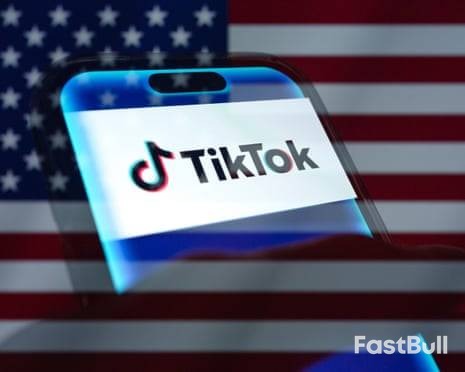
TikTok has finalized a deal to create a new U.S. entity, ending a long-running legal and political battle that threatened to ban the popular video app in the United States. The company announced the agreement on Thursday, marking a new chapter for its American operations.
Under the new structure, TikTok's Chinese parent company, ByteDance, will hold a minority stake in a new joint venture that is majority-owned by American investors. This arrangement allows the platform to continue operating in the U.S. and sidestep a potential ban.
The announcement concludes a five-year saga that began when Donald Trump first threatened to ban the platform during his initial term in office. TikTok's future in the U.S. became uncertain after Congress passed a law in 2024 requiring the app to find a U.S. buyer or face a ban.
After the Supreme Court upheld that law in January 2025, President Trump used an executive order on his first day back in office to postpone the ban. He continued to delay its enforcement as negotiations between the company, potential U.S. partners, and the government progressed. A subsequent executive order in September outlined a plan for U.S. investors to take majority control, paving the way for the current deal.
The new joint venture is designed to place control of TikTok's U.S. operations firmly in American hands, addressing long-standing national security concerns.
Ownership and Key Investors
The deal establishes a new U.S. entity with the following ownership structure:
• American Investors (80.1%): A consortium of U.S. and allied partners holds a controlling majority. This group includes Oracle, private-equity firm Silver Lake, and Abu Dhabi's MGX, with each holding a 15% stake. The investment firm of Dell Technologies founder Michael Dell is also an investor.
• ByteDance (19.9%): TikTok's Chinese parent company retains a minority share.
Leadership and Governance
The new venture will be led by Adam Presser, who previously served as TikTok's general manager and global head of operations.
Oversight will be provided by a seven-member board of directors with a majority of American members. The board includes executives from Oracle, Silver Lake, and MGX, as well as a senior advisor to TPG and TikTok's chief executive, Shou Zi Chew.
The agreement introduces a series of defined safeguards intended to protect U.S. user data and prevent foreign influence.
Data Protection and Algorithm Control
The new U.S. entity has committed to comprehensive data protections, algorithm security, and content moderation assurances. A key component of the deal involves retraining and testing the content recommendation algorithm based specifically on U.S. user data.
Oracle will play a critical role in overseeing the algorithm to ensure the content feed is free from external manipulation. However, China will retain control of the core algorithm, with its cybersecurity regulator having previously stated that any U.S. deal would involve licensing and other intellectual property rights.
Official Approvals and Reactions
A White House official confirmed that both the U.S. and Chinese governments have signed off on the deal. While a spokesperson for the Chinese embassy told Politico they had "no new information to share," President Trump celebrated the outcome.
In a social media post, Trump thanked Chinese President Xi Jinping "for working with us and, ultimately, approving the Deal." He added, "I am so happy to have helped in saving TikTok! It will now be owned by a group of Great American Patriots and Investors."
The core issue driving the legislative and executive actions was the fear among U.S. officials that the Chinese government could leverage TikTok to harvest data from American users. Although TikTok has repeatedly denied these claims, the threat of a ban caused widespread backlash from the many U.S. influencers and creators who depend on the app for their livelihoods.
California Governor Gavin Newsom has launched an official review into TikTok's content moderation practices, accusing the platform of suppressing posts critical of President Donald Trump. The move escalates scrutiny of the social media giant just after its Chinese parent company, ByteDance, finalized a deal to secure its U.S. operations.

On Monday, Newsom's office announced that it had received reports and independently verified instances of content critical of President Trump being suppressed on TikTok. The governor has called on the California Department of Justice to investigate whether this conduct violates state law.
The accusations directly link the alleged censorship to the platform's recent sale to what Newsom's office described as a "Trump-aligned business group." This development has sparked concerns over the platform's editorial independence and its role in political discourse.
In response, a representative for TikTok's new U.S. joint venture dismissed the allegations as inaccurate. The company attributed the performance issues to a data center power outage that caused a "cascading systems failure."
According to a statement released before Newsom's announcement, the company acknowledged that users might experience bugs, slow load times, or failed posts. The representative stressed that the problems were purely technical and that the network has since been recovered, though a full resolution is still underway.
The official investigation comes amid a wave of user complaints about abnormalities on the platform. Several users reported that their posts were being censored, adding weight to the governor's concerns.
• Steve Vladeck, a professor at Georgetown University's School of Law, reported that a video he made about federal immigration powers was placed "under review."
• Casey Fiesler, an expert in technology ethics at the University of Colorado, noted a "significant lack of trust" in TikTok's new ownership. She told CNN that she experienced problems uploading videos related to an immigration crackdown in Minneapolis.
The controversy follows a landmark deal designed to resolve longstanding U.S. government concerns over national security and data privacy. The agreement established TikTok USDS Joint Venture LLC to manage the app's U.S. user data, algorithms, and security.
The deal, praised by Trump, was seen as a major milestone for ByteDance after years of regulatory battles under both the Trump and Biden administrations. The new ownership structure is as follows:
• American and global investors: Hold an 80.1% majority stake.
• ByteDance: Retains a 19.9% stake.
• Managing Investors: Cloud company Oracle, private equity firm Silver Lake, and Abu Dhabi-based investment firm MGX each hold a 15% stake.
A White House official confirmed that both the U.S. and Chinese governments had approved the arrangement. President Trump, who has over 16 million followers on his personal account, previously credited TikTok with helping him win the 2024 election.
Micron Technology on Tuesday committed approximately $24 billion to expand its wafer manufacturing operations in Singapore, as the American memory chipmaker moves to expand production amid global shortages.
In a press release, Micron said the investment would add 700,000 square feet of cleanroom space —highly-controlled manufacturing areas designed to prevent contamination — at an existing NAND manufacturing complex.
Production of NAND, a type of memory chip widely used in personal computers, servers and smartphones, is expected to start in the second half of 2028.
Demand for NAND technology has been skyrocketing in recent months, driven by the rapid expansion of artificial intelligence and data-centric applications.
In response to the shortage, Micron and its memory competitors, including Samsung Electronics and SK Hynix, have been increasing output.
Micron operates manufacturing facilities in Singapore as part of its broader Asian production network, which also includes sites in China, Taiwan, Japan, and Malaysia.
The company is also building a $7 billion advanced packaging plant in Singapore to produce high-bandwidth memory, a type of dynamic random-access memory, or DRAM, used in AI applications.
The pivot by Micron and other memory makers to prioritize high-bandwidth memory production has contributed to shortages of other types of memory chips. These shortfalls are expected to last through late 2027, according to some estimates.
Micron said its high-bandwidth memory facility, also located in the same Singapore manufacturing complex, is on track to contribute meaningfully to its HBM supply in 2027.
"As HBM becomes a part of Micron's Singapore manufacturing footprint, the company expects opportunities for synergies between NAND and DRAM production," the company said in its release.
Micron added that it plans to manage the pace of capacity expansion at the new facility based on market demand.
The newly announced NAND expansion is set to generate about 1,600 jobs in fab engineering and operations, incorporating AI, robotics, and smart manufacturing. That follows the creation of about 1,400 new positions tied to the high-bandwidth memory plant.
"Micron's latest expansion will strengthen our semiconductor ecosystem and further anchor Singapore as a critical node in the global semiconductor supply chain," said Jermaine Loy, managing director of Singapore's Economic Development Board, which encourages local semiconductor manufacturing through various incentives and policies.
Shares of Micron rose over 3% in overnight trading on Robinhood following the announcement
India and the European Union have concluded a long-awaited Free Trade Agreement, finalizing negotiations that first began in 2007. The pact, described as the "Mother of all deals," creates an economic bloc that accounts for 25% of the world's GDP and a third of all international trade.
Speaking at the India Energy Week 2026 opening ceremony, Prime Minister Narendra Modi announced the historic agreement, highlighting its potential to unlock significant opportunities for citizens in both India and Europe.
Modi projected that the deal would deliver a substantial boost to India's manufacturing sector and fuel expansion in its services industry. He emphasized that the Free Trade Agreement is set to enhance the confidence of investors and businesses looking to commit capital to India.
The Prime Minister also noted that the agreement aligns with and complements India's existing trade pacts with the United Kingdom and the European Free Trade Association (EFTA). "This agreement empowers our shared commitment towards democracy and the rule of law," Modi stated.
Trade between India and the EU reached $136.5 billion in the fiscal year ending March 2025. Combined, the two partners represent nearly 20% of global trade and about a quarter of the world's population.
Alongside the economic agreement, India and the EU also formalized a Security and Defence Partnership. India’s Defence Minister, Rajnath Singh, and the chiefs of the three military services met with a high-level EU delegation at the Defence Ministry. The EU group was led by Kaja Kallas, the EU High Representative for Foreign Affairs and Security Policy.
The formal signing of this partnership is scheduled to take place during the 16th India-EU Summit in New Delhi. The summit will be co-chaired by Prime Minister Modi, European Council President Antonio Costa, and European Commission President Ursula von der Leyen, where leaders are expected to adopt a comprehensive joint strategic agenda.
This series of agreements highlights a broader global effort to build alliances that can act as a hedge against the United States. President Donald Trump's actions, including his bid to acquire Greenland and tariff threats against European nations, have tested long-standing Western alliances.
President Trump has already imposed a 50% tariff on goods from India, and an attempted India-U.S. trade deal collapsed last year following a breakdown in communication between the two governments. The new India-EU pact arrives just days after the EU secured a similar deal with the Mercosur bloc and follows India's own recent trade agreements with Britain, New Zealand, and Oman.
A growing number of German officials are calling for the Bundesbank to repatriate the country's vast gold reserves stored in the United States, citing escalating geopolitical risks. Germany holds 3,352 tonnes of gold, the second-largest reserve in the world, with a significant portion remaining in foreign vaults.
Approximately 1,200 tonnes, valued at around €164 billion ($194 billion), are currently held at the Federal Reserve Bank of New York. This arrangement, a relic of the Cold War designed to keep the assets safe from the Soviet Union, is now facing intense scrutiny.
The primary driver behind the repatriation calls is a shifting global landscape. Emanuel Mönch, a prominent German economist and former head of research at the Bundesbank, has labeled the current storage arrangement in the U.S. as "too risky."
"Given the current geopolitical situation, it seems risky to store so much gold in the U.S.," Mönch stated. "In the interest of greater strategic independence from the U.S., the Bundesbank would therefore be well-advised to consider repatriating the gold."
This sentiment is fueled by the United States' increasing use of economic pressure and the dollar as foreign policy tools. Michael Jäger, head of the European Taxpayers Association (TAE), pointed to former President Trump's unpredictability as a key concern.
"Our gold is no longer safe in the Fed's vaults," Jäger warned, suggesting the risk of the Bundesbank losing access to its reserves is rising.
Echoing these concerns, EU Parliament member Markus Ferber has called for regular, in-person audits of Germany's gold by Bundesbank officials. "The Bundesbank's policy for gold reserves has to reflect the new geopolitical realities," he explained.
While calls for repatriation have traditionally come from politically conservative figures, the idea is gaining broader support. Katharina Beck, the Green Party's finance spokesperson, endorsed the move, describing the country's gold reserves as an "important anchor of stability and trust" that "must not become pawns in geopolitical disputes."
Despite this growing pressure, the official stance remains unchanged for now. A spokesperson for Friedrich Merz's coalition government recently stated that moving gold out of the U.S. is not currently being considered. The Bundesbank has also made no official statements on the matter, publicly maintaining its trust in the Federal Reserve.
Not everyone agrees that bringing the gold home is the right decision. Clemens Fuest, President of the Institute for Economic Research (Ifo), advised against repatriation, warning it could have unintended consequences and would "only pour oil on the fire of the current situation."
Frauke Heiligenstadt, a financial policy spokesperson for the Social Democrats, acknowledged the concerns but argued against a rush to action. She noted that Germany's gold reserves are well diversified, with about half already stored in Frankfurt, which "guaranteed" the country's ability to act. Heiligenstadt added that keeping some gold in New York remains logical due to the close financial ties between Germany, Europe, and the U.S.
The debate in Germany is not happening in a vacuum. It is part of a wider global trend of de-dollarization and asset repatriation as countries seek to reduce their dependence on the U.S. financial system. This movement gained momentum after the U.S. and its allies froze nearly half of Russia's $650 billion in gold and foreign exchange reserves.
A 2023 World Gold Council survey revealed the impact of these sanctions.
• A "substantial share" of central banks expressed concern about potential sanctions.
• 68% of banks surveyed said they plan to keep their gold reserves within their own borders, up from 50% in 2020.
One central bank official anonymously told Reuters they had moved their gold from London back to their own country "to hold as a safe haven asset and to keep it safe."
Numerous countries have already taken action. India repatriated 100 tonnes of its gold in 2024. This follows earlier moves by Poland, which brought home 100 tons in 2019, as well as repatriation programs initiated by Hungary, Romania, Australia, the Netherlands, and Belgium. Germany itself completed a project in 2017 to return roughly half of its total reserves to its own vaults.
White Label
Data API
Web Plug-ins
Poster Maker
Affiliate Program
The risk of loss in trading financial instruments such as stocks, FX, commodities, futures, bonds, ETFs and crypto can be substantial. You may sustain a total loss of the funds that you deposit with your broker. Therefore, you should carefully consider whether such trading is suitable for you in light of your circumstances and financial resources.
No decision to invest should be made without thoroughly conducting due diligence by yourself or consulting with your financial advisors. Our web content might not suit you since we don't know your financial conditions and investment needs. Our financial information might have latency or contain inaccuracy, so you should be fully responsible for any of your trading and investment decisions. The company will not be responsible for your capital loss.
Without getting permission from the website, you are not allowed to copy the website's graphics, texts, or trademarks. Intellectual property rights in the content or data incorporated into this website belong to its providers and exchange merchants.
Not Logged In
Log in to access more features
Log In
Sign Up