Markets
News
Analysis
User
24/7
Economic Calendar
Education
Data
- Names
- Latest
- Prev



Signal Accounts for Members
All Signal Accounts
All Contests


The Philadelphia Gold And Silver Index Closed Down 0.40% At 380.81 Points. The NYSE Arca Gold Miners Index Fell 1.62% To 2699.52 Points, After A Sharp Rise Followed By A Fall In Early Trading. The Materials Index Closed Up 0.58%, And The Metals & Mining Index Closed Up 1.44%
On Monday (February 2nd) In Late New York Trading, Spot Silver Fell 6.73% To $79.4438 Per Ounce. Comex Silver Futures Rose 1.56% To $79.760 Per Ounce. Comex Copper Futures Fell 1.49% To $5.8345 Per Pound, Having Fallen As Low As $5.5640 At 14:40 Beijing Time. Spot Platinum Fell 2.93%, While Spot Palladium Rose 0.74%
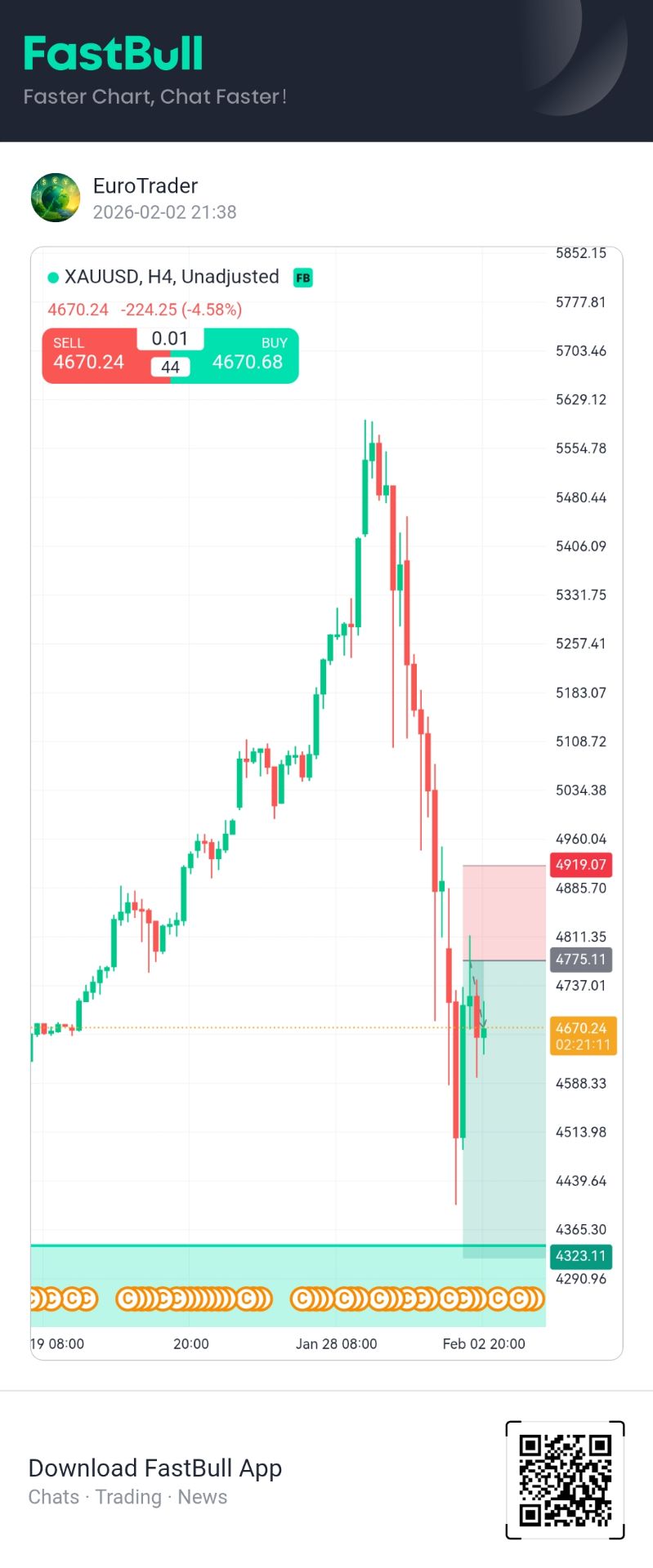
On Monday (February 2nd) In Late New York Trading, Spot Gold Fell 4.54% To $4671.58 Per Ounce, Remaining In A Downward Trend Throughout The Day. At 14:38 Beijing Time, It Had Fallen To $4402.95. On The Daily Chart, Gold Prices Have Fallen For Three Consecutive Trading Days, Approaching The December 31st Low Of $4319.37, And Briefly Breaking Below The 50-day Moving Average And Approaching The 100-day Moving Average (currently At $4483.43 And $4228.16 Respectively). Comex Gold Futures Fell 0.90% To $4702.60 Per Ounce, Also Briefly Falling To $4423.20 At 14:38
US President Trump, Speaking About The Justice Department's Investigation Into The Federal Reserve, Declared: "We'll See How It Goes."
U.S. Treasury Secretary Bessant: Federal Reserve Chairman Nominee Warsh Will Have A Great Start
[Airline ETFs Rise 3.5%, Leading US Sector ETFs; S&P Energy Sector Falls About 2%] On Monday (February 2), The Global Airline ETF Rose 3.51%, Regional Bank ETFs And Banking ETFs Rose Up To 1.79%, Semiconductor ETFs Rose 1.12%, Technology ETFs Rose 0.96%, And Energy ETFs Fell 1.96%. Among The 11 Sectors Of The S&P 500, Consumer Staples Rose 1.58%, Industrials Rose 1.26%, Financials Rose 1.02%, Information Technology/technology Rose 0.46%, And Energy Fell 1.98%

China, Mainland NBS Non-manufacturing PMI (Jan)A:--
F: --
P: --
South Korea Trade Balance Prelim (Jan)A:--
F: --
Japan Manufacturing PMI Final (Jan)A:--
F: --
P: --
South Korea IHS Markit Manufacturing PMI (SA) (Jan)A:--
F: --
P: --
Indonesia IHS Markit Manufacturing PMI (Jan)A:--
F: --
P: --
China, Mainland Caixin Manufacturing PMI (SA) (Jan)A:--
F: --
P: --
Indonesia Trade Balance (Dec)A:--
F: --
P: --
Indonesia Inflation Rate YoY (Jan)A:--
F: --
P: --
Indonesia Core Inflation YoY (Jan)A:--
F: --
P: --
India HSBC Manufacturing PMI Final (Jan)A:--
F: --
P: --
Australia Commodity Price YoY (Jan)A:--
F: --
P: --
Russia IHS Markit Manufacturing PMI (Jan)A:--
F: --
P: --
Turkey Manufacturing PMI (Jan)A:--
F: --
P: --
U.K. Nationwide House Price Index MoM (Jan)A:--
F: --
P: --
U.K. Nationwide House Price Index YoY (Jan)A:--
F: --
P: --
Germany Actual Retail Sales MoM (Dec)A:--
F: --
Italy Manufacturing PMI (SA) (Jan)A:--
F: --
P: --
South Africa Manufacturing PMI (Jan)A:--
F: --
P: --
Euro Zone Manufacturing PMI Final (Jan)A:--
F: --
P: --
U.K. Manufacturing PMI Final (Jan)A:--
F: --
P: --
Turkey Trade Balance (Jan)A:--
F: --
P: --
Brazil IHS Markit Manufacturing PMI (Jan)A:--
F: --
P: --
Canada National Economic Confidence IndexA:--
F: --
P: --
Canada Manufacturing PMI (SA) (Jan)A:--
F: --
P: --
U.S. IHS Markit Manufacturing PMI Final (Jan)A:--
F: --
P: --
U.S. ISM Output Index (Jan)A:--
F: --
P: --
U.S. ISM Inventories Index (Jan)A:--
F: --
P: --
U.S. ISM Manufacturing Employment Index (Jan)A:--
F: --
P: --
U.S. ISM Manufacturing New Orders Index (Jan)A:--
F: --
P: --
U.S. ISM Manufacturing PMI (Jan)A:--
F: --
P: --
South Korea CPI YoY (Jan)--
F: --
P: --
Japan Monetary Base YoY (SA) (Jan)--
F: --
P: --
Australia Building Approval Total YoY (Dec)--
F: --
P: --
Australia Building Permits MoM (SA) (Dec)--
F: --
P: --
Australia Building Permits YoY (SA) (Dec)--
F: --
P: --
Australia Private Building Permits MoM (SA) (Dec)--
F: --
P: --
Australia Overnight (Borrowing) Key Rate--
F: --
P: --
RBA Rate Statement
Japan 10-Year Note Auction Yield--
F: --
P: --
Saudi Arabia IHS Markit Composite PMI (Jan)--
F: --
P: --
RBA Press Conference
Turkey PPI YoY (Jan)--
F: --
P: --
Turkey CPI YoY (Jan)--
F: --
P: --
Turkey CPI YoY (Excl. Energy, Food, Beverage, Tobacco & Gold) (Jan)--
F: --
P: --
U.S. Weekly Redbook Index YoY--
F: --
P: --
U.S. JOLTS Job Openings (SA) (Dec)--
F: --
P: --
Mexico Manufacturing PMI (Jan)--
F: --
P: --
U.S. API Weekly Refined Oil Stocks--
F: --
P: --
U.S. API Weekly Gasoline Stocks--
F: --
P: --
U.S. API Weekly Cushing Crude Oil Stocks--
F: --
P: --
U.S. API Weekly Crude Oil Stocks--
F: --
P: --
Japan IHS Markit Services PMI (Jan)--
F: --
P: --
Japan IHS Markit Composite PMI (Jan)--
F: --
P: --
China, Mainland Caixin Services PMI (Jan)--
F: --
P: --
China, Mainland Caixin Composite PMI (Jan)--
F: --
P: --
India HSBC Services PMI Final (Jan)--
F: --
P: --
India IHS Markit Composite PMI (Jan)--
F: --
P: --
Russia IHS Markit Services PMI (Jan)--
F: --
P: --
South Africa IHS Markit Composite PMI (SA) (Jan)--
F: --
P: --
Italy Services PMI (SA) (Jan)--
F: --
P: --
Italy Composite PMI (Jan)--
F: --
P: --


No matching data
Latest Views
Latest Views
Trending Topics
Top Columnists
Latest Update
White Label
Data API
Web Plug-ins
Affiliate Program
View All

No data
Despite the dramatic sell-off, some market watchers aren't convinced the worst is over.
France's government has successfully passed its 2026 budget, bringing a period of intense political instability that had rattled investor confidence to a close. Prime Minister Sebastien Lecornu secured the fiscal plan after his government survived two no-confidence votes on Monday, ushering in a chapter of relative calm.
The minority government faced two critical challenges in the National Assembly. A censure motion from far-left lawmakers garnered 260 votes but failed to reach the 289 required to oust the government and reject the budget. A separate motion initiated by the far right also fell short, securing just 135 votes.
Lecornu and his government prevailed by making key concessions that convinced center-left Socialist lawmakers to abstain during a series of recent no-confidence votes. This strategy allowed him to avoid the fate of his predecessors, Michel Barnier and Francois Bayrou, who were both forced to resign over disagreements on austerity measures.
The country's political landscape has been fragile since snap elections in 2024 produced a fractured parliament, with opposing blocs consistently working to unseat any prime minister appointed by President Emmanuel Macron.
The newly adopted budget reflects the government's need for a political compromise. It includes smaller spending cuts and tax increases than originally proposed, which means the deficit for the year is now expected to be 5%, a larger figure than initially planned.
With the budget now adopted, the country is expected to enter a period of greater political stability. Lawmakers will have fewer opportunities to trigger no-confidence votes, and opposition parties are beginning to shift their attention toward municipal elections in March and the run-up to the 2027 presidential race.
The resolution of France's parliamentary turmoil has been a welcome development for financial markets. The country's mix of political risk and fiscal challenges—including the largest deficit in the euro area—had previously triggered sell-offs in French assets and driven up sovereign borrowing costs.
The prospect of a budget deal began buoying French bond markets in January. Last week, the premium on France's 10-year debt over equivalent German bonds fell to around 56 basis points, the lowest since Macron first called the snap elections. By Monday's market close, the gap stood at 58 basis points.
Despite the immediate relief, France faces a long-term challenge in repairing its public finances. The nation's debt burden has swelled to over 117% of economic output, a significant increase from below 100% before the pandemic-era spending programs.
There are some tentative positive signs. Recent data indicates the deficit in the central state's accounts narrowed last year to its smallest level since the COVID-19 pandemic. Still, difficult budget decisions lie ahead. The current government has committed to reducing the national deficit to within the European Union's 3% limit by 2029.
Atlanta Federal Reserve President Raphael Bostic outlined a complex landscape for the U.S. central bank on Monday, highlighting both the formidable challenge facing the next Fed chair and persistent inflation concerns.
Speaking at the Rotary Club of Atlanta, Bostic commented on Kevin Warsh, President Donald Trump's nominee to lead the Federal Reserve, describing the role as a "tall task" and a "very large job."
Bostic emphasized that steering the Federal Reserve requires more than just economic expertise; it demands a unique ability to build consensus among monetary policy committee members. He noted this process is a "huge undertaking" that does not happen overnight.
According to Bostic, a successful Fed chair must:
• Build strong relationships with committee members.
• Earn their trust to effectively guide policy.
• Demonstrate wisdom to convince them to follow a specific direction.
"If you want to have policy enacted or go in a direction that you want, you've got to convince them to go along," Bostic said, wishing Warsh well in the new role.
Turning to the economic outlook, Bostic characterized the U.S. economy as resilient, even before factoring in the effects of tax legislation and deregulation. He projected strong economic performance through the first half of 2026.
However, he warned that inflation remains a significant source of concern and is expected to stay high. "It's premature to say inflation job is done," Bostic stated, adding that the economy is still absorbing the inflationary effects of tariffs.
Despite the inflation warnings, Bostic offered a projection for stabilization, suggesting the economy would find its equilibrium by the middle of the year. He also noted a consensus view that the labor market is not expected to worsen.
Oil prices fell sharply on Monday as signs of easing tensions between the United States and Iran prompted traders to take profits after a recent surge. The diplomatic shift unwound the geopolitical risk premium that had pushed crude to near six-month highs.
By 13:30 ET, Brent oil futures for April delivery had dropped 4.7% to $66.10 per barrel. Meanwhile, U.S. West Texas Intermediate (WTI) crude saw a steeper decline, falling 5.1% to $61.87 per barrel. Both benchmarks had posted their largest monthly gains since 2022 in January.
The primary trigger for the sell-off was a statement from U.S. President Donald Trump over the weekend, in which he said Iran was "seriously talking" with his administration. This came shortly after Iranian officials confirmed they were arranging for negotiations with the U.S.
These comments marked a significant de-escalation after a period of heightened concern. Trump had previously threatened military action against Iran and deployed a naval fleet to the Middle East, stoking fears of a conflict that could disrupt regional oil production.
David Morrison, a senior market analyst at Trade Nation, noted the sharp turnaround. "The trigger for the sharp reversal were comments from President Trump suggesting an easing of tensions with Iran. This reduced fears of an immediate supply shock," he said. "Front-month WTI dropped back below $62 per barrel this morning, having traded at a high of $66.30 on Thursday."
Adding another layer to market dynamics, President Trump announced a new trade agreement with India. On his Truth Social platform, Trump stated that Indian Prime Minister Narendra Modi had agreed to stop purchasing Russian oil.
India's oil imports from Russia have been a point of contention in trade talks with the U.S. According to Trump, India will now begin buying "much more" oil from the United States and "potentially" Venezuela.
This development coincides with rising output from the South American nation. Citing shipping data, Reuters reported that Venezuela's oil exports increased sharply in January as the U.S. has moved to support its oil industry and encourage investment. Morrison added that "additional supply is also entering the market, with Venezuelan crude adding to available barrels."
The Organization of Petroleum Exporting Countries and its allies (OPEC+) confirmed on Sunday that it would leave its oil production quota for March unchanged.
The decision reaffirms the group's policy to pause further output hikes, a move first announced in November. The cartel had previously increased production by approximately 2.9 million barrels per day through 2025. OPEC+ offered no new forward guidance, reflecting uncertainty in the global economy and geopolitical landscape.
The recent price drop follows a strong rally driven by several factors, including:
• Fears of U.S. military action against Iran.
• Supply disruptions from extreme cold weather in North America.
• A major production outage in Kazakhstan.

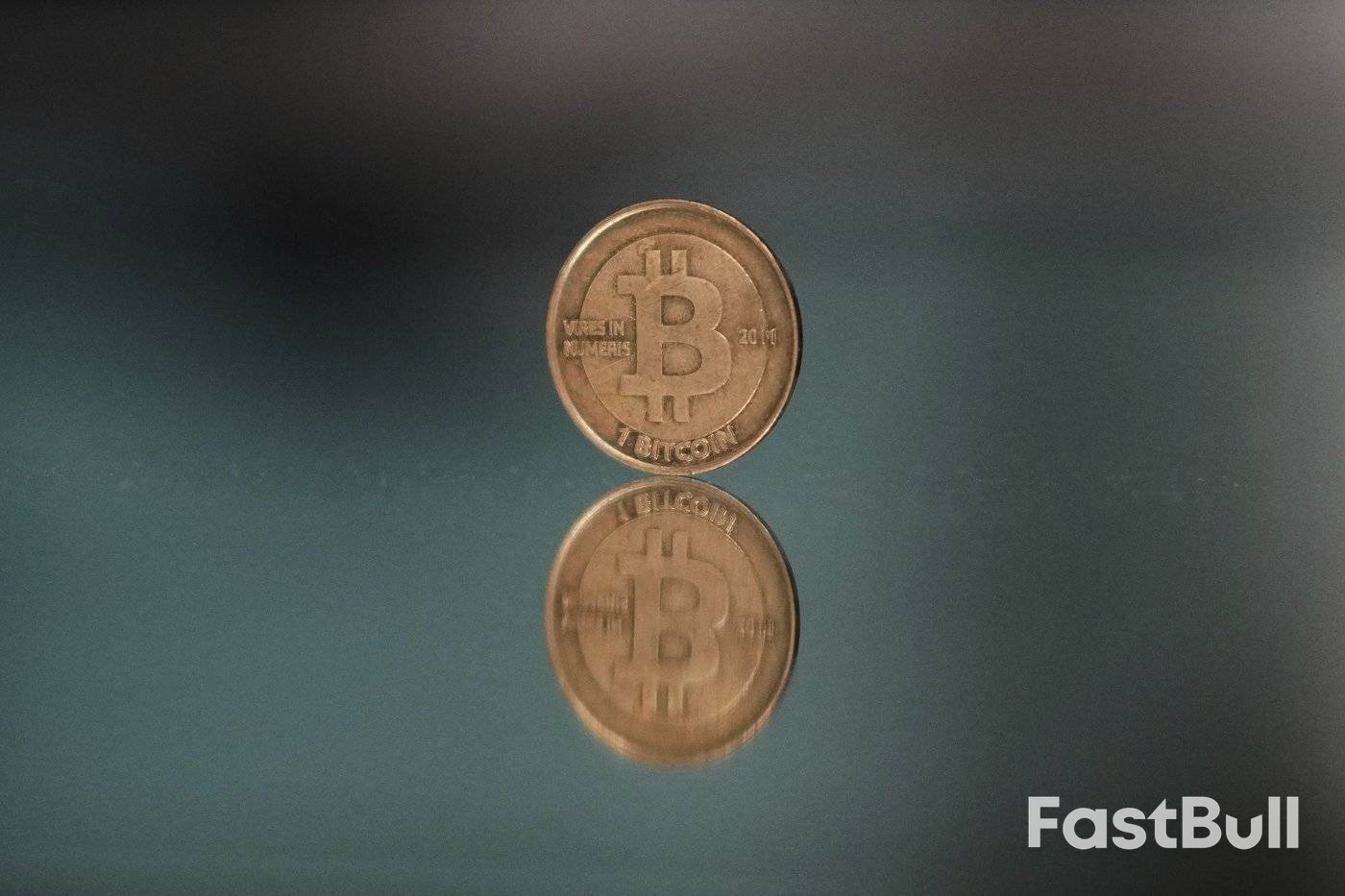
Bitcoin's price fell below the $75,000 mark on Monday, retreating to levels last seen before the re-election of U.S. President Donald Trump. The drop comes as investors pivot away from riskier assets and crucial U.S. cryptocurrency legislation faces delays in Congress.
Digital asset markets had experienced a significant surge following Trump's election victory in November 2024, driven by the perception that his administration would be highly supportive of the crypto sector. Just one month after the election, Bitcoin crossed the $100,000 threshold for the first time—a milestone publicly celebrated by the president.
However, the asset’s trajectory has been volatile. After a sharp decline in April below $75,000, triggered by the announcement of wide-ranging U.S. tariffs that unsettled global markets, Bitcoin resumed its climb. It eventually reached a record high of $126,251.31 in October before beginning its latest pullback.
A primary driver behind the recent downturn is persistent regulatory uncertainty in the United States. While Congress successfully passed a law in July to regulate stablecoins, a more comprehensive crypto bill known as the Clarity Act has stalled in the Senate.
This legislative delay is creating a significant challenge for the market. "Expectations for progress on the Clarity Act have not been met," explained James Butterfill, a researcher at digital asset manager CoinShares. He described the ongoing uncertainty as a major "headwind" on cryptocurrency prices.
Bitcoin's decline accelerated after President Trump announced on Friday his nomination of former U.S. Federal Reserve governor Kevin Warsh to lead the central bank.
Market observers view Warsh as a strong defender of the Fed's independence. His nomination helped reassure traditional financial markets, leading investors to sell safe-haven assets like gold and silver, which saw their prices plunge. At the same time, many investors also liquidated their cryptocurrency holdings and other risky assets to raise cash.
President Trump's close connections to the cryptocurrency industry have drawn accusations of potential conflicts of interest since his return to the White House. He has actively promoted his own crypto-related ventures while in office.
According to recent estimates from Bloomberg, the Trump family's fortune increased by $1.4 billion in the last year from their digital asset holdings alone.
Further intertwining his presidency with the sector, the 79-year-old billionaire launched his own cryptocurrency, $TRUMP, just hours before his inauguration in January 2025. After an initial surge, the coin has since lost approximately 90% of its value from its peak.
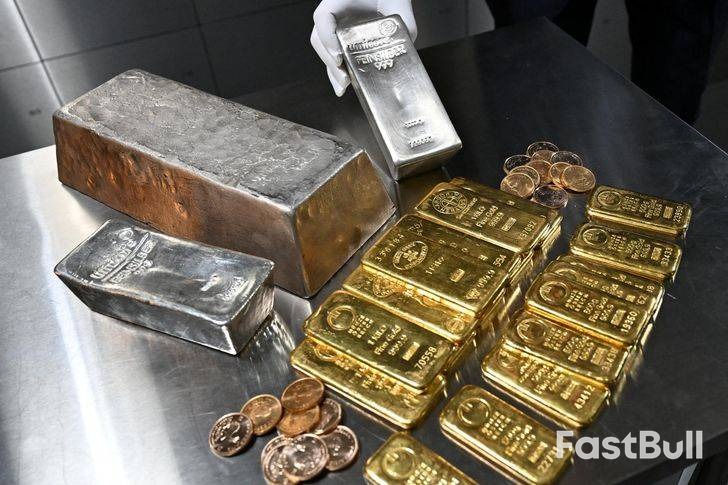
Precious metals prices extended their steep decline on Monday, with both gold and silver tumbling as new margin requirements from the CME Group amplified a selloff that began last week following the nomination of Kevin Warsh as the next Federal Reserve chair.

The rout in the precious metals market deepened during Monday's session. By 1:32 p.m. ET, spot gold was down 4.8% to $4,630.59 an ounce after having fallen nearly 10% earlier in the day. U.S. gold futures for April delivery closed 1.9% lower at $4,652.60 an ounce.
This continues a dramatic downturn for bullion, which fell 9.8% on Friday. The metal has now lost approximately $900 from its January 29 record high of $5,594.82, wiping out most of its gains for the year.
Silver faced even greater pressure. Spot silver dropped 9.2% to $76.81 an ounce, following an earlier slide of as much as 15%. Since hitting a record high of $121.64 last week, silver has fallen by about 37%.
Analysts pointed to a combination of technical and fundamental factors fueling the price collapse.
"Gold and silver are on a rollercoaster ride and when you get to the top of the 'lift hill', gravity takes over and you are heading down," said SP Angel analyst John Meyer.
Key drivers include:
• CME Margin Hikes: On Friday, CME Group announced it would raise margin requirements on precious metal futures. The changes, set to take effect after Monday's close, increased the cost of holding futures positions and prompted traders to liquidate.
• Federal Reserve Speculation: Markets are reacting to President Donald Trump's nomination of former Fed official Kevin Warsh to succeed Jerome Powell as Chair in May. Investors are widely anticipating a policy shift toward rate cuts combined with a tighter balance-sheet policy.
• Strengthening Dollar: The dollar index continued its ascent, reaching a high for more than a week. A stronger dollar makes bullion more expensive for buyers holding other currencies, dampening demand.
Despite the sharp price drops, some analysts advised against interpreting the selloff as the beginning of a sustained bear market.
"The conditions do not appear primed for a sustained reversal in gold prices," wrote Michael Hsueh, a precious metals analyst at Deutsche Bank. In a note, he added that investors "remain highly bid for upside," suggesting that the market is bracing for continued volatility rather than a fundamental collapse in sentiment.
The recent price action has also likely forced out many speculative traders who entered the market during its recent rally. This washout could help cool excess speculation and stabilize the market.
"We saw some money coming out of ETFs and we suspect some brave hedge funds took it from there," Meyer commented.
The negative sentiment spread to other precious metals. Spot platinum fell by 3.3% to $2,091.38 per ounce, while palladium dropped 1.4% to $1,673.70.
White Label
Data API
Web Plug-ins
Poster Maker
Affiliate Program
The risk of loss in trading financial instruments such as stocks, FX, commodities, futures, bonds, ETFs and crypto can be substantial. You may sustain a total loss of the funds that you deposit with your broker. Therefore, you should carefully consider whether such trading is suitable for you in light of your circumstances and financial resources.
No decision to invest should be made without thoroughly conducting due diligence by yourself or consulting with your financial advisors. Our web content might not suit you since we don't know your financial conditions and investment needs. Our financial information might have latency or contain inaccuracy, so you should be fully responsible for any of your trading and investment decisions. The company will not be responsible for your capital loss.
Without getting permission from the website, you are not allowed to copy the website's graphics, texts, or trademarks. Intellectual property rights in the content or data incorporated into this website belong to its providers and exchange merchants.
Not Logged In
Log in to access more features
Log In
Sign Up