Markets
News
Analysis
User
24/7
Economic Calendar
Education
Data
- Names
- Latest
- Prev



Signal Accounts for Members
All Signal Accounts
All Contests


U.S. Weekly Total Rig CountA:--
F: --
P: --
U.S. Weekly Total Oil Rig CountA:--
F: --
P: --
Japanese Prime Minister Sanae Takaichi delivers a speech
Germany Ifo Business Expectations Index (SA) (Jan)A:--
F: --
P: --
Germany IFO Business Climate Index (SA) (Jan)A:--
F: --
P: --
Germany Ifo Current Business Situation Index (SA) (Jan)A:--
F: --
P: --
Brazil Current Account (Dec)A:--
F: --
P: --
Mexico Unemployment Rate (Not SA) (Dec)A:--
F: --
P: --
Canada National Economic Confidence IndexA:--
F: --
P: --
U.S. Non-Defense Capital Durable Goods Orders MoM (Excl. Aircraft) (Nov)A:--
F: --
U.S. Durable Goods Orders MoM (Excl. Defense) (SA) (Nov)A:--
F: --
U.S. Durable Goods Orders MoM (Excl.Transport) (Nov)A:--
F: --
P: --
U.S. Durable Goods Orders MoM (Nov)A:--
F: --
U.S. Chicago Fed National Activity Index (Nov)A:--
F: --
U.S. Dallas Fed New Orders Index (Jan)A:--
F: --
P: --
U.S. Dallas Fed General Business Activity Index (Jan)A:--
F: --
U.S. 2-Year Note Auction Avg. YieldA:--
F: --
P: --
U.K. BRC Shop Price Index YoY (Jan)A:--
F: --
P: --
China, Mainland Industrial Profit YoY (YTD) (Dec)A:--
F: --
P: --
Germany 2-Year Schatz Auction Avg. YieldA:--
F: --
P: --
Mexico Trade Balance (Dec)A:--
F: --
P: --
U.S. Weekly Redbook Index YoYA:--
F: --
P: --
U.S. S&P/CS 20-City Home Price Index YoY (Not SA) (Nov)A:--
F: --
P: --
U.S. S&P/CS 20-City Home Price Index MoM (SA) (Nov)A:--
F: --
U.S. FHFA House Price Index MoM (Nov)A:--
F: --
P: --
U.S. FHFA House Price Index (Nov)A:--
F: --
P: --
U.S. FHFA House Price Index YoY (Nov)A:--
F: --
U.S. S&P/CS 10-City Home Price Index YoY (Nov)A:--
F: --
P: --
U.S. S&P/CS 10-City Home Price Index MoM (Not SA) (Nov)A:--
F: --
P: --
U.S. S&P/CS 20-City Home Price Index (Not SA) (Nov)A:--
F: --
P: --
U.S. S&P/CS 20-City Home Price Index MoM (Not SA) (Nov)A:--
F: --
P: --
U.S. Richmond Fed Manufacturing Composite Index (Jan)--
F: --
P: --
U.S. Conference Board Present Situation Index (Jan)--
F: --
P: --
U.S. Conference Board Consumer Expectations Index (Jan)--
F: --
P: --
U.S. Richmond Fed Manufacturing Shipments Index (Jan)--
F: --
P: --
U.S. Richmond Fed Services Revenue Index (Jan)--
F: --
P: --
U.S. Conference Board Consumer Confidence Index (Jan)--
F: --
P: --
U.S. 5-Year Note Auction Avg. Yield--
F: --
P: --
U.S. API Weekly Refined Oil Stocks--
F: --
P: --
U.S. API Weekly Crude Oil Stocks--
F: --
P: --
U.S. API Weekly Gasoline Stocks--
F: --
P: --
U.S. API Weekly Cushing Crude Oil Stocks--
F: --
P: --
Australia RBA Trimmed Mean CPI YoY (Q4)--
F: --
P: --
Australia CPI YoY (Q4)--
F: --
P: --
Australia CPI QoQ (Q4)--
F: --
P: --
Germany GfK Consumer Confidence Index (SA) (Feb)--
F: --
P: --
Germany 10-Year Bund Auction Avg. Yield--
F: --
P: --
India Industrial Production Index YoY (Dec)--
F: --
P: --
India Manufacturing Output MoM (Dec)--
F: --
P: --
U.S. MBA Mortgage Application Activity Index WoW--
F: --
P: --
Canada Overnight Target Rate--
F: --
P: --
BOC Monetary Policy Report
U.S. EIA Weekly Crude Stocks Change--
F: --
P: --


No matching data
Latest Views
Latest Views
Trending Topics
Top Columnists
Latest Update
White Label
Data API
Web Plug-ins
Affiliate Program
View All

No data
Germany's economy minister advocates new global partners, citing US trade tensions and unsustainable growth.
Germany's Economy Minister, Katherina Reiche, has declared that the country must find new economic partners to navigate a changing global landscape. This call comes as long-standing relationships with allies like the United States have soured, leading to damaging import tariffs.
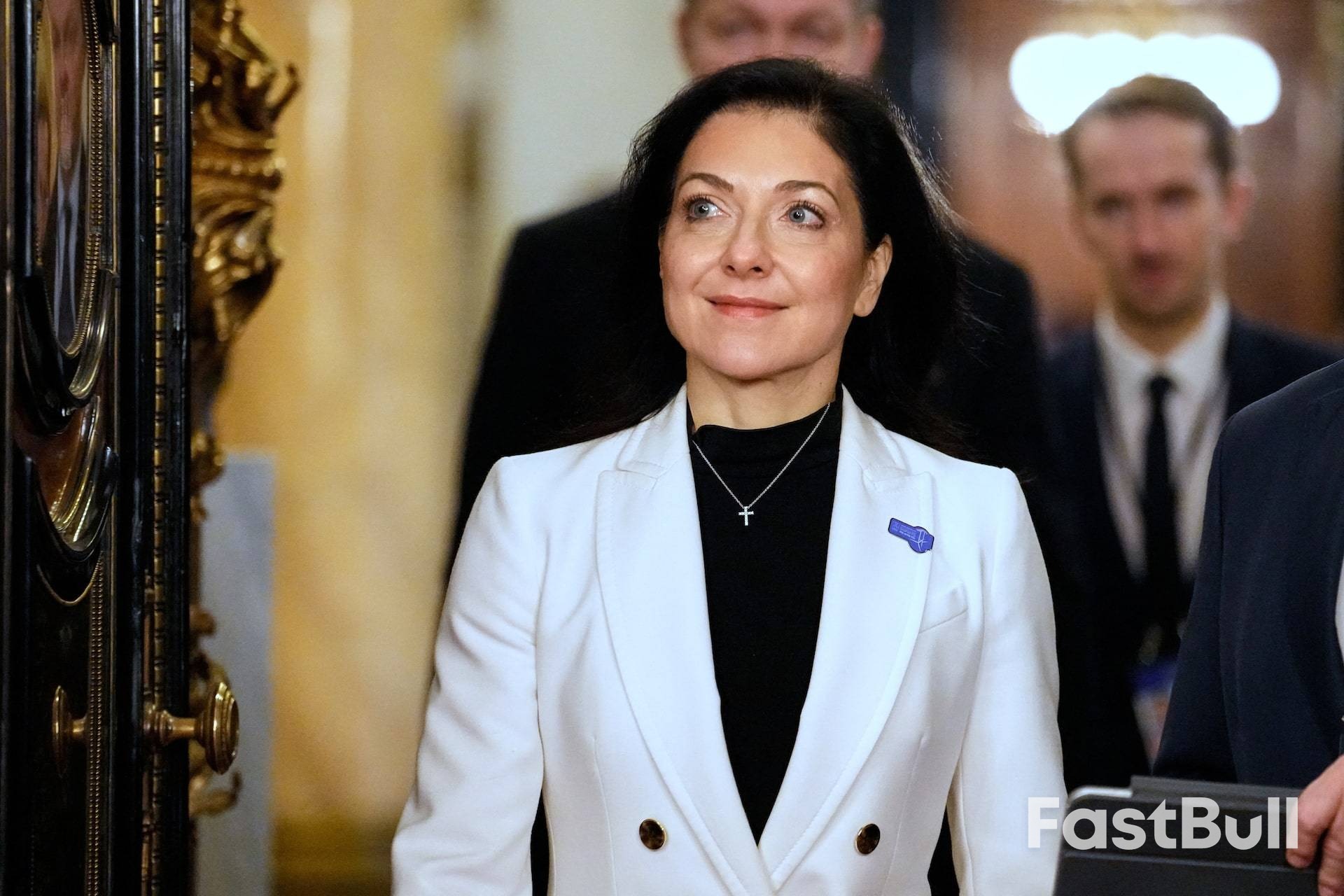
Speaking at the Handelsblatt energy summit, Reiche painted a picture of growing global instability. "The world has become more uncertain, and alliances that we have trusted and relied on are beginning to crumble," she stated.
Reiche clarified that this doesn't mean abandoning traditional partners entirely. Instead, Germany aims to "continue to work together, however challenging that may be," while actively "seeking new partners."
This strategic pivot is a direct response to the unpredictability of U.S. policy under President Donald Trump, whose administration imposed tariffs on key allies, including Canada and the European Union.
To counter this, Reiche identified several potential partners for Germany to pursue deeper economic ties with. The list includes regions and countries such as:
• South America
• India
• The Middle East
• Canada
• Australia
• Malaysia and other Asian nations
Forging new alliances is not just about geopolitics—it is also critical for the future of Germany's economy, the largest in Europe.
Reiche warned that the country's recent economic performance is not sustainable, as it relies heavily on debt-funded investments in defense and infrastructure.
"We are talking about 1%, 1.5%," she said, referring to GDP growth. "This is not sustainable."
The minister's concerns are reflected in official projections. The German government is expected to lower its 2026 GDP growth forecast from 1.3% to just 1.0%. Looking further ahead, GDP growth for 2027 is forecast at 1.3%.

Closer trade ties between India and the European Union will reinforce French carmaker Renault's decision to invest in both regions, chief growth officer Fabrice Cambolive said on Tuesday, hours before the two sides finalised a landmark free trade deal.
Under the deal, tariffs on cars imported from the EU will be slashed immediately to about 30-35% from as high as 110% and then reduced to 10% over time. While the immediate effect is still being assessed, it is expected to benefit European carmakers like Renault (RENA.PA), Volkswagen (VOWG.DE), Mercedes-Benz (MBGn.DE), opens new tab and BMW (BMWG.DE)over time.
"Strategically, it shows the direction and this capacity to work closer between Europe and India is for us, a good news, because we are a company which has bet on these two continents on a very high level," Cambolive told Reuters in the southern Indian city of Chennai.
"It will reinforce our willingness to invest on both continents because we are kind of Indian and European company," he added.
Apart from cars, tariffs on imported car parts from Europe will be abolished after five to 10 years, making it easier for companies to streamline supply chains as well.
Cambolive said while it is important to be able to export from Europe to India, it is also important to see what role India can play in the development of the European automotive industry in terms of parts and cars.
"India was perhaps not in the top one priority (for Renault) in the last four years, but will become because of this getting closer strategy, the strength of our people there, the potential of market growth, and of course, the FTA," he added.
On Monday, Renault relaunched its most popular nameplate in India, the Duster SUV, leaning on the world's third-largest car market for growth outside Europe.

Germany will step up efforts to fight left-wing militants after activists claimed responsibility for an attack on a power station in January that caused the longest electricity blackout in Berlin since World War Two, the interior minister said.
"Our security agencies will be significantly reinforced in the fight against left-wing extremism," the minister, Alexander Dobrindt, said on Tuesday.
He added that 1 million euros was on offer for information leading to the perpetrators of the January attack, which was suspected to have been carried out by a far-left activist organisation called the Volcano group. The incident left 45,000 households without power in freezing temperatures.
Germany's domestic intelligence agency will devote more staff to left-wing militancy, Dobrindt said, adding that new legislation is being prepared to expand the digital investigative powers of security authorities. The measures would cover automated data analysis, biometric facial recognition and the storage of IP addresses.
In its latest report, the domestic intelligence agency said left-wing motivated crime was up 38% in 2024 although the number of leftist violent crimes had fallen by 27%.
Dobrindt said the move, as well as a planned law to protect critical infrastructure, would not lead to a reduction in the fight against other forms of radicalism.
"We have had a lot of success with a right-wing extremism, Islamist terrorism .. But the focus has not been sufficiently on left-wing extremism and we see left-wing terrorism ... is making a strong comeback," he said.
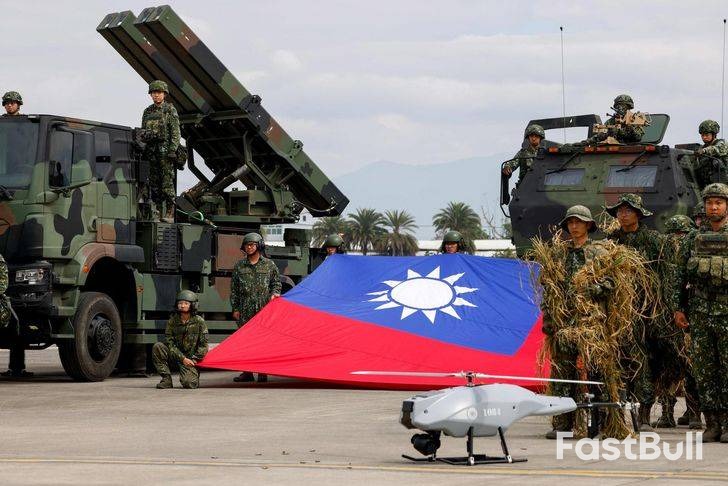
Japanese Prime Minister Sanae Takaichi has clarified Japan's stance on a potential conflict over Taiwan, arguing that Tokyo's failure to act would cause its security alliance with the United States to "collapse." Speaking on a nationally broadcast TV program late Monday, she stepped back from previous comments that hinted at a possible military response from Japan.

The clarification comes after an opposition party leader criticized Takaichi for inflaming tensions with China, which claims sovereignty over the democratically governed island.
Relations between Japan and China have deteriorated significantly in recent months. The downturn followed remarks Takaichi made in November, suggesting that a hypothetical Chinese attack on Taiwan could trigger a military response from Japan.
Beijing reacted swiftly with export curbs, flight cancellations, and harsh public criticism, repeatedly demanding that Takaichi retract her statement.
During the live television appearance, Prime Minister Takaichi sought to reframe her position.
"I want to make it absolutely clear that this is not about Japan going out and taking military action if China and the United States come into conflict (over Taiwan)," she stated, directly addressing her November comments.
Instead, she outlined a more limited, defensive role for Japan:
• Citizen Evacuation: "If something serious happens there, we would have to go to rescue the Japanese and American citizens in Taiwan. In that situation, there may be cases where we take joint action."
• Alliance Integrity: "And if the U.S. forces, acting jointly with us, come under attack and Japan does nothing and simply runs away, the Japan–U.S. alliance would collapse."
Takaichi concluded that any Japanese response would occur "strictly within the limits of the law... while making a comprehensive judgment based on what is happening on the ground."
Japan's pacifist constitution prohibits direct military action. However, it does permit the country to exercise the right of "collective self-defense"—defending an ally like the United States if an attack poses a "threat to its survival."
Takaichi, who has maintained high approval ratings since taking office in October 2025, has called a snap election for February 8. While clarifying her stance, she has not fully retracted her November remarks, insisting they are consistent with long-standing policy and that China has misrepresented them.
In response to her latest comments, China's Foreign Ministry on Tuesday urged Japan to "earnestly reflect and correct its mistakes, and to stop its manipulation and reckless actions on the Taiwan issue."
President Donald Trump adopted a more conciliatory tone with Minnesota's Democratic leaders on Monday, a stark reversal following intense public outcry over the second fatal shooting by federal agents in the state this month.
The change in approach follows the killing of Alex Pretti by federal agents on Saturday, an event that fueled doubts—even among some Republicans—about the Trump administration's aggressive nationwide crackdown on undocumented immigrants and its confrontation with protesters.

This pivot is the latest instance of Trump taking a hardline stance only to retreat later.
This pattern has been visible in recent foreign and trade policy decisions.
• Iran: Earlier this month, Trump threatened military action against Iran if it used lethal force against anti-government protests. After human rights groups reported thousands killed, Trump held off, citing assurances from Tehran that it would suspend hundreds of executions.
• European Tariffs: Last week, Trump announced new tariffs on European allies who opposed his plan for the U.S. to control Greenland. He abruptly canceled them after claiming the "framework" of an agreement had been reached, offering few details a day after his tariff threat triggered a major stock market decline.
On Monday, the Trump administration restructured its immigration operation in Minnesota. Trump, known for his combative style, adopted a warmer tone toward Governor Tim Walz after a phone call, stating they were now on a "similar wavelength."
This was a significant turnabout, as Trump had promised uncompromising mass deportations during his 2024 campaign and had personally attacked Walz and other Minnesota Democrats for opposing his policies.
The president announced he had sent border czar Tom Homan to oversee the situation. A source familiar with the matter stated that senior Border Patrol commander Greg Bovino and some agents were expected to depart Minneapolis as soon as Tuesday.
On social media, Trump declared that Walz "was happy that Tom Homan was going to Minnesota, and so am I!"
Minneapolis Mayor Jacob Frey later confirmed that some agents would be leaving the city after his own conversation with Trump. Frey suggested the president appeared to recognize that the current federal operations were unsustainable. A meeting between Homan and Frey was anticipated for Tuesday.
Trump's policy shift in Minnesota came after some Republicans began questioning the federal agents' tactics and the White House's official narrative. Top administration officials had labeled Pretti a domestic terrorist, a claim contradicted by video footage of the encounter.
The criticism from within his own party was notable:
• Chris Madel, a Minneapolis attorney and Republican gubernatorial candidate, ended his campaign in a surprise video, calling the immigration enforcement in the Twin Cities an "unmitigated disaster." He announced he no longer wanted to be a member of the party over the issue.
• Texas Governor Greg Abbott, a staunch supporter of Trump's immigration crackdown, said in a radio interview that the White House needed to "recalibrate" its Minnesota operations.
• Vermont's Republican Governor Phil Scott called for Trump to de-escalate, stating, "At best, these federal immigration operations are a complete failure... At worst, it's a deliberate federal intimidation and incitement of American citizens that's resulting in the murder of Americans."
The president's new approach toward Governor Walz marked a sharp reversal. Just a day earlier, Trump's deputy chief of staff, Stephen Miller, had accused Walz on social media of trying to "incite attacks on" U.S. Immigration and Customs Enforcement agents. The White House social media team had called the governor "a truly disturbed, unstable individual" and an "unhinged lunatic."
Miller also referred to Pretti, a nurse at a Veterans Affairs hospital, as a "would-be assassin." Homeland Security Secretary Kristi Noem labeled the nurse's actions an act of domestic terrorism.
The White House did not address whether Trump endorsed his aides' rhetoric or if an apology would be issued. "This incident remains under investigation," press secretary Karoline Leavitt told reporters. "And nobody here at the White House, including the president of the United States, wants to see Americans hurt or killed."
Trump's response to the deaths of two U.S. citizens in Minneapolis has been notably more subdued compared to his reactions to other political violence.
After conservative activist Charlie Kirk was assassinated in September, the president delivered an Oval Office address, calling it "a dark moment for America." In November, he gave a national address after an Afghan national shot two National Guard members in Washington, killing one, calling it "an act of evil."
However, the president has not yet directly addressed the nation regarding the deaths of Pretti and Renee Good, another U.S. citizen killed by federal agents in Minneapolis this month. So far, he has relied mainly on social media posts to communicate on the matter.
Even as Trump appeared to de-escalate, his chief spokesperson, Leavitt, continued to blame Walz and Minnesota Democrats for encouraging "left-wing agitators to stop, record, confront and obstruct federal officers."
"This is precisely what unfolded in Minneapolis on Saturday morning," Leavitt added.
China, the world's top soybean importer, is accelerating its purchases from Brazil just after fulfilling an initial round of import commitments to the United States made during a trade truce.
In the past week alone, traders familiar with the transactions report that Chinese importers have booked at least 25 cargoes of Brazilian soybeans. These shipments are primarily scheduled for loading in March and April, a move driven by favorable profit margins.
At the same time, sources indicate that China's state-owned enterprises have paused their purchasing of US soybeans. This shift highlights the powerful role that market economics play, even amid high-stakes political negotiations.
The fundamental reason for the pivot back to Brazil is simple: price.
"It makes complete sense to step up purchases of Brazilian soybeans after meeting the US pledge," said Meng Zhangyu, an analyst at Wuchan Zhongda Futures Co. "Brazilian supplies are much cheaper."
According to traders, US soybeans delivered to China are trading at a steep premium over comparable Brazilian cargoes for February shipments. This price difference means Chinese crushers would face significant financial losses if they were to process the more expensive American beans.
Soybeans have been a central battleground in the US-China trade dispute. After shunning American cargoes, Beijing agreed to resume purchases as part of a broader thaw in relations, buying approximately 12 million tons of US soybeans over the last three months.
Looking ahead, the US government has stated that China committed to buying at least 25 million tons of American soybeans annually through 2028. However, market realities may complicate this long-term target.
"As long as the agreed trade-deal framework reached between China and the US gets implemented smoothly, China should be able to carry out the agreement and continue to buy US soybeans," noted Hanver Li, chief analyst at Shanghai JC Intelligence Co.
Li added that Beijing could meet its targets for the next three years, "even if this means sacrificing some economic interests," potentially by using state reserves to manage the costs.
While Beijing has not officially confirmed the long-term soybean target, it has lowered some tariffs and lifted import bans on three American exporters.
Despite these measures, a levy of around 13% still applies to US soybean shipments, according to traders. For private crushers, who operate on thin margins, this tariff remains a major obstacle. A further reduction may be necessary before they are willing to join any future wave of large-scale US soybean purchases.
A top European Central Bank official has warned that the bank must keep all its policy options on the table to counter an unstable global environment dominated by trade risks.
Martin Kocher, an ECB Governing Council member and head of Austria's central bank, said that while policymakers are currently "in a good place," they are navigating "still very high" levels of uncertainty.
"It's important to have full optionality" for monetary policy to move in either direction, Kocher told Bloomberg Television. "Monetary policy has to be able to react to any kind of risks manifesting themselves quickly and decisively."
The ECB has held its borrowing costs steady since June, judging its current stance as appropriate while inflation remains near its 2% target. The central bank's latest projections show only a minor dip below this goal before a eventual return.
This stability has shaped market expectations, with most investors and economists forecasting that interest rates will remain untouched for the foreseeable future.
However, internal discussions at the ECB echo Kocher's call for readiness. According to an account of their last meeting, officials stressed the need for total flexibility if the economic outlook deteriorates or a major shock occurs.
The primary source of uncertainty remains global trade. Actions by U.S. President Donald Trump, including his demands over Greenland and renewed tariff threats, serve as a stark reminder of how abruptly the economic backdrop can shift.
"We have seen that last week with additional tariff threats. So we have to be careful," Kocher noted, highlighting the potential for repercussions on the European economy. He described the downside risks as "quite substantial."
Despite these external pressures, the eurozone has some internal buffers. Kocher pointed to German fiscal stimulus and Europe's "very high" savings rate as factors that could help support growth.
The eurozone is on track to expand by more than 1% this year, partly driven by government spending on infrastructure and defense in Germany and other nations. Recent business surveys from S&P Global indicated that the private sector sustained moderate growth in January.
On the inflation front, the picture is mixed.
• Headline inflation eased to 1.9% in December and is expected to slow further.
• Underlying price pressures, particularly in the services sector, have proven more stubborn.
Kocher stated that the ECB can tolerate minor deviations from its target. "As long as we are seeing modest divergence from the target, I think we are fine," he said. "But if there is, in any direction, clear movement... then it is important to monitor it closely and be able to respond."
The ECB is also keeping a close eye on the currency market. Following a recent rally in the common currency, Kocher said officials must monitor any further euro strength.
"What we have to monitor now... is whether appreciation continues and perhaps even accelerates," he explained, adding that recent events have "contributed to some concern."
White Label
Data API
Web Plug-ins
Poster Maker
Affiliate Program
The risk of loss in trading financial instruments such as stocks, FX, commodities, futures, bonds, ETFs and crypto can be substantial. You may sustain a total loss of the funds that you deposit with your broker. Therefore, you should carefully consider whether such trading is suitable for you in light of your circumstances and financial resources.
No decision to invest should be made without thoroughly conducting due diligence by yourself or consulting with your financial advisors. Our web content might not suit you since we don't know your financial conditions and investment needs. Our financial information might have latency or contain inaccuracy, so you should be fully responsible for any of your trading and investment decisions. The company will not be responsible for your capital loss.
Without getting permission from the website, you are not allowed to copy the website's graphics, texts, or trademarks. Intellectual property rights in the content or data incorporated into this website belong to its providers and exchange merchants.
Not Logged In
Log in to access more features
Log In
Sign Up